
free shipping at $99


That incredible fizzing spectacle when a bath bomb plunges into your tub isn't some kind of sorcery—it's just a bit of simple, satisfying chemistry. At its heart is a classic acid-base reaction. The two stars of the show, sodium bicarbonate (you know it as baking soda) and citric acid, are packed together in a dry, solid form. They sit there peacefully until the moment they hit the water, which is when the real fun begins.
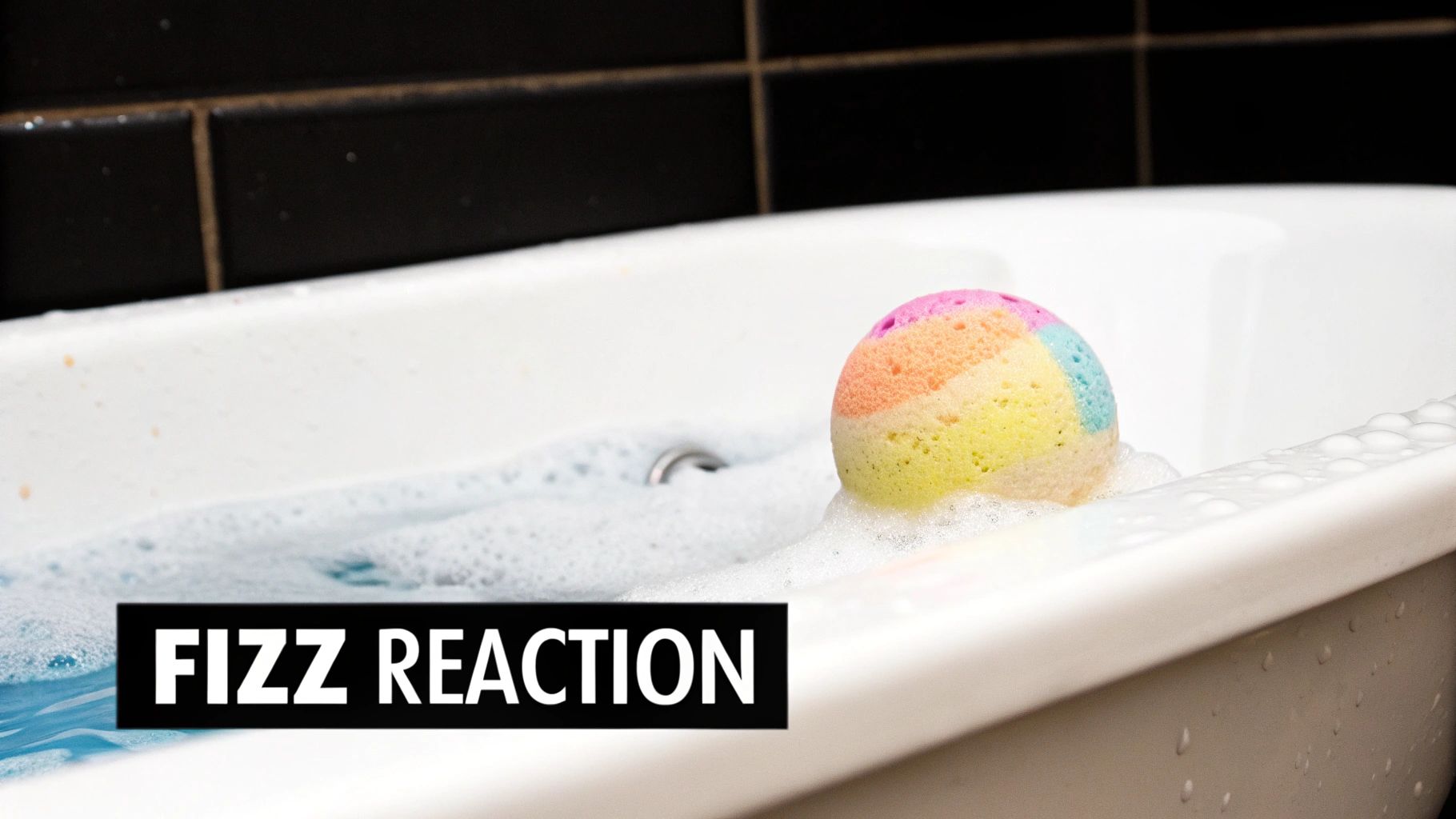
Think of it as a mini volcano erupting right in your bathtub. Inside that colorful sphere, you have an acid (citric acid) and a base (sodium bicarbonate) just waiting for a reason to react. As long as they stay perfectly dry, they can coexist without any drama.
But the water in your tub changes everything. It acts as the perfect matchmaker, dissolving the solid acid and base so they can finally mingle on a molecular level.
The fizzing is pure chemistry in action. Hydrogen ions from the citric acid get friendly with bicarbonate ions from the baking soda, and the result is a burst of carbon dioxide (CO2) gas. This is what you see as bubbles. You can get a deeper look into this process over at Science Focus.
This rapid release of millions of tiny carbon dioxide bubbles is what we call the fizz. These bubbles rush to the surface, creating that delightful sizzle and, more importantly, helping to spread all the other goodies—like colors, fragrances, and oils—all through your bathwater.
The whole show really comes down to a trio of key players. Once you know their roles, the science behind the sizzle becomes crystal clear.
For a quick overview, here's a simple breakdown of what each component does.
| Component | Role In The Reaction |
|---|---|
| Sodium Bicarbonate | The "base" in the reaction. More commonly known as baking soda. |
| Citric Acid | The "acid" part of the pair, usually derived from citrus fruits. |
| Water | The essential trigger that dissolves the dry ingredients and lets them react. |
This table shows just how simple the core reaction is.
Without all three working in perfect harmony, your bath bomb would just be a colorful, fragrant rock sitting at the bottom of the tub. It’s this safe, predictable reaction that gives a bath bomb its entire purpose.
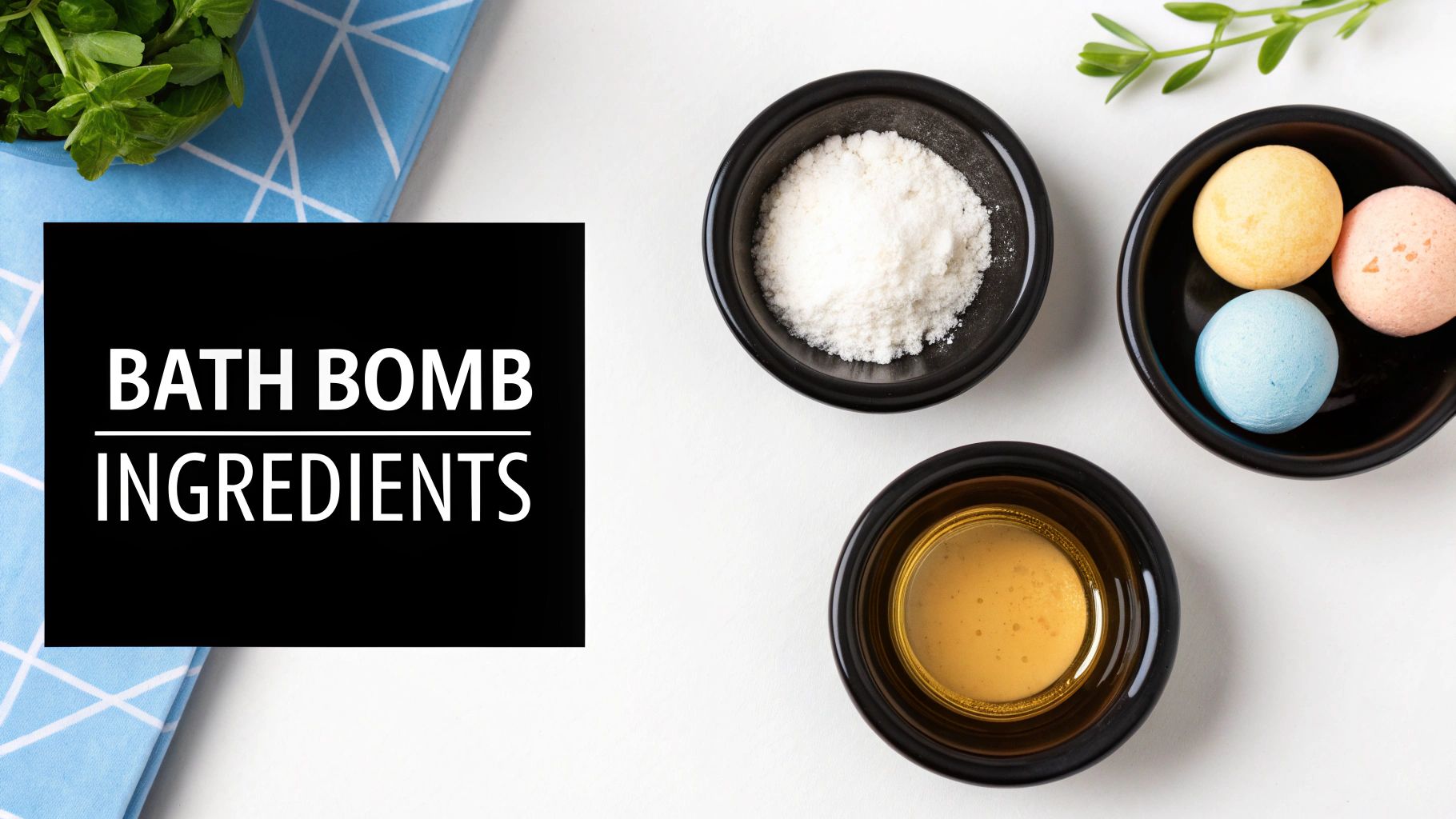
While citric acid and sodium bicarbonate are the stars of the show, a truly luxurious bath bomb relies on a talented supporting cast. These ingredients do more than just add a little flair; they control the performance, nourish your skin, and turn your bath into a full-sensory escape.
The most common additions you'll find are binders. Think of ingredients like cornstarch or cream of tartar. Their main job is to hold the bath bomb together, making sure it doesn’t crumble before it even hits the water. They also help moderate the fizz, slowing things down for a longer, more satisfying show.
Beyond just keeping it all in one piece, other ingredients are chosen for what they bring to your skin and the overall bath environment. This is what transforms a simple chemical reaction into a spa-like treatment.
An unsung hero in many formulations is the emulsifier, like polysorbate 80. Its crucial role is to help the oils and colors mix into the water instead of just floating on top in a greasy slick. It’s a small detail that makes a huge difference!
All these additions are carefully balanced to create a specific effect. If you’re curious about blending your own, you can learn more about how to make bath bombs with the perfect mix. This careful selection is what elevates a simple fizzing ball into an immersive, skin-conditioning indulgence.
Ever wondered what makes a great bath bomb fizz for ages while another just… peters out? It's not magic, it's chemistry. Think of it like baking a cake—the right ingredients in the right amounts make all the difference, and a bad measurement can lead to a total flop.
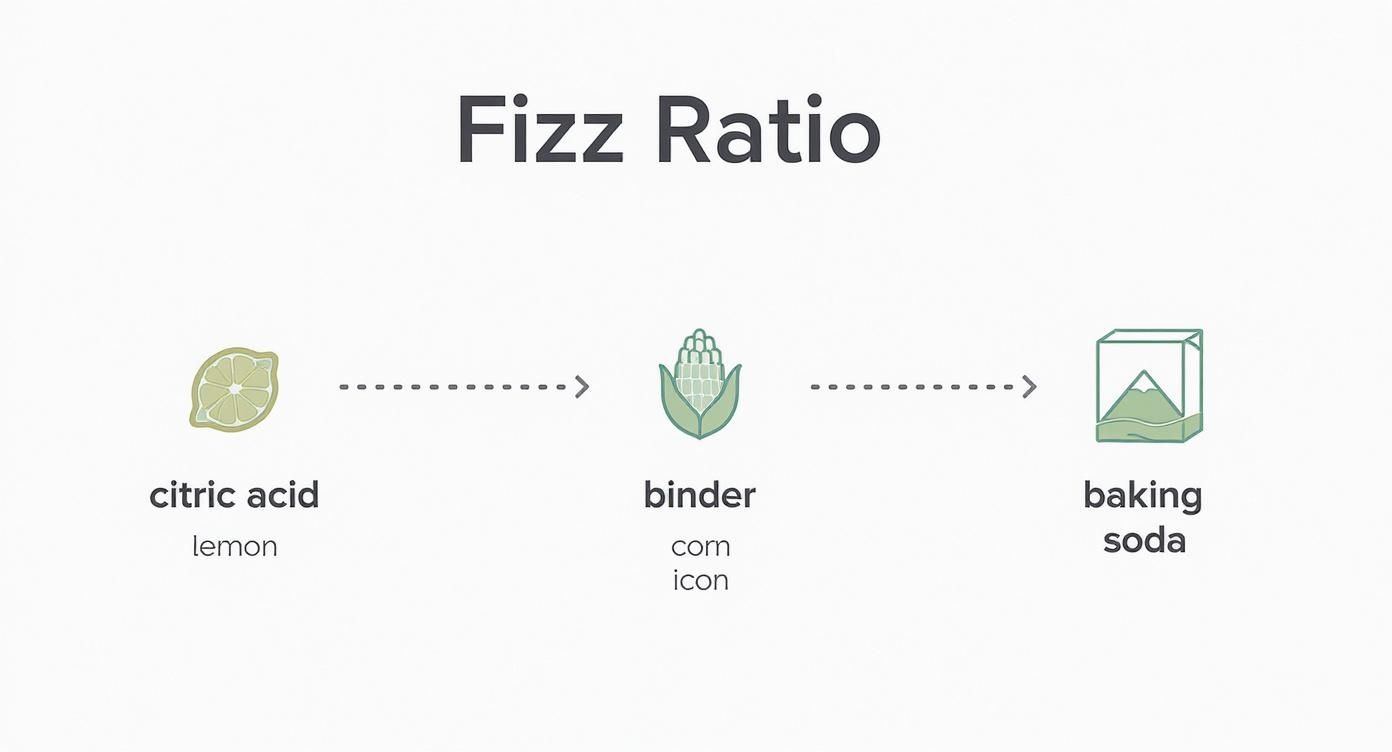
The secret to that perfect, long-lasting fizz is all in the ratio between the two star players: citric acid and sodium bicarbonate. Getting this balance right is what separates a truly spectacular, slow-burning show from a disappointing flash in the pan.
So, what's the magic number? While every recipe has its own little quirks, most makers start with a classic 2:1 ratio—that’s two parts sodium bicarbonate to one part citric acid. This simple formula is the foundation for a steady, satisfying fizz that doesn't burn out too quickly.
In a typical bath bomb weighing around 100 grams, you might see 30-40 grams of sodium bicarbonate paired with 15-25 grams of citric acid. The rest is made up of all the other goodies like oils and colors.
But the reaction isn't just about those two ingredients. Other components play a crucial role as "moderators," controlling the pace of the fizz.
Cornstarch is the perfect example. It acts as a dry filler, physically separating the acid and bicarbonate particles. This makes the water work a bit harder to get the reaction going, slowing everything down. It’s what turns a quick chemical burst into a luxurious, minutes-long experience.
This thoughtful combination turns a simple chemical process into a controlled performance for your senses. If you're feeling inspired to mix up your own, checking out an easy bath bomb recipe is a fantastic way to see how these ratios work firsthand. It’s this careful balancing act that creates a truly incredible bath, from the first bubble to the last.
Ever wonder why some bath bombs explode into a frenzy of fizz the second they hit the water, while others prefer a slow, meandering sizzle? It's not magic. It's chemistry, and you can totally be the director of your own bath time show.
Getting control over your bath bomb's performance comes down to a few surprisingly simple tweaks.
Just like a pinch of sugar dissolves way faster than a solid cube, the particle size of your ingredients is a game-changer. Powders with a super-fine texture have a ton of surface area, so they react with water almost instantly. The result? A fast, furious, and often short-lived burst of bubbles. If you're after a calmer, longer-lasting fizz, using coarser ingredients is the way to go.
How tightly you pack your bath bomb—its compression—matters just as much. A really dense, tightly packed bomb makes the water work harder to get inside, leading to a slow, steady release. A loosely packed one? It'll start to crumble and react much more quickly.
Think of your bathwater as the accelerator pedal for the fizzing reaction. Heat speeds everything up.
By playing with ingredient size, how tightly you press the bomb, and the temperature of your tub, you can design the exact fizzy experience you're craving.
Dialing in the perfect fizz is a balancing act. Tweaking one thing can completely change the show. This table breaks down the main factors you can adjust to get the speed and intensity just right.
| Factor | Effect On Fizz Speed | How It Works |
|---|---|---|
| Particle Size | Finer = Faster, Coarser = Slower | More surface area on fine powders means a quicker reaction. |
| Acid to Bicarb Ratio | Higher Acid = Faster | A higher concentration of acid can speed up the rate of reaction. |
| Moisture | Higher Moisture = Slower Start | Absorbed humidity can slightly pre-activate ingredients, slowing the initial fizz. |
| Binders | More Binders = Slower | Binders like cornstarch and clays hold the bomb together, forcing a slower dissolve. |
| Oils & Butters | More Oils = Slower | These ingredients coat the powders, creating a barrier that water must penetrate. |
| Surfactants | No Direct Effect | Surfactants create bubbles and foam but don't drive the actual fizzing reaction speed. |
Ultimately, mastering bath bomb performance is all about understanding how these simple elements work together. A little experimentation is all it takes to go from a fizz-newbie to a bath-bomb-maestro.
While the fizz is definitely the main event, what really makes a bath bomb special are the ingredients that go to work for your skin. The show is fun, but the real magic happens once the bubbles settle down. This is where the chemistry of fizz gives way to the science of skincare.
Many bath bombs are packed with ingredients chosen for their therapeutic properties. You'll often find Epsom salts, a classic addition famous for soothing sore muscles and melting away the tension after a long day. It’s what turns a simple bath into a truly restorative soak.
Beyond just helping you relax, the best bath bombs are loaded with amazing moisturizing agents. These are the ingredients that make sure you step out of the tub feeling soft, hydrated, and totally pampered.
It's important to remember that not all fats and oils are created equal. While many bath bombs include ingredients for their beautiful look and smell, some also feature natural fats and oils specifically to boost your skin's health. To explore another natural ingredient known for its moisturizing properties, you can learn more about the numerous benefits of beef tallow for skin.
Ultimately, a well-made bath bomb is the perfect blend of a spectacular show and real, tangible skin benefits. If you want to dig deeper, our guide on whether bath bombs are good for your skin offers more insight into choosing the right one for you.
Even after digging into the science, you might still have a few lingering questions. What if it doesn't fizz? Is it safe for my pipes? Let's clear up some of the most common curiosities and turn you into a true bath bomb aficionado.
One of the biggest letdowns is a bath bomb that just... sits there. No fizz, no fun. This is almost always a moisture problem. If your bath bomb gets exposed to humidity before bath time, the acid and bicarb have a tiny, premature party, using up all their fizzing power before they even hit the water. The fix? Always store them somewhere cool and dry—an airtight container is your best friend.
Another big question is about plumbing. Are all those ingredients going to clog my drain? For the most part, you're in the clear. The main fizzing ingredients, sodium bicarbonate and citric acid, dissolve completely. The only time you might run into trouble is with additives that don't dissolve, like whole flower petals or chunky glitter. But any well-made bath bomb is designed with your pipes in mind.
That spectacular fizz isn't just for show—it’s the heart of the whole experience and what’s made bath bombs so wildly popular. We're talking about a market that hit over $300 million in sales in the late 2010s, all because people love that bubbling sensation.
The carbon dioxide bubbles are actually hard at work. They act like tiny little delivery drivers, spreading all the good stuff—nourishing oils, gorgeous fragrances, and vibrant colors—evenly throughout the water. It’s this active dispersal that turns a regular bath into a full-blown sensory escape. If you want to dive deeper, you can read more about the science behind the perfect bath bomb to see how it all comes together.
So, what about the stuff left in the water? Is it okay for your skin? Absolutely. The fizzing reaction neutralizes itself, leaving behind water and a gentle salt called sodium citrate. While the pH of your bathwater might change a little, it stays well within a skin-safe range. The real magic comes from the lovely ingredients released by the fizz. If you're looking to upgrade your entire bath routine, you can explore a wide range of bath products to find your perfect match.
Ready to experience the perfect fizz? Jackpot Candles combines high-quality, skin-nourishing ingredients with the thrill of discovering a hidden jewelry surprise inside. Explore our collection and elevate your next bath at https://www.jackpotcandles.com.
Comments will be approved before showing up.