
free shipping at $99


So, are soy wax candles actually better? The honest answer is, it really depends on what you're looking for in a candle. For a lot of people, soy wax wins hands-down because it’s eco-friendly and burns cleaner. But whether it’s the "best" choice for you comes down to what matters most—a powerful scent, a long-lasting burn, or a smaller environmental footprint.
Lately, the debate between soy wax and old-school paraffin candles has really heated up. It makes sense—we’re all a bit more thoughtful about what we bring into our homes these days. Soy wax, which comes from hydrogenated soybean oil, is a renewable and biodegradable alternative to paraffin, a byproduct of petroleum. That single difference is the main reason so many people see it as the healthier choice for their home and the planet.
To really figure out which one is right for you, we need to put them head-to-head. We’ll look at everything from how they perform and burn to their safety, cost, and overall impact. Think of this as your clear, side-by-side guide to understanding the real story behind each wax.
Before we get into all the details, here’s a quick snapshot of how the two most popular waxes stack up. It’s a great starting point to see their core differences.
| Feature | Soy Wax | Paraffin Wax |
|---|---|---|
| Origin | Plant-based (soybeans), renewable | Petroleum byproduct, non-renewable |
| Burn Quality | Cleaner burn with minimal soot | Can produce black soot |
| Burn Time | Slower burn, often longer-lasting | Faster burn, may be shorter-lasting |
| Scent Throw | Excellent cold and good hot throw | Strong and consistent hot throw |
| Environmental Impact | Biodegradable and eco-friendly | Derived from fossil fuels |
| Cost | Generally more affordable than beeswax | Typically the least expensive option |
This table gives you the highlights, but the real story is in the nuances. As we dig deeper into what makes each wax unique, you’ll get a much clearer picture of which candle truly fits your lifestyle and values. Finding your perfect candle all starts with knowing what’s inside.
Before we can really get into whether soy candles are better, you first need to know what you're actually burning. The journey from a raw ingredient to that glowing candle in your living room is completely different for each type of wax, and that process directly impacts everything from performance and eco-friendliness to the very air you breathe. Trust me, not all waxes are created equal, and where they come from tells a huge part of their story.
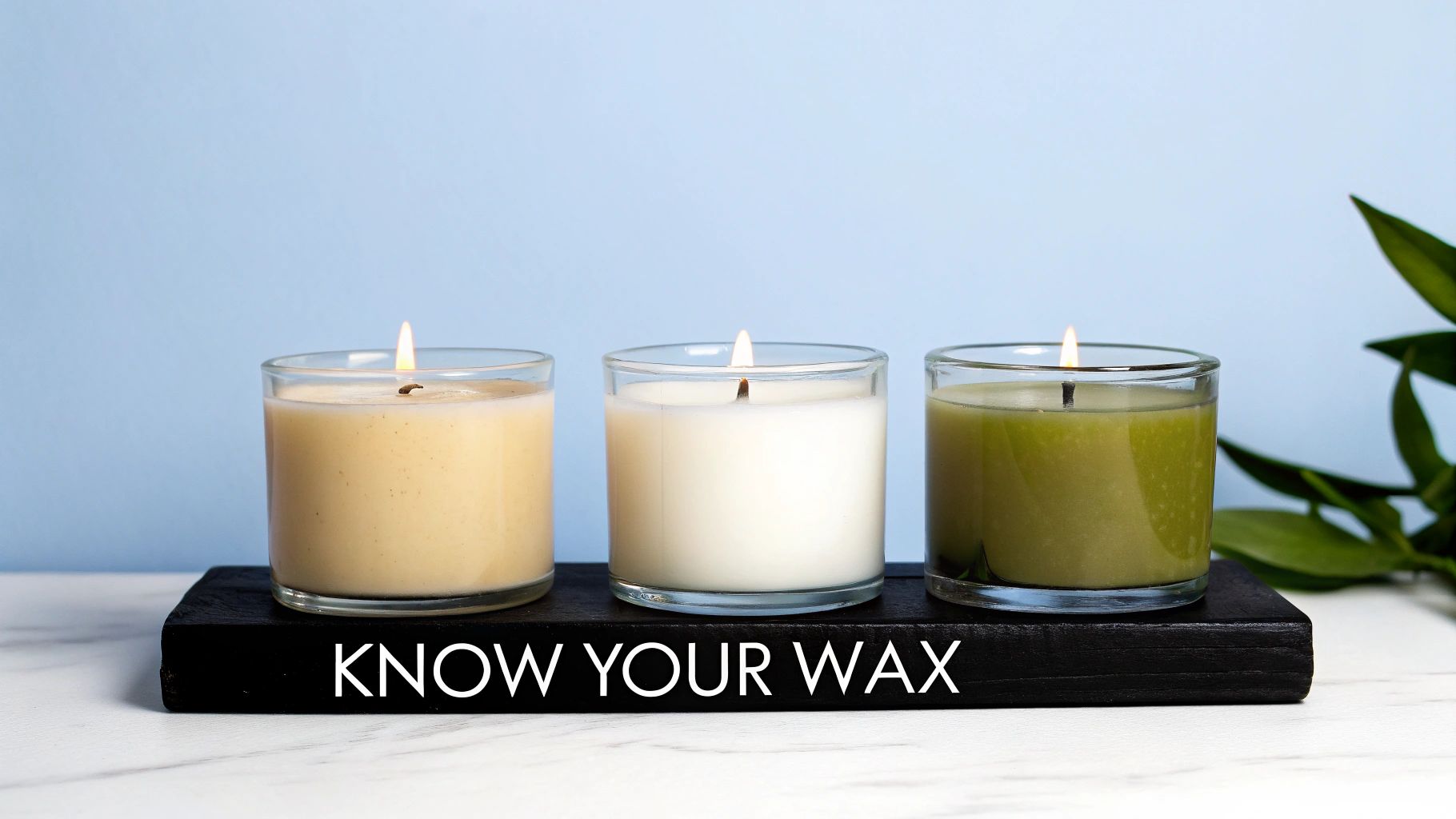
The most common waxes you'll find fit into a few distinct categories based on their source. Getting a handle on their origins gives us the foundation we need to compare how they stack up later on.
Soy wax is the clear leader of the plant-based pack. It’s made from soybeans, a renewable crop, through a hydrogenation process that turns the natural oil into a solid wax. This makes it a biodegradable and eco-friendly choice for a lot of people. If you want to get into the nitty-gritty, we have a whole post that explains in detail what a soy wax candle is and its unique qualities.
Another popular plant-based option is coconut wax, which comes from the meat of coconuts. It’s known for its creamy white look, slow burn, and fantastic scent throw. You’ll often see it blended with soy wax to get the best of both worlds.
Paraffin wax is probably the most traditional and widely used candle wax out there, but its origins are a world away from soybeans. It’s actually a byproduct of refining crude oil—the same process that gives us gasoline. That means it’s a finite, non-renewable resource.
While paraffin is famous for its powerful scent-holding ability and is usually pretty inexpensive, its direct link to the fossil fuel industry is a major consideration for environmentally conscious shoppers.
Beeswax is a totally natural wax made by honeybees when they're building their honeycombs. It's an amazing byproduct of the honey industry and has been prized for centuries. Beeswax naturally gives off a soft, sweet honey scent and is known for its impressively long, dripless burn.
Since it’s created by bees, it’s a renewable resource, but it isn't considered vegan. Its higher price point and distinct natural aroma make it more of a specialty choice compared to the versatile and budget-friendly soy wax.
Each wax type really does bring its own background and production story to the table, which perfectly sets the stage for a detailed showdown on performance.
The scent of a candle has always been the quickest way to make a house feel like a home, but what that candle is made of has become just as important as how it smells. Not too long ago, soy wax was a niche, eco-conscious choice you'd find in specialty shops. Now? It’s a mainstream favorite lighting up living rooms everywhere.
This isn’t just a passing trend. It's a real reflection of how we all shop now—we're more thoughtful and intentional than ever. We read labels, ask questions, and spend our money on products that align with our values. This shift has completely reshaped the home fragrance market, pushing natural, sustainable, and honestly made products right to the front.
Picking a soy wax candle is about so much more than the wax. It’s a small but meaningful decision that supports a healthier lifestyle and a more sustainable way of doing things. Since soy wax comes from soybeans—a renewable crop—it’s a world away from traditional paraffin wax, which is a byproduct of the non-renewable petroleum industry.
That difference really resonates with people looking to shrink their environmental footprint. When you choose soy, you're directly supporting farmers and investing in a plant-based economy. It turns the simple act of lighting a candle into a quiet statement about what you care about.
The growing love for soy isn't just a feeling; the numbers back it up. The global soy candle market was valued at around $0.79 billion and is expected to blow past $1 billion by 2033, growing at a steady clip of about 7.2%. This boom is all thanks to a growing awareness of sustainability and the real economic benefits for the agricultural world. Discover more insights about these market trends on Jackpotcandles.com.
What started as a quiet ripple in the candle industry has now become the new standard for quality and responsibility. This widespread love for soy shows that the answer to "are soy wax candles better?" goes way beyond just how they perform. For many of us, they are better because they represent a conscious choice for a cleaner, greener home.
The journey of soy wax from a little-known alternative to a household staple comes down to a few key things we all care more about now:
This powerful mix of environmental, health, and economic upsides has secured soy wax's place in modern homes. It’s a product that doesn’t just smell good—it feels good to buy and burn.
When you light a candle, you're not just looking for a flame—you're creating an experience. The wax is the heart of that experience, dictating everything from how long your candle burns to how well its gorgeous fragrance fills the room. So, are soy wax candles really better? To answer that, we have to get into the nitty-gritty of how different waxes perform.
Let's put the big three—soy wax, paraffin, and beeswax—head-to-head to see how they stack up in the areas that matter most to candle lovers. Each one brings something different to the table, and knowing their unique personalities will help you pick the perfect candle for what you want, whether that's an all-night burn, a powerhouse scent, or the cleanest air possible.
One of the biggest wins for soy wax is how long it lasts. It’s simple science, really. Soy wax has a lower melting point than paraffin, which means it burns cooler and slower.
That slow, gentle burn translates directly into more hours of aromatic bliss from a single candle. You get more bang for your buck. A paraffin candle, with its higher melting point, tends to burn through its wax much more quickly. While beeswax is the undisputed king of a long burn, its premium price point often puts it in the "special occasion" category. For everyday enjoyment, soy wax hits that sweet spot of amazing performance and great value.
This practical advantage, combined with its eco-friendly roots and support for American farmers, is a huge reason why so many people are making the switch to soy.
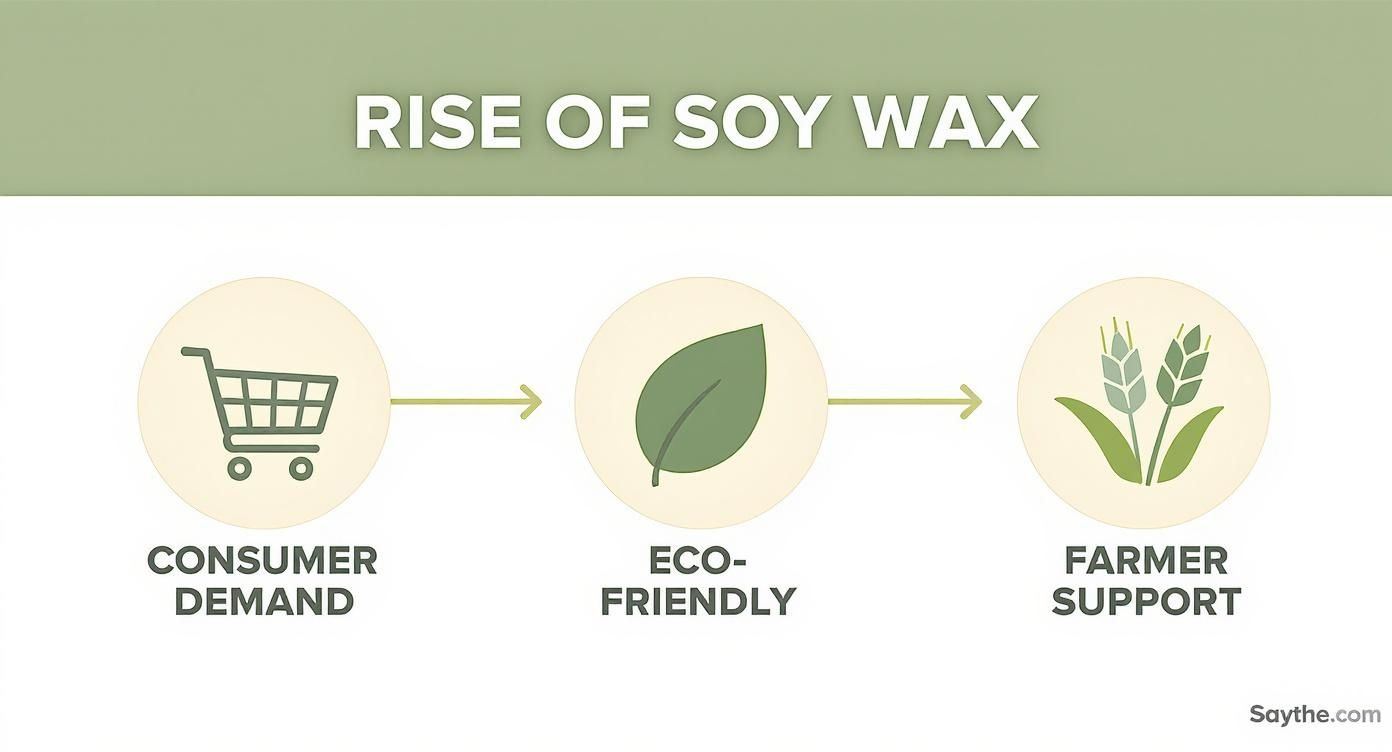
This shift isn't just a trend; it's about consumers actively choosing smarter, more sustainable products that deliver a superior experience.
Let's talk scent throw—the lingo for how well a candle’s fragrance spreads through a room. You’ll hear about two kinds: cold throw (the scent of the unlit candle) and hot throw (the scent when it’s burning). This is where the wax debate gets really interesting.
For years, paraffin was the go-to for a strong hot throw. Its chemical structure is great at holding onto fragrance oils and releasing them in a big way when heated. But times have changed, and soy technology has caught up in a big way.
Soy wax has a naturally fantastic cold throw, making your candle smell amazing even when it’s just sitting on your coffee table. While a pure soy candle can sometimes have a more delicate hot throw, modern soy blends—like the proprietary one we've perfected at Jackpot Candles—are engineered to deliver a powerful, room-filling aroma that easily competes with paraffin. For a deeper dive, check out our guide on the best candle wax for scent throw.
Beeswax has its own lovely, natural honey scent, which is beautiful but can sometimes clash with more complex fragrances. For pure, vibrant perfume notes, a high-quality soy blend is often the more versatile choice.
This might be the most important comparison of all: how cleanly a candle burns. We all want our homes to be cozy, safe, and healthy, and the wax you choose makes a huge difference.
Because it’s a petroleum byproduct, paraffin wax is known for producing that ugly black soot, especially if you forget to trim the wick. Those soot particles don't just stain your walls; they can release chemicals like toluene and benzene into the air you breathe. It's no wonder so many people are looking for cleaner alternatives.
Soy wax, a natural vegetable wax, is famous for its clean burn. It produces next to no soot, helping keep your home and your air much cleaner.
Switching to soy wax is one of the easiest ways to protect your indoor environment without giving up the warm, inviting glow of a candle.
To make it even easier to see the differences, here’s a quick side-by-side look at how each wax performs across the board.
| Performance Metric | Soy Wax | Paraffin Wax | Beeswax |
|---|---|---|---|
| Burn Time | Excellent. Slower, cooler burn for a longer life. | Fair. Burns faster and has a shorter lifespan. | Superior. Highest melting point for the longest burn. |
| Scent Throw | Very Good. Excellent cold throw, strong hot throw. | Excellent. Traditionally the strongest hot throw. | Fair. Natural honey scent can interfere with fragrance. |
| Soot Production | Minimal. Burns very cleanly with little to no soot. | High. Prone to producing black soot. | Minimal. Exceptionally clean-burning and soot-free. |
| Cost | Moderate. Excellent value for performance. | Low. The most affordable wax option. | High. A premium, more expensive choice. |
This table clearly shows that while paraffin is cheap and beeswax is a luxury, soy wax consistently delivers a fantastic, clean, and long-lasting experience, making it the top choice for today's discerning candle lover.
When you're trying to figure out if soy wax candles are better, it helps to look at the whole picture—from the soybean farm all the way to the flickering flame in your living room. A candle's environmental and health impact is about way more than just its scent; it touches on everything from agriculture and renewability to the quality of the air you breathe at home. Let's break it down so you can make a choice that feels right for you.
The biggest difference is where the wax comes from. Soy wax is made from soybeans, a renewable resource that keeps farmers in business. It's also biodegradable, which means it breaks down naturally instead of sticking around and harming the planet.
Paraffin, on the other hand, is a totally different story. It’s a byproduct of refining petroleum. As a fossil fuel product, it's a non-renewable resource, and its creation is tied directly to an industry with a massive environmental footprint.
The green-friendly perks of soy get even more obvious when you look at carbon emissions. European-certified soy wax only produces 0.3-0.4 kg of CO₂e per kilogram, which is a huge difference compared to the higher carbon cost of paraffin. For anyone trying to shrink their environmental impact, that's a pretty big deal.
The kind of wax you choose has a direct effect on the air in your home. Since paraffin is a petroleum product, burning it can release tiny amounts of toxins like toluene and benzene, which can contribute to indoor air pollution.
This is a huge reason why so many health-conscious people are asking "are soy wax candles better?" and making the switch. Soy wax and beeswax are both known for burning much cleaner, producing almost no soot and keeping your indoor air fresh. Choosing the best non-toxic candles is a simple move towards a healthier home. If you're looking for more ways to create a healthier space, it's worth checking out other effective indoor air quality improvement tips.
To make things even simpler, here’s how each wax stacks up on the environment and health front:
At the end of the day, soy wax really strikes a fantastic balance. It delivers on sustainability, health, and performance, making it the perfect choice for anyone who wants to enjoy that beautiful candle glow without worrying about their environmental values or the air they're breathing at home.
Now that you know how different waxes behave, you can pick the perfect candle for any mood or moment. The secret isn't finding one "best" wax; it's about matching a wax's unique personality to what you actually need. This way, you get the exact candle experience you're hoping for every time.
Are you trying to fill a big, open-concept living room with a rich, welcoming scent? A high-quality paraffin candle or a well-made soy blend is probably your best bet. These options are specifically designed for a powerful hot throw, making sure that beautiful aroma travels far and wide.
But for smaller, cozier spots like a bathroom or home office, a 100% soy wax candle is perfect. It gives off a lovely, balanced scent that enhances the space without being overpowering. When exploring options, it's helpful to look at how different brands, like the one behind the Elia 1986 Candle, combine their waxes and fragrances to see what might work for you.
If you're dealing with allergies, scent sensitivities, or just want the cleanest possible indoor air, then the answer to "are soy wax candles better?" is a big yes. A pure soy or beeswax candle is the way to go, since they burn cleanly with barely any soot or irritants.
Smart candle makers know that different waxes have different strengths. That's why many premium brands now create their own proprietary blends to give you a more balanced experience.
Here at Jackpot Candles, we've perfected a sophisticated soy blend for that very reason. It gives you the clean, eco-friendly burn that soy is famous for, but with the powerful, room-filling fragrance you'd expect from a top-tier paraffin wax. You don't have to compromise. You get a candle that burns long, smells incredible, and keeps your air clean, all in one.
When you're new to the world of soy candles, it's natural to have a few questions. As you start exploring why they're such a great choice for your home, some curiosities are bound to pop up. We've got clear, straightforward answers to the questions we hear most often.
Ah, the bumpy top. If you see an uneven surface on your soy candle after the wax has cooled, that’s actually a good thing! It’s a tell-tale sign that you have a candle made from 100% natural soy wax, without any paraffin or other additives blended in.
This texture, sometimes called "frosting" or "pitting," just happens when the natural wax cools down at slightly different speeds. The important thing to know is that it has zero impact on your candle's performance or how great it smells. It’s just soy being soy!
In most cases, yes. A higher price tag often points to better ingredients and more thoughtful craftsmanship. Premium candles typically use high-quality, ethically sourced soy wax and complex, perfume-grade fragrance oils, which create a much richer and more authentic scent experience.
The cost also covers the research and development that goes into creating advanced proprietary blends, like ours at Jackpot Candles. We've engineered our wax to get the best possible scent throw and a super clean, consistent burn from the very first light to the last.
A little bit of candle care goes a long way in getting the most out of your purchase. Following these simple tips will give you a better, more fragrant burn every single time.
Ready to see what a premium soy blend can do? Explore the luxurious, long-lasting fragrances from Jackpot Candles and find a new scent to fall in love with today. Shop Our Collection
Comments will be approved before showing up.