
free shipping at $99


What makes a candle the “best” choice for a mood, the fragrance itself, or the way you use it? There isn't one universal winner. Lavender may suit a quiet evening, while peppermint and eucalyptus make more sense beside a morning laptop. Citrus can brighten a shared room, vanilla can soften it, and sandalwood can make a personal ritual feel more grounded.
This guide ranks seven best candle science scents by the experience you want to create: sleep, focus, uplift, comfort, emotional balance, grounding, or gentle wellness. For each family, you'll find its aroma profile, the mood or memory associations people commonly report, its practical strengths, its limitations, and the room or time of day where it fits best.
Aromatherapy language needs restraint. A scent may complement relaxation or self-care, but a candle isn't a guaranteed medical treatment. The science behind terpenes and aromatherapy can help explain why aromatic compounds attract interest, while candle performance also depends on wax, fragrance formulation, wick choice, ventilation, and cure time. A quality soy wax blend and perfume-grade fragrance oils can help a candle release its intended profile without making the experience identical for everyone.
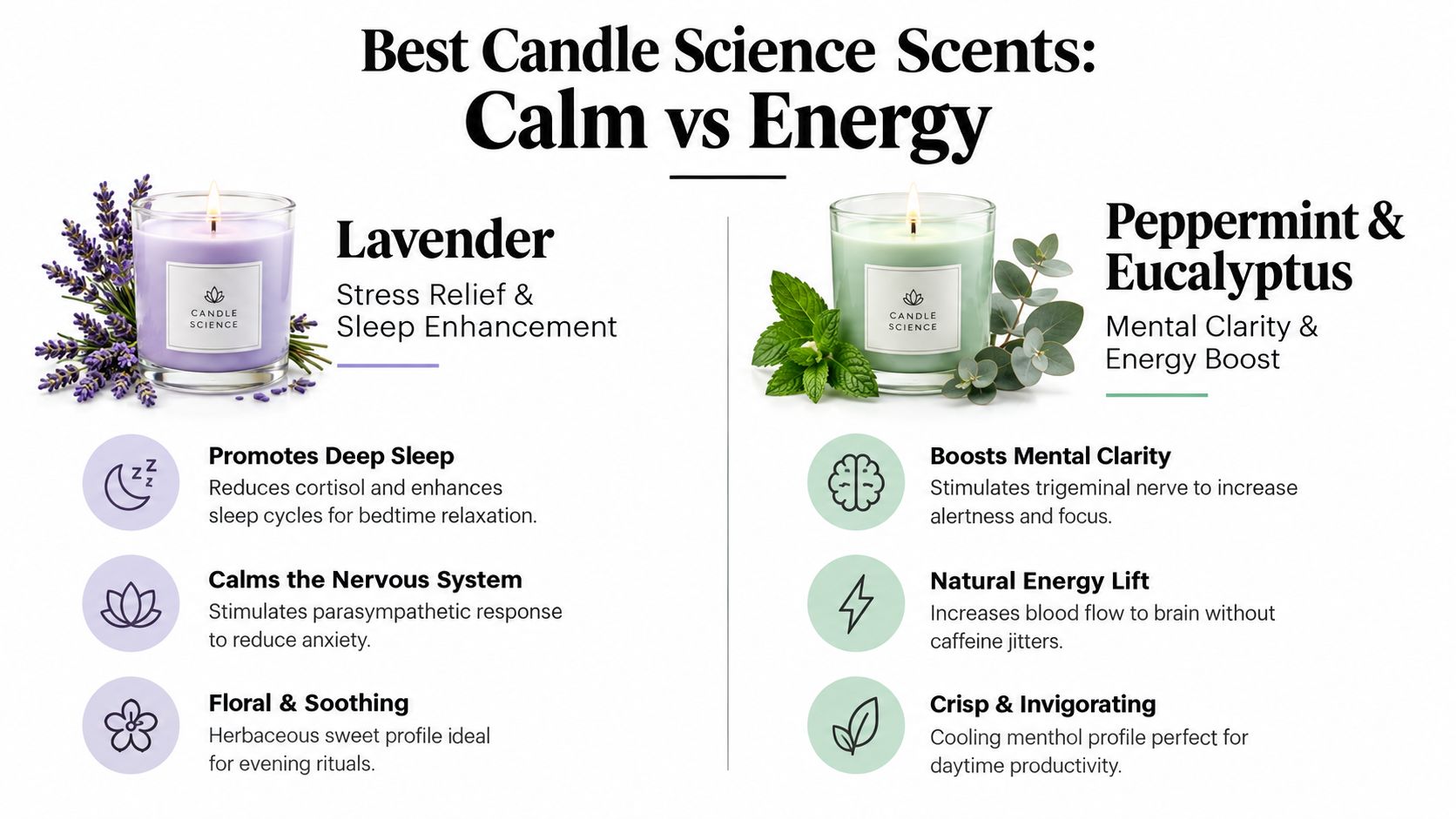
Lavender remains the clearest starting point for an evening candle because its profile is immediately recognizable: floral, herbaceous, softly sweet, and slightly green. People often associate it with clean linens, spas, bedtime routines, and quiet rooms. Those associations matter because scent can work as a ritual cue, reminding you to slow down before sleep rather than promising a guaranteed sleep outcome.
The evidence supports complementary relaxation, not a universal result. Lavender has been studied in aromatherapy contexts for relaxation and sleep-related experiences, but a scented candle differs from a controlled clinical intervention. The flame, wax, fragrance concentration, room size, and personal sensitivity all affect what reaches the nose.
Lavender can become medicinal if the fragrance is too sharp, or overly sweet if the blend leans heavily toward vanilla or powder. A well-balanced candle should preserve lavender's herbal character while keeping the room comfortable. CandleScience's notes on blended wax performance explain why cold throw and hot throw can change after curing, which is especially relevant when a candle smells appealing in its container but seems weaker while burning.
Practical rule: Use lavender as a transition signal, not as a substitute for sleep care. Light it during a quiet wind-down period, then extinguish it before you go to bed.
A bedroom or reading corner usually suits this fragrance better than a large, highly ventilated living area. For a deeper look at choosing the profile, see lavender fragrance oil for candles. A soy blend can provide a smooth base for lavender, while a lighter fragrance load may keep the floral note from dominating. The best use scenario is a consistent evening ritual, perhaps while journaling, stretching, or preparing for bed.
Peppermint and eucalyptus take the list in the opposite direction. Their aroma is cool, camphoraceous, and penetrating, with peppermint adding a familiar menthol sweetness and eucalyptus contributing a cleaner, more medicinal edge. That combination suits people who want a room to feel awake, uncluttered, and active.
The practical appeal is less about claiming that the scent improves intelligence and more about managing atmosphere. A mint profile can make a home office feel distinct from a bedroom, helping create a mental boundary around work. It may also evoke freshness, open windows, shower steam, or a well-ventilated studio.
Use this family before or during a focused task, particularly when you want an energetic room without adding another drink or stimulant. It can work well near a desk, craft table, or study area, but it may feel too forceful during dinner or late-night relaxation.
The guide to scents for focus and energy can help frame this choice for a workday ritual. Don't place a strong mint candle directly beside your face, and be cautious if anyone in the room dislikes intense menthol notes. Ventilation changes the experience, too. In a small office, the same fragrance may feel crisp and invigorating, while in a large room it may become subtle.
Lemon and other citrus scents change a room quickly. Their profile is sparkling, tart, clean, and familiar, with top notes that can suggest freshly cut fruit, sunlight, polished counters, or a morning kitchen. If lavender is a closing scent, citrus is an opening scent. It works when you want the room to feel more welcoming and lively.
Citrus also illustrates why fragrance descriptions need precision. Lemon can smell juicy and natural, but it can also turn sharp, soapy, or overly synthetic when the formulation lacks balance. Orange tends to feel rounder and sweeter, while grapefruit can introduce bitterness and bergamot can add a more perfumed, tea-like character.
A kitchen, entryway, breakfast nook, or living room can benefit from citrus because these spaces already support social activity and movement. A lemon candle may also help create a sense of freshness after cooking, although fragrance should not be presented as a replacement for cleaning or ventilation. Claims about antimicrobial or air-purifying effects require particular care in a candle context. The presence of a citrus note does not prove that a room has been disinfected.
Citrus works especially well for:
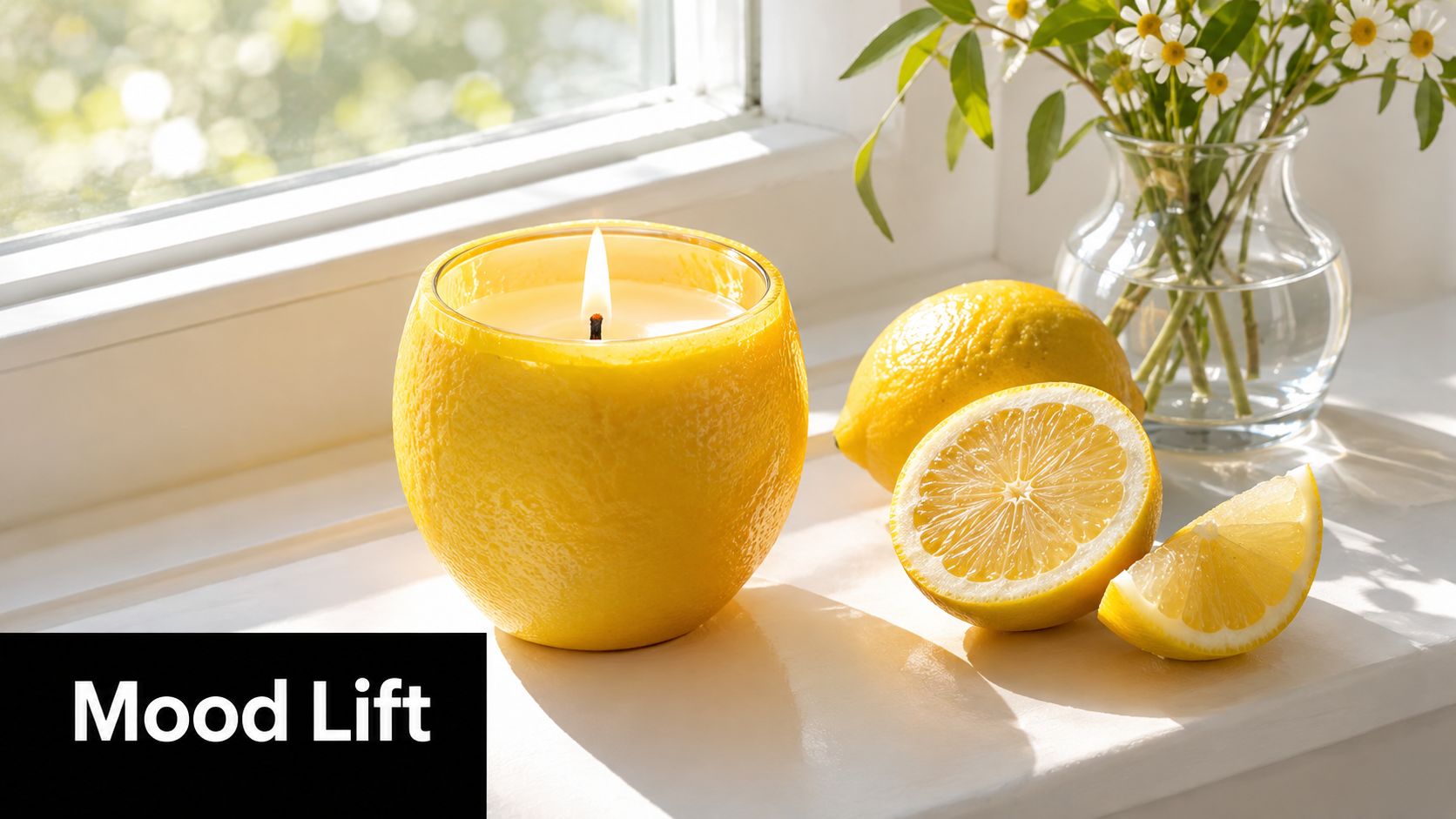
Choose citrus when the desired result is emotional lift through atmosphere, not a promised treatment for low mood. If you're sensitive to sharp fragrances, look for lemon blended with vanilla, tea, or soft woods. Those supporting notes can make the scent feel less like a cleaning product and more like a finished fragrance.
Rose has a wider emotional range than its romantic reputation suggests. Depending on the formulation, it can smell dewy and green, powdery and traditional, dark and velvety, or modern and almost fruity. That flexibility makes rose suitable for a self-care atmosphere, but only when the profile matches the person using it.
A rose candle can evoke a garden, a bouquet, cosmetics, formal occasions, or personal memories connected to a particular person. Those associations may create comfort for one reader and feel overly perfumed to another. Scent memory is personal, so rose shouldn't be marketed as a guaranteed emotional reset.
The supporting notes determine whether rose feels delicate or dramatic. Rose and vanilla create a softer, sweeter profile. Rose and oud feel richer and more formal. Rose with citrus can feel brighter and less powdery, while rose with sandalwood introduces a dry, warm base.
Rose works best when the ritual feels intentional. A short bath, skincare routine, quiet reading session, or private pause gives the fragrance a clear role.
A bedroom, dressing area, or bathroom can provide the right setting. Keep the candle away from towels, curtains, paper, and other flammable materials, especially in a small room where the scent may build quickly. For a premium experience, perfume-grade fragrance oils can give the blend more structure than a single-note floral fragrance.
Rose is also a strong gifting choice when the message is care rather than energy. The hidden jewelry element in a discovery candle can extend that feeling by adding anticipation after the room has been scented. The product should still stand on its own as a candle, though. The surprise adds a second moment, but it shouldn't replace attention to the fragrance's quality or the recipient's preferences.
Vanilla is the broadest comfort choice in this group. Its aroma can be creamy, sweet, toasted, buttery, or softly woody, depending on the blend. It reminds many people of baking, warm drinks, desserts, family kitchens, and familiar interiors. That makes vanilla less divisive than strongly herbal, smoky, or mentholated scents.
Its main strength is versatility. Vanilla can welcome guests in a living room, soften a bedroom, or make a reading chair feel more inviting. It also gives fragrance designers a useful base for more complex combinations.
A pure vanilla candle may feel comforting but lack freshness or contrast. Add lavender and the result becomes more evening-oriented. Add sandalwood and the sweetness gains depth. Add citrus and the blend feels lighter. These combinations let one familiar note serve different moods without turning every candle into the same product.
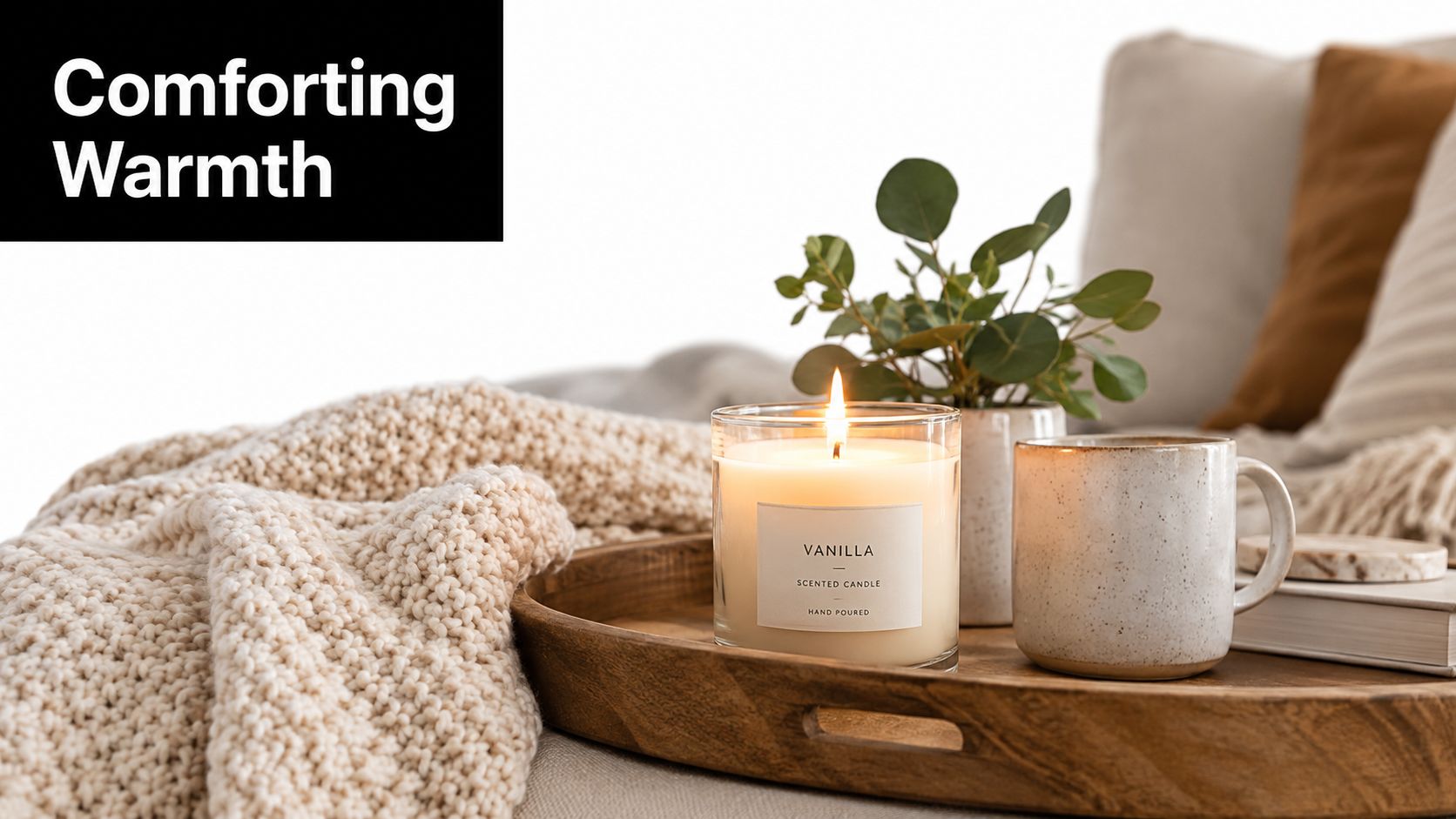
Market language should stay grounded. Vanilla can support a feeling of warmth and familiarity, but it cannot guarantee trust, reduce anxiety, or produce a particular emotional response. The person's memories, expectations, and sensitivity matter more than a label claiming universal comfort.
For candle makers and buyers, performance deserves equal attention. The National Candle Association's emissions study used a 5% fragrance load as a benchmark considered representative of the general European and North American market. That benchmark doesn't tell you that every vanilla candle should use the same formulation. It shows why comparisons need consistent testing across wax and fragrance conditions.
Sandalwood has a dry, creamy, woody character that feels slower and quieter than citrus or mint. It can suggest polished wood, incense, warm skin, earth, and contemplative spaces. Among the best candle science scents, it's particularly useful when the goal isn't to feel cheerful or sleepy, but to feel more present.
The fragrance has long-standing cultural and spiritual associations, yet those associations shouldn't be flattened into a universal wellness promise. A sandalwood candle may support a meditation setting by giving attention a steady sensory reference. It may also help divide a deliberate ritual from ordinary household activity. Neither result is guaranteed, and the scent can be distracting if it's too intense.
Use sandalwood in a meditation corner, yoga space, reading area, or personal altar. Pair it with low visual clutter and a simple activity such as breathing exercises, stretching, or reflective writing. A complex blend with patchouli, amber, cedar, or musk can feel immersive, while sandalwood with citrus or tea becomes lighter and more suitable for daytime.
Ethical sourcing matters here. Natural sandalwood availability and sustainability concerns make responsible supply decisions important, so product descriptions should explain sourcing rather than implying that every “sandalwood” label contains a particular natural material. Synthetic sandalwood accords can offer a consistent scent profile, while sustainably sourced materials may appeal to buyers who prioritize provenance.
The best grounding candle doesn't demand attention. It gives the room a stable background while you focus on the ritual itself.
Sandalwood also suits premium gifting because its profile feels less immediately obvious than vanilla or lemon. A hidden jewelry piece can add anticipation, but the candle's value remains tied to its burn quality, scent balance, and safe use.
Chamomile and honey create the softest profile on this list. Chamomile is floral, herbal, and slightly apple-like, while honey adds golden sweetness and a rounded finish. Together, they suggest tea, quiet kitchens, warm blankets, and low-stimulation evenings.
This family is a good choice for readers who find lavender too recognizable or peppermint too intense. It can create a calm atmosphere without the strong medicinal edge that some people associate with eucalyptus, or the pronounced floral character found in rose.
Place chamomile and honey in a bedroom, bathroom, or reading nook during an evening routine. It works particularly well beside non-scented activities such as bathing, stretching, or reading. The fragrance should remain gentle. If honey becomes too sugary, the candle can start to resemble a dessert rather than a wellness scent.
Candle fragrance shouldn't be described as a treatment for digestive problems, anxiety, or other health conditions. A scent can accompany a comforting routine, but it can't diagnose or manage a condition. Buyers who are sensitive to fragrance should choose a mild formulation, ventilate the room, and stop using the candle if it causes discomfort.
For a sleep-oriented setting, Jackpot Candles' candles for sleeping guide offers a natural companion topic. The central advantage of chamomile and honey is emotional gentleness. It makes the candle suitable for a thoughtful care package, an evening gift, or anyone who wants wellness language without an aggressive or overly clinical aroma.
| Scent | 🔄 Implementation Complexity | ⚡ Resource Requirements | 📊 Expected Outcomes | ⭐ Key Advantages | 💡 Ideal Use Cases |
|---|---|---|---|---|---|
| Lavender - Stress Relief & Sleep Enhancement | Low, straightforward formulation; needs quality oil to avoid synthetic note | Moderate, premium lavender oil, soy wax for slow burn | Promotes relaxation, reduces cortisol, improves sleep quality | ⭐⭐⭐⭐⭐ Clinically supported sleep & relaxation; broad appeal | Evening rituals, bedroom candles, spa/relaxation gifts; burn 30–45 min before bed |
| Peppermint & Eucalyptus - Mental Clarity & Energy Boost | Moderate, control volatile menthol intensity to avoid irritation | Moderate–High, high-volatility menthol/eucalyptus oils; ventilation considerations | Increases alertness and focus; energizing without caffeine jitters | ⭐⭐⭐⭐ Strong focus boost; excellent scent throw for larger spaces | Home office, study, daytime productivity gifts; light 15–30 min before work |
| Lemon & Citrus - Mood Enhancement & Natural Antiseptic | Low, simple bright top notes but needs concentration to prevent fade | Low–Moderate, limonene-rich oils; higher concentration for longevity | Mood lift via dopamine/serotonin pathways; mild antimicrobial air benefits | ⭐⭐⭐⭐ Versatile mood-elevator; cost-effective and widely appealing | Kitchens, living rooms, SAD-season marketing, mood-boost gift sets |
| Rose - Emotional Balance & Self-Care Promotion | High, layered perfume-grade formulation to avoid artificial aroma | High, premium rose absolute/blends; precise layering required | Lowers cortisol; supports emotional processing and self-care rituals | ⭐⭐⭐⭐ Premium/luxury positioning; strong gift and emotional appeal | Romantic occasions, self-care rituals, luxury gift tiers; use in intimate spaces |
| Vanilla - Comfort & Trust Enhancement | Low, straightforward but needs quality vanilla to avoid artificial sweetness | Low–Moderate, natural vanilla/absolute or high-quality accords | Triggers comfort and trust; reduces anxiety; broad demographic appeal | ⭐⭐⭐⭐⭐ Universal appeal; high sell-through and margin-friendly | All-occasion bestseller, entry-level candles, comfort-themed gift bundles |
| Sandalwood - Meditation & Spiritual Grounding | Moderate–High, nuanced woody profile and ethical sourcing concerns | High, sustainably sourced or synthetic sandalwood; higher material cost | Enhances meditation, increases alpha waves, promotes grounding | ⭐⭐⭐⭐ Premium, sophisticated scent; strong mindfulness market fit | Meditation, yoga, wellness bundles, premium/ritual candles; emphasize sustainable sourcing |
| Chamomile & Honey - Digestive Calm & Gentle Wellness | Low–Moderate, delicate herbal-sweet balance to avoid cloying notes | Moderate, quality chamomile extract and honey accords | Gentle relaxation; digestive calm; suitable for sensitive users | ⭐⭐⭐⭐ Gentle alternative to stronger relaxants; appeals to health-conscious niche | Evening gentle-wellness products, gifts for sensitive populations, complementary-medicine settings |
Start with the experience you want to create, then choose the fragrance family that supports it. Lavender fits a familiar bedtime wind-down, while chamomile and honey suit a gentler evening ritual for people who prefer soft herbal sweetness. Peppermint and eucalyptus belong in daytime work or study spaces, where their cool, sharp profile can make the room feel more alert.
Choose lemon and citrus when the atmosphere needs brightness, freshness, or a more social tone. Rose works for self-care and emotionally meaningful gifting, especially when the blend feels modern rather than heavily powdery. Vanilla is the most broadly comforting option, and it can serve as an accessible starting point or the base for blends with lavender, sandalwood, or citrus. Sandalwood is the better match for meditation, reflection, yoga, and other grounding practices.
The scent family is only the first decision. Check the candle's fragrance strength against the room size, consider ventilation, and think about who else shares the space. A fragrance that feels subtle in a large living room may feel overpowering in a small bedroom. Personal sensitivity also matters more than a product description, so don't keep burning a candle that causes discomfort.
Candle performance depends on formulation as well. Independent wax-supply guidance commonly places soy container candles in the 6% to 10% fragrance-load range by weight, with some blends holding approximately 6% to 11%, according to this soy candle fragrance-load guidance. Those figures are formulation guidance, not a promise of scent strength. Exceeding a wax's saturation point can reduce stability and performance, so testing remains essential.
A scented candle can combine fragrance, a deliberate moment, and the anticipation of discovering a hidden ring, necklace, or other jewelry piece. Jackpot Candles describes its products as using a proprietary soy wax blend with exclusive fragrance oils, creating a product concept where the sensory ritual and the jewelry discovery happen together. The strongest choice is still the one whose scent, setting, and intensity fit the person using it.
Jackpot Candles offers scented candles and bath bombs with a surprise jewelry piece inside, making them relevant for readers who want fragrance paired with an intentional discovery ritual. Visit Jackpot Candles to explore scent-led gifts and choose a candle that matches the mood you want to create.
Comments will be approved before showing up.