
free shipping at $99


In a world saturated with advertising, logical arguments about product features are no longer enough. The brands that win are the ones that forge genuine emotional bonds, creating connections that turn one-time transactions into lifelong loyalty. This isn't about manipulation; it's about understanding the deep-seated human drivers of joy, nostalgia, aspiration, and belonging. To truly connect with customers on a deeper level, understanding the underlying principles is crucial, as explored in studies on the psychology of influence.
This article deconstructs 10 powerful emotional marketing examples to reveal the science behind their success. We won't just tell you what worked; we will show you why it worked and how you can replicate it. Each example is broken down into its core emotional trigger, strategic execution, and, most importantly, actionable takeaways.
Prepare to move beyond selling products and start creating unforgettable experiences. You will learn specific tactics for leveraging emotional triggers like surprise, anticipation, and connection. We will provide concrete A/B test ideas you can apply to your own business, with a special focus on products like Jackpot Candles that have an inherent emotional core. This guide is your blueprint for building a brand that resonates with your customer's heart, not just their wallet. We’ll explore everything from nostalgia and community-building to the powerful pull of scarcity and personalization.
The Surprise & Delight strategy is a powerful emotional marketing tactic that embeds an unexpected reward within a product or experience. It taps directly into core human emotions like anticipation, joy, and curiosity. This approach transforms a standard transaction into a memorable event, creating a dopamine rush that customers associate with the brand. It works by building a narrative around the purchase, shifting the focus from the item itself to the excitement of discovery.

This method has a long history of success. Classic examples include Cracker Jack adding a "prize in every box" and McDonald's leveraging Happy Meal toys to drive family engagement. In the digital age, this evolved into gaming loot boxes and subscription boxes like Loot Crate. For a brand like Jackpot Candles, this strategy is the entire business model, merging the primary product (a scented candle) with a secondary, hidden prize (jewelry).
The effectiveness of Surprise & Delight lies in its psychological impact. It leverages the "variable reward" principle, a concept that shows rewards are more motivating when they are unpredictable. This uncertainty creates a compelling loop of anticipation and satisfaction that encourages repeat purchases. The shared experience of the "unboxing" or "reveal" also generates powerful user-generated content, turning customers into organic brand advocates.
Nostalgia Marketing connects a product to cherished memories and past experiences, leveraging the powerful emotional responses triggered by familiar scents, sounds, or aesthetics. It taps into feelings of comfort, security, and happiness associated with the past. For scented products, this is particularly potent because the sense of smell is directly linked to the brain's memory center. A single fragrance can instantly transport someone back to a specific time and place.
This strategy builds a brand story that feels deeply personal and authentic. Yankee Candle mastered this by creating collections based on specific nostalgic themes like "Grandma's Kitchen" or "Autumn Wreath," selling not just a scent but a tangible piece of a customer's memory. This approach forges a strong emotional bond that transcends the product's functional benefits, creating loyalty based on personal connection rather than just price or quality.
Nostalgia marketing is effective because it bypasses rational decision-making and speaks directly to our emotional core. During times of uncertainty, people often seek the comfort and stability of the past, making nostalgic messaging particularly resonant. When a brand successfully evokes a positive memory, the customer transfers those warm feelings onto the product itself. This creates an emotional anchor, making the brand feel like an old, trusted friend. Sharing these memory-invoking experiences also builds a sense of community among customers.
The unboxing experience is an emotional marketing strategy that turns the act of opening a product into a curated, shareable event. It focuses on anticipation, discovery, and gratification, transforming a simple delivery into a memorable brand interaction. This approach understands that the emotional journey to the reward is just as important as the reward itself, building excitement through layers of carefully designed packaging and sensory cues.
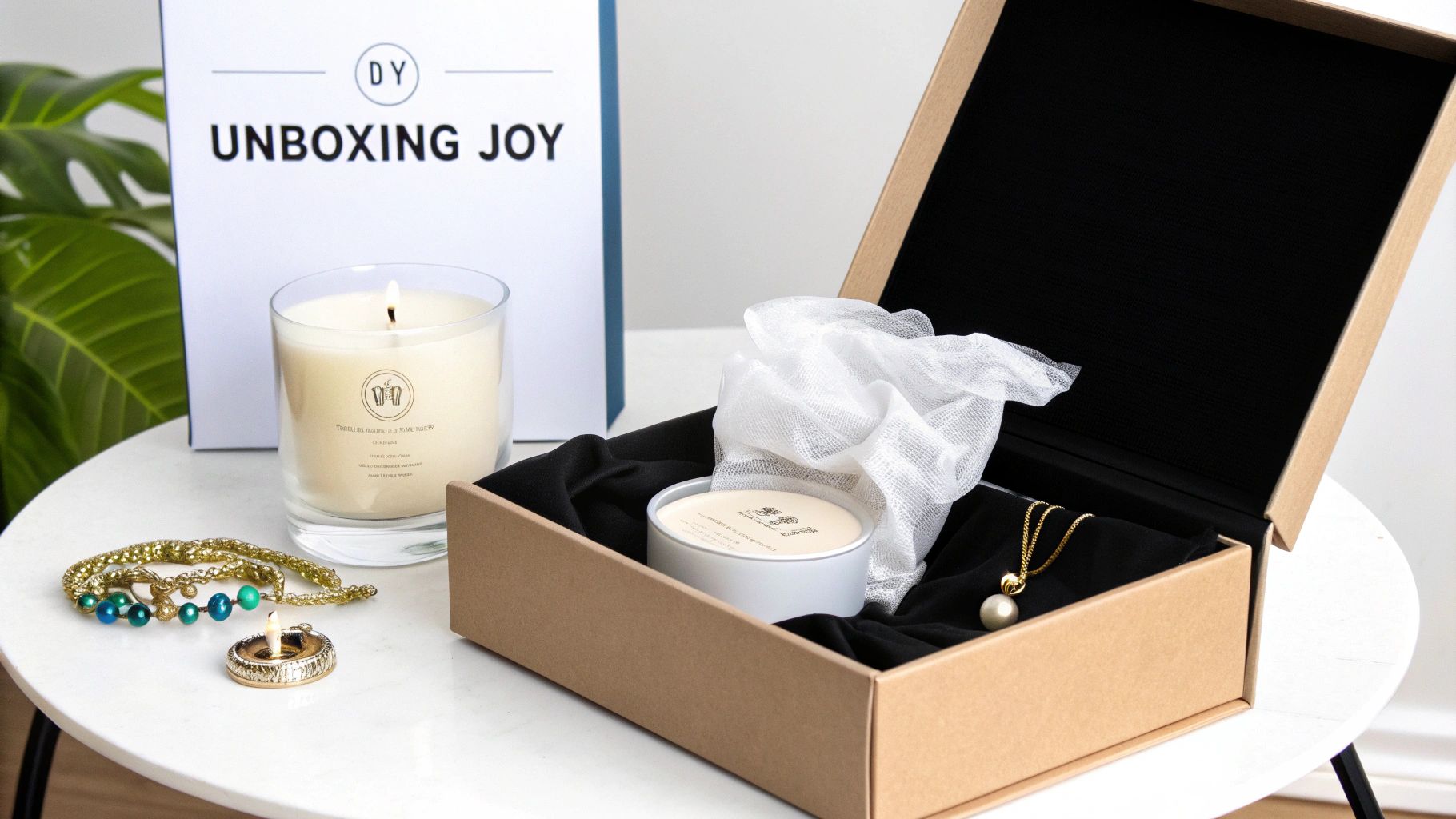
This tactic was famously perfected by Apple, which turned the reveal of a new iPhone into a minimalist, tactile ritual. The trend was amplified by subscription box services like Birchbox and luxury brands that use high-quality materials, ribbons, and tissue paper to elevate the customer experience. For a brand like Jackpot Candles, the unboxing is a multi-stage journey: opening the premium packaging, experiencing the candle’s aroma for the first time, and finally, discovering the hidden jewelry. For a deeper look at this process, you can explore more about candles with jewelry inside on jackpotcandles.com.
A meticulously designed unboxing experience taps into the psychological principle of anticipated gratification. The brain releases dopamine not just upon receiving a reward, but also in anticipation of it. By layering the reveal process, brands extend this feeling of excitement and make the final reward feel more earned and valuable. This multi-sensory experience is highly photogenic and shareable, naturally generating user-generated content that serves as powerful social proof and a key driver of modern emotional marketing examples.
Luxury & Aspiration Positioning markets a product not just for its function but as a symbol of status, self-care, and indulgence. This strategy taps into powerful emotions like desire, pride, and a sense of self-worth. It shifts the consumer's focus from a product's price to its perceived value and the elevated lifestyle it represents. The goal is to make the customer feel that by purchasing the product, they are investing in themselves and achieving a higher standard of living.
This approach is the cornerstone of high-end brands like Rolex, which sells the legacy of a lifetime investment, and Diptyque, whose candles are positioned as essential pieces of sophisticated home decor. Jackpot Candles employs this by emphasizing its proprietary soy wax blends, exclusive fragrance oils, and the promise of valuable jewelry inside. This elevates the candle from a simple home good to an accessible luxury experience, blending ambiance with the aspirational thrill of discovering a high-value prize.
Aspirational marketing is effective because it connects a product to a customer's ideal self. It leverages the psychological principle of self-enhancement, where individuals are motivated to maintain a positive self-view. By associating a brand with luxury, craftsmanship, and exclusivity, customers feel they are embodying those qualities themselves. This creates a deep emotional bond that transcends the product's utility, fostering intense brand loyalty and justifying a premium price point.
This strategy fosters deep brand loyalty by creating a space where customers can share their experiences, celebrate discoveries, and connect over a shared passion. It transforms individual customer transactions into a collective journey, amplifying emotions like joy, belonging, and validation. When customers feel like part of an exclusive "tribe," their relationship with the brand transcends the product itself, turning them into passionate advocates.
This sense of community is the lifeblood of many powerful brands. Harley-Davidson built an empire on its owner groups and rallies, while Lululemon cultivates loyalty through local fitness events and ambassador programs. In the digital world, collector communities for brands like Funko Pop and limited-edition sneakers thrive on platforms like Reddit and Discord, where members track new releases and share their prized finds. For a brand like Jackpot Candles, the "reveal" is a powerful, shareable moment that is the perfect foundation for a vibrant community.
Connection and community building tap into the fundamental human need for belonging. By facilitating shared experiences, a brand becomes the central hub for a subculture. The excitement of one customer's jewelry discovery creates a ripple effect, inspiring others and validating their own participation. This ecosystem generates a constant stream of authentic, user-generated content that serves as powerful social proof, attracting new customers who want to join the in-group.
The Gift-Giving & Occasion Marketing frame is a tactic that connects a product to significant life events, transforming it from a simple item into a meaningful gesture. It taps into powerful emotions like love, appreciation, celebration, and thoughtfulness. This approach frames the purchase as an act of giving, which carries deep psychological and social significance. By doing so, brands align their products with the powerful feelings associated with these special moments.
This strategy is a cornerstone for luxury and sentimental brands. Tiffany & Co. turned its iconic blue box into a symbol of life's most important occasions, while Pandora built an empire by positioning its charms as markers for personal milestones. For a product like Jackpot Candles, this frame is a natural fit. The candle acts as the initial gift, while the surprise jewelry becomes a second, lasting memento of the occasion, creating a "gift that keeps on giving" narrative.
The power of this frame lies in its ability to attach a brand to a customer's core memories. When a product is part of a significant life event, it gains a sentimental value that transcends its physical worth. The act of giving is inherently emotional, and by facilitating this, a brand becomes part of a positive social interaction. This creates an emotional bond not just with the purchaser but also with the recipient, doubling the marketing impact and fostering deep, lasting brand loyalty.
FOMO, or the Fear of Missing Out, is a powerful emotional driver that leverages our innate anxiety about being excluded from a valuable opportunity. This marketing tactic uses scarcity and urgency to compel immediate action. By framing a product or offer as limited in quantity or time, brands tap into emotions like anticipation, urgency, and a competitive desire to acquire something exclusive, transforming a simple purchase into a time-sensitive event.

This strategy was perfected by streetwear brands like Supreme, which built an empire on limited "drops," and sneaker companies like Nike with their SNKRS app releases. Flash sale sites like Gilt and major retail events like Black Friday are built entirely on this principle. For a brand like Jackpot Candles, this could mean releasing a limited-edition scent for a short season or a collection featuring exclusive jewelry designs, amplifying the motivation to buy before the opportunity disappears.
Scarcity marketing works by shifting a customer's mindset from "Should I buy this?" to "When can I buy this?". It creates perceived value; if something is rare, it must be more desirable. The combination of limited inventory with the inherent randomness of the hidden jewelry inside a Jackpot Candle adds another layer of FOMO. This tactic not only boosts short-term sales but also builds a loyal community of engaged fans who eagerly await the next exclusive release.
Personalization and individual recognition marketing is a strategy that makes customers feel uniquely seen, understood, and valued. By leveraging customer data, this approach moves beyond generic messaging to deliver tailored experiences, recommendations, and communications. It taps into the fundamental human need for belonging and significance. This tactic transforms the brand-customer relationship from a simple transaction into a personal dialogue, fostering deep loyalty and trust.
This strategy has become a cornerstone of digital marketing, mastered by giants like Amazon with its product recommendations and Netflix with its content algorithm. However, Spotify Wrapped perfected the art of turning data into a celebrated personal event, creating an annual, highly shareable moment of individual reflection. Brands like Sephora use quizzes for fragrance matching, while Starbucks remembers a customer's favorite drink, making each interaction feel familiar and customized.
Personalization works because it directly counters the feeling of being just another number. When a brand remembers your preferences, celebrates your history with them, or recommends something you genuinely love, it sends a powerful message: "We know you, and we care about you." This validation builds emotional equity and significantly reduces purchase friction, as customers trust that the brand's suggestions are aligned with their actual needs and tastes. It creates a sense of partnership rather than a one-sided sales pitch.
This strategy combines the power of a compelling brand narrative with the trust-building effects of radical honesty. It connects with customers by sharing authentic stories about a brand's origins, values, and mission, tapping into emotions like empathy, trust, and belonging. This approach moves beyond simple product features to create a meaningful identity that customers want to align with, fostering deep, long-term loyalty.
This method has been mastered by brands that sell more than a product; they sell an idea. Patagonia built its legacy on environmental activism stories, while TOMS Shoes pioneered the "One for One" social impact narrative. More recently, Everlane's "Radical Transparency" initiative showed the power of sharing supply chain and pricing details. For a brand like Jackpot Candles, this means moving beyond the prize to tell the story of why the brand exists and the values it upholds.
The effectiveness of this approach is rooted in its ability to humanize a brand. In a crowded marketplace, consumers are drawn to companies that feel genuine and have a clear purpose. Authentic storytelling creates a shared identity, making customers feel like part of a community, not just a transaction. Transparency about processes, from sourcing soy wax to jewelry manufacturing, disarms skepticism and builds a foundation of trust that is difficult for competitors to replicate.
Gamification is a powerful marketing strategy that applies game-like elements such as points, levels, and rewards to non-game contexts. This approach taps into the deep-seated human desires for achievement, progress, and competition. By transforming customer interaction into a game, brands create a compelling and addictive experience that fosters sustained engagement and deepens loyalty. It makes the customer journey feel like a personal quest rather than a series of transactions.
This strategy is famously employed by Duolingo, which turned language learning into a daily habit with its streak and achievement system. Similarly, Starbucks Rewards motivates purchases through its tiered system and challenge-based bonuses, making every coffee run part of a larger game. For a brand like Jackpot Candles, this could mean creating a "Jewelry Collection" tracker or awarding badges for discovering multiple pieces, turning each purchase into a step toward a rewarding goal.
Gamification excels because it provides a steady stream of positive reinforcement. Progress bars, achievement badges, and leaderboards offer tangible proof of a customer's progress and status, triggering feelings of pride and accomplishment. This creates an intrinsic motivation to continue interacting with the brand to unlock the next reward or level. The competitive aspect, like leaderboards, adds a social layer that leverages our desire for social validation and recognition, making the experience more engaging and shareable.
| Strategy | Implementation 🔄 | Resources ⚡ | Expected outcomes 📊 | Ideal use cases 💡 | Key advantages ⭐ |
|---|---|---|---|---|---|
| The Surprise & Delight Strategy | High — product redesign, QA, complex assembly | Significant — jewelry sourcing, higher COGS, specialized assembly | Strong engagement, repeat purchases, social sharing | Social-first D2C products; viral/unboxing campaigns | Creates memorable experiences; raises perceived value ⭐ |
| Nostalgia Marketing & Sensory Memory | Medium — scent R&D and storytelling alignment | Moderate — fragrance development, packaging design | Deep emotional loyalty; willingness to pay premium | Seasonal collections; heritage or emotionally driven brands | Powerful memory-linked recall; cross-generational appeal ⭐ |
| Unboxing Experience & Anticipated Gratification | Medium — packaging engineering and UX sequencing | Moderate–High — premium packaging, fulfillment care | High UGC/video content; elevated brand recall | Giftable products; influencer and social media campaigns | Drives organic content and differentiation ⭐ |
| Luxury & Aspiration Positioning | Medium — consistent premium quality and brand execution | High — premium materials, marketing, partnerships | Higher margins; loyalty based on status and self-image | High-end gifting; boutique and lifestyle markets | Justifies premium pricing; builds prestige and desirability ⭐ |
| Connection & Community Building Through Shared Excitement | Medium — platform setup and ongoing moderation | Moderate — community managers, content incentives | Organic advocacy, sustained UGC, stronger retention | Collector communities; brands seeking organic word-of-mouth | Turns customers into advocates; network effects ⭐ |
| The Gift-Giving & Occasion Marketing Emotional Frame | Low–Medium — campaign timing and occasion messaging | Moderate — seasonal inventory, special packaging | Seasonal sales spikes; increased AOV during peaks | Holidays, milestones, corporate gifting programs | Expands buyer base to gift purchasers; repeat seasonal buys ⭐ |
| FOMO (Fear of Missing Out) & Scarcity Marketing | Medium — controlled releases, inventory management | Moderate — launch ops, real-time stock systems | Urgent purchases and concentrated sales bursts | Limited drops, collaborations, flash sales | Drives urgency and buzz quickly; high conversion potential ⭐ |
| Personalization & Individual Recognition Marketing | High — CRM, data systems, dynamic content | High — tech stack, data teams, privacy compliance | Increased LTV, repeat purchases, higher engagement | Subscription/VIP programs; tailored product recommendations | Deepens customer bonds; boosts retention and CLV ⭐ |
| Storytelling, Authenticity & Transparency | Medium — content strategy and verified sourcing | Moderate — content production, traceability efforts | Strong trust, brand differentiation, long-term loyalty | Mission-driven brands; premium authentic positioning | Builds trust that competitors can’t easily copy ⭐ |
| Gamification & Achievement-Based Engagement | High — platform development, tracking mechanics | High — dev resources, ongoing maintenance, rewards | Elevated engagement, repeat buys, collection behavior | Collection-driven products; loyalty and challenge programs | Sustains repeat engagement; creates habit-forming behaviors ⭐ |
We've journeyed through a powerful collection of emotional marketing examples, moving far beyond surface-level case studies to dissect the strategic machinery that makes them work. From the raw anticipation cultivated by an unboxing experience to the deep, comforting pull of nostalgia marketing, the common thread is clear: the most successful brands don't just sell products; they sell feelings. They understand that a purchase decision is rarely a purely logical calculation. It's an emotional one.
The campaigns and strategies we analyzed, from global giants to niche innovators, all hinge on a fundamental human truth. People crave connection, joy, surprise, and a sense of belonging. They want to feel seen, valued, and excited. Marketing that taps into these core desires doesn't feel like marketing at all. It feels like an experience.
Reflecting on the diverse strategies, from FOMO-driven scarcity to community-building through shared excitement, several key principles emerge. These are the foundational takeaways you can immediately apply to your own marketing efforts.
Understanding these concepts is the first step, but turning insight into action is where real growth happens. Don't feel pressured to implement all ten strategies at once. Instead, choose one or two that resonate most deeply with your brand's unique promise and start there.
Here is a simple, actionable plan to get started:
Mastering emotional marketing is an ongoing process of listening, experimenting, and empathizing with your audience. It requires you to think less like a marketer and more like a psychologist, understanding the "why" behind the "what." By consistently delivering on the emotional promise you make, you will do more than just gain a customer; you will create a loyal advocate, a true fan who feels connected to your brand on a level that transcends the transaction. You will build a brand that people don't just buy, but truly love.
Ready to experience the power of anticipation and surprise for yourself? Jackpot Candles is a living example of emotional marketing, turning the simple act of lighting a candle into a thrilling treasure hunt. Discover your own surprise piece of jewelry by exploring the collection at Jackpot Candles today.
Comments will be approved before showing up.