
free shipping at $99


You've chosen the ring, planned the words, and probably rehearsed the proposal in your head more than once. The final decision is how to build anticipation without turning the moment into a staged performance. An engagement ring candle can create that perfect progression: a beautiful scent, a warm evening, and a hidden piece of jewelry that appears when the recipient least expects it.
But the reveal is only half the product. The candle must burn safely, smell exceptional, and protect the jewelry until the right moment. A cheap novelty candle can undermine an otherwise meaningful proposal. A well-made one turns the entire experience into a ritual.
An engagement ring candle is a scented candle with a concealed piece of jewelry secured inside the wax vessel. The recipient burns the candle over time, allowing the fragrance to fill the room while the hidden package gradually becomes accessible. Depending on the product, the jewelry may be wrapped in protective material or placed inside a heat-resistant container within the candle.
That combination gives the gift two distinct stages. First, it works as a home-fragrance product. Later, it becomes a discovery experience. The candle creates anticipation without announcing exactly when the reveal will happen, which makes it more engaging than handing over a conventional ring box at the start of an evening.
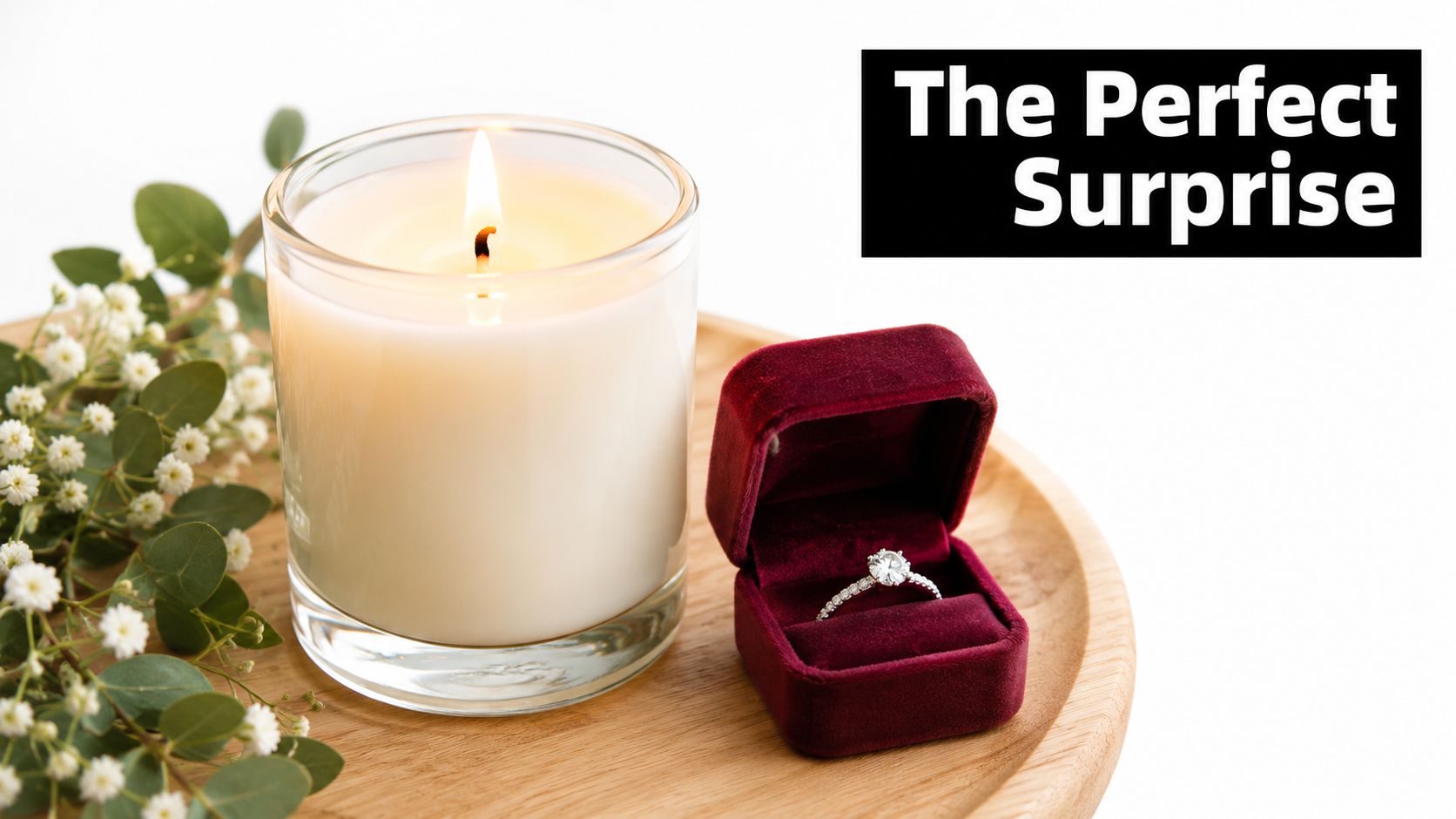
A traditional proposal gives the recipient the central object immediately. A ring candle delays that moment and lets the recipient participate in discovering it. The unboxing, scent, vessel, burn, and retrieval all contribute to the memory.
The category appears to be relatively new rather than a long-established retail segment. A 2026 article describes jewelry being embedded into soy-wax candle vessels as a core product feature over the previous five years, and reports that 412,000 ring candles were sold across North America and the EU in 2023, with an average retail price of $48.95. Those figures come from the article documenting the ring candle phenomenon, so they should be treated as reported market data rather than a universal measure of every seller or region.
The same source identifies unboxing as a major part of the appeal, citing an 87% unboxing satisfaction rate from a Q3 2023 Shopify Pulse survey. It also reports that wedding registries had started including ring candle brands, with 12% of couples doing so in 2023 compared with 0.7% in 2019. That shift suggests the product has moved beyond an amusing surprise gift and into a broader conversation about experiential gifting.
The best way to judge these candles is to ask two questions:
Readers who want a straightforward explanation of the format can also review this guide to what jewelry candles are. The definition is simple, but the buying decision isn't. The romance depends on practical execution.
The ring inside the candle feels meaningful because the ring itself carries a long symbolic history. The candle is a modern delivery system, but the object being revealed represents a tradition associated with promises, legal agreements, ceremony, and commitment.
Independent historical accounts trace the earliest concrete evidence of engagement rings to ancient Rome, where rings symbolized a legal agreement to marry. The ring wasn't merely decoration. It represented a formal intention, which helps explain why a ring still carries more emotional weight than an ordinary piece of jewelry.
The Roman Catholic Church incorporated the ring into marriage ceremonies in the 12th century, according to Britannica's history of wedding-ring traditions. That development strengthened the connection between the ring and public vows. Over time, the ring moved across legal, religious, and social contexts, but its core meaning remained recognizable.
A frequently cited milestone arrived in 1477, when Maximilian I is traditionally credited with giving Mary of Burgundy a diamond engagement ring. Historians often treat that event as the first recorded diamond engagement ring in Western tradition, though the broader practice of using rings to signify commitment reaches much further back.
The modern candle changes the timing of the reveal, not the symbolic language of the ring.
That distinction matters for anyone planning a proposal. An engagement ring candle shouldn't be treated as a replacement for the seriousness of the ring. It adds suspense around an object that already has cultural meaning.
The candle format also reflects how people give gifts today. Recipients increasingly value the experience of opening, using, and discovering a product, not just the object inside the packaging. A hidden ring creates a sequence of emotional beats, curiosity when the candle is opened, pleasure during use, surprise during retrieval, and significance once the jewelry is identified.
That sequence works particularly well for couples who prefer an intimate proposal. The giver can create a personal setting without relying on a public spectacle, elaborate choreography, or a crowd of onlookers. The candle becomes part of the evening rather than an interruption to it.
The historical connection also places a useful responsibility on the buyer. If the ring represents a serious promise, the surrounding product should feel intentional. A poorly made candle with weak packaging and unclear safety guidance sends the wrong message. The contemporary format may be playful, but the ring reveal should still feel considered and respectful.
The hidden ring attracts attention, but the candle earns its place in the home through wax and fragrance performance. A product that smells thin, tunnels badly, or burns unpredictably isn't a premium gift just because it contains jewelry.
Soy-based container candles have technical limits. Expert candle-making guidance generally places the working fragrance load around 6% to 10% by weight, with many makers using approximately 1 ounce of fragrance oil per 1 pound of wax as a practical starting point. CandleScience's burn-testing guidance explains why adding more fragrance isn't a shortcut to a stronger candle. Once the wax can't properly hold the oil, excess fragrance may separate, pool near the wick, or interfere with the burn.
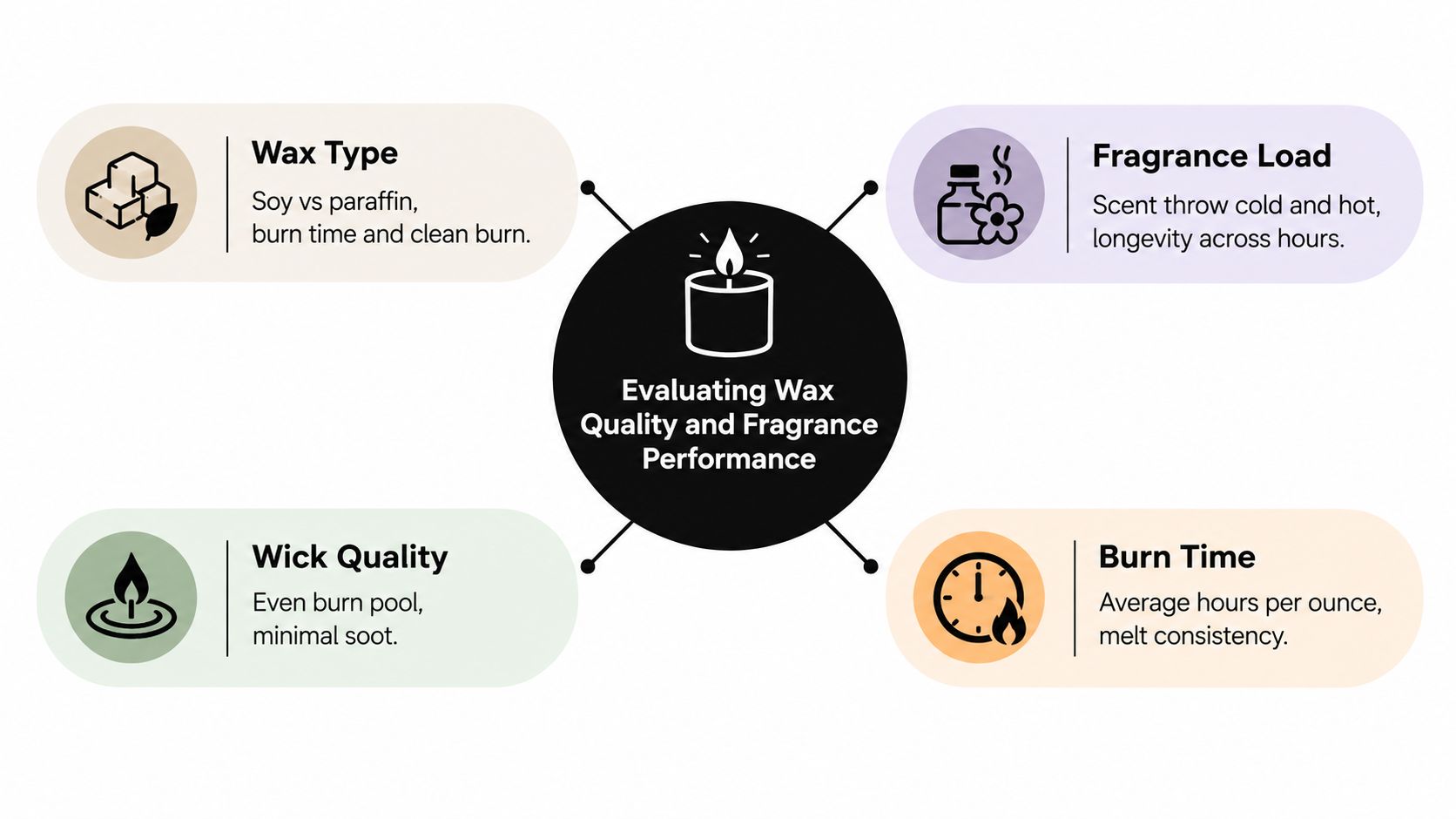
A sound candle formula balances several connected elements. The wax needs to hold fragrance consistently, the wick needs to generate a stable melt pool, and the vessel needs to tolerate the expected heat. If one element fails, the others can't fully compensate.
| Quality factor | What to look for | Why it matters |
|---|---|---|
| Wax type | Clear disclosure of the wax or wax blend | Wax affects burn behavior, fragrance release, and finish |
| Fragrance design | Specific scent notes rather than vague descriptions | A detailed profile helps you judge whether the aroma suits the recipient |
| Wick performance | Guidance on trimming and burning | A correctly maintained wick supports a steadier flame |
| Burn consistency | Practical care instructions and testing information | Consistent melting reduces tunneling and uneven wax loss |
| Jewelry protection | A clear explanation of how the item is enclosed | The ring should remain isolated from flame, debris, and direct heat |
A proprietary soy blend can be a sensible choice when the maker has tested it properly. The phrase itself isn't proof of quality, though. Buyers should look for transparent care instructions, a defined fragrance profile, and evidence that the candle was evaluated as a candle, not merely assembled as a container for a surprise.
Cold throw describes the scent before lighting. Hot throw describes the fragrance released while the candle burns. A candle can smell attractive in its packaging and still perform weakly once lit, so the product description should give more attention to both experiences than to the jewelry's potential value alone.
The wax matrix must bind the fragrance well enough for controlled release. If the formula carries too much oil, the excess can migrate through the wax instead of volatilizing efficiently during combustion. That may lead to sweating, wick clogging, reduced flame stability, or inconsistent scent.
Curing time and wick sizing matter just as much as fragrance percentage. A responsible maker should test the complete candle, including its vessel, wax, wick, fragrance, and jewelry packaging. That is the standard buyers should expect before trusting the product with a proposal.
A ring reveal should never require someone to reach into hot wax or handle an overheated jar. The safest approach is patient and controlled. The candle needs enough burn time to expose the jewelry, but not so much that the vessel, remaining wax, or surrounding surface becomes a hazard.
Use a stable, heat-resistant surface away from curtains, paper, clothing, hair, and other flammable materials. Trim the wick to approximately 5 to 6 millimetres before lighting, keep each burn to around 2 to 4 hours, and stop when roughly 1/2 inch of wax remains, as recommended in this practical guide to candles with rings inside. These limits help control flame size, jar temperature, and the risk of excessive wax pooling.
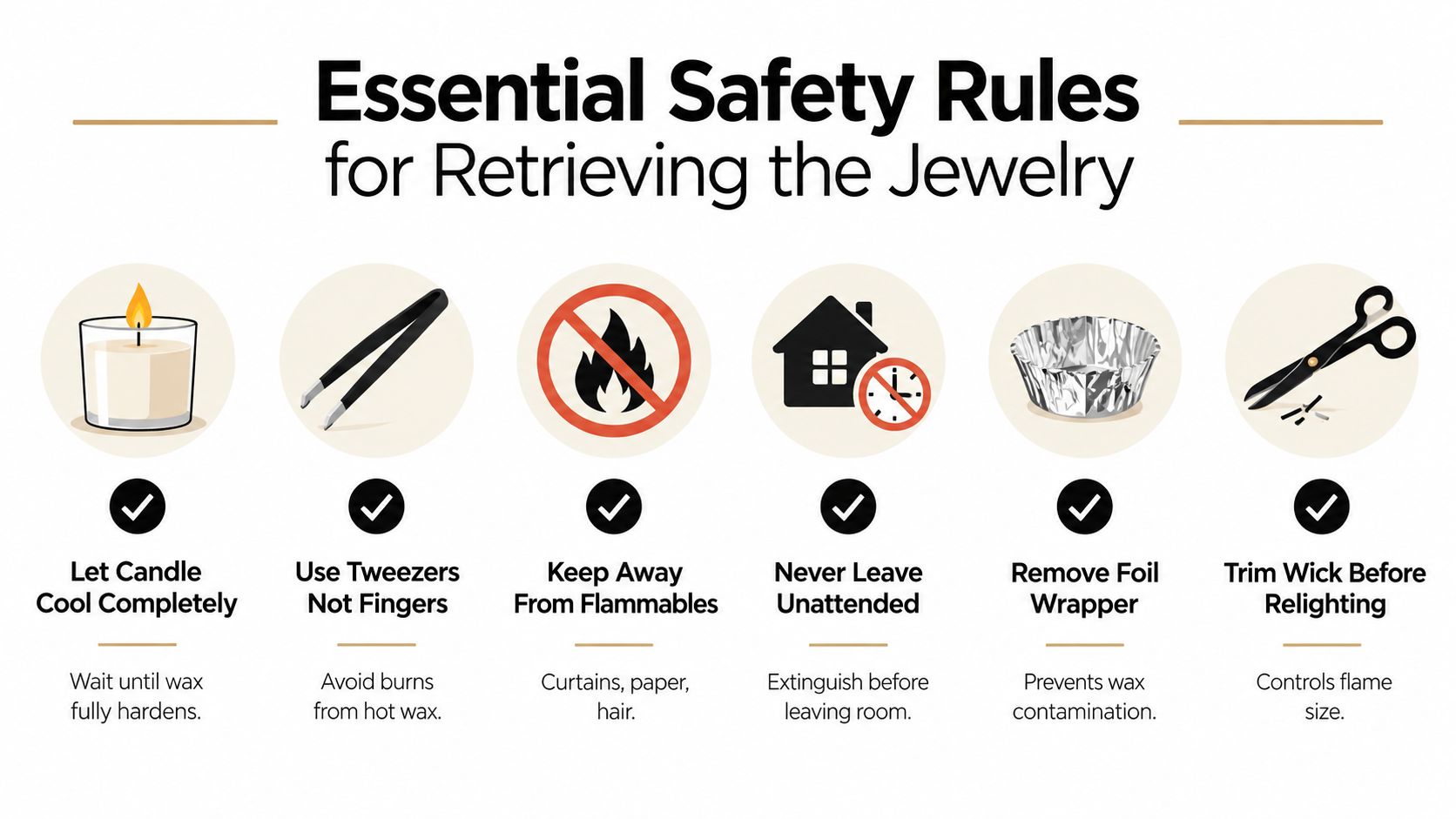
Practical rule: If you can't clearly see how the jewelry is enclosed, stop burning and contact the seller before continuing.
The most useful reveal instructions are specific about cooling, handling, packaging, and what to do if the jewelry becomes partially exposed. A separate jewelry candle reveal guide can help you plan the moment, but the product's own instructions should take priority. If the ring is stuck, don't force it with a knife, pour boiling water into the vessel, or lift a hot container.
The strongest use of an engagement ring candle depends on the recipient's personality. Someone who loves quiet rituals may appreciate a private evening at home. Someone who enjoys involving friends may prefer a dinner setting where the candle becomes part of a larger celebration. The product works best when the format matches the relationship.
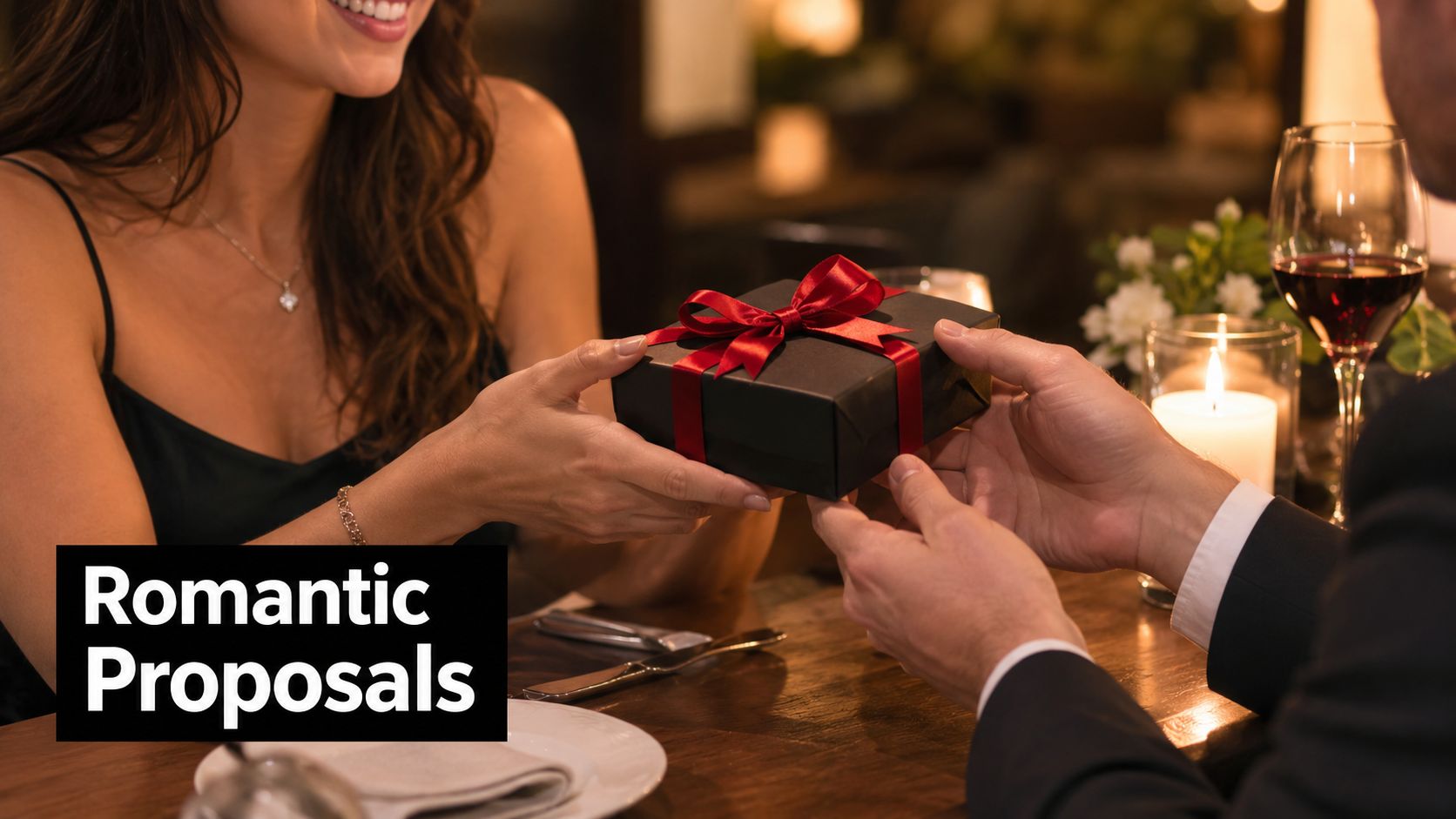
An intimate home proposal gives you the most control. Choose a scent that already fits the recipient's taste, prepare a favourite meal, and place the candle on a heat-safe table where both of you can enjoy it. Don't rush the burn or treat the first visible edge of the package as a cue to begin a speech. Let the recipient discover it naturally, then step in with the ring, a letter, or a prepared toast.
A milestone anniversary makes the candle less obviously proposal-oriented. Give it as a gift connected to a shared memory, such as the scent family used in a favourite hotel, holiday destination, or room in your first home. This approach suits couples who want the discovery to feel like a continuation of their story rather than a surprise staged around a single question.
A wedding or engagement registry gift works best when the recipient already understands the format. The candle can sit alongside practical home goods, glassware, or keepsakes and offer an interactive moment during the celebration. If the hidden jewelry isn't intended as the proposal ring, make that clear in your planning so nobody mistakes the gift for a formal engagement announcement.
A useful resource on how to make a proposal memorable can help you develop the wider setting around the candle. The candle shouldn't carry the entire emotional burden. Music, food, lighting, a handwritten note, and the words you choose will do more for the moment than excessive decoration.
Don't tell the recipient to burn the candle for a particular amount of time if you can't be present to supervise it. Instead, give it as an experience and let the reveal happen during a planned evening. You can prepare the room, but you shouldn't hover over the wax or repeatedly ask whether anything has appeared.
The video below offers a visual reference for the reveal format and can help you think about pacing before you plan your own presentation.
For a private proposal, keep the candle near the centre of the experience but not directly between you and the recipient. For a dinner proposal, light it early enough that the evening doesn't feel like a countdown. For a gift exchange, include a short card explaining that the candle contains a surprise and that it must be burned responsibly.
The best reveal feels unforced. Choose a setting where conversation can continue while the candle burns, then respond sincerely when the jewelry appears. The product creates the opening, but your attention to the person in front of you creates the memory.
Price alone won't tell you whether a jewelry candle is suitable for a proposal. The product page should answer practical questions before you buy: What wax does it use? How is the jewelry protected? What fragrance options exist? What happens if the ring arrives damaged or the size isn't suitable? If the seller avoids those questions and focuses only on a dramatic reveal, choose another product.
A premium brand should treat the candle and the jewelry as one complete experience. The wax needs a dependable formula, the fragrance needs a clear profile, and the packaging needs to keep the hidden item isolated from the flame. A polished label can't compensate for poor burn behavior or vague handling instructions.
A meaningful surprise deserves transparent specifications. Mystery should apply to the timing of the reveal, not to the product's safety or construction.
Market conditions also make quality transparency more important. Research on the broader luxury scented candle with jewelry niche estimates approximately $11 million in tracked online sales in 2025, reports a 10% to 20% year-over-year decline, and projects a rebound of more than 50% in 2026. Those figures are specific to the market research described by Vesta Ember's candle FAQ resource, not a guarantee for an individual brand. They point to a category becoming more premium and gift-driven while buyers become more selective.
That selectiveness is sensible. A surprise ring can attract the first purchase, but only a good candle justifies the product's place in someone's home. Read this guide to jewelry candles for another perspective on the format, then compare individual product pages rather than choosing on presentation alone.
If the hidden jewelry may become part of a longer-term ring decision, consult wedding ring upgrade guidance before treating an unexpected piece as the final answer. The candle can create a beautiful proposal moment, but the recipient should still have freedom to choose or upgrade jewelry later.
For this kind of gift, premium quality isn't an indulgence. It protects the reveal, respects candle safety, and ensures the recipient receives something enjoyable before and after the jewelry appears.
Jackpot Candles offers scented candles and bath bombs with a hidden jewelry surprise, including ring-focused products designed around the discovery experience. Visit Jackpot Candles to explore the available options and choose a candle that supports both a memorable reveal and a satisfying fragrance experience.
Comments will be approved before showing up.