
free shipping at $99


The calendar notification lands while you're answering email: a birthday is two weeks away, a wedding is approaching, or an anniversary has appeared on the family calendar again. You know the recipient well enough to care, but not well enough to know whether they want another object, a practical upgrade, or an experience they can schedule.
That uncertainty sends many shoppers into the same loop. They scroll through endless product lists, consider a gift card out of panic, then wonder whether last year's safe choice will make the occasion feel forgettable. Gifts for special occasions carry emotional weight, so a mismatch can feel more disappointing than an ordinary shopping mistake.
A better approach starts before you search for a product. Decide on the occasion type, the recipient's personality, and your budget ceiling. That three-part framework narrows the field quickly, helps you avoid gifts that conflict with the recipient's lifestyle, and leaves room for a personal detail that makes the final choice feel intentional.
The date matters because the gift is part of a social ritual, not just a transaction. Consumer behavior research found that 79% of gifts given, 83% of gifts personally received, and 79% of gifts exchanged by others were occasion-based, rather than unrelated to a specific event, according to the consumer gifting research study. Birthdays, weddings, holidays, graduations, and family milestones provide the structure people use to decide when giving feels expected and meaningful.
That explains why a generic purchase can feel wrong even when it's useful. A desk accessory might suit a coworker, but it may not carry enough emotional meaning for a parent's milestone birthday. A highly romantic keepsake might be perfect for a partner and awkward for a colleague. The product isn't automatically good or bad. Its fit depends on the event and relationship.
Use three questions before opening a shopping tab:
Practical rule: If you can't explain why the gift suits both the person and the occasion, keep looking.
The framework also protects you from panic buying. Instead of asking, “What product should I buy?” ask, “What kind of gesture fits this moment?” You may then choose a sentimental object, a practical upgrade, an experience, or a surprise format that combines usefulness with a reveal. That shift turns an overwhelming product search into a manageable decision.
A special-occasion gift should do three things: acknowledge the event, reflect the recipient, and arrive with a level of care that matches the moment. Price alone doesn't meet that standard. A modest item with a relevant message and thoughtful presentation can feel more appropriate than a costly product chosen without context.
The first pillar is occasion type. A 16th birthday and a 30th anniversary have different emotional gravity. A birthday may suit a personal celebration item, a favorite scent, or an activity built around the recipient. An anniversary usually benefits from shared symbolism, a meaningful date, or an experience that belongs to the couple. The same object can work for both, but the story you attach to it needs to change.
The second pillar is personal meaning. Consider whether the recipient values memories, convenience, discovery, or time together. An engraved watch can acknowledge a significant anniversary for someone who appreciates lasting objects. Concert tickets may be the stronger choice for a friend who consistently chooses nights out over home décor.
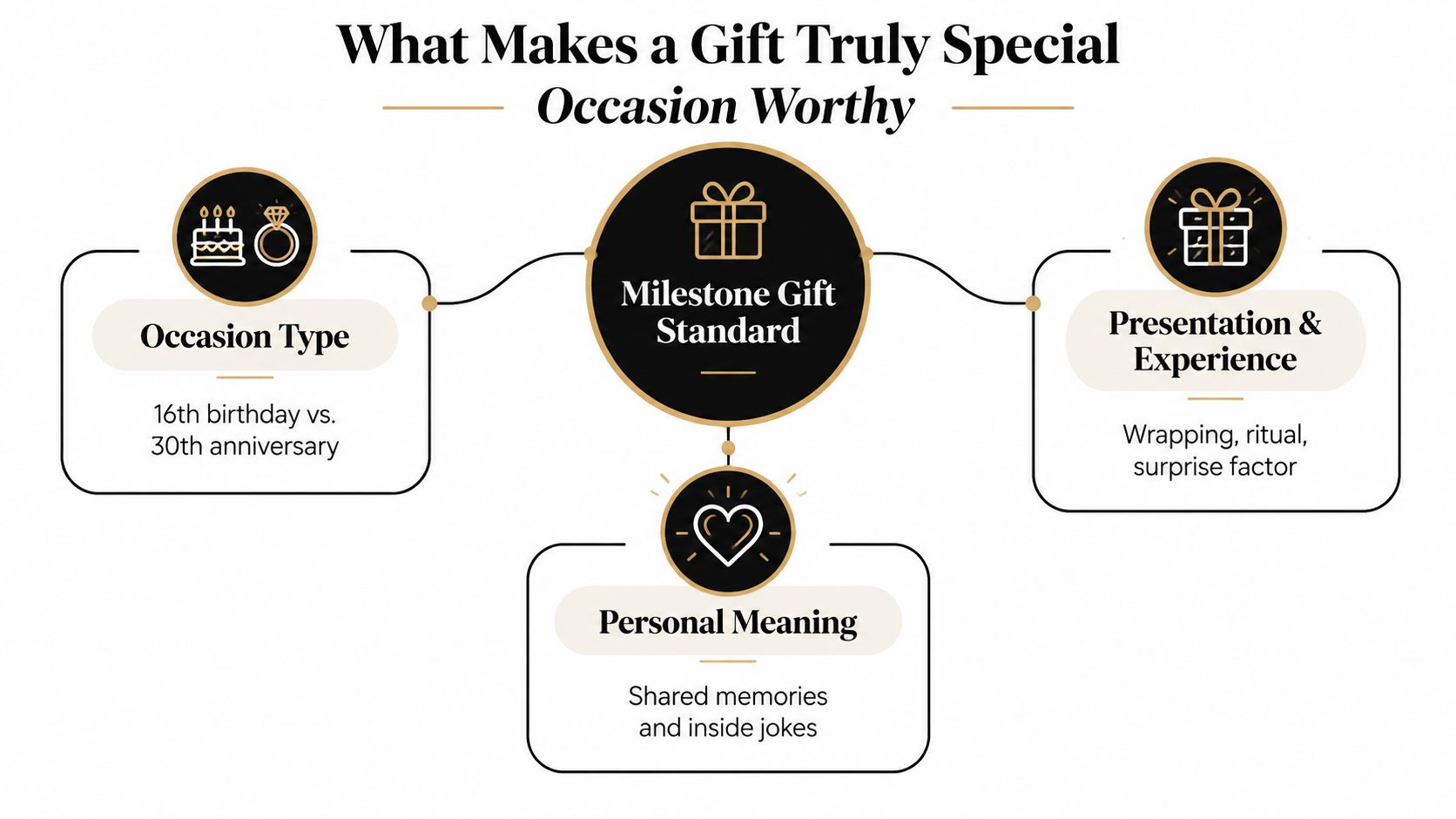
The third pillar is budget discipline. Decide what you can spend without stress, then choose the strongest version of the right category inside that limit. A stretched budget often produces compromises in shipping, presentation, or customization. A firm ceiling keeps the decision honest.
Use this quick test:
A gift clears the standard when all three answers are yes. The recipient doesn't need to see the price. They need to see that you understood the occasion and paid attention to them.
Most gift decisions fall into four formats. Each can succeed, but each creates a different kind of risk.
| Approach | Emotional Impact | Personalization Needed | Failure Risk | Best For |
|---|---|---|---|---|
| Sentimental keepsakes | High when the memory is authentic | High | Style or taste mismatch | Partners, close family, milestone anniversaries |
| Experiences | High through shared memories | Moderate to high | Scheduling or participation problems | Experience-driven friends and couples |
| Practical upgrades | Moderate, with strong usefulness | Moderate | Can feel impersonal | Graduates, remote workers, practical recipients |
| Surprise discoveries | High at the reveal | Moderate | Quality varies between sellers | Hard-to-shop-for recipients and playful occasions |
Sentimental keepsakes include photo books, engraved pieces, custom jewelry, and objects tied to a shared story. They work best when you know the recipient's aesthetic and can identify a specific memory rather than adding a generic name. The emotional upside is substantial, but the failure cost is high if the design feels unlike them.
Experiences solve the clutter problem. A cooking class, concert, day trip, or wellness appointment gives the recipient something to anticipate instead of another item to store. The drawback is practical: you need to understand their availability, energy, mobility, and appetite for scheduled plans.
Practical upgrades are safer. Replace a worn-out version of something they already use, such as a work bag, kitchen tool, travel accessory, or desk microphone. This approach respects utility, though it can feel too functional for an emotionally significant milestone unless you add a message or shared ritual.
A surprise discovery combines an immediate-use product with a hidden reward. A jewelry-inside candle or bath bomb gives the recipient a sensory experience first, then creates a reveal without requiring you to guess their exact jewelry style in advance. The format works especially well for someone who enjoys novelty but doesn't want a large collection of objects.
The strongest choice often blends categories. A surprise candle can be both a practical home item and a playful experience. Add a note connected to the occasion, and it gains the personal meaning of a keepsake without demanding precise knowledge of the recipient's taste.
The occasion should determine the emotional direction of the gift. A one-size-fits-all strategy fails because a birthday, wedding, and baby shower involve different recipients, relationships, and expectations.
Birthdays usually center on the individual. Choose something connected to a preference, habit, or small pleasure, such as a favorite fragrance profile, a hobby-related accessory, or an activity they can enjoy. For a friend whose taste you only partly know, a usable surprise format creates more flexibility than clothing or highly specific décor.
Anniversaries call for sentiment. A shared meal, a planned day together, an engraved date, or a gift connected to an early memory gives the occasion a relationship-specific meaning. For additional ideas organized by relationship and style, consult this guide to unique anniversary gift ideas.
Graduations mark a new chapter, so practical upgrades often land well. Think about what the recipient will use in work, further study, travel, or an independent home. A handwritten note about the transition prevents the gift from feeling like office equipment.
Weddings involve two people and often come with established household needs. A registry-friendly purchase is usually the safest route, while a lasting keepsake works when you know the couple well. This good wedding gifts guide can help when you need to balance usefulness, sentiment, and the couple's shared life.
Baby showers should support the parents-to-be, not only the baby. Useful care items, a meal-related gesture, or something that gives the parents a small moment of calm can feel more considerate than another decorative nursery object.
| Milestone | Best Gift Type | Why It Works | What to Avoid |
|---|---|---|---|
| Birthday | Personal celebration item or activity | Keeps attention on the recipient | Generic items with no personal connection |
| Anniversary | Sentimental keepsake or shared experience | Honors the relationship | Impersonal household necessities |
| Graduation | Practical upgrade with a note | Supports a new chapter | Items unrelated to the recipient's next step |
| Wedding | Registry item or lasting keepsake | Serves the couple's shared future | Strongly taste-specific décor without guidance |
| Baby shower | Nurturing gift for parents or baby | Recognizes the whole family transition | Gifts that add clutter without a clear use |
The closer the relationship, the more specific your reference can be. A distant relative may need a broadly useful choice, while a partner deserves a detail only you would know.
Personalization is the most efficient way to increase meaning without automatically increasing the physical size or cost of a gift. A date, initial, note, scent choice, or color preference tells the recipient that you selected the item for them rather than choosing the first acceptable product.
A personalized touch also solves a common tension. You can choose a broadly usable item while still making the gesture feel individual. A candle with a custom message, a bath product in a preferred scent family, or a small object paired with a handwritten memory can feel more considered than a technically expensive item with no explanation.
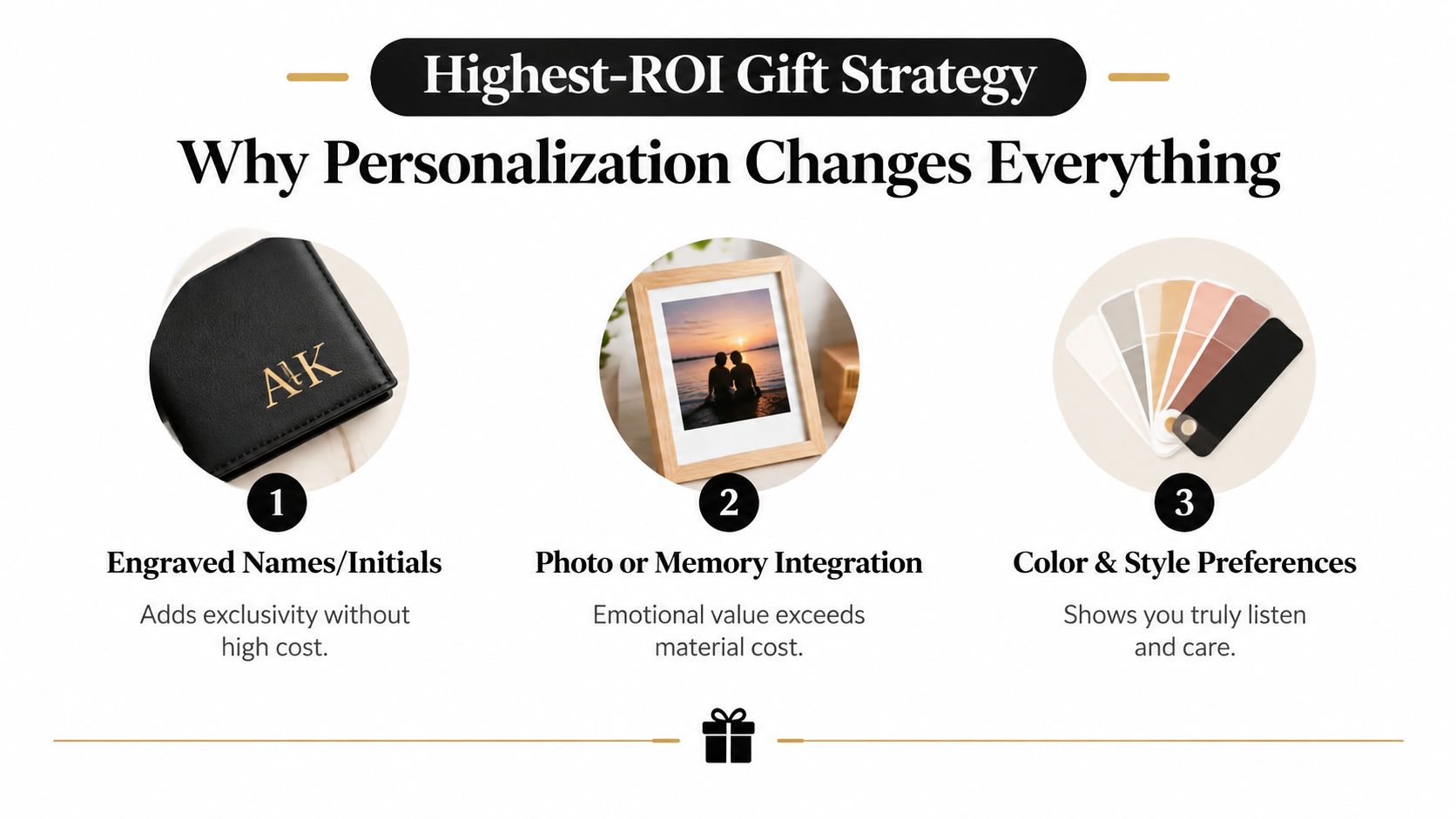
At a modest budget, use details that cost little but carry context. Write why you chose the item, add a favorite color, select a scent associated with a shared place, or include a small printed photograph. The recipient experiences the attention before they assess the object.
With more room to spend, consider monogramming, an engraved date, custom packaging, a selected fragrance blend, or an item built around a specific memory. The customization should remain legible and restrained. Too many names, symbols, and messages can make a gift look busy.
At a higher budget, personalization can guide the whole experience. Select a premium object in the recipient's preferred material, arrange an activity around their schedule, or pair a lasting piece with a note that explains its significance. More money doesn't remove the need for judgment. It makes a wrong guess more costly.
A personal detail should answer one question: Why did you choose this for me?
The main risk is getting a detail wrong. Verify spelling, dates, initials, sizes, and scent preferences before ordering. Check whether the seller allows revisions, exchanges, or returns, especially when the item includes jewelry or a customized component. For a closer look at how a candle can carry that kind of detail, see these personalized candles for gifts.
Personalization works because it signals attention. That signal, not decoration alone, separates a purchase from a gift.
Choosing a surprise-discovery gift works best through three decisions: the occasion, the recipient's personality, and your budget ceiling. This format solves a common problem when you want a present to feel premium and personal without guessing someone's exact jewelry taste. A surprise-jewelry candle or bath bomb delivers a useful sensory product first, then reveals a ring, necklace, or another jewelry piece.
For a slower, more atmospheric experience, choose candles with jewels inside. The wax gradually exposes the jewelry, which suits someone who enjoys home fragrance, quiet evenings, and rituals that unfold over time. A bath bomb dissolves faster in water, making it a stronger choice for recipients who enjoy bath routines, colorful sensory products, and an immediate reveal.
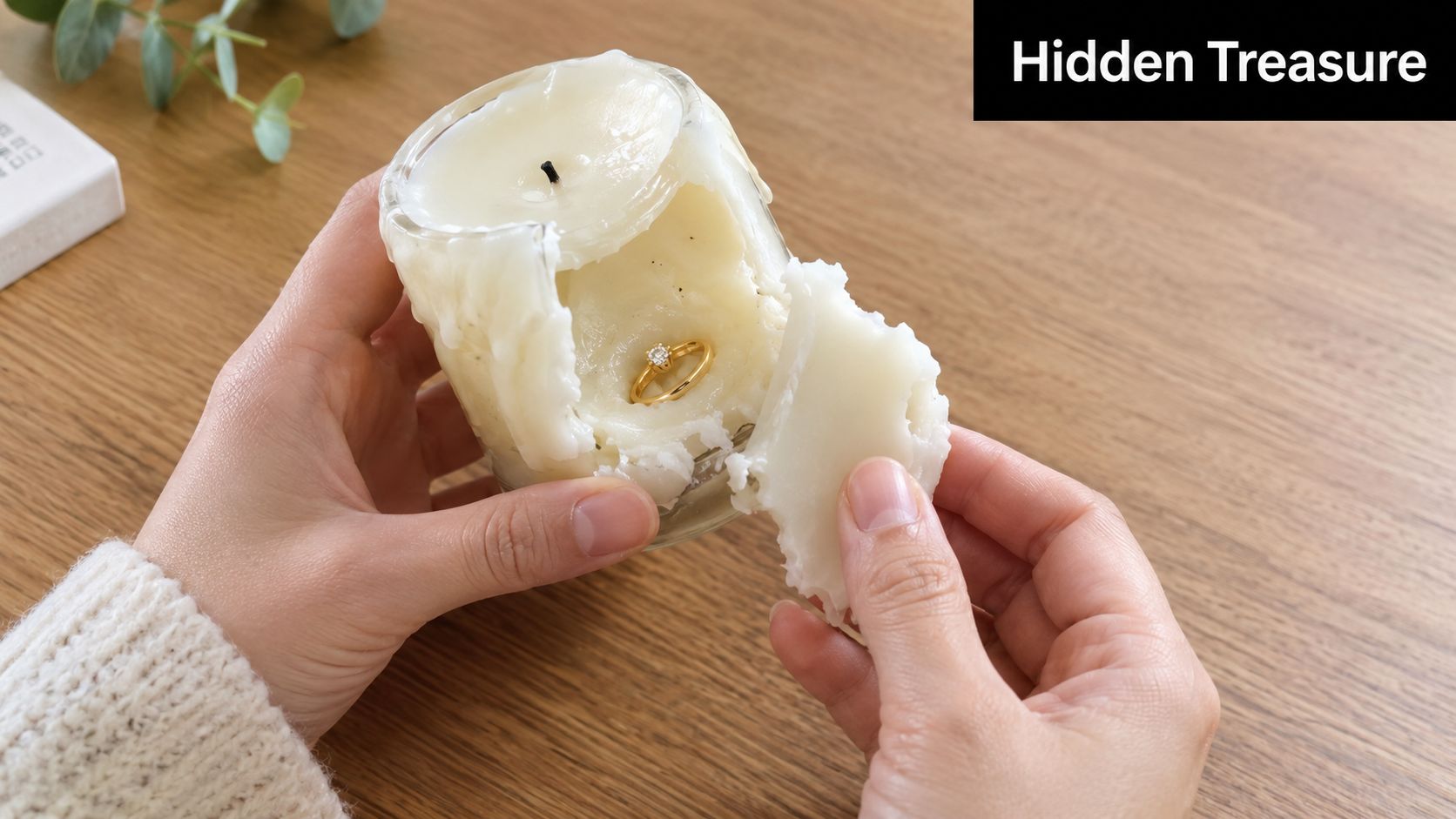
The hidden jewelry creates the surprise, while the surrounding product determines whether the gift feels worthwhile. Choose a candle with clearly identified soy or coconut wax, fragrance information, and safe-use instructions. A comparison published by the American Oil Chemists' Society found significant soot from paraffin candles, while soy candles produced little or none. The soy candles also burned more slowly with smaller flames in that study.
For bath bombs, read the ingredient list and follow the maker's skin-safety guidance. If jewelry is included, confirm that the findings are lead-free, check the stated ring or necklace sizing, and determine whether the piece is fashion-grade or fine jewelry. Do not assign precious-metal or gemstone value unless the listing states it clearly.
Soy candles require careful formulation. Soy wax fragrance-load guidance places a practical fragrance range around 6% to 10% by weight, with 6% to 8% often described as a balanced zone. Excess fragrance can contribute to soot, weak scent throw, frosting, or oil separation, so manufacturing precision matters more than an intense scent description.
Check the return policy for the jewelry component and how the hidden item stays protected during use. The format succeeds when the sensory product is enjoyable on its own, the jewelry feels appropriate, and the reveal adds a memorable second moment. Quality control keeps the surprise from becoming the entire point.
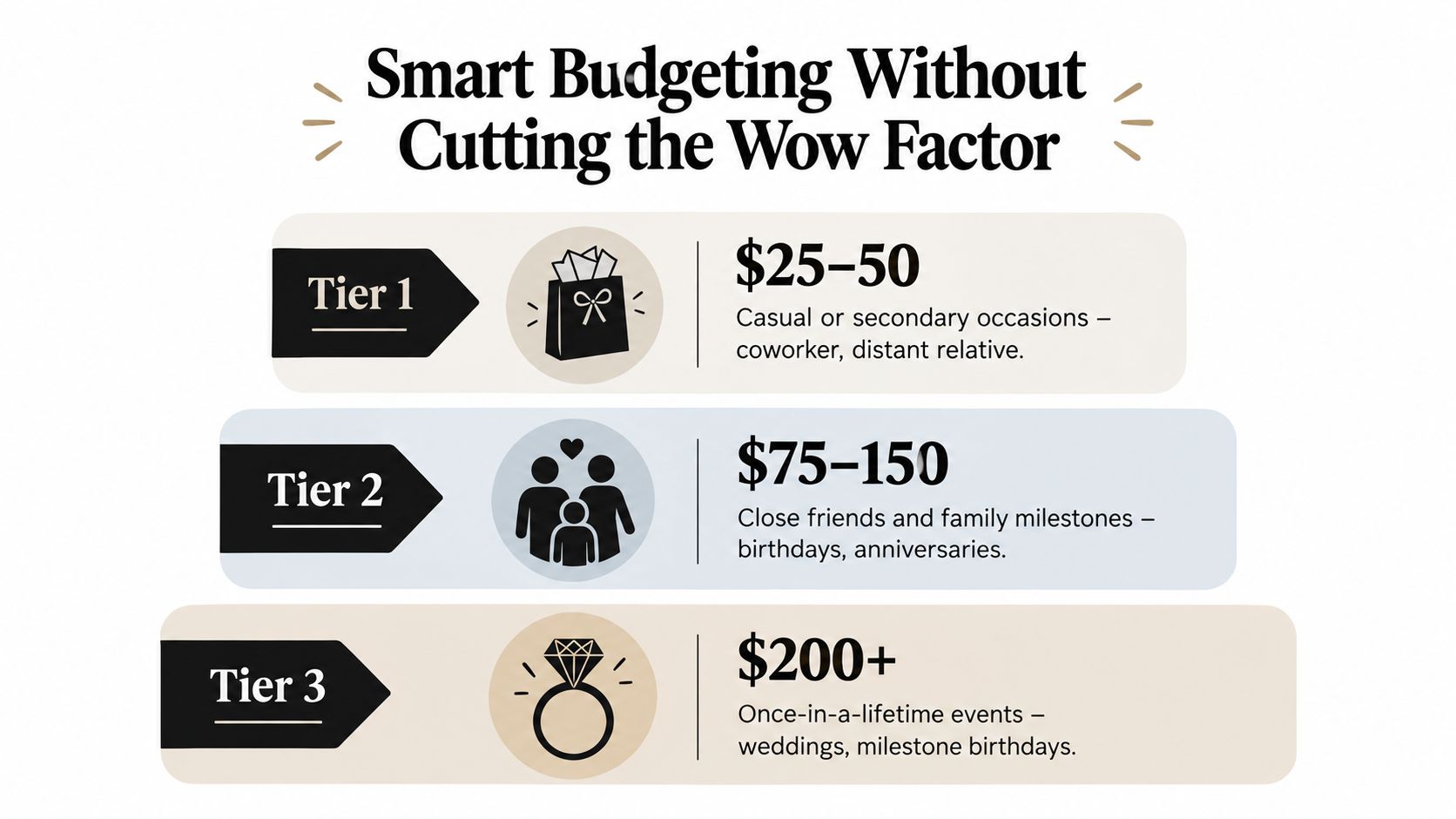
Your budget should reflect both the relationship and the importance of the occasion, but it doesn't need to compete with anyone else's spending. A useful starting point is $25 to $50 for casual or secondary occasions, $75 to $150 for close friends and family milestones, and $200 or more for once-in-a-lifetime events, as a planning framework rather than a rule.
Those ranges should remain flexible. A coworker's birthday, a sibling's graduation, and a couple's wedding involve different expectations. Group gifting can also make sense for weddings or graduations when one person can't comfortably fund the desired item alone. Coordinate one useful or meaningful purchase instead of creating a pile of disconnected contributions.
Presentation creates perceived value because it turns delivery into an event. Use these techniques:
A lower-cost candle with a thoughtful note and a planned reveal can land better than a more expensive anonymous delivery. The recipient notices the sequence: opening, reading, using, discovering, and remembering why you chose it.
The largest budgets in major markets also show why occasion planning matters. A 2026 roundup citing NRF-based figures projected $476 billion in American gift spending, with an average annual spend of about $1,340 per person across gift occasions; the source reports the figures as projections or averages for its stated period in the 2026 gift-spending roundup. You don't need to imitate that scale. You need a clear ceiling and a delivery that feels personal.
Run through this list before checkout:
The goal isn't perfection. A gift becomes memorable when the recipient can see the reasoning behind it. Choose the occasion first, respect the person's habits, spend within your means, and make the reveal deliberate.
For gifts that combine scented soy candles or bath bombs with a hidden jewelry discovery, Jackpot Candles offers occasion-focused options designed around that use-and-reveal experience. Browse the Jackpot Candles collection to choose a surprise format, add a personal message where available, and give a milestone gift with both immediate enjoyment and a memorable reveal.
Comments will be approved before showing up.