
free shipping at $99


You're probably at the point where the Christmas list is real, the wrapping paper's already making a mess on the table, and you want one gift that feels thoughtful without turning into a craft disaster. A homemade candle can do that, but only if it looks clean, smells intentional, and doesn't surprise the recipient with a crooked wick or a cracked top. The good news is that how to make candles for Christmas gifts is less about fancy tools and more about a few disciplined choices, then giving each candle the same care you'd give a store-bought one.
A handmade candle lands differently because it works on several levels at once. It's practical, decorative, and personal, and candles already have a strong place in holiday buying patterns, with about 35% of all candle sales happening during the Christmas and holiday season, candles used in 7 out of 10 U.S. households, and 76% of shoppers in one consumer survey seeing candles as good gifts, according to industry guidance citing National Candle Association data and Shopify survey figures. The same source also notes the global candle market was projected to reach US$6.64 billion by 2027, which helps explain why candle gifting feels established rather than niche. For context on how presentation can turn a handmade object into a memorable gift, the pairing of scent and surprise is part of the appeal behind this best-friend gift idea from Jackpot Candles, while a polished label or gift box can be sourced separately, including from an Image Studio shop if you want clean packaging pieces that look more finished than homemade scraps.
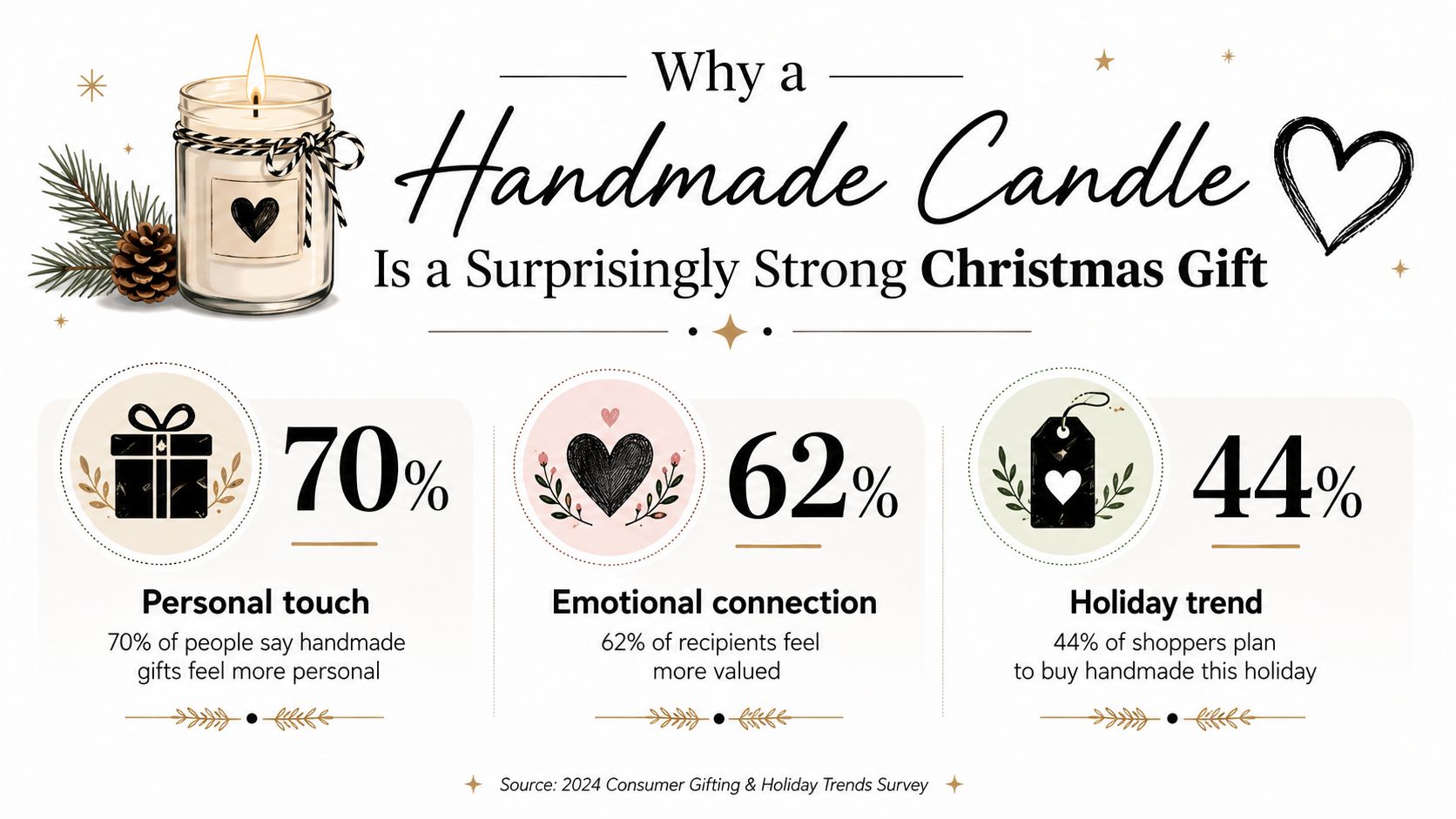
The best candle gifts feel chosen, not grabbed. That's why a candle works so well at Christmas, it carries scent, color, and mood without needing a huge budget or an elaborate build, and the recipient sees effort the second they unwrap it. A plain jar can still feel special if the wax burns cleanly, the label looks deliberate, and the fragrance suits the person, not just the season.
What you notice first is that candles fit into everyday life. They live on a shelf, a coffee table, or a bedside stand, which makes them more useful than a lot of holiday décor that gets packed away in January. That practicality is part of the reason candles keep showing up in holiday carts, and it's why the candle doesn't have to be complicated to feel generous.
A candle gets judged in layers. The vessel needs to look stable, the wax surface should be smooth enough to feel intentional, and the scent has to be noticeable without overpowering the room. If one of those pieces is off, the whole gift reads as a practice run instead of a present.
Practical rule: if the candle would look awkward without a bow, it probably needs more work before you wrap it.
That's where the layered-gift mindset helps. Think in terms of scent, vessel, label, and presentation, not just wax in a jar. When those four parts line up, the candle feels more like a curated object and less like a craft project.
Holiday gifting rewards specificity. A soft vanilla candle in a frosted jar reads differently from a pine-scented candle in clear glass, and a handwritten tag changes how the gift is received. The point isn't to make the candle busy, it's to make every visible detail support the same mood.
For a quick inspiration check, look at how a simple personalized gift can feel considered without being expensive. The same logic applies here, one good scent, one clean vessel, one neat label. That's usually enough.
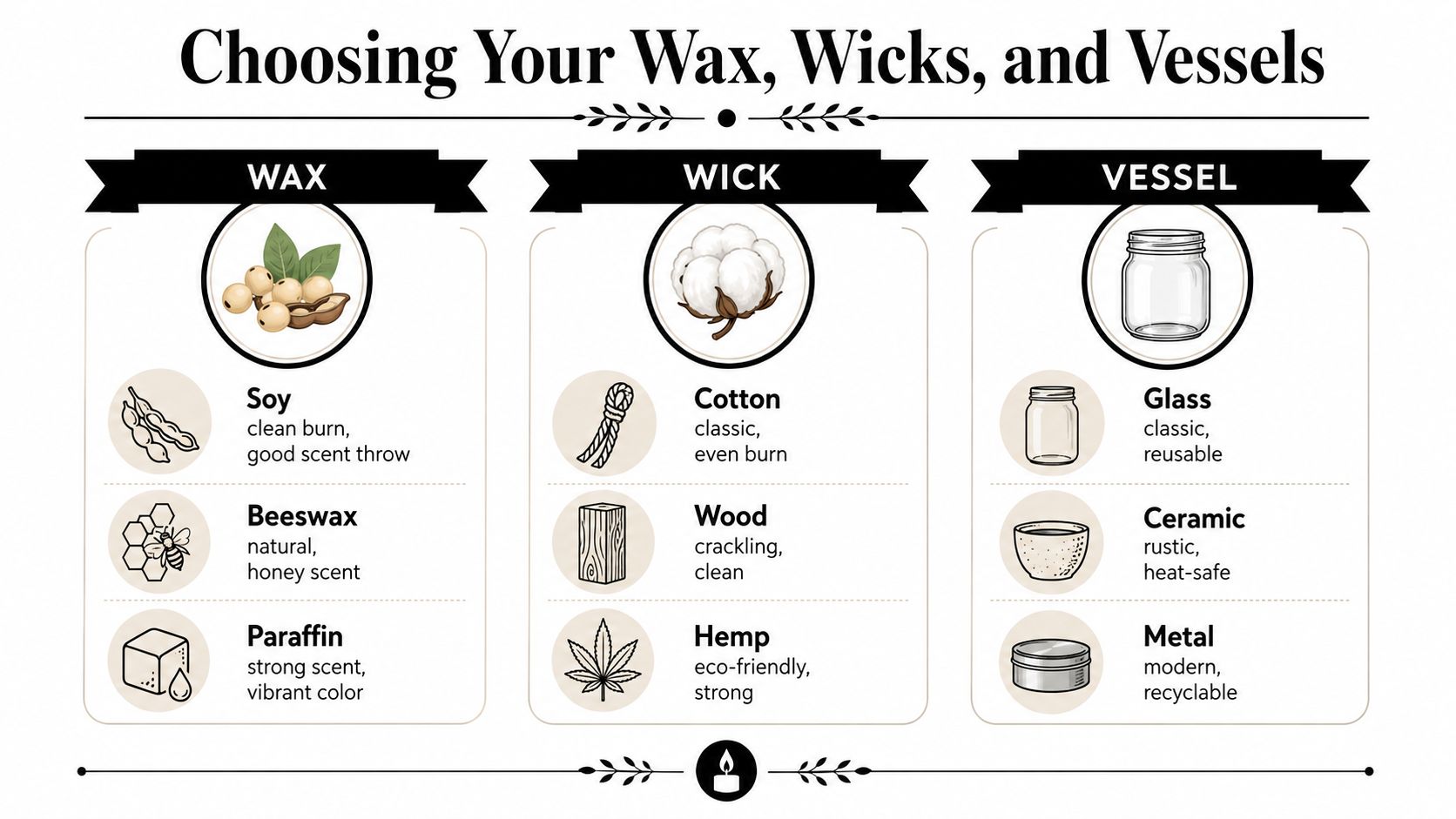
Start with the three things that control how the candle behaves, wax, wick, and vessel. People often shop the fragrance first, but the base matters more because it decides burn quality, appearance, and how forgiving the candle will be when you're still learning. If you get those three pieces right, fragrance and packaging become a lot easier.
Soy wax is the safest default for a first batch because it's common in DIY candles and usually gives a slower, cleaner burn. Paraffin still shows up in many tutorials because it can carry scent strongly and behaves predictably for beginners who want a straightforward pour. Beeswax brings a natural look and a faint honey note, which can be lovely, but that built-in aroma means it won't disappear into the background the way soy can.
Pick wax based on the gift, not the internet's favorite ingredient. If the candle needs a cleaner, more plant-based profile, soy makes sense. If you care most about a bold fragrance throw and vivid color, paraffin may be easier. If you want a more rustic, lightly scented candle, beeswax fits better.
The wick isn't about brand loyalty, it's about diameter and burn behavior. A wick that's too small tunnels. A wick that's too large burns too hot and can darken the vessel or overwhelm the fragrance. For first-time makers, the smarter move is to buy wick sizes recommended for the jar width instead of guessing.
Vessels should be heat-safe and boring in the best way. Straight-sided glass jars, sturdy tins, and ceramic containers made for hot pours are the least stressful choices. Leave enough headspace so the top doesn't crowd the rim, and skip delicate thrift-store glass unless you already know it can handle heat.
A candle kit looks simple on paper, but the jar and wick decide whether the gift feels polished or frustrating.
Fragrance is where the candle turns from functional to personal. A Christmas gift candle shouldn't just smell like “holiday,” it should smell like the person who's opening it, whether that means pine for someone who loves the outdoors, cinnamon for a kitchen-minded host, vanilla for a softer profile, or citrus if you want the candle to feel brighter than a typical winter blend. The best holiday candles feel chosen with intent.
Independent candle instructions commonly suggest about 30 drops of essential oil per 3 cups of wax for a subtle scent, rising to around 45 drops for something stronger, while larger-batch examples use roughly 1 ounce of fragrance oil per 1 pound of soy wax. Those benchmarks matter because over-fragrancing can destabilize the burn. If the wax can't hold the oil well, the candle may sweat, burn unevenly, or smell worse instead of better.
That's why fragrance oil and essential oil aren't interchangeable in practice. Essential oils can work well for lighter scents, but fragrance oils often give more room for complex holiday blends and stronger throw. For a Christmas gift, that trade-off is usually worth thinking through before you pour anything.
Two-note blends are easier to control than elaborate mixes. Pair one warm note with one fresh note, or one sweet note with one wood note, and keep the stronger scent in the background. Pine plus vanilla, cinnamon plus orange, or cedar plus bergamot all work because one scent supports the other instead of fighting it.
If you want a gift to feel more personal, add one small surprise instead of piling on extras. A folded note tucked into the packaging, a tiny charm attached to the tag, or a small jewelry piece hidden in the wrapping can create a stronger reveal than decorative clutter on the wax itself. That's where the gift starts to feel memorable rather than merely scented.
For another angle on seasonal scent choices, these holiday candle scent ideas are useful as a reference point when you're deciding whether to stay classic or lean more woodsy, bright, or dessert-like.
This is the part where a candle either behaves or turns annoying. Temperature control is the difference between a smooth gift candle and one with rough tops, weak scent, or a jar that looks like it fought the wax and lost. Melt the wax in a double boiler until it reaches about 180–185°F (82–85°C), then add fragrance below that point so you don't drive off the scent before it even gets into the jar.
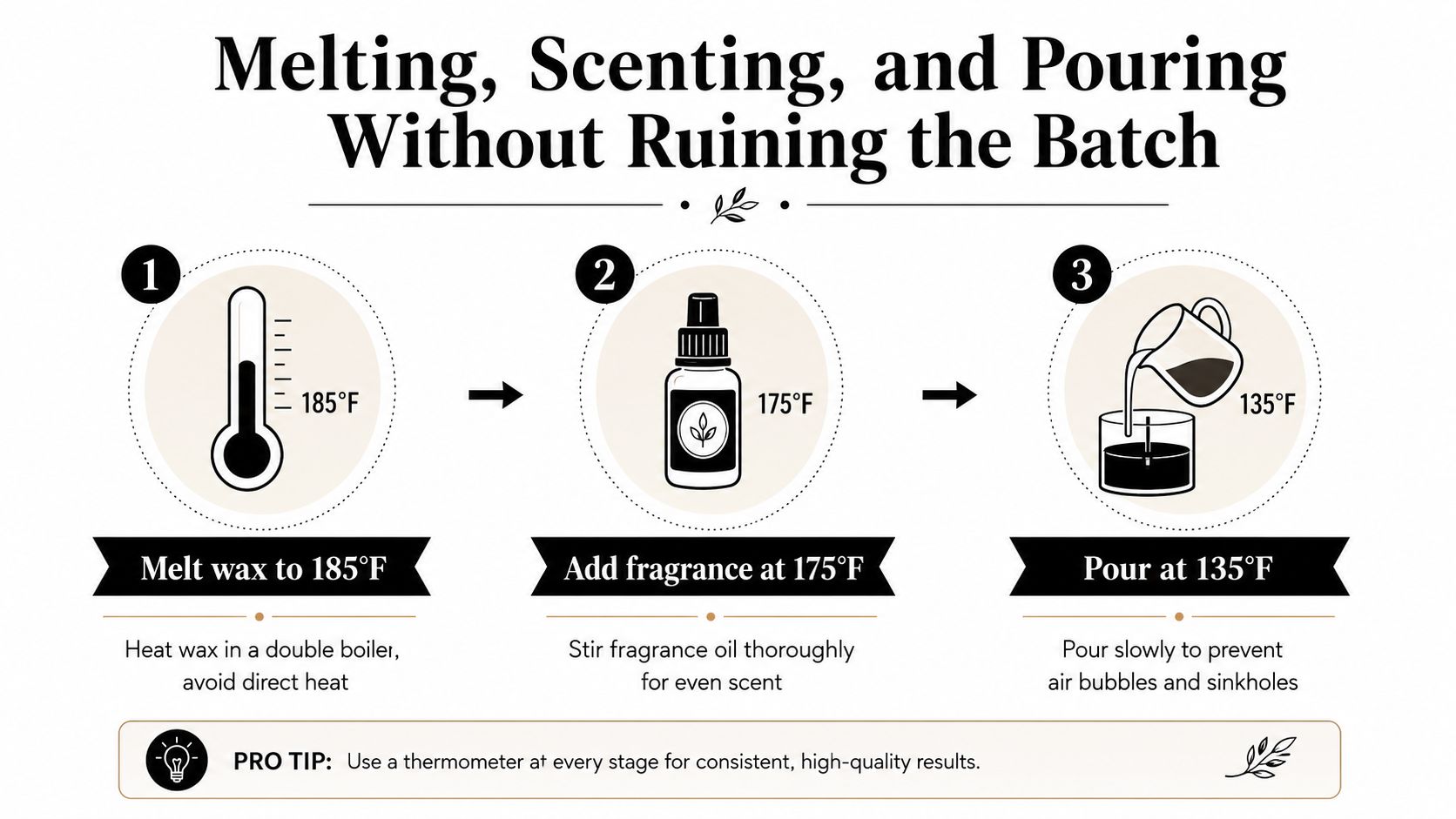
Reputable DIY guidance says to pour soy wax around 125–140°F (52–60°C) depending on the wax, which helps the candle set cleanly. Pour too hot and you can lose fragrance or end up with rough tops. Pour too cool and the wax may cling badly to the glass or leave a bumpy surface.
Before you pour, center the wick and lock it down. A wick tab fixed with a sticker or hot glue, plus a wick bar or clothespin across the top, keeps the wick from drifting when the wax moves. That tiny setup step is one of those beginner habits that pays off immediately because a centered wick burns more evenly and looks more professional.
Don't rush the cooling stage. Let the candle sit undisturbed until it's fully hardened, then trim the wick after it's set.
Finished doesn't mean perfectly decorative on the first pass. It means the top has set, the wick is centered, and the wax has attached well enough to the vessel that the candle looks stable. If you see a sinkhole after the first cool-down, top it off rather than pretending it won't show.
A good batch also respects the container. Pre-warming the jar reduces thermal shock, especially with glass, and it helps the wax cool more evenly. That one habit saves more candles than people expect, because the vessel and the wax need to cool together instead of fighting each other.
The usual beginner mistake is waiting until the candle is fully finished to notice something was off early. Uneven tops, sinkholes, frosting, wet spots, drowning wicks, and weak scent throw all have practical fixes, but only if you catch them before wrapping. If the candle is for a gift, don't treat defects as character.
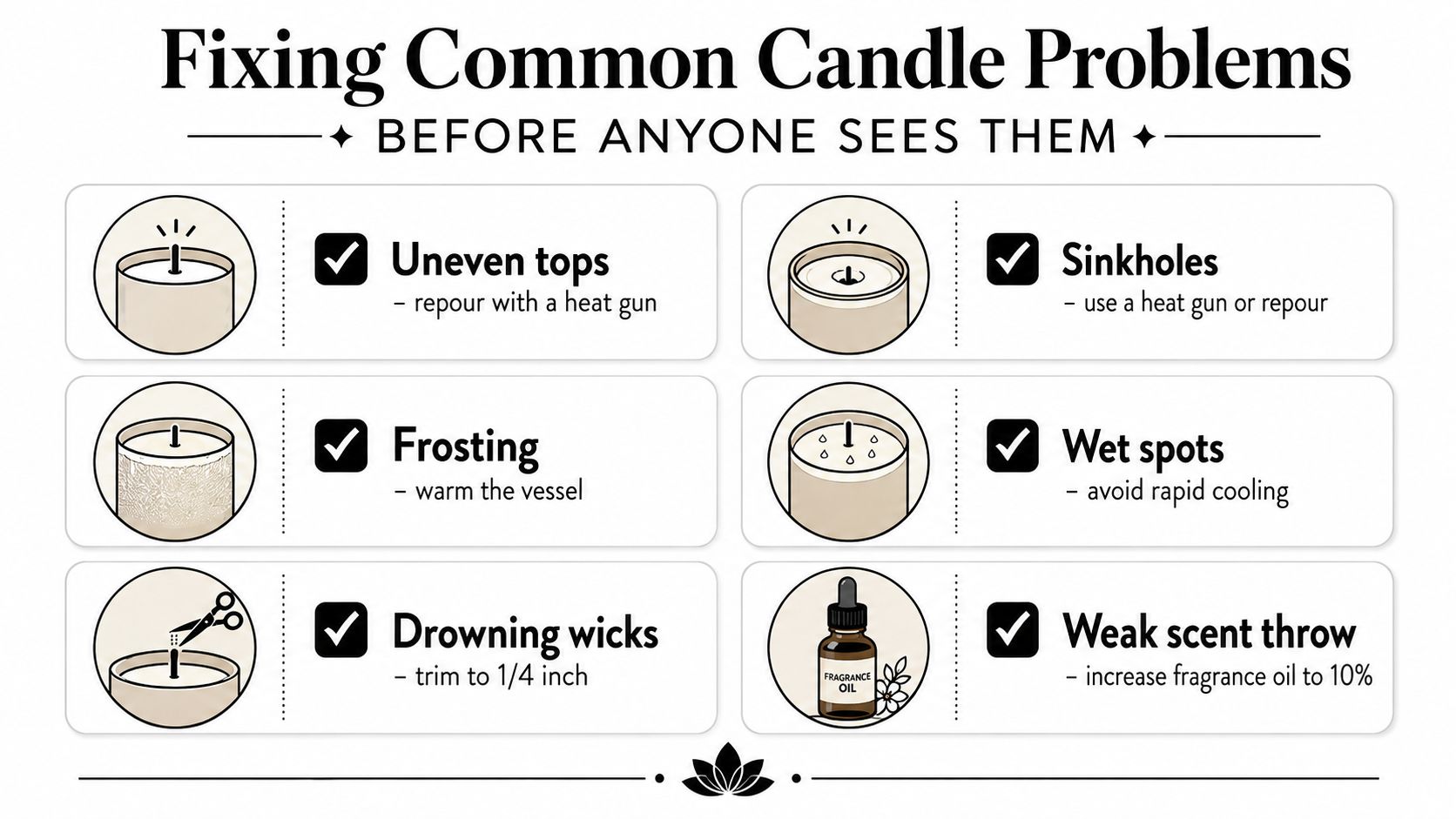
Uneven tops usually need a quick repour or a light pass with a heat gun. Sinkholes respond the same way, especially if they form after the first cool-down. Frosting is more common in some waxes and often improves when the vessel is warmed a bit before pouring.
Wet spots are usually a cooling issue, not a disaster. Rapid temperature changes make wax pull away from the glass, so a slower set and a pre-warmed container help more than scrambling at the end. If the jar is clear, those little adhesion issues show fast, so it's better to prevent them than to try hiding them with a label.
A wick that sinks into the wax or ends up buried too low is a candle that will burn badly from the start. Trim it to about 1/4 inch before testing or gifting so it burns cleanly and doesn't smoke more than it should. If the wick drifts while the wax is still fluid, the burn path will follow that mistake later.
Weak scent throw is usually a formula issue, not a packaging issue. If the wax holds too little fragrance, the candle will smell faint when cold and weaker still when lit. The fix is to adjust the fragrance load within the limits of the wax, not to keep adding random extras to the top.
For a deeper look at one of the most common burn issues, this tunneling guide is useful because tunneling usually comes back to wick choice, jar width, or a rushed first burn.
Safety matters more than polish. A candle that looks pretty but cracks, tunnels, or overheats isn't gift-ready yet.
The candle doesn't become a gift when the wax hardens. It becomes a gift when the outside tells the same story as the inside. That means a label that names the scent clearly, a vessel that looks clean, and wrapping that protects the candle without smothering it in plastic or overdone ribbon.
A simple homemade label can do a lot. Put the scent name, wax type, and a short note like “hand-poured” or “made for cozy nights” on the front, then keep the back clean or add a small batch note if you want the candle to feel more artisan. If you're printing at home, matte sticker paper usually looks calmer than glossy stock and doesn't fight the jar.
For wrapping, avoid heavy layers that trap heat or hide the jar's shape. Kraft paper, a linen tie, or a small box keeps the candle protected while still letting the recipient see what they're opening. A single sprig, dried botanical, or satin ribbon can work, but only if it doesn't clash with the vessel.
| Recipient | Scent Profile | Optional Surprise |
|---|---|---|
| Host who loves a clean home | Pine, cedar, or citrus | Folded thank-you note tucked under the ribbon |
| Friend who likes softer scents | Vanilla, amber, or light spice | Small charm on the tag |
| Family member who likes classic holiday scents | Cinnamon, clove, or orange | Hidden jewelry piece in the wrapping |
| Outdoors person | Evergreen, fir, or smoked wood | Seed packet tied to the box |
A finished packaging flow matters the same way a warehouse picking setup matters in retail operations, because clean handling makes the final product look intentional. That's the logic behind a well-planned warehouse picking setup from Material Handling USA, even if your version is just a kitchen table and a few neat boxes.
Specificity wins here. If you know the person is more likely to love a smoky wood note than a sugary scent, choose that. If they love surprises, give them one hidden element, then keep the rest of the gift calm so the reveal still feels special.
If you want your first candle gifts to look as polished on the outside as they smell on the inside, start with a better base and skip the guesswork. Jackpot Candles is a good place to see how scent, presentation, and a reveal moment can work together in one giftable package. Make your first batch clean, personal, and deliberate, then build from there with the same care.
Comments will be approved before showing up.