
free shipping at $99


Before you even start searching for "jewelry appraisal services near me," it's smart to take a step back and figure out why you need one in the first place. A professional appraisal isn't just a price tag; it's an official, detailed document that states the value of your jewelry. This piece of paper is your best friend when it comes to insurance, estate planning, or even selling a piece down the road.
Think of it as a crucial document that protects your most cherished assets.
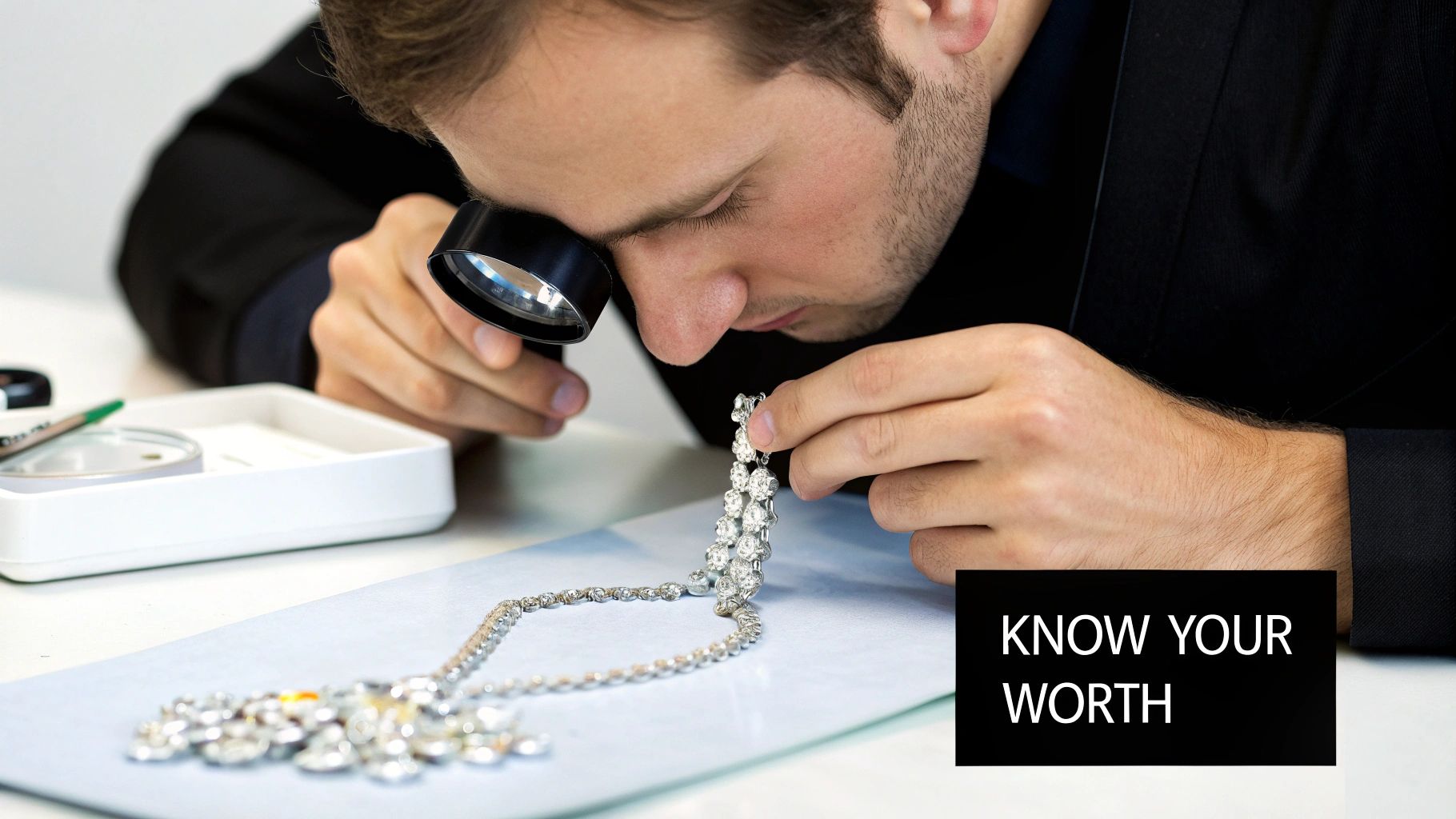
Before we get into finding the right local expert, let’s talk about the real-world moments where an accurate appraisal is an absolute lifesaver. This isn't just about satisfying your curiosity—it's about financial protection and making smart decisions. Honestly, it's an investment in your peace of mind.
An appraisal acts as a detailed blueprint of your jewelry's worth at a specific moment, all backed by a certified pro. This documentation becomes critical during some of life's biggest events.
Getting proper insurance coverage is easily the most common reason people seek out an appraisal. Picture this: your grandmother’s engagement ring goes missing. Without a current appraisal that details its replacement value, your insurance company might just offer a settlement based on a vague description. That payout could fall painfully short of what you’d actually need to replace such a unique and sentimental piece.
A detailed appraisal report ensures that if something is lost, stolen, or damaged, your insurance policy covers the actual cost to replace the item with one of like kind and quality—not just an estimated guess.
Beyond insurance, certified valuations are essential in other major life events. And for each situation, you'll need a specific type of appraisal to keep things fair and accurate.
Not all appraisals are created equal, and the right one depends entirely on your situation.
Here's a quick look at the most common appraisal types to help you decide which service you need.
| Appraisal Type | Best For | Valuation Focus |
|---|---|---|
| Retail Replacement Value | Insurance coverage | The cost to replace the item new from a retail store. |
| Fair Market Value | Estate planning, equitable distribution, charitable donations | The price a willing buyer would pay a willing seller in a typical market. |
| Liquidation Value | Quick sales, divorce settlements, collateral loans | The value if the item needs to be sold quickly, often lower than market value. |
Knowing which one you need from the start saves you time and ensures the documentation you receive is actually useful for your goals.
The jewelry appraisal industry plays a huge role in the global jewelry market, which was valued at around $348 billion in 2025. With the United States making up nearly 25% of that consumption, the need for precise, trustworthy valuation services has never been greater.
For a deeper dive into how appraisals fit into the bigger picture of managing valuable assets, check out this essential guide to asset appraisal for estate liquidation. Understanding these key reasons will empower you to find the right professional and get the exact type of appraisal you need.
So, you're ready to find a qualified expert in your area. Thinking a quick "jewelry appraisal services near me" search will do the trick? Not so fast. Finding a true professional you can trust with your valuables means knowing where to look and, more importantly, how to sift through the results.
Let's start with your search terms. Instead of something generic, try getting more specific. Think along the lines of "GIA certified appraiser [your city]" or "independent jewelry valuator [your zip code]". This simple tweak helps you bypass the big retail stores that just offer appraisals on the side, pointing you toward dedicated specialists.
One of the best ways to find someone reputable is to go straight to the source: professional appraisal organizations. These groups have strict codes of ethics and require their members to have solid education and experience. It's a fantastic shortcut to a pre-screened list of pros.
Using these directories gives you a head start with a list of professionals who have already been vetted. You'll often find hidden gems here—experts who don't rely on flashy ads to get clients.
Don't forget about the power of a good old-fashioned recommendation. Professionals in related fields usually have a trusted network they turn to for their own clients. You might be surprised who has a great contact for you.
Try asking:
These people have a reason to send you to someone good—their own reputation is on the line, after all.
To keep it all straight, think of the process as a simple flow of vetting your potential candidates.
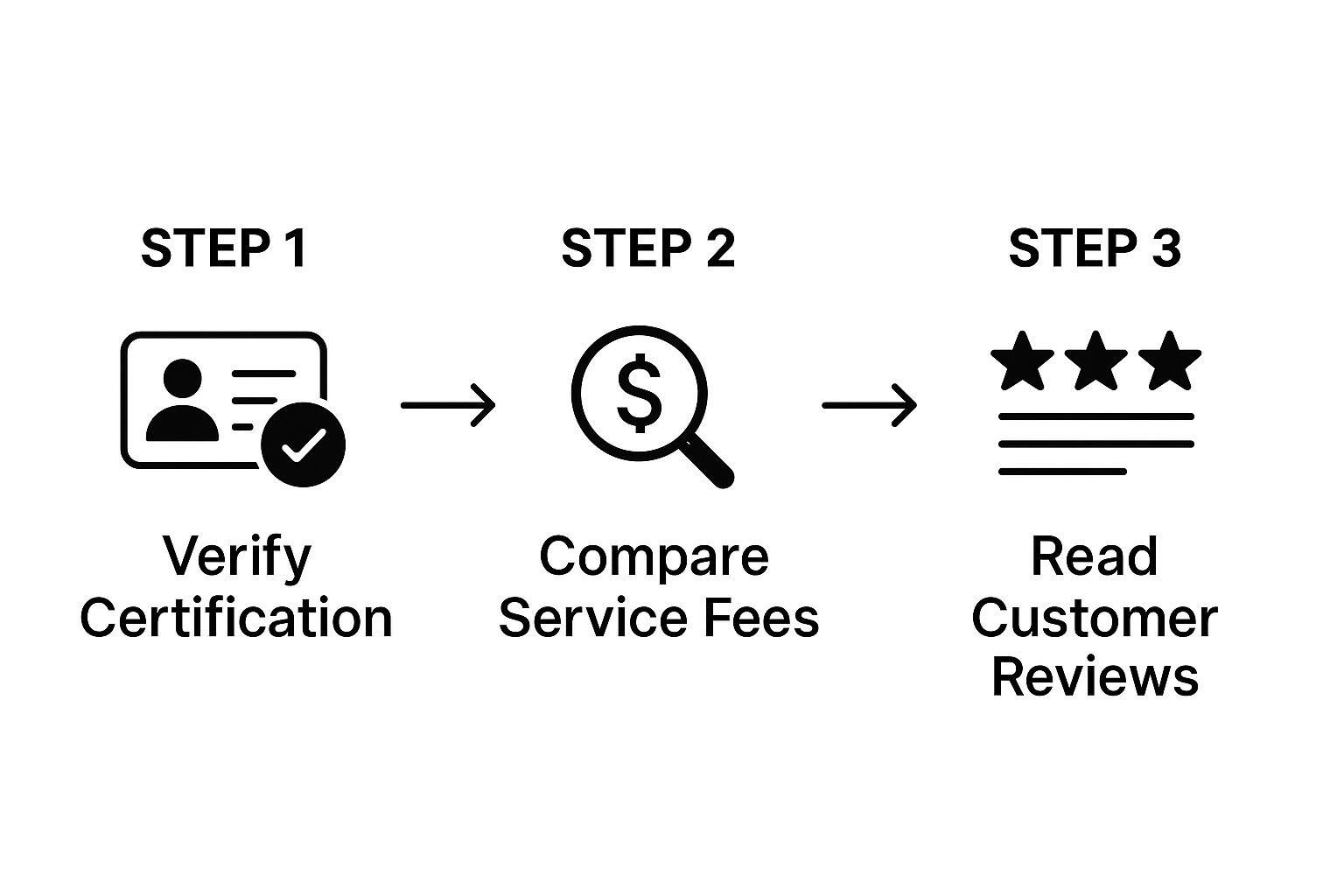
This little guide really breaks it down: check their credentials, see how their prices stack up, and read what other people are saying. Those are the cornerstones of making a smart choice.
Once you have a few names, it’s time for some online detective work. When you look at reviews, don’t just stop at the star rating. Dive into the actual comments to get a feel for what the experience was really like.
Look for reviews that highlight the appraiser's thoroughness, professionalism, and willingness to answer questions. A comment like, "they took the time to explain every little detail" tells you so much more than a generic "great service!"
This deeper dive helps you understand how the appraiser communicates and if they truly care about helping their clients.
We know many of our customers are curious about the value of the jewelry they discover in our products. While it’s a fun surprise, a formal valuation really needs an expert’s touch. You can learn more about our complimentary appraisal service for jewelry found in our products.
By mixing directory searches, personal referrals, and a close read of reviews, you’ll build a solid list of people to contact for your appraisal.
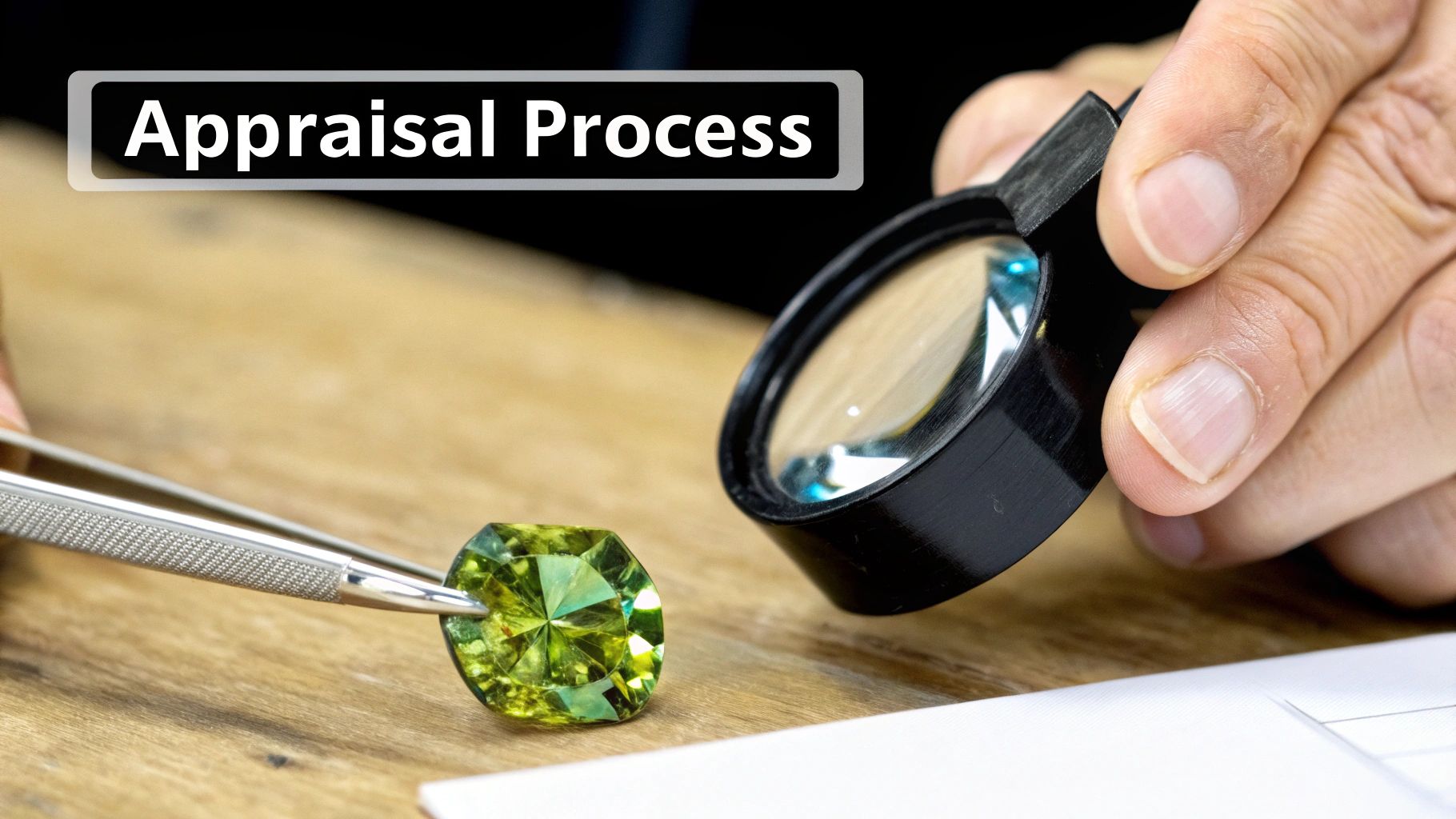
Alright, you've done your homework and have a shortlist of potential appraisers. Now it's time to dig a little deeper. Choosing the right expert to handle your valuables isn't just about finding someone qualified—it's about finding the right person for your specific piece.
Don't be shy about treating your first conversation like a little interview. It is! A trustworthy professional will welcome your questions and have clear, confident answers ready.
First things first, let's talk qualifications. You want to see a one-two punch of expertise: someone who is both a gemologist and a certified appraiser. A Graduate Gemologist (G.G.) diploma from the renowned Gemological Institute of America (GIA) is the gold standard for identifying and grading gems.
But being a great gemologist doesn't automatically make someone a great appraiser. You also want to look for a certification from a respected organization like the American Society of Appraisers (ASA). This combo ensures they can scientifically analyze your jewelry and accurately value it based on what's happening in the market right now.
Kick things off with a few key questions:
That last question is a big one. The knowledge needed to value a delicate Victorian brooch is worlds away from appraising a brand-new diamond ring. If you have unique pieces, like some of the beautiful handmade jewelry out there, finding an appraiser with experience in that niche is crucial.
Next up, you need a crystal-clear picture of how they operate and what their services cost. Transparency is non-negotiable here. A true professional should be totally upfront about their process, from the first look to the final report.
Here’s a major red flag: an appraiser who charges a percentage of the jewelry's final value. That’s a huge conflict of interest. Stick with someone who charges a flat fee per item or a simple hourly rate.
Your appraiser’s fee should be based on their time and expertise, not the value of your item. This ensures an unbiased and objective valuation every time.
Also, ask about what you'll get at the end. Will the report include detailed descriptions, high-quality photos, and a clear statement of value? A proper appraisal is a legal document, so it needs to be comprehensive.
The global jewelry appraisal market is booming and expected to hit $3.79 billion by 2025. Why? Because people need this official documentation for insurance claims and legal matters. This growth underscores just how important a detailed, professional report is for your own records. Asking these questions helps you find the right pro to protect your precious assets.
To really get the most out of your time with a professional appraiser, a little bit of prep work can make a huge difference. When you walk into your appointment organized, it doesn't just make the process run smoother—it gives the appraiser everything they need to do a thorough, accurate job. Think of it as helping them build the complete history of your pieces.
It's a lot like visiting a new doctor. You'd bring your medical history to help them make a better diagnosis, right? It's the same idea here. Handing over the right paperwork helps an appraiser create a much more comprehensive report.
Before you head out the door, spend a few minutes gathering any and all documents related to your jewelry. This information doesn't unfairly sway the final value. Instead, it provides crucial context and provenance that adds depth to the final report.
So, what should you be looking for?
This paperwork helps the appraiser verify key details and can often speed up their research process. If they charge by the hour, this could even save you a bit of money. But don't stress if you can't find any of these documents—any good appraiser can definitely work without them.
Making sure your jewelry is clean and organized is a small step that has a big impact.
For cleaning, you don't need anything fancy. A simple solution of mild dish soap and warm water with a soft-bristled toothbrush usually does the trick. Just gently scrub your pieces to remove any built-up dirt or oils that might be hiding important details. Definitely avoid harsh chemicals, as they can damage certain gemstones and metals.
Pro Tip: If you're bringing in several items, jot down a quick inventory list. Note each piece (e.g., "three-stone diamond ring," "gold link bracelet") and include any details you know. This keeps both you and the appraiser organized and makes sure nothing gets missed.
This simple list is a lifesaver, especially if you're searching for jewelry appraisal services near me to evaluate a whole collection for something like an estate settlement or a big insurance update.
Taking these few steps means you'll walk into your appraisal feeling confident and prepared. You’re not just a bystander; you're actively helping to document the value and story of your most cherished items, making the whole experience feel more rewarding.
Once the appraiser has finished their detailed inspection, you'll get a multi-page document that can look pretty intimidating at first. This report is the official record of your jewelry's value, but all the technical terms can be tough to sort through. Let's break down what it all means so you can actually use it, whether it's for insurance, estate planning, or even a potential sale.
The first thing you’ll see is a super-detailed description of your piece. It won't just say "gold ring with a diamond." It'll be more like "14-karat white gold," and will specify the total weight, how it was made (like cast or handmade), and list any identifying marks or stamps. Think of this part as your jewelry’s official biography—every little detail is crucial for identifying it later.
If your jewelry has stones, the report gets even more specific. For a diamond, you'll see a full breakdown of the 4Cs—Cut, Color, Clarity, and Carat weight. The appraiser gives each of these a grade and will note any unique features or flaws.
For other gems, the report will identify the species (like Corundum for a sapphire) and point out any treatments it has undergone. For instance, a ruby might have been heat-treated, which can have a big impact on its value. This is the kind of granular detail an insurance company needs to find a comparable replacement if something happens.
A good appraisal report should be so thorough that another jeweler could read it and create a near-identical replica without ever seeing the original piece. That level of detail is what protects you.
Finally, you get to the number you were probably looking for: the monetary value. But it's really important to know what kind of value is being assigned. There are two main types, and they're used for very different things.
The jewelry appraisal market is growing fast and is projected to be worth over $750 million by 2033, mostly because more people need precise valuations for these exact scenarios. The difference between RRV and FMV is fundamental to how the whole industry works. You can discover more about the trends shaping the jewelry appraisal market on datainsightsmarket.com.
Knowing which valuation you need for your situation is key. And if you’ve ever been curious about the value of surprise jewelry, like the kind found in our products, you can check out some fun examples in our jewelry ring candle reveals. When you understand your report, you're empowered to ask the right questions and make the most of this important document.
Stepping into the world of jewelry appraisals can feel a little confusing, especially if it's your first time. To help make things clearer, we've put together some quick answers to the questions we hear the most from people searching for jewelry appraisal services near me.
Think of this as your quick guide to feeling more confident about the whole process.
The price of an appraisal really comes down to the piece itself and the appraiser's experience. Most pros charge either a flat fee per item or an hourly rate, which usually lands somewhere between $75 and $150 per hour.
It makes sense—a simple gold wedding band will be much quicker and cheaper to appraise than a big, complex antique necklace with a dozen different gemstones that needs a lot of research.
Here’s a big red flag to watch out for: if an appraiser tries to charge you a percentage of your item’s final value, walk away. That’s a major conflict of interest.
This is a great question! For your really valuable pieces, it’s smart to get them reappraised every three to five years. Why? Because the market values for gold, platinum, and gemstones are always on the move. An updated appraisal makes sure your insurance coverage is actually enough to replace the item at today's prices.
Plus, your insurance company might actually require you to get an updated valuation on high-value items to keep your policy active. It's always a good idea to check your policy details so you stay fully protected.
Think of it like this: an outdated appraisal could leave you seriously underinsured if something happens. Regular reappraisals are like a financial check-up for your jewelry, making sure your coverage keeps up with the market.
This one trips a lot of people up, but the two documents are totally different and serve very different purposes.
So, the lab report provides the critical data, and the appraisal uses that data to figure out what the whole piece is worth in dollars and cents.
While clicking a few buttons for an online appraisal might sound easy, they have some serious drawbacks. An appraiser can't physically hold and inspect the piece to see its true condition, check the quality of the metalwork, or confirm if the gems are real.
Because there's no hands-on examination, reports from online services are almost never accepted by insurance companies or for legal matters. For an official, trustworthy valuation, nothing beats an in-person examination by a certified professional. It's always the safest and most reliable way to go.
At Jackpot Candles, we know the thrill of discovering a beautiful new piece of jewelry. While our reveals are all about fun and surprise, a professional appraisal is the best way to document the value of your most treasured items. Find your next favorite piece today!
Comments will be approved before showing up.