
free shipping at $99


You're scrolling past a candle or bath bomb that promises a hidden ring, necklace, or charm, and the question is obvious: is the surprise worth the uncertainty? You want to know whether the candle will still burn properly, whether the bath bomb will fizz instead of crumble, and whether the jewelry will look like a keepsake or a disappointing trinket.
Jewelry candles and bath bombs are related products, but they work in very different ways. The candle turns the reveal into a slow, fire-based ritual. The bath bomb uses water, fizz, fragrance, and a single-use experience. The practical details matter more than the reveal alone, especially when a hidden object can affect burn quality, dissolution, skin comfort, or cleanup.
Surprise-inside products combine two familiar buying motivations: a scented household or self-care product and a small discovery moment. That combination makes them easy to give, because the recipient gets something useful before the hidden jewelry appears. A candle can sit on a shelf and scent a room, while a bath bomb can turn an ordinary bath into a more playful ritual.
The broader candle category helps explain why these products have staying power. The global candle market was valued at USD 8.98 billion in 2025 and is projected to reach USD 16.42 billion by 2034, with a 7.06% CAGR, according to Fortune Business Insights' candle market overview. The same source identifies Europe as holding about 30% of the market in 2025, which places candles in a mature, internationally distributed consumer category rather than a narrow novelty niche.
Seasonality also supports the format. U.S. retail candle sales are estimated at approximately USD 3.14 billion annually, and about 35% of sales occur during the Christmas season, as reported in the same candle market research. A hidden piece of jewelry adds an obvious gifting hook, but the fragrance, vessel, wax, and burn experience still need to justify the purchase.
Practical rule: Treat the jewelry as one feature, not the entire product.
Before buying, ask four basic questions:
For more gift ideas built around discovery and comfort, explore these surprise gift ideas. The strongest purchase is the one where the recipient would still enjoy the candle or bath bomb even if the hidden item were modest.
Manufacturers need to solve two problems at once. They must hide the jewelry securely, then release it without making the main product unsafe or unpleasant to use. Most surprise pieces are made from plated brass or another alloy, often with cubic zirconia or glass stones, because those materials can be formed into small rings, pendants, earrings, and charms that fit inside the product.
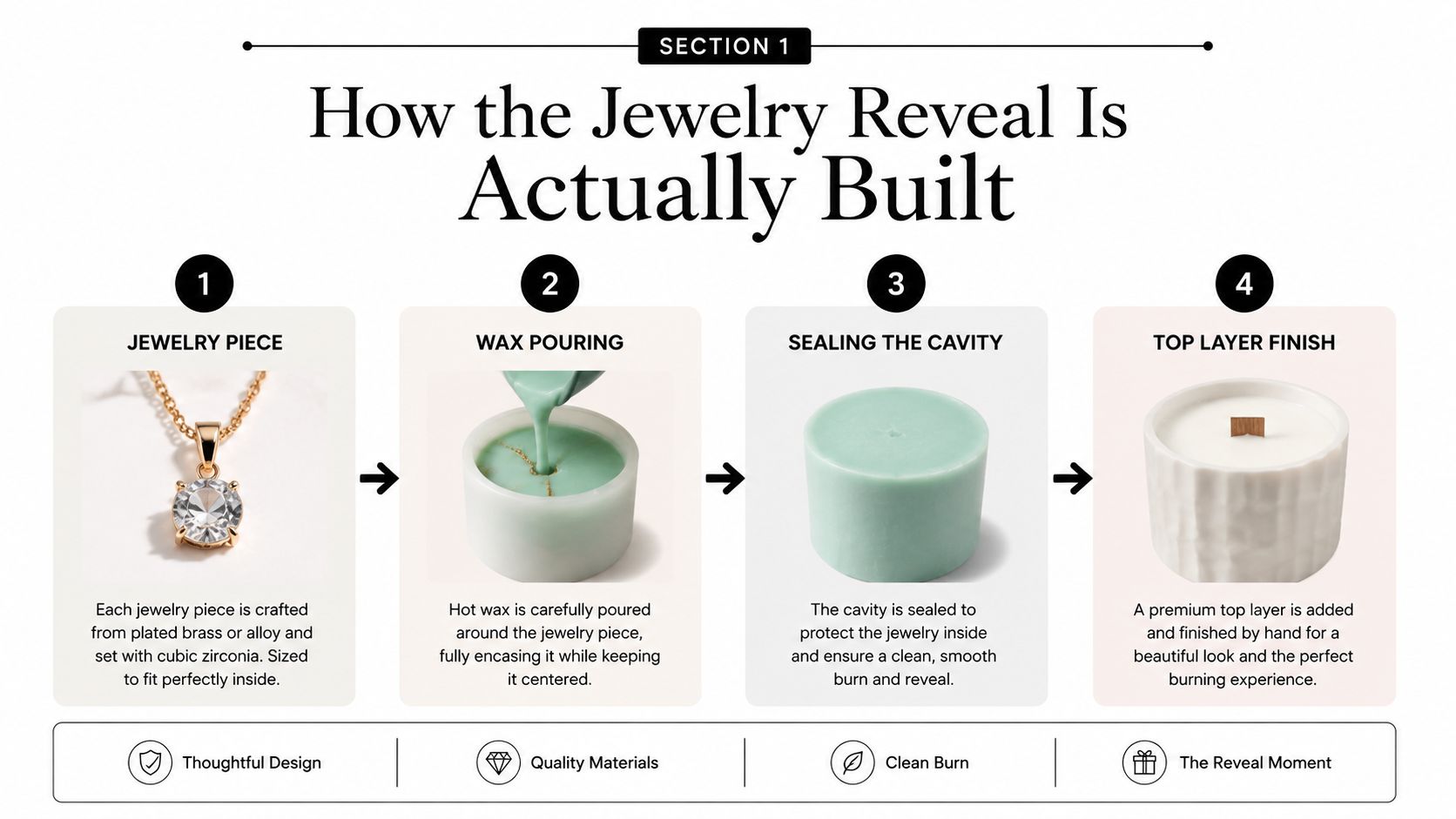
A candle maker may place the jewelry inside a small foil or heat-resistant pouch before the wax fully sets. Some designs suspend the package with a wick pin or position it inside a cavity between wax layers. The maker then adds a top layer that conceals the object while leaving it far enough from the wick to reduce direct flame contact.
Placement controls the timing of the reveal. If the pouch sits too close to the wick, the flame or hot melt pool can scorch it, damage its contents, or introduce unwanted material into the burn area. If it sits too deep, the buyer may need to burn most of the candle before reaching it. The finished candle therefore depends on the relationship between jewelry depth, wick position, wax pool, and container shape.
A manufacturer also needs to keep the pouch sealed. Fragrance oil or colored wax should stay in the candle, while the jewelry package should keep its contents isolated until removal. A leaking wrapper can affect the appearance of the wax and make the reveal less hygienic or less attractive.
A bath bomb uses a different approach because it has no flame and no slowly expanding melt pool. The maker presses a dry cavity into one half of the molded bomb, places the wrapped jewelry inside, and caps it with the second half. The two sides must bond firmly enough to survive handling but dissolve in water once the user starts the bath.
The cavity cannot be placed randomly. Too shallow, and the jewelry may fall out during packing or transport. Too deep, and the bomb may dissolve around the object without releasing it promptly. The wrapper must also tolerate fragrance, colorants, and moisture exposure without breaking apart before the bath begins.
A useful technical explanation of the product format appears in this guide to what a jewelry candle is. The central design principle is simple: hide the piece without interfering with the process that makes the product enjoyable.
The biggest difference is the pace of the reveal. A jewelry candle asks you to wait while the wax melts and the hidden item becomes accessible. A jewelry bath bomb gives you a concentrated experience that usually ends within one bath, with the jewelry appearing as the bomb dissolves.
Candles also have a life before and after the reveal. The vessel can function as home décor, and the fragrance can remain the main reason to use it. A bath bomb offers stronger visual immediacy through fizz, color, scent, and water movement, but it disappears after use. The jewelry becomes the lasting object.
| Feature | Jewelry Candle | Jewelry Bath Bomb |
|---|---|---|
| Reveal format | Gradual, tied to melting wax | Single-use, tied to dissolution |
| Main sensory experience | Fragrance, glow, and a decorative vessel | Fizz, color, fragrance, and bath feel |
| Main practical concern | Flame, wick behavior, hot wax, and soot | Moisture, skin compatibility, residue, and cleanup |
| Commitment | Requires a supervised burn over time | Fits into one bath |
| Best setting | Living room, bedroom, gift display, or relaxing evening | Bathroom, spa-style routine, or self-care gift |
| Keepsake handling | Remove and clean jewelry after the wax reveal | Rinse and dry jewelry after the bath |
| Ideal recipient | Someone who enjoys candles and anticipation | Someone who prefers bathing rituals or doesn't use candles |
A candle rewards patience. The reveal arrives as part of an extended routine, and the scent may fill the room before the jewelry is visible. That makes it suitable for someone who enjoys ambient fragrance, decorative objects, and a slower discovery.
The tradeoff is responsibility. Open flame requires supervision, wick care, ventilation, and attention to the hidden package. Soot can also appear when combustion is incomplete, particularly when the formulation, wick, fragrance load, or oxygen supply isn't well balanced.
A bath bomb feels more immediate and theatrical. The user drops it into water, watches it dissolve, and waits for the hidden item to emerge. It doesn't require an open flame, so it may suit households where candles aren't practical or welcome.
The tradeoff is compatibility. Fragrance, dyes, oils, and residue may not suit every skin type or bathtub surface. The jewelry also needs rinsing and drying, especially when its plating or finish can react with moisture and product residue.
Neither format wins universally. Choose the candle when the recipient values burn-and-wait atmosphere. Choose the bath bomb when they want an immersive, single-use bath ritual and are comfortable with the ingredients.
The hidden jewelry doesn't create the fragrance, support the wick, or make the fizz stronger. It adds a physical object that the maker must accommodate. The product's actual performance comes from the wax blend, fragrance formulation, wick, bath-bomb powders, moisture control, oils, and colorants.
Soy wax candles aren't soot-free. Soot forms through incomplete combustion, and excess fragrance, poor wick sizing, and low oxygen conditions can increase visible smoke and residue, as explained in this candle soot chemistry guide. The same source discusses fragrance load as a factor in how cleanly a flame burns, while practical candle-making guidance commonly places effective fragrance load around 6% to 8%, with 10% often treated as an upper boundary in many formulations.
That doesn't mean a candle with more fragrance is automatically better. Too much fragrance oil can destabilize the flame, create dark smoke, or interfere with the melt pool. The maker must balance scent strength against wick behavior, container diameter, wax characteristics, and the location of the hidden package.
Paraffin, soy, and coconut-containing blends can behave differently in scent release, melt-pool formation, and residue. Product descriptions should therefore name the wax type rather than relying on broad phrases such as “clean burning.” A proprietary soy blend may perform well, but the buyer still needs realistic care instructions.
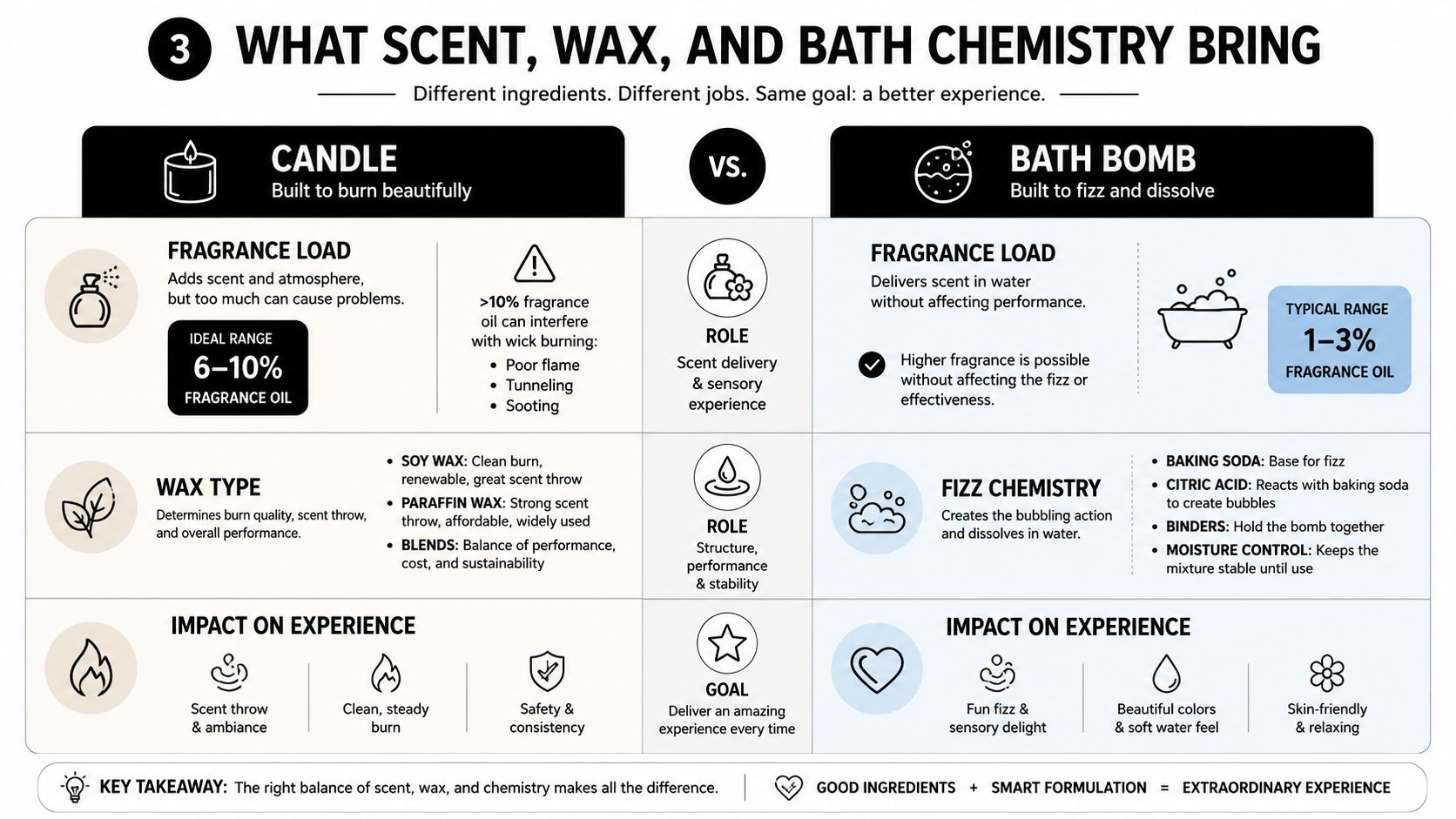
Bath bombs fizz because sodium bicarbonate reacts with citric acid. Sodium bicarbonate is mildly alkaline, with a pH around 8.3, while citric acid is acidic, around pH 3.0 to 3.24. Their reaction releases carbon dioxide, producing the familiar bubbles, as described in this bath bomb formulation discussion.
Formulators commonly work with a 2:1 or approximately 4:3 bicarbonate-to-citric-acid ratio by weight, but the final result depends on moisture, compression, particle size, oils, and additives. Water is particularly important because premature contact can start the reaction before the bomb reaches the tub.
A hidden ring or pendant occupies space inside the mold and can affect how the powder compacts around the cavity. It doesn't contribute to the fizz or skin feel, but it can influence structural strength and the path water takes through the bomb. Manufacturers must keep the object dry, use a suitable wrapper, and preserve enough powder around it for a firm shape.
The hidden object introduces risks that ordinary candles and bath bombs don't have. In a candle, metal findings, foil, or protective packaging must stay away from the active flame and the hottest part of the melt pool. In a bath bomb, the main concerns shift toward skin contact, moisture, residue, and the condition of the jewelry after removal.
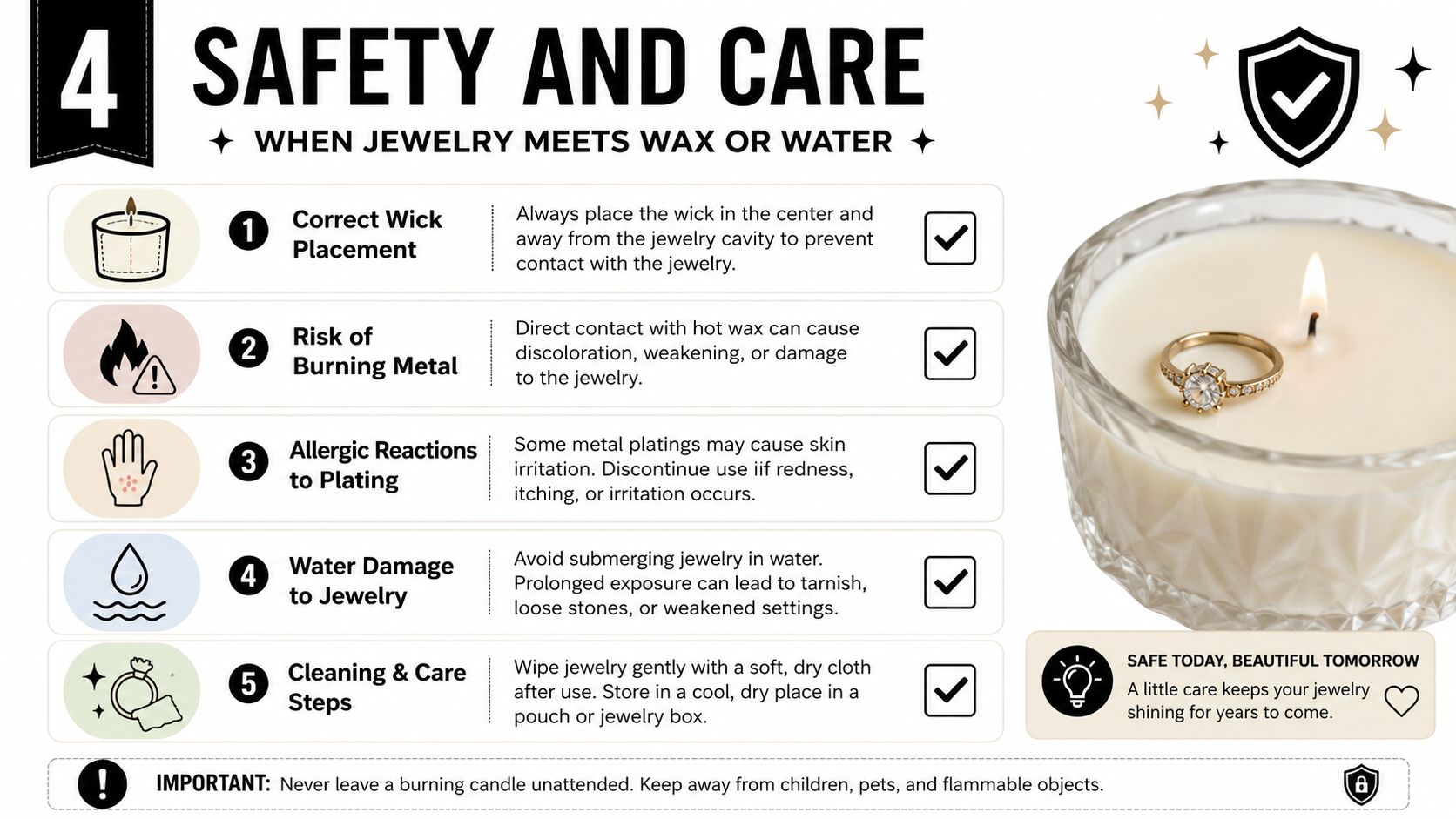
Start with the wick. Trim it according to the maker's instructions before lighting, and keep the candle on a stable, heat-resistant surface. Never leave it burning unattended, especially as the melt pool approaches the hidden cavity.
A wick placed too close to the jewelry package can expose wrappers or metal components to heat. Hot wax may also collect over the concealed item, so don't reach into the vessel while the candle is lit or while the wax remains hot. Extinguish the candle, allow the contents to cool, and follow the product's stated removal method.
Do not treat the reveal as a reason to keep burning a candle that is smoking, flaring, or behaving unpredictably.
Good ventilation helps manage fragrance and combustion byproducts, but ventilation doesn't replace supervision. If the flame touches foil, plastic, or another unexpected material, stop using the candle and contact the seller for product-specific advice. The Jackpot Candles safety and burning guidance is a useful reference for care instructions.
Bath bombs can contain fragrance, dyes, oils, and other ingredients that irritate sensitive skin. Check the complete ingredient list before gifting one to someone with fragrance sensitivity, allergies, or a history of reactions. A scented product isn't automatically unsuitable, but the recipient should know what they're applying to bathwater.
Remove the jewelry from the water promptly, rinse away bath residue, and dry it thoroughly with a soft cloth. Plated alloys can discolor or contribute to temporary skin staining when exposed to moisture, sweat, or cosmetic residue. For a practical explanation of why jewelry can leave green marks and how to reduce that problem, read this green skin cause guide.
Small rings, charms, and wrappers can also become cleanup hazards. Check the tub and drain area after the bath, keep tiny findings away from children and pets, and store the cleaned piece separately until it is completely dry.
The recipient's routine should decide the format, not the novelty alone. Someone who lights candles while reading may appreciate a gradual reveal, while someone who rarely uses candles may get more from a bath bomb. The safest gift is also the one that fits the recipient's home, schedule, and ingredient preferences.
| Occasion | Best Fit | Why It Works |
|---|---|---|
| Birthday | Jewelry candle or bath bomb | Choose based on whether the recipient prefers home fragrance or bath rituals |
| Anniversary | Jewelry candle | The slower reveal creates a shared, anticipatory moment |
| Housewarming | Jewelry candle | The vessel adds fragrance and can function as décor |
| Mother's Day | Jewelry candle | It suits recipients who enjoy relaxing ambient routines |
| Get-well gift | Jewelry bath bomb | A bath-focused format supports a quiet self-care evening |
| Teen or tween celebration | Jewelry bath bomb | The reveal is immediate and easy to share, with adult attention to ingredients |
| Bridal shower | Jewelry bath bomb | It works well for a spa-style group theme |
| Friend-group exchange | Jewelry bath bomb | Each person can use a single product without committing to a long burn |
A candle works best when the gift should unfold over time. It can be wrapped as a decorative object, placed in a living space, and enjoyed for its scent before the jewelry appears. That makes it a natural fit for birthdays, anniversaries, housewarmings, and Mother's Day, provided the recipient is comfortable using an open flame.
A bath bomb suits a more immediate moment. It can turn a private evening into a small event without requiring a candleholder or extended burn session. Get-well gifts, bridal showers, teen celebrations, and friend exchanges can all suit this format, but check whether the recipient has bathtub access.
A fragrance preference can override the occasion. Strong perfume may be welcome in a living room but uncomfortable in a small bathroom, while dyes and oils may be unwelcome for someone with sensitive skin. The recipient may also want a private reveal rather than a group activity, or the opposite.
Packaging matters for direct gifting, too. A product that arrives in a presentable box needs less preparation than one that requires repacking. If you're uncertain, choose the format that aligns with the recipient's existing habits rather than trying to create a new one.
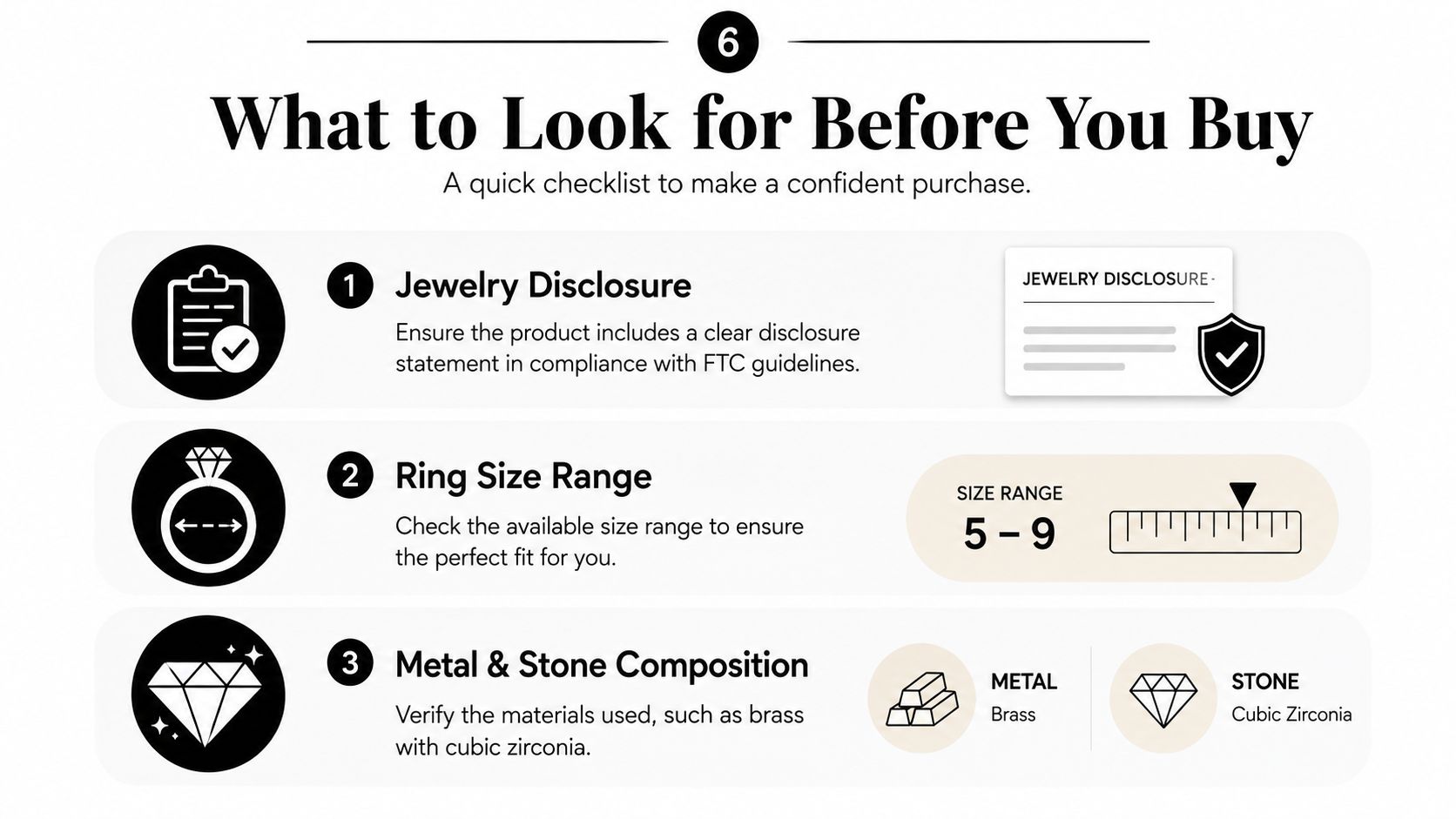
A quick product check can prevent most disappointment. Start with the jewelry disclosure. The listing should identify whether the piece uses plated brass, another alloy, sterling silver, or a different material, and it should describe the stone as cubic zirconia, glass, or another stated option. Look for ring sizing information, rather than assuming the hidden ring will fit.
Next, inspect the product details. Candle listings should explain the wax type, fragrance profile, expected burn guidance, and safe reveal process. Bath-bomb listings should provide complete ingredients, fragrance details, colorant information, moisture-resistant packaging, and instructions for removing and cleaning the jewelry.
Buy the experience you can verify, not the reward you can imagine.
Check the return policy before checkout. A melted candle or dissolved bath bomb may receive different treatment from an unused product, so read the terms instead of assuming a standard return applies. Independent reviews are most useful when they document the actual reveal, jewelry finish, fragrance strength, fizz, and packaging rather than repeating the advertised reward value.
Finally, ask two confirming questions: does the scent or fizz experience suit the recipient, and is the packaging ready for gifting without repackaging? If the answer is yes, the hidden jewelry can add delight without carrying the entire purchase.
Jackpot Candles offers scented jewelry candles and bath bombs designed around a hidden jewelry reveal, including rings, necklaces, and earrings. Visit Jackpot Candles to compare the formats, review the product details, and choose a surprise experience that fits the recipient's routine.
Comments will be approved before showing up.