
free shipping at $99


In a world that constantly demands our attention, finding a moment of peace can feel like a monumental task. Yet, the practice of meditation offers a powerful and accessible path to tranquility and mental clarity. This isn't about forcing your mind to be empty; it's about learning to observe your thoughts and feelings without judgment, creating space between you and your mental chatter. This guide is designed to demystify the process, offering a clear roadmap to the most effective meditation techniques for beginners. We will move past the abstract concepts and provide you with actionable steps to get started immediately.
Inside this article, we'll explore seven distinct and practical methods, each tailored to different personalities and preferences. From the grounding practice of a Body Scan to the focused rhythm of a Walking Meditation, you'll find a technique that resonates with your lifestyle. The goal is to equip you with the tools you need to build a consistent and rewarding practice. Understanding the positive impacts of meditation can further motivate your journey; you can explore an infographic detailing the top health benefits of meditation to see just how transformative it can be. Prepare to unlock a calmer, more focused version of yourself, one mindful moment at a time.
Mindfulness Meditation is arguably the most well-known and foundational of all meditation techniques for beginners. Originating from Buddhist traditions, this practice involves focusing your attention on the present moment, observing your thoughts, feelings, bodily sensations, and surrounding environment without judgment. The core idea isn't to empty your mind, but rather to become a curious and compassionate observer of its activity.
This technique has gained immense popularity due to its extensive scientific backing, with research highlighting its effectiveness in reducing stress, improving focus, and enhancing emotional regulation. Its principles are now integrated into various mainstream programs, from Mindfulness-Based Stress Reduction (MBSR) in healthcare settings to corporate wellness initiatives like Google's 'Search Inside Yourself'.
Getting started is simple. Find a quiet space where you won't be disturbed for a few minutes.
Mindfulness is not just a formal practice; it's a way of living. To further deepen your understanding and integration of this practice, you can learn how to practice mindfulness daily.
Breath Awareness, or Anapanasati in the Pali language, is one of the most fundamental and accessible meditation techniques for beginners. Stemming from ancient Buddhist traditions, this practice uses the simple, natural rhythm of breathing as a primary object of focus. By anchoring your attention to the breath, you can calm a restless mind, develop concentration, and cultivate a sense of inner peace.
This method is considered a cornerstone of many meditation paths because the breath is always with you, serving as a constant and reliable anchor to the present moment. Its power lies in its simplicity. Versions of this practice are seen everywhere, from Pranayama in yoga studios to breathwork exercises used by athletes for focus, and even in clinical settings as a tool to manage anxiety.
The goal is to observe the breath without controlling it. Find a quiet spot where you can sit undisturbed.
Body Scan Meditation is a technique that cultivates a strong mind-body connection by systematically guiding your attention through your entire body. Instead of focusing on the breath, this practice invites you to bring a gentle, curious awareness to physical sensations in each part of your body, from your toes to the top of your head. The goal is to notice sensations like warmth, tingling, tension, or contact without judgment or the need to change them.
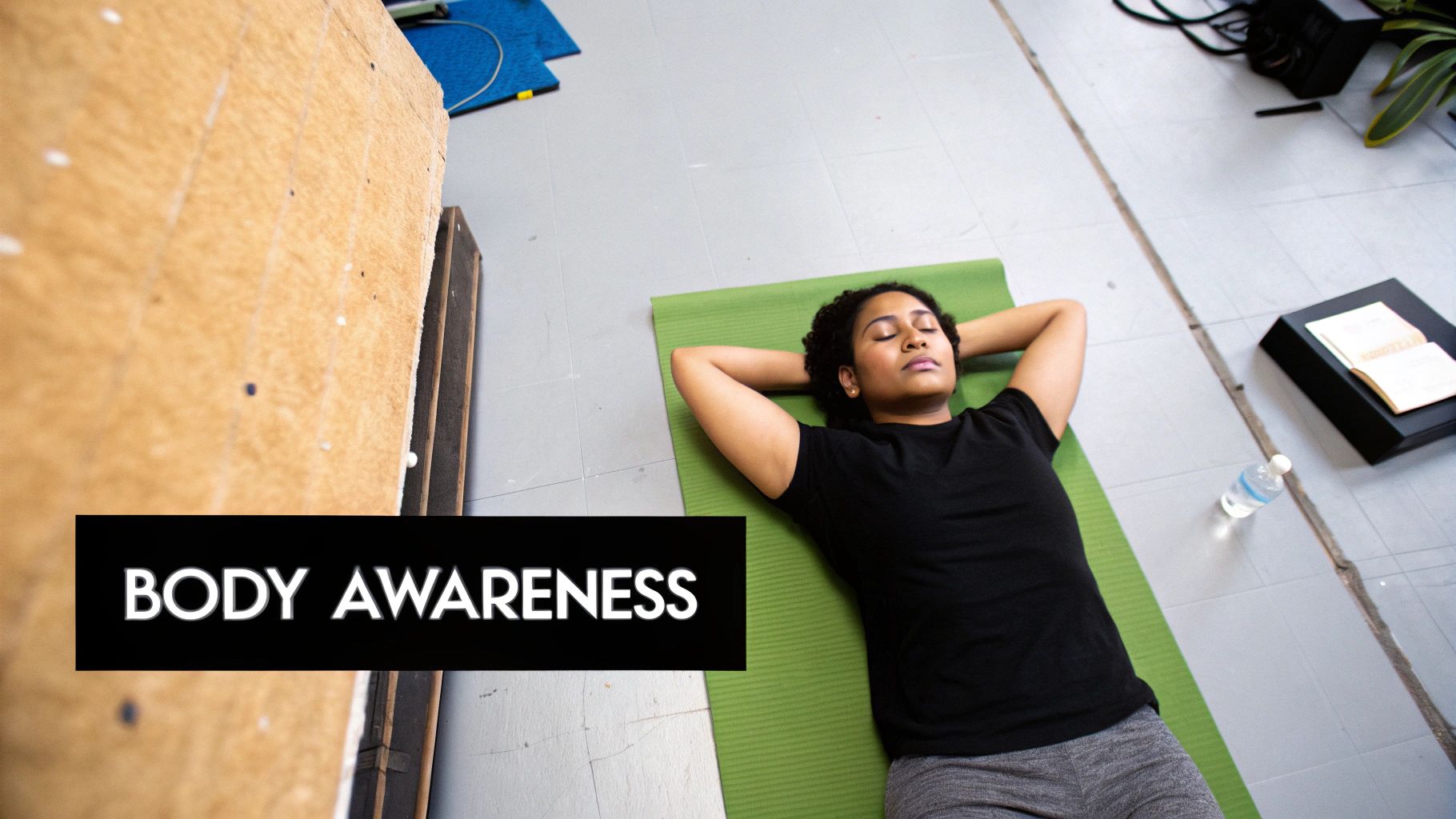
This method is a core component of Mindfulness-Based Stress Reduction (MBSR) programs, famously developed by Jon Kabat-Zinn, and is widely used in clinical settings for pain management and insomnia treatment. Its power lies in its ability to ground you in your physical self, release stored tension you may not have been aware of, and promote a state of deep, restorative relaxation, making it one of the most accessible meditation techniques for beginners.
This practice is often done lying down, making it exceptionally relaxing and ideal before bedtime.
Loving-Kindness Meditation, also known as Metta, is a heart-centered practice that focuses on cultivating feelings of goodwill, kindness, and compassion. Originating from Buddhist traditions, this technique helps to develop a state of unconditional, inclusive love, starting with yourself and gradually expanding outward to encompass all living beings.
This powerful practice is more than just a fleeting mood; it's a trainable skill. Research has shown that regular practice can increase positive emotions, decrease negative ones, and enhance feelings of social connection and empathy. Its benefits are so recognized that Metta is used in compassion-focused therapy, corporate self-compassion workshops, and even in schools as a tool for bullying prevention.
The practice revolves around the silent repetition of specific, well-wishing phrases directed toward different people.
Guided Meditation is one of the most accessible and popular meditation techniques for beginners, acting as a personal trainer for your mind. In this practice, a teacher guides you through the steps of a meditation session, typically via an audio or video recording. The guide provides instructions on everything from posture and breathing to visualization and managing thoughts, removing the guesswork and pressure of "doing it right" on your own.
This method's success is rooted in its structured support, making meditation less intimidating. It has been popularized by world-renowned apps like Headspace and Calm, which have brought guided sessions to millions of users. The format is incredibly versatile, with sessions tailored for specific goals like reducing anxiety, improving sleep, or boosting focus, making it a highly practical tool for modern life.
Practicing guided meditation is as simple as pressing play. You just need a device and a quiet place to listen.
Walking Meditation bridges the gap between formal sitting practice and an active, mindful life. As one of the most accessible meditation techniques for beginners, it involves bringing your full attention to the physical act of walking. Instead of focusing on a destination, the goal is to be completely present with the sensations of movement, your body, and your environment.
This practice is perfect for those who find sitting still for long periods difficult or for anyone looking to integrate mindfulness into physical activity. Popularized in the West by Zen master Thich Nhat Hanh, it is a core practice in traditions like the Plum Village community. It offers a unique way to ground yourself in the present moment by connecting mind and body through rhythmic, deliberate motion.
Find a clear path where you can walk back and forth without obstacles, ideally about 10 to 20 feet long. This can be indoors or outdoors.
Mantra Meditation is a powerful and ancient concentration practice that uses a repetitive sound to quiet the mind. The "mantra" can be a word, sound, or phrase repeated silently or aloud. This repetition serves as a focal point, preventing the mind from drifting into distracting thoughts and allowing you to access a deeper state of stillness and awareness. This is one of the most accessible meditation techniques for beginners who find it hard to focus on the breath alone.
This technique spans numerous traditions, from the Japa meditation of Hinduism and Buddhism to modern secular practices. Well-known examples include Transcendental Meditation (TM), popularized by Maharishi Mahesh Yogi, which uses personalized mantras. The resonant sound provides an anchor for your attention, making it particularly effective for those with a busy or overactive mind.
This practice is versatile and can be adapted to your personal comfort level.
| Meditation Type | Implementation Complexity 🔄 | Resource Requirements ⚡ | Expected Outcomes 📊 | Ideal Use Cases 💡 | Key Advantages ⭐ |
|---|---|---|---|---|---|
| Mindfulness Meditation | Moderate - requires consistent practice | Minimal - no equipment needed | Stress reduction, improved focus, emotional regulation | Daily stress management, general mental well-being | Scientifically backed, flexible practice |
| Breath Awareness (Anapanasati) | Low - simple focus on breath | Minimal - no equipment needed | Calming effect, builds concentration | Beginners, anxiety relief, breath-based focus | Always available anchor, anxiety reduction |
| Body Scan Meditation | Moderate - systematic, 20-45 min | Minimal - usually lying down | Deep relaxation, improved body awareness, pain relief | Stress relief, sleep improvement, pain management | Effective for relaxation and body awareness |
| Loving-Kindness Meditation (Metta) | Moderate - involves emotional focus | Minimal - silent or guided | Increased positive emotions, compassion, social connection | Emotional healing, relationship improvement | Cultivates compassion and self-love |
| Guided Meditation | Low - instructor-led, highly structured | Requires device or app | Better focus, learning meditation techniques | Absolute beginners, learning various meditation styles | Structured, easy to follow |
| Walking Meditation | Low to moderate - mindful movement | Space to walk (indoor/outdoor) | Combines mindfulness with movement, less drowsiness | People who dislike sitting, integrating mindfulness in daily life | Accessible, integrates physical activity |
| Mantra Meditation | Moderate - repetition of phrases | Minimal - silent or vocal practice | Enhanced concentration, inner stillness | Concentration enhancement, cultural/spiritual practice | Clear focal point, culturally rich practice |
You've now explored a diverse toolkit of meditation techniques for beginners, each offering a unique pathway to a calmer, more centered state of being. From the simple, profound act of watching your breath in Mindfulness and Anapanasati, to the gentle grounding of a Body Scan, each method serves as an anchor in the present moment. We’ve journeyed through cultivating compassion with Loving-Kindness meditation, followed expert voices in Guided practices, embraced movement with Walking Meditation, and found focus in the repetition of a Mantra.
The true power of this exploration lies not in mastering every single technique, but in discovering the one, or the combination, that resonates most deeply with you. Your meditation practice is not a rigid prescription; it's a personal, adaptable ritual that should fit seamlessly into your life.
Remember that the goal isn't to silence your thoughts completely, a common misconception that discourages many beginners. Instead, the aim is to change your relationship with your thoughts. You learn to observe them without judgment, creating a space between your awareness and the mental chatter that often commands your attention.
The most crucial elements for success are patience and consistency. A five-minute daily practice is far more impactful than a one-hour session once a month. This consistency builds a new neural pathway, making it easier to access a state of calm over time. Think of it as training a muscle; small, regular efforts yield the most significant long-term results.
To truly integrate these practices, start small and be intentional. Here’s a simple plan to get you started:
This journey is a profound act of self-care. By regularly practicing these meditation techniques for beginners, you are not just finding a momentary escape from stress. You are actively building resilience, enhancing your focus, and cultivating a deeper, more compassionate relationship with yourself and the world around you. You are crafting a personal sanctuary, not just in your home, but within your own mind. The peace you seek is already within you, waiting to be discovered, one mindful breath at a time.
Ready to transform your meditation space into a true sanctuary of calm? Elevate your practice with the soothing aromas and gentle light of a candle from Jackpot Candles. Discover your favorite scent and let the hidden jewelry inside serve as a beautiful reward for your commitment to self-care. Visit Jackpot Candles to find the perfect companion for your mindful moments.
Comments will be approved before showing up.