
free shipping at $99


When you hear the term "organic soy wax," it's not just a fancy label. It means the candles are made from hydrogenated soybean oil, but with a crucial difference: the soybeans themselves are grown without any pesticides or genetic modification. This commitment to purity creates a cleaner, non-toxic candle, which is why so many health-conscious people are making the switch from traditional paraffin.
Think about it like shopping for groceries. You know the difference between a regular apple and an organic one. The organic apple was grown without synthetic pesticides and fertilizers, and the same principle applies here. The soybeans used for organic wax come from farms dedicated to sustainable, chemical-free agriculture. This simple choice at the source makes all the difference.
The process starts on the farm, where soybeans are grown under strict organic guidelines. After harvesting, the beans are cleaned, flaked, and then turned into oil. A process called hydrogenation solidifies that oil into the waxy substance perfect for candles. What you're left with is a completely plant-based, renewable, and biodegradable wax.
The "organic" promise is all about purity, from the moment the seed is planted to the time you light the wick. It's a full-circle commitment.
This careful, step-by-step approach creates a candle that is worlds away from its petroleum-based cousins.
The biggest win with organic soy wax is its clean burn. Unlike paraffin wax—which is a leftover from refining crude oil—soy wax doesn't release known carcinogens like toluene and benzene into your air.
People are flocking to organic soy wax candles because they want healthier homes and a happier planet. A cleaner burn means better indoor air quality, which is a big deal for families, pet owners, and anyone with asthma or allergies. It's a small change in material that has a huge impact on your living space.
But it’s not just about health—it’s about performance, too. Soy wax has a lower melting point, which means it burns slower and more evenly. You get more candle for your money. This slow, steady burn also creates a larger pool of liquid wax around the wick, allowing for a richer, more consistent scent that beautifully fills a room without ever feeling overwhelming. If you're new to the world of candles and want to explore different styles, starting with a general candle set can be a great way to discover what you love.
When you're picking out a candle, the wax is a bigger deal than you might think. It affects everything—from how clean it burns to the air you're breathing in your own home. The two big players on the market are soy wax and paraffin wax, and honestly, they couldn't be more different. Getting to know them is the key to choosing a candle that really fits your lifestyle.
Paraffin wax is what most of us grew up with. It's an old-school choice, but its origins are a little iffy—it’s a byproduct of refining crude oil. Basically, it’s what's left over after making things like gasoline. Since it comes from a non-renewable fossil fuel, its impact on the planet isn't great.
Even more important, though, is what happens when you light a paraffin candle. It can release some pretty nasty stuff into the air, including things you really don't want in your house like benzene and toluene. These are the same kinds of pollutants you'd find in diesel exhaust, which is a major red flag, especially if you have kids, pets, or anyone with allergies or asthma at home.
Where a candle's wax comes from tells you almost everything you need to know. One is pulled from deep within the earth, a resource we can't get back. The other is grown in a field, ready to be planted again next season.
This huge difference in where they come from is really the starting point for all the other benefits you get with organic soy wax candles.
Choosing soy over paraffin isn't just a matter of taste; it’s about making a conscious decision for a cleaner burn and a healthier home. One is a petroleum byproduct, the other is a plant-based, renewable resource. The choice is pretty clear.
Okay, so soy is healthier and better for the planet—but how does it actually perform? This is where soy wax really pulls ahead.
Soy wax has a lower melting point than paraffin. That might sound like a small technical detail, but it completely changes your candle experience. Because it melts at a cooler temperature, you get a much slower and longer-lasting burn. That means your soy candle will easily outlast a paraffin candle of the same size, giving you way more bang for your buck.
That cooler, slower burn also creates a bigger pool of melted wax around the wick. This "melt pool" is what throws the fragrance into the room. A larger melt pool means a stronger, more consistent scent that beautifully fills your space, not just a quick hit of fragrance that fades away. If you want to get into the nitty-gritty, check out our detailed look at soy vs. paraffin candles.
To give you a quick rundown, here’s how the two stack up side-by-side.
| Feature | Organic Soy Wax | Paraffin Wax |
|---|---|---|
| Source | Soybeans (Renewable, plant-based) | Petroleum (Non-renewable, fossil fuel) |
| Burn Time | Longer and slower burn | Burns faster |
| Soot | Minimal to no black soot | Often produces black soot |
| Air Quality | Clean burn, non-toxic | Can release toxins and carcinogens |
| Scent Throw | Strong, consistent fragrance release | Scent can be strong but fade quickly |
| Clean-up | Easy to clean with soap and water | Difficult to remove, requires solvents |
| Cost | Higher initial cost, better value | Cheaper upfront, less burn time |
It’s easy to see why so many people are making the switch once you see the benefits laid out so clearly.
The move to natural waxes isn't just some passing trend; it's a real shift in what people want. We're all looking for healthier, more eco-friendly products, and candles are no exception. Soy wax candles are simply outperforming paraffin in just about every way that matters.
The numbers back it up, too. The soy wax candle market is expected to grow at a 7.5% CAGR from 2025 to 2033, which is way faster than the overall candle market's 5.26% growth. As more people learn about indoor air quality, they’re choosing natural waxes that don’t release harmful chemicals.
This infographic breaks down the key benefits that make organic soy wax candles the winning choice.
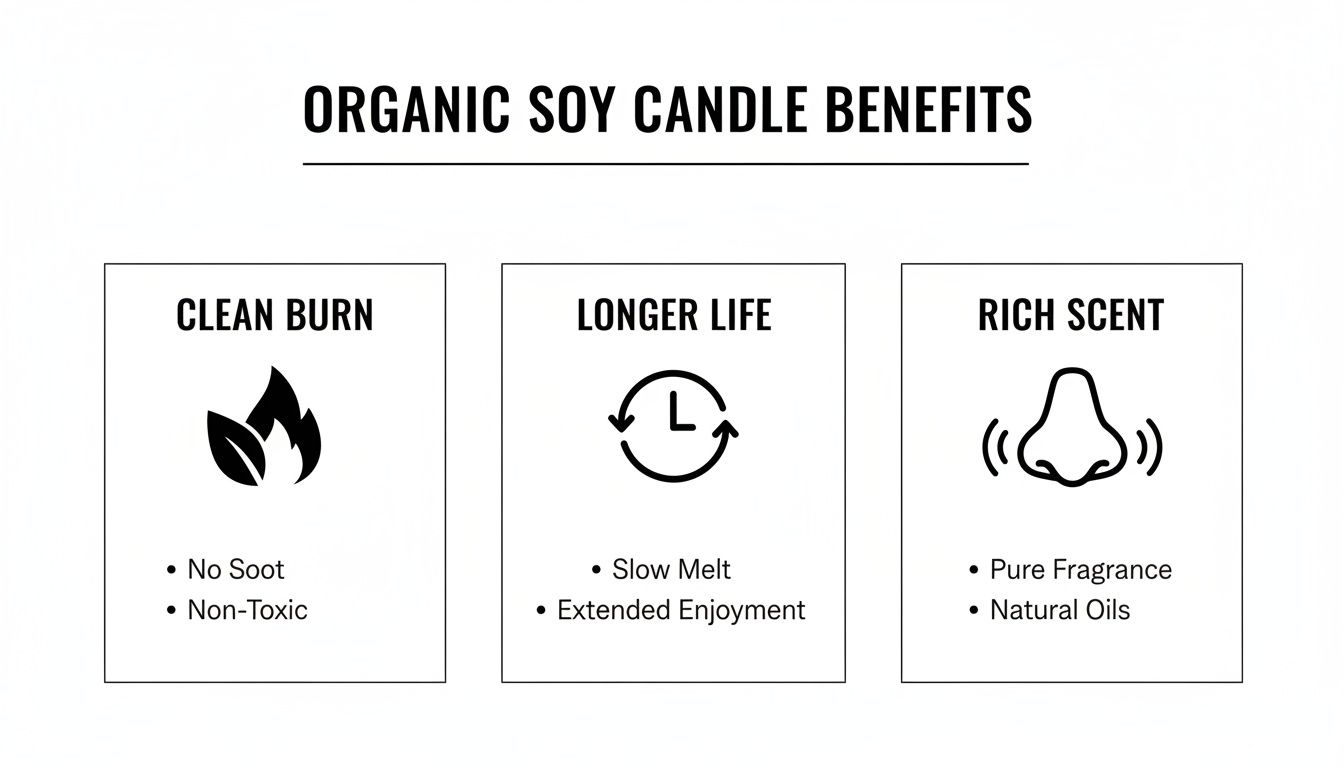
When you add it all up—the non-toxic burn, the better scent, the longer life—it’s clear that soy wax creates a superior, premium candle experience.
Choosing a soy wax candle is about so much more than just picking a pretty scent. It's a conscious choice that’s better for you, your home, and the planet. Think about it: when you light a candle, whatever it's made of becomes part of the air you breathe. This is where soy wax really starts to pull ahead of the pack.
The first thing you’ll notice is how clean the burn is. Paraffin candles, which are made from petroleum, can release some not-so-great stuff like benzene and toluene when they burn. Organic soy wax candles, on the other hand, offer a non-toxic burn. That means you’re not inviting any unwanted pollutants into your home’s atmosphere.
This is a huge deal, especially if you have kids, pets, or anyone in the house with allergies or asthma. A clean-burning candle keeps your air pure, so you can enjoy that cozy vibe without a single worry about what you’re breathing in.
The good vibes from organic soy wax candles reach far beyond your living room. Their environmental footprint is way lighter than paraffin candles, and it all starts at the source.
Soybeans are a renewable resource. Every year, farmers plant and harvest new crops, which is a completely sustainable cycle. Paraffin, however, is a byproduct of crude oil—a fossil fuel that we can’t get back once it’s gone. The whole process of drilling for and refining oil isn't great for the environment, either.
Here’s a quick look at why soy is such a big win for Mother Earth:
Every soy wax candle you light is a small vote for a more sustainable way of doing things.
By opting for soy, you're not just buying a product; you're investing in a cleaner agricultural system and reducing your reliance on fossil fuels. It’s a simple switch that aligns with eco-conscious values and contributes to a larger positive impact.
Once you know the whole story behind the wax, the choice is pretty simple. You're not just dodging the bad stuff; you're actively choosing something better. A healthier home is a fantastic reason to make the switch, and the benefits for the planet just sweeten the deal.
You can dive deeper into all the perks and see why it’s a superior choice by exploring the benefits of soy wax candles. Ultimately, embracing organic soy wax is about making a smart, holistic decision—one that’s good for you, performs beautifully, and helps keep our planet healthy. It turns the simple act of lighting a candle into a positive, mindful experience.
The magic of a great candle isn't just its color or the pretty jar it comes in; it's the whole experience. How a candle scents a room and how long that experience lasts are the real tests of its quality. When it comes to organic soy wax candles, the secret to their incredible performance is baked right into the physical properties of the wax itself.
Let's talk fragrance. In the candle world, you'll hear two key terms tossed around: cold throw and hot throw. Cold throw is simply the scent you smell when the candle is unlit on the shelf. The hot throw? That's the amazing aroma it releases when you actually light it. While soy wax has a lovely, subtle cold throw, its true power is unleashed when the flame gets going.
Think of candle wax as a fragrance delivery system. Paraffin wax has a higher melting point, which means when you light it, you only get a small pool of melted wax around the wick. It’s like trying to fill a room with the scent from a tiny saucepan on low heat—it does something, but it's pretty limited.
Soy wax, on the other hand, is the real star. It has a lower melting point, allowing it to create a larger, more even melt pool that stretches all the way to the edges of the jar. This bigger surface area acts more like a slow-simmering pot of spices, releasing those beautiful fragrance oils gradually and consistently. The result is a richer, more authentic hot throw that fills your space without being overpowering. It's a gentle, steady release, not a quick, intense burst that vanishes.
One of the best things about soy wax is its incredible burn time. An organic soy wax candle can last up to 50% longer than a paraffin candle of the exact same size. And no, that isn't just some marketing gimmick; it's simple science.
Because soy wax melts at a cooler temperature, the flame doesn't have to work as hard to turn it into liquid. This slow, cool burn means the wax gets used up at a much more relaxed pace. You get way more hours of cozy ambiance from your candle, which makes it a fantastic value over time.
The cooler burn temperature and slower consumption rate mean you’re not just buying a candle; you’re investing in hours of ambiance. This efficiency is a direct result of soy wax’s natural composition.
This slower process also leads to a much cleaner burn. The steady, low-temperature flame produces hardly any soot, which is great for keeping your candle jars, walls, and the air you breathe clean.
Want to get the absolute most out of your organic soy wax candle? Then you need to nail the first burn. This is what we call setting the memory burn, and it is crucial. If you blow out the candle before the wax has melted all the way to the edges, it will "remember" that smaller pool.
For every future burn, the candle will only melt within that initial tunnel. This wastes all the good wax stuck to the sides of the jar and drastically shortens your candle's life. We call this frustrating phenomenon tunneling.
Luckily, it's super easy to prevent. Just follow this one simple rule:
Following this single tip is the key to unlocking every last bit of value and fragrance from your gorgeous soy candle.
Navigating the candle aisle can feel a little tricky sometimes, but learning to spot a truly high-quality soy candle is simple once you know what to look for. It’s about way more than just the scent; you have to consider the wax, the wick, and how open the brand is about its ingredients.
This guide will help you see past the clever marketing and choose a candle that delivers a superior, clean-burning experience you can feel good about.
The first—and most important—step is to check out the wax. Look for candles that are explicitly labeled "100% soy wax" or "all-natural soy wax." You'll want to be a little wary of vague terms like "soy blend," as these often contain a good amount of paraffin to keep costs down. That just reintroduces the very pollutants you’re trying to avoid in the first place.
A premium candle is all about the details, and the wick is a surprisingly critical part of the equation. A high-quality organic soy wax candle will almost always use a wick made from natural materials.
Next, take a look at the wax itself. Pure soy wax has a few unique tells. It often has a slightly creamy, opaque appearance, unlike the slick, almost translucent look of paraffin. You might also notice something called "frosting"—small, crystalline patterns on the surface. Don't worry, it's a completely natural trait of soy wax and a great sign that your candle is the real deal.
A high-quality candle is an honest one. The best brands are proud of their ingredients and will clearly state that they use 100% soy wax and all-natural wicks. If a label is vague, the candle probably has something to hide.
Let’s be honest, the scent is usually what draws us to a candle, but not all fragrances are created equal. High-end soy candles typically use essential oils or perfume-grade fragrance oils. Essential oils give you that pure, natural aroma straight from plants, while top-tier fragrance oils are complex blends designed for a powerful and long-lasting scent throw. Try to avoid candles with a generic "fragrance" label that doesn’t specify the quality or source.
The labels and packaging offer the final clues. When you're trying to find high-quality products, the presentation often speaks volumes. You might even be interested in the process behind creating professional custom candle labels. Trustworthy brands give you clear, detailed information.
There's a reason the global soy candle market was valued at USD 7,951.5 million in 2024—it's because people are actively looking for these transparent, eco-friendly options for their homes. You can read the full research about the soy candle market growth to see just how popular they've become.
Knowing what makes a great candle is one thing, but actually experiencing it turns the simple act of lighting a wick into a full-on sensory journey. At Jackpot Candles, we’ve bundled all the best parts of a high-quality organic soy wax candle into a unique experience that’s all about delight.
It all starts with our proprietary soy wax blend. We’ve engineered it for a clean, slow burn, which means you get the most life out of your candle with barely any soot and a consistently beautiful flame. This carefully crafted blend is the secret to an amazing fragrance experience.
This move toward better, natural waxes is part of a bigger wellness movement. People are actively choosing scented soy candles, and the market is projected to skyrocket to $6.6 billion by 2031. It makes sense—soy wax is biodegradable, burns longer, and has a fantastic scent throw. It’s the perfect base for our rich fragrances and slow, even burn, making a simple candle a true treat.
We pair our premium wax with exclusive, perfume-grade fragrances. These aren't your average, one-note scents; they're complex, world-class aromas crafted to create a luxurious vibe that fills your space with an inviting, unforgettable scent. The combination of our wax and fragrances delivers an incredible hot throw that stays true from the first light to the very last.
But the real magic of a Jackpot Candle goes way beyond its beautiful smell and clean burn. We’ve turned home fragrance into an event you’ll look forward to.
The heart of the Jackpot Candles experience is the thrill of discovery. We reimagined the candle as more than just light and scent—it’s a vessel holding a hidden treasure, just waiting for you to find it.
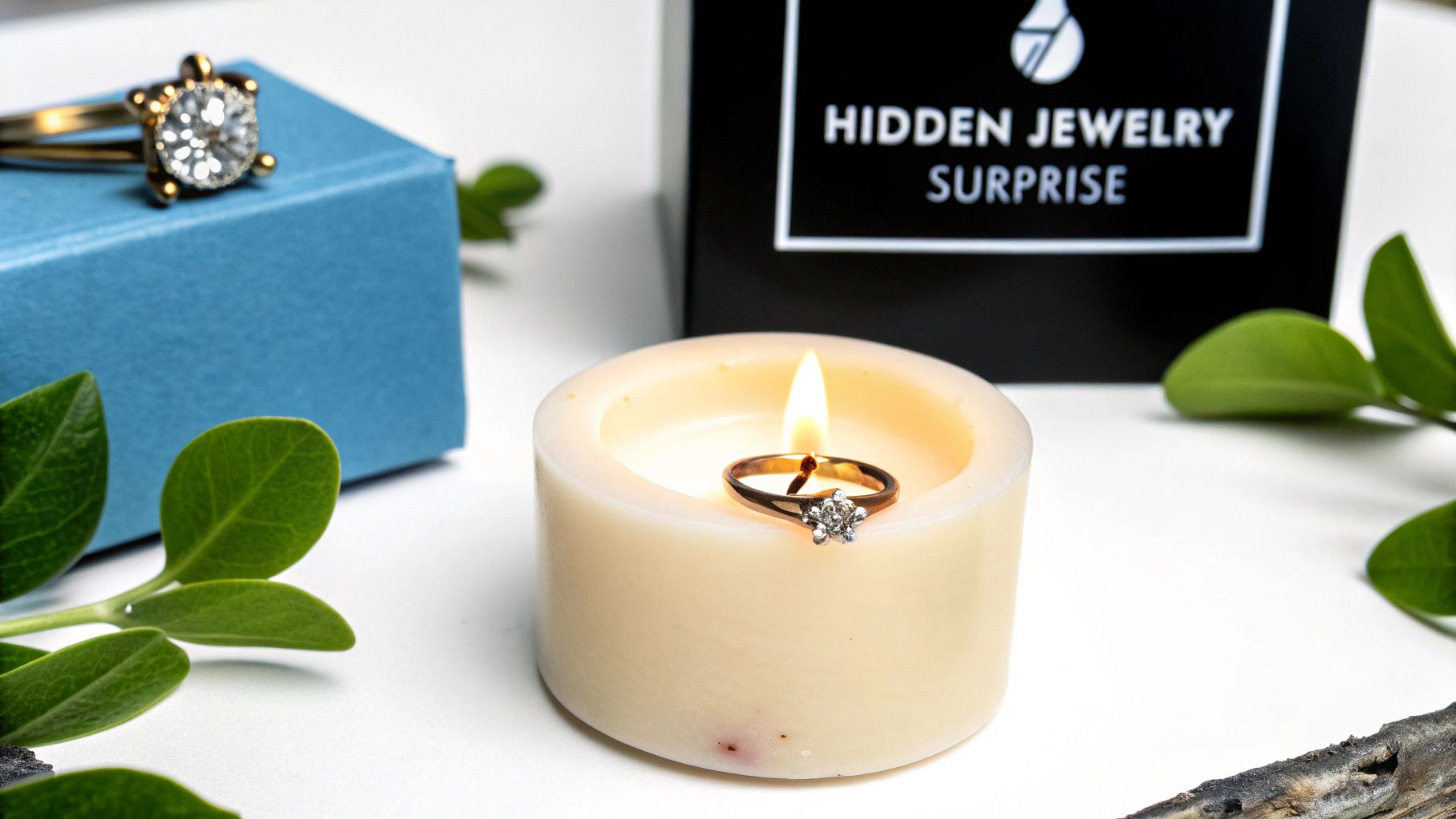
As your organic soy wax candle burns down, it reveals a hidden surprise: a gorgeous piece of jewelry nestled inside. This element of discovery transforms the whole thing from just another home product into a moment of genuine excitement.
Diving into the world of organic soy wax candles is exciting, but it's totally normal for a few questions to pop up along the way. Getting the inside scoop on these common curiosities is the key to making sure you get the absolute most out of every candle. Let's talk about some of the things people wonder about most.
Here's the deal: no open flame can ever be 100% soot-free. It's just the nature of fire! But the difference between soy and paraffin is night and day. Organic soy wax candles produce dramatically less soot, and what little you might see is typically light-colored and non-toxic—nothing like the thick, black gunk you get from petroleum-based candles.
Want to guarantee the absolute cleanest burn? It’s easy. Just remember to trim your wick to about 1/4 inch before you light it up each time. Also, try to keep your candle away from drafts, fans, or open windows. This gives the flame a steady, happy environment to burn cleanly and efficiently, which means less soot for you.
Ever noticed a slightly weird crystalline or mottled pattern on the surface of your soy candle? Don't worry, your candle isn't broken! This is a natural thing called "frosting," and you should actually be happy to see it. It's a dead giveaway that you've got a genuine, 100% soy wax product.
This happens because the natural wax is just trying to go back to its original crystalline form. It’s a purely cosmetic quirk and has zero effect on how your candle burns or how amazing it smells. Think of it as a little beauty mark that proves your candle is the real deal—made from natural, plant-based ingredients.
Those unique visual textures you see on soy wax, like frosting or an uneven top after it cools, are actually hallmarks of its authenticity. They aren't defects; they're proof that you're burning a natural, high-quality wax without a bunch of synthetic additives.
Yes, you absolutely can! One of the best perks of soy wax is how ridiculously easy it is to clean up. Once there's only about 1/2 inch of wax left at the bottom, it's time to retire the candle for safety reasons.
Cleaning the jar is a breeze from there. You can pop the jar in the freezer for a few hours—the leftover wax will shrink up and usually pop right out. Another trick is to gently warm the jar to melt that last little bit. A quick scrub with soap and hot water, and you'll have a sparkling clean container ready for a new life storing makeup brushes, planting a small succulent, or just looking pretty on a shelf.
This is a big one for getting the best performance and longest life out of your candle. You want to burn it long enough for the melted wax pool to reach all the way to the container's edges. A good rule of thumb is to plan for one hour of burn time for every inch of the jar's diameter.
That first burn is the most critical. If you don't let it melt all the way across, you'll get "tunneling," which is when the wick burns straight down the middle and leaves a ton of wasted wax along the sides. On the flip side, as a general safety rule, you should never let any candle burn for more than four hours at a time. This keeps things safe and ensures a perfect, even burn every single time.
At Jackpot Candles, we take the clean-burning goodness of our proprietary soy wax blend and add a little thrill: a hidden jewelry surprise waiting inside. You get a premium fragrance journey and a beautiful keepsake, all in one.
Comments will be approved before showing up.