
free shipping at $99


In a crowded market, competing on price is a race to the bottom. A premium pricing strategy, however, allows brands to communicate superior value, foster intense loyalty, and build a more sustainable, profitable business. This isn't just about charging more; it's about justifying that price through exceptional quality, compelling stories, and an unmatched customer experience. Understanding the core value proposition and consumer perception is key; for instance, examining the motivations behind luxury purchases like Rolex watches reveals that customers pay for heritage, status, and investment value, not just a timepiece.
For a brand like Jackpot Candles, which combines high-quality soy wax candles with the excitement of discovering jewelry, understanding these strategies is the key to elevating its position from a novelty product to a premium gift experience. Moving beyond a simple cost-plus model unlocks significant brand potential and higher profit margins. This article explores 10 proven premium pricing strategy examples, breaking down the psychology and mechanics of each one. We provide a clear roadmap for how a unique brand can implement them to command a higher price point and captivate a more discerning audience, transforming customer perception and driving long-term growth.
This foundational premium pricing strategy involves establishing your product not just as high-quality, but as a genuine luxury item. It moves beyond cost-plus pricing to anchor your product's value in concepts like exclusivity, superior craftsmanship, heritage, and brand story. Companies like Rolex and Hermès don't price watches and handbags based on materials alone; they price them to reflect a legacy of excellence and a status symbol, creating a perception of high value that justifies the premium.
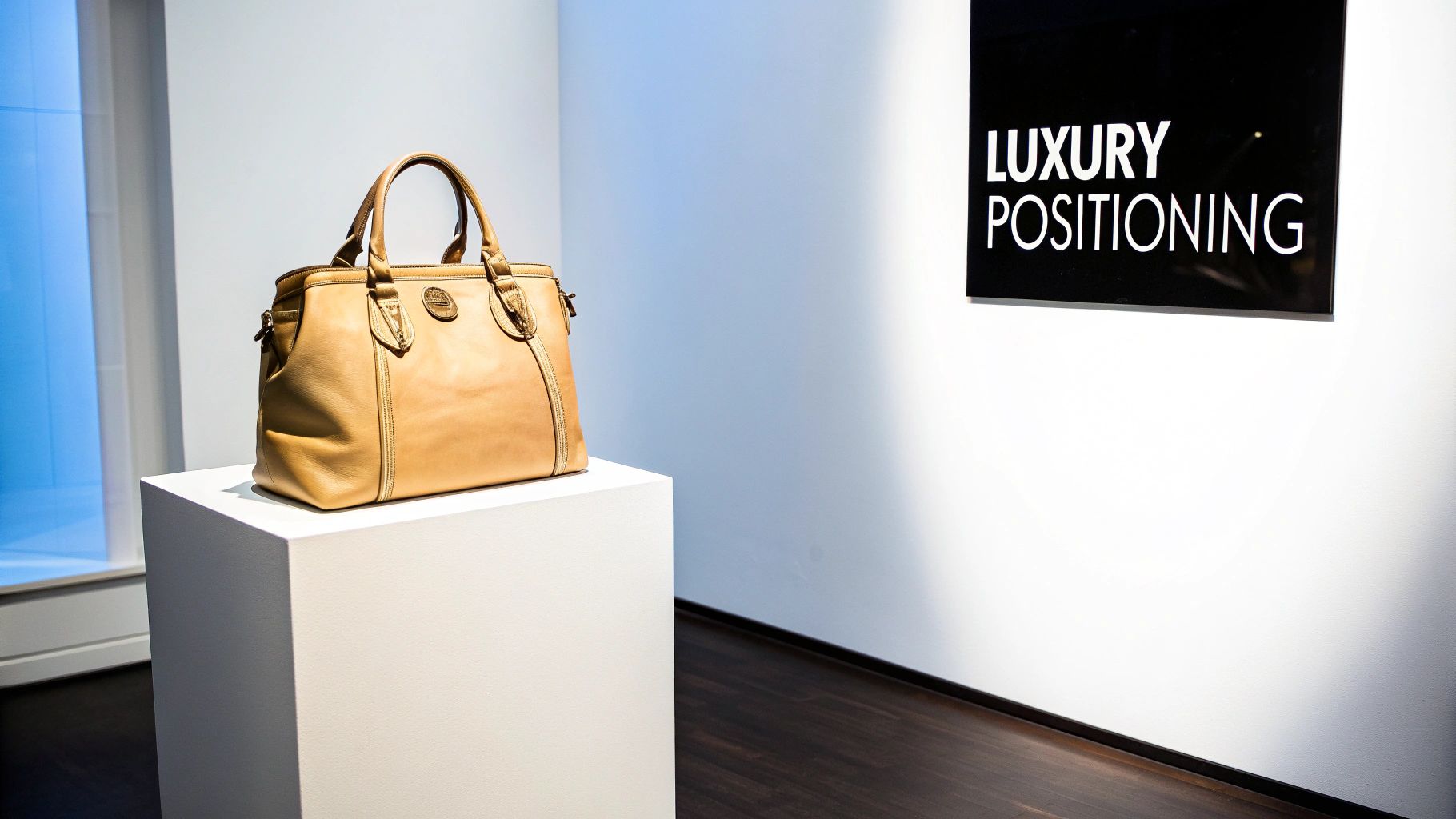
This approach is powerful because it builds a brand moat that is difficult for competitors to cross. By creating an aspirational identity, you attract a loyal customer base willing to pay more for the experience and prestige associated with your brand, not just the product itself.
This premium pricing strategy justifies a higher price by bundling the core product with valuable services, enhanced support, or exclusive features. Instead of selling a standalone item, companies create a comprehensive package that offers greater convenience, security, or utility. Brands like Apple excel at this, charging a premium for their hardware because it’s integrated with a seamless ecosystem of software, iCloud storage, and exceptional in-person customer support via the Genius Bar.
This approach effectively shifts the customer's focus from the product's component cost to the total value of the experience. It builds loyalty by solving a broader set of customer problems, making the premium price feel like a smart investment rather than just a purchase. This is a powerful example of a premium pricing strategy that enhances customer retention.
This premium pricing strategy justifies a higher price by weaving a rich history or compelling mission into the brand's identity. Consumers are not just buying a product; they are buying into a story, a legacy, or a cause. Brands like Patagonia and Tom's Shoes leverage their narratives of environmental activism and social impact, respectively, to create a powerful emotional connection that transcends the product's functional value and supports a premium price.
This method is effective because it builds deep customer loyalty and differentiates the brand in a crowded market. A strong narrative makes the purchase feel meaningful, transforming customers into advocates who are willing to pay more to be part of the brand's journey and support its values.
This strategy leverages the psychological principle that people place a higher value on items that are scarce. By deliberately limiting production or creating special "limited edition" runs, you create a sense of urgency and exclusivity. Brands like Supreme and Nike use this to perfection with their limited "drops," turning product releases into cultural events where the fear of missing out (FOMO) justifies a premium price tag well above the item's material cost.
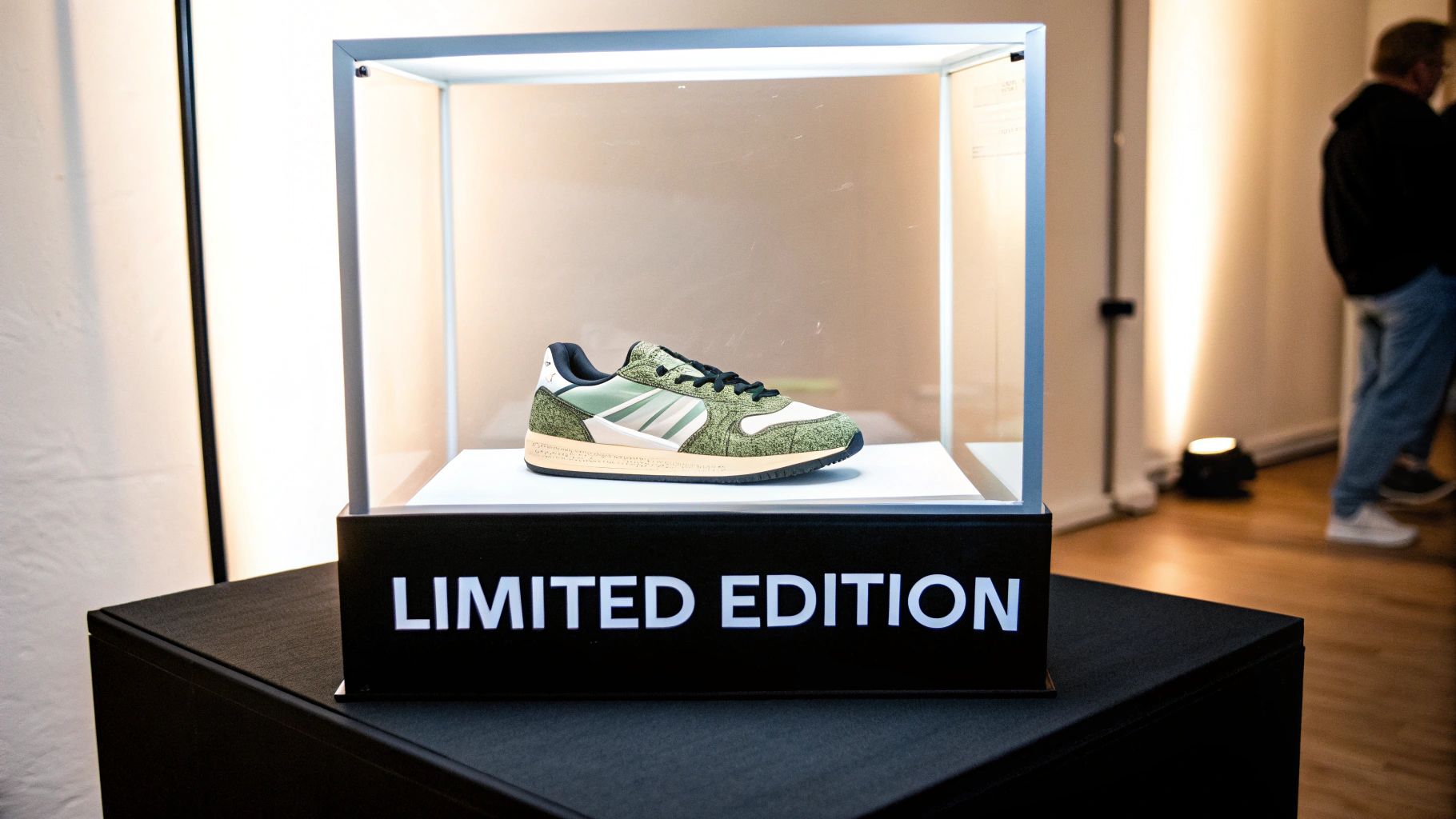
This approach transforms a purchase from a simple transaction into an acquisition of a rare collectible. The value is not just in the product itself, but in its limited availability, making it a powerful premium pricing strategy example for creating intense demand and brand hype.
This premium pricing strategy involves justifying a higher price through technological superiority and continuous innovation. Companies like Tesla and Dyson command premium prices not just for quality, but for offering cutting-edge features and performance that competitors cannot match. By being first-to-market with a revolutionary feature or owning proprietary technology, a brand can set a price based on its unique value proposition rather than market averages.
This approach creates a powerful competitive advantage by positioning the product as the most advanced option available. Customers are often willing to pay more for tangible benefits like better performance, unique features, or enhanced convenience, which makes it one of the most defensible premium pricing strategy examples.
This premium pricing strategy involves leveraging the credibility and prestige of a well-known personality, designer, or brand to elevate your own product's perceived value. By creating a partnership, your product inherits the positive attributes associated with the endorser, justifying a higher price point. This is exemplified by Nike's Air Jordan line, where Michael Jordan's legendary status transformed a sneaker into a cultural icon, allowing for premium pricing far beyond production costs.
The power of this strategy lies in borrowed equity. A collaboration or endorsement acts as a powerful shortcut to building trust and desire, attracting the endorser's audience and creating a compelling reason for customers to pay more for a special, limited-edition product.
This premium pricing strategy justifies a higher price point by committing to environmentally sustainable practices, ethical labor, and responsible sourcing. Consumers are increasingly willing to pay more for products they believe are beneficial to the planet and society. Companies like Patagonia and Allbirds build brand value by embedding their social and environmental mission directly into their products, making the premium price a reflection of their commitment to a greater good.
This approach builds profound brand loyalty and differentiates you in a crowded market. By demonstrating a genuine commitment to ethical practices, you attract a dedicated customer base that shares your values and is proud to support your mission, viewing their purchase as a contribution to positive change.
This strategy charges a higher price by allowing customers to tailor products to their exact specifications, creating a unique item that holds greater personal value. This approach transforms a standard product into a one-of-a-kind creation, justifying a premium cost. Companies like Nike By You let customers design their own sneakers, while bespoke suit makers craft garments for a perfect fit, turning the act of purchasing into a collaborative, high-value experience.

The power of personalization lies in its ability to foster a deep connection between the customer and the product. When customers invest time and creativity, their perceived ownership and the item's value increase significantly, making them less sensitive to price and more loyal to the brand that provided the unique opportunity.
This premium pricing strategy focuses on justifying a higher price by delivering an exceptional customer experience and white-glove service that transcends the product itself. The premium isn't just for the item; it covers the cost of superior service, memorable interactions, and the overall experiential value. Companies like The Ritz-Carlton build their entire brand on legendary service, where the customer experience is the core offering, making the price secondary to the feeling of being exceptionally cared for.
This approach creates powerful emotional connections and loyalty. When customers feel valued and receive outstanding support, they are far more willing to pay a premium and become vocal brand advocates. This strategy differentiates you in a crowded market where the product alone may not be enough.
This strategy justifies a higher price by focusing on superior product quality, exceptional durability, and longevity. It shifts the customer's mindset from the initial purchase price to the total cost of ownership over time. Brands like Red Wing Boots or All-Clad cookware command premium prices because customers trust they are buying a product that will perform reliably for years, or even a lifetime, making the higher upfront investment worthwhile.
This premium pricing strategy example works by building a reputation for reliability and craftsmanship. By proving that your product outlasts and outperforms cheaper alternatives, you create a powerful value proposition that appeals to discerning consumers who prioritize long-term performance over short-term savings.
| Strategy | Implementation Complexity 🔄 | Resource Requirements ⚡ | Expected Outcomes 📊⭐ | Ideal Use Cases 💡 | Key Advantages ⭐ |
|---|---|---|---|---|---|
| Luxury Brand Premium Positioning | Very high 🔄 — long-term brand building & control | Very high ⚡ — marketing, craftsmanship, selective retail | High margins & strong brand equity 📊 — premium perception, loyal niche | Heritage fashion, watches, supercars 💡 | Prestige, margin insulation, strong loyalty ⭐ |
| Value-Added Services Premium | Moderate 🔄 — service design and delivery systems | High ⚡ — staffing, support platforms, training | Improved retention & CLV 📊 — justifiable price premiums | SaaS, enterprise software, hospitality, electronics 💡 | Justifiable pricing, upsell opportunities, competitive moat ⭐ |
| Brand Heritage & Storytelling Premium | High 🔄 — narrative development & consistency | Moderate ⚡ — content, PR, sourcing transparency | Emotional connection & advocacy 📊 — perceived fair premium | Artisanal goods, legacy brands, mission-driven firms 💡 | Differentiation via intangibles; strong advocacy ⭐ |
| Scarcity & Limited Edition Premium | Moderate 🔄 — drop logistics & authentication | Low–Moderate ⚡ — limited runs, targeted marketing | Rapid demand spikes & high resale value 📊 — FOMO-driven sales | Streetwear, collectibles, special launches 💡 | Generates buzz, highest short-term premiums ⭐ |
| Innovation & Technology Premium | High 🔄 — sustained R&D and product development | Very high ⚡ — R&D, patents, engineering talent | Technical differentiation & pricing power 📊 — early adopter uptake | Tech, automotive, pharma, cutting-edge electronics 💡 | Patent protection, performance-led pricing, lifecycle gains ⭐ |
| Prestige Association & Endorsements | Moderate 🔄 — partner alignment & activation plans | High ⚡ — talent fees, co‑creation, PR | Quick prestige boost & media attention 📊 — rapid perception change | Fashion collabs, beauty launches, athlete/influencer products 💡 | Fast brand transfer, aspirational appeal, publicity ⭐ |
| Sustainability & Ethical Sourcing Premium | Moderate–High 🔄 — supply‑chain changes & transparency | High ⚡ — certification, sourcing, process changes | Loyalty from conscious consumers 📊 — reputational gains, justified premium | Apparel, food, consumer goods targeting values-driven buyers 💡 | Positive reputation, regulatory resilience, long-term loyalty ⭐ |
| Personalization & Customization Premium | High 🔄 — bespoke processes & order flow complexity | High ⚡ — skilled labor, tech platforms, data systems | Higher margins & satisfaction 📊 — lower returns, strong loyalty | Bespoke footwear, jewelry, build-to-order electronics 💡 | Emotional ownership, price justification, direct relationships ⭐ |
| Experiential & Premium Service Delivery | High 🔄 — protocolized white-glove service & culture | Very high ⚡ — staffing, training, operational overhead | Strong advocacy & lifetime value 📊 — defensible premium pricing | Luxury hospitality, private aviation, VIP services 💡 | Memorable experiences, brand defensibility, high CLV ⭐ |
| Quality & Durability Premium | Moderate 🔄 — manufacturing standards & testing | High ⚡ — superior materials, testing, warranties | Long-term value & resale potential 📊 — lower total cost of ownership | Tools, cookware, cameras, durable consumer goods 💡 | Longevity, trust, repeat customers, resale value ⭐ |
Implementing a premium pricing strategy is far more than a simple financial calculation; it is a foundational commitment to a higher standard of quality, service, and brand identity. Throughout this guide, we've explored a diverse range of premium pricing strategy examples, from leveraging brand heritage and storytelling to harnessing the power of scarcity and technological innovation. Each example underscores a central truth: a premium price tag is not merely assigned, it is meticulously earned.
The journey from a standard product to a premium experience requires a deliberate and multi-faceted approach. For a unique brand like Jackpot Candles, the opportunity lies not in adopting a single strategy, but in artfully layering several. Imagine combining the Quality and Durability Premium of proprietary soy wax and perfume-grade fragrances with the allure of a Scarcity and Limited Edition Premium through seasonal collections. This foundation is then amplified by a Brand Heritage and Storytelling Premium that frames the 'treasure hunt' experience of discovering surprise jewelry as a unique, emotionally resonant brand ritual.
The most successful premium brands understand that their price reflects a promise. This promise is communicated through every touchpoint, from packaging and website design to customer service and marketing messaging.
Ultimately, mastering premium pricing requires a deep understanding of your customer, a relentless focus on delivering exceptional value, and the confidence to position your brand as something genuinely worth paying more for. While a premium strategy is a specific approach, it's beneficial to understand its place within the broader landscape. For a comprehensive overview, exploring resources like the Ecommerce Pricing Strategies: The Complete Guide for Online Retailers can provide valuable context for making informed decisions.
By choosing the right combination of strategies and executing them with precision, any brand can elevate its products from mere commodities into coveted, priceless experiences. The path to premium is a marathon, not a sprint, but the rewards of building a resilient, high-margin brand are well worth the effort.
Ready to see a brilliant example of a premium experience in action? Discover how Jackpot Candles combines high-quality, fragrant candles with the excitement of a surprise jewelry reveal. Explore their collections at Jackpot Candles and experience firsthand how a brand can transform a simple product into a memorable event.
Comments will be approved before showing up.