
free shipping at $99


You've probably had this moment already. A candle is on the table, the room smells great, and someone's asking, “So when do we get the ring?” That's the appeal of ring reveal candles. They look like a normal scented candle at first, but they're built to turn a simple burn into a small unboxing moment, with a hidden piece of jewelry waiting inside.
That mix of surprise, scent, and giftability is what makes the format easy to understand once you've seen it in person. It's also why the category sits neatly between home fragrance and jewelry gifting. If you're trying to buy one for the first time, the main questions are usually the same, what's inside, how do you get it out safely, and is the jewelry worth anything real?
You light the candle, enjoy the fragrance, and wait for the wax to melt low enough to expose a hidden jewelry packet. That's the basic idea behind a ring reveal candle, and it's more specific than just “a candle with something inside.” It's a scented candle engineered around a reveal moment, so the hidden item becomes part of the burn experience instead of a separate surprise tucked in the box.
The format works because it combines two familiar behaviors, buying candles for atmosphere and buying gifts for the emotional payoff. The National Candle Association notes that candles became notably more popular as decorative items, mood-setters, and gifts in the mid-1980s, and that the 1990s brought an “unprecedented surge” in popularity alongside new waxes such as soybean wax (National Candle Association history of candles). That history matters, because ring reveal candles are really a premium-gifting extension of an already established candle culture.
A first-time buyer often assumes the jewelry is the whole product. It isn't. The candle is still supposed to perform as a real candle, with fragrance, burn behavior, and presentation all doing their job while the hidden ring stays protected until the reveal. That's why these products can work as self-gifts, bridal shower activities, or small celebration pieces. The fun is not just in “finding a ring,” it's in turning a familiar object into a staged surprise.
Practical rule: if the candle can't function as a decent scented candle first, the reveal won't feel satisfying for long.
For a plain-language overview of the category, the internal guide on what a ring candle is is a useful companion read.
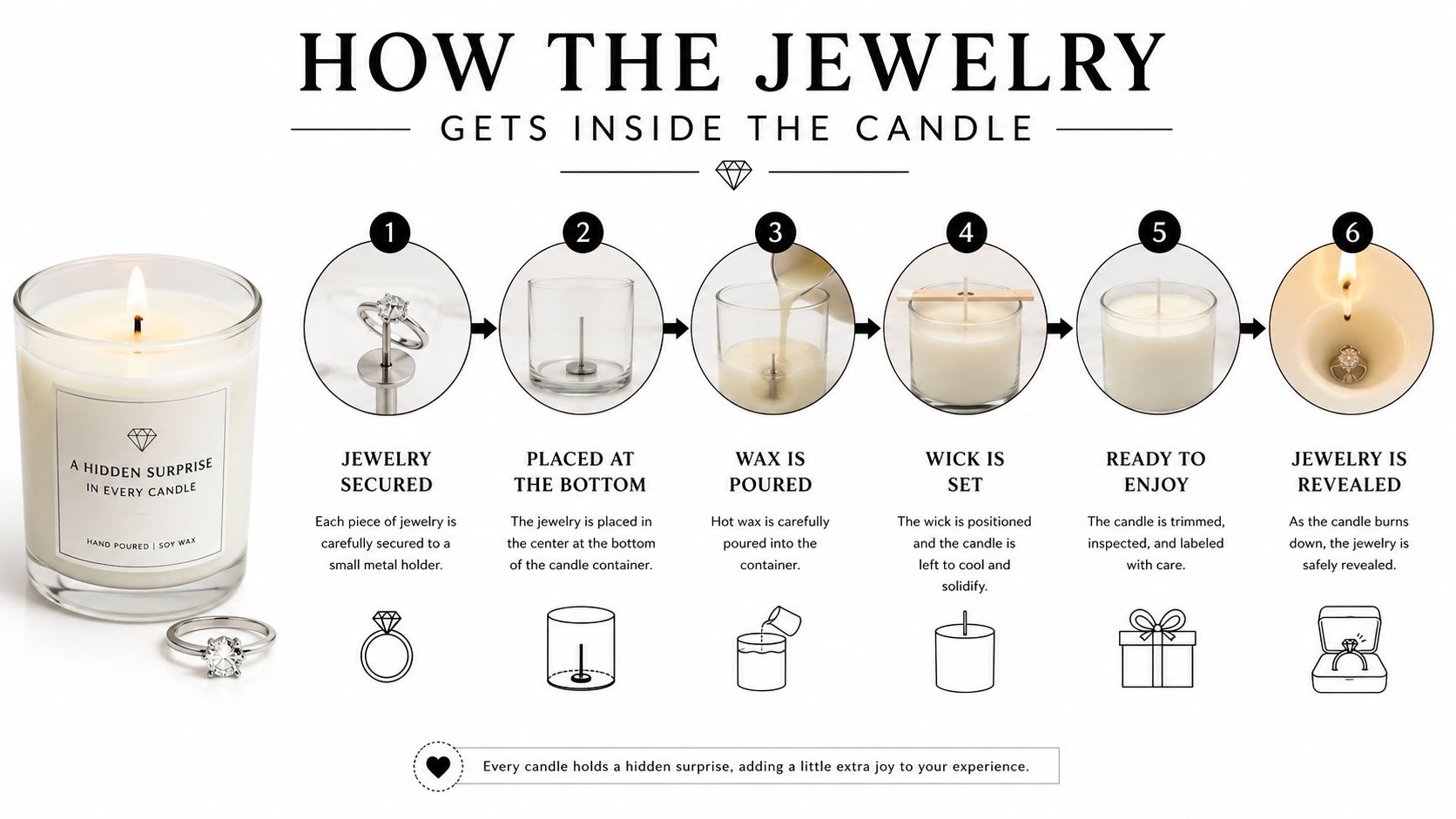
A hidden-jewelry candle only feels magical until you look at the build. Then it becomes a straightforward piece of candle engineering. The jar usually starts with wax and a centered wick, but the jewelry itself is placed in a foil-wrapped setting and embedded low enough in the wax that it won't appear until the candle has burned down to that point.
The reason the packet is wrapped is simple, it protects the metal and stone from direct flame contact and keeps the jewelry separate from the hottest part of the burn. Brands also position the setting carefully so the candle melts around it instead of exposing it right away. That placement is what creates the anticipation. You can watch the wax pool widen over time, then eventually spot the foil glinting through the softened wax.
A reveal candle depends on controlled wax consumption. Candle combustion isn't instant, a typical candle burns at about 0.1 g/min and releases roughly 80 W of heat, so the melt pool grows gradually rather than all at once (candle performance basics). That slow progression is what gives the hidden packet time to stay protected while still becoming visible at the right point.
Wax blend and wick choice shape that experience. A steadier burn gives the customer a cleaner reveal window and reduces the chance of the foil becoming exposed too early. The build isn't accidental, it's tuned so the candle melts predictably instead of collapsing around the jewelry.
A good ring reveal candle usually shows a stable melt pool, not a lopsided tunnel. As the wax lowers, the foil packet should become visible without looking scorched or buried in debris. The internal walkthrough on making candles with jewelry inside illustrates the same basic construction logic makers use when they place the hidden piece.
The key point is that the reveal is engineered, not random. The jewelry sits where the burn path can expose it later, and the wax system has to support that timing.
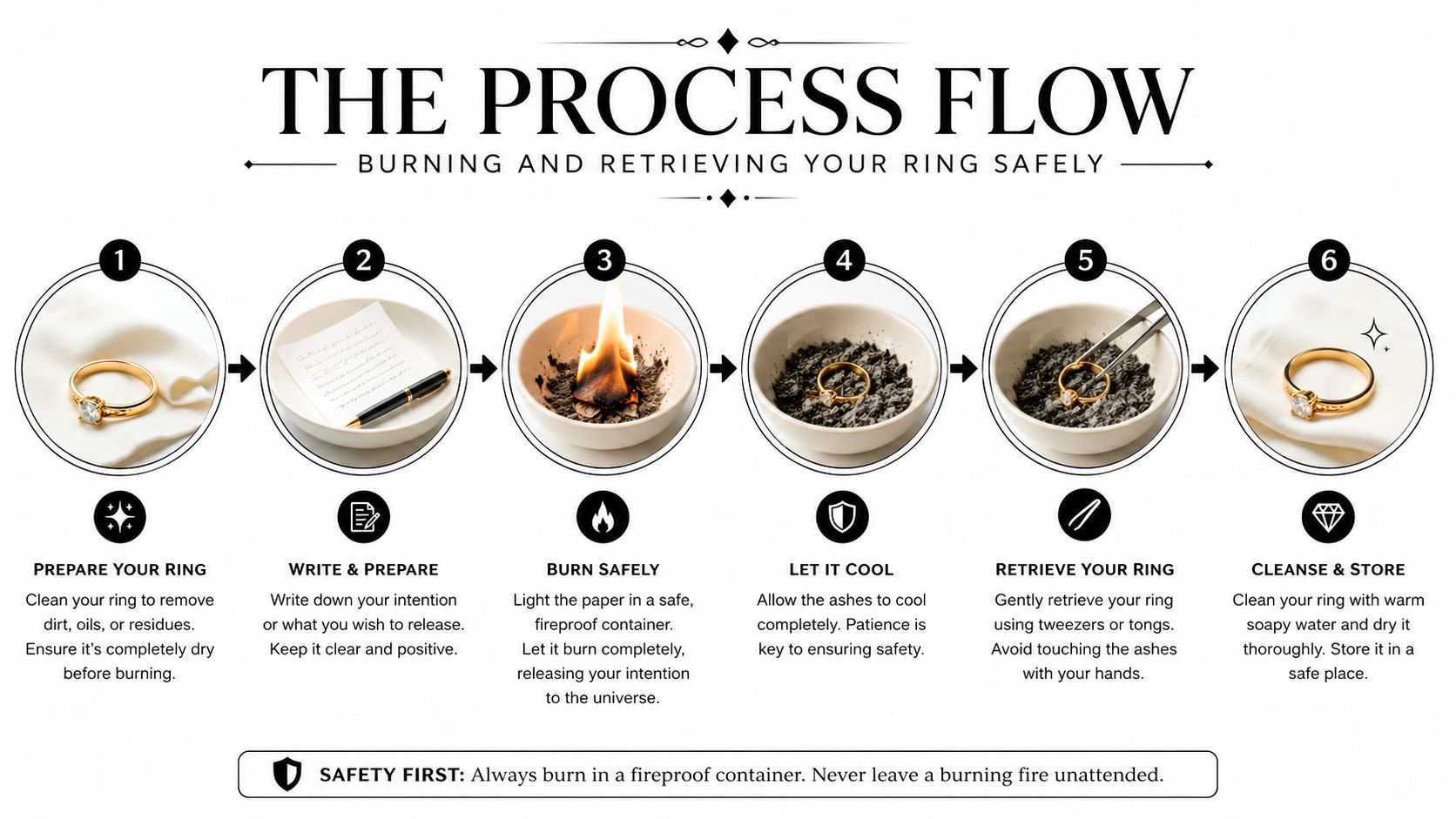
Safety matters more once the packet starts to show. The biggest mistake people make is treating the reveal like a prize they should fish out immediately. Don't do that. Keep the candle supervised, keep the wick trimmed, and stop burning once the foil is clearly visible and easy to reach.
The simplest rule is this, never open or pull the packet while the candle is lit. Extinguish the flame first, then let the wax cool slightly so it's no longer piping hot. The candle should be warm enough that the packet can still be lifted, but not so hot that you're handling liquid wax with bare fingers. The internal reveal guide on Jewelry Candle Reveal follows the same basic logic.
Don't keep burning once the packet is exposed and partially melted. That's the point where the candle stops behaving like a normal fragrance candle and starts becoming a safety question.
If the foil appears earlier than you expected, the safest move is still the same, extinguish, cool, and retrieve. Faster-burning wax can compress the timing window, so don't assume the packet should stay hidden for a fixed amount of time.
A lot of marketing around these candles leans hard into the dream of finding a big prize. The experience is more structured than that. Diamond Candles' launch announcement said 1 in 100 customers could win a $100 ring, 1 in 1,000 could win a $1,000 ring, and 1 in 5,000 could win a $5,000 ring (Diamond Candles launch announcement). That tells you the model is tiered, not flat, with a small number of high-value surprises and a much larger number of standard pieces.
Those odds make sense once you compare them with ordinary jewelry spending. The Knot reported a national average cost of $5,900 for an engagement ring in 2019, down from $6,351 in 2017 and $5,095 in 2011 (The Knot engagement ring survey). In other words, consumers are already used to meaningful jewelry purchases that can cost thousands, so the appeal of a hidden ring isn't just novelty. It borrows the emotional weight of jewelry buying and packages it inside a candle experience.
| Prize Tier | Approximate Value | Reported Odds |
|---|---|---|
| Entry surprise | Standard jewelry piece | Not disclosed |
| Mid-tier win | $100 | 1 in 100 |
| Higher-tier win | $1,000 | 1 in 1,000 |
| Top prize | $5,000 | 1 in 5,000 |
The trick is not to confuse excitement with guaranteed value. Most reveals are meant to be wearable, fun, and giftable, not necessarily investment pieces. That's why value expectations matter so much.
If you want a plain-language breakdown of how value is presented in the category, the brand's own ring-value guide at What is my ring value really worth is the place where the tiered model is explained most directly.
A good reveal candle should feel predictable in use, not mysterious in quality. Start with the wax blend. Soy-based blends are commonly positioned as cleaner, slower, and longer-lasting than paraffin-heavy options, and that matters because a steadier burn gives you a better reveal window and less soot on the jar and wick. A candle that burns too fast can make the jewelry appear before the room has had time to enjoy the scent.
Burn time is the next thing to check. A commercial ring candle listing using soy and coco wax advertises an extended 23-hour burn in an 8 oz format (Sterling Candle FAQ), which is useful as a reference point for how much the blend and wick configuration can affect total runtime. More runtime doesn't just mean more fragrance, it gives the customer more control over when the foil packet appears.
You also want straightforward jewelry disclosure. If a listing won't say whether the ring is fashion jewelry, costume jewelry, or a surprise item with disclosed value ranges, treat that as a warning sign. Buyers deserve to know whether they're buying scent plus novelty, or scent plus a disclosed prize structure.
Buying clue: the clearer the burn-time details and jewelry policy, the less likely you are to feel disappointed later.
The packaging matters too. A well-made candle should protect the jewelry from wax seepage and keep the reveal clean enough to retrieve without digging. Thin jars, vague fragrance descriptions, or missing care instructions usually point to a rushed product.
Here's the fast checklist I'd use:
For one product example in this category, Jackpot Candles offers jewelry candles built around the hidden-ring reveal concept, with the same basic wax-and-jewelry structure discussed here.
A ring reveal candle doesn't have to be reserved for proposals. It can work as a low-pressure way to create a moment without making the whole event feel overproduced. The format is flexible because the reveal can be private, shared, staged, or casual depending on the occasion.
For a proposal, the candle works best when the person lighting it already expects a meaningful reveal. Keep the setup simple, a quiet dinner, a small home setting, or a private celebration where the ring can be discovered without a crowd watching. The candle becomes a warm-up to the bigger question, not a distraction from it.
For a bridal shower or bachelorette party, group energy matters more than secrecy. One person can light the candle while everyone guesses when the packet will show, then the reveal becomes part of the conversation. That format keeps the focus on the fun of discovery instead of trying to turn the candle into a second proposal.
For a birthday, the candle feels most natural when it's treated as a keepsake gift. The recipient can light it after the party or during a quiet evening at home, which gives the reveal a more personal tone. The ring then feels like part of the birthday memory instead of just another wrapped present.
Self-care gifting is the simplest use case. Burn it during a bath, a reading night, or a reset evening, then enjoy the jewelry as a bonus rather than the main event. That framing lowers pressure and makes the candle feel like a treat instead of a test of luck.
The best occasions are the ones where the reveal has room to breathe. If the moment already has some emotional weight, the candle adds structure without needing a script.
Once the foil packet is exposed, the candle's job is basically done. Keeping it burning as if nothing changed is a bad assumption, because the burn path has reached the area where the hidden jewelry sat. The general candle safety guidance is simple, burn only while supervised, trim the wick, and keep foreign material out of the melt pool, since debris can affect flame behavior and soot.
The more important question is what you do with the candle afterward. If the wax around the packet is too damaged, I'd treat the remaining candle as a keepsake vessel rather than a normal burn item. If you do keep using it, do it cautiously and only while you can monitor the flame closely. A candle with exposed hardware or residue is not the same thing as a fresh candle.
For the jewelry itself, cooling comes first, then cleaning. Wipe the ring gently with a soft cloth before deciding whether it needs more detailed care. If you want broader jewelry maintenance guidance, the VVS Jewelry care guide is a helpful general reference for storage and cleaning habits.
A lot of buyers never think about this stage, but it's where the ownership experience gets real. The reveal is exciting, the care afterward is what keeps the ring usable and the candle safe.
Are the rings real? Some are wearable fashion pieces, and some candles are built around higher-value prize tiers. The key is to read the seller's value disclosures carefully and not assume every ring is fine jewelry.
Can I appraise the ring? Yes, if the seller provides a code or appraisal process. In that case, the value you see is usually a retail replacement value, which is not the same as resale value.
Is it safe to keep burning after the packet shows? Not without caution. Once the foil is exposed, stop the flame, cool the wax, and remove the ring before you keep using the candle.
How do I know a seller is reputable? Look for clear burn-time details, a plain explanation of the jewelry policy, and real care instructions after the reveal. If the listing only sells mystery without specifics, that's a weak sign.
Can the ring be resold? Maybe, but the answer depends on what it's made of and whether it has real hallmarks or independent documentation. A value tag by itself doesn't guarantee resale strength.
A good ring reveal candle should leave you with two things, a pleasant candle experience and a jewelry surprise you understand. If you want to explore that kind of gift format for yourself, visit Jackpot Candles and browse the hidden-jewelry candles that turn a simple burn into a reveal you can plan around.
Comments will be approved before showing up.