
free shipping at $99


You've found a ring you love, or you're planning a surprise, and one small detail threatens the whole purchase: the ring size. A beautiful ring that spins, pinches, or won't pass the knuckle creates an avoidable problem, especially when the recipient discovers it inside a surprise gift.
The reliable approach isn't guessing from height, weight, or an “average” women's size. It's measuring the correct finger, using millimeters, and accounting for knuckle shape, band width, hand asymmetry, and daily swelling. This ring size guide for women gives you a practical way to get close at home and a clear plan if the fit still needs correction.
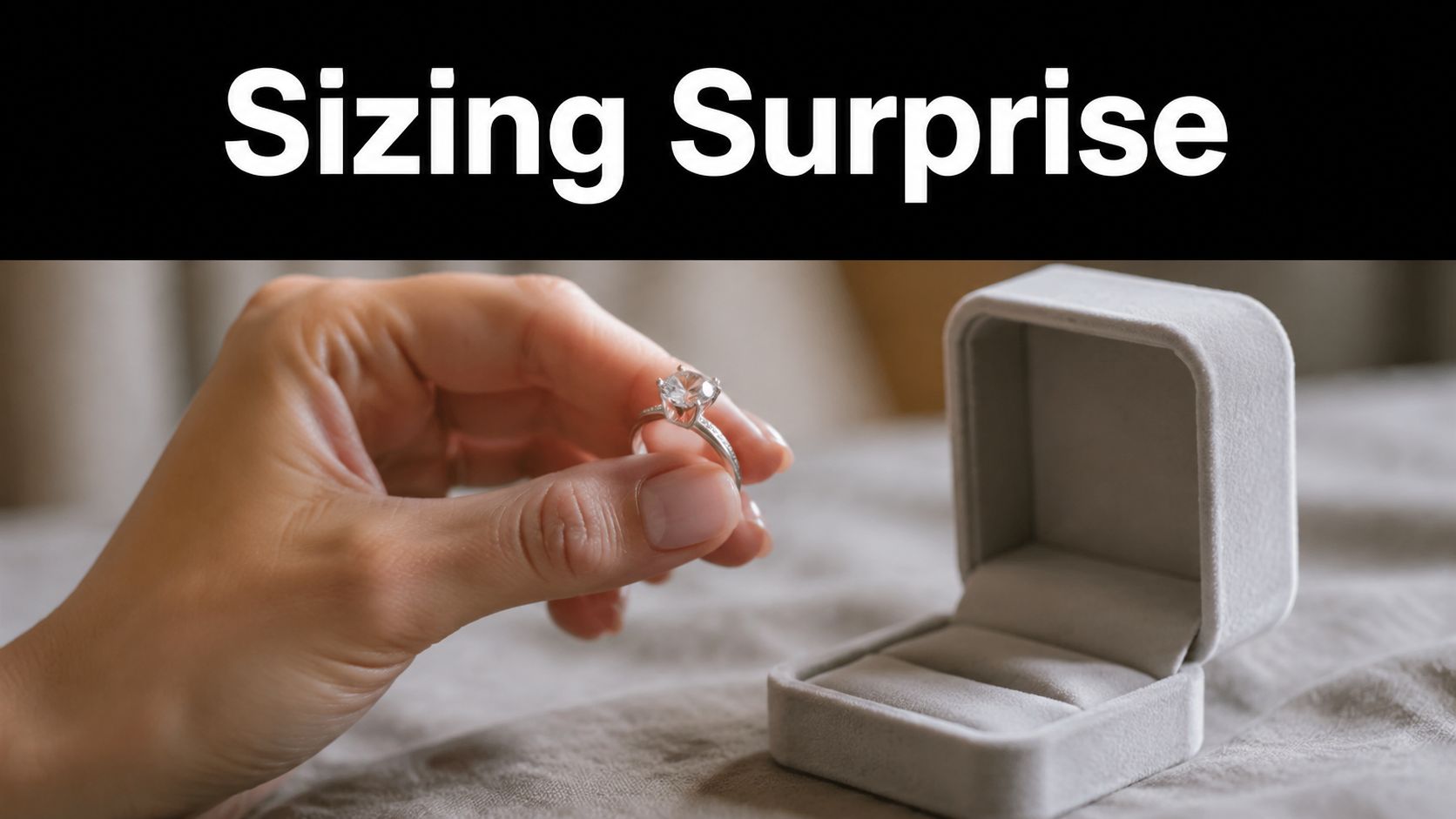
A shopper once bought a delicate ring as a surprise gift after comparing the recipient's hand with an online photo. The recipient's fingers looked slender, so the shopper chose a small size. The ring arrived, the reveal went perfectly, and then the ring stopped at the knuckle. It looked right in the box but couldn't be worn.
That mistake is common because finger shape doesn't reliably follow body shape. Height, weight, hand appearance, and assumptions about an “average woman's ring size” can frame expectations, but they can't identify the correct size for a particular finger. A market-facing guide places many US women's rings around sizes 6 to 7, while also noting that sizing can vary broadly and depends on the individual hand and comfort preference (women's ring sizes explained).
A US chart commonly centers women's ring sizing around size 7, with most women's rings falling between sizes 5 and 8. That range corresponds to roughly 49.3 mm to 57.0 mm in circumference, while size 7 measures about 54.4 mm around the inside of the ring (US ring size education).
Those figures help you understand the chart. They don't tell you whether the ring belongs on size 5, 6.5, 7, or 8. The intended finger may have a prominent knuckle, the dominant hand may be larger, or the design may have a wide band that feels tighter than a narrow one.
My rule as a jeweler: averages help you choose where to investigate. They never replace measuring the actual finger or a ring that already fits.
A wrong size can mean return shipping, an exchange, resizing limitations, or an uncomfortable gift moment. Some rings can be adjusted easily, while others have design details or materials that make alteration impractical. Measuring first gives you the best chance of preserving the surprise and avoiding a preventable return.
The most dependable home method depends on what you can access secretly. If you have a ring that fits the intended finger, use it. If you're measuring directly, use a calibrated sizer or a carefully repeated paper method.
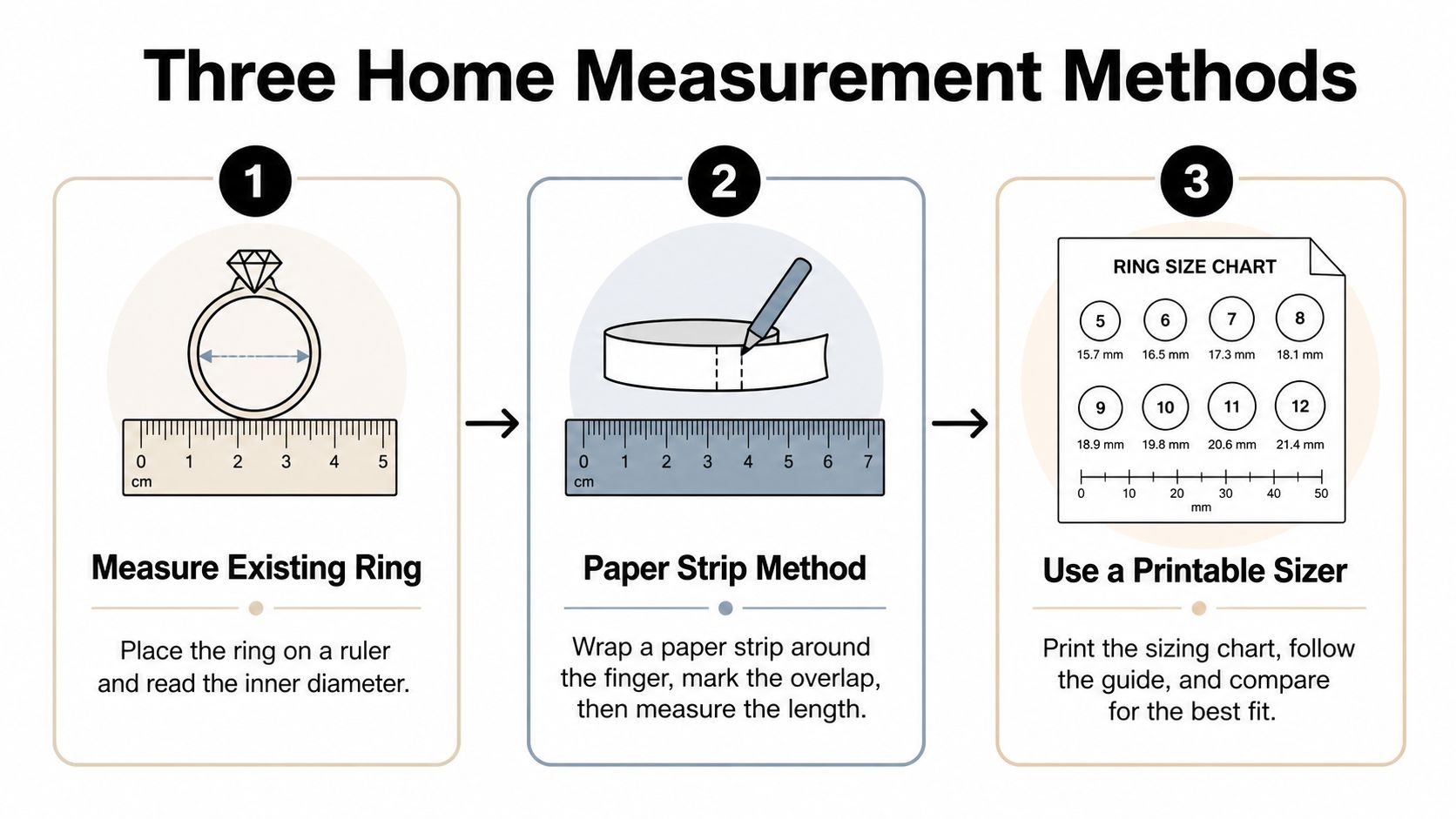
Find a ring that fits the same finger, ideally on the same hand. A ring worn on another finger can give you a misleading result because finger sizes differ.
This method works well because it uses a real fit rather than an estimate. It fails when the ring is loose, stretched, distorted, or intended for a different finger. Measure more than once, and make sure the ruler begins at zero.
If you're researching designs before choosing a stone or setting, a resource on sourcing wholesale gemstone rings can help you compare ring styles while keeping sizing requirements in mind.
A printable ring sizer is useful only when the document prints at its intended scale. Select 100% scale in the print settings. Don't choose “fit to page” or allow the printer to shrink the template.
Verify the scale before using it. If the printed reference is wrong, every circle or measurement on the page is wrong too. Place an existing ring over the matching circles, or cut out the sizing strip according to the tool's instructions.
You can use the Jackpot Candles printable ring sizer, but check the printed scale before trusting the result.
Cut a narrow strip of paper, or use non-stretch string. Wrap it around the base of the intended finger without compressing the skin. Mark where the ends meet, then measure the length in millimeters and compare it with a circumference chart.
This method is convenient but easy to distort. Pulling the strip tight underestimates the circumference. Leaving it loose overestimates it. Repeat the process two or three times, preferably at different times of day, because temperature and daily swelling affect finger size (women's ring sizing guide).
For a visual walkthrough of home measurement, watch the sizing demonstration below.
If a measurement sits between two sizes, choose the larger size. The ring must pass over the knuckle without excessive pressure, and a slightly loose ring can often be adjusted more easily than one that can't be worn.
A conversion chart becomes useful only after you identify what each system measures. US, UK/Australian, and EU labels describe the same ring, but the labels differ. Use the inside diameter or circumference in millimeters as your anchor, especially when an international retailer uses an unfamiliar size.
US size 7 corresponds to approximately 54.4 mm circumference, 17.3 mm inside diameter, UK/AU N, and EU 54 (ring size conversion education). That reference lets you verify whether a retailer's chart is translating the size correctly.
| US Size | UK/AU Size | EU Size | Diameter (mm) | Circumference (mm) |
|---|---|---|---|---|
| 5 | J½ | 49 | 15.7 | 49.3 |
| 6 | L½ | 52 | 16.5 | 51.9 |
| 7 | N | 54 | 17.3 | 54.4 |
| 8 | P | 57 | 18.1 | 57.0 |
“EU 54” and US 7 point to nearly the same circumference in this chart. Check the retailer's definition before ordering: EU sizing generally refers to circumference, while diameter is a separate measurement. Also confirm that the listed measurement is for the ring's inside, not its outside.
Half sizes provide finer control than full sizes. Charts include options such as 5.5, 6.5, 7.5, and 8.5, and adjacent full sizes differ by roughly 1.3 mm of circumference (women's ring size statistics). That small change can decide whether a ring stays secure or presses against the finger.
Choose the larger size if the measurement falls between sizes, the knuckle is prominent, or the band is wide. Choose the smaller size only if the ring already clears the knuckle comfortably and the larger size would spin excessively at the base. For a surprise from Jackpot Candles, record both the measured millimeters and the converted label, so customer service can help if the hidden ring needs an exchange.
A circumference measurement is useful, but it doesn't describe the whole fit. Two fingers can share a similar base measurement and need different ring sizes because one has a wider knuckle, or because one ring has a broad band that creates more contact with the skin.
The first hidden variable is the relationship between the finger base and knuckle. If the knuckle is wider, the ring must clear it even when the base is relatively narrow. Sizing only around the base can produce a ring that feels comfortable once it's on but won't slide into position.
Test both points. Measure the base where the ring will sit, then consider the widest point the ring must cross. If the difference is noticeable, prioritize comfortable knuckle clearance and use a sizing bead or another adjustment if the ring spins at the base.
A ring should pass the knuckle with firm, comfortable resistance. It shouldn't require force, and it shouldn't fall off when your hand points downward.
A narrow band usually feels less restrictive than a wide band in the same nominal size. Guides commonly recommend allowing extra room for bands 6 mm or wider, especially when several rings are stacked together (complete ring sizing guide).
Don't measure with a slim fashion ring and assume the result will feel identical in a broad wedding band. A wide band covers more of the finger, increases contact, and can feel tight even when the measured circumference hasn't changed.
Measure in the evening, when your fingers have experienced normal daily activity. Warmth and swelling can alter the fit, so a morning measurement may leave too little room later.
Measure the specific finger and hand that will wear the ring. The dominant hand is often larger, and the left and right ring fingers aren't interchangeable. A ring intended for the right hand should be sized from that hand, not inferred from a left-hand ring.
Use this decision framework:
A ring that doesn't fit perfectly isn't automatically a failed purchase. First identify where the fit breaks down, then choose the least invasive correction.
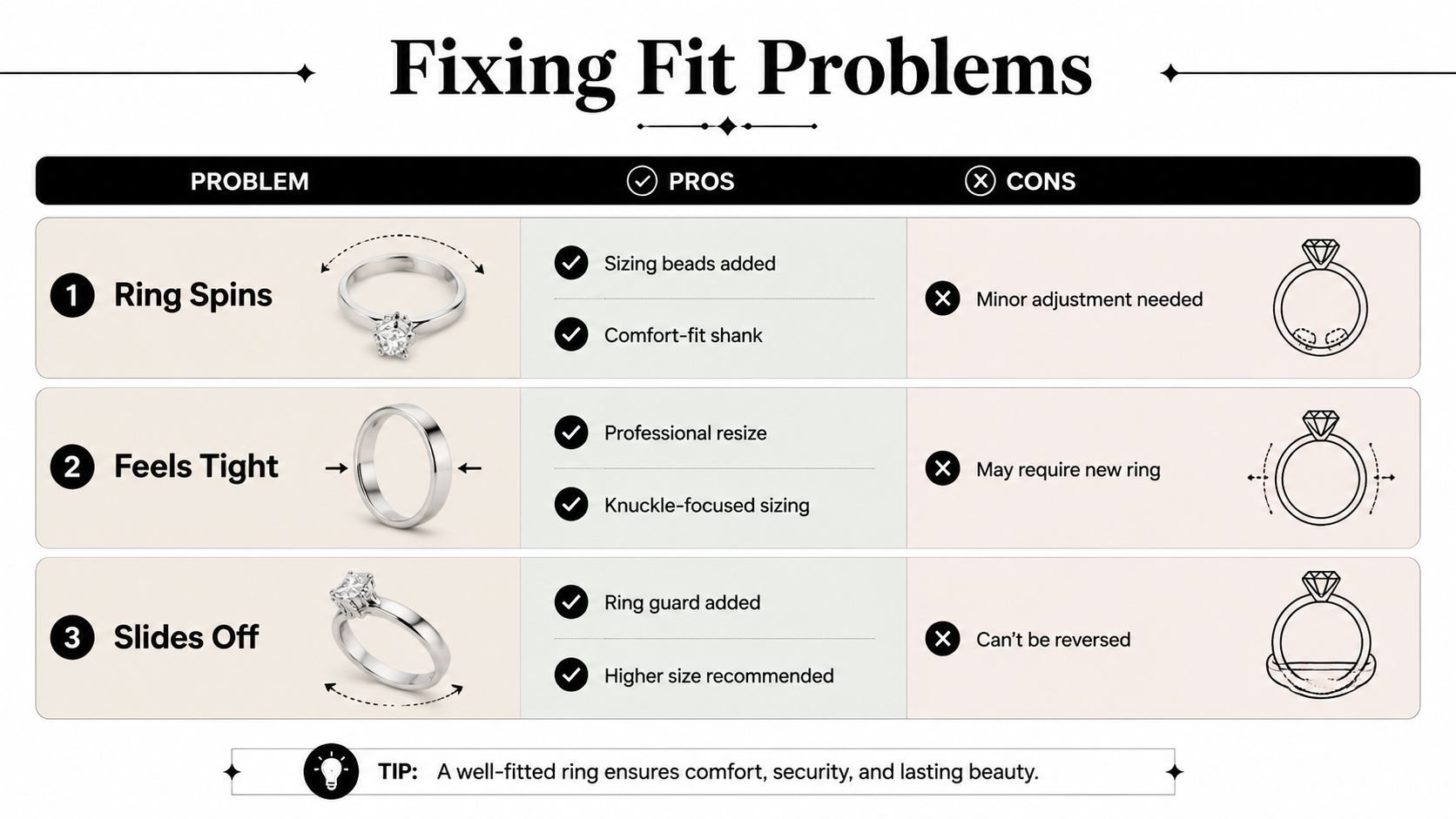
A ring that rotates freely usually has too much space at the base compared with the knuckle. This is especially noticeable with a top-heavy stone or a setting that pulls the ring downward.
A jeweler can add sizing beads inside the shank. These small additions reduce movement without changing the entire ring size. A removable silicone ring adjuster can also help for temporary wear, but it may collect residue and isn't always suitable for long-term use.
A comfort-fit shank, sizing beads, or a properly fitted ring guard can solve movement without forcing the finger into a tighter overall size.
Remove the ring if the finger becomes painful, numb, discolored, or difficult to free. Swelling can make a borderline fit feel much tighter, particularly after heat or activity.
For a valuable ring, ask a professional jeweler to assess whether the band can be resized or stretched safely. The construction, setting, engraving, and metal all matter. Don't attempt to force the ring over the knuckle or alter it with household tools.
This is a sizing failure at the widest point of the finger. A ring that fits the base but stops at the knuckle needs either a larger size, a revised shape, or an exchange.
An exchange is often better than resizing when the ring is new and the design permits it. Resizing can be limited by the band's material, pattern, stones around the full circumference, or structural details. For broader guidance about choosing a larger fit, see Can you make larger rings.
Many sizing problems are manageable because women's ring sizes cluster within a relatively narrow range. One independent guide reports that about 60% of women wear sizes between 5.5 and 7.5 (average ring size statistics). That doesn't predict an individual size, but it explains why jewelers routinely solve fit issues around the middle of the chart.
Surprise gifting requires a different sizing strategy. Your goal isn't always perfect measurement before the reveal. Sometimes the better decision is preserving the moment and making the exchange process simple.
Borrow a ring the recipient wears on the intended finger. Photographing it beside a ruler can help, but measuring the inside diameter directly is more dependable. Trace the inside edge on paper, or take the ring to a jeweler without drawing attention to the reason.
Ask a trusted friend or family member only if they're discreet and likely to know the correct finger. A ring worn on the middle finger won't necessarily tell you the size needed for the ring finger.
For a casual surprise, use a measured ring whenever possible. If there's no access to one, treat the central part of the women's chart as a starting point, not a guarantee. A retailer with a clear exchange policy is more valuable than a confident guess.
Read the product terms before buying. Check whether the ring can be exchanged, whether resizing is available, and whether the design can be altered. Keep packaging, order details, and any included documentation until the fit has been confirmed.
For a high-value, custom, or difficult-to-resize ring, reveal the gift without pretending the size is final. Measure together afterward, or choose the piece after the recipient has tried on a calibrated ring sizer.
Jackpot Candles customers may discover a hidden ring inside a candle or bath bomb, so the surprise arrives before the wearer has been measured. If the ring isn't the right size, the practical next step is to review the available exchange guidance, as outlined in what to do if you don't know the recipient's ring size.
The best plan is simple: measure secretly for ordinary rings, preserve exchange flexibility for guessed sizes, and size together for important or specialized pieces. A thoughtful surprise doesn't depend on pretending every ring will fit immediately.
Jackpot Candles offers scented candles and bath bombs with surprise jewelry inside, including rings that may need sizing after discovery. Visit Jackpot Candles to choose a surprise gift, then keep the fit guidance and exchange information available in case the hidden ring needs attention.
Comments will be approved before showing up.