
free shipping at $99


You've found a candle that promises more than fragrance. The vessel looks gift-ready, the scent is meant to shape the room, and somewhere inside the wax sits a hidden ring, necklace, or charm waiting to appear. That combination makes rosy ring candles exciting, but it also raises practical questions: Does the wax burn well? How much fragrance is enough? Is the embedded jewelry safe around a flame?
The best way to judge one is to look beyond the reveal. A premium jewelry candle should deliver a pleasant cold scent before lighting, a reliable hot throw while burning, an attractive vessel, and a carefully planned reveal that doesn't create unnecessary fire risk. The surprise matters, but the candle still has to work as a candle.
The experience begins before the wick is lit. You open the package and notice the vessel first, perhaps a glass jar with a decorative label, polished wax, and a design that can remain part of a room after the jewelry has been recovered. A gentle scent rises from the surface, known as the cold throw. It gives you an early impression of the fragrance, although it won't necessarily predict exactly how the candle will smell once the wax melts.
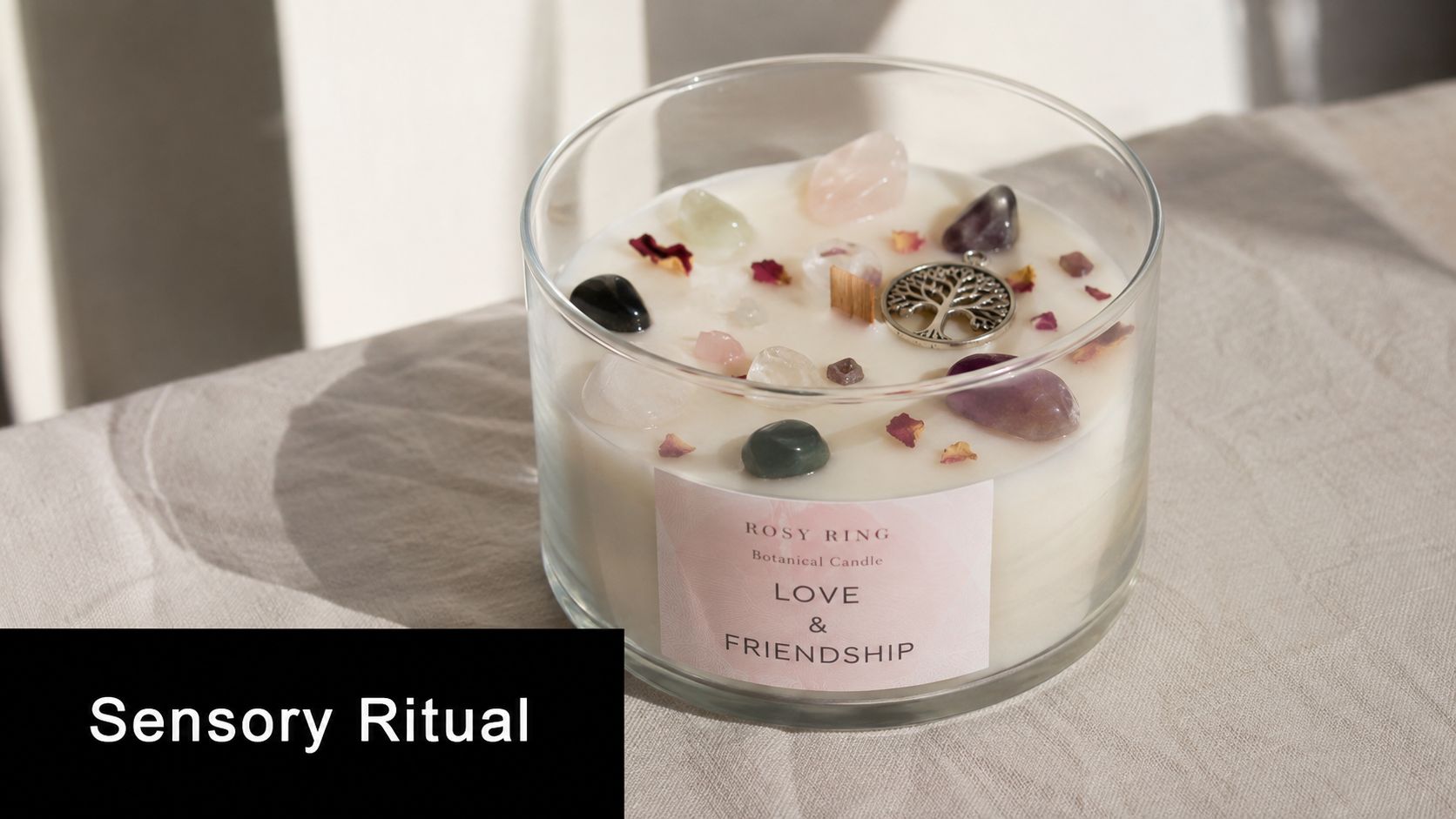
Lighting the candle changes the rhythm. At first, you're watching the flame and waiting for the wax to soften. Then the fragrance begins to open, filling the space more gradually than the unlit surface suggests. The visual details remain important, but your attention keeps returning to one question: When will the hidden piece appear?
That anticipation gives a jewelry candle a different emotional shape from an ordinary scented candle. A standard candle offers atmosphere through scent and light. A rosy ring candle adds a small ritual, because the buyer or recipient participates in uncovering the gift rather than finding it immediately in a box.
The reveal works especially well for birthdays, friendship gifts, celebrations, and moments when the recipient enjoys an element of discovery. The jewelry doesn't have to be the sole reason for buying the candle. For many people, the product succeeds when the fragrance and presentation feel worthwhile even before the surprise is uncovered.
The reveal also changes how you burn the candle. You're more likely to watch the melt pool, observe the wax line, and pause when the wrapping becomes visible. That attention can be positive, provided it doesn't lead you to leave the flame unattended or handle hot materials too quickly.
A useful mindset: Treat the jewelry as an added experience, not as a reason to ignore the candle's burn quality or safety instructions.
A well-designed product balances three sensations: the appearance of the vessel, the development of the fragrance, and the curiosity created by the hidden object. If one of those elements is weak, the novelty won't compensate for long. If all three work together, the candle becomes both home fragrance and an interactive gift.
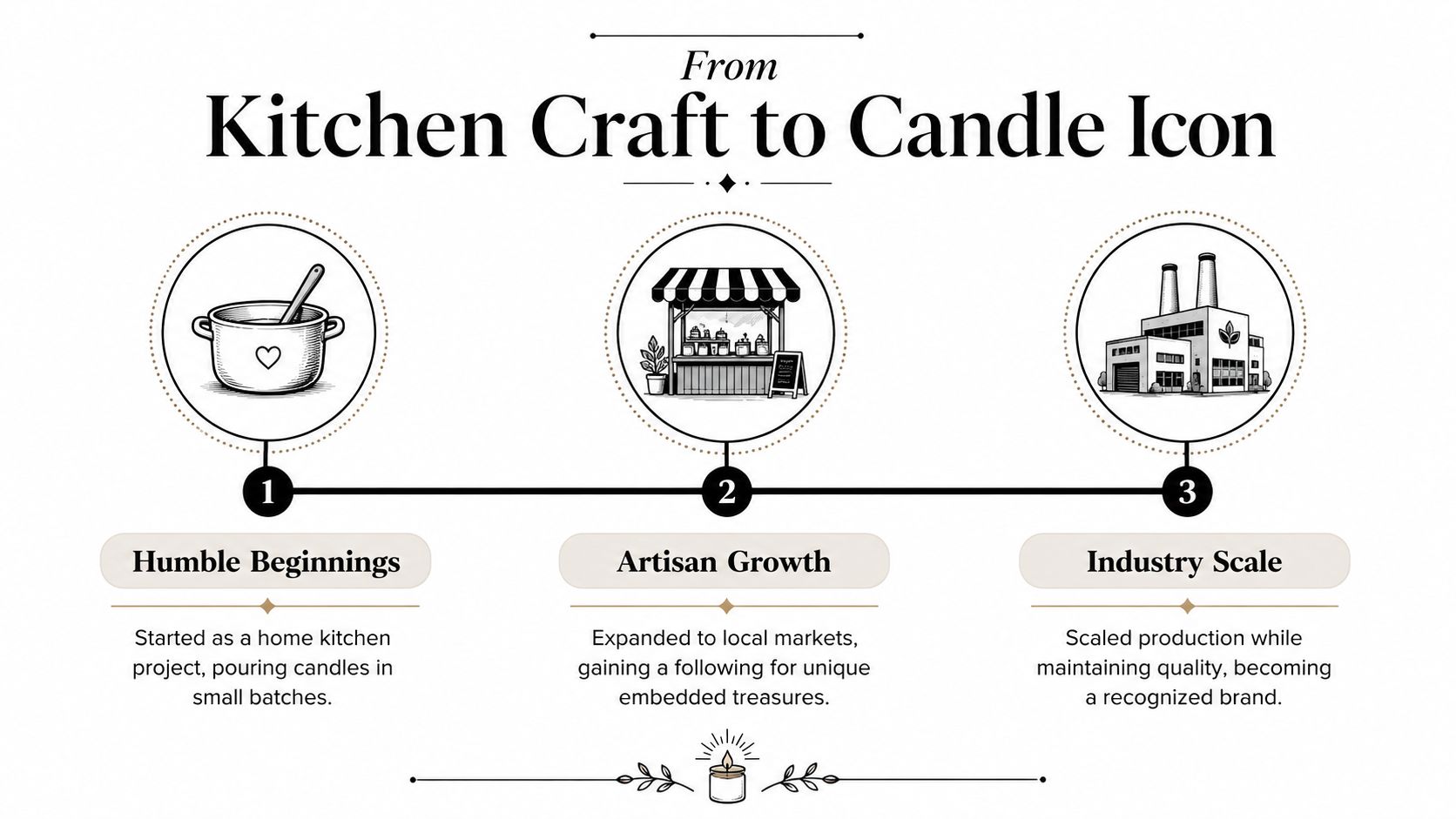
Rosy Rings' story begins with a small-scale creative project rather than a factory floor. The brand was founded in 1995 by Shannon Cumberland in Denver, Colorado, starting as a home-kitchen project shaped by gardening and experimentation, according to industry background on candle brands and market positioning. That origin matters because it connects the finished product to the handmade tradition many candle buyers still value.
The business later expanded into a 30,000-square-foot factory in Broomfield, Colorado, a milestone that shows how the operation moved from a local artisan beginning toward industrialized production. Scaling changes the technical challenge. A small maker can adjust a batch by observation, while larger production requires repeatable wax behavior, consistent fragrance distribution, stable vessels, reliable wicks, and controlled placement of embedded elements.
Rosy Rings developed within a scented-candle category where design and fragrance influence the buying decision. Independent market reporting indicates that premium scented candles account for 71.8% of the scented segment, while fragrance is a decisive factor for nearly three-quarters of buyers, as reported in the same candle industry overview. Those figures help explain why a premium candle competes on more than burn time. Buyers are evaluating the room experience, the look of the container, the identity of the scent, and the emotional value of the product.
Market estimates differ considerably, so exact category size should be treated cautiously. One report estimated the global scented-candles market at USD 2.24 billion in 2024, with a projection of USD 3.47 billion by 2033 and a 5.2% CAGR from 2025 to 2033. Another summary estimated USD 8.4 billion in 2025 and projected USD 14.6 billion by 2034, using a 6.3% CAGR. The disagreement reflects different definitions and research methods, but both estimates point toward continued category expansion in the Grand View Research scented-candles market analysis.
The same market analysis places North America at a 32.9% share in 2024 and reports that container candles held 57.6% of the market in 2024. For Rosy Rings, that context is relevant. The brand operates in the United States and uses a format that aligns with the dominant jar-and-vessel style of scented candles.
Industrial scale doesn't automatically make a candle better. It creates the capacity to make the same product consistently, but quality still depends on formulation and testing. A premium brand has to preserve the sensory qualities that attracted buyers to small-batch candles while managing production with greater precision.
That's the central tension behind rosy ring candles. The product carries the visual warmth of an artisan gift, yet its performance depends on technical decisions that must hold steady from batch to batch. The home-kitchen origin supplies the story. The larger production system has to deliver the reliability.
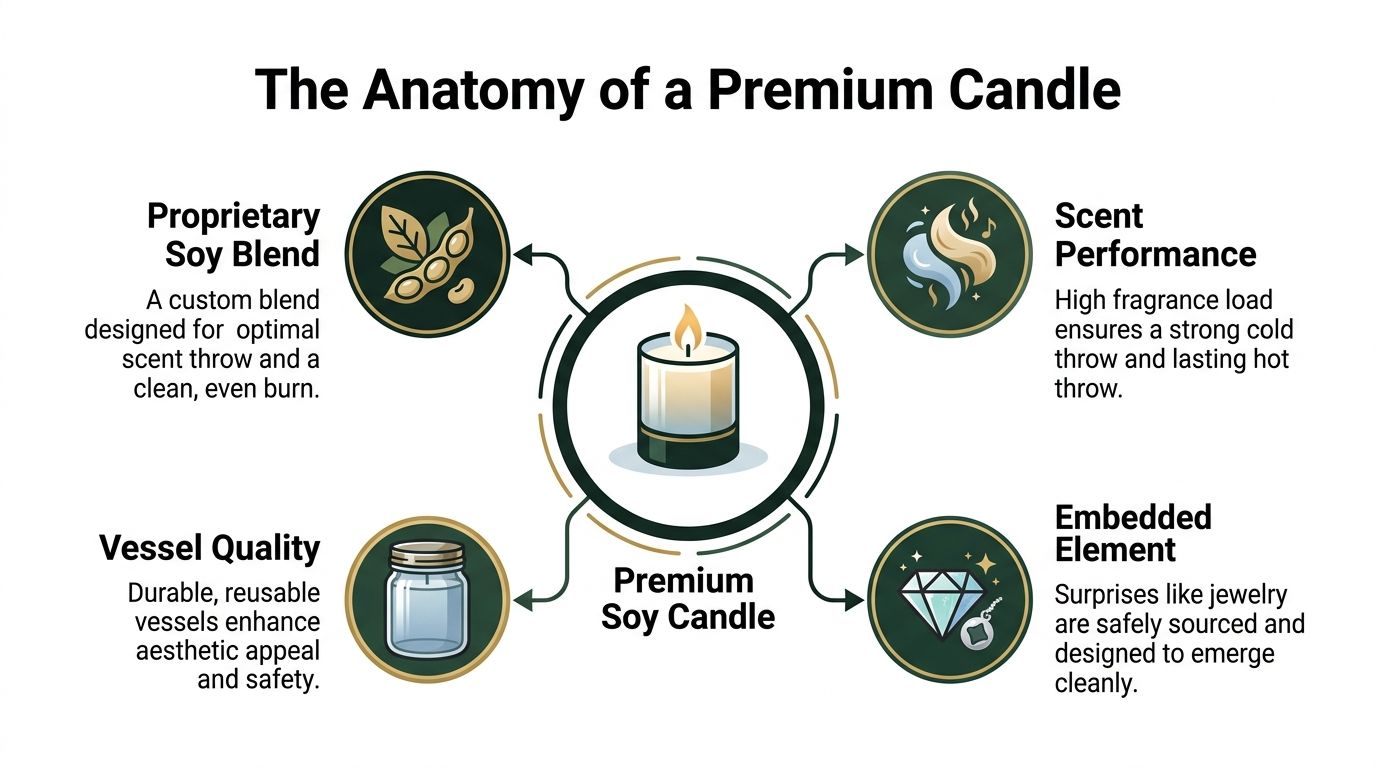
A premium candle's performance starts with the relationship between wax, fragrance, wick, vessel, and cure time. Soy blends are often chosen for a cleaner-burning profile than paraffin, but they aren't automatically perfect. They need the right fragrance concentration and enough time for the wax structure to settle.
Soy wax tends to release fragrance more slowly than paraffin because it holds fragrance molecules differently during the bonding process. A candle-making guide from Bramble Berry's soy wax reference explains that curing for several days before the first burn can improve scent performance as the wax crystal structure stabilizes.
That waiting period affects both the unlit and lit experience. A candle that smells faint when newly poured may become more expressive after curing. A rushed first burn can also make it harder to judge the final hot throw, because the wax and fragrance haven't reached their most stable state.
For readers who want a basic explanation of the material itself, this guide to what soy wax candles are provides useful background. The important buying point is simple: soy wax is a formulation choice, not a guarantee of performance. The blend, wick, fragrance, vessel, and curing process all matter.
Fragrance load describes the amount of fragrance oil compared with the weight of the wax. It should be calculated from wax mass, not from the candle's total fill weight. Independent candle-making references generally place soy container candles in a practical range of 6% to 10%, with 8% to 9% often used as a balance between scent strength and burn behavior, according to this fragrance-load guide.
A simple example makes the calculation clearer. One ounce of fragrance per one pound of wax is roughly a 6.25% load, based on the same reference. Moving toward 8% to 10% can provide a stronger room scent when the wax manufacturer supports that range, but adding more oil isn't a shortcut to luxury. Excess fragrance can destabilize combustion, weaken the flame, and affect the surface of the candle.
The practical rule: The strongest candle isn't the one with the highest possible fragrance load. It's the one whose wax, wick, vessel, and fragrance have been tested together.
Cold throw is the fragrance you notice before lighting. Hot throw is the scent released while the wax melts. A candle can have a strong cold throw and a disappointing hot throw, or the reverse. Buyers should therefore evaluate the full burn experience instead of judging the product solely by its lid or surface.
Look for a melt pool that develops evenly, a flame that remains controlled, and fragrance that becomes noticeable without turning harsh or overpowering. Soy blends may need more patience than paraffin-heavy formulas, but that slower release can contribute to a softer, more layered room scent when the formulation is well calibrated.
The embedded element adds another design requirement. The maker must position the jewelry so it can emerge without forcing the wick to burn through an unexpected obstruction. That is why wax quality and jewelry placement belong in the same conversation. A beautiful reveal is only successful when the candle continues to behave predictably around it.
Rosy Ring candles sit in a crowded concept category. Many products use the same basic promise, a scented candle with a hidden piece of jewelry inside. The differences appear in the details buyers can't always assess from a product photograph: wax composition, fragrance design, vessel construction, jewelry description, and instructions for the reveal.
A standard mass-market candle may focus on the surprise at a lower price point. That can be appropriate when the recipient mainly wants a playful unboxing moment. A premium product aims to make the candle itself feel complete, with a more deliberate scent profile, a considered vessel, and an embedded item that supports the gift's theme.
| Feature | Premium Brands, such as Rosy Ring | Standard Mass-Market |
|---|---|---|
| Wax approach | Often emphasizes soy or a custom soy blend, with attention to burn quality | May use paraffin, a paraffin blend, or an unspecified formula |
| Fragrance | Usually positioned around layered, distinctive scent experiences | Often built around familiar, straightforward fragrance profiles |
| Vessel | Designed to function as part of the décor and gift presentation | Commonly prioritizes basic packaging and cost control |
| Jewelry reveal | Treated as a planned part of the burn and presentation | May focus primarily on the novelty of finding the item |
| Buyer priority | Fragrance, appearance, and discovery all matter | The surprise may be the main purchase driver |
| Best fit | Someone who wants a home-fragrance product with an interactive element | Someone seeking an accessible novelty gift |
Premium pricing is easier to understand when you separate the components. You aren't paying only for the ring. You're also paying for wax selection, fragrance formulation, vessel design, production control, packaging, and the work required to place and protect the hidden item.
That doesn't mean every premium candle is automatically worth the cost. If the recipient rarely burns candles, a simpler jewelry candle may deliver enough enjoyment. If they care about scent quality and home décor, the fragrance and vessel may matter as much as the reveal.
For a broader look at how jewelry candles work as a product category, this jewelry candle guide offers helpful context. Use it to identify which features are important to you before comparing brands.
Start with the wax information. A clear description of the wax blend is more useful than a vague claim about a “clean” candle. Next, look for fragrance notes that explain how the scent is expected to develop, rather than listing only a broad category such as floral or sweet.
Then examine the jewelry disclosure. The product should make clear what type of item is hidden and how the buyer should retrieve it. If the listing treats the insert as a mystery object without explaining basic safety considerations, be cautious.
The better choice depends on your priorities. Premium rosy ring candles make the most sense when you want a lasting fragrance object and a reveal, while standard alternatives may suit buyers who mainly want the surprise at an accessible price.
An object inside candle wax changes the burn conditions, so “the jewelry is hidden” shouldn't be treated as a complete safety explanation. Metal and stone behave differently from dried flowers, plastic, paper, or other decorative materials. Items that can splinter, melt, ignite, or release unwanted material into a liquid melt pool create a different risk profile.
Independent candle-making communities have specifically raised concerns about embedded surprises and burn hazards, including in this discussion of jewelry inside candles. The sensible approach is neither panic nor vague reassurance. Check the materials, follow the maker's instructions, and supervise the candle throughout the burn.
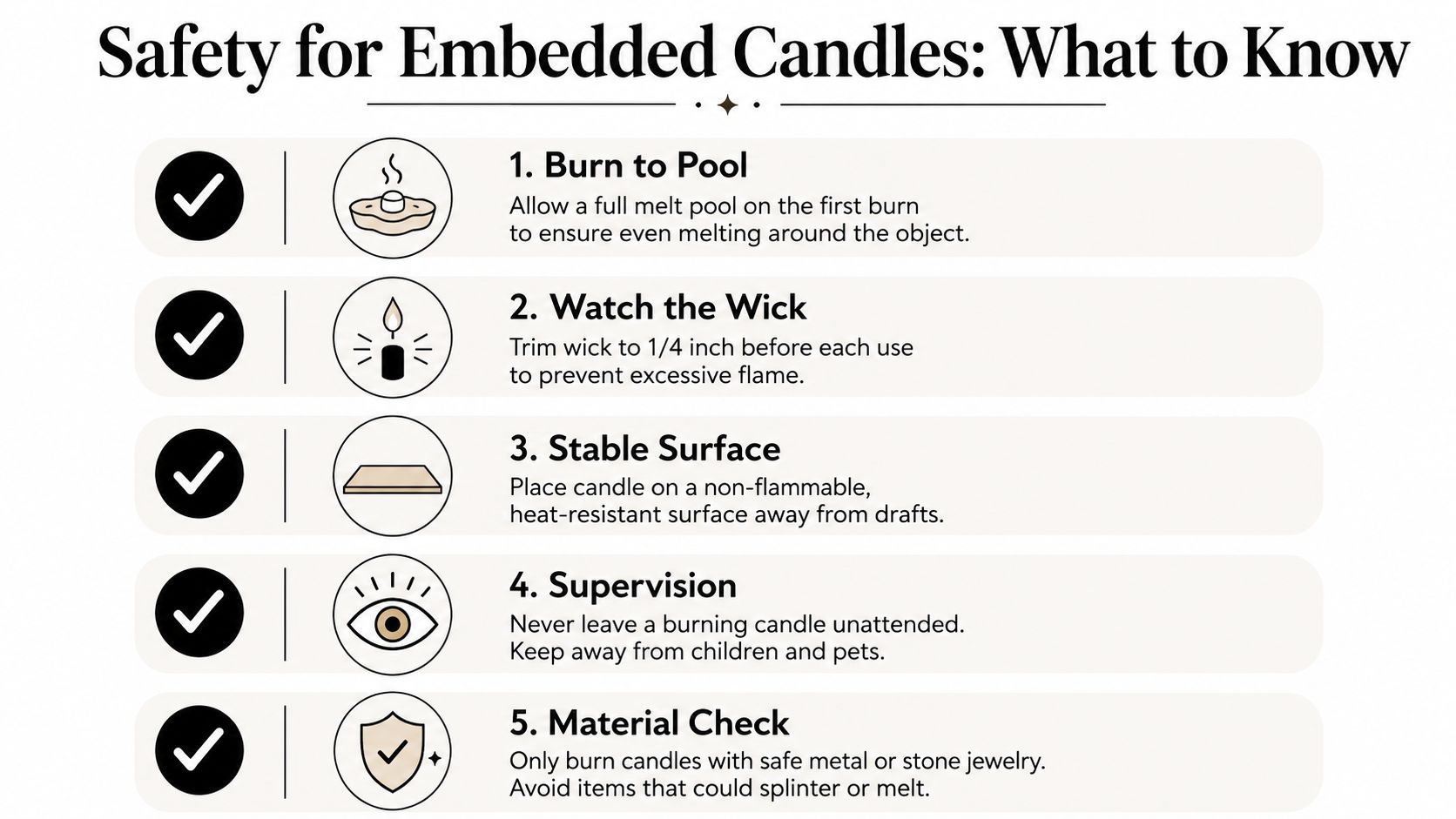
Before lighting, place the candle on a stable, heat-resistant, non-flammable surface away from drafts. Keep it away from children, pets, curtains, paper, and anything else that could catch fire.
Trim the wick to about 1/4 inch before each use, following the safety guidance represented in the product instructions. A controlled wick helps reduce excessive flame and keeps the burn more manageable.
Watch the melt pool rather than burning on autopilot. As the wax liquefies, look for signs that the wrapping or jewelry is becoming exposed. Don't use your fingers to pull out an item from hot wax. Extinguish the flame, allow the materials to cool, and then retrieve the jewelry carefully.
Never leave an embedded candle burning unattended, even if the jewelry hasn't appeared yet.
Metal or stone jewelry is fundamentally different from botanicals or plastic inserts, but “metal” doesn't mean every surrounding wrapper or attachment is safe at high heat. Avoid modifying the candle or adding your own objects. If the item emerges with hot wax around it, let it cool on a protected surface before cleaning it.
The candle's emissions also deserve attention. Advocacy coverage has raised questions about compounds released by scented candles indoors, while the National Candle Association's report on botanical candles emphasizes properly made candles and appropriate fragrance standards. A balanced buyer should consider the wax blend, fragrance load, ventilation, and burn behavior rather than assuming that a soy label alone answers every indoor-air question.
Burn in a ventilated room, stop using a candle if the flame becomes unstable, and follow the specific instructions supplied with the product. For additional practical guidance, consult these jewelry candle burning safety tips.
Rosy ring candles suit people who want home fragrance and discovery in the same gift. They're especially appealing to recipients who enjoy decorative vessels, expressive scents, and small rituals rather than an item that can be opened and understood immediately.
Choose the fragrance according to the person, not only the jewelry. A floral or botanical profile may suit someone who enjoys garden-inspired décor. Warm woods, spice, or richer blends can work for a recipient who prefers a cozy evening atmosphere. If the gift is for a plant enthusiast, a broader resource such as this Little Green Leaf gift guide can help you pair the candle with complementary ideas.
The technical verdict is equally clear. A premium soy blend can offer a cleaner-feeling burn profile, but performance depends on the complete formulation. Fragrance load must stay within the wax's tested range, curing affects scent release, and the reveal needs careful supervision. The jewelry adds excitement, yet the candle should still be worth lighting after the surprise has been collected.
Jackpot Candles offers scented candles and bath bombs with a hidden jewelry reveal, including rings, necklaces, and other pieces inside the product. Visit Jackpot Candles to explore options that combine fragrance, presentation, and the anticipation of discovering a surprise.
Comments will be approved before showing up.