
free shipping at $99


A romantic date night is intentional, one-on-one time that two partners protect to connect through a shared, enjoyable activity. If an expensive dinner leaves you distracted and a homemade meal gets you laughing together, which evening is more romantic?
The difference isn't the reservation. It's whether you both want to be there, have room to pay attention, and share something that feels a little different from everyday life. Mutual enthusiasm and comfortable novelty are more useful guides than price, venue, or how long the evening lasts.
A romantic date night is planned couple time, set apart from chores and other responsibilities so you can reconnect. Say you usually eat dinner while checking messages and discussing tomorrow's errands. Preparing a meal together, putting your phones away, and lingering over a conversation changes the purpose of that evening, even if you never leave the kitchen.
Intentional doesn't have to mean elaborate. In the Wheatley Institute's date-night report, based on a 2022 YouGov survey of 2,000 married heterosexual Americans aged 18–55, 48% reported date nights once or twice a month or more frequently, while 52% said they never went out with their spouse or did so only a few times per year. That makes a monthly date a practical starting point, not a test you need to pass every weekend.
The same report found that regular daters described themselves as very happy in their marriages more often than those without regular dates. That's an association, not proof that scheduling dinner causes happiness, but it supports treating couple time as something worth protecting.
A useful distinction: Being in the same room is proximity. Choosing to spend that time engaging with each other makes it a date.
In 2024, 51% of married respondents said they'd gone on one to four dates with their spouse during the previous three months, according to The Knot's Relationship and Intimacy Study. You don't need a packed social calendar to make room for your relationship.
When you're wondering, “What is a romantic date night?” try a simple test: Did you have uninterrupted time together? Did you share an experience rather than occupy the same space? Did you finish feeling closer? Those questions tell you more than the restaurant bill.
Think of romance as a shared experience, not a performance one partner stages for the other. These elements help distinguish meaningful couple time from an evening that only looks romantic.
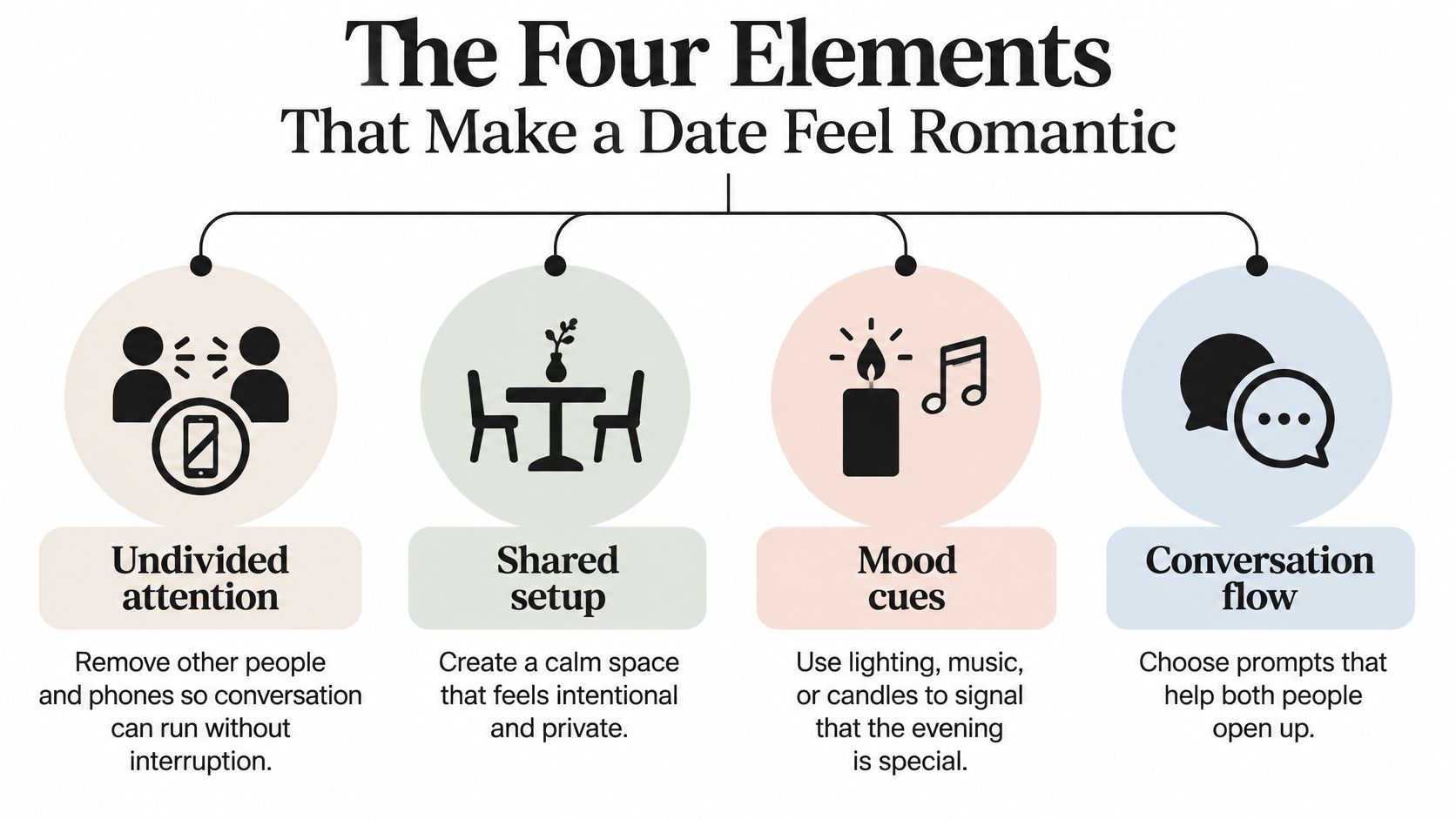
Undivided attention means reducing competition for your focus. A study of leisure context and relationship quality found that leisure alone with a romantic partner was positively associated with short-term relationship quality, while leisure with others but without the partner was negatively associated with it. For a date, that suggests giving conversation some protected space, rather than squeezing it between notifications.
Shared engagement gives you something to experience together. Cooking, playing a game, or arranging a relaxing bath can create opportunities to respond to each other. Neither person needs to entertain the other all evening, but both should have a part in what happens.
A little unfamiliarity can interrupt autopilot. In an intervention discussed in a review of shared novel activities, couples who completed at least 90 minutes of new shared activities per week for four weeks improved in romantic satisfaction relative to a control group, with effects still measurable four months later.
That isn't a required date-night duration. The practical lesson is calibrated novelty: choose something new enough to be interesting, but comfortable enough that you can still enjoy each other. Trying a recipe fits; pressuring a nervous partner into an intimidating activity doesn't.
Mutual enthusiasm is the final check. Coverage of date-night relationship findings emphasizes that shared activities work best when both partners want to participate. Each person can suggest a comfort activity, a curiosity-driven activity, and a constraint, such as energy, budget, or childcare, before approving the plan together.
Romantic Elements and How to Check Them
| Element | What It Looks Like | Quick Check |
|---|---|---|
| Undivided attention | Phones away, no other guests or distractions | Could you talk for an hour without interruption? |
| Shared engagement | Both partners cook, play or create together | Are you both taking part rather than watching? |
| Mild novelty | A new recipe, music or activity | Is it different from routine but still comfortable? |
| Mutual enthusiasm | Both partners chose the plan | Did each partner pick at least one activity? |
The hour in the table is a thought experiment, not a minimum. Candles and baths can support these elements, but they can't supply them. Which element was missing from your last evening together?
Mood Choices by Sensory Effect
| Sense | Setting Choice | Effect on the Evening | Avoid |
|---|---|---|---|
| Light | Warm lamps or safely placed candles | Softens faces and encourages an unhurried atmosphere | Bright overhead fluorescent light |
| Scent | One or two candles in a single fragrance family | Sets a mood without overwhelming the room | Stacking strong scents in a small room |
| Sound | Low-volume playlist of songs you both know | Fills silence without competing with talk | Loud or unfamiliar playlists |
| Temperature | A mutually comfortable room with a blanket nearby | Helps both partners settle in comfortably | A chilly room with no warm layer |
| Texture | Cushions, linen and a shared blanket | Makes comfortable closeness easier, if both want it | Cluttered table surfaces |
Use the room to signal a change of pace, not to create a flawless photograph. Switch off harsh overhead lighting and use lamps that let you see each other comfortably. Keep enough light for eating, moving around, and handling hot dishes safely.
For fragrance, start gently. Choose a scent you both like, and keep strongly scented candles away from food if they compete with the meal. Our explanation of why the sense of smell matters offers more context for making fragrance an intentional choice rather than an afterthought.
Ask about fragrance sensitivity before lighting anything. If either person dislikes smoke, has scent allergies, or prefers an unscented room, use lamps or flameless candles instead. Keep flames on stable, heat-resistant surfaces, away from curtains and blankets, and extinguish them before leaving the room.
Choose familiar music at a volume that doesn't require raised voices. Adjust the room together rather than assuming everyone enjoys the same temperature, and put a throw within reach. Clear somewhere to set a drink without balancing it between laundry and unopened mail.
A romantic room should be easy to inhabit. If either person is uncomfortable, change the setting rather than asking them to tolerate it.
Before the date starts, make a quick sweep:
Then stop adjusting the room. Your partner needs your attention more than the cushions do.
Choose an idea by asking what you'd both enjoy doing, not what looks most impressive. The following scenes offer different levels of effort and spending. As a hypothetical planning window, you might reserve 90 to 150 minutes for any of them, adapting the activity rather than treating that window as a requirement.
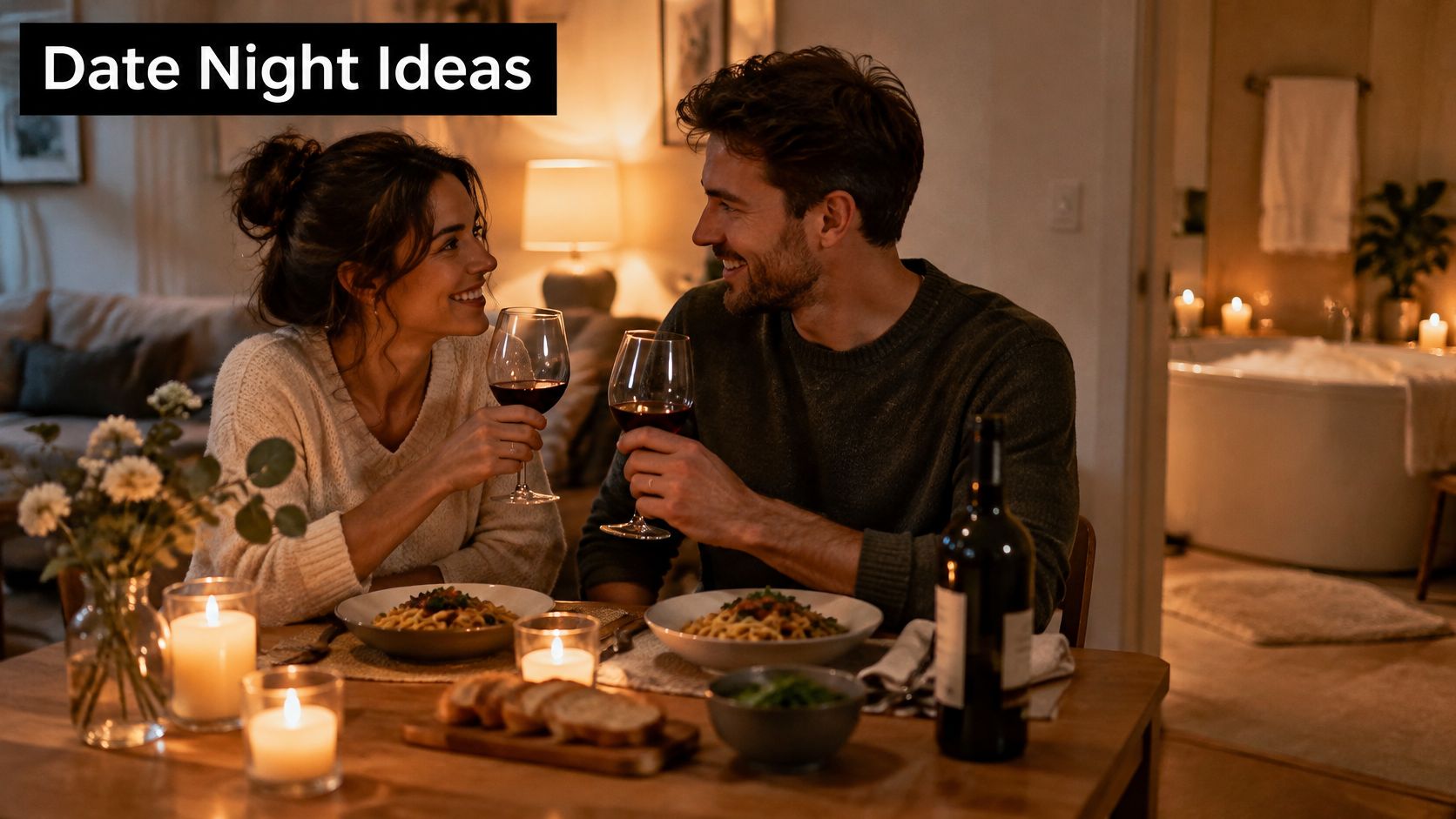
A candlelit dinner at home. One partner chooses the main dish, the other picks dessert, and both approve the shopping list. Keep the budget low by using ingredients you already have, then cook together with a shared playlist in the background. Use a gently scented candle away from the food, or an unscented alternative.
Once you sit down, ask: What was a small moment this week that you enjoyed? It's an easier opening than asking someone to summarize everything they're feeling.
A bath ritual. Let the person with stronger preferences about fragrance and water temperature guide the setup, while the other prepares towels and drinks. This can be a low-to-moderate-cost evening, depending on supplies you already own. Use a bath bomb only if it suits both people's skin and preferences, and keep any candle well away from towels and the tub's edge.
Ask: What would you like more of next month? If sharing a bath isn't comfortable or accessible, adapt the idea with our at-home spa night guide.
If you'd rather move than make something, Danza Academy of Social Dance's beginner dance moves for couples offer another shared activity to explore. Clear a safe space and approach it as play, not a test of coordination.
Going out isn't automatically more romantic than staying home. In 2025, Gen Z Americans reported spending an average of $194 per romantic night out, compared with $127 for Baby Boomers, according to BMO's Real Financial Progress Index. Those are spending averages, not recommended budgets or measures of affection.
Home dates aren't merely consolation prizes, either. Stacker's reporting on changing dating habits describes survey respondents who consider ordering in as intimate as going out, alongside people choosing less expensive activities because of rising costs. The useful question is whether your setting supports the kind of time you want together.
Budget rule: Choose a plan you can enjoy during the date without worrying about how you'll pay for it afterward.
A home date feels intentional when you distinguish it from the rest of the day:
For more low-cost options, our cheap summer date ideas can help you find a starting point without planning an expensive outing.
Adapt the format to your actual household. Caregivers may need a shorter window and an emergency contact exception; disabled partners may need accessible seating, rest breaks, or a different activity entirely. Long-distance partners can prepare the same snack and share music over a video call.
Alcohol, physical touch, gifts, and privacy should follow both partners' preferences and cultural or religious boundaries. Skip venues that create financial strain, exhausting travel, or so much noise that you can't talk. A walk and a homemade meal can be a complete plan.
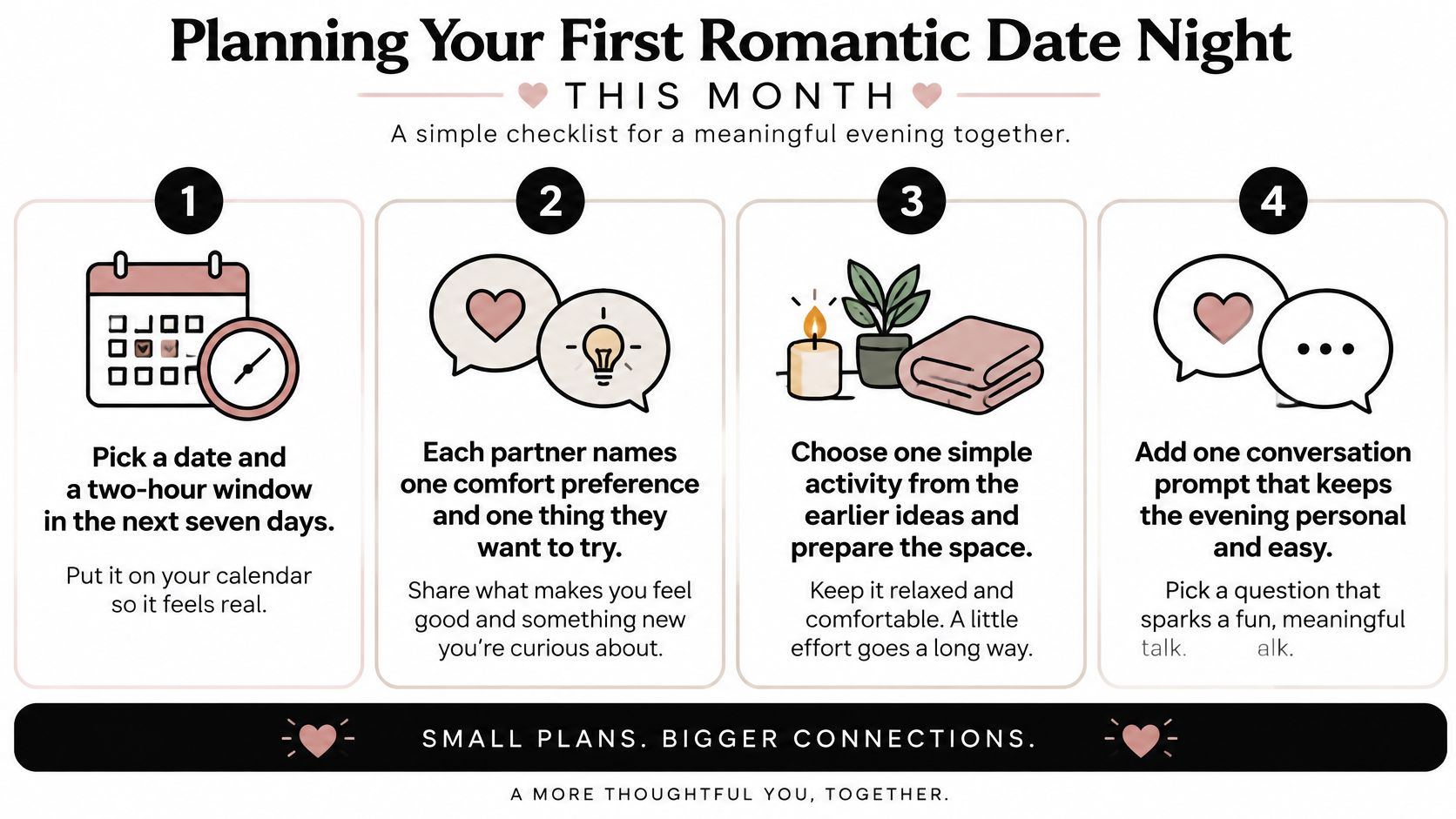
Start with a plan small enough that you'll follow through. You don't need to settle on your ideal date-night tradition before enjoying an evening together.
If you're planning an outing locally, Chronos One Escape Rooms Eltham's indoor date inspiration for London couples offers possibilities to discuss together. Choose for your shared interests, not because an activity appears on a list.
For an optional ready-made surprise, our Blind Date Candle is priced at $29.95, and our Monthly Club is a subscription that sends a bath bomb and candle with jewelry every month. Neither requires making the reveal the focus of your evening.
Use a monthly date as a manageable baseline if it suits you; weekly plans are optional. Before you put away the calendar, ask your partner: Which part of this plan should we keep for next month?
We offer scented candles and bath bombs with surprise jewelry inside, giving you an optional sensory detail and shared discovery for an at-home date. Visit Jackpot Candles together to choose something you'd both enjoy, then protect time for the conversation that makes the evening personal.
Comments will be approved before showing up.