
free shipping at $99


When you're searching for the best bath and body products, what are you really looking for? It's not just about a fancy label. It's about high-quality ingredients, responsible practices, and a sensory experience that helps you genuinely press pause on a busy day. The goal is to find the perfect match for your skin—a ritual that feels just as indulgent as it is effective.
Walking down the bath and body care aisle can feel like a sensory overload. With countless options all promising amazing results, how do you separate the good from the great? The secret lies beyond the flashy packaging and clever ads. It’s all about a thoughtful blend of pure ingredients, ethical sourcing, and an experience that actually feels special.
Think of it like a master chef in the kitchen. They don't just toss random ingredients into a pot. They carefully select the freshest, highest-quality components and understand exactly how they'll work together. In the same way, the best bath and body products are made with superior ingredients that truly nourish your skin, not just strip it clean. That’s the real foundation of a great self-care routine.
To cut through the noise, let's break down the three pillars that define a top-tier product. Getting a handle on these will help you make smarter, more confident choices for your daily rituals.
Ingredient Integrity: This is the big one. Always look for products packed with skin-loving ingredients like shea butter, natural oils, and gentle exfoliants. Steer clear of harsh sulfates and unnecessary fillers that can rob your skin of its natural moisture.
Ethical Practices: A fantastic product shouldn't come at a cost to our furry friends or the planet. Brands that are serious about cruelty-free testing and sustainable sourcing show a deep respect for both their customers and the world we live in.
Sensory Experience: Let's be honest—how a product smells and feels is a huge part of the appeal. A sophisticated, well-balanced fragrance can turn a quick shower into a mini spa escape, melting away stress and boosting your mood.
The goal isn’t just to find a product that works, but one that creates a moment of genuine pleasure and relaxation. That’s the true essence of modern self-care.
This shift toward quality and experience is happening everywhere. The global bath and shower market was valued at around USD 51.17 billion in 2024 and is expected to hit USD 79.96 billion by 2032. That massive jump shows just how much people are willing to invest in premium, effective personal care these days.
To make things even easier, we put together a simple table to guide you. It breaks down the key things to look for when you're evaluating any bath or body product. And if you want to see what makes certain items stand out, checking out guides on popular Japanese beauty products can offer some cool insights into innovative formulas and different approaches to self-care.
Here’s a straightforward checklist to keep in mind the next time you're shopping.
| Evaluation Criterion | What to Look For | Why It Matters |
|---|---|---|
| Ingredient List | Recognizable, nourishing ingredients listed first. | The first few ingredients make up the bulk of the formula, showing you its true focus. |
| Skin Compatibility | Labels like "pH-balanced" or "for sensitive skin." | This ensures the product won't disrupt your skin's natural protective barrier and cause irritation. |
| Scent Profile | High-quality essential oils or perfume-grade fragrances. | You get a more complex and lasting aroma without the harshness of cheap synthetic scents. |
| Ethical Standards | Cruelty-free certifications (like the Leaping Bunny logo). | This is your guarantee that the product and its ingredients were not tested on animals. |
Using these simple checkpoints can help you feel confident that you’re choosing products that are good for your skin, your conscience, and your well-being.
Ever walk down the bath and body aisle and feel like you need a translator? The ingredient lists are a mile long and packed with scientific names that make it impossible to know what you’re actually putting on your skin. But here's the secret: learning to read those labels is the single best tool you have for finding products you'll absolutely love.
Think of an ingredient list like a recipe. The stuff at the top of the list makes up the bulk of the product, just like flour in a cake. The ingredients way down at the bottom are there in the smallest amounts. It's a simple trick, but it instantly tells you if a product is the real deal—is it actually packed with that nourishing shea butter it's advertising, or is it just a tiny drop at the end of a long, synthetic list?
Most bath and body products are built around a few core types of ingredients. Once you know what they do, it's like learning the basic food groups for your skin. You'll be able to spot them on a label and know exactly what they’re bringing to the party.
When you break it down, a truly fantastic product is about more than just one thing. It's a careful balance.
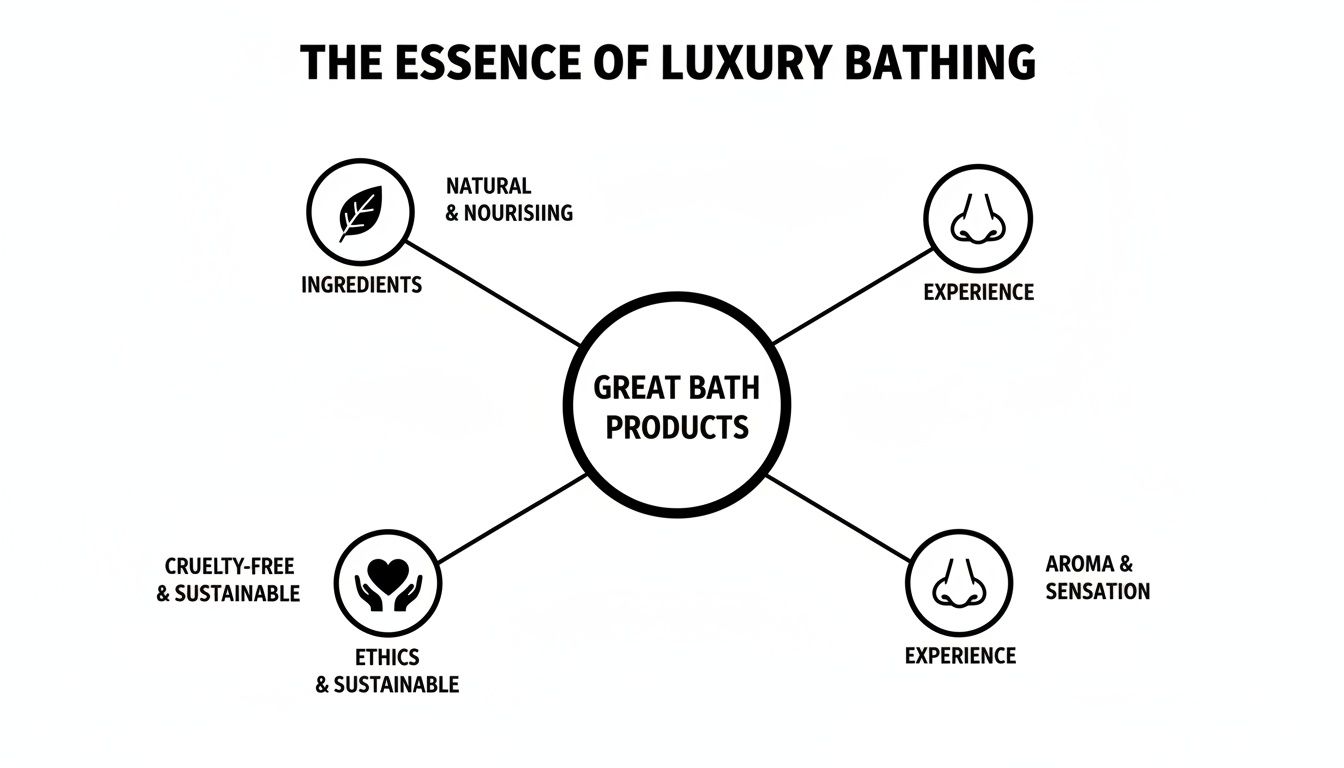
This map gets it right: a great product needs effective ingredients, ethical creation, and a beautiful experience. If one piece is missing, the whole thing just feels incomplete.
Body washes and shower gels are a perfect example. In 2024, they owned a whopping 36.80% of the global bath and shower market. Why? Because their liquid form is the perfect vehicle for a cocktail of beneficial ingredients. Unlike a simple bar of soap, a liquid formula can suspend all the good stuff—moisturizers, vitamins, and other active ingredients—so they can actually get to your skin. You can explore more data on market trends to see just how much formulation matters to shoppers.
When you're scanning a label, some ingredients are like little green flags, signaling a high-quality, effective product. These are the heavy lifters that hydrate, soothe, and protect your skin.
Humectants: These guys are moisture magnets, literally pulling water from the air right into your skin. Keep an eye out for glycerin, hyaluronic acid, and aloe vera. They deliver a burst of hydration that feels light, not greasy.
Emollients: These are the smoothers. They soften the skin by filling in the tiny gaps between your skin cells. You'll see them listed as shea butter, cocoa butter, and natural oils like jojoba or coconut oil. They're responsible for that silky, luxurious feeling.
Occlusives: Think of these as a protective seal. They create a barrier on your skin to stop moisture from escaping. Powerhouse occlusives like petrolatum, lanolin, and beeswax lock in hydration, making them a lifesaver for super dry skin.
A well-balanced product will often contain a mix of all three—a humectant to draw in moisture, an emollient to soften the skin, and an occlusive to seal it all in. This synergy is what creates lasting hydration and a healthy skin barrier.
Just like there are hero ingredients, there are others you might want to sidestep, especially if your skin is on the sensitive side. Knowing their names helps you make smarter choices.
Sulfates (SLS/SLES): Sodium Lauryl Sulfate and Sodium Laureth Sulfate are what create that big, bubbly lather. But they can be harsh, stripping your skin of its natural oils and leaving it feeling tight, dry, or irritated.
Parabens: These are preservatives used to give products a longer shelf life. While many are considered safe in small doses, some people prefer to go paraben-free just to be cautious. You might see them listed as methylparaben or propylparaben.
Synthetic Fragrances: That one little word on the label—"fragrance" or "parfum"—can hide a cocktail of dozens of chemicals. For anyone with sensitive skin or allergies, these mystery ingredients can be a big trigger for irritation. Choosing products scented with essential oils or labeled "fragrance-free" is often a much safer bet.
By getting familiar with these key ingredient types, you go from being a confused shopper to an empowered one. You'll have all the knowledge you need to pick the absolute best bath and body products for your skin.
Think of choosing the best bath and body products like being a personal stylist for your skin. You wouldn't wear a heavy winter coat in July, right? In the same way, you shouldn't slather a thick, oil-based cream on already oily skin. The real secret is understanding your skin's unique personality—its needs, its quirks, and what makes it feel absolutely amazing.
Figuring out your skin type is the first and most crucial step. It’s the compass that guides all your product choices, making sure you’re giving your skin what it actually craves instead of just taking a shot in the dark. Once you know your type, you can build a routine that works with your body, not against it.
Let's start by figuring out which category your skin falls into. Each type has its own tell-tale signs, and spotting them is easier than you might think.
Knowing these traits helps you look past generic advice and start choosing ingredients that make a real difference. For example, exploring the wonders of aloe vera gel for facial care shows how one amazing ingredient can target specific needs, and that same principle applies to your whole body.
The best body care routine isn't about the price tag; it's about using the right products for your specific skin. A consistent routine with well-matched products will always beat using a trendy-but-wrong product every now and then.
Once you've got your skin type figured out, you can start layering products to get the best results. A solid routine usually includes a great cleanser, an exfoliant, and a moisturizer. It's like putting together the perfect outfit—each piece has a purpose.
Getting familiar with which natural ingredients to keep your summer skin healthy can also give you some great ideas for powerful, simple ingredients to add to your routine.
To make things simple, we've put together a quick guide to help you find your perfect match.
This table breaks down exactly what your skin is asking for, from ingredients to the types of products that will let it shine.
| Skin Type | Key Characteristics | Recommended Ingredients | Product Types to Prioritize |
|---|---|---|---|
| Dry | Flaky, tight, sometimes rough texture. | Hyaluronic Acid, Shea Butter, Lactic Acid, Glycerin. | Creamy Body Wash, Rich Body Butter, Gentle Chemical Exfoliant. |
| Oily | Shiny appearance, prone to body breakouts. | Salicylic Acid, Tea Tree Oil, Kaolin Clay, Niacinamide. | Foaming Body Wash, Lightweight Lotion, Clay-Based Body Mask. |
| Sensitive | Easily irritated, prone to redness and itching. | Ceramides, Oatmeal, Aloe Vera, Chamomile. | Fragrance-Free Cleanser, Soothing Serum, Barrier Repair Cream. |
| Combination | Oily in some areas (like the back) and dry in others. | Antioxidants (Vitamin C), Hyaluronic Acid, Jojoba Oil. | pH-Balanced Wash, Gel-Cream Moisturizer, Targeted Treatments. |
When you start aligning your shopping list with this kind of framework, you’re doing more than just washing up. You’re actively supporting your skin’s health, setting the stage for balanced, glowing, and comfortable skin from head to toe.
Think of fragrance as the soul of your bath routine. It’s that invisible magic that can melt away the stress of a chaotic day or give you a burst of energy to face the morning. But when you're hunting for the best bath and body products, you'll find not all scents are created equal. Knowing the difference is what turns a simple shower into a truly luxurious escape.
The world of scent is basically split into two camps: natural essential oils and synthetic fragrance oils. Each plays a unique role and brings its own special something to the products you love.
Essential oils are the real deal—pure extracts pulled directly from plants through methods like distillation or cold pressing. We’re talking about lavender, eucalyptus, or sweet orange oil. Their aromas are a direct gift from nature, often prized for their aromatherapeutic perks, like lavender's famous ability to help you unwind.
On the flip side, synthetic fragrance oils are cooked up in a lab. This scientific approach lets creators dream up an almost endless variety of scents that you just can't bottle from nature, like the smell of a fresh ocean breeze or warm vanilla sugar. They also tend to be more stable and consistent than their natural cousins.
Let's break down what sets them apart:
The best brands often use a smart blend of both. They capture the therapeutic goodness of essential oils and pair it with the reliability of high-quality synthetic fragrances to create a sophisticated, long-lasting aroma that’s the best of both worlds.
A truly great fragrance isn’t just one flat scent; it’s a masterpiece, built layer by layer, kind of like a musical chord. Perfumers design scents with three distinct layers, known as fragrance notes, that show up at different times.
Imagine it as a little story unfolding on your skin:
Top Notes: This is your first impression! These are the bright, sparkly scents that hit you right away—think citrus like lemon or bergamot, and light herbs like mint. They’re vibrant and fun but fade the fastest, usually within 15-30 minutes.
Middle Notes (Heart Notes): After the top notes dance away, the heart of the fragrance makes its entrance. These are usually floral, fruity, or spicy scents like rose, jasmine, or cinnamon. They are the main character of the scent story and stick around for a few hours.
Base Notes: These are the deep, rich aromas that give a fragrance its staying power and anchor the whole experience. Think musk, amber, vanilla, and sandalwood. They’re the last to show up and can linger on your skin for hours, leaving a warm, memorable finish.
A truly exceptional scent tells a complete story, transitioning smoothly from its bright opening to its warm, lingering conclusion. This complexity is a hallmark of perfume-grade fragrances used in luxury bath products.
Picking a scent is a totally personal journey. What’s the vibe you're going for? Do you want to relax, feel energized, or get cozy? For pure relaxation, look for notes of lavender, chamomile, or sandalwood. If you need a pick-me-up, citrus, peppermint, or ginger are fantastic choices.
Want to take it to the next level? Try layering. This can make your favorite scent last longer and create a unique aroma that’s all you. The trick is to make sure your scents play nicely together. Stick with products from the same fragrance family or find ones that share a base note.
For example, you could use a vanilla-scented body wash and follow it up with a warm amber body lotion. This technique creates a beautiful depth that a single product just can't match, making the scent a true part of your personal style.
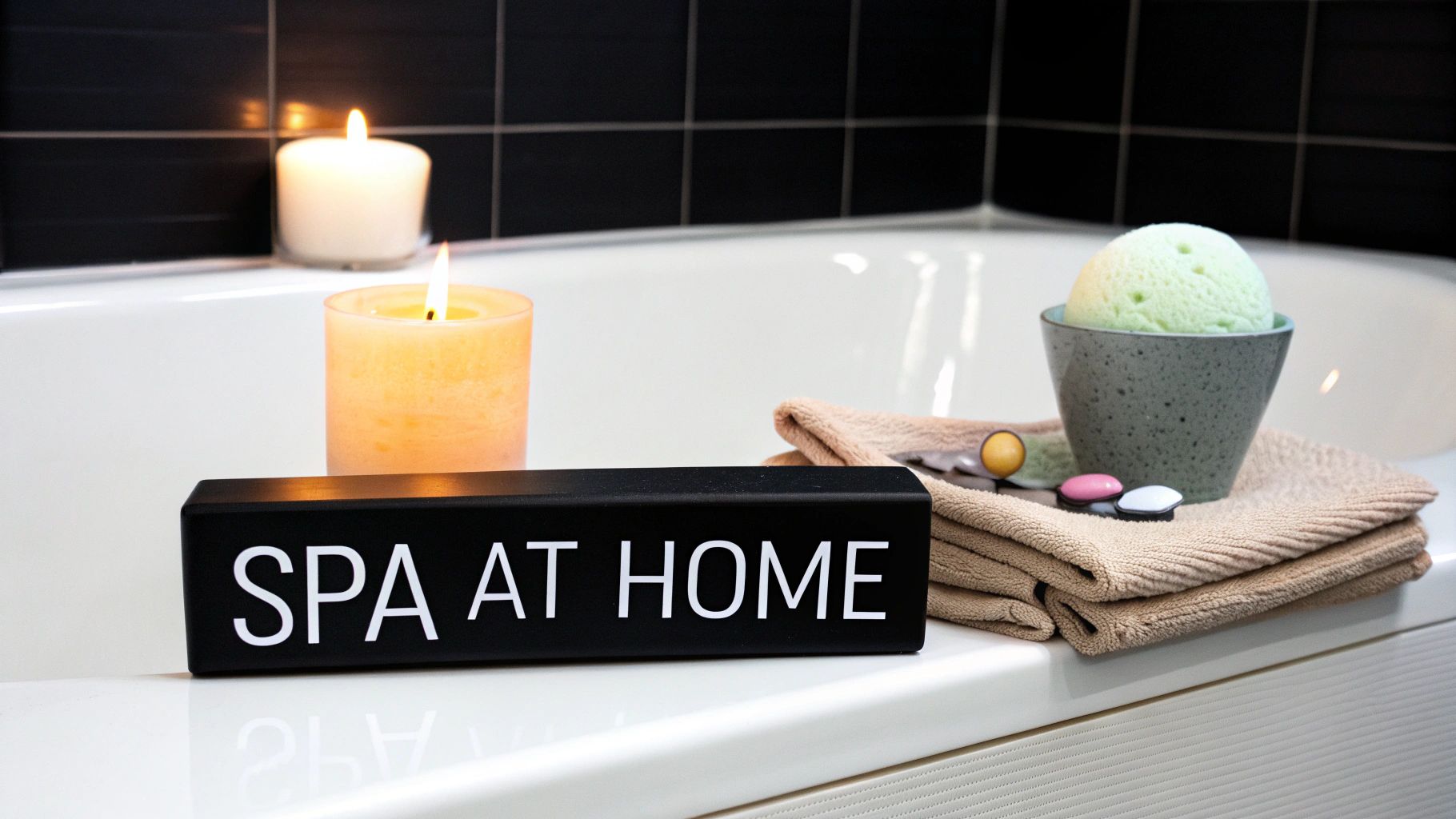
Let's be honest, most days a shower or bath is just another chore to check off the list. But what if you could transform that simple task into a genuine escape? It’s not about finding more time in your day; it’s about making the time you do have count for so much more. The secret is all in choosing products that light up your senses and turn a mindless routine into a soul-soothing ritual.
This whole vibe shift often starts with setting the right atmosphere. You’d be surprised how much the simple act of lighting a candle can change the energy of a room, telling your brain it's officially time to unwind. Of course, the quality of that candle is what really makes the difference in creating that spa-like feeling at home.
A really good scented candle does more than just flicker in the corner—it creates an entire experience. Take the wax, for instance. So many of the best candles use a soy wax blend, and for good reason. It’s known for giving you a much cleaner, slower burn than old-school paraffin.
What that means for you is enjoying that gorgeous fragrance for way longer, without all the soot. When you pair that superior wax with rich, perfume-grade fragrances, you get a scent that fills the room beautifully without being overpowering. It’s the perfect foundation for a truly immersive self-care session.
As more of us are investing in these little at-home retreats, the demand for amazing products has skyrocketed. The bath and shower market in North America was valued at a whopping USD 13.80 billion in 2024. Zooming in, the U.S. luxury bath and body market is expected to jump from USD 3.63 billion in 2024 to USD 5.71 billion by 2032. It’s clear we’re all craving higher-quality, experience-driven products.
Once you've set the mood, the real fun begins with products that add a little bit of delight and surprise. This is where the truly best bath and body products shine, going way beyond just cleaning and moisturizing. They create a moment you’ll actually remember.
Just imagine dropping a bath bomb into the tub. It’s not just fizzing with pretty colors and releasing an incredible scent—it’s also holding a hidden treasure inside. That single twist completely changes the whole point of taking a bath. Suddenly, it’s not just about getting clean. It’s about the thrill of anticipation and discovery.
The ultimate self-care indulgence isn't just about premium ingredients and beautiful scents. It's about adding an element of surprise that turns an everyday act into a joyful, memorable experience.
This whole idea of hiding a gift inside a product takes it from something you just use up to something you get to keep. For anyone looking to make their self-care time a priority, it adds a layer of fun that makes the whole ritual something to genuinely look forward to.
This unique spin also happens to make for an unforgettable gift. Giving someone a gorgeous scented candle or a set of luxe bath bombs is always a sweet gesture. But when that gift also has a surprise piece of jewelry tucked inside? It becomes a lasting memory.
It’s a winning formula for a few reasons:
Ultimately, turning your routine into a ritual is all about finding more joy in those small moments. By picking products that are thoughtfully designed to surprise and delight, you can transform the simple act of bathing into a powerful moment of self-care, relaxation, and even a little treasure hunting. If you’re looking for more ways to spoil yourself, check out our guide to luxury bath products for women.
Jumping into the world of bath and body care can feel a little overwhelming at first. As you start to piece together the perfect routine for your skin, it's totally normal for questions to pop up. We get it, and we're here to help clear things up.
Think of this as your go-to guide for all those little details. We’re tackling the questions we hear most often so you can feel amazing about every choice you make for your self-care ritual.
This is a big one, and the honest answer is: it really depends on your skin. For most people, exfoliating 1-3 times per week is the magic number. That’s usually enough to scrub away dull, dead skin cells and reveal that smoother, brighter skin underneath without causing any drama.
But the most important thing is to listen to what your body is telling you.
No matter how often you do it, always—and we mean always—follow up with a great moisturizer. Exfoliating can be a bit drying, so putting that moisture right back into your skin is a must for keeping it healthy and happy.
Not always! A hefty price tag can sometimes be more about fancy packaging and big ad campaigns than what’s actually in the bottle. The true worth of any product is hiding in the ingredient list, not on the price sticker. That said, some premium products do invest in higher concentrations of quality ingredients or use more complex, perfume-grade scents.
The "best" product isn't the most expensive one; it's the one with a high-quality ingredient list that perfectly suits your skin's needs and your budget. Focus on reading the label, not just the price.
At the end of the day, a well-made, affordable product you use all the time is going to give you way better results than a pricey one that doesn't quite work for your skin.
The secret is all about layering. This trick involves using a few products with the same or similar scents to build up a fragrance that’s richer and lasts so much longer. When you get it right, your favorite scent can stick with you from morning 'til night.
Here’s a simple layering routine to try:
This creates a gorgeous depth of fragrance that a single spritz or swipe just can't compete with.
We’d recommend against it. It might seem convenient, but the skin on your face is way thinner and more delicate than the skin on your arms and legs. They just have different needs!
Body lotions and creams are usually packed with heavier oils and butters that can be a recipe for clogged pores and breakouts on your face. Plus, the yummy fragrances in the best bath and body products can sometimes be too strong for sensitive facial skin, leading to redness or irritation. For a closer look at product safety, you can learn more about if bath bombs are good for your skin in our detailed guide. Your best bet is to stick with products that were made specifically for your face.
Ready to transform your routine with products that are as delightful as they are effective? Explore the Jackpot Candles collection to discover luxurious scented candles and bath bombs with a beautiful jewelry surprise hidden inside. Find your new favorite today at https://www.jackpotcandles.com.
Comments will be approved before showing up.