
free shipping at $99


Most of us assume our homeowner's policy has us covered if something happens to our valuables, but that can be a very expensive mistake. The truth is, most standard policies have incredibly low coverage limits for jewelry—often capping out at just $1,500 to $2,500. On top of that, high deductibles can make filing a claim for smaller items pretty much pointless.
This is exactly where specialized jewelry insurance comes in, closing those critical gaps and giving you real peace of mind against risks your average policy just won't touch.
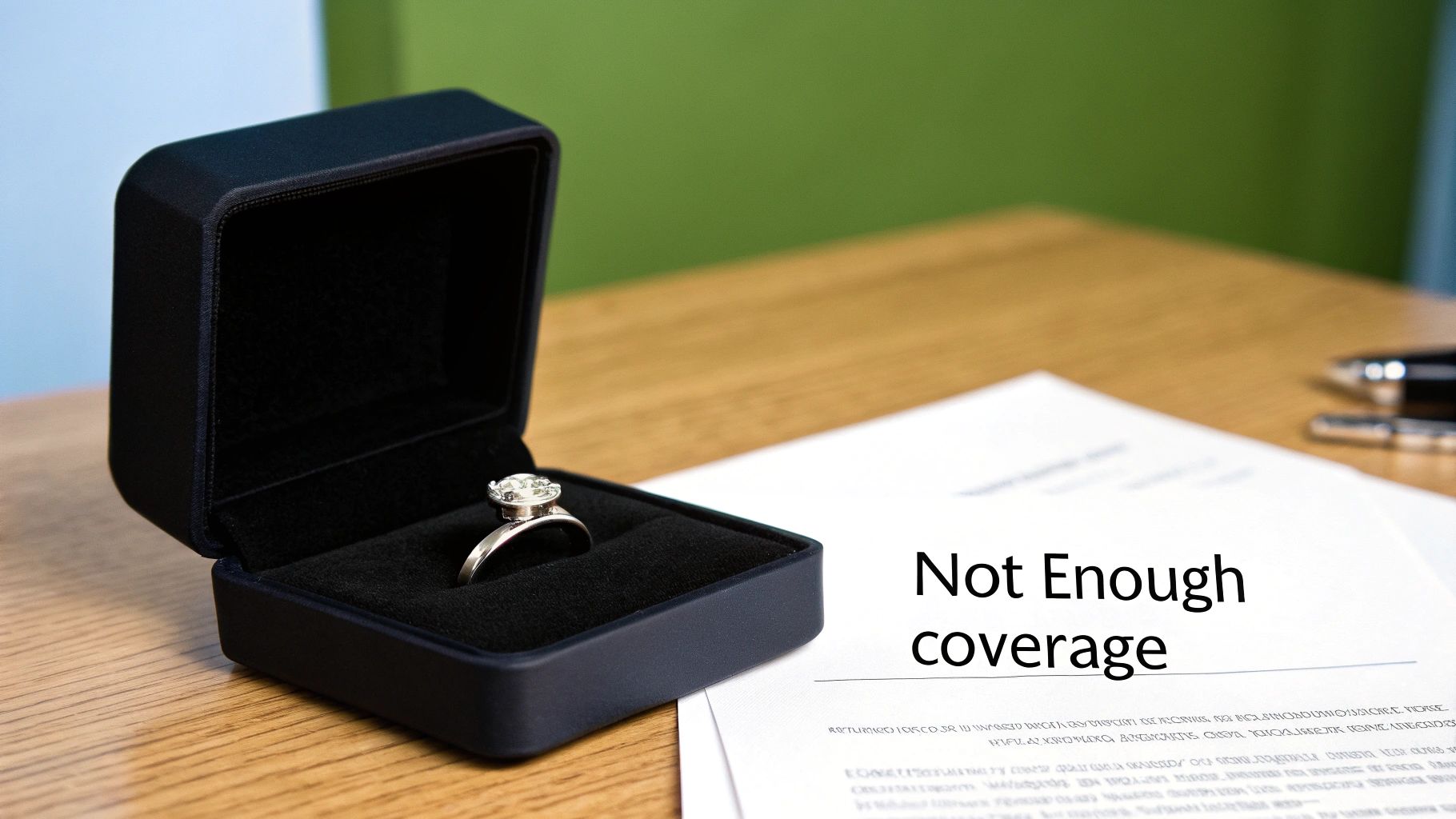
Relying on your homeowner's or renter's policy to protect valuable jewelry is a bit like bringing a tiny umbrella to a hurricane—it’s just not going to do the job when you need it most. These policies are built for the big stuff, like your house and all the general things inside it, not for the unique risks that come with small, portable, and high-value pieces like an engagement ring or a family heirloom.
The biggest issue is the sub-limit for specific categories. Your policy might cover tens of thousands in personal property, but there's almost always a separate, much lower limit just for jewelry. If a $10,000 ring gets stolen, you might only get a $1,500 check back, leaving you to cover the rest.
Beyond the low payout limits, standard policies have a few other major weak spots. One of the biggest? No coverage for "mysterious disappearance." If your ring slips off your finger while you're at the beach, you're likely out of luck because you can't prove it was stolen.
Another key difference is what happens when you file a claim. Making a claim on your homeowner's policy, even for a small piece of jewelry, can jack up your premium for years. With a dedicated jewelry insurance company, claims are handled separately and won't affect your primary home insurance rates.
Key Takeaway: Homeowners policies are designed to protect your home’s structure and general contents, not special assets. The low limits, high deductibles, and lack of coverage for things like mysterious disappearance create a huge risk for your valuable jewelry.
The global jewelry insurance market is expected to hit USD 10.4 billion by 2034, which shows just how many people are realizing they need better coverage. What's really interesting is that claims data shows damage (44%) happens more often than theft (36%)—a detail that many standard homeowners policies don't handle very well.
To really see the difference, you have to look at how each policy type values your jewelry. A standard policy often pays out the "actual cash value," which means they factor in depreciation. That’s a problem for jewelry, which can hold or even increase in value. Specialized insurers, on the other hand, usually offer "agreed value" coverage, which means you get the full appraised amount, no questions asked. Our guide on how to value jewelry can walk you through that process.
Here’s a quick rundown of the most important differences:
| Feature | Standard Homeowners Policy | Specialized Jewelry Insurance |
|---|---|---|
| Coverage Limit | Low (typically $1,500 - $2,500) | Full appraised value of the item |
| Deductible | High (often $1,000+) | Low or even $0 options available |
| Covered Perils | Named perils (theft, fire) | All-risk (loss, damage, theft) |
| Mysterious Disappearance | Usually excluded | Generally included |
| Premium Impact | A claim can raise your overall rate | Claims do not affect home policy |
Before you start hunting for quotes from the top jewelry insurance companies, you need a game plan. It’s easy to get fixated on the price, but the real story is in the policy details—that’s what determines how you’ll be treated in a worst-case scenario. Learning a few key terms will help you see past the monthly premium and pick a plan that actually has your back.
The first and most important thing you need to understand is the difference between "agreed value" and "actual cash value" coverage. This one detail can make a massive difference in how much you get paid after a loss.
An agreed value policy is really the gold standard for something as precious as jewelry. How it works is simple: you and the insurance company agree on your item's value from the get-go, usually based on a recent professional appraisal. If your piece is lost, stolen, or destroyed, the insurer pays you that full, pre-agreed amount. No arguments, no deductions.
On the flip side, an actual cash value (ACV) policy pays out the replacement cost minus depreciation. That might be fine for a laptop, but it’s a terrible deal for jewelry, which often goes up in value over time. An ACV policy could leave you with way less than you need to replace your piece, especially if it’s an heirloom or custom design.
Why It Matters: An agreed value policy locks in your jewelry's full appraised worth, protecting both its financial and sentimental value. Don't even consider a policy unless you can confirm it's based on agreed value.
Getting familiar with how insurers assess risk can also give you a better feel for why policies are structured the way they are. You can learn more about the insurance underwriting process to get a behind-the-scenes look at how your premium is calculated.
Another major fork in the road is the type of risk the policy covers. The specialized jewelry insurers almost always offer all-risk coverage, sometimes called "open peril" coverage. This is exactly what you want.
An all-risk policy covers your jewelry against every kind of loss, theft, or damage unless a situation is specifically excluded in the fine print. This covers all the real-life stuff that happens, like:
In contrast, named peril policies—which are common with standard homeowners insurance—only cover the specific events listed in the contract, like fire or burglary. If the cause of your loss isn't on that short list, you're out of luck. This leaves huge gaps, especially for things like accidental loss or damage.
Beyond those big-picture concepts, a few other features separate the great jewelry insurers from the merely okay ones. As you get quotes, keep a little checklist handy to see how each provider stacks up on these practical points.
1. Worldwide Coverage
Does your policy follow you wherever you go? If you travel often, you need to make sure your jewelry is protected anywhere in the world, without a bunch of complicated fine print for international trips.
2. Repair and Replacement Flexibility
This one is a huge deal. Does the insurer make you use one of their "in-network" jewelers for repairs or replacements? A top-tier policy gives you the freedom to go back to your original, trusted jeweler. That’s absolutely essential for custom pieces or designer brands where craftsmanship is key.
3. Deductible Options
Look for companies that offer flexible deductible choices, including a $0 deductible option. A higher deductible might lower your premium a bit, but a zero-deductible plan means you pay absolutely nothing out-of-pocket if you ever have to file a claim.
Picking the right insurance is about so much more than just the price tag. You need a policy that actually fits your lifestyle, your specific pieces, and what you’d expect if something went wrong. The best jewelry insurance companies offer a level of specialized, comprehensive protection that a standard homeowners policy just can't touch.
We're going to break down the most respected names in the game—Jewelers Mutual, BriteCo, and Zillion—and see how they stack up against just adding a rider to your existing homeowners policy.
To really see the difference, let’s think about how each would handle a real-world headache. What if you’re traveling overseas and a diamond pops out of your engagement ring? Or what happens if your watch gets swiped from a gym locker? The way a company responds in those moments is what truly shows you its value.
This infographic breaks down the core things you need to look for: how comprehensive the coverage is, how they protect your item's value, and how much freedom you have with repairs.
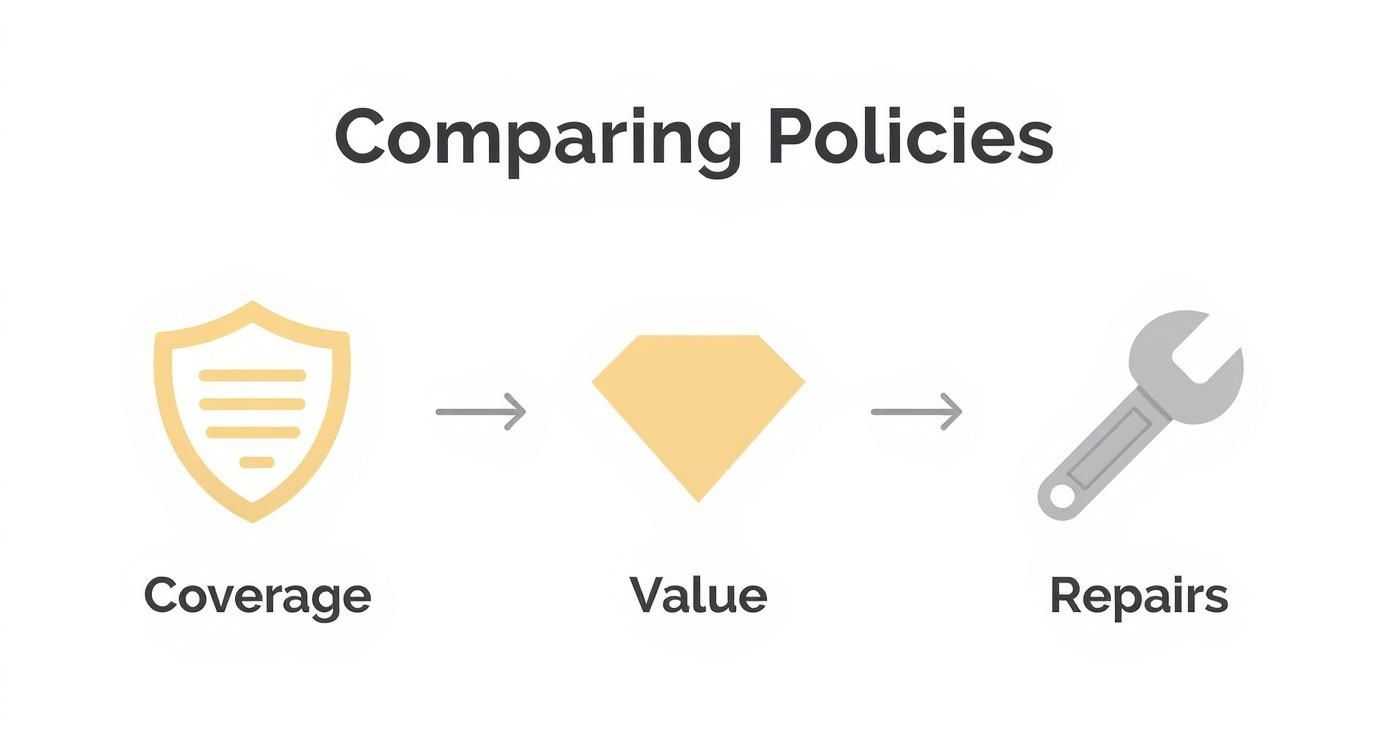
As you can see, the top-tier policies nail all three, giving you solid all-risk coverage, agreed value payouts, and the ability to work with your own trusted jeweler.
Founded way back in 1913 by jewelers for jewelers, Jewelers Mutual is probably the most recognized name in the business. That long history gives them a deep understanding of everything from underwriting to claims. They're known for their comprehensive, worldwide "all-risk" coverage that protects against loss, theft, damage, and even mysterious disappearance.
Their policies are built on an agreed value foundation. This is a huge deal. It means if your item is a total loss, you get the full amount it was insured for, period. No arguments about depreciation or what it's worth today.
One of their best features is the flexibility they give you for repairs and replacements. Jewelers Mutual lets you work with your own jeweler, which is a massive plus if you have a custom piece or just really trust your local shop. They don’t lock you into a network.
Key Differentiator: Jewelers Mutual's century-long focus on jewelry provides unmatched industry expertise. Their policies are traditional and strong, emphasizing your choice in the repair process. This makes them a fantastic option if you have high-value or custom-designed pieces.
BriteCo is a newer player that's made waves by using tech to create a faster, smoother experience. They offer worldwide, all-risk coverage with a standard $0 deductible, which is a pretty sweet deal for a lot of people. Their policies also come with up to 125% replacement coverage, meaning if your item’s replacement cost has gone up, they’ll cover up to 25% over its appraised value.
That automatic inflation protection is a major perk, especially with how much the prices of precious metals and gems can fluctuate. The entire process, from getting a quote to filing a claim, is handled through a clean online platform that really clicks with a digital-first crowd.
Where BriteCo really shines is its partnerships with jewelers right at the point of sale, making insurance an instant, seamless part of buying your jewelry. That convenience is a huge draw. They also let you use your own jeweler for any repairs, which keeps them right in line with the best in the industry.
Zillion’s whole model is built around speed and simplicity, offering instant coverage right when you buy something. By partnering directly with jewelers, Zillion can often insure your new piece before you even walk out the door, with no long application to fill out. That "click to protect" ease is what they’re all about.
Just like the others, Zillion provides all-risk coverage for loss, theft, damage, and mysterious disappearance. Their claims process is designed to be quick and painless, aiming to get you a repair or replacement through your original jeweler as fast as possible. This focus on speed makes them a great choice, especially for brand-new purchases.
The demand for this kind of specialized insurance is blowing up. By 2023, the global jewelry insurance market hit an estimated value of USD 10 billion, and it's expected to keep growing. This is driven by more people owning high-value items and new tech helping insurers offer better rates. You can dig into the numbers in a detailed market report about jewelry insurance industry growth on verifiedmarketreports.com.
Many big insurance companies like State Farm, Allstate, or Geico let you add a "rider" or "floater" to your homeowners or renters policy. This basically just raises the coverage limit for a specific item, like your engagement ring. While it might seem like the simplest option, it comes with some serious downsides.
A rider is definitely better than nothing, but it just doesn't compare to the complete protection and expert service you get from a dedicated jewelry insurer.
To help you visualize these differences, here's a quick side-by-side look at how these options compare on the features that matter most.
| Feature | Jewelers Mutual | BriteCo | Zillion | Homeowners Rider (Typical) |
|---|---|---|---|---|
| Coverage Type | All-Risk Worldwide | All-Risk Worldwide | All-Risk Worldwide | Named Perils, often limited |
| Mysterious Disappearance | Covered | Covered | Covered | Often excluded |
| Valuation | Agreed Value | Agreed Value | Agreed Value | Actual Cash Value or limit |
| Deductible | Options available | $0 Standard | Options available | Varies, often higher |
| Repair/Replacement | Your choice of jeweler | Your choice of jeweler | Your choice of jeweler | Insurer's network |
| Inflation Protection | Optional coverage | Up to 125% included | Optional coverage | Typically none |
| Impact on Other Policies | None | None | None | Can raise homeowners premium |
This table makes it pretty clear: specialized insurers offer a much more robust and flexible safety net for your most precious items.
Let's see how these policies actually perform when things go wrong.
You're on vacation in Italy when you look down and realize the center stone of your ring is gone.
Your luxury watch is stolen from your gym locker.
Ultimately, choosing one of the best jewelry insurance companies is an investment in expertise and peace of mind. You're getting a policy truly designed for the unique risks that come with owning valuable, sentimental pieces.
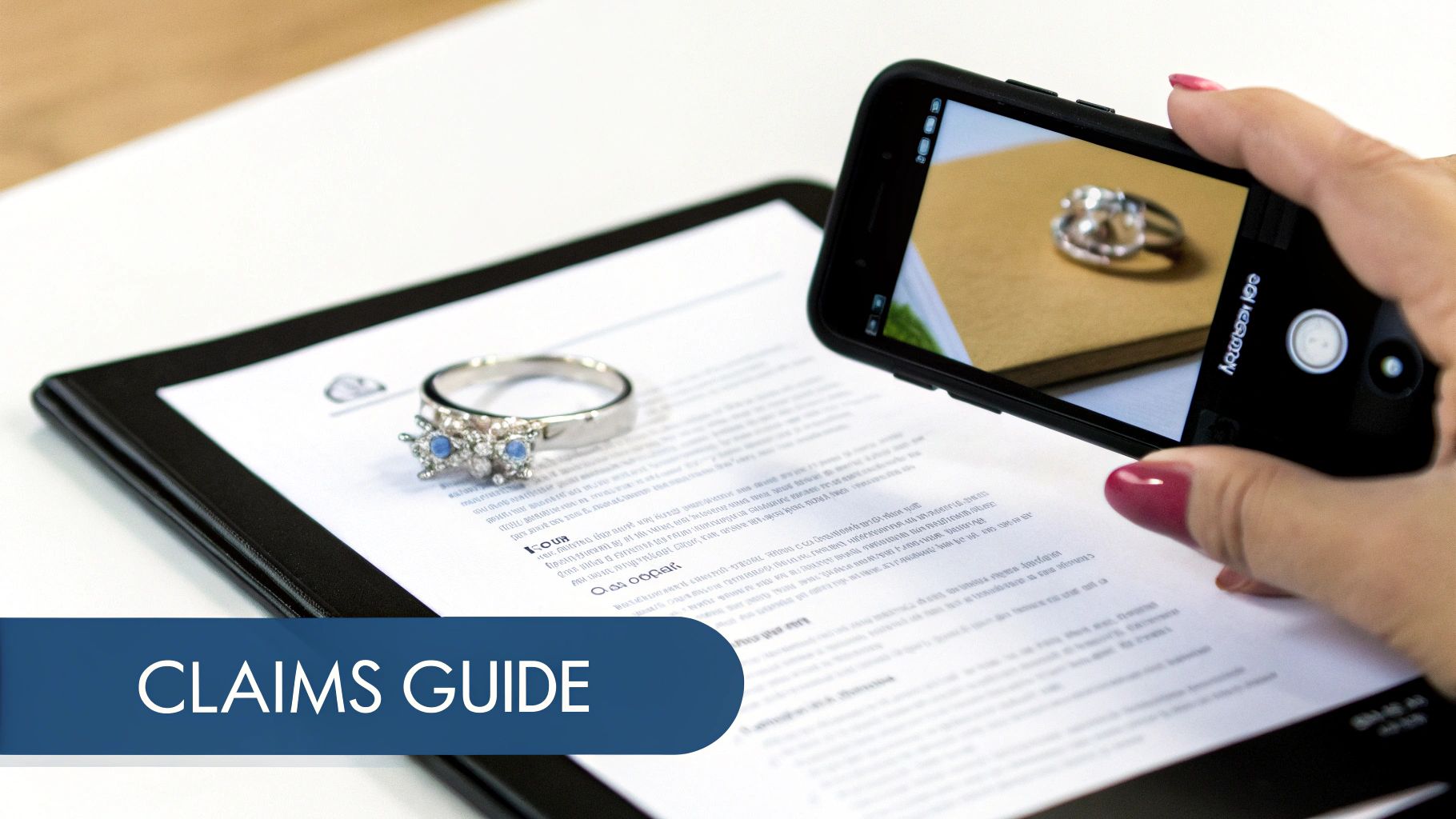
Picking out the perfect policy is just step one. The real test of your jewelry insurance comes down to two make-or-break moments: getting it appraised and, if the worst happens, filing a claim. Knowing how to handle both makes all the difference and ensures you’re getting the protection you paid for.
Think of it this way: the appraisal sets the stage by locking in your jewelry’s value, and the claims process is the grand finale that makes you whole again if it's lost, stolen, or damaged.
A professional appraisal is the bedrock of a good "agreed value" policy. This isn't just a quick look-over; it's a super-detailed document from a certified gemologist. They'll note everything—carat weight, cut, color, clarity, metal, and any unique features—and assign a retail replacement value. This number is what your insurer uses to figure out your premium and what they’ll pay out.
Most specialty insurers will ask for an appraisal that's no more than 18 to 24 months old. Why? The market for precious metals and gems is always moving. If gold prices shoot up, an old appraisal could leave your piece seriously underinsured, and nobody wants that.
A current, detailed appraisal is your most important tool. It’s the official record that proves your jewelry's value, eliminating guesswork and potential disputes during a claim. Without it, you risk settling for a lower amount.
The global fine jewelry industry is huge, expected to hit $450 billion by 2030. With that much value floating around, it’s clear why protecting your own little piece of it is so important.
Finding an appraiser you trust is crucial. Look for someone with credentials from a respected organization like the Gemological Institute of America (GIA). If you’re not sure where to start, our guide on finding local jewelry appraisal services can point you in the right direction. For a deeper dive into how the pros determine value, check out a guide to understanding jewelry valuation.
Let’s be real, no one wants to file an insurance claim. But if you have to, knowing what to expect makes a tough situation a lot less stressful. Whether your ring was stolen or a stone just vanished, the process with a top-tier insurer is usually pretty smooth.
Step 1: Call the Police (If It's Stolen)
First thing's first: if there was a theft, file a police report immediately. This document is non-negotiable for your insurance claim; it’s the official record of what went down.
Step 2: Contact Your Insurer ASAP
Don’t put it off. The best companies have easy-to-use claims systems, often online or with a dedicated person to help you. Be ready to provide:
Step 3: Work with Your Jeweler
This is where specialized insurers really earn their keep. A standard homeowners policy might send you to one of their approved vendors, but a jewelry-specific insurer lets you go back to your jeweler for repairs or a replacement. This is huge, especially if you have a custom or designer piece.
Your insurance company will work directly with your jeweler to approve the cost of the repair or start making a replacement of the same kind and quality. It’s a hands-on approach that respects the sentimental value of your jewelry just as much as its dollar value.
https://www.youtube.com/embed/mdM9CrqTjVs
Figuring out the "best" jewelry insurance isn't a one-size-fits-all deal. Honestly, the right company for someone protecting a single engagement ring is totally different from what a seasoned collector needs. It really boils down to your own life—how you travel, what you own, and what gives you peace of mind.
This is where we get specific. Instead of just listing features, let's match the strengths of these insurers to real-life situations. Think of it like a personalized recommendation to help you find the perfect fit for what you value most.
You just said "yes!" and now you have a single, incredibly sentimental, and valuable ring on your finger. The last thing you want is complicated insurance paperwork on top of wedding planning. You need something simple, strong, and immediate.
Top Recommendation: Zillion or BriteCo
Both Zillion and BriteCo are fantastic here, mainly because they often work directly with jewelers. This means you can get instant, all-risk coverage before you even walk out of the store. For a brand-new ring, that immediate protection is a game-changer.
If you're always on the go, whether for work or fun, you need a policy that travels as well as you do. You can’t be worried about whether your coverage works the same in Paris as it does in Peoria, or dealing with a claim across different time zones.
Top Recommendation: Jewelers Mutual
Jewelers Mutual is the old guard for a reason—their worldwide coverage is rock-solid and has been for decades. Their policies are built for people who move, offering the same level of protection no matter where you are on the globe. No need to call and notify them before you take a spontaneous trip.
Their proven track record and straightforward worldwide protection make them a no-brainer for jet-setters. If a stone gets chipped while you're overseas, their process is smooth—you can start the claim immediately and then have the repair handled by your trusted local jeweler when you get home.
Your jewelry box is more of a treasure chest. It’s filled with heirlooms, watches, and a growing collection of rings and necklaces. Your needs are way more complex than just insuring one item.
Top Recommendation: Jewelers Mutual
While others can certainly handle multiple pieces, Jewelers Mutual's traditional, itemized approach is perfectly suited for a collection. You can list every single piece with its specific appraisal value, ensuring nothing is underinsured. This clarity is everything when you're managing a diverse portfolio of jewelry. Plus, bundling multiple items under one policy with them is often much more cost-effective than insuring each piece on its own.
Your main goal is solid, dependable coverage that doesn't break the bank. You want the core all-risk protection for peace of mind against a major financial loss, but you're not interested in paying for extra frills.
Top Recommendation: BriteCo
BriteCo really shines when it comes to competitive pricing. A $0 deductible is standard, which is a huge plus, and their modern, tech-forward approach often translates into lower premiums. You aren't sacrificing the important stuff, either—you still get worldwide coverage and can use your own jeweler.
They also include up to 125% replacement coverage, giving you an automatic buffer against rising gold and diamond prices. It’s a ton of value packed into an affordable policy.
Even after you've compared the big players, a few nagging questions can pop up. Let's walk through some of the most common ones so you can feel totally confident in your choice.
It's always best to clear up any confusion before you sign on the dotted line.
The first question is usually about the price tag. What should you budget for this kind of peace of mind?
A good rule of thumb is to expect your annual premium to be around 1% to 2% of whatever your jewelry is worth. So, if you have a $10,000 engagement ring, you’re looking at about $100 to $200 a year. Easy enough, right?
Of course, a few things can nudge that number up or down. Living in an area with lower crime rates might get you a better deal, while a big city address could cost a bit more. If you choose a higher deductible, your yearly cost goes down, but most people opt for a $0 deductible for total coverage, which costs a little more.
A Little Insider Tip: Ask your insurance agent about discounts for being extra careful. Sometimes, just keeping your jewelry in a home safe or a bank vault when you're not wearing it can knock a few dollars off your premium because it lowers the risk of theft.
For the best specialty insurers, the answer is a big YES. They usually want to see a detailed appraisal that’s no more than 18 to 24 months old. This isn’t just them being picky; it’s the document that locks in your piece’s exact value if something happens.
Think about it: the prices for gold, diamonds, and other gems are always changing. An old appraisal might mean you're underinsured and won't get enough to cover a full replacement. A current one makes sure you get paid what your item is actually worth today. If you're not sure where to start, you can find resources to get a free jewelry appraisal.
This is a huge one, and it's a feature that separates the best policies from the rest. "Mysterious disappearance" is exactly what it sounds like—it covers you when your jewelry is just... gone. You don't know when, where, or how it happened.
It's for those heart-stopping moments when you look down and your ring isn't on your finger, or you realize an earring vanished sometime during your busy day. This is almost never covered by a standard homeowners policy, which is why having a dedicated jewelry insurer is so important.
This can be a real deal-breaker. The top-tier companies, like Jewelers Mutual or BriteCo, let you go back to your own trusted jeweler for any repairs or replacements. This is a must-have if you own a custom piece or a family heirloom where the original artist's touch is part of its soul.
On the flip side, a homeowners policy add-on might force you to use someone from their approved list. You might not get the same quality or craftsmanship you're used to, which can be a real problem when you’re talking about something so precious.
At Jackpot Candles, we believe the joy of discovering beautiful jewelry should last a lifetime. Protecting your surprise treasures with the right insurance ensures they always will. Explore our collection of scented candles and bath bombs today for your next beautiful discovery at https://www.jackpotcandles.com.
Comments will be approved before showing up.