
free shipping at $99


When you're hunting for the best non-toxic home fragrance options, look for products made with 100% pure essential oils, plant extracts, and natural waxes like soy or beeswax. These are the good guys. They skip the synthetic chemicals, keeping the air in your home clean, healthy, and beautifully scented without any hidden risks.
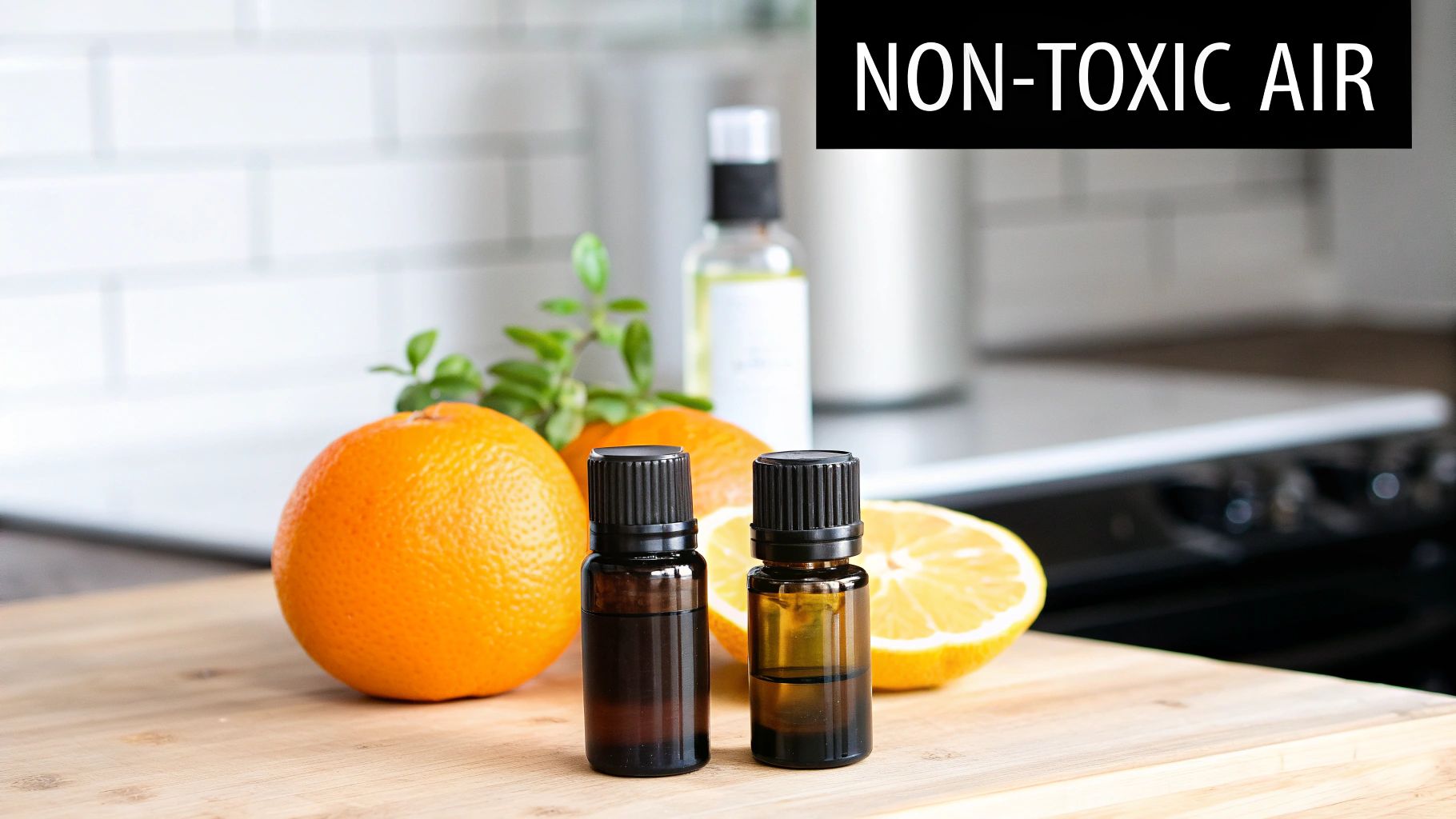
Let's cut through the noise and talk about what "non-toxic" really means for the air you breathe every day. Forget the complicated definitions. Think of it like this: a conventional air freshener is like a lab-created "orange" flavor, packed with artificial compounds. A non-toxic home fragrance? That's the real deal—the bright, zesty scent you get from an actual orange peel. It’s simple, pure, and comes straight from nature.
The difference is all about the ingredients. Conventional fragrances often rely on a cocktail of synthetic chemicals to create scents and make them last. That's where the red flags for indoor air quality start popping up, as so many of these mystery ingredients are linked to health issues.
You'd be surprised what can hide in traditional home fragrance products. Often, you won't even find these compounds listed on the label. That's because "fragrance" or "parfum" is often considered a trade secret, a loophole that lets manufacturers bundle dozens of chemicals under one vague term.
Here are some of the most common offenders to watch out for:
Choosing a non-toxic option means you're consciously sidestepping these ingredients and putting your family's well-being first. It’s about creating a home that not only smells incredible but also feels good and supports your health.
Opting for fragrances from natural sources puts you back in control of your indoor air quality. You're cutting your family's exposure to potentially harmful volatile organic compounds (VOCs) with every spritz or flicker of a wick.
This shift toward safer home scents isn't just a small trend; it's a massive movement. The U.S. home fragrance market was valued at $2.90 billion in 2024 and is on track to hit $4.60 billion by 2030. This boom is being fueled by people like you demanding wellness, sustainability, and products with biodegradable, natural ingredients that don't trash our indoor air.
If you're ready to start exploring what's out there, browsing a curated Home Fragrance collection is a great first step. It gives you a clear picture of what to look for: brands that are transparent about their ingredients and are genuinely committed to a clean scent experience.
Walking through the home fragrance aisle can feel like trying to navigate a minefield of confusing terms and hidden ingredients. To confidently find the best non toxic home fragrance, you need a game plan. Think of yourself as a detective and the product label as your first clue. Your real mission is to look right past the pretty packaging and flashy marketing to figure out what’s actually inside.
A super simple place to start is the ingredient list. If you spot vague terms like "fragrance," "parfum," or "fragrance oil" with no other details, that's a red flag. These are often catch-all terms that can hide dozens of undisclosed chemicals, including hormone-disrupting phthalates. Brands that are truly non-toxic are proud to be transparent.
When you're scanning a product, look for ingredients that are clear and easy to understand. The safest bets will proudly list things like "100% pure essential oils" or "plant-derived extracts." That kind of honesty is your best sign of a clean product. It's also really helpful to know the difference between fragrance oils and essential oils to make smart choices. If you want to get into the details, you can learn more about fragrance oils versus essential oils in our detailed guide.
For a trustworthy shortcut, keep an eye out for third-party certifications. These seals confirm that a product has met some seriously strict safety standards.
To help you on your detective journey, here's a quick cheat sheet for reading labels.
| Safe Ingredients & Terms | Red Flag Ingredients & Terms |
|---|---|
| 100% Pure Essential Oils | "Fragrance" or "Parfum" (unspecified) |
| Plant-Derived Extracts | Phthalates, DEP, DBP, DEHP |
| Natural Isolates | Parabens (methyl, propyl, etc.) |
| MADE SAFE® or EWG VERIFIED™ Seals | Paraffin Wax |
| Soy, Coconut, or Beeswax | Formaldehyde Releasers |
| Lead-Free Cotton or Wood Wicks | Synthetic Dyes, Benzene, Toluene |
This table isn't exhaustive, but it's a fantastic starting point for spotting the good stuff and steering clear of the questionable ingredients.
The ingredients that create the beautiful aroma are only half the story. The carrier—the very thing that delivers the fragrance into your home—is just as crucial for keeping your air clean. For candles, the type of wax used makes a world of difference.
Choosing a candle made from natural waxes like soy, beeswax, or coconut wax is one of the most impactful decisions you can make. Unlike paraffin wax, a petroleum byproduct, these waxes burn cleanly without releasing toxins like benzene or toluene into your air.
The same idea applies to other fragrance products, too. For room sprays, look for a simple base of distilled water and plant-based alcohol instead of synthetic chemical propellants. With reed diffusers, the base should always be a non-toxic carrier oil. By checking out both the scent source and its delivery system, you make sure every part of your chosen product helps create a healthy, wonderfully scented home.
If you love the idea of customizing your home's scent with total precision, scent diffusers are an amazing choice. Think of them like a personal scent DJ, letting you mix and match aromas to perfectly vibe with your mood, the season, or even the time of day. Unlike single-scent products, diffusers put you in the driver's seat, offering one of the most flexible ways to create the best non-toxic home fragrance experience.
But here’s the thing: the magic is only as good as the ingredients you use. The absolute key to a truly clean experience is pairing your diffuser with 100% pure essential oils. These are the potent, concentrated liquids pulled directly from plants, capturing their true scent and essence. Anything less—like synthetic fragrance oils or mystery "blends"—can sneak those very chemicals you’re trying to avoid right back into your air.
Not all diffusers are created equal. Each type works a little differently, offering a unique experience with its own set of pros and cons that might make it a better fit for your space and lifestyle.
The craving for authentic, nature-derived scents is really changing the game. In fact, a whopping 22% of consumers worldwide now use soothing fragrances like floral, fresh, and citrus to help manage anxiety and stress—a trend that really took off after the pandemic. This whole clean-living movement is all about unprocessed ingredients, which just goes to show how much our emotional well-being is tied to our scent preferences. You can dive deeper into how wellness trends are shaping the fragrance market on grandviewresearch.com.
With so many oils on the shelves, learning to spot the fakes is a crucial skill. A pure essential oil will always list its Latin botanical name on the label—for example, Lavula angustifolia for Lavender. If you see generic names or a bottle that just says "fragrance oil," be wary. Pure oils should also come in dark glass bottles (like amber or cobalt blue) to protect them from light, which can break them down.
This little decision tree can help you navigate your choices between different non-toxic fragrance options.
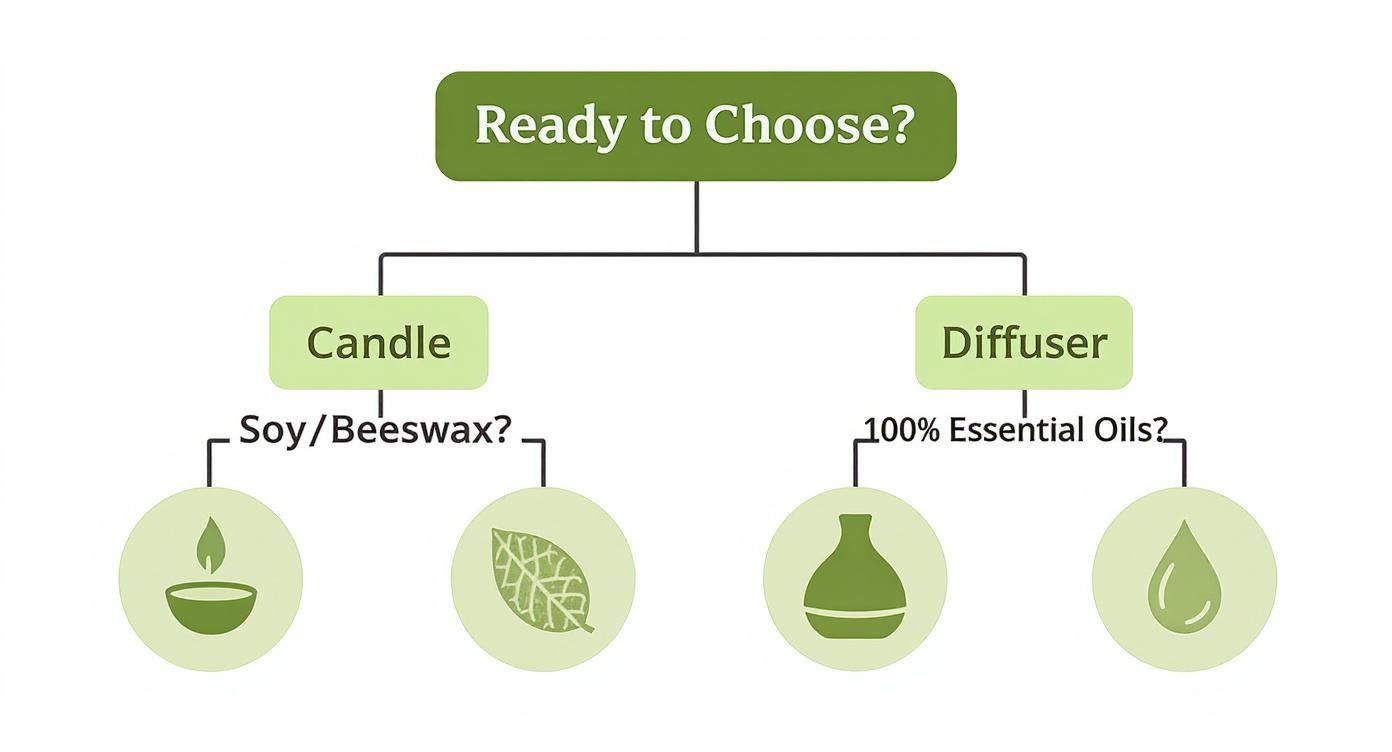
As you can see, whether you go for a candle or a diffuser, the most important step is checking the core ingredients. For candles, that means soy or beeswax. For diffusers, it means 100% essential oils. That's how you guarantee a truly non-toxic result.
By picking the right diffuser and pairing it with high-quality oils, you can create your own personal sanctuary. Whether you're diffusing calming lavender to unwind or an uplifting citrus to get a burst of energy, you're embracing a powerful way to safely and beautifully scent your home.
Nothing sets a cozy mood quite like the soft glow of a candle. But not all candles are created equal. The wrong one can actually pump unwanted pollutants into your home, working against that healthy, clean vibe you're going for.
The secret to finding a truly clean-burning candle comes down to understanding its three core parts: the wax, the wick, and the fragrance. Let's break it down.
The journey to a cleaner candle starts with the wax. A ton of candles on the market are made from paraffin wax, which is a byproduct of refining petroleum. When you burn paraffin, it can release nasty stuff like benzene and toluene—carcinogenic compounds you definitely don't want floating around your living space.
This is exactly why choosing a natural wax is the most important step you can take. Think of paraffin as the highly processed junk food of the candle world. Natural waxes, on the other hand, are the whole-food alternatives for your home’s air.
To guarantee a clean burn, you’ll want to look for candles made from 100% natural waxes. These are renewable, biodegradable, and burn way cleaner than paraffin, leaving behind hardly any soot.
Your best bets for clean-burning waxes are:
Just as crucial as the wax is the wick. A big concern in the past was the use of wicks with lead cores, which could release harmful lead particles when burned. While lead-core wicks were banned in the U.S. back in 2003, it's still smart to double-check.
Make sure your candle uses a lead-free wick. Look for wicks made from 100% cotton, hemp, or wood, as these materials burn cleanly and safely.
Okay, so you've got a clean wax and a safe wick. The final piece of the puzzle is the fragrance itself. This is where a lot of brands fall short, using synthetic fragrance oils loaded with phthalates and other mystery chemicals.
To find the best non toxic home fragrance in a candle, look for brands that are totally transparent about where their scents come from. They should state clearly that they use either 100% pure essential oils or phthalate-free, paraben-free fragrance oils.
This transparency is your best clue that you're getting a high-quality product. Vague terms like "premium fragrance" without any more detail should be a red flag.
When you choose a candle with a clean scent source, you're making sure the aroma filling your home is as pure as its ingredients. For a deeper dive into great safe options, check out this guide to the best non-toxic candles that put clean ingredients first.
By zeroing in on these three things—natural wax, a lead-free wick, and a pure scent source—you can kick back and enjoy the beautiful ambiance of candles without worrying about your home's air quality.
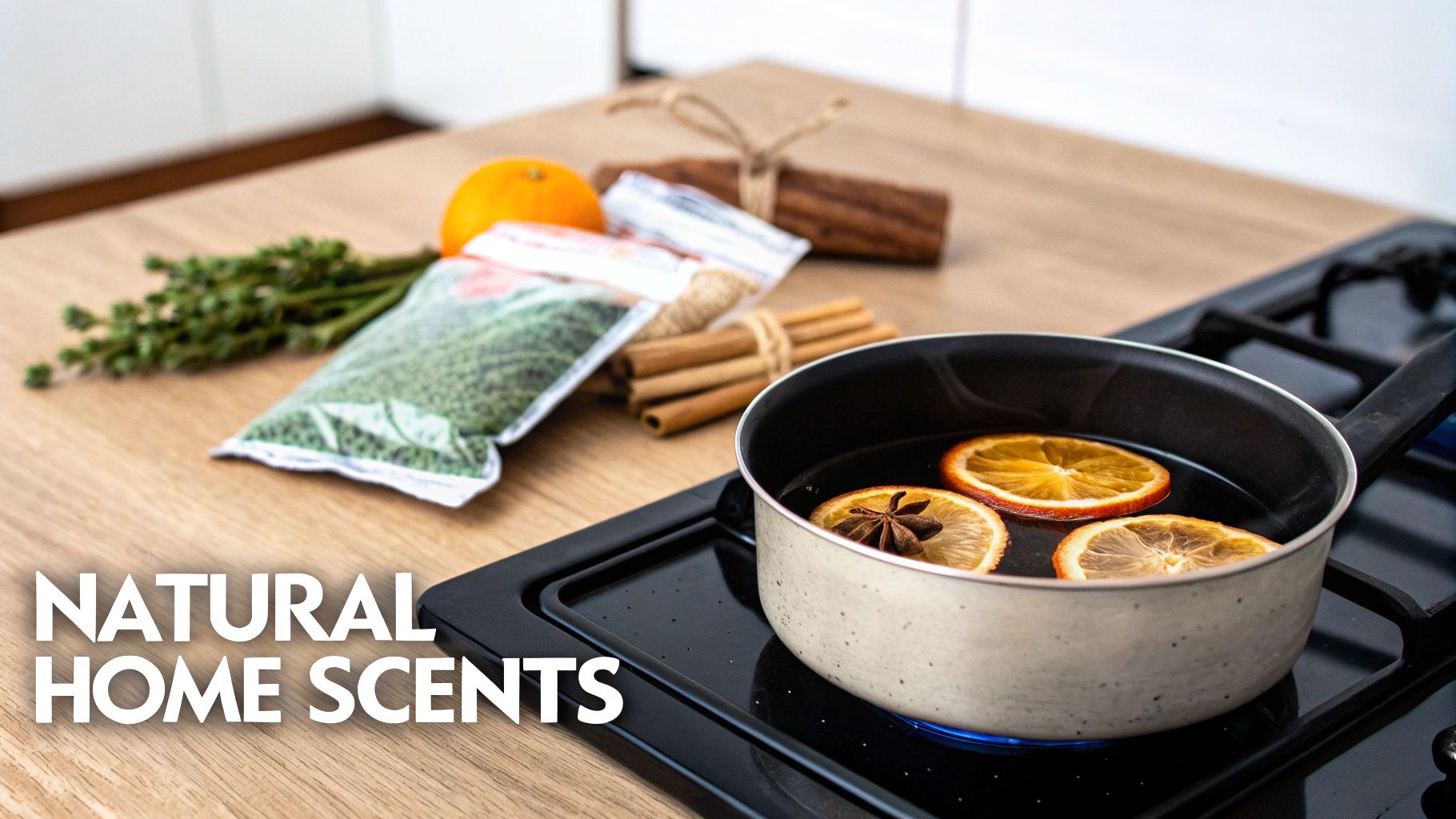
Stepping away from store-bought products can open up a whole new world of creative, affordable, and totally natural ways to scent your home. When you go the DIY route, you have complete control over every single ingredient, making sure your space smells amazing without any hidden synthetics.
Think of it as farm-to-table for your home's atmosphere—fresh, simple, and pure.
One of the coziest ways to do this is with a stovetop potpourri. Just let a small pot of water simmer and toss in your favorite natural goodies. A mix of citrus peels, cinnamon sticks, and cloves creates a warm, welcoming scent that gently drifts through your whole home, perfect for a quiet afternoon or having friends over.
This shift toward natural, non-toxic options isn't just a small trend; it's driving major changes in the market. The global natural home fragrance market was valued at around $6.31 billion in 2025 and is set to keep growing, all thanks to people like us who want wellness benefits and eco-friendly products.
Making your own non-toxic home fragrance is way easier than it sounds. With just a few simple ingredients, you can whip up custom scents that are both effective and safe for your family.
Beyond DIY projects, bringing naturally fragrant plants into your home is a beautiful way to keep a pleasant, subtle aroma going all the time. These living air fresheners work around the clock, looking pretty and smelling great.
Bringing fragrant houseplants into your space is like having a permanent, low-maintenance diffuser. It’s a simple, sustainable way to enhance your environment with authentic, natural scents.
Plants like jasmine, gardenia, or the lovely Osmanthus Fragrans offer delightful natural scents without you having to lift a finger.
To get the most out of your natural fragrances, it helps to know what different scents can do. Some oils are famous for relaxation, while others are known for their energizing vibes. If you want to dive deeper, you might like our guide on five popular essential oils and their benefits.
These creative alternatives prove that finding the best non-toxic home fragrance can be a fun, hands-on, and seriously rewarding process.
Stepping into the world of non-toxic home fragrance can feel like learning a new language. You have questions, and getting straight answers is the best way to feel good about the scents you bring into your home.
Let's clear the air on some of the most common concerns. After all, making the switch is about more than just buying a new candle—it’s about understanding the little details so you can create a safe, beautiful-smelling space that works for you and your family.
This is a huge one for pet parents, and for good reason. While many essential oils are totally fine when used correctly, some can be harmful to our furry friends—especially cats, whose livers don't process certain compounds the way ours do.
It pays to be informed. Oils like tea tree, pennyroyal, wintergreen, and some citrus oils can be a problem for cats. For dogs, tea tree, pine, and wintergreen are often on the "steer clear" list.
The trick to keeping everyone safe is all about smart use:
These terms get thrown around a lot, and it can be tricky to tell them apart. Here's the scoop. Essential oils are the real deal—pure, concentrated aromatic compounds pulled directly from plants using methods like distillation. Think of it as the literal soul of the plant.
On the other hand, "natural fragrance" is a bit of a broader category. It can include essential oils, but it might also contain other naturally sourced bits and pieces, like single scent molecules isolated from a plant. While "natural" is definitely a step up from synthetic mystery chemicals, it's not as transparent.
If you're after the highest purity and the most authentic plant goodness, look for products that proudly state they are scented with 100% pure essential oils.
Yep, they sure can. "Non-toxic" means a product is made without known harmful chemicals or carcinogens. It doesn't mean it's automatically allergen-free. Just like some people are allergic to pollen, some can be sensitive to the natural compounds in plants.
If you or someone in your home has asthma or major allergies, even the purest scents can sometimes be a trigger. The best way to handle it is to go slow. Introduce new fragrances one at a time, stick to lighter scents, and always make sure there’s good airflow in the room.
Natural scents can be more delicate than their synthetic cousins, but that doesn't mean they have to disappear in a flash. You can absolutely make them stick around longer!
If you're using a diffuser, try running it in cycles—maybe 30 minutes on, then 30 minutes off—instead of letting it run constantly. This little trick keeps you from going "nose blind" to the scent and helps your precious oils last longer.
For candles, that very first burn is the most important one. You have to let the wax melt all the way to the edges of the jar. This prevents that annoying "tunneling" effect and ensures you get an even burn and the best possible scent throw every single time you light it. And for reed diffusers? Just give the reeds a flip once a week to refresh the fragrance and help it travel through the room.
Ready to fill your home with incredible, clean-burning scents? Jackpot Candles uses a proprietary soy wax blend and premium, perfume-grade fragrances to create an amazing aroma experience, all with a surprise piece of jewelry hidden inside. Explore our collection of candles today.
Comments will be approved before showing up.