
free shipping at $99


If you've ever wondered which wax makes the best candle, the answer is refreshingly simple: it's often a high-quality soy wax blend. This choice strikes the perfect balance, giving you a clean, long-lasting burn with a powerful scent that fills the room. It truly is the best of all worlds.
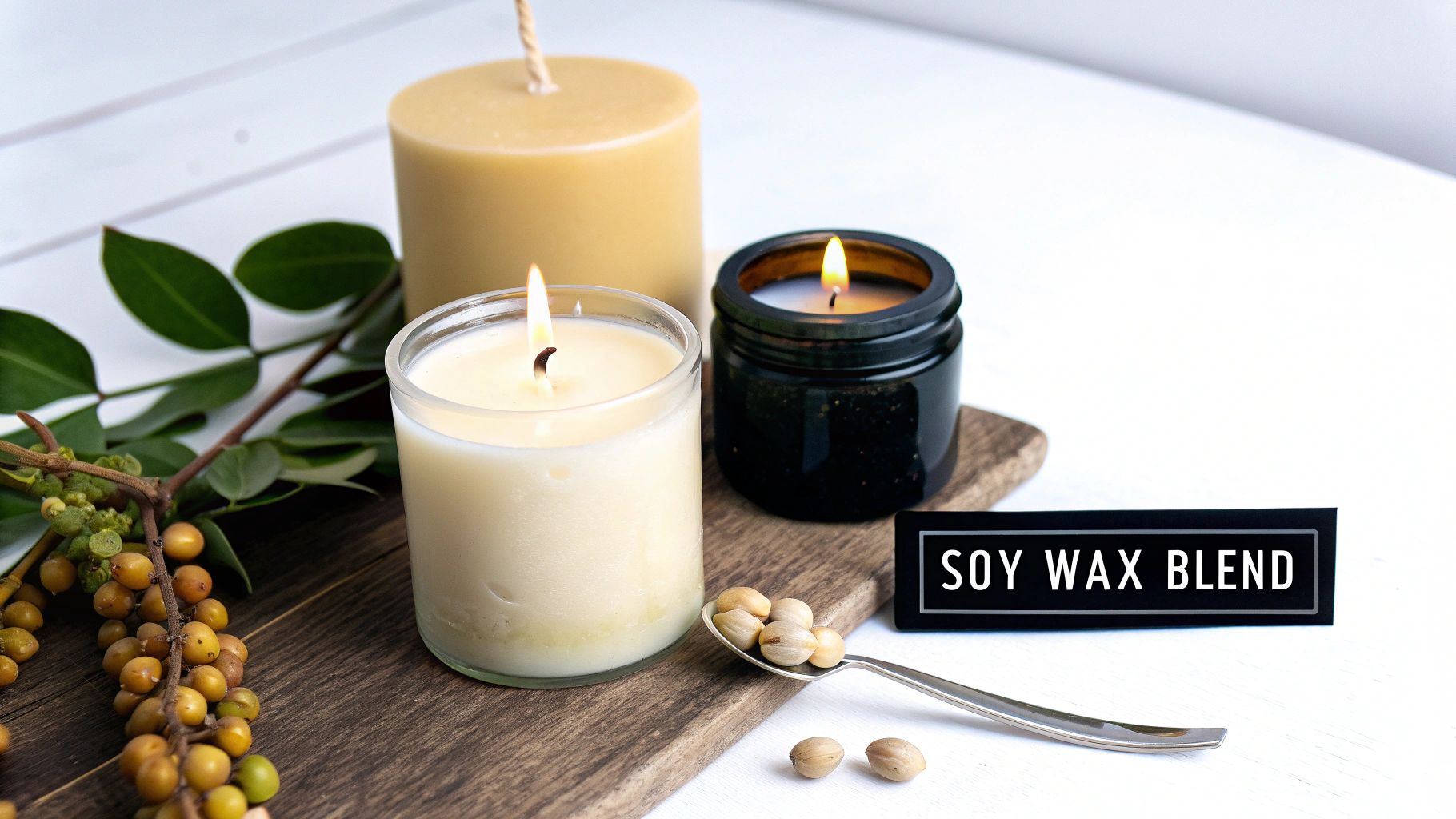
Think of candle waxes like different types of fuel for a car. Some, like paraffin, are powerful and cheap but not very refined. Others, like pure soy or beeswax, are incredibly clean and efficient but come with a much higher price tag.
Just as a master engineer creates a high-performance fuel, expert candle makers combine different waxes to craft a superior product that outperforms any single ingredient.
A proprietary soy blend takes the clean, slow-burning nature of soy wax and dials it up by enhancing its scent throw and appearance. This thoughtful combination sidesteps the usual trade-offs you find with other waxes, like cost, environmental impact, or performance. After all, choosing the right wax is a huge part of the art of scent.
To give you a clear picture right away, it helps to see how the most common waxes stack up. Each one has its own personality—excelling in some areas while falling short in others. Understanding these core differences is the first step to appreciating why blends so often come out on top.
This visual guide breaks down the key traits you care about most, giving you a strong foundation before we dive into the nitty-gritty of each wax.
Key Takeaway: No single wax is perfect. That's why blends are so effective! They are carefully formulated to maximize the good stuff (like a clean burn and strong fragrance) while minimizing the bad (like weak scent or high cost).
The table below is your cheat sheet for understanding the candle wax landscape. Consider it a quick comparison of the most popular options across the metrics that matter.
A quick comparison of the most popular candle waxes across key performance metrics.
| Wax Type | Burn Time | Scent Throw | Soot Level | Eco-Friendliness |
|---|---|---|---|---|
| Paraffin | Fast | Excellent | High | Low (Petroleum-based) |
| Soy | Slow | Good | Very Low | High (Renewable) |
| Beeswax | Very Slow | Fair (Natural Scent) | Very Low | High (Natural) |
| Coconut | Slow | Excellent | Low | High (Renewable) |
| Soy Blend | Slow | Excellent | Very Low | High (Mostly Renewable) |
When you think of a "candle," you're probably picturing one made from paraffin wax. For years, it’s been the undisputed king of the candle world, the workhorse behind most mass-produced candles you see on store shelves. It’s powerful, it’s reliable, and it gets the job done—but like an old-school muscle car, it's not exactly the cleanest or greenest option out there.
Paraffin is a byproduct of refining petroleum. That little fact is the key to understanding both its greatest strengths and its biggest weaknesses. Because it's so readily available, it's incredibly cheap to produce, which is why it became the go-to for manufacturers who needed to make candles at a massive scale.
This cost advantage is exactly why it’s held onto its crown for so long. In 2022, paraffin wax still commanded a huge 30.40% market share, mostly because natural waxes like soy or beeswax just can't compete on price. You can dive deeper into the candle market stats with this report from Persistence Market Research.
But paraffin’s popularity isn't just about being cheap; it's a beast when it comes to one thing in particular: scent. This wax is famous for its incredible ability to hold a ton of fragrance and throw it across a room.
What does that mean for you? A paraffin candle can fill a huge space with a strong, consistent aroma. If you're someone who wants the most powerful scent possible, paraffin is hard to beat. Its molecular structure is just perfectly designed to grab onto fragrance oils and release them beautifully when the candle is lit.
It's also super versatile. Manufacturers can tweak it to have different melting points and levels of hardness, making it a fit for pretty much any candle style:
For all its performance perks, paraffin wax is facing some serious side-eye from shoppers who care about their health and the planet. Since it comes from petroleum—a non-renewable resource—its environmental footprint is a major issue. Unlike soy or coconut wax, it's not biodegradable.
The more pressing concern for many people is what happens when you actually light it. Burning paraffin can release tiny amounts of volatile organic compounds (VOCs) like toluene and benzene into your home. While the levels are generally low, the idea of burning a petroleum product indoors is a deal-breaker for a lot of us.
The Soot Situation: Soot is that fine black stuff left behind when a candle doesn't burn completely. While every candle makes a little bit of soot, paraffin is known for producing way more than natural waxes. Over time, it can leave those annoying black marks on your candle jars, walls, and even your ceiling.
This doesn't mean every paraffin candle is a toxic hazard, but it does shine a light on a fundamental difference. Natural, plant-based waxes just burn cleaner. Paraffin, because of what it's made of, simply can't say the same.
Ultimately, choosing paraffin is a trade-off. You get a powerful scent and a low price tag, but you sacrifice a clean burn and sustainability. For anyone prioritizing a healthy home and eco-friendly products, those drawbacks are often more than enough to start exploring the much better alternatives out there.
When you start moving away from the classic, petroleum-based paraffin, you open up a whole world of amazing natural waxes. For anyone hunting for the best wax for their candles, two names pop up again and again: soy and beeswax. These aren't just slightly different ingredients; they represent a totally different philosophy about what a candle should be—one that puts a healthier home and a happier planet first.
Soy wax has quickly become the go-to for eco-conscious candle lovers everywhere. Its story starts right in the soybean fields. Through a process called hydrogenation, simple soybean oil is turned into a solid wax that's just perfect for making candles. This farm-to-wick origin is its biggest superpower.
Because it comes straight from a plant, soy wax is a renewable resource and it’s biodegradable. It’s a choice you can feel good about, knowing you aren't using up finite resources.
Beyond its green cred, soy wax has a secret weapon in how it performs: it burns incredibly slowly and at a lower temperature. That lower melting point means a soy candle will last a whole lot longer than a paraffin candle of the same size. You get more hours of gorgeous fragrance and cozy light for your money.
Think of it like two ice cubes in your drink—one regular, one of those big fancy ones from a whiskey bar. The regular cube disappears in minutes, but that slow-melt cube just lingers, keeping things cool without watering them down. Soy wax is that slow-melt ice, extending the life of your candle and making it a much better value in the long run.
This gentler burn also means a much cleaner experience. Soy wax produces almost no soot, so you can finally say goodbye to those annoying black smudges on your walls and candle jars. It's the perfect pick for keeping your home looking pristine and for anyone sensitive to particles in the air.
If soy wax is the reliable, eco-friendly champion, then beeswax is the luxurious, top-of-the-line thoroughbred. It’s harvested directly from honeycombs built by bees, making it one of the oldest and most treasured materials in candlemaking history. It’s beautiful all on its own, with a natural golden color and a light, sweet honey scent that doesn't need any help from added dyes or fragrances.
Beeswax is also incredibly dense, which gives it the longest burn time of any natural wax out there. A pure beeswax candle feels like a true indulgence, burning for what feels like forever with a bright, warm flame that actually mimics the light spectrum of the sun. It is the ultimate slow-burner.
What really makes beeswax special is its reputation as a natural air purifier. When it burns, it’s said to release negative ions that can help latch onto and neutralize common airborne irritants like dust, pollen, and dander. This has made it a huge hit among the wellness crowd.
All this premium performance does come with a premium price tag, though. Beeswax is quite a bit more expensive than other waxes because of how much work goes into harvesting it. Its lovely natural scent can also sometimes clash with added fragrances, so it isn't always the best base for complex, layered aromas.
So, when you're picking between these fantastic natural waxes, it really just comes down to what you're looking for.
Beeswax truly shines as a high-end, natural option loved for its purity and incredible performance. Harvested from honeycombs, it burns clean with that signature honey scent and releases those talked-about air-purifying negative ions—a major draw for the wellness market. In fact, the candle segment makes up a stunning 48% of the entire wax market revenue, which shows just how much people love a good candle. You can dive deeper into these numbers in the 2023 wax market analysis by KBV Research.
At the end of the day, both soy and beeswax offer a far better experience for anyone who values their health, the planet, and a quality product. They turn a simple candle from just a decorative piece into a thoughtful choice for creating a cleaner, more beautiful, and healthier home.
Choosing the right candle wax is about more than just what it's made of—it’s all about how it behaves when you actually light it. Think of it like comparing engines. Some are built for raw power and speed, while others are designed for quiet, long-lasting efficiency. To find your perfect candle, you need to look under the hood at the key performance metrics that define the entire experience.
These specs—scent throw, burn time, melt pool, and soot—are what separate a disappointing candle from one that perfectly suits your space and style. Let’s break down what each one means and see how the different waxes stack up.
Simply put, scent throw is how well a candle spreads its fragrance throughout a room. For anyone buying a scented candle, this is probably the most important factor. But it’s not just one thing; there are actually two types of scent throw to consider.
While paraffin is a powerhouse for both cold and hot throw, a well-made soy blend delivers an amazing hot throw with a much cleaner burn. This gives you a more refined and pleasant fragrance experience over the life of the candle.
Burn time is exactly what it sounds like: how long your candle will last before all the wax is gone. This is mostly determined by the wax's density and melting point. Denser waxes with higher melting points, like beeswax, burn much, much slower than softer waxes.
Imagine a log on a fire. A dense hardwood log smolders for hours, while a soft pine log burns up in a flash. Beeswax is the hardwood of the candle world, giving you an exceptionally long burn. Soy wax also burns naturally slower than paraffin—in fact, a soy candle will typically last up to 50% longer than a paraffin candle of the same size. For a closer look at how these two popular options compare, you can learn more by checking out soy vs paraffin candles.
The melt pool is the circle of liquid wax that forms around the wick as a candle burns. Getting a full, even melt pool that reaches the edge of the jar is absolutely critical for your candle's performance and lifespan.
Why It Matters: If a candle doesn’t form a full melt pool on its very first burn, it will start "tunneling." This is when the wick burns straight down the middle, leaving a thick wall of unused wax along the sides. A proper melt pool ensures every bit of wax gets used, maximizing your burn time and scent release.
Soy wax and soy blends are fantastic at creating consistent, even melt pools. Their lower melting point lets the flame's heat melt the wax all the way to the edge more easily. Paraffin can also achieve a good melt pool, but it often needs a hotter flame, which can unfortunately lead to more soot.
Soot is that black, powdery stuff that can show up from an incomplete burn. While all candles produce a tiny bit of soot, the type of wax makes a massive difference. Soot is what causes those black marks on your candle jar and, in some cases, even on your walls.
This is where natural waxes have a huge advantage. Soy wax and beeswax burn incredibly cleanly, producing very little soot.
Paraffin, since it's a petroleum byproduct, naturally produces more soot. This is a big drawback if you're concerned about indoor air quality and keeping your home looking pristine. Choosing a soy blend is one of the easiest ways to guarantee a cleaner, healthier burn.
To bring it all together, here’s an in-depth look at how different waxes perform across these crucial metrics. This table makes it easy to see the strengths and weaknesses of each option at a glance.
| Performance Metric | Paraffin Wax | Soy Wax | Beeswax | Coconut Wax | Soy Blend |
|---|---|---|---|---|---|
| Hot Scent Throw | Excellent | Good | Subtle | Excellent | Excellent |
| Burn Time | Shortest | Long | Longest | Long | Very Long |
| Cleanliness (Soot) | Low (sooty) | Excellent | Excellent | Excellent | Excellent |
| Melt Pool | Good | Excellent | Good | Excellent | Excellent |
| Cost | Low | Moderate | High | High | Moderate |
| Sustainability | Low | High | High | High | High |
As you can see, while paraffin has a strong scent, it falls short on burn time and cleanliness. Natural waxes like soy and beeswax offer a much cleaner, longer-lasting experience, and a high-quality soy blend often provides the perfect balance of all the best features.
This chart highlights the popularity of the top natural waxes based on their performance and appeal.
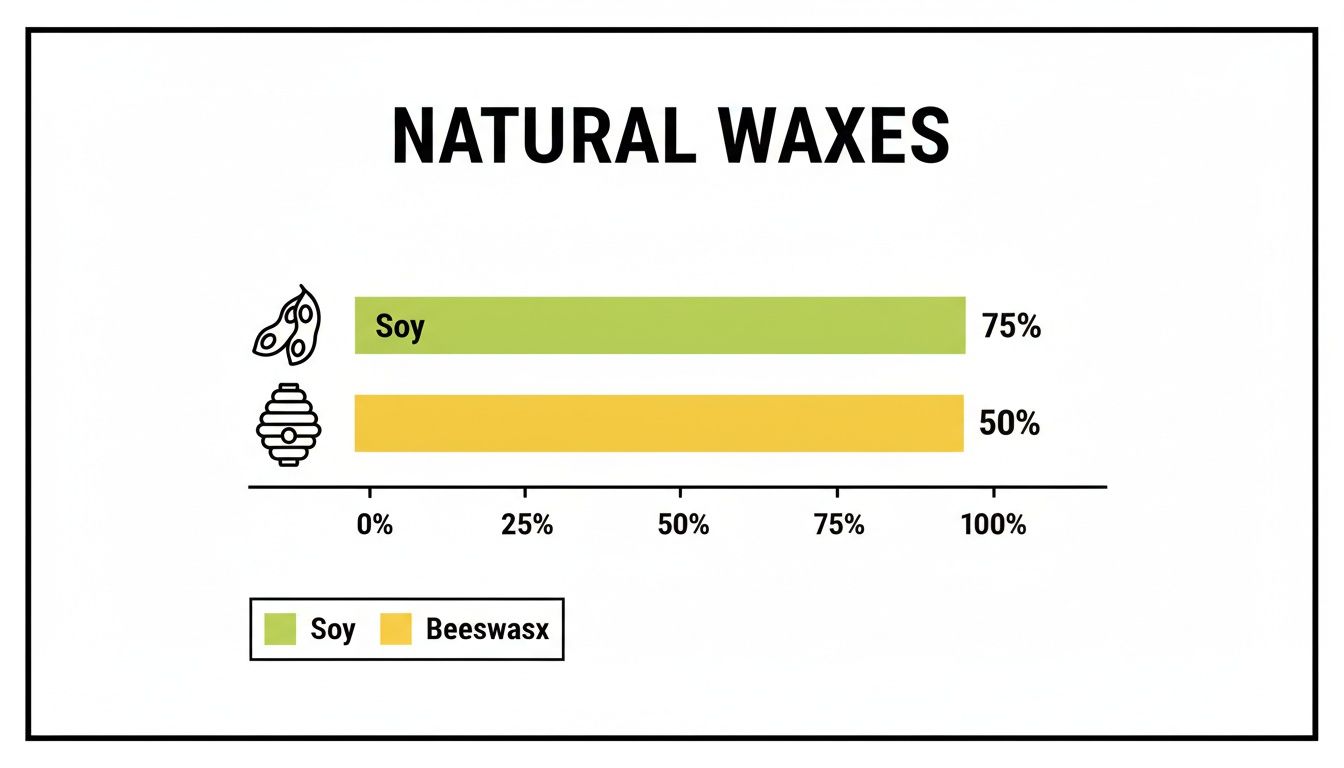
It’s clear that soy wax is a dominant force in the natural candle market, loved for its balanced performance. Beeswax remains a strong, premium alternative. Ultimately, understanding these performance metrics empowers you to choose not just a candle, but the right experience for your home.
After looking at all the different waxes, you might be wondering if there's one clear winner. While pure soy, beeswax, and paraffin each have their perks, the real secret to an amazing candle often lies in a blend. Specifically, a thoughtfully crafted soy wax blend.
This isn't about cutting corners or compromising. It's about strategic perfection.
Think of it like a master chef creating a signature sauce. A single ingredient might be good on its own, but the real magic happens when you combine complementary flavors to create something truly special. In the world of candlemaking, blending is how artisans take the best qualities of different waxes to build something superior.
A proprietary soy blend usually starts with that clean-burning, renewable soy wax we all love. Then, it's elevated with other natural vegetable waxes to overcome the few downsides of pure soy, resulting in a candle that performs beautifully every single time.
So, what's the goal of blending? It’s all about amplifying the good stuff while getting rid of the not-so-good. Pure soy wax is famous for its slow, clean burn and eco-friendly roots, but let's be honest—it can sometimes be a bit fussy with scent throw or getting that perfectly smooth, creamy top.
By mixing in small, precise amounts of other plant-based waxes (like coconut, for example), candle makers can fine-tune the formula for peak performance. This intelligent blending is the secret behind so many luxury candles that fill your room with fragrance without sacrificing that clean burn. You really do get the best of both worlds.
The Blending Advantage: A soy blend is formulated to hold more fragrance oil and release it more powerfully than pure soy can alone. All this, while keeping that slow, low-soot burn that makes soy so popular. It’s a perfect marriage of eco-conscious values and high-end performance.
Okay, so what specific upgrades does a blend bring to your candle? The improvements directly tackle the things we care about most, making it an ideal choice for anyone who wants a top-tier candle experience. For a closer look at the foundation, check out the many benefits of soy wax candles in our guide.
Here’s what you can expect from a high-quality soy blend:
Ultimately, a soy wax blend represents the peak of modern candlemaking. It takes the sustainable, clean-burning foundation of soy and perfects it, delivering the powerful fragrance and beautiful finish we all want from a premium product. It’s the smart, no-compromise choice for a truly exceptional candle.
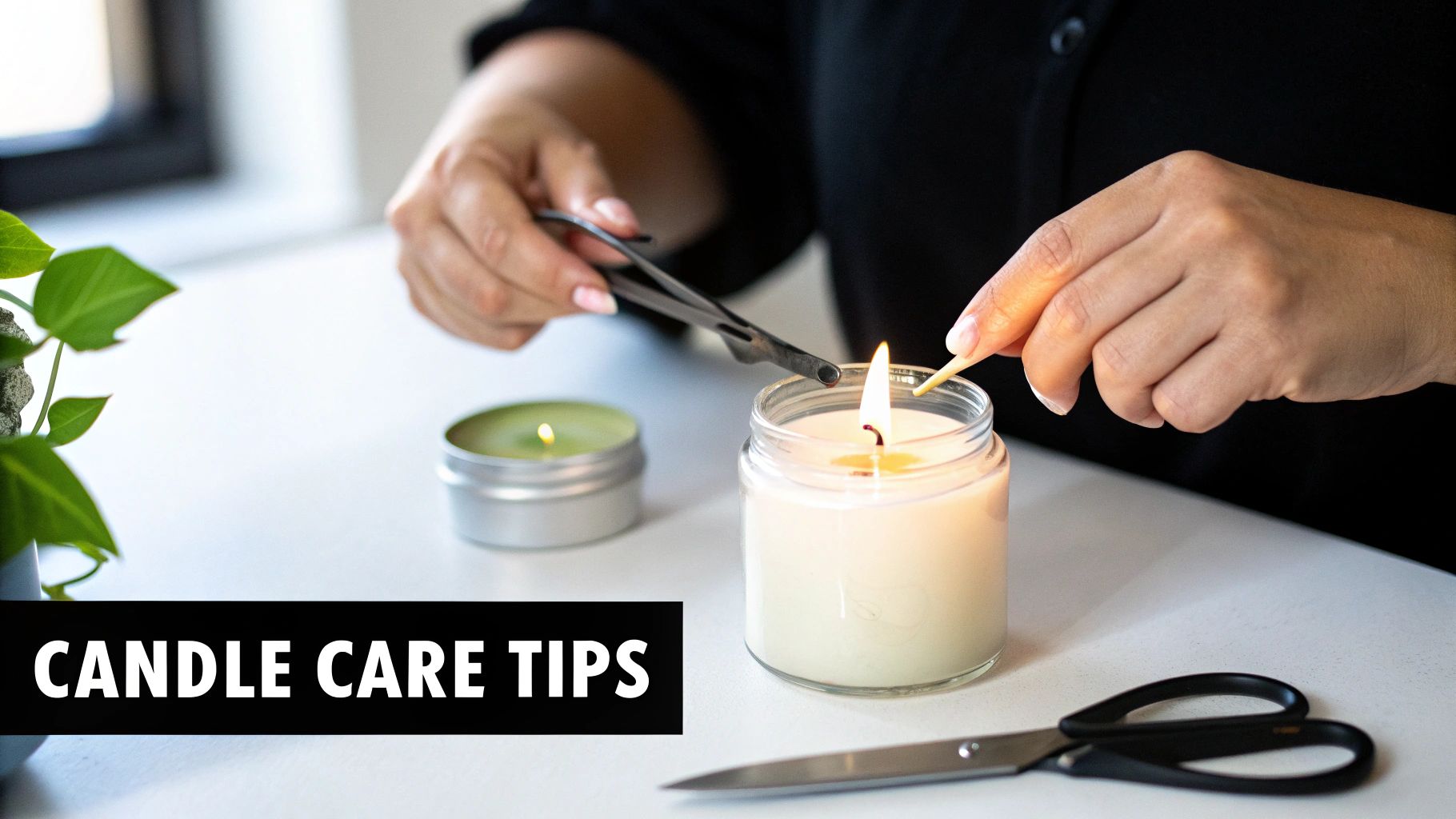
Picking out the perfect candle is just the beginning of the journey. If you want to get that luxurious, long-lasting experience you paid for, a little bit of care goes a very long way.
Proper maintenance makes sure your candle burns cleanly and safely, stretching every last drop of fragrant wax to its full potential. It doesn't matter if it's soy, beeswax, or a fancy blend—these tips are universal.
Think of it like owning a nice car—you wouldn’t just skip the oil changes, right? A little upkeep preserves performance, and the same idea applies to your favorite candle.
Pay attention, because the very first time you light a new candle is the most important burn it will ever have. Seriously. This initial burn sets the stage for every single one that follows.
Your one and only goal here is to create a full, even melt pool that reaches all the way to the edges of the jar. This can take a few hours, so don't light it up unless you have the time to let it do its thing.
A good rule of thumb is to let it burn for one hour for every inch of its diameter. When you let the wax melt completely across the top, you prevent that dreaded "tunneling"—where the wick just burns a hole straight down the middle, wasting tons of wax on the sides.
Crucial Tip: A full melt pool on the first burn creates a "memory" for the wax. This ensures an even, efficient burn for the rest of the candle's life, which means you get the most out of your fragrance and burn time.
Before you light your candle—each and every time—you absolutely must trim the wick. This simple, two-second task is completely non-negotiable if you want a clean, safe burn.
A long wick creates a big, flickering flame, and that's what leads to all that ugly black soot and smoke.
Just grab a wick trimmer or even a pair of nail clippers and snip the wick down to about ¼ inch. A shorter wick makes a smaller, more controlled flame. This tiny step makes a massive difference in performance and drastically cuts down on soot.
For a complete rundown, check out our full guide on how to properly care for your candles.
Finally, think about where you're putting your candle. It matters more than you think. Always burn it on a heat-resistant surface, and keep it away from drafts, fans, or open windows. Any air current can make the flame dance around, causing an uneven burn and—you guessed it—more soot.
And of course, always follow these essential safety rules:
Following these simple tips will help you get so much more life out of any candle, ensuring it performs beautifully from the first light to the very last.
When you start digging into the world of candle waxes, a lot of questions tend to pop up. We get it. To help you feel like an expert when picking out your next candle, we’ve answered some of the most common things people ask.
Absolutely. Natural waxes like soy, beeswax, and coconut are generally the safest way to go. Paraffin wax, which comes from petroleum, can sometimes release tiny amounts of volatile organic compounds (VOCs) when it burns.
While the levels are usually pretty low, you just don't get that with plant-based waxes. They offer a much cleaner burn with way less soot, which is always a plus for your indoor air quality.
This is a great question! For a long time, paraffin was the king of strong scents. But times have changed, and so has wax technology. Modern soy wax blends are now specifically created to hold and throw fragrance just as well—if not better.
A high-quality soy blend really gives you the best of both worlds: a rich, room-filling scent that you love, but without the petroleum base. It's why we think it's the top choice for amazing scented candles.
Nope, you definitely have to match the wax to the candle's style. It's a bit like baking; you can't use bread flour for a delicate cake and expect it to turn out right.
When it comes to being green, soy wax is a serious contender. It’s made from soybeans, which are a renewable resource, and it’s biodegradable. Beeswax and coconut wax are also fantastic, sustainable choices.
Choosing a candle made from a plant-based wax is an easy way to enjoy that beautiful, flickering flame while making a choice you can feel good about.
Ready to experience that perfect balance of a clean burn and a luxurious, lasting fragrance? Jackpot Candles uses a proprietary soy wax blend to create a truly superior candle, complete with a beautiful piece of surprise jewelry waiting inside.
Discover your perfect scent and surprise today at Jackpot Candles!
Comments will be approved before showing up.