
free shipping at $99


When you're picking out a candle, you’re doing more than just choosing a scent—you're choosing a wax, and each one comes with its own personality and history. Figuring out the real differences between soy and paraffin wax is the key to finding that perfect candle for your home. These two are the heavy hitters in the candle world, but they couldn't be more different.
At its heart, the difference is pretty simple: paraffin is a byproduct of refining crude oil, which means it’s a non-renewable fossil fuel. On the other hand, soy wax is a vegetable wax made from soybean oil, a completely renewable resource grown by farmers. This one difference changes everything, from how long a candle burns and how its fragrance fills a room to its impact on the environment and even your health.
To really settle the soy vs. paraffin candle debate for yourself, you have to look past the label and see how each wax acts in the real world.
| Feature | Soy Wax | Paraffin Wax |
|---|---|---|
| Origin | Vegetable (Soybeans) | Petroleum Byproduct |
| Sustainability | Renewable & Biodegradable | Non-Renewable |
| Burn Time | Longer, Slower Burn | Faster Burn |
| Scent Throw | More Subtle, Builds Slowly | Strong & Immediate |
| Burn Quality | Cleaner, Minimal Soot | Can Produce More Soot |
| Typical Cost | Higher Initial Price | Lower Initial Price |
This table gives you a quick snapshot, but the best choice isn't always so black and white. For example, a paraffin candle might be just what you need to quickly fill a big, open-concept living room with fragrance before your guests show up. A soy candle, though, is perfect for a long, relaxing bath or for creating a steady, gentle ambiance in your bedroom over a few hours.
Ultimately, it all comes down to what you care about most. If a clean, eco-friendly burn is your top priority, soy is the clear winner. If you need a big scent impact without a big price tag, paraffin often has the edge.
As we get deeper into this comparison, we'll break down each of these points in more detail. You can learn more about our own dedication to sustainable ingredients and why we use soy wax in our handcrafted candles. This guide will give you the confidence to pick the candle that truly fits your needs, making sure every time you light it, you get the exact experience you were looking for.
To get to the heart of the soy vs. paraffin debate, you really have to start at the beginning. Where does the wax actually come from? The journey from its raw state to the finished candle on your shelf is what truly defines its performance, cost, and overall footprint.
And let me tell you, these two waxes come from completely different worlds.
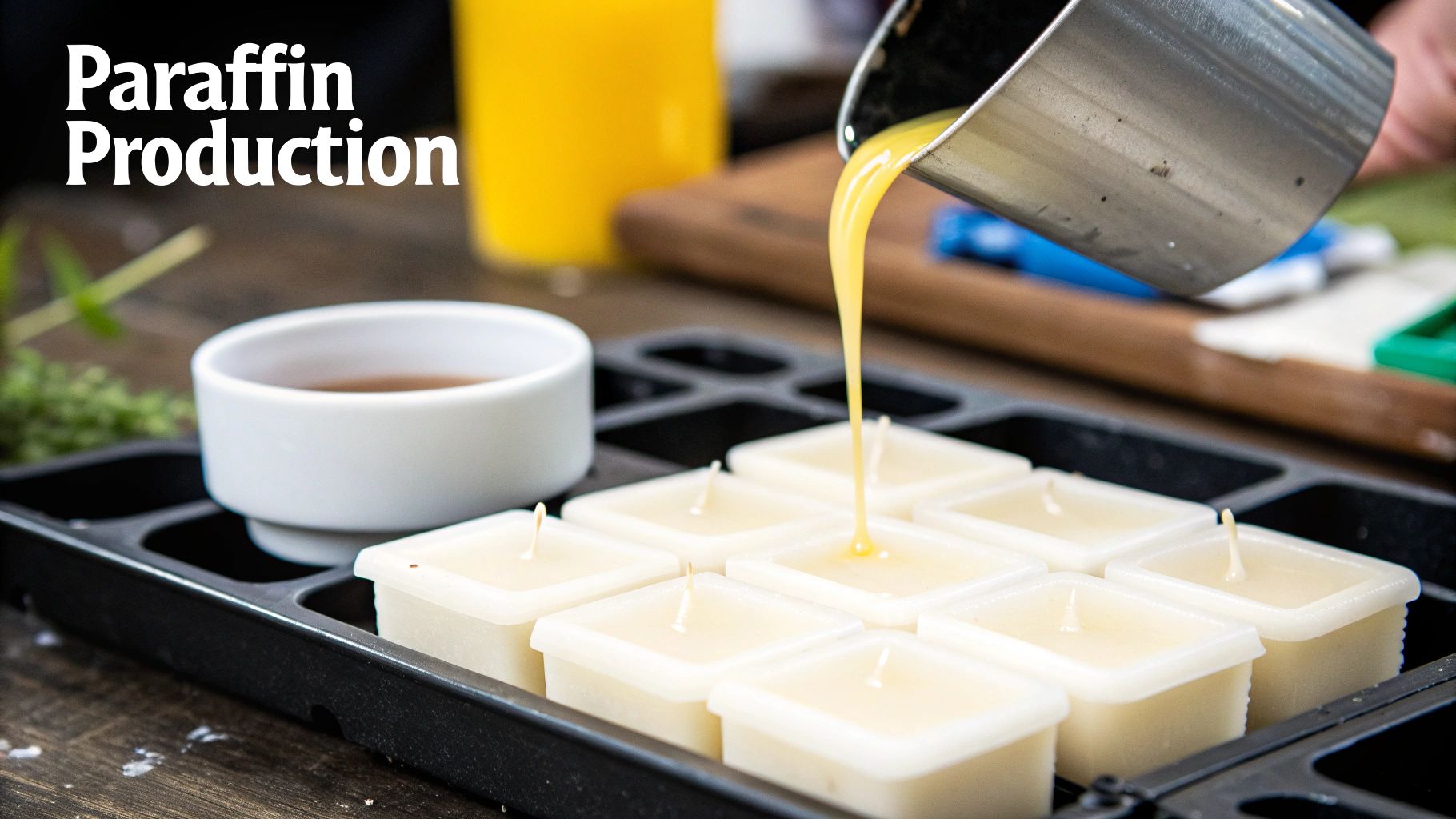
Paraffin wax is a byproduct of the massive petroleum industry. When crude oil gets refined into gasoline, a waxy substance is left over. This raw material then goes through a purification process of dewaxing and filtering until it becomes the clean, white, and odorless wax you see in so many candles.
Because it’s tied to such a huge global industry, paraffin is churned out on an enormous scale. That industrial efficiency is what makes it such an affordable and consistent wax for candlemakers, and it's why it has dominated the market for ages.
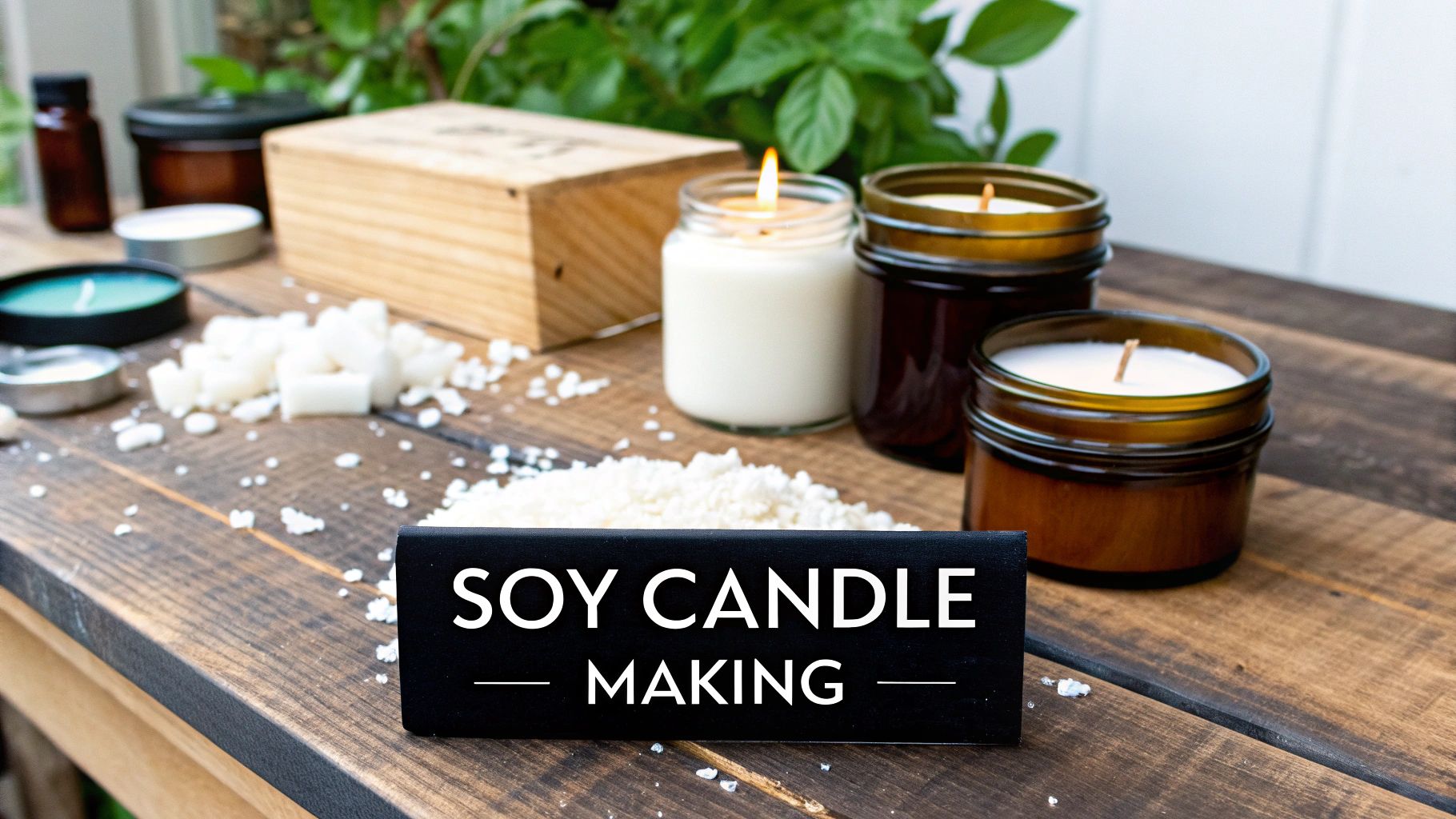
Soy wax, on the other hand, starts its life in a field. It’s a vegetable wax, coming straight from the oil of soybeans, which are a renewable, agricultural crop.
The process is pretty fascinating. Farmers harvest the soybeans, which are then cleaned, cracked, de-hulled, and rolled into flakes. From there, the soybean oil is extracted. This raw oil then goes through a process called hydrogenation, which changes some of the fatty acids in the oil. This is the magic step that turns the liquid oil into a soft, creamy solid wax perfect for candlemaking.
This farm-to-candle journey connects soy wax to the natural rhythms of agriculture, not industrial refining.
The core difference is simple yet profound: paraffin is a finite resource refined from fossil fuels, while soy is a renewable resource grown from the earth. This distinction is the foundation for almost every other comparison between them.
The origin story of each wax also controls its price and availability. Paraffin's supply and price are directly linked to the ups and downs of the global petroleum market. If crude oil prices spike, you can bet that the cost of paraffin wax will eventually follow.
Soy wax, however, dances to a different tune. Its cost and supply are shaped by agricultural factors, things like:
Understanding this journey—from an oil rig or a farm field all the way to your living room—gives you crucial context. It helps explain why one candle might cost more than another and gives you a much clearer picture of each product's true value. This foundational knowledge is key when choosing the right candle for your home.
When you’re deciding between soy and paraffin, it really comes down to two things: how long the candle will last and how well it fills your room with that amazing scent. These two factors, the burn time and the scent throw, are where you’ll notice the biggest difference, and knowing what to expect helps you pick the right candle for the right moment.
A candle's scent throw is its superpower—the ability to release its fragrance into the air. We talk about this in two ways: the cold throw (what you smell when it's unlit) and the hot throw (the scent it releases when burning). This is where paraffin often jumps out to an early lead.
Thanks to its molecular structure, paraffin wax is really good at releasing fragrance quickly and powerfully once it gets hot. It’s known for delivering a strong, immediate hot throw that can perfume even a large, open-plan room in no time.
This makes paraffin a fantastic choice for certain situations. Let's say you've got guests coming over in an hour and you want to fill your living room with a welcoming fragrance. A paraffin candle is your best friend here, delivering a big burst of scent right when you need it.
Soy wax, on the other hand, offers a more subtle and steady fragrance experience. Its denser makeup and lower melting point mean it releases scent much more slowly and gently. Instead of hitting you with a powerful wave of aroma, it creates a lovely, consistent ambiance that builds over time. It’s the perfect companion for a quiet night with a book or a long, relaxing soak in the tub.
Key Takeaway: Paraffin is the sprinter, delivering a strong, fast hot throw that's great for quickly scenting big spaces. Soy is the marathon runner, providing a steadier, more nuanced fragrance perfect for creating a lasting, ambient mood.
Beyond the scent, burn time is a huge deal when you’re thinking about a candle’s value. And this is where soy wax really pulls ahead.
Because it has a lower melting point, soy wax burns much more slowly and at a cooler temperature than paraffin. What does that mean for you? More hours of candlelight from a single jar. In fact, lab tests have shown that soy candles can burn anywhere from 30% to 50% longer than paraffin candles of the same size. This longer life is a major reason so many people are making the switch. You can dive deeper into these performance details and learn why a slower burn rate matters on hywax.com.
This marathon burn doesn't just give you more bang for your buck; it also means you get a more stable and prolonged fragrance. While a paraffin candle might be done after one long dinner party, a soy candle could easily last you through several cozy evenings.
Ultimately, your choice depends on what you're looking for. Do you need a quick, powerful scent to make an impact? Or are you after a slow, marathon burn that provides hours of gentle, lingering aroma? Answering that question will point you straight to the right wax for any occasion.
When you light a candle, you're doing more than just adding a beautiful fragrance to your room. You're also making a choice that affects your indoor air and the environment. The whole soy vs. paraffin candles debate goes way beyond simple performance—it’s about what you’re actually burning and where that material comes from.
It all starts with their origins, and they couldn't be more different.
Paraffin wax is a byproduct of refining petroleum. Because it comes from crude oil, it’s a non-renewable resource. That means the supply is limited, and getting it out of the ground has a significant environmental cost.
Soy wax, on the other hand, begins its life in a soybean field. It's a vegetable-based wax derived from soybean oil, making it a renewable and biodegradable resource. This plant-based beginning gives it a completely different environmental footprint right from the get-go.
Beyond where the wax comes from, how it burns impacts the air inside your home. While any well-made and properly maintained candle is generally considered safe, there are some key differences in what they release into the air that many people care about.
When paraffin wax burns, it can release trace amounts of volatile organic compounds (VOCs), like toluene and benzene. It’s also known for producing more soot, which is that black stuff you sometimes see on the candle jar, your walls, or even your ceiling. That fine particulate matter can be an issue for anyone with asthma, allergies, or other respiratory sensitivities. Beyond just the visible smoke, it's worth understanding environmental toxins and how they can play a role in your overall health.
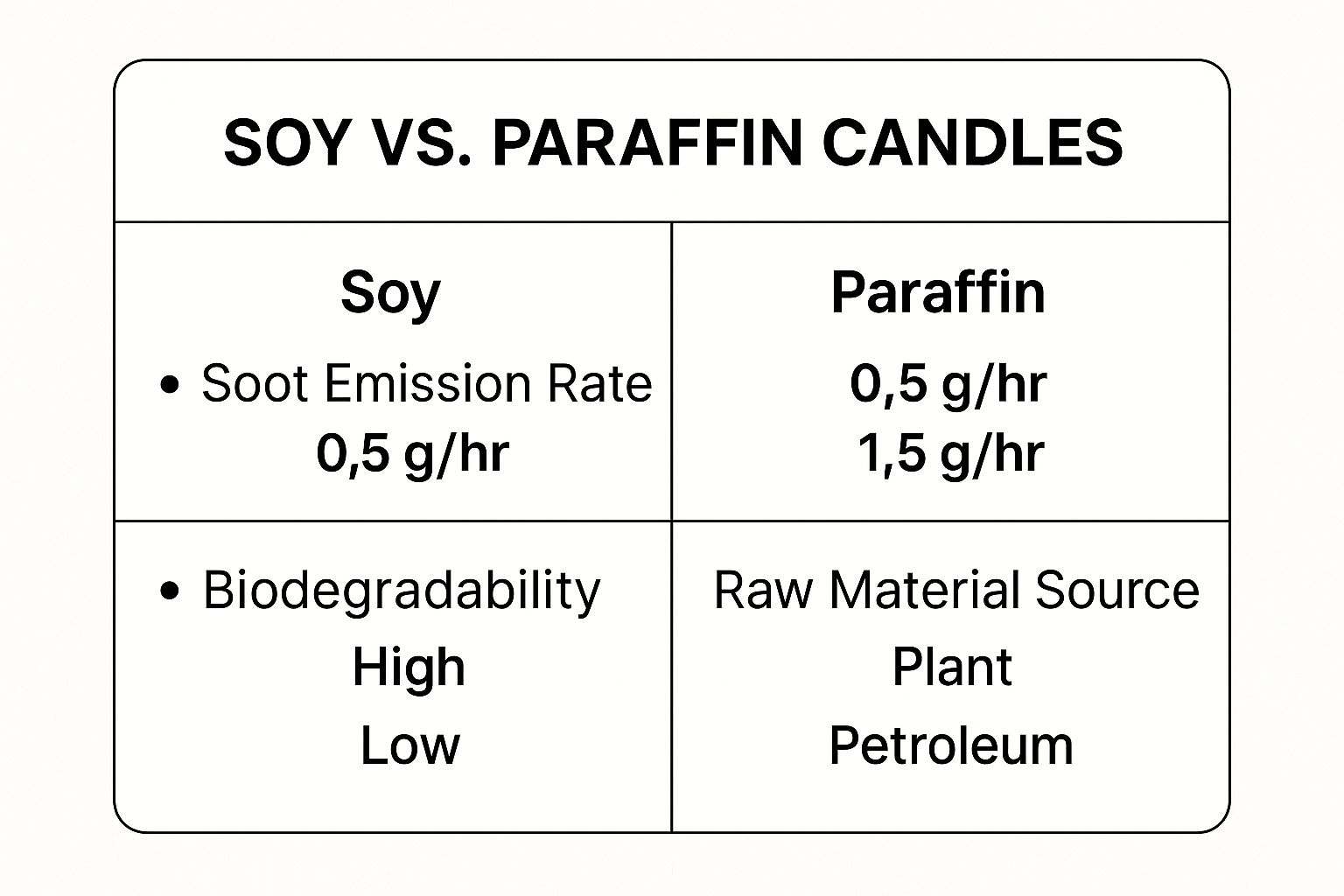
When you look at the facts, it’s clear that soy wax offers a cleaner burn with much less soot and comes from a source that's far more sustainable and biodegradable.
Soy wax is really celebrated for its clean-burning properties, producing little to no soot. This means you get a purer scent experience and better indoor air quality, making it a go-to choice for health-conscious households.
To make things even simpler, here's a quick side-by-side look at the two. This table helps break down the key characteristics of soy and paraffin wax, so you can easily find the best fit for what you need.
| Feature | Soy Wax | Paraffin Wax |
|---|---|---|
| Source | Soybeans (Renewable) | Petroleum (Non-renewable) |
| Burn | Slower, cooler, and cleaner | Faster and hotter |
| Soot | Minimal to none | Can produce significant soot |
| Scent Throw | Excellent, mixes well with oils | Strong, good for powerful scents |
| Environmental | Biodegradable & sustainable | Not biodegradable |
| Cost | Generally more expensive | More affordable |
Ultimately, the choice between soy and paraffin really depends on your personal priorities. If a clean, sustainable burn is at the top of your list, soy is a fantastic option.
These days, people are more aware of what they're buying, and that's changing the candle market. The demand for eco-friendly options has made soy wax incredibly popular, especially in North America. People are drawn to its natural, non-toxic profile and its much smaller environmental footprint compared to paraffin.
At the end of the day, picking between soy and paraffin is a personal decision that balances your environmental values with your wellness goals. For anyone looking for a cleaner, more sustainable candle experience, soy almost always comes out on top.
If you want to get into the nitty-gritty, you might be interested in our guide on https://www.jackpotcandles.com/blogs/news/candle-science-why-is-soy-wax-better-than-paraffin for your home. No matter which type of candle you choose, always make sure you have good ventilation to enjoy it safely
When you’re standing in the candle aisle, it's easy to let the price tag make the decision for you. Let's be honest, paraffin candles almost always look like the better deal at first glance. There's a simple reason for that: paraffin wax is a byproduct of the petroleum industry, which means it's abundant and cheap to produce on a massive scale.
Soy candles, on the other hand, usually come with a higher initial price. Their journey starts on a farm, not in a refinery. The costs of growing, harvesting, and processing soybeans into a stable, clean-burning wax mean you're investing in a more premium, agricultural product right from the start.
But here’s the thing savvy candle lovers know: the initial price isn't the whole story. To get the real financial picture, you have to think in terms of cost per burn hour. This is where soy candles really start to shine.
Soy wax has a lower melting point, which means it burns much slower and cooler than paraffin. A soy candle of the same size can easily last up to 50% longer than its paraffin counterpart. So, while you might pay more at the checkout, that soy candle could actually be the more economical choice in the long run.
The best way to judge a candle's value isn't by its sticker price. It's by how many hours of beautiful fragrance and light it gives you. A longer-lasting soy candle often ends up having a lower cost per hour than a cheaper paraffin one.
Let's break it down with a quick, real-world example. Imagine you're choosing between two candles of the same size and scent:
The $15 paraffin candle seems like a steal, right? But let’s do the math on the cost per hour:
In this case, the soy candle actually gives you more bang for your buck over time, all while providing a cleaner and more sustainable burn. You’re getting more hours of enjoyment for less money per hour.
The price difference isn't just about production costs; it's also about what people are looking for. Sure, paraffin wax still dominates the market, but there's a huge and growing demand for natural, eco-friendly products.
Soy wax is carving out a premium spot in the market because of its sustainable story and the higher costs of its farm-to-candle journey, which you can read more about in this breakdown of market dynamics on hywax.com. This trend shows a real shift in how we shop—more and more, people are willing to invest in products that align with their values, looking past the initial price to consider the bigger picture of value and environmental impact.
Deciding between a soy and a paraffin candle isn't really about crowning a single winner. It's more about matching the right wax to the right moment. The best choice always comes down to what you care about most—whether that’s a big scent, a long burn, or a cleaner home environment. Let's move past the technical stuff and get practical about picking the perfect candle for your needs.
When you're having people over for a party or want to fill a big, open-concept room with fragrance fast, paraffin is your best friend. Its ability to throw a powerful, immediate scent is perfect for setting a mood in a hurry. If you need an instant aromatic punch or you're watching your budget, a paraffin candle gets the job done without the higher price tag.
On the flip side, if you're looking for a cleaner, longer-lasting experience, a soy candle is the way to go. Its slow, soot-free burn makes it the obvious choice for smaller, more intimate spaces like your bedroom or bathroom, where air quality is a bigger deal. That's why it's such a great pick for homes with kids, pets, or anyone with sensitivities.
Think about these everyday moments:
The bottom line is that it all comes down to context. Paraffin is great for short-term, high-impact scent, while soy is your go-to for long-lasting ambiance and a cleaner burn.
If you're still on the fence, digging a little deeper into whether soy candles are better for your lifestyle can help clear things up. Once you understand these situational differences in the soy vs. paraffin candles debate, you'll be able to pick the perfect candle every single time.

When you're trying to pick between soy and paraffin, a few questions always seem to pop up. Getting those answers sorted out is the best way to figure out which wax really belongs in your home.
Let's start with the big one: are paraffin candles toxic? While high-quality paraffin is refined enough to be considered non-toxic, it is a byproduct of petroleum. When you burn it, it can release tiny amounts of soot and VOCs, which could be an issue if you or your family have sensitivities. A well-ventilated room is always a good idea, no matter what candle you're burning.
If you're a fan of soy candles, you've probably seen your candle's surface look a little bumpy or crystalline after burning. That's a little something called frosting, and it's a perfectly normal, natural characteristic of pure soy wax. Think of those little visual quirks as a sign you've got the real deal—they don't affect how the candle performs one bit!
Finally, people often ask if you can mix the two waxes. The answer is yes, and lots of candle makers do just that. These "paraffin-soy blends" are created to get the best features of both waxes.
The goal of a blend is usually to get the powerful scent throw of paraffin combined with the slower, cleaner burn you get from soy. It's a popular middle-ground for balancing performance and price, so be sure to check the label if you're looking for a 100% pure wax candle.
Knowing these little details helps you shop smarter and feel more confident about the candles you bring into your space.
At Jackpot Candles, we believe in using pure, high-quality ingredients you can feel good about. That’s why we handcraft our candles with all-natural soy wax for a clean, long-lasting experience—complete with a surprise jewelry reveal inside! Discover your new favorite scent at https://www.jackpotcandles.com.
Comments will be approved before showing up.