
free shipping at $99


You've probably been there already, holding a candle that promised a little luxury and a little surprise, wondering when the ring is supposed to appear and whether the whole thing is worth the wait. A candle with Swarovski ring inside is built for that exact moment, but the part many don't see is the engineering under the wax, not just the reveal. Once you understand how the burn works, what the hidden ring usually is, and how brands frame the value, the product stops feeling mysterious and starts making a lot more sense.
The first few minutes usually look plain. The wick catches, the scent starts to open, and the top layer turns into a smooth melt pool. If the candle was made well, the flame stays steady and the jewelry remains buried while the wax slowly clears a path around it.
That middle stretch is easy to misread. A hidden-ring candle is made to behave like an ordinary candle first, then reveal the ring later, so the candle itself has to burn correctly before the surprise can happen. That is one reason the base product matters so much, because the U.S. candle market has long been tied to home décor, gifting, and fragrance products, not just novelty purchases, according to the National Candle Association.
Patience matters more than guesswork here. One review of a mystery-ring candle noted that the hidden ring value could range from $10 to $5,000, which shows how these products rely on surprise and a wide value spread instead of a guaranteed luxury item (HubPages review).
Practical rule: if the candle burns like a normal home candle at first, that is a good sign. The reveal should feel delayed, not forced.
By the time the wax level drops, the experience shifts from fragrance to discovery. That handoff is the point of the format, and it is why people keep buying these candles even when they already know the ring might be modest. The surprise is part of the product, but the candle has to earn the burn first.
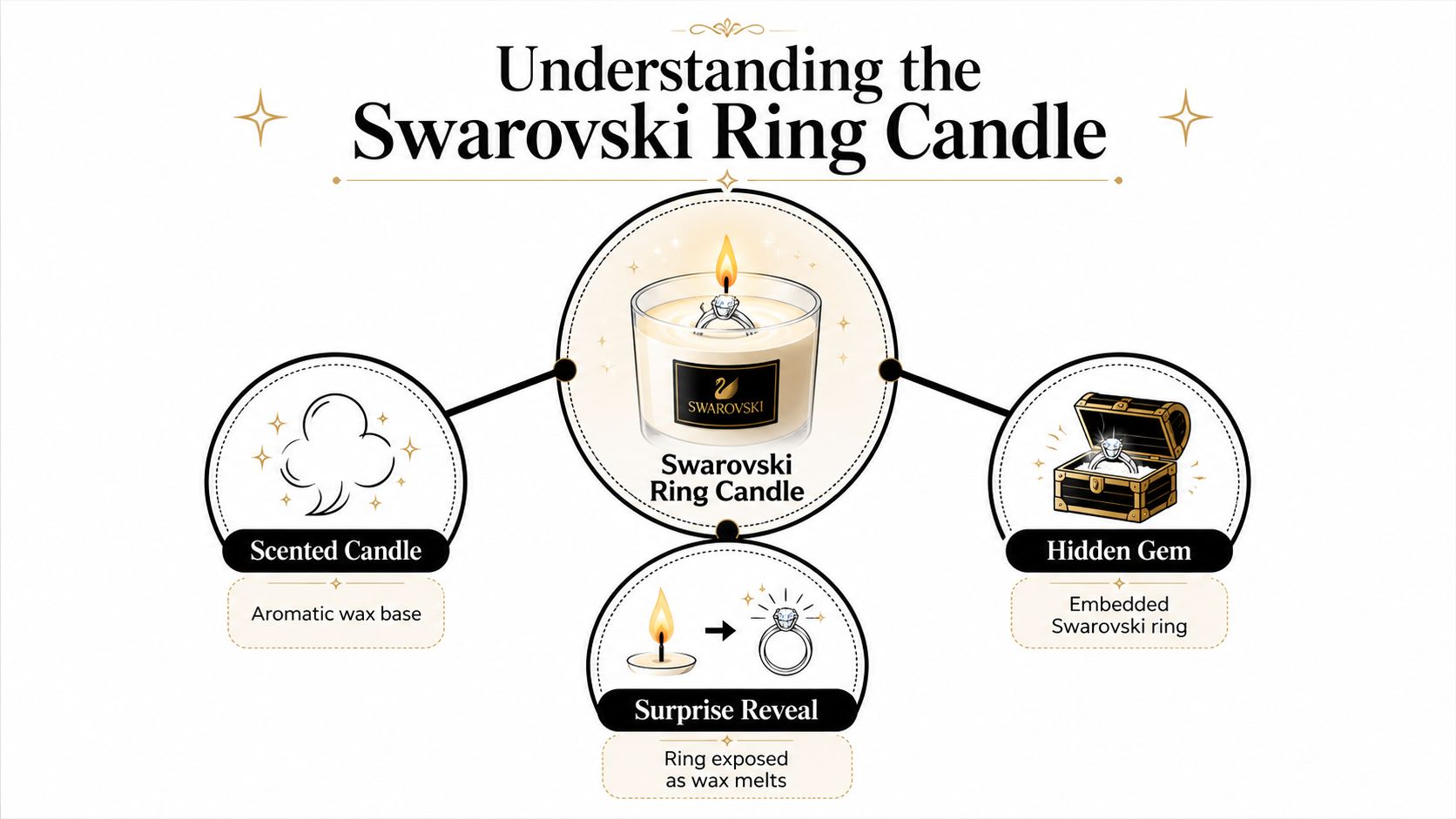
A Swarovski ring candle combines two separate products in one container. The first is a scented candle, usually made with wax, fragrance oil, and a wick. The second is the hidden ring, kept out of reach until the wax burns low enough to expose it.
The simplest way to understand it is as a two-layer gift. It behaves more like a surprise toy hidden inside a dessert shell than like fine jewelry sold on its own. You are not buying a ring that happens to sit in wax, you are buying a candle that has been built to reveal something later.
The label can still confuse buyers. In many hidden-jewelry candles, Swarovski usually points to a crystal element on the ring, not a full Swarovski-manufactured ring in the way a crystal shopper might expect. Swarovski's own product listings show how broad the brand's crystal-focused world is, which helps explain why the name is often used as a decorative signal rather than a strict jewelry category (Swarovski product listings).
Careful buyers should read the listing, not just the headline. A brand may say the candle contains a Swarovski ring, but the ring itself could be crystal-adjacent, crystal-embellished, plated, or styled to look sparkly. That difference matters because it changes both what the buyer should expect and what the ring may be worth later.
For a plain-English breakdown of how jewelry candles work, Jackpot Candles' jewelry candle explanation is useful because it separates the candle from the surprise instead of treating them as one product.
The reveal depends on what happens before the candle ever reaches a shelf. The ring is typically placed inside a heat-protected foil pouch or capsule, which keeps the flame from touching it directly while the surrounding wax burns away. That small layer of protection is what makes the surprise possible without turning the jewelry into the first thing the fire reaches.
The wax matters too, because not every wax melts the same way. Comparable hidden-jewelry candles use soy-based wax with a cotton wick, and their burn times are often reported around 35 to 80 hours, which helps the wax melt more evenly and keeps the jewelry insulated for longer (Mestige hidden jewellery candles). Soy wax usually burns more slowly than many paraffin blends, so the candle can hold the ring in place while the melt pool develops around it at a steadier pace.
The jar changes the timing as much as the wax does. A larger container, a wider melt pool, or a multi-wick design can expose the pouch sooner than a small single-wick candle with the same amount of wax. The reason is straightforward, more wax liquefies at once, so the jewelry becomes uncovered faster.
You can see that approach in Swarovski-linked hidden-jewelry candle products as well. One example is a 340 g soy candle in a glass jar with a triple cotton wick and about 35 hours of burn time, which points to a design aimed at even wax consumption rather than quick exposure (Swarovski-hidden jewellery candle example). The setup is doing several jobs at once, controlling heat, limiting soot, and shaping how fast the ring appears.
The ring should stay away from direct flame heat and soot. If it sits too shallowly, or if the candle is burned well past the safe window, the jewelry can be affected before it ever comes out of the wax.
If you want to see how makers build that protection into the candle itself, the process overview for making jewelry candles shows why placement and wax depth matter so much.
A hidden ring candle can feel like a small treasure hunt, but the question buyers usually ask is simpler. What did they get, costume jewelry, plated metal, or a ring that can hold up as a keepsake? Those options are not the same, and they should not be treated as if they are.
The value spread can be wide. Reviewers of mystery-ring candles have described hidden ring values ranging from modest pieces to much higher surprise finds, while brand-side descriptions often use broad value bands to frame the reveal. HubPages review is one example of that kind of consumer commentary, and Jackpot Candles' ring value guide shows how some makers ask shoppers to check a code before judging the ring by appearance alone.
| Ring Tier | Material | Estimated Value | Typical Frequency |
|---|---|---|---|
| Entry-level surprise ring | Plated or base-metal | Modest | Common |
| Mid-tier hidden ring | Sterling silver or better-finished plated metal | Higher than entry-level | Less common |
| Special-edition reveal | Limited-edition jewelry with higher stated value | Can be much higher | Rare |
That table is the clearest way to read the category. A ring with a crystal accent is not automatically a premium ring, and a ring that looks expensive is not always made from higher-grade metal. The detail that matters most is the actual material, because sparkle can hide very ordinary construction.
A good way to think about the reveal is to separate presentation from substance. The candle may be sold around a value promise, but the ring itself still needs to be judged on finish, metal type, and whether the brand gives a clear way to verify what was inside the wax.
The ring shouldn't go from wax to finger without a quick reset. Once it's exposed, let everything cool completely, then remove the pouch with clean hands or tweezers. A rushed reveal can leave soot, wax residue, or hot metal where you don't want it.
Before you wear it, rinse the ring under warm water and inspect the setting. That matters even more if the ring looks plated, because thin finishes can show wear sooner than solid metal and may not handle skin sensitivity as well. Nickel, copper, and low-grade alloys are the usual problem metals for people with reactions, so if your skin is sensitive, pay attention to what the ring says about composition.
The candle itself deserves the same caution. Never dig into hot wax to find the ring faster, and never leave a burning candle unattended. If the pouch is visible, stop burning and let the container cool, because pushing the candle farther than intended can damage the jewelry and make the retrieval messier than it needs to be.
Patience protects the reveal and the ring.
That sounds simple, but it's the difference between a clean unboxing and a scorched piece of jewelry you don't want to wear.
A trustworthy listing gives you more than a pretty photo. It explains what the wax is made of, what kind of wick is inside, how long the candle burns, and what kind of ring you might receive. If a brand hides those basics, the surprise is carrying too much of the sales pitch on its own.
Start with transparency. Look for a clear statement about the ring materials, whether the Swarovski element is a crystal accent or a branded component, and whether the company explains any value range or appraisal process. A product page that only says “hidden jewelry inside” leaves too many questions unanswered.
The photos matter too. A strong listing usually shows the container, the wax level, and sometimes the pouch placement or reveal process. Vague product photography can hide weak build quality, especially when the candle is sold mainly on the surprise factor.
A careful buyer also checks whether the brand explains the reveal in plain language. If the listing reads like a teaser and never says how the jewelry is protected inside the wax, that is a sign to slow down and look for more detail before buying.
A good purchase starts with treating the candle as a working candle, not just a reveal vehicle. If the wax burns evenly, the scent stays pleasant, and the jar feels sturdy in hand, the product earns its place long before the ring shows up. That mindset keeps the focus on what you're buying, instead of on a promised surprise that may or may not live up to the packaging.
A soy blend, a cotton wick, and a container sized for steady burning usually make the process feel more controlled. The candle behaves more like a well-made lamp than a stunt, with the wax melting at a pace that protects the hidden package and lets the fragrance develop naturally. That does not tell you the ring will be better, but it does make the experience smoother because the candle can do its job without rushing toward the reveal.
A little planning also helps after the wax is gone. If you expect to keep the ring, set aside a small jewelry holder or use one of the leather cases from Grainmark Leather so the piece has a safe place once you've cleaned it and checked whether it suits you. That turns a novelty moment into something easier to store, wear, and remember.
Responsible shopping means choosing brands that explain the materials, the likely value range, and how the Swarovski reference is used, instead of relying on mystery alone. A page that says enough to set expectations is usually easier to trust than one that only sells the reveal.
Do these rings usually come in a fixed size? Most hidden rings are standard sizes, so they may fit some people and not others. If the ring is made from a material a jeweler can work with, resizing may be possible.
Is the ring made by Swarovski? Usually not in the strict sense people assume. In many products, the Swarovski reference points to a crystal element or crystal-style embellishment, not a fully manufactured Swarovski ring.
How do I know when it's close to the reveal? You'll usually see the wax level dropping low enough that the pouch starts to show. Don't dig around in the wax, just let the burn progress until the package appears.
What if the ring is damaged or missing? Check the brand's stated policy and keep the packaging. A clear listing should already have told you what to expect, and a reputable seller should be able to respond when the reveal doesn't match the promise.
Jackpot Candles makes jewelry candles with a hidden ring inside, so the format will feel familiar if you're comparing options in this category. If you want to browse a brand that treats the candle and the reveal as one product, visit Jackpot Candles and look at how their jewelry-candle setup is presented before you decide what kind of surprise you want.
Comments will be approved before showing up.