
free shipping at $99


Finding a surprise ring inside your candle is one of those little moments of pure magic. The jewelry candle ring value can be anything from a sweet little keepsake worth $15-$30 to a real showstopper appraised at over $500. Let’s dive in and figure out exactly what kind of treasure you've just discovered.
Seeing that first glimmer of foil in the melting wax is a feeling you just can't beat. It’s part treasure hunt, part lottery ticket, and a whole lot of fun. You’ve just uncovered a hidden piece of jewelry, and now the big question is bubbling up: What is it actually worth?
Figuring out your ring's value is a journey all its own, and it starts the second you pull it from its cozy little pouch. We're going to walk you through every step, from giving it a once-over yourself to getting a professional opinion. We’ll decode the little clues on your ring, break down what makes it valuable, and give you the scoop on what to do next. Think of it as going from a curious finder to a clued-in owner.
The whole idea behind these candles taps into two huge industries that people absolutely love. It's a special little niche where the simple pleasure of a beautiful candle meets the potential for a serious surprise. A candle that costs you $30-$50 could end up holding a piece of jewelry worth way more. It’s like a modern-day treasure chest, mixing the booming candle market with the timeless love for jewelry. You can even read more about the candle market’s exciting growth projections on Precedence Research.
This fun trend also fits perfectly with how we shop for ourselves these days. More and more, we're treating ourselves to little luxuries, and what’s better than a treat that comes with another surprise inside? You can learn more about the whole experience of finding jewelry in candles in our detailed article.
The appeal is so simple and so brilliant: you get the cozy, sensory experience of a premium candle, plus the thrilling possibility of discovering a valuable surprise. Each candle doesn't just offer a gorgeous fragrance; it holds a story waiting to be unwrapped.
Okay, so you’ve fished your little prize out of the candle wax and given it a good cleaning. Now the real fun begins—it's time to play detective. Think of your ring as a tiny mystery box, and the first clues to its value are stamped right on the inside of the band.
These little engravings, called hallmarks, are like a secret code that tells you exactly what the ring is made of. You’ll probably need a magnifying glass or the zoom on your phone's camera to see them clearly, but finding them is your first big step toward figuring out what your ring is really worth.
The most common hallmarks will tell you if you're holding sterling silver, real gold, or something that's just gold-plated. Each stamp is a critical piece of the puzzle, separating a fun piece of costume jewelry from a genuinely valuable find. As you get started, learning how to tell real gold jewelry from plated look-alikes is a skill that will come in handy.
Here are a few of the stamps you’re most likely to see:
This handy little chart breaks down the discovery process, from the moment you find the ring to getting a final valuation.
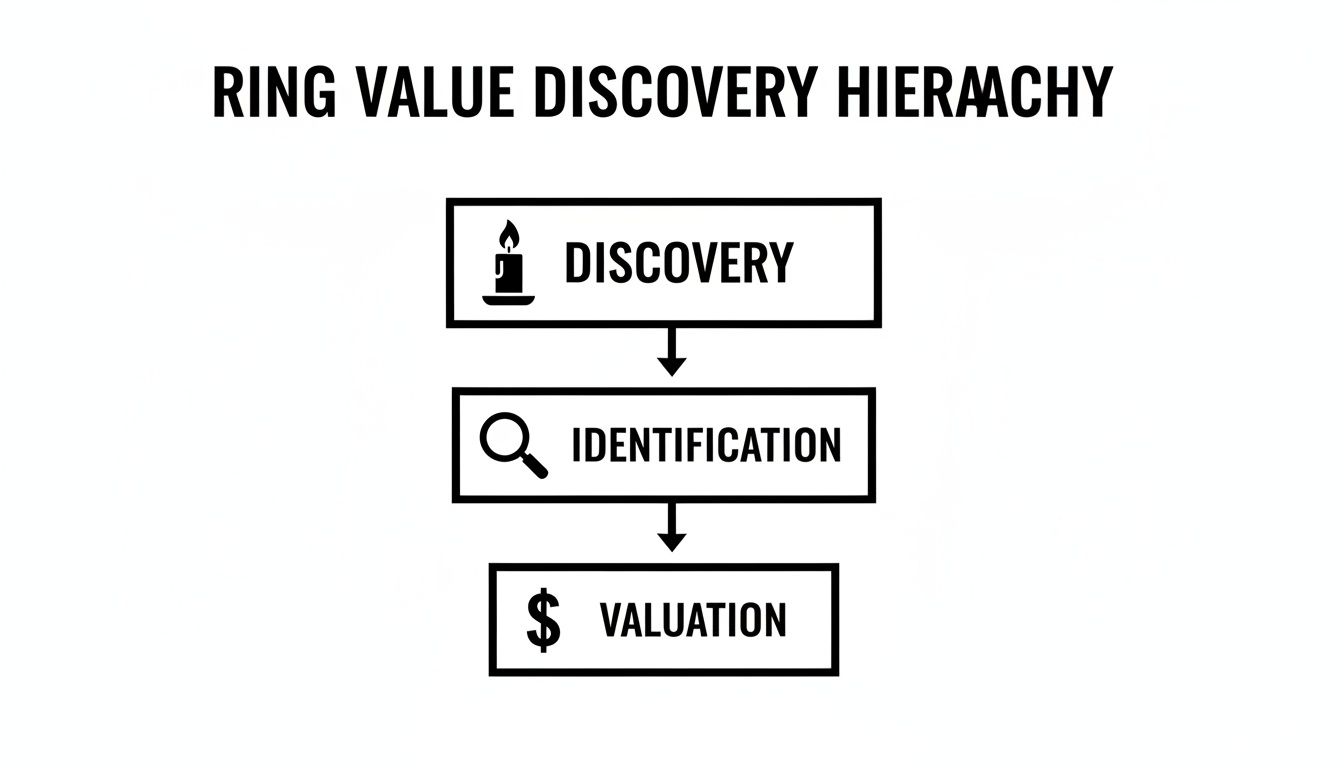
As you can see, identifying these initial clues is that crucial middle step. It connects the excitement of finding your ring with the reality of understanding its actual worth.
Use this quick reference table to identify your ring's material from the stamp found on the inner band.
| Hallmark / Stamp | Meaning | Typical Material Value Tier |
|---|---|---|
| 925 | Sterling Silver (92.5% pure silver) | Mid-Tier |
| 10K | 10 Karat Gold (41.7% pure gold) | High-Tier |
| 14K | 14 Karat Gold (58.3% pure gold) | High-Tier |
| 18K | 18 Karat Gold (75% pure gold) | Premium-Tier |
| GP | Gold Plated | Low-Tier |
| HGE / RGP | Heavy Gold Electroplate / Rolled Gold Plate | Low-Tier |
These are the most frequent marks you'll encounter, giving you an immediate sense of the ring's base value.
Next up, take a good look at the stone. You'd need a professional gemologist for a 100% positive ID, but you can definitely do some initial recon yourself. A real gemstone often has a depth and richness to its color that glass or synthetic crystals just can't replicate.
Hold the ring under a bright light and look into the stone. See any tiny lines, specks, or cloudy spots? Jewelers call these inclusions, and while they might sound like flaws, they are often a good sign! These little imperfections are nature's fingerprints, proving the stone was formed in the earth. A stone that looks absolutely, perfectly flawless is often a hint that it might be lab-created or just plain glass.
Remember, the goal of this initial inspection isn't to get a final appraisal. It's about gathering enough preliminary information to decide if your ring is a fun piece of costume jewelry or potentially a valuable treasure worth getting professionally appraised.
Once you've checked for any tiny stamps on the band, the real fun begins. Figuring out what your new ring is actually worth comes down to a few key things that jewelers look at every day. Think of it like being a judge at a talent show—you're not just looking at one thing, but the whole package that makes it special. Getting a handle on these elements is the secret to understanding your jewelry candle ring value.
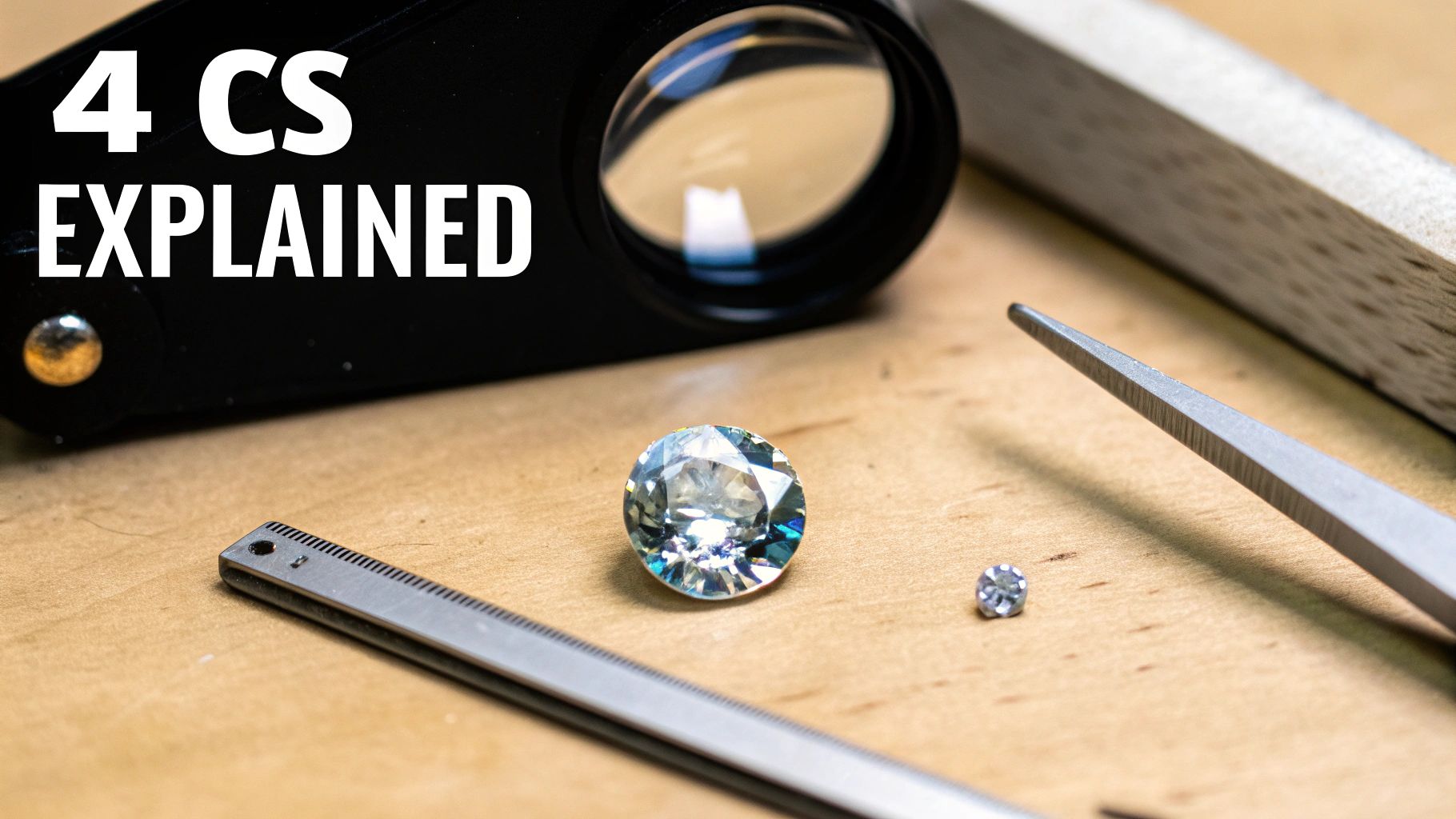
When it comes to the gemstone, everything comes down to the famous "4 Cs": Cut, Color, Clarity, and Carat. Each one plays a huge part in the stone's final price tag, creating a delicate balance of beauty and rarity. This level of detail is exactly what makes so many unique jewelry heirlooms so incredibly valuable.
These four points are the universal language for talking about a diamond's quality, but the same basic ideas apply to most other gemstones, too.
Cut: This isn't about the stone's shape (like round or oval). It's all about how well its little angled surfaces, or facets, play with light. A great cut turns the stone into a tiny hall of mirrors, catching light and shooting it back out for that incredible sparkle.
Color: For classic white diamonds, the goal is actually a total lack of color. Jewelers grade this on a scale from D (perfectly colorless) to Z (a noticeable light yellow). Think of a D-color diamond like a drop of pure, clear water—it lets light pass through to create a brilliant little rainbow.
Clarity: This is a measure of how clean the stone is on the inside and out. It looks for tiny internal imperfections (called inclusions) or surface marks. Imagine looking through a windowpane; the fewer specks and smudges, the clearer the view and the more valuable it is.
Carat: This one’s simple—it’s just how much the stone weighs. Bigger usually means more valuable, but only if the other three Cs are looking good, too. A huge, cloudy diamond won’t be worth nearly as much as a smaller, flawless one.
The band holding your gorgeous gemstone is just as important. Its value really boils down to its purity.
Think of it like baking a cake. An 18K gold ring is a recipe with a whole lot of the main ingredient—75% pure gold, to be exact. A 10K gold ring, on the other hand, uses a bit less, coming in at 41.7% pure gold.
While 18K gold is worth more because of that higher gold content, 10K gold is often tougher and more durable because the other metals mixed in add strength. It's a classic trade-off between pure value and the resilience you need for everyday wear.
A gemstone's brilliance is only half the story. The precious metal that frames it provides the foundation for its value, turning a beautiful stone into a complete, wearable piece of art.
The real surprise of these candles shines through when you look at the numbers. The rings found inside can have a retail value anywhere from $15 to $1,000. Even if you spend $75-$200 on a professional appraisal, finding a decent ring can give you a 3-10x return on what you paid for a $40 candle. It's a fun little slice of the global jewelry market, which was valued at a whopping USD 310.90 billion in 2024. In a market that big, a little bit of surprise goes a long way.
So, you've done your own detective work, but now you're ready for the final verdict. While sleuthing is fun, the only way to know the true jewelry candle ring value for sure is to get a professional appraisal.
This isn't just about finding out a dollar amount. It's about getting a certified, detailed document that officially confirms your ring's authenticity and worth. Think of it as trading your magnifying glass for an expert's high-powered microscope—they’re trained to see the tiny details that can make a huge difference in value.
An appraisal turns that exciting find into a documented asset. This is a must-have if you plan on getting it insured or maybe even selling it down the line. It’s a formal, unbiased assessment based on real industry standards.
Your first step is to find a qualified pro. It's important to know that not all jewelers are certified appraisers, so you’ll want to look for specific credentials that guarantee they know their stuff and follow ethical standards.
Here’s who you should be looking for:
When you're searching for an expert, don't be shy about asking for their qualifications. A trustworthy appraiser will be happy to share their certifications and experience, giving you total peace of mind.
A quick online search for local jewelers with these credentials is a perfect starting point. Many reputable jewelry stores have a certified gemologist right on staff. If you need a little more help, our guide on finding jewelry appraisal services near you has some great tips.
Once you're there, the appraiser will run a series of tests to check out every little detail of your ring. And don't worry, these tests are completely non-invasive—they will never need to take your ring apart or do anything that could damage it.
The process usually looks something like this:
This report is your golden ticket. It will give you a super-detailed description of the ring, including all the juicy specifics on the materials and gemstones, and assign it a retail replacement value. That final number is what it would cost to replace your exact ring today, which is exactly what you need for insurance purposes.
Alright, let's talk about the big question: What is your new ring actually worth? Once the fun of digging out your treasure is over, it's time to figure out what you've got. Everyone's hoping for that jackpot find, but knowing the typical value tiers helps you appreciate the surprise, no matter what it is.
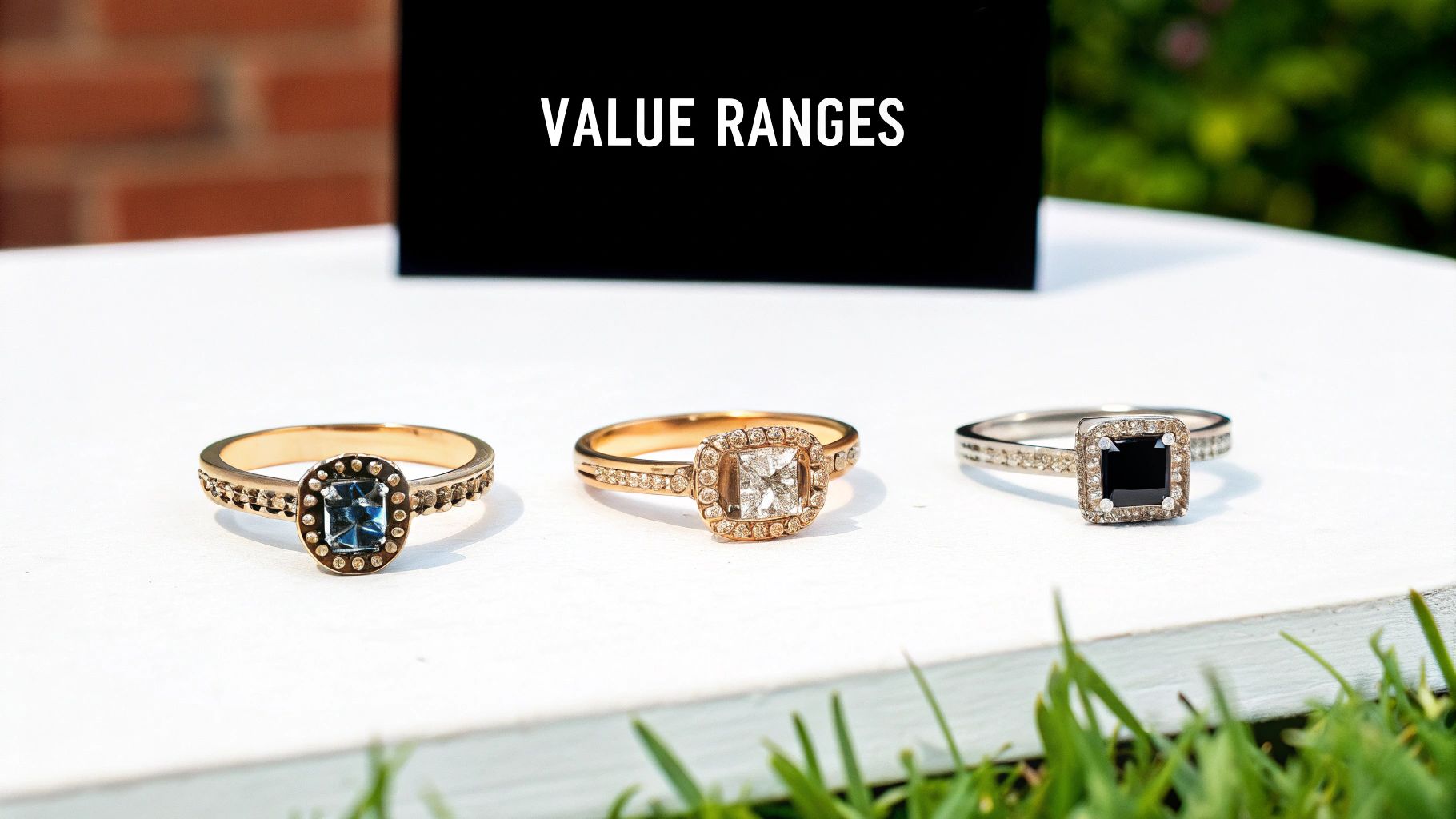
The value of these rings can range quite a bit, from a pretty keepsake all the way up to a seriously valuable piece. Most of the rings you'll find fall into a few common categories, and it all comes down to the materials used to make them.
The most common rings are fun, beautiful fashion pieces. They're designed to look great without breaking the bank and usually have a base metal, like brass, that's plated with gold or silver.
These rings are the heart and soul of the surprise jewelry experience! They're perfect for everyday wear because you don't have to stress about losing something super expensive. You get the thrill of the find and a pretty new accessory to show for it.
Take a step up, and you get to the sterling silver rings. These are a fantastic find! They often have semi-precious gems or high-quality crystals and offer a lot more durability and real value than your typical fashion jewelry.
Uncovering a sterling silver ring is a great outcome. With a little care, you've got a quality piece that can last for years. If you want to dive deeper into what makes a piece valuable, check out our guide on how to value jewelry.
This is what gets everyone's heart pounding—the true jackpot. These rare finds are crafted from solid gold (think 10K or 14K) and might even feature genuine diamonds or other precious gems like sapphires or rubies.
Finding a solid gold ring is the ultimate prize. It's rare, sure, but it completely transforms the experience from a fun little novelty into a real investment. It just goes to show you that real treasure can pop up in the most unexpected places.
A candle that costs you $25-$60 could reveal a 14k gold ring worth up to $500, which is way more than you paid. It’s a little slice of the massive global jewelry market—projected to hit USD 457 billion by 2032—making every candle a fun bet with a potentially huge payoff.
Alright, the treasure hunt is over. You've gone from the excitement of finding your ring to getting the official word on its value from a pro. Now you're sitting there with a sparkly piece of jewelry and a fun decision to make.
Holding that appraisal gives you a few different options, and what you choose really depends on how much you love the ring versus your financial goals.
The simplest, and often most popular, choice? Just enjoy it! If you absolutely adore the ring's style or it just feels special, then wearing it is the perfect end to the story. It's more than just a ring—it's a fun memory you get to carry with you.
But what if it's not quite your taste, or you'd rather have the cash? Selling is definitely an option. The key thing to remember here is the difference between the appraised value and what you'll actually get for it, the resale value. The appraisal gives you the full retail price—what it would cost to buy that exact ring brand new in a store. Resale value is what someone will pay for it secondhand, and that's almost always a good bit lower.
A great way to think about it is like buying a car. The appraisal is the "new car sticker price," while the resale value is the "used car trade-in price." Keeping that in mind will help you set realistic expectations if you decide to sell.
Now, if your ring's appraisal came back with a pretty high number—let's say $500 or more—you'll want to think seriously about getting it insured. You can usually add it to an existing homeowner's or renter's policy, or get a separate plan just for the jewelry. This way, your new little treasure is protected against loss, theft, or damage.
Ultimately, this is your call, balancing how you feel about the ring with what makes the most sense practically. Here’s a quick look at the paths you can take:
No matter what you decide, knowing the real value of your jewelry candle ring puts you in the driver's seat. Whether it becomes a favorite piece in your collection, a nice little bonus for your bank account, or a protected investment, you've officially seen your treasure hunt all the way through to the end.
We get it. The anticipation is a huge part of the fun, and now that you've got your treasure, you're probably bursting with questions. Let's dig into some of the most common ones we hear to help you get to know your new piece of jewelry a little better.
The quickest way to tell is to look for a tiny stamp called a hallmark, usually tucked away on the inside of the band.
If you spot a "925" mark, congratulations—you've got genuine sterling silver! Markings like "10K" or "14K" mean you've found a solid gold treasure. A "GP" stamp, on the other hand, stands for gold plated, which means it's a beautiful fashion piece with a thin layer of gold over a different base metal.
This is a really important one, and it's a distinction that often trips people up. The appraisal value is the full retail price—basically, what it would cost to buy that exact ring brand new from a jeweler.
The resale value is what someone would actually pay you for it secondhand, and this number is almost always lower than the appraisal.
Think of it like a new car. The appraisal is the sticker price on the lot, fresh from the factory. The resale value is what you'd get for it a year later as a trade-in. They're two very different numbers for the exact same item.
While every single candle hides a beautiful piece of jewelry, the high-value "jackpot" rings are rare on purpose—that’s what makes finding one so incredibly exciting! Most of the rings you'll uncover are gorgeous fashion or sterling silver pieces you can wear and love right away.
The solid gold rings are the extra-special treasures that only a lucky few will discover. It makes the whole experience a true game of chance where you're always guaranteed to win a pretty prize.
Oh, absolutely! The experience isn't just about the surprise ring. A premium candle made with high-quality soy wax and rich, perfume-grade fragrances creates a far superior experience from start to finish.
You get a cleaner, longer-lasting burn and a luxurious scent that truly fills the room. The jewelry inside is really the cherry on top of an already amazing product.
Ready to start your own treasure hunt? At Jackpot Candles, every one of our hand-poured soy candles comes with a surprise ring and an exciting chance to discover a high-value jackpot piece. Find your new favorite scent and your next piece of jewelry today at https://www.jackpotcandles.com.
Comments will be approved before showing up.