
free shipping at $99


Ever walked down the candle aisle and felt a little… underwhelmed? It’s easy to get lost in a sea of scents that all smell vaguely the same. But what if your home fragrance could do more than just mask odors? What if it could genuinely improve your mood and create an experience for your well-being?
That's where essential oil candles come in. These aren't your average, run-of-the-mill candles. They're crafted with pure, plant-derived extracts to take you on a sensory journey that’s as real as it gets. Forget synthetic imitations—this is about turning your home into a true sanctuary.
Choosing a candle today is about so much more than just picking a pretty smell. It’s about curating an atmosphere and making a conscious choice about what you bring into your home. More and more of us are ditching candles loaded with artificial stuff and seeking out options that actually contribute to a feeling of wellness. It’s a shift toward authenticity.
Think of it this way: you know the difference between fresh-squeezed orange juice and a sugary, artificially flavored orange drink. One is pure, vibrant, and straight from the source. The other is a lab-made copy. Candles made with essential oils are like that fresh-squeezed juice—they deliver the true, complex essence of plants, not just a flat imitation.
This move toward natural products isn't just a small trend; it’s a huge market shift. The global candle market is booming, and it's projected to hit a value of around USD 14.77 billion in the coming years. A massive part of that growth comes from scented candles, especially as people look for products to help with aromatherapy, wellness, and creating calming home decor. If you want to dive deeper, you can find more insights about the natural home fragrance trend on FreeYourself.com.
This isn't surprising, really. It reflects a bigger desire for products that fit into a healthier lifestyle. We're all getting savvier, reading labels and asking what’s really in the things we bring into our personal spaces.
The choice to use candles scented with pure essential oils is an investment in your home's atmosphere. It’s about creating a space that not only looks and smells beautiful but also feels genuinely restorative and clean.
At the end of the day, picking an essential oil candle is about the whole experience. It's about the intention behind lighting it. These candles are designed to be partners in your daily rituals, not just pretty objects sitting on a shelf.
By choosing candles for their natural aromatic benefits, you're actively shaping the feel of your environment. You’re filling your home with subtle, complex scents that support you, one flame at a time.
To really get why people love candles made with essential oils, you have to peek behind the curtain and understand what’s going on with the ingredients. It's a world of difference, and not all scented candles even belong in the same category. A true essential oil candle is a thoughtfully crafted item, built from the ground up with only natural components.
Think of an essential oil as the literal soul of a plant. It’s a super-concentrated liquid that holds all the aromatic good stuff, extracted straight from things like flowers, leaves, bark, or roots. This isn't some lab-made chemical trying to imitate a smell; it's the real deal, captured in a bottle. That distinction is everything when it comes to a genuine aromatherapy experience.
When you light a candle made with pure lavender essential oil, you’re not just smelling a generic "lavender scent." You're breathing in the complex, layered aroma that comes directly from the lavender plant itself, with all the subtle, calming notes that nature intended.
A top-notch essential oil candle is way more than just wax with a smell. It’s a complete system where every single part has to work together to give you a clean, beautiful, and effective aromatic experience. There are three core things you should always look for.
Each piece of the puzzle is critical. You could have the most amazing essential oil blend in the world, but it’s completely wasted if it's mixed into a smoky, fast-burning petroleum wax with a cheap wick.
Okay, this is probably the most important thing for any candle lover to get straight. The terms get thrown around and used interchangeably in marketing all the time, but they describe two totally different ingredients.
A fragrance oil is a synthetic, lab-created chemical compound designed to imitate a scent. An essential oil is a natural, volatile compound extracted directly from a plant. One is a copy, the other is the real thing.
Let's lay it out so it's crystal clear.
| Feature | Essential Oils | Fragrance Oils |
|---|---|---|
| Source | Extracted from real plants (flowers, leaves, etc.) | Created synthetically in a laboratory |
| Complexity | Rich, complex, and multi-layered aroma | Often a flatter, single-note scent |
| Purpose | Used for aromatherapy and natural scenting | Used purely for scent; no therapeutic benefit |
| Cost | Generally more expensive due to extraction processes | Much cheaper to produce in large quantities |
At the end of the day, a candle made with fragrance oil can make a room smell like roses, but a candle made with rose essential oil can fill your space with the true, complex, and authentic aroma of the flower itself. It’s the difference between a simple air freshener and a real tool for setting a mood or creating a feeling in your home.
Once you get these fundamentals, you can spot authentic candles made with essential oils with confidence and pick a product that actually fits a wellness-focused lifestyle.
The real magic of candles made with essential oils goes way beyond the oils themselves. Think of the wax as the candle's very foundation—it’s the vehicle that carries the beautiful scent and, most importantly, determines how cleanly it burns in your home.
It’s a bit like a high-performance car; you wouldn't put subpar fuel in a finely tuned engine and expect great results. In the same way, even the purest essential oils can’t live up to their potential without a quality wax to help them along. When you pick a candle, you’re also picking the material that will melt and drift through your air, so it’s a choice that really matters for creating a clean, restorative vibe.
Natural waxes are the go-to for anyone who’s mindful about what they bring into their home. Sourced from renewable, plant-based materials, they're famous for their clean-burning qualities. That means way less soot compared to their petroleum-based cousins.
Let's get to know the top players:
Soy Wax: This one's a total superstar in the natural candle world. Made from soybean oil, soy wax is biodegradable and burns at a lower temperature. This slow, cool burn means your candle lasts much longer, giving you more time to soak in its scent. Plus, it has an excellent scent throw, making it a perfect partner for those delicate essential oil blends. Want to dive deeper? We have a whole guide explaining why soy wax is such a fantastic choice for candles.
Beeswax: As one of the oldest candle-making materials around, beeswax is pretty incredible. It’s a natural byproduct from honeybees and carries a subtle, sweet honey aroma all on its own. One of its coolest perks is that it’s considered a natural air purifier—it releases negative ions that can help latch onto and neutralize pollutants in the air.
Coconut Wax: Though it's a newer face on the scene, coconut wax is quickly winning people over. Crafted from the meat of coconuts, this wax is prized for its creamy white look and amazing scent throw, whether the candle is lit or not. It also burns incredibly slowly and cleanly, which is why you’ll often find it in more luxurious, high-end candles.
These natural options create the perfect, clean canvas for a genuine aromatherapy session. They let the pure fragrances of the essential oils come through without any weird chemical smells getting in the way.
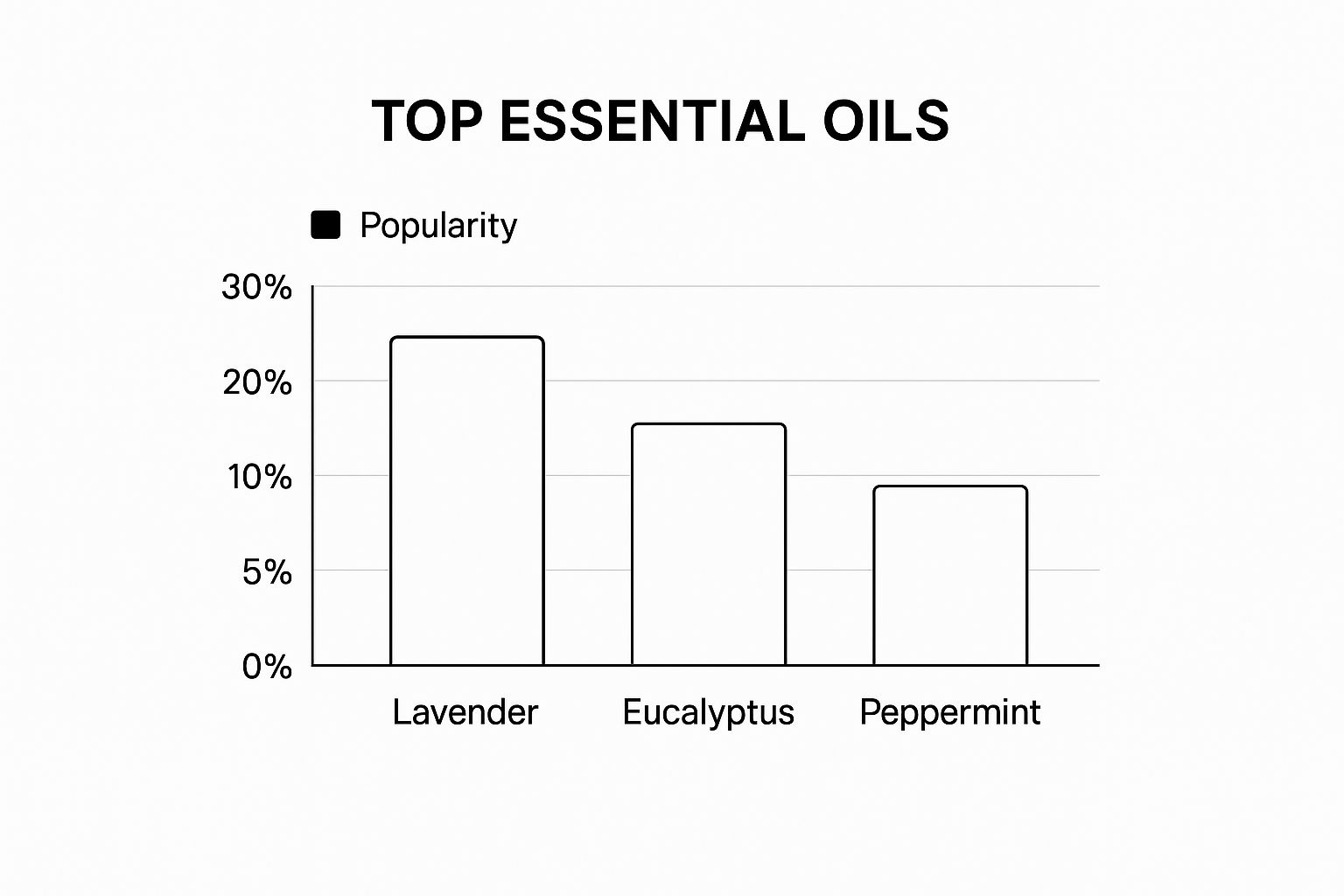
As you can see, Lavender is a clear favorite, which makes sense given how many of us use it to unwind and de-stress!
Before we move on, let's break down the key differences between natural waxes and the old-school alternative, paraffin. This table should help you see why making a conscious choice is so important.
A detailed comparison of common candle waxes to help you choose the best option based on burn quality, scent throw, and health considerations.
| Wax Type | Source | Key Benefit | Consideration |
|---|---|---|---|
| Soy Wax | Soybeans | Long, clean burn; biodegradable | Can have a "frosty" look; scent throw varies |
| Beeswax | Honeybees | Natural air purifier; sweet scent | More expensive; strong natural scent |
| Coconut Wax | Coconuts | Excellent scent throw; slow burn | Often blended; can be pricier |
| Paraffin Wax | Petroleum | Inexpensive; strong scent throw | Releases toxins when burned |
Ultimately, choosing a wax is about more than just scent—it's about creating a healthier and more pleasant environment in your home.
For a long time, paraffin was the default wax for candles, mostly because it's cheap and holds onto fragrance really well. The issue, however, lies in where it comes from, which is a big red flag for a lot of people today.
Paraffin wax is a byproduct of the crude oil refining process. When it burns, it can release compounds like toluene and benzene—both known carcinogens—into your air. You're essentially inviting fossil fuel emissions right into your living room.
This is exactly why reading the label is so critical. If a candle doesn't say what kind of wax it uses, it's almost always made with paraffin or a blend that's heavy on it.
By deliberately choosing a candle made with soy, beeswax, or coconut wax, you're taking a direct step toward a cleaner, healthier home. You aren't just buying a candle; you're making a conscious decision about the air you and your family breathe.
Choosing a candle made with essential oils is about so much more than just a nice smell. It’s about being intentional with the feeling you want to create in your space. This is where we get into the really cool part: aromatherapy. We're talking about the direct line between a candle's scent and its power to shift your mood.
When you breathe in the fragrance from an essential oil candle, you're not just picking up on a scent. You're actually firing up your limbic system—the part of your brain that handles emotions and memories. This is exactly why a certain smell can instantly transport you back in time or make you feel relaxed or energized on the spot.
Think of it like making a playlist for your nose. You pick certain songs to get pumped up for a workout or to wind down after a long day, right? You can do the exact same thing with essential oil candles. Suddenly, buying a candle isn't just a purchase; it’s a small, deliberate act of self-care.
The best part about essential oils is that their effects are pretty well-known. This makes it super easy to pick a scent that lines up with what you're trying to achieve. You can build your own little collection of scents for any mood or moment just by knowing which oils do what.
This focus on wellness has really changed the game. The market for luxury essential oil candles is booming because more people are looking for real benefits, like stress relief and a mood boost. This has pushed candle makers to use better, higher-quality ingredients, turning these candles from simple decor into a key part of a healthier lifestyle.
Let's dive into some of the most popular scent families and how you can use them to transform your own home.
For those moments when you just need to turn down the noise and quiet your mind, some oils are absolute superstars. Think of these as your go-to for creating a peaceful sanctuary in your bedroom or living room.
The calming effects of these oils can be a huge help in promoting relaxation, making them fantastic natural sleep aids.
On the flip side, you have bright, zesty scents that sharpen your focus and lift your spirits. These are your best friends for a home office, the kitchen, or any space where you need a bit of a mental kickstart.
Picking an energizing scent is like throwing open a window on a sunny spring day. It lets the light in, clears out the stale air, and leaves you feeling refreshed and ready to go.
Imagine lighting a citrusy lemon candle on a gloomy morning to fill your kitchen with sunshine and optimism. Or, try a peppermint candle on your desk to power through that 2 p.m. slump. To learn more about what these oils can do, check out our guide on five popular essential oils and their benefits.
Sometimes you don't need to relax or get energized—you just need a fresh start. Certain scents are brilliant for clearing the air, both literally and figuratively. They're perfect for a bathroom refresh or for making your entryway feel clean and welcoming.
Once you get the hang of these scent profiles, you're not just buying a candle anymore. You’re choosing a tool to consciously shape your environment and support your well-being.
Stepping into the candle aisle can feel a little overwhelming with all the choices, right? But finding the perfect essential oil candle gets a whole lot easier once you know the inside scoop. When you know what to look for, you can shop with total confidence, easily spot the duds, and bring home a candle that actually does what it promises. It all comes down to learning how to read the label like a pro.
Your first mission, and the most important one, is to figure out where that lovely scent is coming from. You want to see clear, proud language. A truly good candle will say something like it's scented with "100% essential oils."
Be on the lookout for sneaky terms like "fragrance," "fragrance oils," or "nature-identical oils." These are almost always code for synthetic, lab-made chemicals. Getting this right is the difference between a glorified air freshener and a real tool for setting a mood.
Beyond just the scent, a few other key details on the label tell you the real story of a candle's quality. Think of it as your personal checklist for picking a winner.
Here’s what you should be looking for:
This demand for top-notch candles is a big deal globally. Online shopping has made it easier than ever for people to find amazing artisanal brands, and sales are booming. The Asia-Pacific region, for example, is seeing huge growth as more people shop online for unique scents. You can dive deeper into these trends in this detailed scented candle market report.
Okay, so you've found a candle with great ingredients. The last piece of the puzzle is performance. How well will it actually fill your room with that amazing scent? This is where scent throw and candle size come into play.
Scent throw is just a fancy term for how well a candle's fragrance travels through a room. It’s all about the wax, the amount of essential oil, and the size of the candle itself.
Getting the right size candle for your room is key. A tiny candle will get completely lost in a big, open living room, but a huge, powerful candle can be way too much for a small bathroom.
Here’s a quick guide to help you match the candle to the room:
| Room Size | Recommended Candle Size | Example Spaces |
|---|---|---|
| Small | 3-6 oz (Single Wick) | Bathrooms, home offices, small entryways |
| Medium | 7-12 oz (Single or Double Wick) | Bedrooms, kitchens, average-sized living rooms |
| Large | 13+ oz (Multiple Wicks) | Open-concept living areas, large master suites, great rooms |
By following this simple checklist—verifying the oils, checking the wax and wick, and matching the size to your space—you're all set. You can confidently pick out a beautiful, high-quality essential oil candle that’s perfect for your home and transforms it into the sanctuary you deserve.
To get the most out of your beautiful candles made with essential oils, a little TLC goes a very long way. Think of it like this: you've invested in a premium aromatherapy experience, and a few simple habits will protect that investment, making sure every burn is as safe and fragrant as the first.
The single most important moment for any candle is its very first light. You absolutely have to let the wax melt all the way to the edges of the jar, creating what’s called a full “melt pool.” Depending on the size of your candle, this can take anywhere from 2 to 4 hours.
Why is this so critical? That first burn sets the wax's "memory." If you blow it out too soon, you'll create a tunnel right down the middle. This not only wastes a ton of wax but can also drown the wick, drastically cutting down your candle's lifespan and scent throw.
Before every single burn—and I mean every single one—you need to trim your wick. Grab a wick trimmer or even a pair of nail clippers and snip the wick down to about 1/4 inch. This is a non-negotiable step for a clean, safe burn.
A properly trimmed wick keeps the flame small and under control, which helps prevent a few common problems:
It only takes a few seconds, but this small habit pays off big time. For even more great advice, check out our guide on how to make candles last longer.
Enjoying an essential oil candle should be a relaxing ritual, and keeping it a safe one is easy. As beautiful as that flickering flame is, it's still an open fire that requires your attention. Always put safety first.
Never leave a burning candle unattended. If you're leaving the room or heading to bed, always extinguish the flame completely. A fire can start in just a few seconds.
Sticking to these basic rules is the best way to protect yourself, your family, and your home:
As you start exploring the world of candles made with essential oils, you're bound to have some questions. It’s totally normal! Making the switch to a more natural way of scenting your space is an exciting journey, and getting the facts straight helps you pick the perfect candle. Let’s dive into some of the most common things people wonder about.
One of the first things people notice is that the scent from a real essential oil candle feels different from a synthetic one. It's not that it's weaker—it's just more sophisticated and complex. Synthetic fragrance oils are often engineered to be incredibly loud, hitting you with a single, powerful note that can sometimes feel overwhelming.
Essential oil candles, on the other hand, deliver a more subtle and layered aroma that's all about creating a therapeutic vibe. Think of it as the difference between hearing a live acoustic guitar performance and a super-amplified pop song. Both are music, but one has rich, intricate layers while the other is all about volume. The "scent throw" from a natural candle is designed to gently weave itself into your room, creating a genuine atmosphere instead of just covering up smells.
Yep, it's true that you’ll usually see a higher price on genuine essential oil candles. The reason is simple: it all comes down to the quality and cost of the ingredients. Making a truly natural candle is just a more hands-on, resource-heavy process from the very beginning.
The price really reflects the journey of the ingredients inside. It covers everything from sustainably grown plants and the delicate process of extracting pure essential oils, to using premium, clean-burning natural waxes. The cheaper candles on the shelf often use mass-produced chemicals and paraffin wax, which comes from petroleum.
At the end of the day, you're paying for purity and authenticity. That price difference is a direct nod to the commitment to high-quality, natural components that are better for your home and your own well-being.
Knowing how to read the label is your superpower when it comes to finding a genuinely natural candle. With so much clever marketing out there, you need to know what to look for—and what to be wary of.
Here are the green flags you want to see:
On the flip side, be cautious with vague phrases like "fragrance oils," "nature-inspired scent," or just "fragrance." These are often sneaky ways to hide synthetic ingredients. A brand that’s truly natural will be excited to tell you exactly what’s in their candles.
Ready to experience the authentic beauty of natural fragrance? At Jackpot Candles, we craft our candles with 100% soy wax and high-quality scents, each containing a surprise jewelry reveal. Discover your new favorite candle and hidden treasure today!
Comments will be approved before showing up.