
free shipping at $99


Have you ever wanted to create a scent that is uniquely yours, one that can’t be bought off a shelf? Fragrance layering is the art of combining multiple scented products to build a complex, personalized, and long-lasting aromatic experience. This isn't just about spritzing two perfumes; it's a sophisticated practice that extends from your personal care routine to the very ambiance of your home. By thoughtfully combining scents, you can craft a signature aroma that evolves throughout the day and transforms your living space into a sensory sanctuary.
Many people stick to a single scent, fearing a fragrant clash, but the secret lies in understanding harmony, notes, and application techniques. Just as skincare enthusiasts master the art of combining products as detailed in guides on how to layer serums for maximum benefits, fragrance layering allows you to create a unique and evolving scent profile for your home and personal space.
In this guide, we'll move beyond basic advice and explore advanced fragrance layering tips that professionals use. We will cover how to build a scent profile from the ground up, starting with your bath and carrying through to the candles you light. Get ready to unlock a new level of personalization and turn your daily routine into a masterpiece of fragrance.
True fragrance layering begins long before you reach for a perfume bottle. The most impactful and personal scent experiences start with a foundational layer, a scented canvas you create during your bath or shower. This initial step sets the aromatic theme for your entire day or evening.
Think of it as priming a canvas before painting. The warmth of the water opens your pores, allowing the fragrant oils from a bath bomb to gently infuse your skin. This creates a subtle, intimate base that melds with your unique body chemistry, providing a much more durable and nuanced starting point than a simple spritz of perfume alone.
The key to a successful foundation is choosing a cohesive scent family. Instead of using a jumble of competing products, select a bath bomb that establishes a clear fragrance direction. For instance, a Jackpot Candles bath bomb is an excellent tool for this first step, turning your bath into a deliberate act of scent creation.
After your thematic bath, the goal is to preserve this delicate first layer. Immediately apply a lightly scented or, even better, an unscented moisturizer. This step is crucial for two reasons: it locks in the bath bomb's fragrance, and it hydrates your skin, creating a smooth surface that helps subsequent perfumes project more effectively and last longer.
Pro Tip: This foundational method is one of the most effective fragrance layering tips for longevity. By anchoring the scent to your skin early on, you ensure your fragrance journey has a solid, slow-releasing base that carries you through the day.
Once you’ve established a scented foundation, the next step is to understand the art of pairing. Successful layering requires knowing which fragrance families work harmoniously together. This isn't about simply piling on scents; it's about creating a sophisticated, nuanced profile where different notes enhance, rather than compete with, each other.
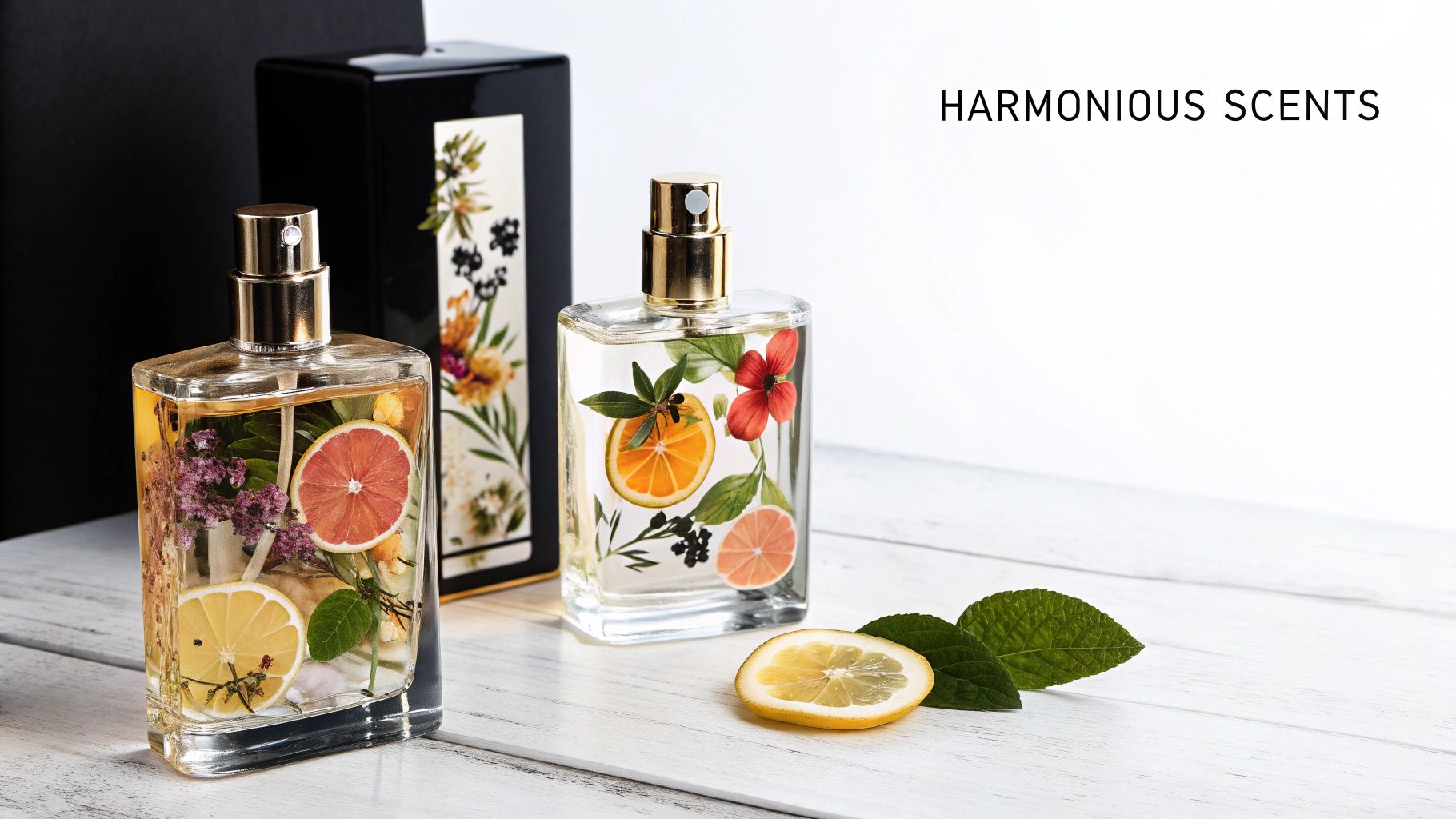
Think of it like music theory. Certain notes create a beautiful chord, while others result in dissonance. In fragrance, families like woody, floral, oriental, and fresh each have distinct characteristics. The goal is to combine families that share complementary traits or create a pleasing contrast, resulting in a scent that smells intentional and complex rather than chaotic. For a deeper dive, you can learn more about how to understand candle fragrances and scent notes to master these combinations.
The key is to start with classic pairings that are known to work well. Use the fragrance wheel, popularized by Michael Edwards, as your guide. Families adjacent to each other on the wheel are almost always compatible. For a personal touch, you can also extend a theme; for example, layering a crisp, aquatic bath bomb with a product like an Ocean Dew Mist can amplify a refreshing marine profile.
Before committing a new combination to your skin, always test it first. Spray each fragrance on a separate paper blotter, then hold them together and wave them under your nose to get a sense of the combined aroma. This simple step prevents olfactory mishaps and helps you discover winning combinations. Start with lighter scents first and then add heavier ones, as this allows the more delicate notes to shine through without being overpowered.
Pro Tip: This is one of the most crucial fragrance layering tips for creating a signature scent. By understanding how families interact, you move from being a simple fragrance wearer to a fragrance architect, curating a scent that is uniquely yours.
Moving beyond your foundational scent, the next level of layering involves the targeted application of different perfumes to your body’s pulse points. This classic technique involves placing complementary fragrances on the warm areas of your skin where blood vessels are closest to the surface, such as your wrists, neck, and inner elbows. The heat from these points diffuses the scents, creating a dynamic and evolving fragrance aura around you.
This method allows you to craft a multi-faceted scent profile that reveals different notes as you move or as your body temperature changes. Someone standing near you might catch one scent, while a closer interaction could reveal another, making your fragrance experience uniquely personal and intriguing.
The goal is to create a harmonious blend rather than a clash of notes. This requires thoughtful placement and pairing of your chosen fragrances. Think of it as creating a fragrant chord where each note plays a specific, complementary role.
To get the most out of this technique, apply stronger, heavier scents to lower pulse points (like behind the knees) so they can gently rise. Lighter, more volatile scents should be placed on higher points (like the neck and wrists) where they can project more effectively. This strategic placement ensures a balanced and nuanced scent journey.
Pro Tip: This is one of the most advanced fragrance layering tips used by perfumers. It allows you to wear multiple signature scents at once without them competing. Much like knowing where to place scented candles for optimal room diffusion, knowing where to apply perfume on your body is key to mastering its effect.
One of the most common mistakes in fragrance layering is allowing competing scents from your skincare products to muddle your carefully chosen perfume profile. To achieve a pure, long-lasting scent experience, you must first create a neutral canvas. This is where unscented base products become an essential tool in your fragrance wardrobe.
Applying an unscented moisturizer or body oil before your perfume acts as a primer for your skin. Hydrated skin holds onto fragrance molecules far more effectively than dry skin, which can absorb the perfume oils too quickly and cause the scent to fade. This neutral base ensures that your chosen fragrance remains true to its intended character without any clashing notes from a scented lotion.
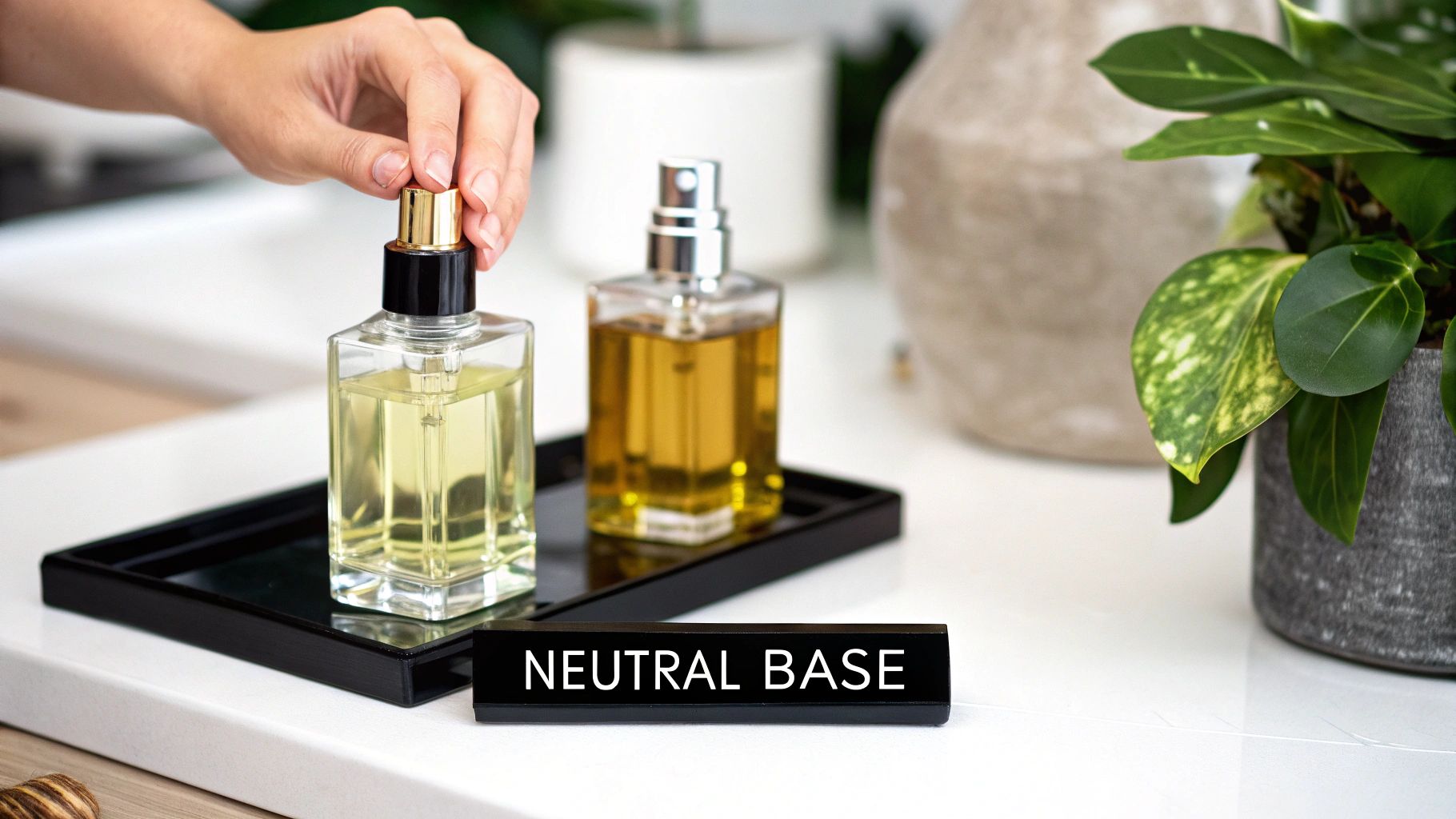
The goal is to hydrate the skin and create an adherent surface for your fragrance. This technique, popularized by professional perfumers and beauty influencers, prevents the fragrance from being altered or diminished by underlying product scents. A clean, moisturized foundation allows the top, middle, and base notes of your perfume to unfold exactly as the creator intended.
Timing and application are critical for this method to work. Apply your unscented base product to your pulse points, like your wrists, neck, and behind your ears, about 10 to 15 minutes before spritzing your perfume. This allows the moisturizer or oil to fully absorb, leaving behind a perfectly prepped surface ready to lock in your scent. Avoid products with strong "natural" scents like shea or cocoa butter, as these can still interfere.
Pro Tip: This is one of the most effective fragrance layering tips for making any perfume last longer. By creating a neutral, hydrated foundation, you are not just preventing scent clashing; you are actively extending the life and improving the performance of your favorite fragrances.
For a truly sophisticated approach, turn to a technique borrowed from the world of interior design: the 60-30-10 rule. This professional method translates color theory into fragrance composition, providing a structured yet creative framework for combining scents. It ensures a balanced, harmonious blend where each note has a purpose, preventing a chaotic mix.
This rule helps you move from simple layering to intentional scent architecture. The idea is to assign a specific weight to each fragrance in your combination. The dominant scent forms the core identity (60%), a secondary scent adds complexity and depth (30%), and a final accent note (10%) provides a unique, memorable twist. This prevents any single fragrance from overwhelming the others.
The key to this technique is understanding the role each fragrance plays. The goal is to build a multi-dimensional scent profile that evolves beautifully on the skin. Start with your most prominent fragrance and build from there with decreasing intensity.
Before committing the blend to your skin, it's wise to test the ratios on a paper blotter or scent strip. This allows you to evaluate how the fragrances interact without your body chemistry influencing the result. Adjust the proportions until you find a combination that feels balanced and uniquely you. This measured approach takes the guesswork out of layering.
Pro Tip: This rule is one of the most advanced fragrance layering tips used by professional perfumers. It allows you to deconstruct and reconstruct your favorite scents, creating a custom blend that is truly one-of-a-kind and expertly balanced.
Just as you wouldn't wear a heavy wool coat in July, your fragrance wardrobe should adapt to the world around you. True scent mastery involves tailoring your fragrance layers to the season, the weather, and the specific occasion. This ensures your chosen aroma is not only appropriate but also performs optimally, projecting beautifully without overwhelming the senses.
The science is simple: heat amplifies scent, while cold suppresses it. This makes seasonal adaptation one of the most crucial fragrance layering tips for achieving balance and sophistication. Lighter, brighter notes thrive in warm weather, while richer, more complex scents need the crisp winter air to truly unfold.
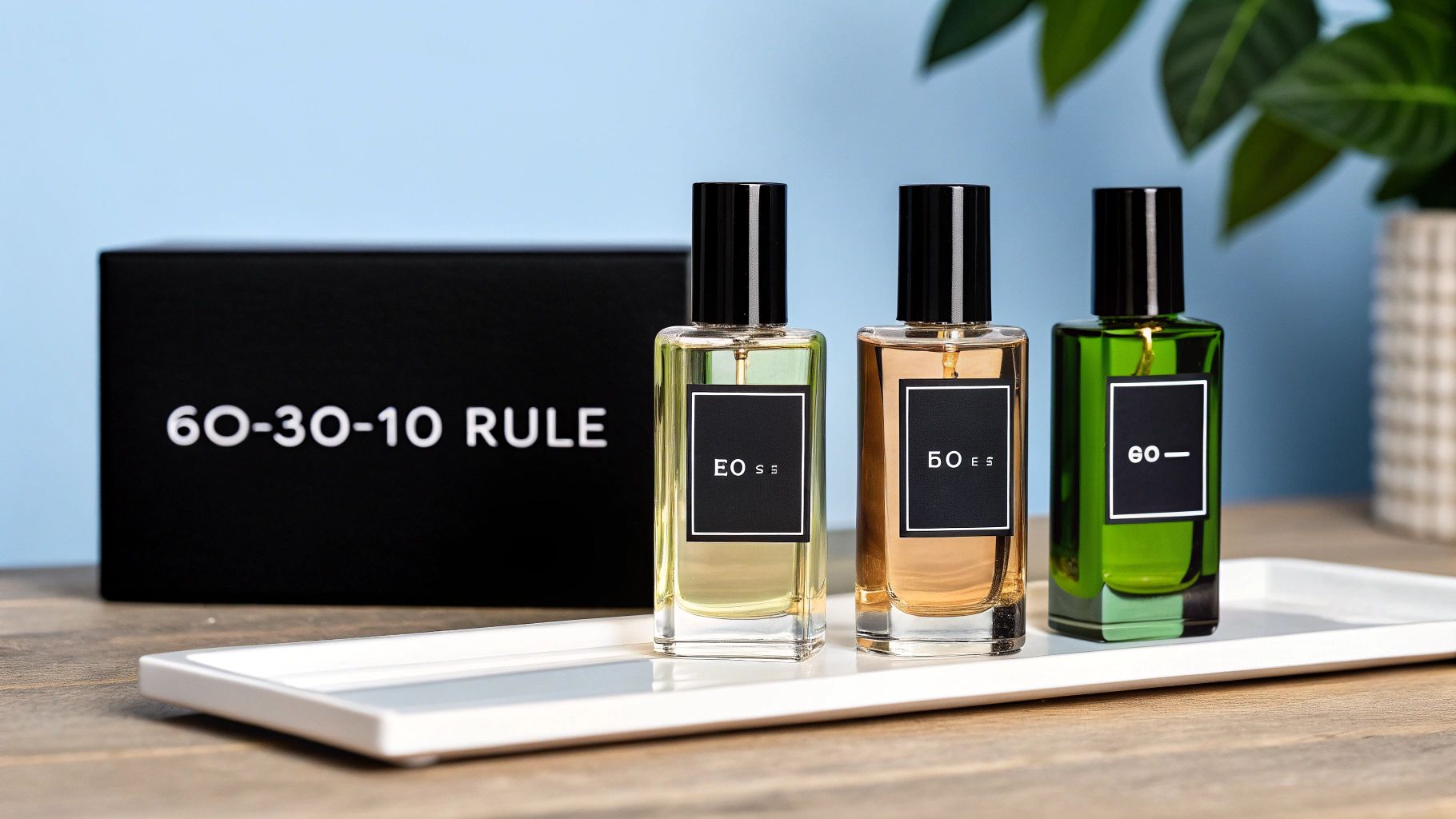
The key is to match the weight and character of your fragrances to the ambient environment. This concept, long practiced by luxury fragrance houses and fashion tastemakers, allows you to create a scent profile that feels intentional and harmonious.
To perfect this technique, think like a stylist building a capsule wardrobe for your fragrances. Curate a small collection for each season and rotate them accordingly. Pay attention to how indoor heating or air conditioning affects your scent projection and adjust the number of sprays you apply. A single spritz of a heavy winter scent can be more than enough indoors.
Pro Tip: When layering for a specific occasion, always consider the "fragrance dress code." A light, clean combination is respectful in professional or formal settings, while a bold, expressive duo is perfect for social events where you want to make a statement.
| Technique | Implementation Complexity 🔄 | Resource Requirements ⚡ | Expected Outcomes 📊 | Ideal Use Cases 💡 | Key Advantages ⭐ |
|---|---|---|---|---|---|
| Start with the Base: Apply Heaviest to Lightest | Moderate - requires multiple fragrance types and careful layering timing | High - needs various fragrance concentrations | Structured, long-lasting scent with clear layers | Everyday wear, creating complex scent profiles | Maximizes longevity and scent evolution |
| Master Complementary Fragrance Families | Moderate - requires knowledge of fragrance families and relationships | Medium - focused on compatible scent families | Harmonious and professional-quality blends | Seasonal, occasion-specific layering | Reduces scent clash and builds confidence |
| Strategic Pulse Point Application | Moderate to High - multiple fragrances and precise placement needed | High - needs several fragrances | Personalized, multi-dimensional scent experience | Personalized layering, special occasions | Enhances projection and scent complexity |
| Utilize Unscented Base Products | Low - add one extra skincare step | Medium - requires additional unscented products | Improved fragrance adherence and longevity | All fragrance applications | Extends wear time and smooths application |
| The 60-30-10 Fragrance Ratio Rule | High - demands precise measurement and ratio control | Medium - requires multiple fragrances | Balanced, sophisticated, and wearable blends | Professional layering, balanced scent creation | Foolproof structure guaranteeing consistent results |
| Seasonal and Occasion-Based Layering | Moderate to High - planning for weather and events | High - extensive fragrance wardrobe | Context-appropriate scent projection and longevity | Season-specific, professional vs. casual settings | Maximizes fragrance performance and appropriateness |
The journey from simply wearing a fragrance to curating a complete aromatic experience is where the true magic happens. As we have explored, creating this sensory signature is an art form built on a foundation of smart, strategic fragrance layering tips. It is about understanding that your personal scent and home environment are not separate entities, but rather a holistic canvas for self-expression.
By embracing these techniques, you move beyond the one-dimensional and step into a world of sophisticated, personalized aroma. You now have the tools to build a scent profile that is as dynamic and unique as you are.
Let's recap the core principles that will transform your approach to scent:
The true value of these fragrance layering tips lies in their application. Your next step is to become a scent artist. Start small. The next time you draw a bath, don't just choose a bath bomb; think about the candle you will light alongside it. Consider how the lingering scent from your bath products will interact with the perfume you apply afterward.
Your goal is not just to smell good, but to create an environment that feels like you. This is a powerful form of self-care and personal branding, crafting an invisible yet unforgettable message about who you are.
Begin to build your "fragrance wardrobe." Collect a few core scents from different families that you absolutely love. These will become the building blocks for your layering experiments. Don’t be afraid to try unconventional pairings. The most memorable signature scents are often born from bold, confident choices. By thoughtfully layering aromas, you create a rich, complex, and lasting impression that is impossible to achieve with a single product. This is your opportunity to craft an immersive experience that delights the senses and makes every day feel a little more luxurious.
Ready to build your fragrance wardrobe and master the art of scent layering? Explore the curated collections at Jackpot Candles to find the perfect foundational bath bombs, candles, and wax melts to begin your journey. With a vast array of high-quality scents and the thrill of a jewelry surprise inside, you have everything you need to start creating your signature aromatic experience today at Jackpot Candles.
Comments will be approved before showing up.