
free shipping at $99


So, you're wondering if you can actually get a free jewellery appraisal. The short answer is yes, but it's really important to know what you're getting.
Usually, a "free" service means you're getting a verbal estimate of what your piece is worth. This is absolutely perfect if you're just curious about a family heirloom or want a rough idea of a selling price. It's not the same thing as a formal, written appraisal that you'd need for insurance—that kind of detailed report almost always comes with a fee.
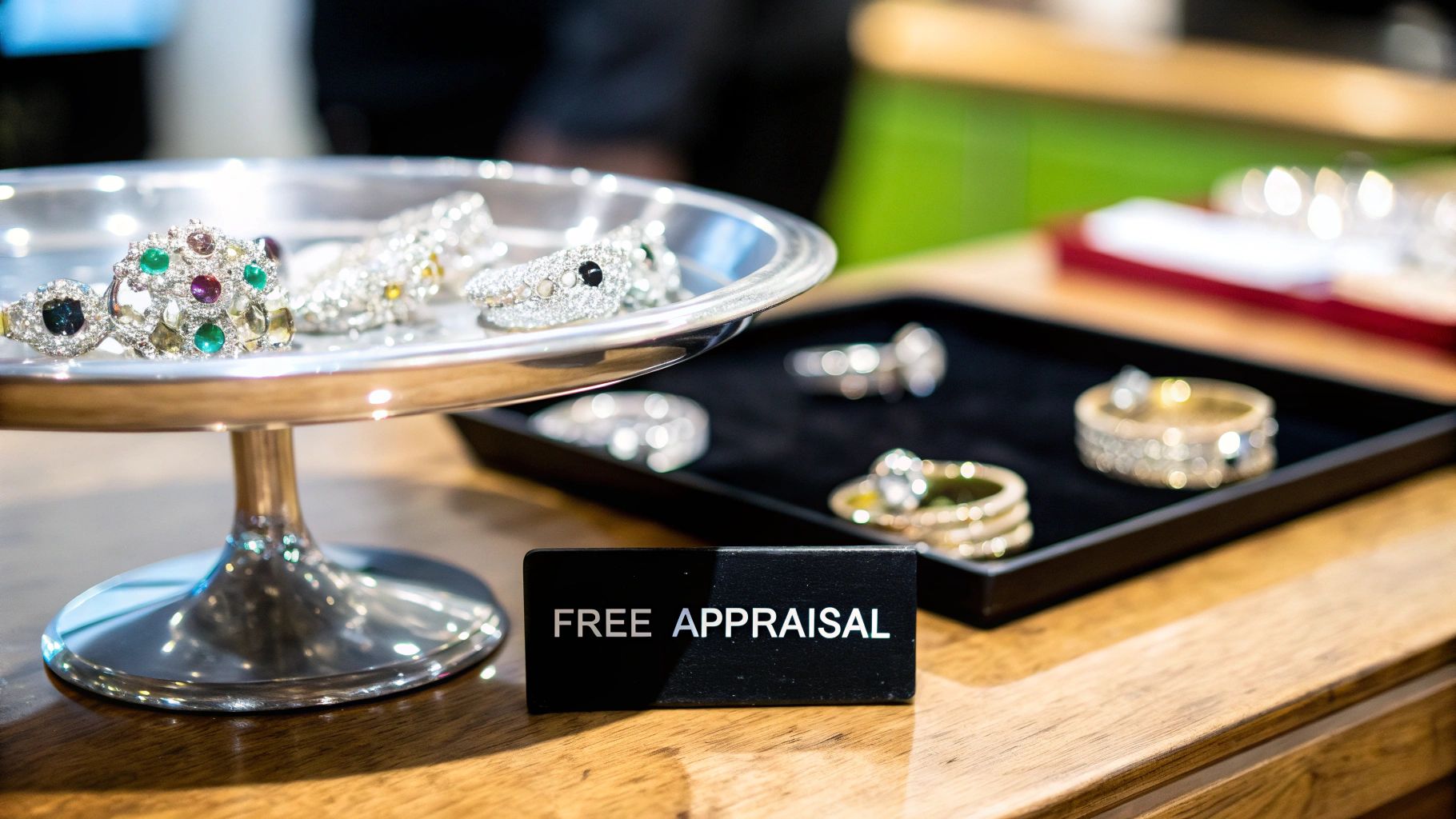
Before you start looking around, let's get the terminology straight so your expectations are in the right place. The appraisal world isn't one-size-fits-all, and the free option has its own specific, very useful purpose. Think of it more like an initial consultation than a legally binding document.
A free verbal estimate is just that—a quick, informal opinion on your jewellery's value. A jeweller will take a look at your piece, and based on their experience, give you a ballpark figure. It's the ideal route if you've inherited a brooch you know nothing about or are thinking about selling an old ring.
On the other hand, a formal written appraisal is a much more detailed, official document. It will include in-depth descriptions, precise measurements, quality grades for any stones, and even photographs. This is the kind of report insurance companies need to properly cover your items against loss or theft. Because of all the research, liability, and documentation involved, this service costs money, typically anywhere from $50 to $200 per item.
The key takeaway? A free verbal appraisal gives you a ballpark figure for resale or just to satisfy your curiosity. A paid written appraisal provides a detailed, official valuation for things like insurance. Knowing the difference from the get-go is the first step to getting what you actually need.
People get their jewellery valued for all sorts of reasons, and your personal goal will point you toward the right type of appraisal. For a deeper dive into this, you can check out our comprehensive guide on how to value jewelry.
Here are some of the most common motivations:
Your neighborhood jeweller is often the quickest and most straightforward place to start for a preliminary valuation. Many local shops, particularly the independent ones, are happy to offer a complimentary verbal appraisal. It’s a great way for them to build a relationship with you and show off their expertise. The trick is knowing how to approach them to get a genuine opinion without feeling like you're being pushed into a sale.
Start by looking up jewellers in your area. I always recommend focusing on independent, family-owned stores that have been around for a while and have solid customer reviews. These businesses really pride themselves on personal service and are usually more open to giving a casual, no-obligation look at your piece. While large retail chains might offer this too, it can sometimes feel more like part of a sales pitch.
A little prep work can make a huge difference and helps you make the most of everyone's time. You don't need a folder full of documents for a simple verbal estimate, but having a few things ready is smart.
When you walk in, be friendly and direct. I've found that saying something like, "I was hoping you might be able to offer a quick opinion on this piece," works wonders. It sets a low-pressure tone and shows you respect their time and expertise.
It's helpful to understand the landscape of free vs. paid appraisals. While a paid service gives you formal paperwork, the experience of a free, in-person look often leaves people more satisfied.
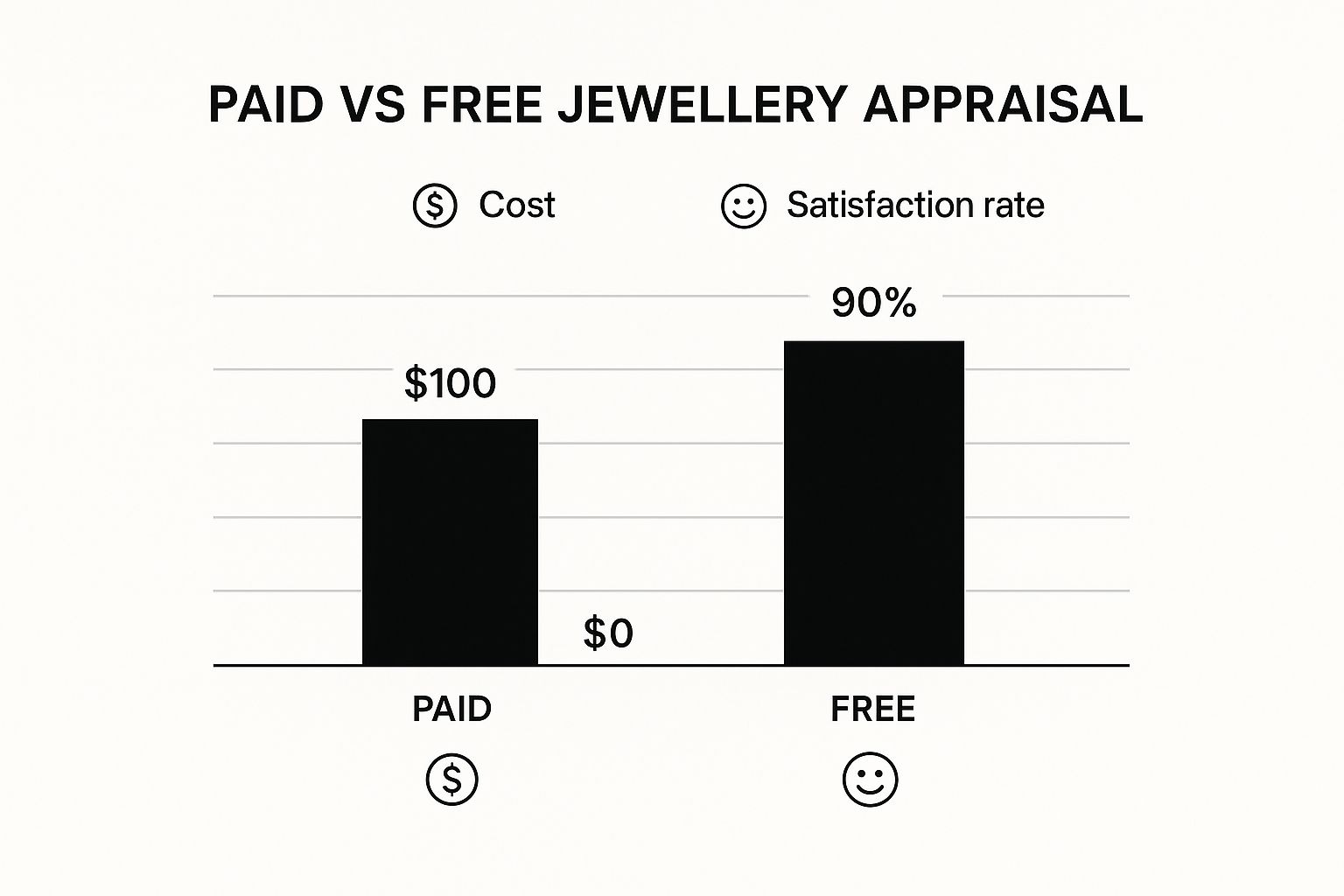
This high satisfaction with free appraisals likely comes from the direct, personal interaction and, of course, the fact that it doesn't cost anything!
Deciding between a small local shop and a big brand name can be tough. Here’s a quick breakdown to help you choose where to go first.
| Feature | Independent Local Jeweller | Large Chain Store (e.g., Jared) |
|---|---|---|
| Personal Service | Typically high; you often speak directly with the owner or a senior gemologist. | Can be inconsistent; you may interact with a sales associate rather than an expert. |
| Expertise | Often deep, specialized knowledge, especially in vintage or custom pieces. | Staff usually have general training but may lack specialized expertise. |
| Sales Pressure | Generally lower; more focused on building a long-term relationship. | Can be higher, as appraisals may be used as a lead-in to a sales conversation. |
| Wait Time | Usually minimal; you can often get an opinion on the spot. | May require an appointment or leaving the item for a later evaluation. |
| Follow-Up | Great for building a trusted contact for future repairs, purchases, or paid appraisals. | Less personal; the relationship is more transactional. |
Ultimately, both can be good options, but for a friendly, expert first opinion, my money is on the local independent jeweller.
Getting your jewellery valued is becoming more and more common, especially with vintage and antique pieces making a huge comeback. In fact, the global jewelry appraisal market is projected to grow by $1.81 billion between 2023 and 2028. People want to know what their treasures are worth!
To get the most out of your visit, don't just ask for a number. Try asking more specific questions to gather real information:
This approach gives you a much richer story about your item. For more advice, you can always check out our full guide on finding jewelry appraisal services near me. A quick chat with a local jeweller can be the perfect first step in uncovering your item's history and its true worth.
Let's be honest, sometimes the idea of trekking to a jeweller feels like a hassle. The great news is you can get a solid preliminary idea of your jewellery's worth right from your couch. Online platforms have totally changed the game, giving you a quick, and often free, way to figure out an item's market or auction value. It’s the perfect first step if you just want a fast assessment without booking an appointment.
Think of yourself as a detective for your own jewellery. The process starts with you gathering the evidence. You'll need to take really clear, high-quality photos of your piece from every angle. Get up close! Make sure you capture any little markings or stamps (like "14K" or "750"), the gemstones, and any unique details. Good lighting is your best friend here.
Once you've got your photos and a good written description, you'll upload everything to the platform's portal. From there, reputable services will have their experts—or sometimes their AI—take a look. Just keep in mind that these online estimates are usually for fair market value. That's what your piece might realistically sell for, which is different from a higher insurance replacement value.
This whole digital approach isn't just a small trend; it's a huge part of a growing industry. The global jewelry appraisal market hit about USD 3.65 billion in 2024 and is expected to jump to USD 6.53 billion by 2032. Digital platforms are already handling over 30% of these appraisals, with AI-powered services like Mearto and Worthy getting more and more popular. You can dive deeper into this growing market on 24marketreports.com.
Pro Tip: When you're using any online service for a free appraisal, always play it safe. Stick to platforms that have clear privacy policies. Never share more personal info than you need to, and be wary of anyone who pressures you to sell the second they give you a number.
As you start looking around, you'll find there are a lot of options out there. It's worth checking out a comprehensive list of the best antique appraisal online free services to see which platform feels right for you. These tools are a fantastic, no-pressure way to get the ball rolling and understand what your jewellery might be worth.
Beyond popping into your local jeweler, one of the best ways to get a free, expert opinion on your jewelry is by finding a special event. These appraisal fairs are like a real-life version of Antiques Roadshow, often hosted by auction houses or even local historical societies.
They bring specialists right into your community, which is a fantastic opportunity to get your pieces in front of a true expert.
Finding them is easier than you might think. A quick online search for terms like "jewelry appraisal event" or "auction house valuation day" plus your city’s name is a great start. I also recommend following major auction houses like Sotheby's or Christie's on social media. They're constantly announcing public valuation events in different cities.
You’ll likely only get a few minutes with an expert, so you have to be strategic. A little bit of prep work really goes a long way here.
When it’s your turn, try asking more specific questions. For instance, "Can you help me identify the period this piece is from?" or "What are the key characteristics you see that determine its value?" You’ll walk away with so much more useful information than just a number.
These quick, face-to-face meetings are absolutely perfect for getting feedback on unique or antique jewelry. The specialists at these events often have deep knowledge in specific eras or styles—expertise you probably won't find at a standard retail store.
When you’re looking into a free jewellery appraisal, a healthy dose of skepticism is your best friend. A little bit of knowledge goes a long way in protecting you from a bad valuation, so knowing what to look for will help you trust the number you're given—or know when it's time to get a second opinion.
First things first, it’s really important to understand that not all "values" are the same. An appraiser can throw a number at you, but it's pretty meaningless without knowing what kind of value it is.
For instance, the replacement value is the top-dollar figure you'd need to buy a brand-new, similar item from a retail store. This is the number your insurance company wants. On the other hand, the fair market value is what someone would actually be willing to pay for your pre-owned piece right now, and that's usually a much lower number.
Keep your eyes open for a few key behaviors that might suggest the appraisal isn't completely on the level. A trustworthy jeweller is interested in building a long-term relationship, not just making a fast buck.
A huge red flag is high-pressure sales tactics. If someone immediately pushes you to sell your jewellery right then and there, especially with a lowball offer and a "this deal is only good for right now" vibe, just walk away. It's a classic move to get you to act before you have time to think it over.
Another thing to watch for is a lack of professional credentials. Don't be shy about asking if the appraiser is a Graduate Gemologist (G.G.) from a respected institution like the Gemological Institute of America (GIA). While a quick, free verbal appraisal doesn't demand full certification, a total absence of formal training is definitely a reason to be cautious.
A genuine appraisal should feel educational, not like a sales pitch. If the "expert" dismisses your questions, seems rushed, or gives you a value that feels drastically off without a clear explanation, it's a wise move to thank them for their time and seek another opinion elsewhere.
At the end of the day, you have to trust your gut. If a valuation feels way too low, it could be a deliberate attempt to buy your piece for much less than it's worth. An honest professional will always take the time to explain their reasoning, pointing out the specific qualities of your jewellery that led them to their final number.
When you're getting a free jewellery appraisal, it's totally normal for a few questions to pop into your head. Getting them answered will help you walk into any consultation feeling confident and ready.
This is probably the number one thing people ask. If you have any of the original paperwork for your piece, you'll want to bring it along. Things like sales receipts, old appraisal reports, or certificates from a gemological lab (like the GIA) give the appraiser a fantastic starting point and help them land on a more accurate value, faster.
No documents? Don't sweat it. A good appraiser can figure everything out from scratch. But having that history is always a bonus.
We get this question a lot, and it's a smart one. For anything you have insured, getting an updated appraisal every three to five years is a solid rule of thumb. The market values for gold, platinum, diamonds, and other gemstones are always shifting, and an old appraisal could mean you're seriously underinsured.
Think of it this way: an updated report ensures your insurance coverage matches what it would actually cost to replace the item today. If you're just curious or thinking about selling, getting an appraisal anytime is a good idea.
Pro Tip: Always have your jewellery professionally cleaned right before you take it in. A sparkling clean piece makes it much easier for the expert to see the true color and clarity of the gemstones and to get a good look at the metal's condition and the overall craftsmanship.
Finally, people often wonder if a free, informal estimate is sufficient. For satisfying your own curiosity or getting a rough idea of what you could sell it for, a verbal estimate is perfect.
For a deeper dive into all the little things that determine what an item is worth, our guide explains how to know what your ring is worth. But remember, for official business like getting insurance coverage, you'll need to pay for a formal, written report.
Ready for a jewellery surprise of your own? Explore Jackpot Candles and discover a beautiful piece of jewellery hidden inside our luxurious scented candles. Visit us today!
Comments will be approved before showing up.