
free shipping at $99


Before you even think about diamonds, let’s talk about the two things that really matter: setting a budget you're comfortable with and figuring out your partner's personal style. Get these two right from the start, and the whole process becomes a lot less stressful and a lot more fun.
Okay, let's get the money talk out of the way. First things first: forget the old "three months' salary" rule. That was a marketing line from decades ago, not a real financial plan. The right amount to spend is what feels right for your bank account.
This whole process is about celebrating your love, and you don't want a cloud of financial stress hanging over it. A ring chosen with thought and care, within your means, is infinitely more romantic than one that causes financial strain. If you need some help landing on a realistic number, a good engagement ring budget calculator guide can really help clear things up and give you the confidence to move forward.
With a budget in place, now the fun part begins: figuring out what your partner actually loves. Your mission is to find a ring that looks like it was made just for them. This isn't about wild guesses; it's about sharp observation.
Start by looking at the jewelry they already wear and love.
These aren't just small details—they're your road map. For example, if their jewelry box is filled with simple silver necklaces and bracelets, a classic solitaire ring in platinum or white gold is a pretty safe bet. If they're drawn to antique shops and lace details, a vintage-inspired design might just be the one.
A ring should reflect the wearer's personality. Don't focus on trends; focus on who they are. The best ring is one that looks like it was made just for them, fitting seamlessly into their life and style.
You have to be a little sneaky here. Casually browse past a jewelry store and see what they glance at. Pay attention when a friend gets engaged—what do they say about the ring? If you're really stuck, you could always bring a trusted friend or family member into the fold to help you do some recon.
This first step is all about laying a solid groundwork. The global engagement ring market is a massive industry, valued at around $79 billion, so walking in prepared makes a huge difference. By nailing down your budget and having a clear idea of their style, you’re not just buying jewelry—you’re choosing a symbol that truly represents your relationship. For more tips on this, check out our guide on how to value jewelry.
Alright, let's talk about what really matters when you're looking at diamonds. If you want to move past the sticker shock and truly understand what you're buying, you need to get familiar with the 4Cs: Cut, Color, Clarity, and Carat.
Think of the 4Cs as your secret weapon. This isn't just boring industry jargon; it's the universal language of diamond quality. Once you get the hang of it, you'll be able to spot real value and make smart trade-offs, ensuring you get a jaw-dropping diamond without overpaying for features you can't even see.
If you only take one piece of advice from this guide, let it be this: Cut is king. Seriously. We're not talking about the diamond's shape (like round or oval). Cut refers to the quality of the diamond's angles, proportions, and facets—how well it's been crafted to handle light.
An exceptionally cut diamond is like a perfectly engineered prism. It grabs every bit of light and shoots it back out in a dazzling display of sparkle and fire.
On the flip side, a poorly cut diamond just... sits there. It'll look dull and flat, even if it has perfect color and clarity. A bad cut can even make a diamond look smaller than its actual carat weight. For this reason, my advice is to never compromise on cut. Your goal should be a diamond with an Excellent or Very Good cut grade. It's the one "C" that has the biggest impact on that "wow" factor.
The infographic below really brings this to life, showing how small tweaks to the 4Cs can dramatically change a diamond's sparkle and price.
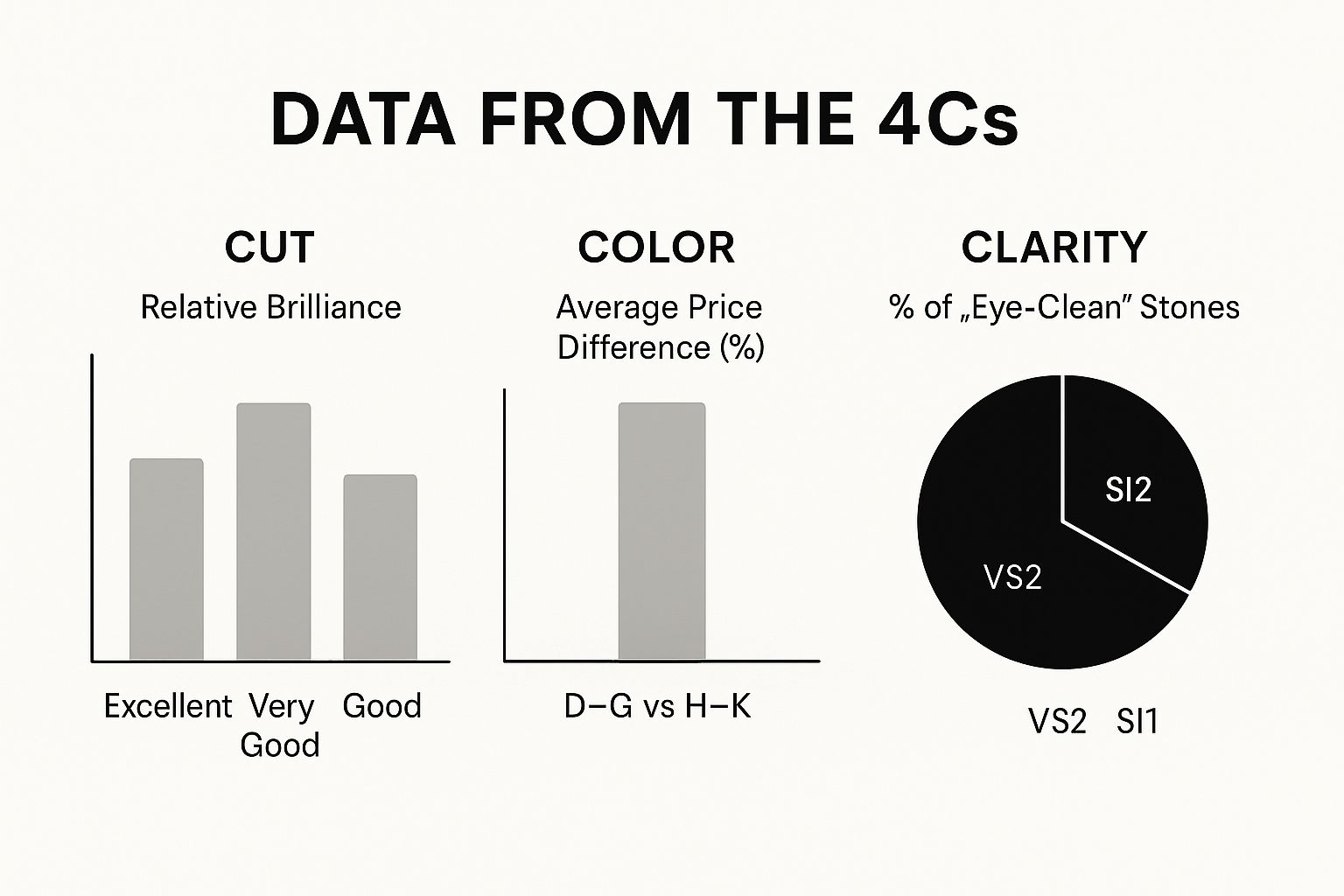
As you can see, locking in an 'Excellent' cut gives you a huge boost in brilliance. From there, you can play with the other Cs—like dropping to an H or I color—to find some major savings with almost no visible trade-off.
To make this easier, here’s a quick-reference guide to help you decide where your money is best spent.
| The 'C' | What It Measures | Impact on Appearance | Smart Budgeting Tip |
|---|---|---|---|
| Cut | The quality of a diamond's angles, proportions, and facets. | Highest. The #1 factor determining a diamond's brilliance and sparkle. | Never compromise here. Allocate a significant portion of your budget to an 'Excellent' or 'Very Good' cut grade for maximum sparkle. |
| Color | The absence of color, graded from D (colorless) to Z (light yellow). | Moderate. Most people can't see the difference between colorless and near-colorless grades once set. | Aim for the G-J range. These "near-colorless" diamonds look white to the naked eye and offer incredible value compared to D-F grades. |
| Clarity | The presence of tiny internal or external imperfections (inclusions/blemishes). | Low to Moderate. The goal is "eye-clean," not flawless. Most inclusions are microscopic. | Look for VS2 or SI1 grades. These are often eye-clean and cost significantly less than VVS or Flawless grades. Put the savings toward a better cut. |
| Carat | The diamond's weight, not its physical size. | High. Directly impacts the perceived size and presence of the ring. | Buy just shy of "magic sizes." A 0.95-carat costs much less than a 1.00-carat but looks virtually identical. This is a huge money-saver. |
This table should help you prioritize. Focus on what you can see (like Cut and Carat) and save on what you can't (like tiny differences in Color and Clarity).
Diamond color is graded on a D-to-Z scale, where D is totally colorless. While a D-grade diamond is the pinnacle of purity, you absolutely do not need to pay a premium for one to get a ring that looks stunningly white.
For most people, diamonds in the G to J range are the sweet spot. They're considered "near-colorless" and look perfectly white to the naked eye once they're set in a ring. A G-color diamond can be thousands less than a D-color one but look identical when you’re admiring it on her finger.
Pro Tip: Your choice of metal really matters here. Yellow or rose gold bands cast a warm glow, which can make even a K-color diamond look beautiful and intentional. If you're going for platinum or white gold, stick to the D-J range to keep that bright, icy look.
Clarity is all about imperfections—tiny internal marks called inclusions and surface flaws called blemishes. The scale runs from Flawless (FL), which is incredibly rare, down to Included (I), where flaws are pretty obvious.
Here’s the secret to winning on clarity: find an "eye-clean" diamond. This simply means there are no flaws visible to your naked, unaided eye. You can almost always find beautiful eye-clean diamonds in the VS2 (Very Slightly Included 2) and SI1 (Slightly Included 1) grades.
Choosing an eye-clean SI1 diamond over a VVS1 stone could literally save you thousands. That's money you can put toward a better cut or a bigger carat size—things that will make a much more noticeable difference.
Let’s clear this up: carat is a measure of a diamond's weight, not its size. A higher carat weight usually means a larger-looking diamond, but it's not the whole story. The stone's cut and shape play a huge role in how big it appears. A brilliantly cut 0.95-carat diamond can easily look larger than a sloppy 1.00-carat one.
This is where you can get really strategic. Diamond prices jump dramatically at what are known as "magic" sizes—think 1.00, 1.50, and 2.00 carats. By aiming for a diamond just under these thresholds (say, a 0.97-carat instead of a 1.00-carat), you can get a nearly identical look for a much lower price.
It's a smart move in a massive industry; the global diamond engagement ring market was recently valued at $82.89 billion and is only getting bigger. Knowing these little tricks helps you navigate that market like a pro. You can explore more about this growing market and its trends.
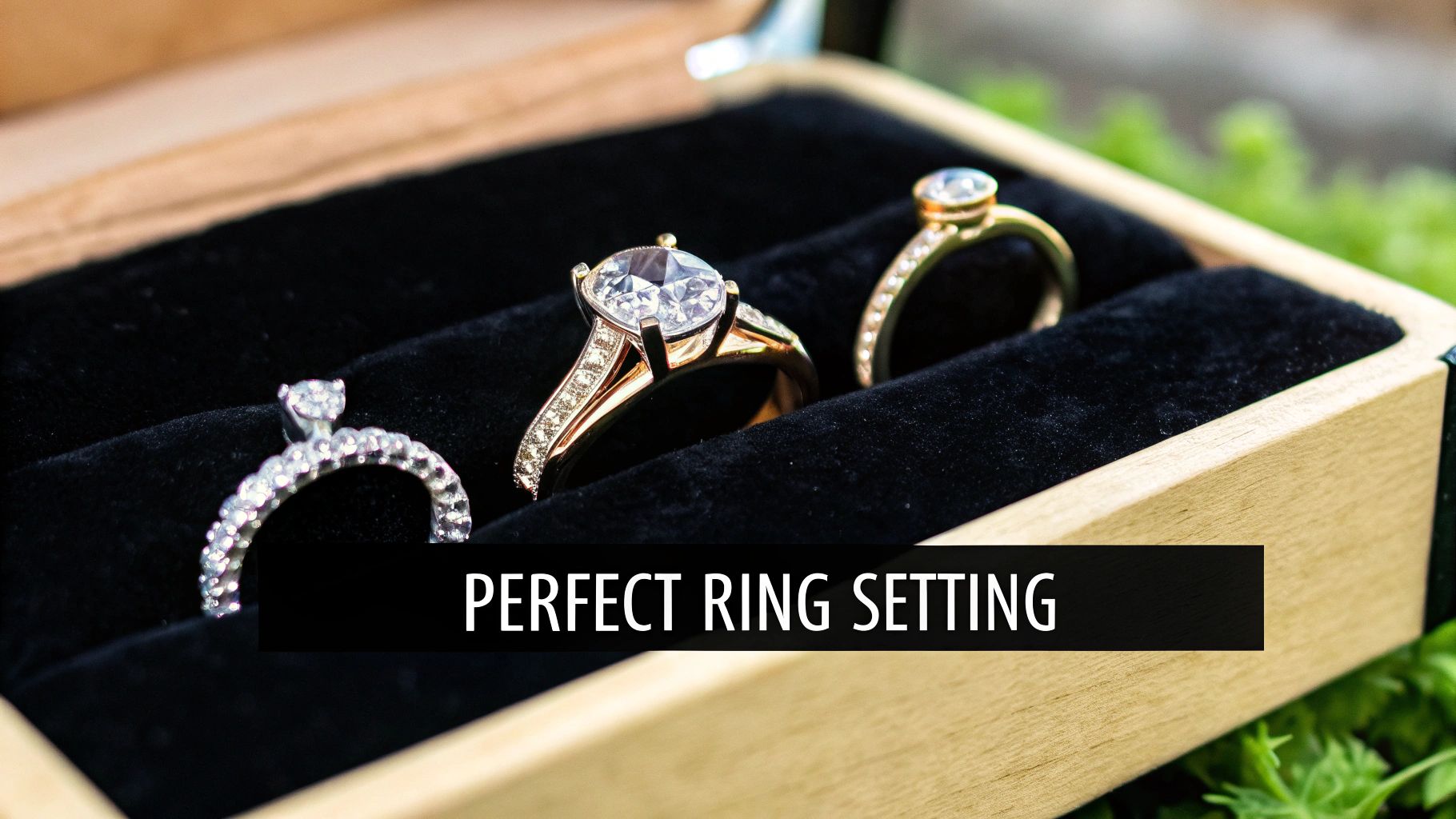
If the diamond is the star of the show, then the setting is the stage that lets it shine. The setting is the metal framework holding the diamond, but it does so much more than that—it completely defines the ring's personality and style. Think of it as the architecture that brings your entire vision to life.
This choice is just as personal as picking the diamond itself. It’s where you get to inject character, whether your partner dreams of timeless elegance, vintage romance, or something totally modern and glamorous. Let's walk through some of the most popular styles to help you find the perfect match.
Every setting tells a different story. Getting to know the unique vibe of each one is the key to choosing a ring that feels just right.
Ultimately, it all comes down to personal taste. A solitaire is for the person who appreciates understated beauty, while a halo is for someone who loves to make a glamorous statement.
The metal you pick for the band is the final piece of the puzzle. It sets the tone for the ring's overall color, how durable it is, and what kind of upkeep it will need. Each option has its own distinct character.
Let's break down the most popular choices.
| Metal | Appearance | Durability and Hardness | Maintenance Needs | Best For |
|---|---|---|---|---|
| Platinum | Naturally bright, cool white | Extremely durable and dense | Needs occasional polishing to maintain shine | The ultimate in luxury; hypoallergenic and perfect for active lifestyles |
| White Gold | Bright white, similar to platinum | Strong and durable, but slightly less dense than platinum | Rhodium plating needs to be reapplied every few years | A platinum look at a more accessible price point |
| Yellow Gold | Classic, warm yellow | Softer than platinum and white gold, scratches more easily | Regular polishing to keep its luster | A timeless, traditional look that makes diamonds pop |
| Rose Gold | Soft, romantic pink | Durability is similar to yellow gold; copper alloy adds strength | Generally low maintenance, deepens in color over time | A trendy yet vintage feel that complements all skin tones |
As you can see, there’s a perfect metal for every preference and lifestyle. From the tough, bright look of platinum to the warm, romantic vibe of rose gold, the band is what ties the whole design together.
Pro Tip: Your choice of metal can subtly influence how the diamond's color appears. A yellow gold band can make a diamond with a slight warm tint (like a J or K color) look intentional and beautiful, while platinum or white gold will highlight the icy whiteness of a colorless stone.
Making this decision means you're joining a massive market. The global jewelry industry was valued at $348 billion, and with trends showing over 30% of engagement ring sales now happening online, understanding these details is more important than ever.
Thinking about the complete look is essential. For those who love intricate details, you might find that some styles of handmade jewelry offer a unique and personal touch that mass-produced rings just can't replicate.
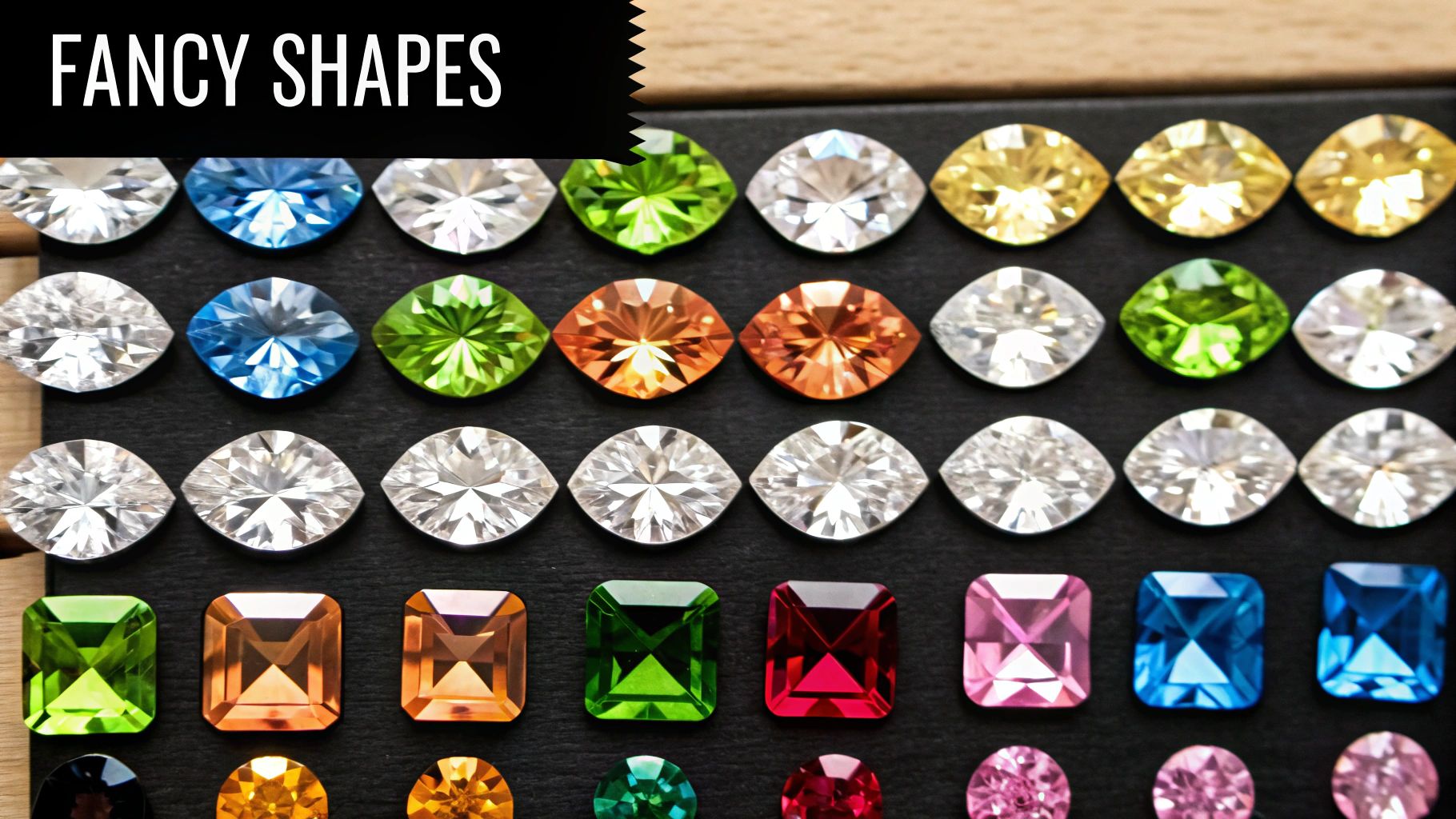
Sure, the classic round brilliant diamond is popular for a reason—it’s a timeless stunner. But it’s definitely not your only option. Diving into the world of "fancy" shapes is where the real fun begins, and it’s where you can find a stone that feels like it was made just for your partner.
These non-round shapes are packed with personality and can even be a savvy move for your budget. An oval or marquise cut, for instance, can look much larger than a round diamond of the exact same carat weight because of their elongated shapes. You get a bigger look without a bigger price tag.
Every diamond shape has its own vibe. Getting to know their unique personalities is the key to picking one that feels right for the person you love.
Choosing one of these shapes is a huge part of personalizing the ring. An oval might be perfect for someone with a timeless, graceful style, while a princess cut totally suits a more modern, edgy personality. It's all about matching the stone to the wearer.
Heads up: diamonds aren't the only game in town. More and more couples are opting for colored gemstones to create a ring that’s deeply personal and stands out from the crowd. These stones are not only beautiful but can also carry special meaning.
Some of the most-loved gemstone choices include:
Your choice of center stone sets the entire tone for the ring. A deep blue sapphire creates a regal, classic feel, while a soft pink morganite feels modern and romantic. Don't be afraid to step outside the diamond box to find something truly unique.
Okay, time for a big decision: a natural diamond from the earth or one grown in a lab? First things first, let's be clear: lab-grown diamonds are not fakes. They are chemically, physically, and optically identical to natural diamonds.
The only difference is where they came from.
The biggest draw for lab-grown diamonds is the price. You can expect them to be 30-50% less expensive than a natural diamond of the same quality. This gives you a choice: you can either save a good chunk of your budget or get a much larger, higher-quality stone for the same amount of money. The decision is a personal one, weighing tradition against budget and ethics.
You've done the hard part. You’ve waded through the 4Cs, pictured the perfect setting, and found a design that just feels right. Now, it's time to handle the final—but absolutely critical—details of the purchase. This is where you go from dreaming about the ring to actually making it happen, and you want to make sure every last detail is smooth, secure, and totally stress-free.
These last steps are all about asking the right questions and doing a little practical detective work. From figuring out the ring size without blowing the surprise to understanding the paperwork that protects your investment, getting this right gives you complete peace of mind.
Trying to figure out your partner's ring size on the down-low is a classic challenge, but it's not as hard as you might think. Your goal is just to get close; most jewelers offer one free resizing, so don't sweat it if you're a millimeter off.
A little pro tip: it's always better to guess a bit too big. Sizing a ring down is usually a much simpler job for a jeweler than sizing it up.
Here are a few clever ways to get the measurement:
A diamond grading report, often just called a certificate, is the single most important piece of paper you'll get. It's a completely unbiased assessment of the diamond's quality from a reputable gem lab. The Gemological Institute of America (GIA) is the gold standard here.
Think of the certificate as your diamond's official blueprint. It independently verifies the 4Cs—Cut, Color, Clarity, and Carat weight—that you spent so much time learning about. This report is your guarantee that you're getting exactly what you paid for. It's also essential for insurance and any future resale or upgrade.
A diamond without a GIA certificate (or one from another top-tier lab) is like buying a car without a title. It’s an immediate red flag. This document is your proof of quality and your ultimate protection as a buyer.
When you look at the report, find the clarity plot. It’s a little diagram that maps out all the diamond's internal characteristics, or inclusions. You can use it to make sure the diamond in front of you is the exact one described in the report.
You really have two main paths here: a traditional brick-and-mortar jeweler or a reputable online retailer. Each comes with its own set of perks.
Local Jewelers vs. Online Retailers
| Feature | Local Jeweler | Online Retailer |
|---|---|---|
| Experience | Highly personal, hands-on service. You can see, touch, and try on the ring. | A massive selection with advanced search tools and 360-degree videos. |
| Selection | Limited to what they have in stock, though custom work is often an option. | A much, much larger inventory of both diamonds and settings to browse. |
| Price | Generally higher because of overhead costs like rent and staff salaries. | Usually more competitive pricing because they have lower overhead. |
| Convenience | You get that instant gratification, but you have to make time for in-person visits. | Shop from your couch, anytime. The ring is shipped securely right to you. |
Okay, before you pull out your wallet, run through this quick checklist with the jeweler. Getting clear, simple answers to these questions will save you from any potential headaches down the road.
Once you have these answers, you can confidently make the final decision. This isn’t just another purchase; it’s one of the most meaningful investments you'll ever make.
Even after hours of research, a few nagging questions always seem to surface right before you're ready to make the purchase. It's totally normal. Getting these final details ironed out is the key to buying with 100% confidence.
We hear the same questions all the time from people in your exact position. Let's walk through them so you can feel completely at ease with your decision.
Hands down, the timeless solitaire setting on a slim, delicate band is still queen. It’s an absolute classic, especially with a stunning oval or brilliant round diamond. This look is all about showcasing that gorgeous center stone, and its elegance never goes out of style.
But we're also seeing a massive trend toward more personal, unique touches. "Hidden halos"—a little circle of diamonds tucked just beneath the main stone—are hugely popular for that secret bit of sparkle only the wearer can fully appreciate. Three-stone rings with different gem shapes are also a favorite for couples who want their ring to tell a story.
Ultimately, the best style isn’t what’s trending on social media; it’s the one that perfectly captures your partner’s personality.
Okay, let's put this one to bed for good. That old "three months' salary" rule is nothing more than an outdated marketing slogan. It's not a real financial guideline, and you should ignore it completely. The right amount to spend is whatever fits comfortably within your personal budget and financial goals.
The real value of an engagement ring is in the promise it symbolizes, not the price on the tag. Your smartest—and most romantic—move is to set a budget that doesn't cause you any financial stress.
You can find a beautiful, high-quality ring at almost any price point. The goal should be to get the absolute best quality for the money you've decided to spend. Focus on things like the diamond's cut, which makes a huge impact, rather than getting hung up on a specific number. You want to start your new life together on solid financial footing.
Yes. Absolutely, unequivocally, yes. This is a big one. Lab-grown diamonds are chemically, physically, and optically identical to diamonds that come from the earth. The only thing that separates them is their origin.
Because they’re created in a controlled lab setting, they often have a major price advantage, typically costing 30-50% less than a mined diamond of the exact same quality. This makes them a fantastic option for getting more for your money—think a larger stone or better clarity for the same price. Plus, many people love the appeal of their transparent, sustainable backstory.
First off, take a deep breath. This happens all the time, and any reputable jeweler is more than ready for it. Nearly every jeweler offers at least one complimentary resizing, usually within the first year after you buy the ring. It’s a standard part of the experience.
Here’s a pro tip: If you’re guessing, it’s always safer to buy a ring that’s a little too big rather than too small. It's a much simpler process for a jeweler to make a ring smaller than it is to make it larger. Just make sure to ask about their specific resizing policy before you buy, but know that it's a common and very fixable issue.
Once you’ve found the ring, the real fun begins! Get a jump on your next steps with this comprehensive wedding planning timeline.
At Jackpot Candles, we believe in creating moments of joy and surprise. While you plan your future, explore our collection of beautifully scented soy candles, each with a surprise piece of jewelry hidden inside. Discover your next treasure at https://www.jackpotcandles.com.
Comments will be approved before showing up.