
free shipping at $99


That frustrating dark film that creeps over your favorite jewelry? It isn't dirt. It's tarnish, and it’s a totally normal chemical reaction between the metal and elements in the air.
Once you get what’s actually happening, you'll find it’s much easier to clean your pieces the right way and even stop tarnish from forming in the first place.
At its core, tarnish is just a simple case of oxidation. When metals like silver and copper hang out with oxygen and sulfur in the air, a chemical reaction happens on the surface. This creates a thin layer of silver sulfide or copper sulfide, which is that dark stuff you see.
It's not a sign of cheap or bad-quality jewelry! In fact, it's a natural property of these beautiful metals.
Even high-end pieces aren't totally immune. Pure gold and platinum are champs and don't tarnish, but most jewelry you own is probably an alloy—a smart mix of metals designed for better strength and durability. Take sterling silver, for example. It's 92.5% silver and 7.5% other metals, usually copper. It's that little bit of copper that makes it vulnerable to tarnish.
It's helpful to know how different metals hold up. If you're curious about gold, you can learn more about whether gold jewelry tarnishes and see how various gold alloys react differently.
You might be surprised by the common things that can make your jewelry tarnish way faster. Just being aware of these can make a huge difference in how often you have to polish everything.
Here are the usual suspects:
The global jewelry market hit around $293 billion USD back in 2020, and a good chunk of that involves maintenance and cleaning. With about 70% of U.S. households owning silver jewelry, keeping it shiny is a common goal.
Knowing what causes tarnish helps you pick the right cleaning method, whether you're dealing with classic silver or trendy rose gold. If you're still figuring out your favorite metals, you can explore more about your personal jewelry style and how to best care for each one. Think of this knowledge as your first line of defense in keeping your collection sparkling.
You don’t always need to shell out for specialized products to get your jewelry sparkling again. Believe it or not, some of the best solutions are probably sitting in your kitchen pantry right now, offering a gentle, chemical-free way to fight tarnish. These at-home methods are perfect for bringing that original shine back to your favorite pieces.
Before you start cleaning, it helps to know what you're up against. Tarnish isn't just dirt; it's a chemical reaction. This visual guide breaks down the science behind why your cherished pieces can lose their luster over time.
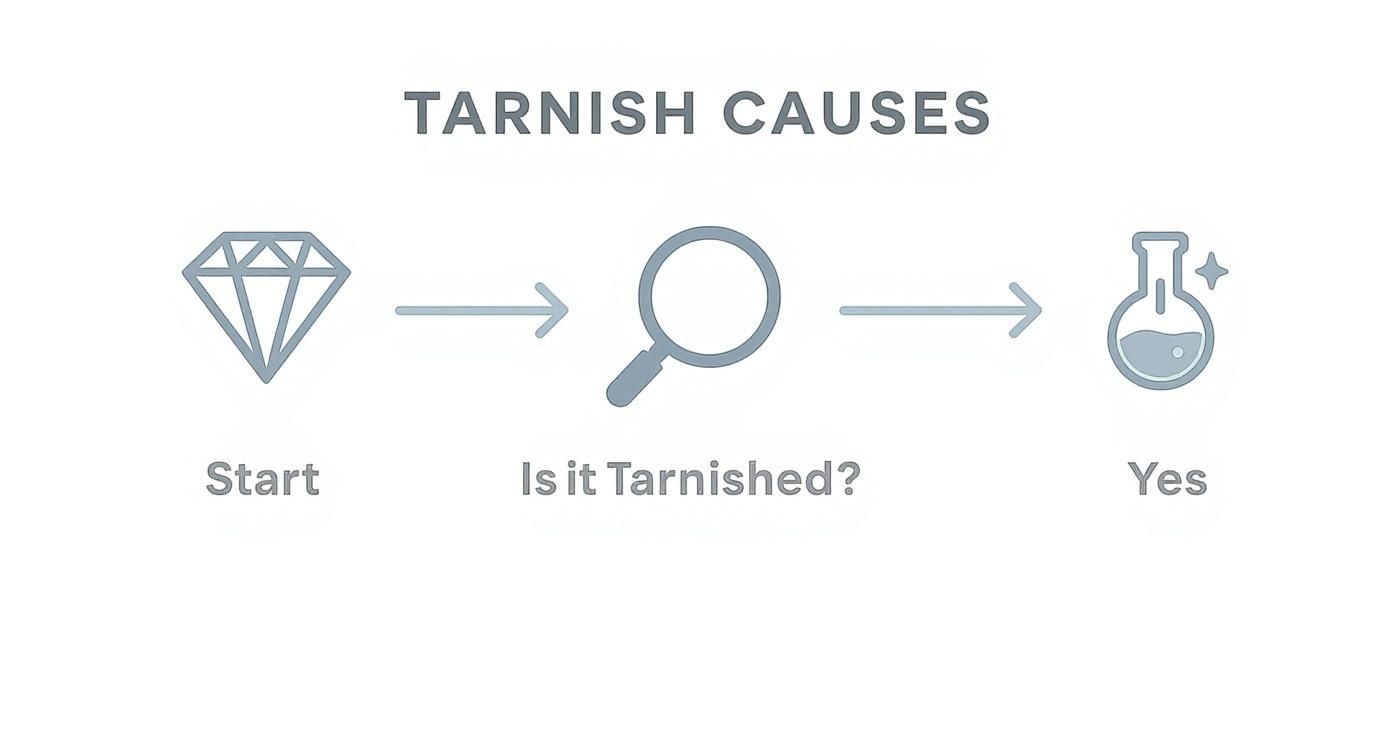
As you can see, understanding that tarnish is a chemical process is key to picking the right cleaning method that reverses the reaction without damaging your jewelry.
One of the most popular—and coolest—ways to clean sterling silver involves a bit of kitchen chemistry. This isn’t just a cleaning hack; it’s a gentle electrolytic process that actually lifts the tarnish right off without any harsh scrubbing.
Here’s what you’ll need to get started:
Just combine the baking soda and salt in your foil-lined bowl, then pour in the hot water and give it a stir. Pop your tarnished silver jewelry into the solution, making sure every piece is touching the aluminum foil. You’ll be amazed as you watch the tarnish literally disappear in minutes. This trick has been known to remove up to 90% of tarnish, leaving a beautifully polished finish.
Once the magic is done, use a pair of tongs to take the items out, give them a quick rinse under cool water, and pat them dry with a soft, lint-free cloth. For a more detailed walkthrough, you can check out our complete guide on how to clean sterling silver for that professional touch at home.
Important Note: This method is a game-changer for solid sterling silver, but you’ll want to skip it for jewelry with delicate, porous gemstones like turquoise, opals, or pearls. The heat and the solution can cause some serious damage to these softer stones.
Gold and platinum are tough cookies and don't tarnish like silver, but they can still get dull from everyday grime like skin oils and lotions. Luckily, getting them to shine again is incredibly simple.
A quick bath in warm water with a few drops of mild dish soap is usually all it takes. Let your gold or platinum pieces soak for about 15-20 minutes. This gives the soapy water enough time to work its magic and break down any buildup.
After a good soak, you can use a super soft-bristled baby toothbrush to gently scrub around settings and inside tiny crevices. Rinse everything thoroughly under warm running water to get all the soap off—any leftover film will just make it look dull again. Finally, dry it completely with a soft, clean cloth. If you’re working with different types of gold, it’s always a good idea to check out some expert tips for cleaning gold jewellery.
Sorting out which DIY method to use for which metal can be confusing. This table breaks down the safest and most effective homemade solutions for your most common jewelry types.
| Metal Type | Safe DIY Solution | Instructions | Materials to Avoid |
|---|---|---|---|
| Sterling Silver | Baking Soda & Aluminum Foil Bath | Soak in hot water with baking soda, salt, and foil for 5-10 minutes. Rinse and pat dry. | Harsh abrasives, toothpaste, chlorine bleach, polishing cloths with embedded stones. |
| Gold | Mild Dish Soap & Warm Water | Soak for 15-20 minutes, gently scrub with a soft toothbrush, rinse, and dry completely. | Chlorine, abrasive cleaners, ultrasonic cleaners (if stones are present). |
| Platinum | Mild Dish Soap & Warm Water | Same as gold: soak, gently scrub, rinse, and dry. Platinum is very durable. | Harsh chemicals are unnecessary and could harm any gemstones. |
| Fashion Jewelry | Damp Cloth with Mild Soap | Wipe gently with a damp cloth and a tiny drop of soap. Dry immediately and thoroughly. | Soaking in water, abrasive cleaners, harsh chemicals. Avoid getting plated items wet. |
Always remember that while these DIY methods are fantastic, they aren't one-size-fits-all. Take a moment to consider the materials—both the metal and any gemstones—before you start. A gentle, thoughtful approach is always the best way to keep your treasures looking beautiful for years to come.
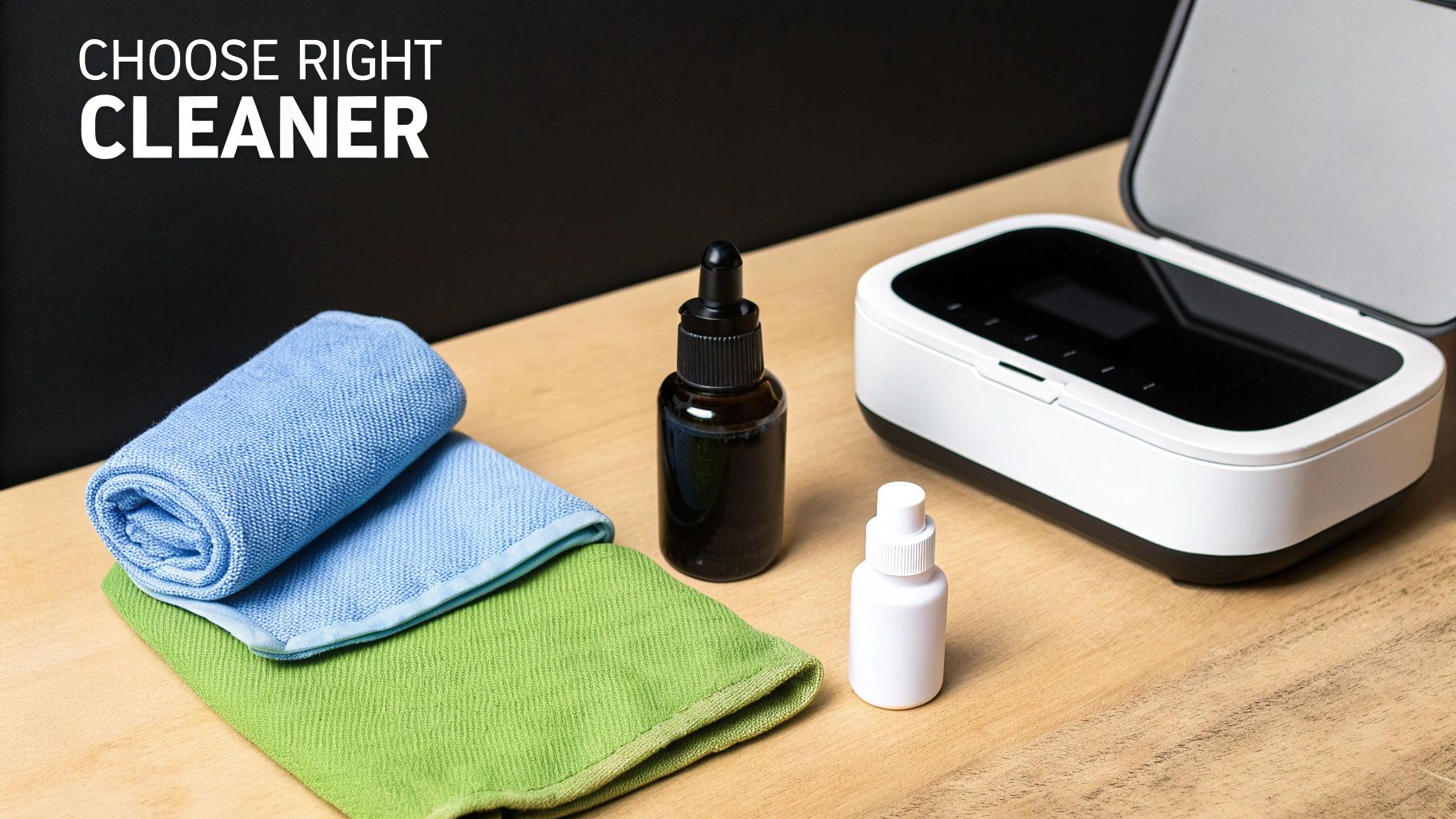
When a quick soap bath just won’t shift stubborn tarnish, it’s time to bring in the heavy hitters. Commercial polishing cloths, chemical dips, and ultrasonic cleaners each have their sweet spot—and over the years I’ve learned when to reach for which.
A polishing cloth embedded with micro-abrasives and a protective wax layer is perfect for light tarnish on rings and flat bracelets. You’ll see a noticeable shine in seconds—no water required. On the flip side, those tiny settings and filigree designs stay out of reach.
When metal looks years old, a chemical dip can wake it right up. A quick 10–30 second dunk, followed by a thorough rinse, usually does the trick. Just watch out: acids in the dip can leach into porous gems like amber, turquoise or opal.
"Chemical dips deliver professional-grade shine but require caution with delicate stones."
Ultrasonic cleaners send high-frequency waves through a water-based solution to loosen grime in every nook. First seen in the mid-20th century, by 2020 over 80% of jewelers in major markets were using them for non-abrasive, detailed cleaning. Learn more about jewelry cleaning history on Wikipedia.
Ultrasonic units excel with:
However, stay away from pearls, emeralds or any glued-together pieces. Always follow your machine’s guidelines on cycle times and solution strength.
Key Takeaway: Confirm gemstone compatibility before starting an ultrasonic cycle.
| Product Type | Tarnish Level | Gemstone Safety | Effort Required |
|---|---|---|---|
| Polishing Cloth | Light | Solid metals only | Low |
| Chemical Dip | Moderate to heavy | Avoid porous stones | Medium |
| Ultrasonic Cleaner | Heavy and detailed | Check stone compatibility | High (equipment) |
Pro Tip: Always test a new cleaner on a hidden spot before tackling your favorite piece.
A quick swipe with an anti-tarnish cloth between deep cleans can stretch out the time between heavy treatments. With the right commercial products in your toolkit, stubborn tarnish on bracelets, necklaces, or rings doesn’t stand a chance.
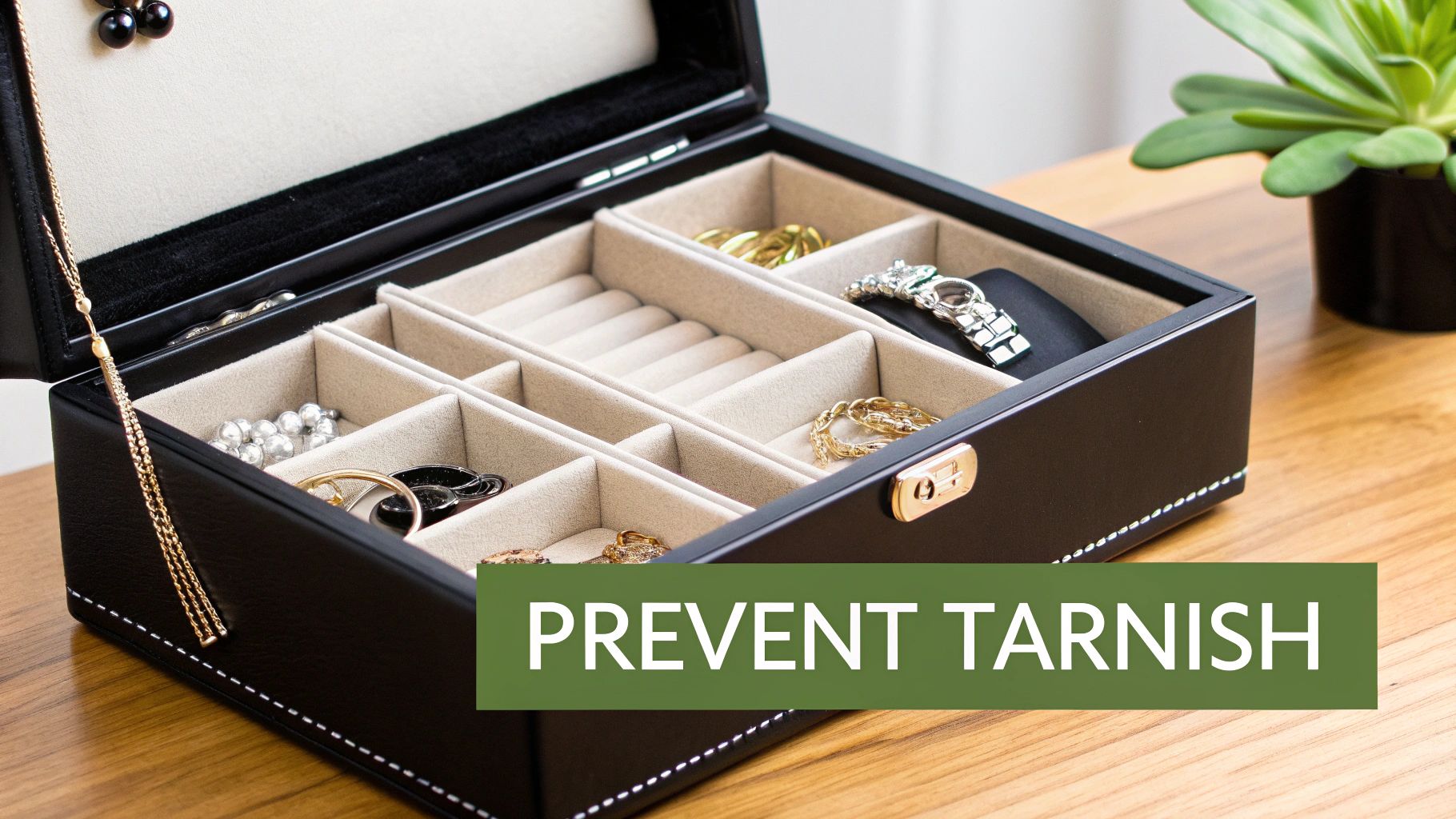
Honestly, the best way to deal with tarnish is to stop it from ever showing up. While you can't completely halt the natural process of oxidation, you can definitely slow it way, way down with a few simple habits. This means less time scrubbing and more time actually wearing and loving your favorite pieces.
The easiest way to start is to think of your jewelry as the final touch to your outfit. That one little mental shift can make a huge difference.
If you only remember one thing about jewelry care, make it this: your jewelry should be the last thing you put on before you head out the door, and the first thing you take off when you get home. It’s a golden rule for a reason! Following this simple order keeps your pieces away from all the chemicals that love to cause tarnish.
Just think about your morning routine. Hairspray, perfume, lotions, makeup—they all contain ingredients that can react with the metals in your jewelry. Putting your pieces on after all those products have had a chance to set creates a buffer.
Same logic applies at the end of the day. Taking your jewelry off first means it won't get coated in makeup remover or face wash. Plus, you’ll never have that heart-stopping moment when a favorite necklace gets snagged on your sweater as you're pulling it off.
It’s the small, consistent things you do every day that have the biggest impact over the long haul. Weaving these little habits into your routine will keep your collection looking brand new and cut down on how often you need to do a deep clean.
Pro Tip: I keep a small jewelry dish on my nightstand and another by the kitchen sink. It gives me a safe, consistent spot to put my rings and bracelets so they don't get lost, knocked into the sink, or accidentally soaked in chemicals.
How you store your jewelry when you're not wearing it is just as crucial as how you wear it. The main enemies here are oxygen and humidity. Your goal is to keep your pieces away from both.
That pretty jewelry tree you have on your dresser might look great, but it leaves everything exposed to the air. The best place for your jewelry is somewhere cool, dark, and dry. A fabric-lined jewelry box with separate little compartments is perfect because it also stops pieces from bumping into and scratching each other.
If you want to take your storage to the next level, especially for your good sterling silver, here are a couple of my favorite tricks:
While DIY methods are fantastic for routine upkeep, some situations really do demand a professional’s touch. Knowing when to put down the polishing cloth and head to a jeweler can be the difference between a beautifully restored treasure and a costly, heartbreaking mistake.
Think of it this way: certain pieces are just too precious or delicate to risk. If you’re dealing with an irreplaceable antique, a beloved family heirloom, or jewelry with extremely fragile settings, a professional cleaning is the only way to go. These items often have unique alloys or construction methods that just don't play well with common at-home solutions.
Some materials are especially sensitive and can be easily damaged by the chemicals or even the water temperature used in DIY cleaning. You should always seek expert help for pieces featuring:
A professional jeweler doesn't just clean your pieces; they inspect them. They'll spot a loose prong or a weak clasp that you might miss, preventing a potential loss down the road.
If you aren't sure about your jewelry's value or what it's made of, seeking out local jewelry appraisal services can give you the clarity you need to make smart decisions about its care.
So, what makes a professional cleaning so different? Jewelers have access to specialized equipment that provides a deeper, safer clean than anything you can achieve at home.
For instance, they use high-powered steam cleaners that blast away grime from the tiniest crevices with pressurized steam—a method that's completely safe for durable stones like diamonds.
They also have professional-grade polishing wheels and compounds that can remove deep scratches and severe tarnish, restoring that perfect mirror-like finish without damaging the metal. This level of restoration is simply not possible with a polishing cloth. For severe, blackened tarnish that has set in over years, a jeweler's expertise is the safest and most effective route to bringing your cherished item back to life.
Even when you have all the right methods, a few questions always seem to pop up once you get started. Getting the real answers can save you from making a costly mistake and give you the confidence to tackle anything from your everyday wedding band to that special necklace you only break out once a year.
Let's dive into some of the most common things people ask.
You've probably heard this one before: use a little toothpaste to scrub your silver. While it sounds like a clever shortcut, it's one of the most persistent myths out there. Most toothpastes get their cleaning power from mild abrasives, like silica.
These tiny, gritty particles can leave thousands of microscopic scratches on soft metals like silver. Over time, this actually dulls the finish and can even harm delicate gemstones set in the piece. It's much better to stick with things that won't scratch, like a soft polishing cloth or that gentle baking soda and aluminum foil bath we talked about earlier.
This really comes down to how much you wear a piece. If it's something you wear every single day, like an engagement ring or your favorite chain, a quick, light cleaning once a week is a great habit. This simple step keeps lotion, skin oils, and daily grime from building up.
All you need is a little bath of warm water with a few drops of mild dish soap. For a more serious cleaning to bring back that sparkle and check for loose stones, a deeper clean every six months or so is a good goal.
Pro Tip: A little bit of prevention goes a long way. Consistent, gentle cleanings are way more effective than a harsh scrub down the road. Wiping down your jewelry after you take it off can make a huge difference in how often you need to do a deep clean.
This one is a biggie, and getting it wrong can ruin a piece. You absolutely cannot clean gold-plated jewelry the same way you clean solid gold. It's a critical difference. Gold plating is just a super-thin layer of gold applied over a different base metal, and that thin layer can be rubbed right off with harsh chemicals or too much scrubbing.
For anything gold-plated, forget about intense scrubbing or chemical dips. The safest way is to gently wipe the surface with a soft, lint-free cloth that's just slightly damp with some mild, soapy water. Follow up with a cloth dampened with plain water to rinse, and then pat it completely dry right away to avoid water spots.
How you store your jewelry is your number one defense against tarnish. The goal is simple: keep your pieces away from air and humidity, which are the main things that cause oxidation.
Here are a few easy habits to get into:
Ready to find your next favorite piece? With Jackpot Candles, the fun is in the discovery. Each beautifully scented, soy-blend candle has a surprise piece of jewelry hidden inside, just waiting for you. Experience the thrill at https://www.jackpotcandles.com.
Comments will be approved before showing up.