
free shipping at $99


Learning how to layer necklaces is all about creating a balanced look with different lengths, textures, and a clear focal point. The easiest way to get started is by picking out three necklaces: a short base chain, a mid-length piece with some texture, and a longer pendant necklace to anchor the whole look. This simple approach keeps your chains from getting tangled and instantly elevates a basic outfit into a thoughtfully styled statement.
Layering necklaces is more than just wearing jewelry; it's a way to tell your own story. This styling trick has become a huge part of modern fashion, and for good reason. Its real magic is in its versatility—you can go minimalist and delicate for an everyday look or bold and intricate for a special occasion.
It’s no surprise the global layered necklace market, once valued at $3.8 billion, is expected to skyrocket to $7.2 billion by 2033. This style is here to stay.
To get that effortless, chic vibe, you have to understand the core principles. Think of it less like just throwing on a few chains and more like intentionally building a look from the ground up.
A fantastic starting point for anyone new to layering is what I call the "Rule of Three." It's not a strict law, but it's a super helpful framework for creating balance and making your stack visually interesting. It’s all about selecting three distinct pieces that play well together.
This visual flow chart breaks down the simple three-step process for building a balanced stack.
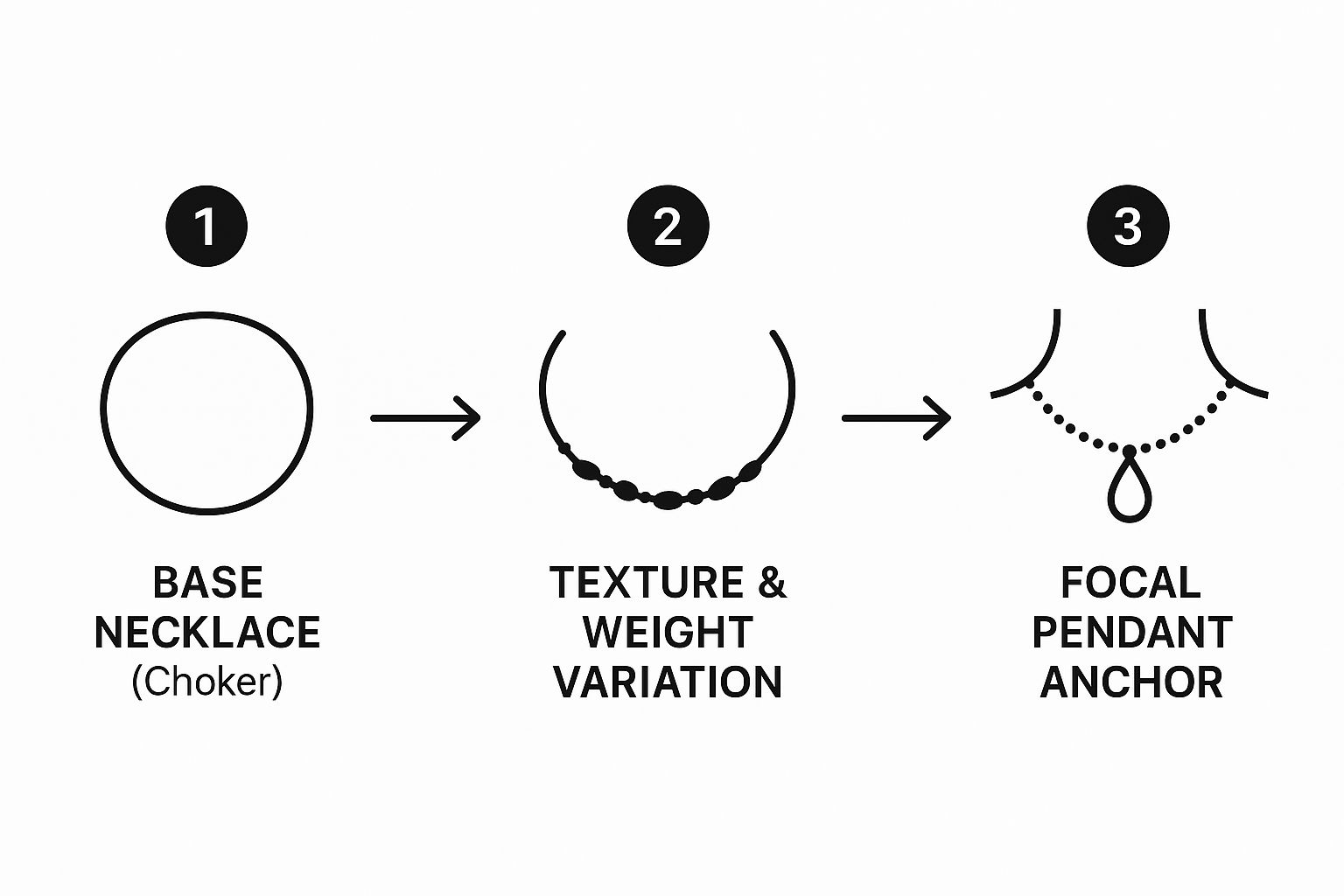
As you can see, starting with a high base, adding that mid-length texture, and finishing with a low anchor creates a stack that looks polished and put-together.
To make sure your layered looks are always on point, it’s a great idea to keep up with the top accessory trends for 2025.
To really nail your necklace game, it helps to keep three core principles in mind. I've broken them down here to make it super simple.
| Principle | What It Means | Quick Tip |
|---|---|---|
| Varying Lengths | Choose necklaces with at least a 2-inch difference in length to prevent tangling and create a cascading effect. | Start with a 16", then add an 18", and finish with a 20" or longer chain. |
| Mixing Textures | Combine different chain styles (e.g., snake, rope, figaro) to add depth and visual interest to your stack. | Pair a delicate, simple chain with a chunkier, more detailed one. |
| Creating a Focal Point | Select one piece, usually the longest, to be the "hero" of the stack. A pendant or charm works perfectly. | Let your pendant necklace anchor the look and draw the eye downward. |
Thinking about these three elements—length, texture, and a focal point—will help you move beyond just wearing necklaces to truly styling them.
Getting the lengths and spacing just right is the real secret behind a layered necklace stack that looks totally put-together, not like you just threw a few chains on. Think of it like creating a visual waterfall down your neckline—each piece needs its own moment to shine, creating a beautiful cascade that draws the eye.
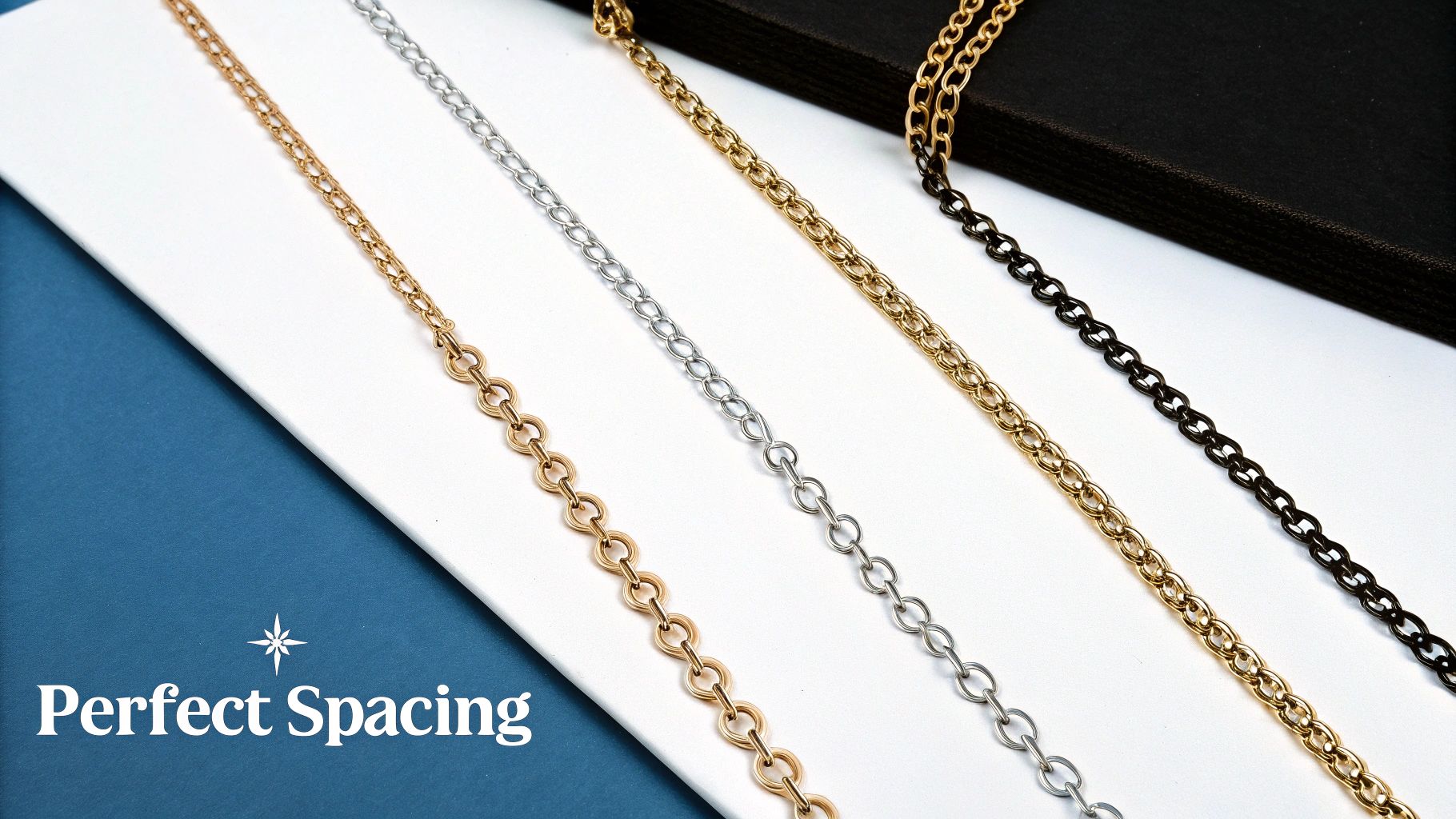
Here's the golden rule I always follow: keep about one to two inches of separation between each necklace. It might not seem like a lot, but this little gap makes all the difference. It’s what stops your beautiful chains from tangling into a frustrating knot with every move you make.
When necklaces are too close in length, they’re practically guaranteed to overlap and intertwine.
For a classic, can't-go-wrong look, I love stacking a 16", 18", and 20" chain. This trio creates a tight, cohesive style that sits perfectly over a simple t-shirt or a cozy crew neck sweater.
Getting familiar with the standard sizes is the first step to becoming a layering pro. Each length sits differently on the body and really pops with certain necklines.
14-Inch (Choker): This style hugs the base of your throat, making it the perfect top layer to anchor your stack. It looks amazing peeking out from under the collar of a button-down shirt.
16-Inch (Collar): A super popular starting point, this chain usually rests right on your collarbone. It’s so versatile and can work as either your shortest or middle layer, depending on your vibe.
18-Inch (Princess): This is probably the most common necklace length you'll find, falling just a bit below the collarbone. It’s the ideal spot to showcase a small, delicate charm or pendant.
20-24 Inch (Matinee): These longer chains are fantastic for drawing the eye downward and creating an elegant, elongating effect. They’re my go-to for holding a larger pendant or acting as the dramatic finale to a stack, especially with V-neck or scoop-neck tops.
If you’re feeling a bit more adventurous, try pairing a 14” choker with a 20” chain and finishing it off with a long, dangling 24” lariat. This creates a much bolder statement with more breathing room between the pieces, which is perfect for drawing attention to a plunging neckline.
The most important thing is to keep the spacing consistent. Whether you choose a tight two-inch gap between each layer or a more dramatic four-inch gap, keeping that distance uniform is what creates that polished, intentional look we’re all after.
You absolutely don't need to go out and buy a whole new set of necklaces to start layering. A necklace extender is a total lifesaver!
This affordable little tool can instantly add one to three inches to any chain you already own. It’s a brilliant way to adapt the pieces you love, giving you the freedom to create that perfect spacing with any combination you can dream up.
Once you master these lengths and spacing tricks, you have complete creative control over your look. For some ideas and inspiration, explore our collection of versatile necklaces—they’re designed for effortless stacking
Let's just say it: the old rule about sticking to one metal is officially over. The modern way to layer necklaces is all about confidently mixing it up. Combining different metals and textures is the secret to creating a stack that looks personal, curated, and seriously high-end.
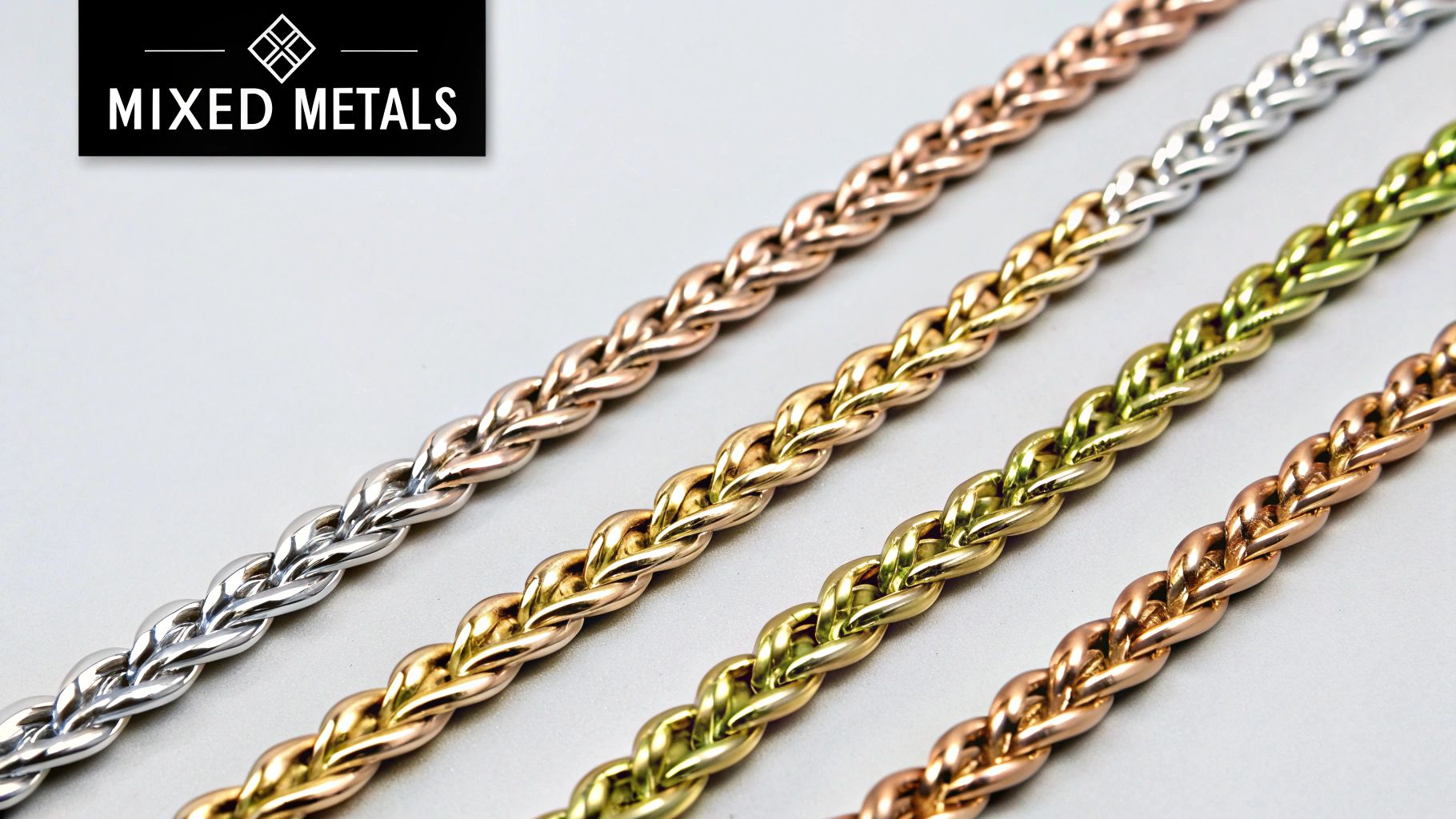
The trick to making a mixed-metal look work is to be intentional about it. You want it to look like a thoughtful style choice, not like you got dressed in the dark. You can pull gold, silver, and even rose gold together harmoniously by finding a common thread that ties everything together.
Think of it as creating a "bridge." This could be a single necklace that already has two different tones in its design, or you could simply repeat one metal across two separate chains. This deliberate link makes the entire stack feel cohesive and stylish.
If you're just dipping your toes into mixing metals, start small. Pick one dominant metal and use the other as an accent. For instance, start with two of your favorite yellow gold chains and then slide a delicate silver piece right in the middle. It creates a pop of contrast that’s interesting without being overwhelming.
Another can't-miss strategy is to stick with a classic pairing. Here are a couple of combinations that are basically foolproof:
Jewelry is a massive form of self-expression, and the market reflects that. It's a $50.03 billion industry globally, projected to soar to $75.85 billion by 2032. That's a lot of necklaces! You can dive deeper into the global necklace market trends if you're curious.
My go-to rule of thumb? If you’re stacking three necklaces, make two of them the same metal. This simple 2:1 ratio keeps your stack feeling balanced and prevents the different metals from looking like they're fighting for attention.
Okay, beyond just the metals, playing with texture is what really takes your layering game to the next level. Combining different chain styles adds so much visual interest and personality. A stack where every chain is the same just tends to fall flat.
Imagine pairing a slinky, liquid-like herringbone chain with a more structured, open-link paperclip chain. The contrast between the smooth, sleek surface of one and the bold definition of the other is instantly captivating.
Don't be shy about experimenting with different surfaces! A beaded satellite chain adds a delicate, dotted texture that looks incredible next to a classic rope chain. When you mix textures like this, the different surfaces catch the light in unique ways, making your entire necklace stack way more dynamic and eye-catching. This is how you go from just wearing necklaces to truly styling them.
A truly fantastic layered look is so much more than just a few chains thrown together—it should tell a story. And the main characters in that story? Pendants and charms. These are what transform a simple stack into a statement that's deeply personal to you.
Think of them as the anchors that give your whole look a clear focal point and a bit of meaning.
Every well-thought-out stack needs a "hero" piece. This is the one necklace that really commands attention and grounds all the other layers. You get to decide where this hero lives. Putting it on your shortest chain draws the eye up toward your collarbone. Or, you can let it hang on your longest chain for a more dramatic, elongating vibe.
When you're playing with multiple pendants, the secret is to create balance, not competition.
A great way to do this is by mixing up their size and visual weight. For example, you could pair a tiny, delicate charm on a 16-inch chain with a bigger, more substantial medallion on a 22-inch chain. That contrast makes sure each piece gets its own moment to shine without the whole look feeling cluttered.
This is where you can really have fun and let your personality come through. Adding dainty initial pendant necklaces or other meaningful charms is a perfect way to build that personal narrative right into your jewelry stack.
The most compelling layered looks often feel like a curated collection of memories. By mixing a modern coin pendant with a vintage locket or a zodiac charm, you create a style that is uniquely and beautifully your own.
Once you’ve picked out your pendants, think about their shapes and how they’ll sit next to each other. A round coin pendant, for instance, looks amazing next to a vertical bar charm because the different silhouettes create a really dynamic look. An organic, freeform charm can also soften up a more structured, geometric pendant.
Here are a few ideas for styling your hero piece with different outfits:
Ultimately, the goal is to build a look that feels completely authentic to you. For a little more inspiration on pieces that tell a story, check out our guide to choosing beautiful handmade jewelry.
So, you've curated the perfect necklace stack, but something still feels... off. Chances are, it's not the jewelry; it's the canvas. Think of your neckline as the frame for your jewelry masterpiece. The real secret to learning how to layer necklaces like a pro is tailoring your stack to complement your outfit, making sure they work together instead of fighting for attention.
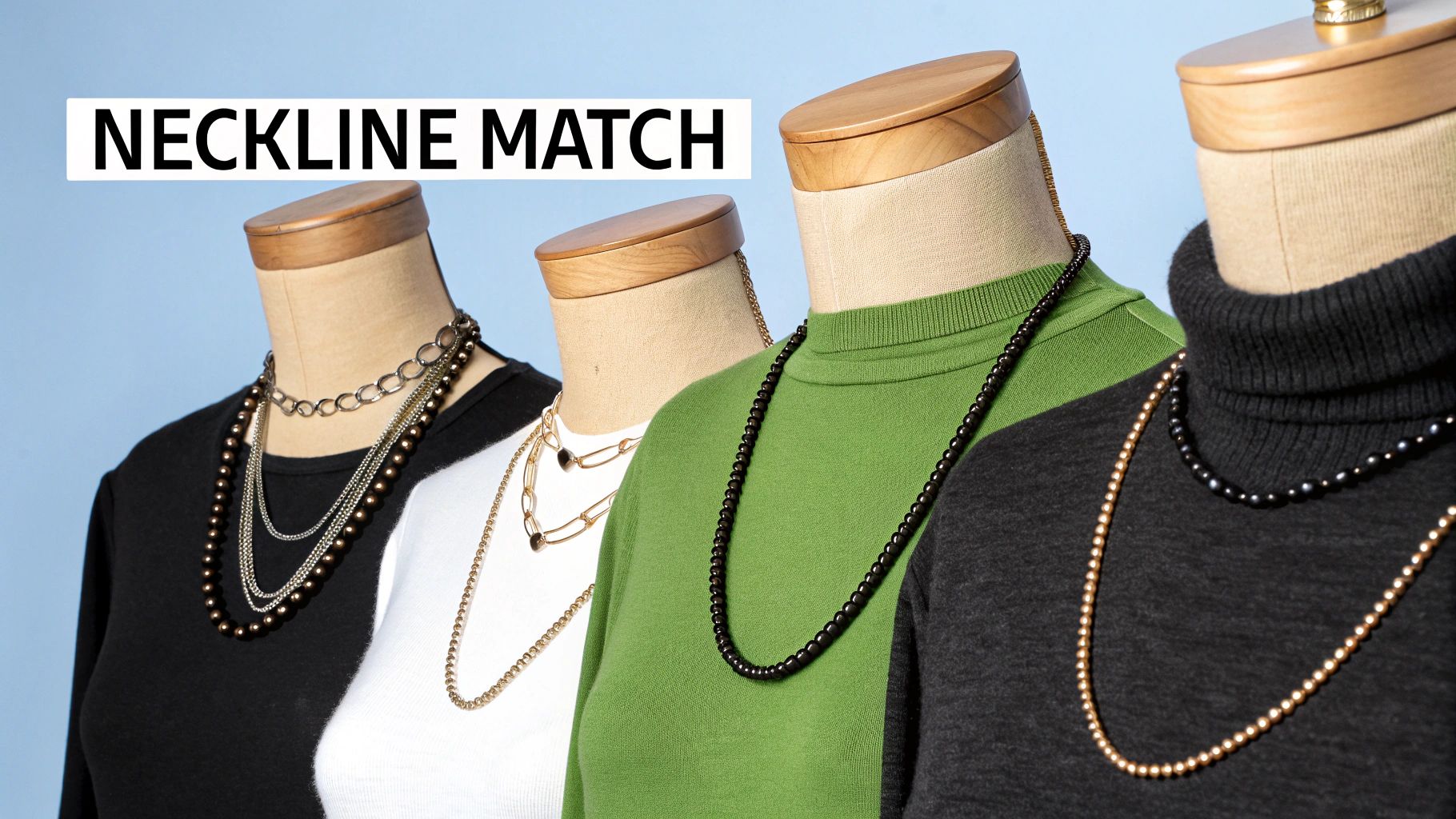
The shape of your top is the single biggest factor in deciding which necklace lengths and styles will look best. A deep V-neck, for instance, practically begs for a cascading stack. It creates this beautiful downward line, and letting your longest pendant follow that "V" just ties the whole look together. It's elegant and intentional.
On the other hand, a high crew neck acts as a solid backdrop. This is where your shorter layers get to shine. I love pairing a 14-inch choker with a delicate 16-inch chain here. They sit beautifully right above the fabric, drawing everyone's eyes upward and framing your face perfectly.
Matching your layers doesn't have to feel like rocket science. Once you get a few simple guidelines down, you'll be able to confidently style your stacks for any top in your closet. It’s all about creating a sense of visual balance and letting both your outfit and your jewelry have their moment.
Here are some of my go-to pairings for popular necklines:
My number one rule? Let the jewelry live within the open space your neckline creates. Try to avoid letting your necklaces overlap with the fabric of your top. When they cross over, the whole look can feel cluttered and accidental.
Button-down shirts are my secret weapon for layering. They offer a couple of really unique styling opportunities.
For a classic, work-appropriate vibe, I'll unbutton the top two buttons and let a delicate, short stack peek out. It’s just a subtle hint of personality that feels really put-together.
But if I'm feeling a bit more fashion-forward, I’ll do the opposite. Try buttoning the shirt all the way up and wearing a shorter, bolder stack over the fabric. It acts almost like a statement collar. This trick works especially well with simple, solid-colored shirts where your jewelry can really take center stage.
Of course, even when you've got the basics down, you might run into a few little hiccups. We've all been there—the dreaded tangled chain disaster or just wondering if you can really mix that fancy piece from your grandma with a trendy one you just bought. It can feel a little frustrating, but trust me, every layering problem has a super simple fix.
Let's walk through some of the most common questions I hear and get you some clear, easy answers. You'll be troubleshooting like a pro in no time.
This is the big one, isn't it? It’s probably the number one frustration for anyone who loves layering. You spend all that time getting the perfect look, and an hour later, it’s a jumbled mess. Good news—preventing tangles is totally possible with a few smart tricks.
The best thing you can do is choose necklaces with different weights and textures. A really delicate, lightweight chain is just asking to get wrapped around a heavier, chunkier one. So, create some contrast! Try pairing a slinky snake chain with a beaded satellite chain. This gives each piece its own space and makes them way less likely to get tangled up.
Spacing is also a huge deal. Like we talked about, leaving at least an inch or two between each layer is a must. When chains are too close in length, they just slide and twist into each other as you move. Necklace extenders can be a lifesaver here, letting you adjust the lengths of pieces you already have.
If you want a truly foolproof fix, look into a necklace separator clasp. This little gadget is a game-changer. It has a few rings on one side for each of your necklaces and a single clasp on the other. It holds every chain perfectly in place, so tangles literally can't happen.
And don't forget about storage! Never, ever just throw your necklaces into a drawer together. Hang them up individually on a jewelry stand, or if you're traveling, use a jewelry roll with separate spots for each one. A little bit of care makes a world of difference.
Absolutely! You should. This "high-low" style is what modern fashion is all about. It lets you build a full, interesting look that feels totally you, without needing a jewelry box full of solid gold. The trick is just to make it all look cohesive and intentional.
Try your best to match the metal tones. For example, if you're layering a 14k gold family heirloom with a gold-plated chain, find a plated piece that has a similar warm, yellow color. If the undertones are way off, it can sometimes make the quality difference more obvious.
A great way to approach this is to make your fine jewelry the star of the show.
This way, your most special pieces get the attention they deserve, and you still get that trendy, multi-layered vibe. It’s all about smart balancing.
There really are no hard-and-fast fashion rules, but a general guideline can definitely help when you're just getting started. For a balanced, everyday style that looks chic without being over-the-top, three to four necklaces is usually the sweet spot. That's enough for each piece to stand out without cluttering up your neckline.
At the end of the day, it's all about what you feel comfortable in. If your stack feels too busy or heavy, it probably is. Trust your gut! Start with three, then add or take one away until it feels perfect for you and your outfit.
The short answer here is a big yes. I always recommend taking off all your necklaces before you go to sleep, shower, swim, or work out. Taking them off at night is the easiest way to keep them from tangling, snagging on your sheets, or even breaking while you toss and turn.
Keeping them dry is also key to making them last. Water, soap, shampoo, and especially chlorine can make metals tarnish and lose their sparkle—this is especially true for sterling silver and gold-plated jewelry. Over time, all that exposure can also create a dull film on the chains and stones. Making it a habit to protect your jewelry is a simple way to keep it beautiful for years. And of course, keeping your pieces clean is a must; if you need some tips, you can learn more about how to clean sterling silver to keep it looking brand new.
Comments will be approved before showing up.