
free shipping at $99


Ever wondered why some scented candles seem to disappear in a flash, while others grace your home with their presence for weeks on end? It’s not magic, and it’s not just about the size of the jar. The secret lies in a fascinating blend of science and expert craftsmanship.
A truly long-lasting scented candle is more than just wax and a wick; it's a carefully engineered system. When every piece of the puzzle fits perfectly, the result is a slow, even burn that fills your space with a beautiful, consistent fragrance from the first light to the very last drop of wax.
Think of a premium candle as a fragrance delivery system, meticulously designed for peak performance. The best ones are a result of careful choices where the wax, wick, fragrance, and vessel all work together in perfect harmony.
Understanding how these elements interact is the key to telling a fleeting candle from a truly exceptional one. When they’re all in sync, the candle burns cleanly and efficiently, releasing its scent beautifully without burning out too quickly.
So, what are these crucial components? Let's break down the four core elements that determine both how long your candle lasts and how well its fragrance fills a room—what we call the "scent throw."
The Wax: This is your candle's fuel. The type of wax, like a proprietary soy blend, dictates the melting point. Waxes with a lower melting point, such as soy, melt more slowly, which can seriously extend your candle's life compared to old-school paraffin.
The Fragrance Oil: You could call this the soul of the candle. The quality and concentration (or "fragrance load") of the oils are everything. High-end, perfume-grade oils create a much richer, more complex aroma that has real staying power.
The Wick: This is the engine that drives the whole operation. The wick's job is to pull melted wax up into the flame. If it's too big, it burns way too fast. Too small, and it'll "tunnel" straight down the middle, wasting all that precious wax on the sides. A perfectly sized cotton wick is crucial for that even, steady burn we're all after.
The Vessel: This is the foundation holding it all together. A candle's container isn't just for looks; its shape and size affect how heat spreads out. A well-designed vessel helps the wax melt evenly across the top, creating that perfect "melt pool" for a flawless burn.
This dedication to quality is why the home fragrance world is booming. The global scented candles market is set to grow from US$2.5 billion in 2026 to US$3.5 billion by 2033. It’s clear people are looking for high-quality products to create a wonderful ambiance at home.
To make things simple, here’s a quick rundown of what to look for. This table gives you an at-a-glance guide to how each component affects a candle's lifespan and scent.
| Component | Impact on Longevity | Impact on Scent |
|---|---|---|
| Wax Type | Slow-burning waxes like soy blends last longer. | Determines how effectively fragrance is released. |
| Fragrance Load | A higher load doesn't always mean a longer burn. | A higher concentration of quality oils creates a stronger scent throw. |
| Wick Quality | A properly sized wick ensures an even burn, preventing waste. | An efficient burn releases scent consistently. |
| Vessel Design | Promotes an even melt pool, maximizing wax use. | Helps distribute scented air as the wax melts. |
Ultimately, a candle that performs well is a candle where all these pieces work as a team.
Creating a candle that truly lasts is about striking that perfect balance. A high-grade soy wax won't do you much good with a cheap, flimsy wick, and the world's most luxurious fragrance oil is wasted if the wax can't release it properly. You can dive deeper into this fascinating process in our guide on candle science.
It's a bit like other aromatic traditions. For example, understanding how long incense sticks burn comes down to similar principles of material and construction. Once you get these basics down, you’ll be able to spot a superior candle from a mile away and know exactly how to make it last.
Think of a candle's wax as its fuel. Just like the type of wood you choose for a fire determines how long and bright it burns, the wax in a candle dictates its entire performance. Not all waxes are created equal, and knowing the difference is the first step to finding a genuinely long-lasting scented candle.
Many candles you'll find on the shelf use paraffin wax. You can think of it as fast-burning kindling. It’s cheap and holds fragrance well, but it burns up quickly and can leave behind a noticeable amount of soot. This means your candle experience might be intense, but it will also be short-lived.
On the other hand, premium waxes like soy are more like a dense, slow-burning hardwood log. They burn low and slow, giving you a steady, consistent flame that lasts so much longer.
Soy wax, which comes from soybean oil, is a renewable resource that has totally changed the candle game. Its biggest advantage is its lower melting point. This means it doesn't need as much heat to melt, leading to a slower, cooler burn that can extend a candle's life by up to 50% compared to a paraffin candle of the same size.
That cooler burn also does wonders for the fragrance. Instead of scorching the delicate fragrance oils with intense heat, a soy wax blend gently warms them up. This allows all the complex notes of a perfume-grade scent to drift into the air more evenly, creating a rich, immersive aroma that fills a room without ever feeling overpowering.
It's no secret that the quality of wax directly impacts the experience. Scented candles are a wellness staple for many people, with over 70% of consumers choosing them for their therapeutic benefits. This demand is driving major growth in the market, which is projected to jump from USD 11.52 billion in 2025 to USD 19.46 billion by 2033. While paraffin still has a big market share, the cleaner, slower burn of high-quality soy blends releases fragrance more efficiently, delivering that long-lasting stress relief everyone's looking for.
To see the difference clearly, let's break down the most common options. Each wax type offers a different balance of burn time, scent throw, and cleanliness, making the choice a crucial one for performance.
The diagram below shows how all the core components of a candle have to work together, with wax being the absolute foundation.
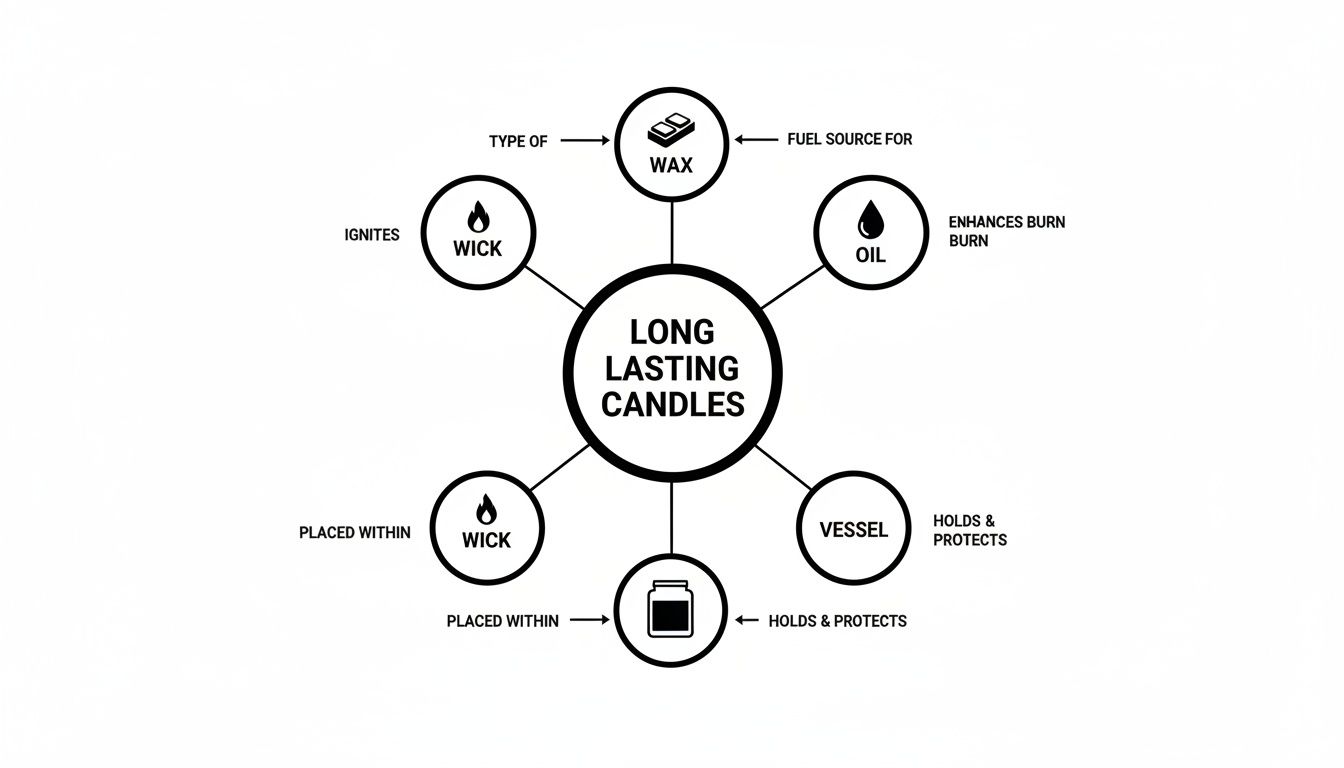
This visual really highlights how the wax, wick, fragrance oil, and vessel must be perfectly balanced to get that long-lasting, clean burn we all want.
A superior wax isn't just about burn time; it's about the quality of the entire experience. It ensures the fragrance you paid for is released beautifully from the first light to the last, without any interference from smoke or soot.
Ultimately, choosing a candle made with a high-quality soy wax blend is an investment in a better, longer-lasting scent experience. It provides a clean foundation that lets the wick and fragrance oils do their jobs perfectly. If you're curious to dive deeper into different wax options, check out our guide on finding the best wax for scented candles.
While the wax is the fuel for your candle, the wick and fragrance oil are the true conductors of the show. They’re a dynamic duo, working together to turn solid wax into that beautiful, flickering flame and captivating aroma we all love. Getting this partnership just right is the secret to creating a genuinely long lasting scented candle.
Think of the wick as the candle's engine. Its whole job is to pull the melted wax up to the flame through a process called capillary action. If that engine isn't tuned perfectly, the whole system sputters out. A wick that’s too beefy will create a massive flame, burning through wax way too fast and leaving behind ugly smoke and soot.
On the flip side, a wick that’s too skinny can't draw up enough fuel. This starves the flame, causing it to burn a narrow hole right down the middle of the candle. We’ve all seen it—that frustrating issue known as tunneling. It wastes all that precious wax stuck to the sides of the jar and drastically cuts your candle's life short.
Choosing the right wick is more of an art than a science, and it’s something expert candlemakers obsess over. The wick has to be perfectly matched to the specific wax, the fragrance, and even the diameter of the jar to get that clean, even burn.
Wick Material: You want to see wicks made from braided cotton or a cotton-paper blend. These burn cleanly and consistently, unlike cheaper versions that can have nasty metals or other impurities hidden inside.
Wick Thickness: The main thing that decides wick size is the width of the candle jar. A wider jar needs a thicker wick—or sometimes two or three wicks—to generate enough heat to melt the wax all the way out to the edges.
Perfect Placement: A perfectly centered wick is absolutely non-negotiable. If it’s even a little off-center, one side will melt faster, leading to a lopsided burn and a whole lot of wasted wax.
If the wick is the engine, then the fragrance oil is the soul of the candle. It's what turns a simple light into an experience that can transport you somewhere else entirely. But here’s the thing: not all fragrance oils are created equal, and their quality has a huge impact on both the scent itself and how the candle performs.
You might hear the term "fragrance load," which is just the percentage of fragrance oil mixed into the wax. It sounds like more would be better, but there’s a sweet spot. Overload the wax with too much oil, and you can actually clog the wick and smother the flame.
The real magic is in the quality of the oils. Standard synthetic scents can smell flat and fade in minutes. Premium, perfume-grade fragrances, on the other hand, are complex blends of top, middle, and base notes that bloom and evolve as the candle burns.
High-quality fragrance oils are designed to bond with the wax on a molecular level. This deep connection ensures the scent is released smoothly and evenly as the wax melts, instead of being scorched off by a hot flame.
This is exactly why a beautifully crafted candle from Jackpot Candles, made with a proprietary soy blend and exquisite oils, can fill a room with a rich, lasting scent that never feels overpowering. The soy wax melts at a lower temperature, gently warming these complex oils and letting their true character shine through. If you're curious about what goes into creating these amazing scents, our article on high-quality candle fragrance oils is a great place to start.
Ultimately, the dance between the wick and the oil is what separates a so-so candle from a spectacular one. A perfectly chosen wick makes sure every bit of wax is used efficiently, maximizing burn time. At the same time, that steady, clean burn provides the perfect stage for high-quality fragrances to work their magic, creating an aromatic journey that lasts.
Getting your hands on a premium candle is only half the battle. Knowing how to burn it properly is what really separates a good experience from a truly great one. With just a few simple habits, you have the power to dramatically extend your candle's life and make its scent throw even more incredible.
These little maintenance tips are just as crucial as the quality of the wax or wick. By mastering them, you'll make sure every candle you own performs at its absolute best, giving you hours of beautiful fragrance and preventing common problems that waste both wax and money. Let's get into the essentials for a perfect burn, every single time.
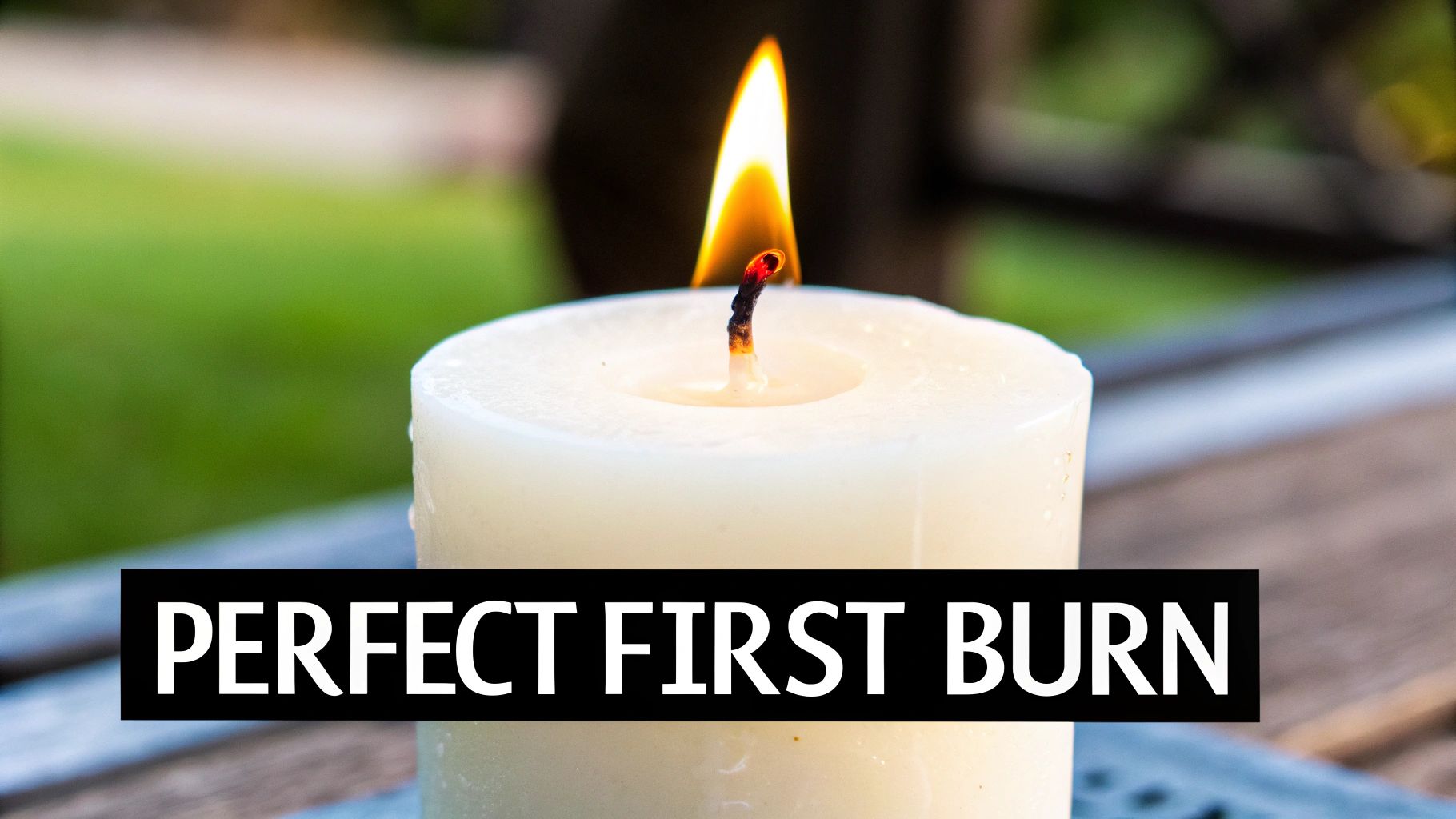
That very first time you light up a new candle? It's the most important burn it will ever have. This initial session creates the "burn memory" for the rest of the candle's life. Getting it right is the secret to preventing that dreaded tunneling for good.
Think of it like laying the foundation for a house—if it's not perfectly even, the whole structure will be off. The goal here is to let the wax melt all the way across the entire surface, from the wick right to the edge of the jar, creating a full, even melt pool.
This can take a little patience, usually about one hour for every inch of the candle's diameter. For a standard 3-inch candle, you'll want to plan for a solid 3 to 4-hour burn. Rushing this step is the number one reason tunneling happens, leaving you with that frustrating ring of wasted wax along the sides.
Before you light your candle—every single time after that first burn—trimming the wick is absolutely non-negotiable. A long, untrimmed wick can cause a whole host of problems that shorten your candle’s life and ruin its performance.
Imagine the wick is like a plant that needs regular pruning to stay healthy. When it gets too long, it creates a big, flickering flame that burns way too hot. This makes the candle burn through its wax too fast, produces ugly black soot, and can even be a fire hazard.
For a clean, steady burn, just follow these simple steps:
This quick two-second habit makes a massive difference in achieving that perfect long lasting scented candle experience.
"A trimmed wick creates a calmer, more stable flame. This not only prevents soot but also allows the wax to melt at a slower, more even rate, which is essential for maximizing both burn time and fragrance release."
To get the absolute most out of your candle, always try to keep your burn sessions to no more than four hours at a time. This "four-hour rule" is a golden standard among candle lovers for both safety and performance.
Burning a candle for much longer can cause the container to get dangerously hot and the wick to mushroom, leading to a larger, less stable flame. Once you hit that four-hour mark, it’s best to extinguish the flame properly. Using a snuffer or dipping the wick into the wax pool is way better than blowing it out—this trick prevents smoke and keeps the scent pure for next time.
Let the candle cool down completely before you trim the wick and light it again. This simple rhythm of burning, cooling, and trimming will keep your candle in perfect shape from its first light to its very last.
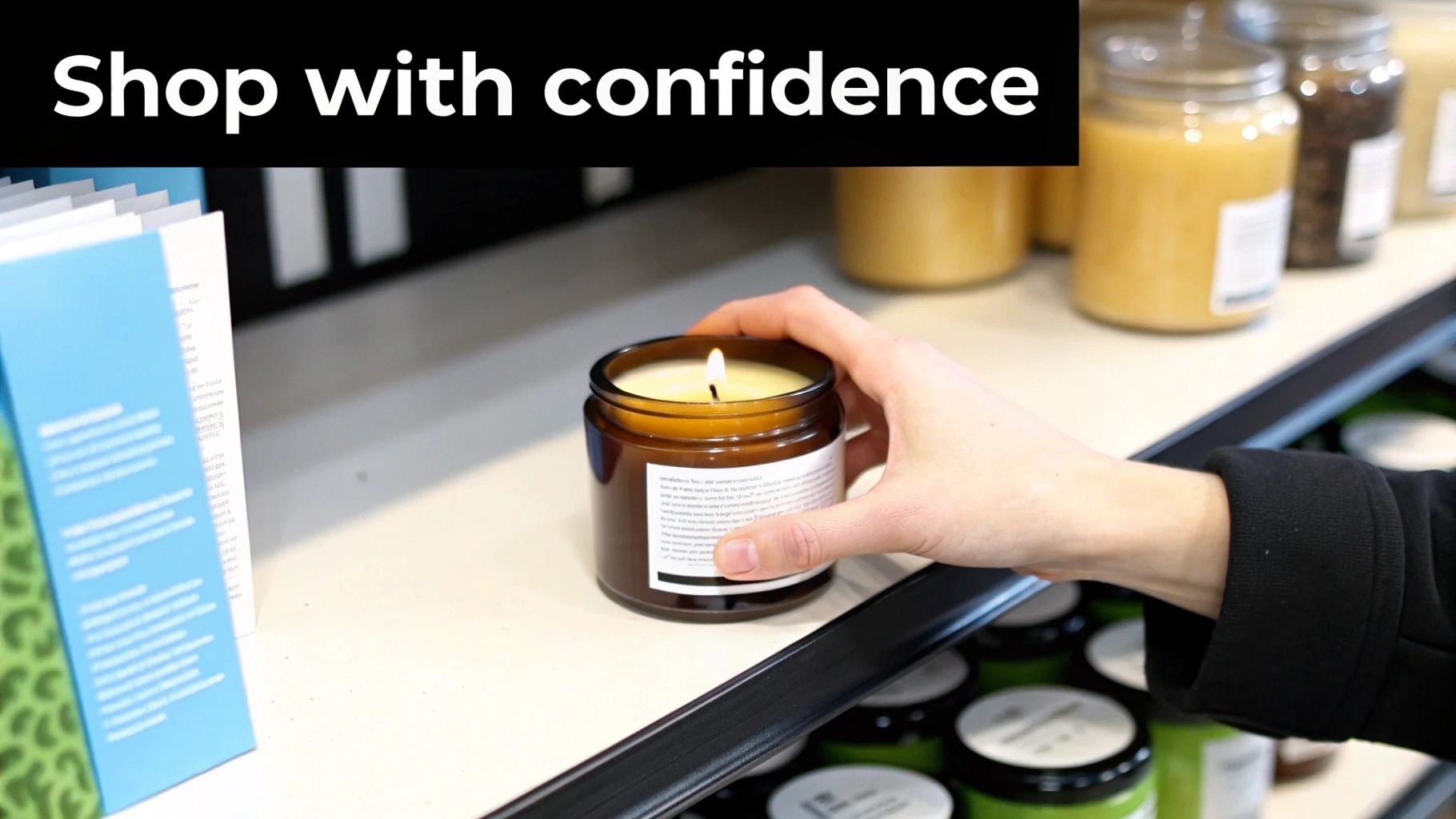
Walking into a store filled with candles can be a little overwhelming. With so many choices, how do you pick one that will actually last and fill your home with that gorgeous scent you're craving? It’s not just guesswork—a few simple checks can tell you almost everything you need to know about a candle’s quality right there in the aisle.
Once you know what to look for, you can feel confident you’re investing in a long lasting scented candle that delivers a truly premium experience. Think of this as your personal buyer's guide to spotting a superior candle at a glance.
First things first, take a close look at the wax itself. The surface of a high-quality candle should look smooth and creamy, without any weird blemishes or cracks. The color should also be even and consistent all the way through.
Keep an eye out for a candle that looks oily or has little beads of liquid sitting on top. This is called "sweating," and it happens when the fragrance oil starts to separate from the wax. It's usually a dead giveaway of a poorly made candle that probably won't burn clean or throw its scent very well.
Next up, check out the wick. A well-crafted candle will have its wick standing straight and proud, perfectly centered from the top all the way down to the base. If the wick is off-center, that’s a major red flag. An off-kilter wick means an uneven burn, which leads to that annoying tunneling effect and a ton of wasted wax.
The wick should be made from braided cotton or maybe a cotton-paper blend. You definitely don’t want anything with a metal core. The wick’s size also has to be just right for the jar's diameter. If it looks too thick, the candle will burn way too fast. Too thin, and it’s a one-way ticket to tunnel town.
Here's a quick visual checklist for the wick:
Before you even think about lighting a candle, its unlit scent tells a story. Go ahead, pick it up and give it a gentle sniff. This is what candle lovers call the "cold throw." A top-tier candle made with premium fragrance oils will have a beautiful, distinct aroma even when it's just sitting there.
If you can barely smell anything, or if it has a chemical, cheap smell, that’s a pretty good preview of what you’ll get when you light it. A weak cold throw often means the fragrance load is too low or the oils are low-grade, which almost always leads to a disappointing hot throw (the scent you get when it's burning).
The strength and complexity of the cold throw are direct clues to the quality of the fragrance oils used. A well-crafted scent will be noticeable and appealing, promising a rich aromatic experience once the candle is burning.
For example, here at Jackpot Candles, we use perfume-grade fragrances that make their presence known before you even light the wick—it’s a true sign of the quality inside. This commitment ensures the scent you fall in love with in the store is the very same one that will fill your room. By running through these simple checks, you can make sure your next candle purchase is a great one.
The candle world is buzzing with well-intentioned advice that, frankly, can waste your wax and cut your candle’s life short. A lot of these common tips sound logical at first glance, but they actually work against the science of a clean, efficient burn. Let's clear the air and debunk a few myths that might be costing you.
Once you get why these popular "hacks" don't work, you'll be able to sidestep the common mistakes and become the go-to candle guru among your friends. This little bit of knowledge is the key to getting the absolute most value and enjoyment from every long lasting scented candle you bring into your home.
You'd think a bigger, more powerful flame would pump out more fragrance, right? It’s a common assumption, but it’s actually the complete opposite. An oversized, dancing flame is a tell-tale sign of an untrimmed wick, and it's burning way too hot and way too fast.
This intense heat is no friend to your fragrance. It literally scorches the delicate fragrance oils, destroying their beautiful, complex notes before they ever have a chance to fill your room. A big flame also gobbles up wax like there's no tomorrow and leaves behind that ugly black soot.
For the best possible scent throw, what you really want is a calm, steady flame about a quarter-inch high. That's the sweet spot you get from a properly trimmed wick. This allows the wax to melt slowly and evenly, gently warming the oils to release their true, intended aroma.
This is one of the most stubborn myths out there, and it can do some serious, permanent damage to your candle. The logic is that cold, hard wax will melt slower. While that’s technically true for a minute, freezing the wax makes it extremely brittle and almost always causes it to crack all the way through.
Freezing a candle introduces moisture and creates tiny fractures in the wax. This damage makes the candle burn unevenly, and the cracks can stop the wick from properly drawing up fuel. This can extinguish the flame or cause severe tunneling.
These cracks completely mess with the candle's structure, leading to a messy and unpredictable burn that ends up wasting far more wax than it ever saves. The best practice? Always store your candles at room temperature in a cool, dark place. Protecting them from wild temperature swings is one of the easiest ways to guarantee they have a long, happy life.
Even the most seasoned candle lover runs into a head-scratcher now and then. Getting the hang of all the little details is what turns a good candle experience into a great one. We get a lot of questions, so we've put together the answers to the most common ones to help you get that perfect, long lasting scented candle performance every single time.
Think of this as your go-to guide for any candle conundrums. With these quick tips, you'll know exactly what to do to make every candle you own last longer and smell amazing.
Tunneling is that annoying thing that happens when a candle burns a hole straight down the middle, leaving a thick wall of wax around the sides of the jar. It's frustrating, and it's almost always because the first burn wasn't long enough.
That very first light is critical—it sets the "memory" for every burn that follows. You need to let the wax melt all the way to the edges of the container. If you've already got a tunnel, don't worry! Just wrap a bit of aluminum foil around the top of the jar like a tent, leaving an opening over the flame. This traps the heat, melts that stubborn wax ring, and gives your candle a fresh start for an even burn next time.
For the best results and your own safety, a good rule of thumb is to burn your candle for no more than four hours at a time. Sticking to this simple guideline helps prevent common problems that can wreck a candle's life.
After about four hours, it's best to blow it out, let it cool down completely, and give the wick a little trim before you light it up again. This simple routine is the secret to a clean, efficient, and seriously long-lasting candle.
Sticking to that four-hour window is the best thing you can do for your candle's health. It keeps the wax and wick in perfect shape, so you get to enjoy every last bit of fragrance and burn time.
Yes, it definitely can! The scent in a candle can weaken over time if you don't store it right. The fragrance oils are what we call "volatile," which just means they can evaporate out of the wax if they're exposed to too much air, light, or heat.
To keep your candle's aroma as vibrant as the day you got it, always store it in a cool, dark place with the lid on tight. Direct sunlight is a big no-no, as it can break down those precious oils. Of course, a well-made candle with high-quality oils, like the ones we use at Jackpot Candles, is going to hold its scent for ages, but a little storage TLC goes a long way.
Ready to see what a truly long-lasting scented candle is all about—with a fun surprise inside? Check out the Jackpot Candles collection, where every premium soy candle holds a beautiful piece of jewelry. Find your perfect scent today.
Comments will be approved before showing up.