
free shipping at $99


You've settled onto the sofa after dinner and lit two candles side by side. The less expensive jar fills the room within minutes, while the candle with the higher price tag seems to bloom slowly, if at all. Then you notice other differences: one flame leaves a dark ring around the glass, the other creates a smooth pool of liquid wax, and one fragrance still feels balanced when you light it again.
That comparison raises the useful question: what are you paying for in a luxury soy candle? The answer isn't just the word “soy” on the label. Wax selection, wick engineering, fragrance concentration, vessel design, curing, and burn habits all shape what you see and smell. This guide gives you a practical way to assess those details, including candles from Jackpot Candles, without treating price or polished packaging as proof of quality.
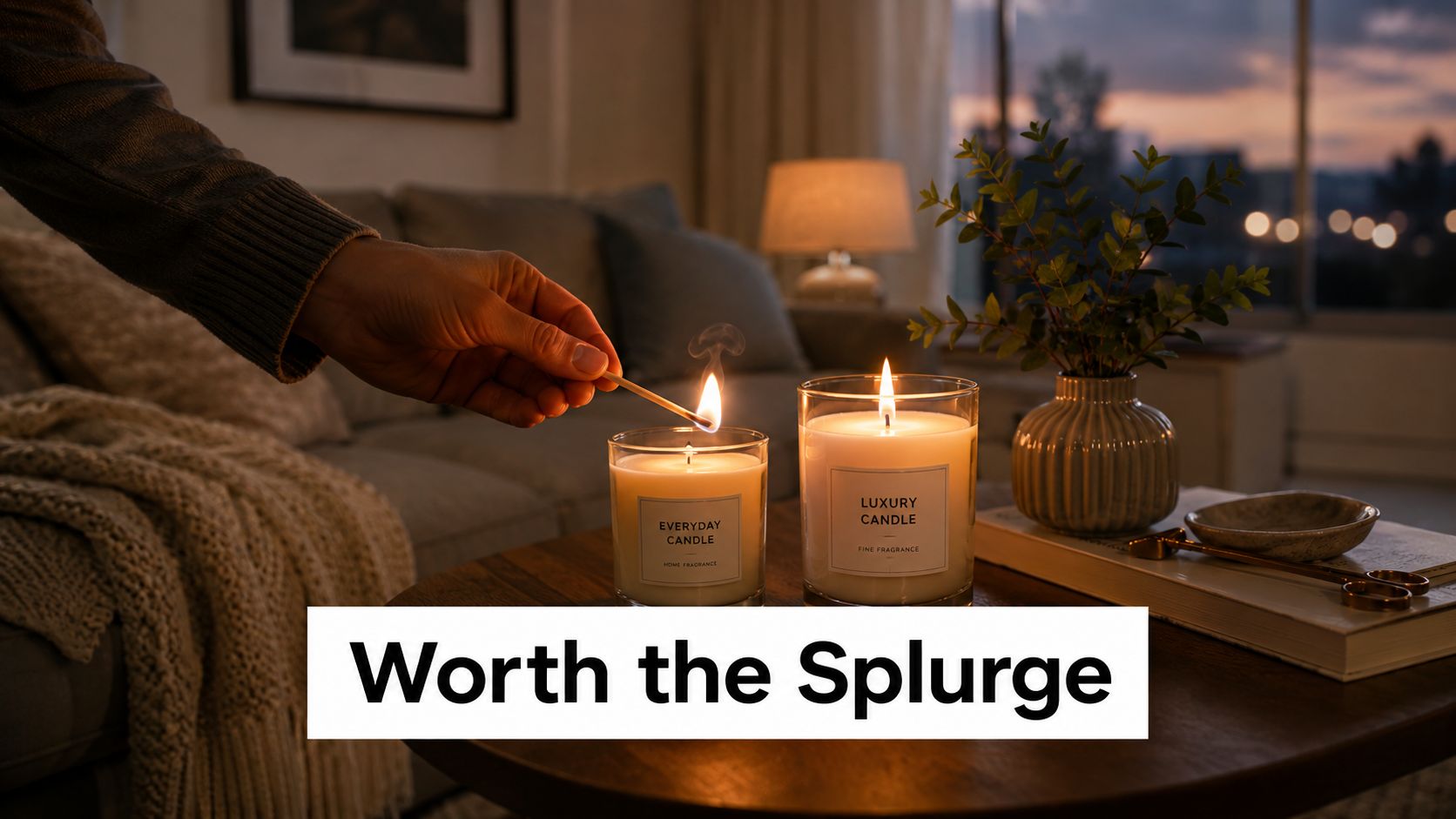
The first clue is often visible before the fragrance has fully developed. A well-made candle produces a centered, stable flame and an even melt pool that gradually reaches the vessel's edges. The glass stays relatively clear, the wick doesn't collapse into a wet pool, and the scent remains recognizable rather than turning sharp or smoky.
A poorly matched candle shows the opposite pattern. The flame may flicker dramatically, the wax may melt only in a narrow crater, or smoke may collect around the rim. A powerful scent in the first few minutes can also be misleading. If the fragrance fades quickly, smells burnt, or loses its layered character on a later burn, the candle may be releasing oil inefficiently rather than performing well.
A practical test: judge the candle in three places, the flame, the wax surface, and the room around it.
Luxury is partly sensory, but it's also measurable through repeated observation. Look for:
The soy candle category itself is relatively recent. Michael Richards developed soy wax as a cheaper alternative to beeswax in 1991, and The Body Shop became the first major retail chain to offer soy candles publicly in 1995, according to market history and category data. That history helps explain why soy fits modern premium fragrance culture so closely. It emerged alongside demand for plant-based home fragrance rather than serving as an ancient luxury material.
The vessel also contributes to the experience. Weight, glazing, lid fit, label placement, and proportions affect whether the candle feels like a considered object or a standard jar with upgraded graphics. For readers interested in how physical products are planned and refined, a home decor product design system offers useful context for thinking about the relationship between materials, appearance, and production.
Price still matters, but it isn't a performance test. A less expensive candle can be expertly wicked, while an expensive one can tunnel or soot. Use the same criteria when comparing a boutique candle, a gift-set candle, or the products discussed in this guide to luxury candle brands.
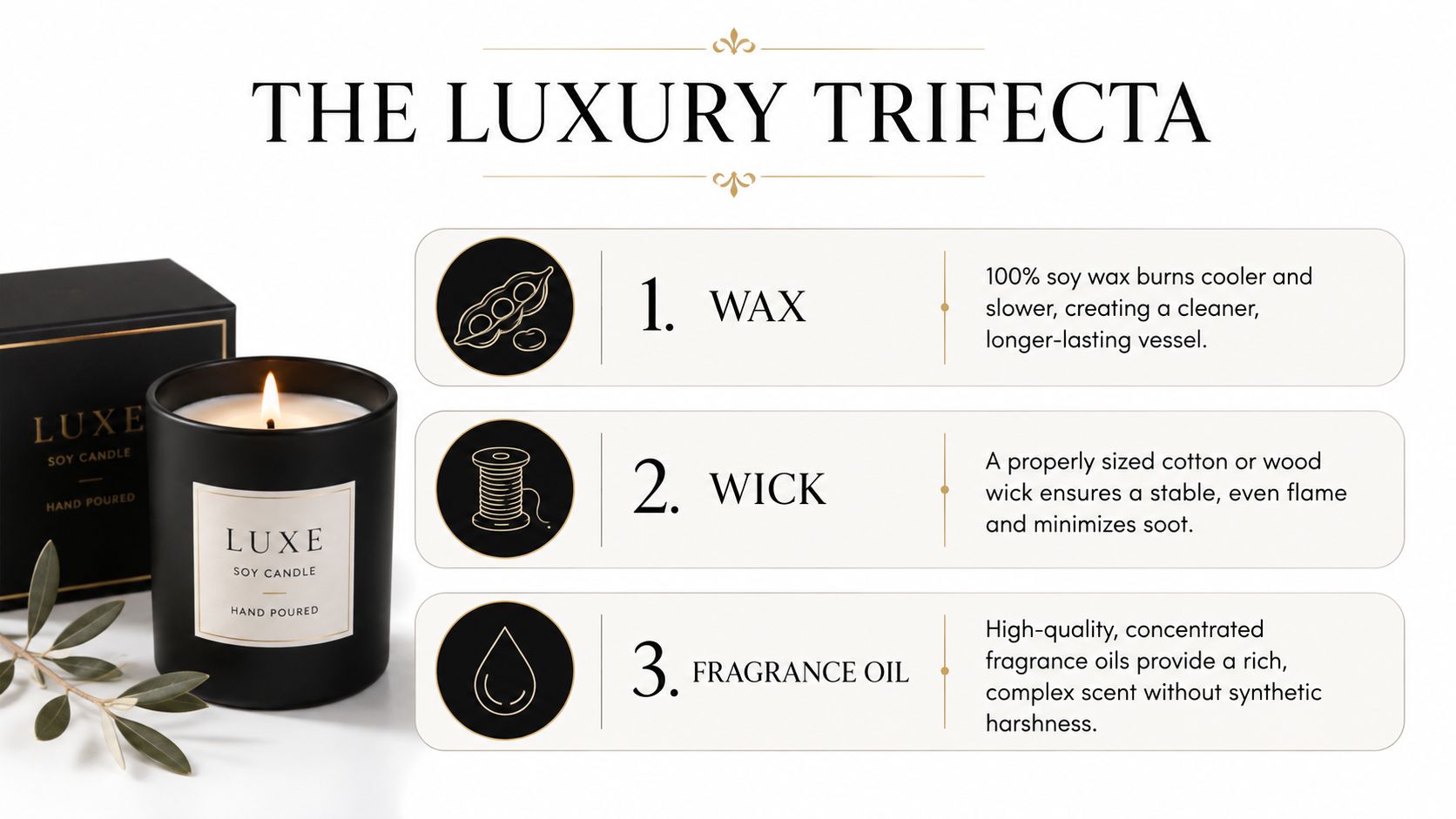
A luxury soy candle depends on three interacting materials: wax, wick, and fragrance oil. Think of them as a system. A good fragrance can underperform in a poorly wicked vessel, and an excellent wick can't rescue a wax blend that doesn't hold or release fragrance consistently.
Soy wax gives makers a plant-based material with a relatively cool, gradual burn. That doesn't automatically make every soy candle premium. The supplier, refining process, blend composition, pouring conditions, and curing all influence the final result.
A pure soy candle may create a softer, creamier appearance and a slower scent release. A soy blend can be chosen for a smoother finish, improved vessel adhesion, or more predictable fragrance performance. Neither label tells you enough by itself. Look for clear disclosure of whether the candle uses pure soy or a blend, especially if you're comparing products with similar prices.
The wax also determines how the candle responds to room temperature. A surface that looks slightly uneven may reflect the natural behavior of soy rather than a defect, but deep cracks, wet spots, or persistent separation deserve closer attention.
Wick material matters, but wick size relative to vessel diameter matters more. Cotton wicks can offer a familiar, quiet flame. Paper-cored versions provide a different structure, while wooden wicks add a soft crackle and a broader flame profile. Each can work well when matched to the wax and fragrance system.
A wick that's too small may create tunneling because it can't melt enough wax across the container. A wick that's too large may produce excessive heat, soot, mushrooming, and an overly aggressive melt pool. Double-wick designs can distribute heat across a wider vessel, but they still require testing and proper spacing.
Fragrance oil quality has the strongest influence on scent character. Synthetic, natural, and nature-identical materials can all appear in a complex composition. “Natural” doesn't guarantee better throw, and “synthetic” doesn't automatically mean harsh. The meaningful questions are whether the formula smells balanced, whether it works safely with the wax, and whether the maker discloses useful ingredient information.
A perfume-style composition may move from bright opening notes to floral or aromatic middle notes and warmer base notes. That evolution is what makes a candle feel composed rather than merely scented. More guidance on how wax affects fragrance performance appears in this explanation of the best wax for scented candles.
Treat the video as a visual complement, not a substitute for testing. The strongest candle makers adjust the wick and fragrance together, then observe the flame, melt pool, soot, and scent over repeated burns.
A candle can be made from soy and still burn badly. Wax is only one part of the system. Wick size, fragrance chemistry, dye, vessel width, room airflow, and trimming habits shape the result just as strongly. Soy generally produces less soot and fewer VOCs than paraffin, yet every burning candle creates combustion byproducts. The material alone cannot guarantee a clean or pleasant burn.
An independent test shows why wick care deserves attention. Over a 380-minute period, trimmed soy candles burned at about 3.89 ± 0.28 g/h, while untrimmed candles burned at 4.50 ± 0.22 g/h. The untrimmed candles also formed a wider melt pool, 6.5 ± 0.4 cm compared with 5.4 ± 0.2 cm, according to the independent soy-wax candle combustion test. In practical terms, a longer wick can feed a larger, hotter melt pool, so trim length changes more than flame appearance.
| Wax type | General burn character | Soot and air considerations | Fragrance experience |
|---|---|---|---|
| Soy | Cooler, gradual melt | Generally less soot than paraffin, though burn habits still matter | Often develops steadily |
| Paraffin | Faster, hotter-feeling release | More likely to show soot when poorly wicked or burned in drafts | Can feel immediate and forceful |
| Coconut blends | Creamy finish with blend-dependent behavior | Depends on the accompanying wax and formulation | Often aims for fuller diffusion |
| Beeswax | Distinctive natural wax character | Performance depends on wick and additives | Typically more subtle and wax-forward |
These are tendencies, not promises. A carefully tested paraffin candle may burn more cleanly than a poorly tuned soy candle. A coconut-soy blend may be selected for its surface finish, stability, or scent diffusion rather than for a simple material label. For a brand such as Jackpot Candles, the useful question is whether the finished candle shows controlled behavior, not whether “soy” appears prominently on the packaging. This comparison of soy and paraffin candles offers further material-specific context.
A strong first scent impression is not automatically better. Paraffin can release fragrance quickly and forcefully, while soy often develops more gradually as the melt pool expands. One suits someone who wants immediate impact. The other may better support a room without dominating it.
The soy candle category now occupies a substantial commercial and fragrance-focused market. One industry estimate values the global soy candle market at about USD 3.95 billion in 2026 and projects USD 6.89 billion by 2035. Another estimates soy-wax scented candles at USD 1.45 billion in 2023 and projects about USD 4.3 billion by 2033, as summarized in soy candle market history and category commentary. Market size shows demand, not consistent craftsmanship.
Choose the wax according to the experience you want. Soy often suits a slower, softer burn profile. Paraffin may suit stronger early throw. Blends can balance texture, stability, and diffusion. Judge the actual flame, melt pool, soot, and scent over repeated burns rather than treating the wax name as a quality verdict.
Fragrance load is the proportion of fragrance oil blended into the wax. Soy candles commonly work within a practical range of 6% to 10%, while 6% to 8% often balances scent throw with burn stability. Loads above about 10% may make the wick struggle, contributing to clogging, mushrooming, soot, or an uneven burn, according to soy wax fragrance and burn guidance.
The percentage is a formulation detail, not a luxury score. A candle near the upper end is not automatically better. Fragrance strength, vessel width, wax blend, and wick size all change the result. A moderate load with a layered fragrance can smell fuller than a heavily loaded candle with a flat blend.
The wick is the candle's fuel-delivery system. It draws liquid wax from the melt pool, carries that fuel upward, and vaporizes it at the flame. As fragrance load rises, the wax can become harder to move and burn cleanly. A wick that is too small may drown in the melt pool. One that is too large can overheat the vessel, create a tall flame, and produce soot.
Cotton wicks may use single, double, or multi-ply construction. Wooden wicks can provide a broad flame and a distinctive sound, but they still require suitable sizing and trimming. Vessel diameter matters just as much. A narrow jar concentrates heat differently from a wide bowl, even when both use the same wax and fragrance percentage.
Technical formulation benchmarks place a typical soy candle's maximum fragrance capacity around 10% to 12%. They also associate an 8 oz soy candle at a 10% fragrance load with roughly 31 to 43 hours of burn time when the wick is correctly sized, as described in the formulation reference linked above. Treat that estimate as a test condition, not a promise. Vessel size, wick design, fragrance chemistry, and care instructions can all change the outcome.
Wick rule: a fragrance percentage has meaning only when you know which wick and vessel were tested with it.
Room size changes scent coverage. A lower-load candle with a steady wick may scent the area near a coffee table without reaching the hallway. A more concentrated formula with suitable heat distribution may travel farther, though greater intensity can feel less comfortable. For a useful comparison, try the candle near a separate Living Air Bluetooth humidifier, and remember that a candle and a diffuser distribute fragrance through different systems. Judge the flame, melt pool, scent reach, and burn behavior over repeated uses, rather than relying on the fragrance percentage or the word “soy” alone.
Soy is often described as a clean-burning shortcut. The more accurate version is that soy generally produces less soot and fewer VOCs than paraffin, but it still creates particulate matter and combustion byproducts. The word “soy” can't cancel out a tall wick, smoky flame, synthetic fragrance components, dye, or a room with stagnant air.
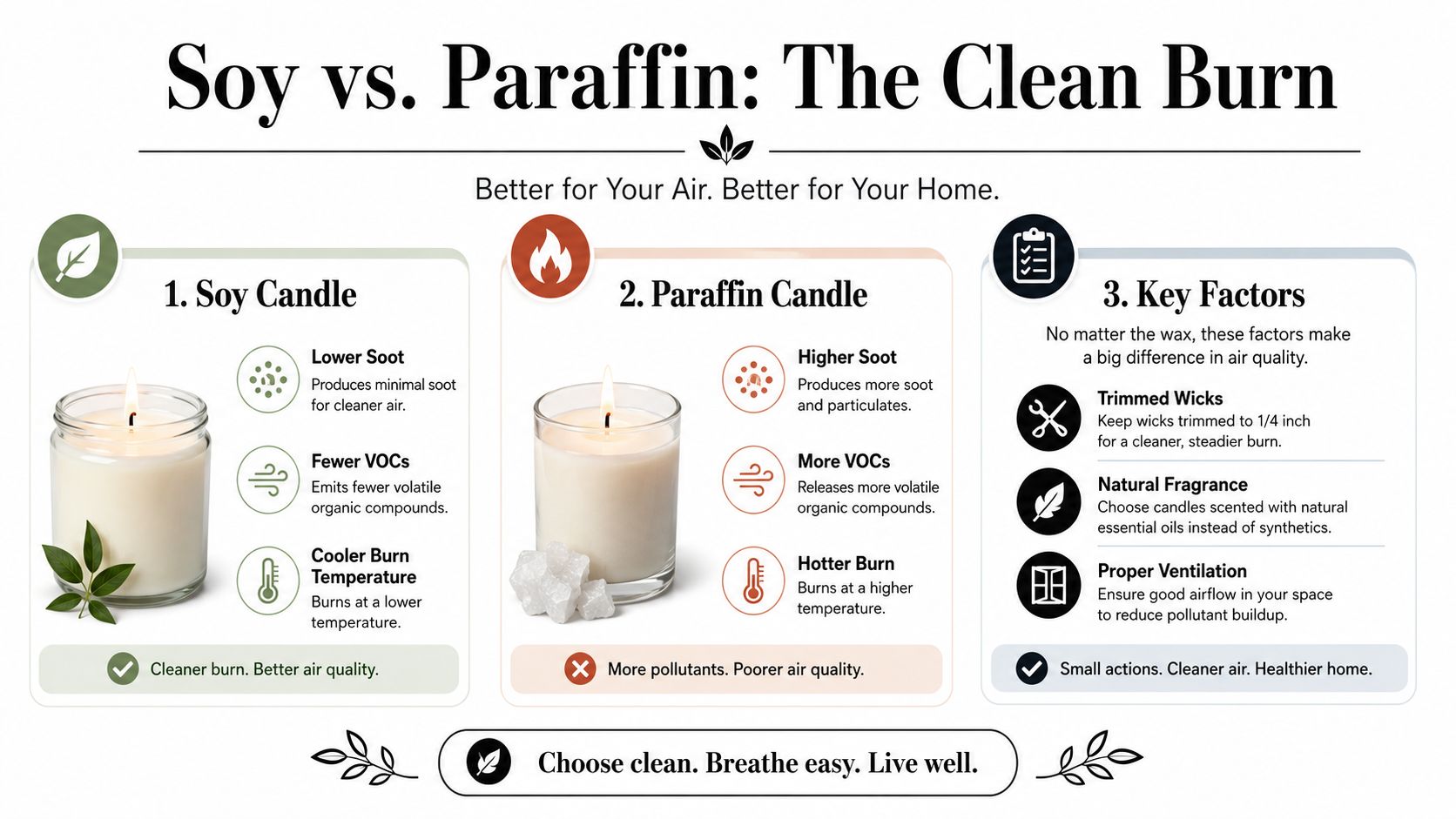
A visible soot mark is useful feedback. It may indicate that the wick is too long, the flame is disturbed, the fragrance load is difficult to burn, or the candle contains materials that don't combust cleanly. Even when the glass looks clear, the flame still produces emissions. Independent and industry guidance emphasizes this distinction in discussion of soy candles and indoor air quality.
Small rooms deserve more caution, especially bathrooms with closed doors and limited airflow. Open a door or window when practical, keep the candle away from fabrics and books, and avoid positioning it where a draft makes the flame surge. Air movement should refresh the room without pushing the flame sideways.
A luxury candle can still be a poor choice for a sealed room. The cleaner approach is simple: burn a well-made candle with a trimmed wick, avoid visible smoke, and provide reasonable airflow. People with respiratory sensitivities should take their own tolerance into account and stop burning if the fragrance or emissions cause discomfort.
Soy is neither perfectly pollution-free nor alarming in ordinary use. It's one part of an indoor-air equation that also includes the wick, fragrance formulation, vessel, burn duration, flame behavior, and ventilation.
The first burn establishes how the wax will behave around the vessel. Let the melt pool travel across the full usable diameter before extinguishing, using the practical guideline of about one hour per inch of vessel width. If you stop too early, the candle may preserve a narrow memory and continue melting inward, creating tunneling.
Tunneling leaves a sleeve of unused wax around the sides. That wastes fuel and reduces the candle's usable surface area. A foil wrap can sometimes help rescue an early tunnel. Place foil around the upper vessel with an opening above the flame, then monitor the candle closely as redirected heat softens the cooler wax near the edges.
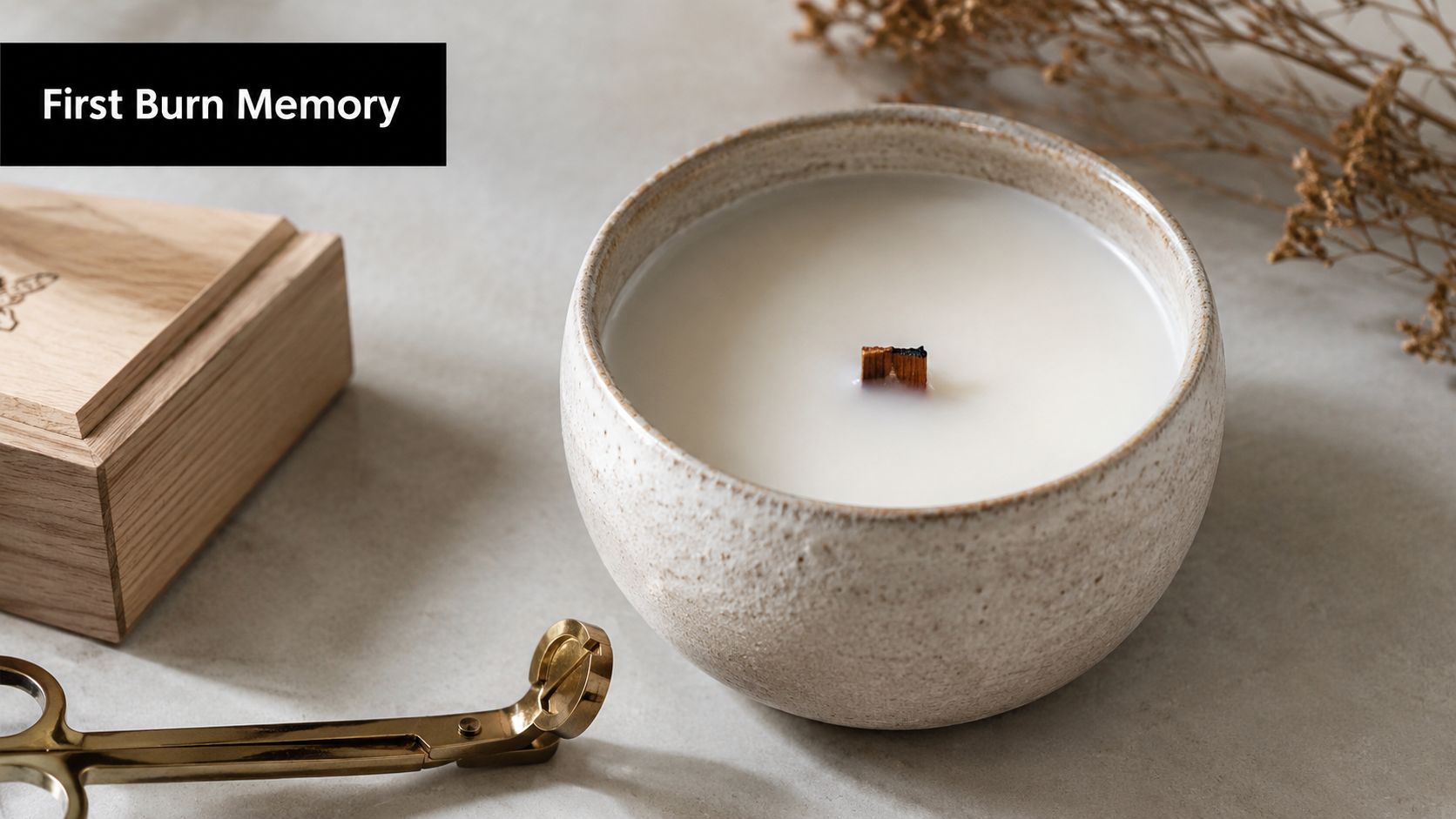
A longer wick creates a taller flame and can consume fragrance and wax more quickly. It can also produce more soot, particularly when airflow disturbs the flame. Trim before each relight rather than waiting until the wick visibly mushrooms.
Keep the lid on when the candle isn't being used. Store it at room temperature, away from direct sunlight and humid bathrooms. Heat, light, and moisture can affect the wax surface and fragrance character over time.
If the candle has already tunneled, use one supervised rescue burn rather than repeatedly burning it for short periods. Stop if the vessel becomes excessively hot, the flame behaves unpredictably, or the foil approaches the flame. Candle care improves performance, but it can't correct an unsafe vessel or a poorly matched wick.
A high price may reflect better materials, design, or testing, but it cannot prove them. Apply the same checklist to a fragrance studio, department store, subscription box, or Jackpot Candles product.
Side-by-side test: Write these six criteria on paper, then score two candles before checking their prices.
A luxury candle should make its main choices understandable. You should be able to identify the wax, wick construction, product quantity, and intended burning conditions. If a label gives only mood words and little technical information, lower your confidence rather than assuming the missing details are premium.
For a concrete comparison, browse the Elia candle and apply the same questions. Look for coordination rather than one impressive feature. A heavy vessel cannot compensate for a poorly matched wick, and a strong fragrance load cannot guarantee an even melt pool.
Luxury soy candles earn their place through that coordination. The wax supports the wick, the wick controls the fragrance-bearing melt pool, the fragrance develops without overwhelming the flame, and the vessel makes safe use feel natural. This framework also gives you a fair way to assess Jackpot Candles, whose scented candles use a soy wax blend and may include surprise jewelry. Check the wax, wick, fragrance, vessel, and burn performance before choosing a gift or home-fragrance ritual.
Comments will be approved before showing up.