
free shipping at $99


In our fast-paced world, maintaining a positive outlook can feel like an uphill battle. The constant demands of modern life often leave our emotional reserves running low, making it easy to feel overwhelmed or stuck in a funk. While there's no single magic button for instant happiness, reclaiming a sense of well-being is more accessible than you might think. The key often lies not in complex solutions, but in simple, sustainable habits.
This guide is designed to be your practical resource, exploring a curated list of powerful, science-backed natural ways to boost mood. We will move beyond generic advice like "just think positive" and delve into actionable strategies you can implement immediately. You will discover the specific 'how' and 'why' behind each method, from leveraging the neurochemical benefits of sunlight to optimizing your nutrition for better gut-brain communication.
Our goal is to equip you with a personalized toolkit for emotional resilience and mental clarity. Whether you need a quick lift on a difficult day or are building a long-term foundation for mental wellness, the following sections offer concrete steps. You'll learn how to integrate these practices seamlessly into your routine, empowering you to cultivate a brighter, more balanced state of mind, one intentional action at a time.
Physical exercise is a cornerstone of mental well-being and one of the most effective natural ways to boost mood. When you engage in physical activity, your brain releases a cascade of feel-good neurochemicals, including endorphins, serotonin, and dopamine. These chemicals work together to create feelings of pleasure and reduce the perception of pain, while also lowering levels of stress hormones like cortisol.
Even moderate activity provides immediate and long-term benefits. Renowned psychiatrist Dr. John Ratey of Harvard Medical School emphasizes that exercise fundamentally improves brain chemistry and function, promoting neuroplasticity, which is the brain's ability to adapt and rewire itself. This process helps alleviate symptoms of depression and anxiety, making physical activity a powerful tool for mental health maintenance.
For a quick reference on the tangible impact of exercise, here are some key data points.
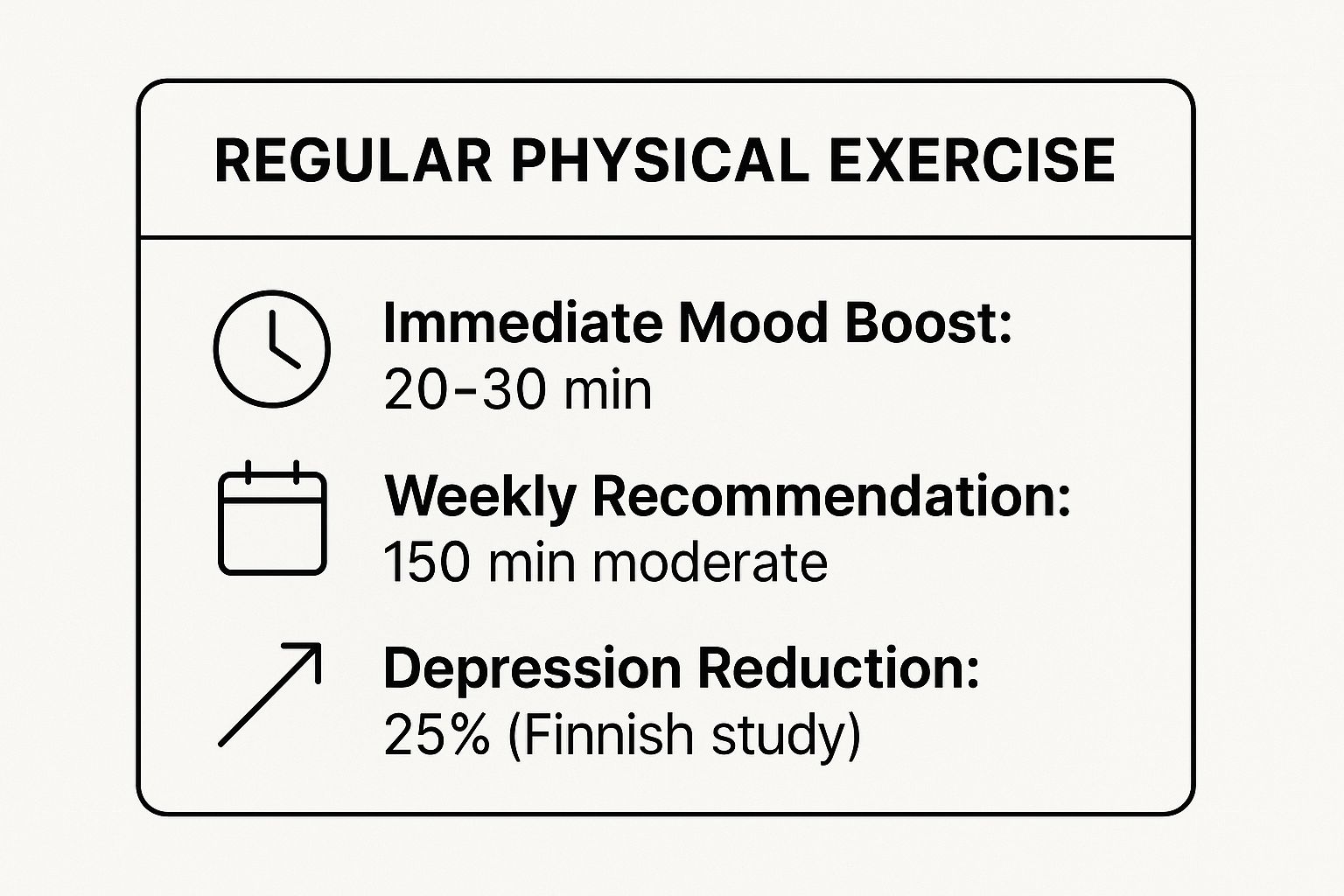
These metrics highlight how even short bursts of activity can provide an immediate lift, while consistent effort delivers significant long-term mental health improvements.
To make exercise a sustainable habit, focus on consistency over intensity.
Mindfulness meditation is a powerful mental practice focused on bringing your attention to the present moment without judgment. It involves observing your thoughts, feelings, and bodily sensations as they arise. This practice helps rewire the brain's neural pathways, strengthening areas associated with emotional regulation and reducing activity in the amygdala, the brain's fear and stress center. It is one of the most accessible natural ways to boost mood.

Popularized by figures like Jon Kabat-Zinn, this technique trains the brain to detach from negative thought patterns that can fuel anxiety and low moods. Instead of being carried away by worries about the past or future, you learn to anchor yourself in the now. The benefits are well-documented; for instance, UCLA’s Mindful Awareness Research Center found that mindfulness practice can lead to a 23% reduction in depression symptoms, while users of the Headspace app report a nearly 15% reduction in stress after just 30 days.
Incorporating mindfulness into your daily life doesn't require hours of sitting in silence. Consistency is more important than duration.
Harnessing the power of natural sunlight is a simple yet profoundly effective way to enhance your mood and overall well-being. Sunlight exposure helps regulate your body’s internal clock, or circadian rhythm, and triggers the production of vitamin D, a nutrient vital for mental health. It also prompts the brain to release serotonin, a key neurotransmitter that promotes feelings of calmness and focus.
This biological response is why sunlight is a cornerstone of managing conditions like Seasonal Affective Disorder (SAD). Dr. Norman Rosenthal, a pioneer in SAD research, demonstrated how light directly impacts brain chemistry responsible for mood. Insufficient exposure can disrupt these delicate systems, leading to lower energy and a dampened spirit. This makes intentional sun exposure one of the most accessible natural ways to boost mood, aligning your body’s rhythms with the natural world.
The benefits are recognized globally, from Scandinavian countries where light therapy boxes show high success rates for SAD, to the Japanese practice of shinrin-yoku (forest bathing), which incorporates sunlight and nature to improve health outcomes.
Integrating sunlight into your routine doesn't require drastic changes, just a few consistent habits.
Deep breathing exercises are a powerful and accessible tool for instantly shifting your emotional state. This practice works by activating the parasympathetic nervous system, which triggers the body's natural relaxation response. Intentional, slow breathing sends a signal to your brain to calm down, reducing levels of the stress hormone cortisol and increasing oxygen flow, which helps create a sense of clarity and ease.
This simple technique is one of the most effective natural ways to boost mood because it directly counteracts the physiological effects of stress. When you feel anxious or overwhelmed, your breathing often becomes shallow and rapid. By consciously slowing it down, you can lower your heart rate and blood pressure, providing immediate relief. Techniques like the '4-7-8' method, popularized by Dr. Andrew Weil, have been shown to significantly improve sleep quality and reduce anxiety, making controlled breathing a cornerstone of mental wellness.
Watch this short video to learn a simple but effective breathing technique.
The U.S. military even employs tactical breathing to help soldiers manage stress in high-pressure combat situations, highlighting its profound real-world effectiveness.
To integrate deep breathing into your daily routine, consistency is key.
Humans are inherently social beings, and fostering strong relationships is a powerful and natural way to boost mood. Meaningful social connections trigger the release of oxytocin, often called the "bonding hormone," which promotes feelings of trust and reduces anxiety. Engaging with loved ones also activates the brain's reward system, increasing dopamine and serotonin while lowering the stress hormone cortisol.
The profound link between relationships and happiness is well-documented. Dr. Robert Waldinger, director of the 85-year Harvard Study of Adult Development, states that strong relationships are the single greatest predictor of long-term happiness and health. The study found that individuals with quality social ties were not only happier but also physically healthier and lived longer. Conversely, loneliness has been shown to have a health impact comparable to smoking 15 cigarettes a day.
Strong community bonds are essential for mental resilience. These connections provide a vital sense of belonging and an emotional support system that helps buffer life's inevitable challenges, making it a critical component of sustained well-being.
Nurturing your social life requires intentional effort. Here are some actionable steps to deepen your connections.
Practicing gratitude is a powerful and accessible method for improving mental well-being and is one of the most transformative natural ways to boost mood. The act of consciously focusing on what you are thankful for rewires your brain to notice positive experiences more readily, strengthening neural pathways associated with happiness and contentment. This shift reduces the brain's focus on negative thoughts and emotions, leading to lasting improvements in overall mood.
The benefits of gratitude are well-documented by researchers like Dr. Robert Emmons and Dr. Martin Seligman, pioneers in positive psychology. Their studies show that regular gratitude practice can significantly increase happiness and reduce symptoms of depression. For instance, participants in a University of Pennsylvania study reported a 25% increase in happiness levels after just one week of consistent gratitude journaling. This simple exercise helps foster resilience and life satisfaction by changing your perspective.
This intentional focus on the good in your life actively combats the brain’s natural negativity bias. By consistently acknowledging positive aspects, you cultivate a more optimistic outlook that directly impacts your emotional state and builds a stronger foundation for mental health.
Incorporating gratitude into your daily routine is simple and requires only a few minutes each day.
Spending time in nature, a practice known in Japan as shinrin-yoku or "forest bathing," is a potent and scientifically backed natural way to boost mood. This immersive experience involves mindfully connecting with the natural environment, which has been shown to significantly reduce stress hormone levels like cortisol, lower blood pressure, and enhance immune function. The benefits are partially attributed to inhaling phytoncides, antimicrobial organic compounds released by trees.

Dr. Qing Li, a leading expert in forest medicine, has shown that nature exposure helps calm the part of the brain associated with rumination, a pattern of negative self-focused thought common in anxiety and depression. A well-known Stanford University study found that a 90-minute walk in a natural setting decreased activity in the prefrontal cortex, the brain region active during rumination. This science supports what many feel intuitively: nature has a deeply restorative effect on the mind.
Incorporating forest bathing into your routine is about mindful presence, not physical exertion.
Engaging in creative activities is a powerful and enjoyable method for improving mental well-being and is one of the most accessible natural ways to boost mood. The act of creating stimulates the brain's reward system, releasing dopamine and promoting a "flow state," a deep level of immersion that reduces anxiety and elevates your emotional state. Art-making provides a non-verbal outlet for emotions and fosters a tangible sense of accomplishment.
Artistic expression activates multiple regions of the brain simultaneously, promoting neural connectivity and cognitive flexibility. Dr. Cathy Malchiodi, a leading art therapy pioneer, explains that creative processes can help individuals re-frame traumatic memories and manage stress. This engagement moves you from passive consumption to active creation, which is inherently empowering and mood-lifting.
The impact is well-documented across various art forms. For instance, community choir participation has been shown to decrease anxiety by as much as 84% in participants, while studies on art therapy for veterans revealed a 43% reduction in PTSD symptoms.
The goal is to enjoy the journey of creation, not to produce a masterpiece.
Quality sleep is a fundamental pillar of emotional health and a powerful natural way to boost mood. When you sleep, your brain works to process emotions, consolidate memories, and reset crucial neurotransmitter levels. This restorative process clears metabolic waste and rebalances chemicals like serotonin and dopamine, which directly regulate mood, resilience to stress, and emotional stability.
Insufficient or poor-quality sleep disrupts this delicate neurochemical balance, leading to heightened irritability, anxiety, and a lower mood. As sleep expert Dr. Matthew Walker highlights in his book "Why We Sleep," sleep is a non-negotiable biological necessity that recalibrates the emotional circuits of the brain. Without it, the amygdala, the brain's emotional center, can become overactive, triggering stronger negative reactions to everyday events.
The impact of prioritizing sleep is significant and well-documented. For instance, structured approaches like sleep restriction therapy have shown success rates as high as 85% for treating insomnia, and corporate wellness programs focusing on sleep have been shown to increase employee productivity by up to 23%. This data underscores the direct link between quality rest and improved daily function and mood.
To make quality sleep a consistent part of your routine, focus on building strong sleep hygiene habits.
The food you eat has a profound impact on your mental state, making nutrition one of the most powerful natural ways to boost mood. The connection is rooted in the gut-brain axis, a complex communication network linking your digestive system and brain. Astonishingly, over 90% of the body's serotonin, a key mood-regulating neurotransmitter, is produced in the gut, highlighting how a healthy digestive system is essential for emotional balance.
A diet rich in anti-inflammatory foods, omega-3 fatty acids, and probiotics supports a thriving gut microbiome, which in turn promotes stable mood and reduces the risk of mental health issues. Pioneers in nutritional psychiatry like Dr. Uma Naidoo have demonstrated that poor nutrition can lead to chronic inflammation, a known contributor to depression and anxiety. Conversely, a nutrient-dense diet nourishes both body and mind.
The impact of dietary changes can be significant. Studies have shown that adopting a Mediterranean-style diet can reduce the risk of depression by up to 33%, and eliminating processed foods often leads to noticeable mood improvements within just two weeks.
Incorporating mood-boosting foods into your daily life is simpler than it sounds. Focus on small, consistent changes.
| Item | Implementation Complexity 🔄 | Resource Requirements ⚡ | Expected Outcomes 📊 | Ideal Use Cases 💡 | Key Advantages ⭐ |
|---|---|---|---|---|---|
| Regular Physical Exercise | Moderate - requires scheduling and physical effort | Low to Moderate - mostly time and sometimes equipment | Immediate mood boost; long-term depression reduction | Suitable for most; especially those seeking physical & mental health | Improves brain chemistry; accessible; social benefits |
| Mindfulness Meditation | Moderate - needs consistent daily practice | Very Low - no equipment needed | Anxiety & depression reduction; improved focus | Ideal for stress, emotional regulation, anytime use | Increases brain gray matter; free and cumulative benefits |
| Exposure to Natural Sunlight | Low - requires daily outdoor time | None (except possible sun protection) | Mood improvement in 15-30 mins; regulates circadian rhythm | Best for Seasonal Affective Disorder & sleep issues | Free; multiple health benefits; quick effects |
| Deep Breathing Exercises | Low - simple techniques but needs mindful attention | None | Immediate stress relief in minutes; long-term stress resilience | Suitable for quick anxiety relief anytime, anywhere | No cost, immediate effects; improves heart rate variability |
| Social Connection & Relationships | Moderate - requires emotional investment and time | Low | Improved mental & physical health; increased life satisfaction | Essential for overall wellbeing; combating loneliness | Fundamental human need; releases bonding hormones |
| Gratitude Practice | Low - simple routine but requires consistency | None | Increased happiness by ~25%; improved resilience | Ideal for daily mood boosting and long-term positivity | Easy to adopt; rewires brain for positivity |
| Time in Nature (Forest Bathing) | Moderate - requires access to natural settings | None to Low (travel/time investment) | Reduces cortisol by 50%; cognitive and immune boosts | Good for stress reduction; combining exercise & mindfulness | Combines multiple mood benefits; natural and cost-free |
| Creative Expression & Arts | Moderate to High - variable by activity and skill level | Variable - materials/classes may cost | Neuroplasticity increase; emotional release | Suitable for self-expression, therapy, and flow states | Enhances brain connectivity; therapeutic and social |
| Quality Sleep Optimization | Moderate - lifestyle changes and environment setup | Low to Moderate - possible sleep aids | Improves mood regulation; reduces negative emotions | Foundational for all mood interventions | Essential biological process; enhances other treatments |
| Nutrition and Gut Health | High - requires dietary adjustments and habit changes | Variable - cost of quality nutrition | Depression risk reduction; improved brain function | Root physiological approach; chronic mood support | Addresses gut-brain axis; multiple health benefits |
Improving your emotional well-being is not about a single grand gesture, but the consistent practice of small, intentional acts. The ten strategies we've explored, from regular exercise and mindfulness to quality sleep and social connection, are powerful, evidence-backed tools. Their true magic, however, is unlocked when you weave them into the unique fabric of your daily life, creating a personalized system for self-care.
The path to a brighter, more stable emotional state is a deeply personal journey. There is no one-size-fits-all solution, and the most effective approach is one you can sustain. The beauty of these natural ways to boost mood lies in their accessibility and adaptability. You don't need a complete life overhaul; you simply need to start small and build momentum.
To begin, choose just one or two methods from this list that genuinely resonate with you. Perhaps it's the idea of a short, brisk walk in the morning sun to harness the benefits of both exercise and light exposure. Or maybe it's the simple act of jotting down three things you're grateful for in a journal before turning off the lights. The key is to start with a manageable change that feels inviting, not intimidating.
Consider these practical steps to integrate your chosen practices:
Mastering these natural mood-boosting techniques is not about achieving perfection. It’s about building a compassionate and resilient relationship with yourself. Some days, a 20-minute workout will feel fantastic; on others, a few mindful breaths may be all you can manage. The goal is consistency over intensity. Each small, positive action you take is a deposit into your well-being account, accumulating over time to build a rich reserve of emotional strength.
By combining these natural strategies with mindful rituals, you create a holistic and sustainable system that nurtures your mood from the inside out. You empower yourself to navigate life's inevitable challenges with greater ease and to more fully appreciate its moments of joy. This journey is a testament to the profound impact that small, deliberate choices can have on your overall happiness and mental clarity.
Ready to elevate your self-care routine into a delightful ritual? Explore the collection at Jackpot Candles and find the perfect scent to accompany your moments of peace and reflection. Discover your hidden jewelry surprise and add an extra spark of joy to your wellness journey with a beautiful, fragrant candle from Jackpot Candles today.
Comments will be approved before showing up.