
free shipping at $99


You light the candle after dinner, expecting a warm fragrance and a quiet evening. A few burns later, something metallic appears beneath the softened wax. The first reaction is excitement, followed quickly by practical questions: How did the ring get inside? Is it genuine? Can the candle still burn safely? And what is the jewelry worth?
A ring inside candle is a scented candle made with a concealed jewelry item, usually a ring, although some products hide earrings, pendants, or other pieces. The appeal combines two experiences in one product, the familiar comfort of fragrance and the suspense of a physical reveal. The format became popular as a gift because the recipient can enjoy the candle before discovering an object that may have personal or monetary value.
The category also benefits from a large, expanding candle market. One industry estimate places the global candle market at USD 14.77 billion in 2025, with a projection of USD 25.44 billion by 2033 and a projected compound annual growth rate of 7.3% (candle industry market estimate). That context matters, but it doesn't answer the questions that determine whether a particular jewelry candle is a smart purchase. The details are in its construction, burn instructions, metal disclosure, and appraisal terms.
The surprise usually arrives gradually. The candle has been burning normally, the fragrance fills the room, and then the flame or wick begins behaving differently as it approaches the hidden capsule. You may notice a small reflective edge, a change in the wax surface, or a slight movement near the wick. That moment feels more like opening a gift than finishing a household product.
The ring isn't just dropped loose into liquid wax. In a professionally assembled candle, the jewelry is placed inside a protective wrapping or pouch before the maker pours wax around it. The package is positioned within the candle so melting wax eventually exposes it, while the jewelry remains separated from the active flame for as long as the design allows.
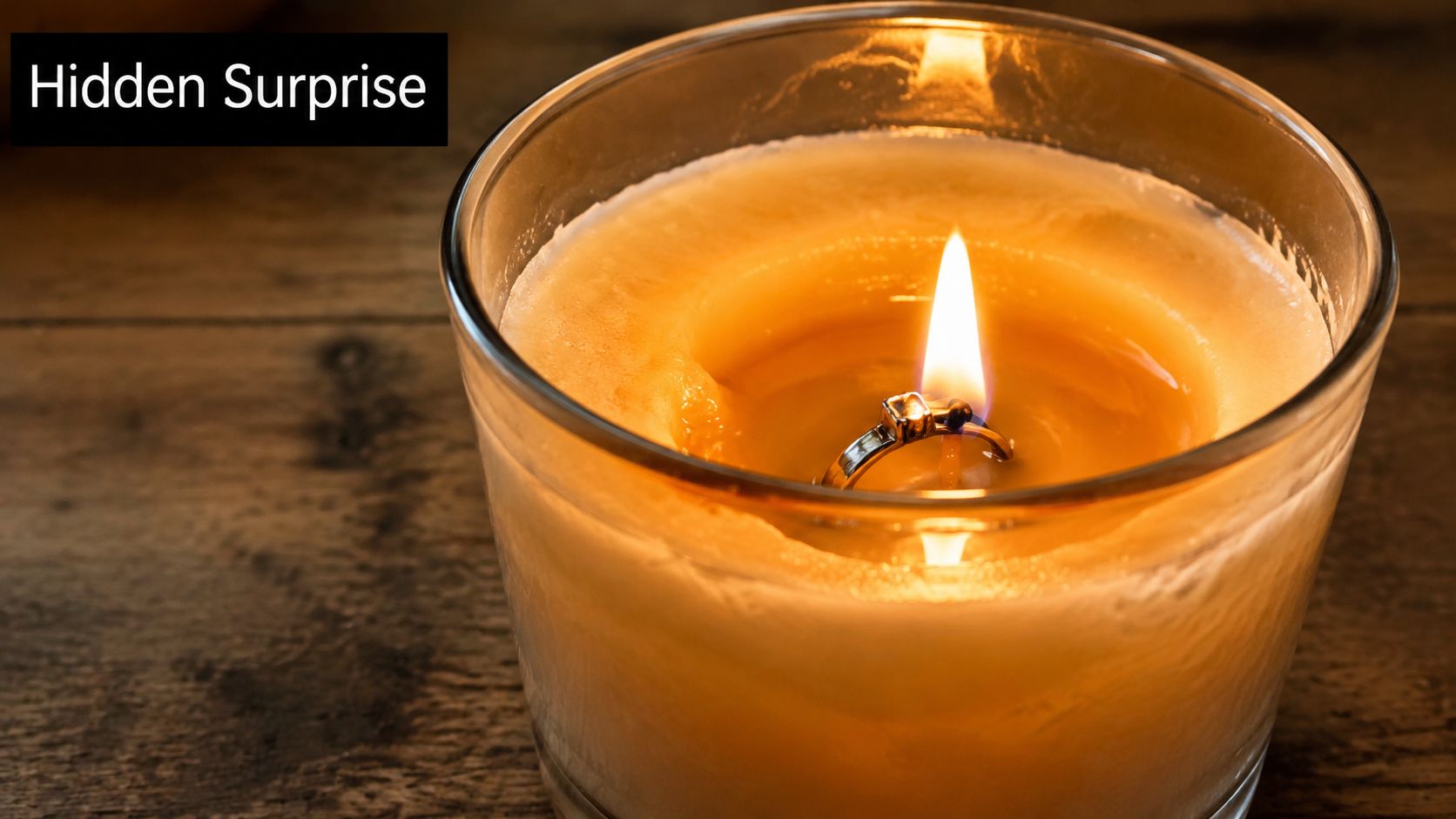
A normal candle offers scent, light, and decoration. A jewelry candle adds a second reward, but the added reward can be misunderstood. The ring might be a simple plated band, a sterling silver piece, or a higher-tier design with a more valuable stone. The product's entertainment value is real even when the jewelry isn't a major financial prize.
The four questions below are the right starting point for a first-time buyer:
The best way to approach these products is as fragranced gifts with a jewelry surprise, not as guaranteed investments. That mindset makes the reveal enjoyable while keeping expectations grounded.
A ring inside a candle begins like a standard container candle, then gains a second set of design requirements. The maker must center the wick, keep the jewelry away from early flame exposure, and place it where melting wax can reveal it without leaving it permanently trapped.
The reveal point depends on the candle's size, wax behavior, capsule position, and wick performance. A colored wax plug or another visual marker may signal that the jewelry is nearby, but brands do not all use the same warning.
The ring and its wrapping occupy space that wax and fragrance would otherwise fill. A small capsule usually does not stop the scent system, yet poor placement can divide the melt pool and send liquid wax toward one side. That uneven flow can leave the wick with less consistent fuel, causing flicker or extra heat as the candle burns.
Makers therefore match jewelry placement with wick diameter, jar width, fragrance load, and wax blend. The process is explained further in this guide to making candles with jewelry inside.
The video below shows a general production example. Exact methods vary by manufacturer.
If the wax melts too quickly on one side, the ring may be exposed beside a hot wick instead of within a calm, even pool. Wax therefore affects more than scent and burn time. It controls how quickly a melt pool forms, how evenly it spreads, and how smoothly the protective capsule becomes reachable. The jewelry itself does not burn, but its wrapping and position become part of a system shaped by heat, liquid wax, fragrance, dye, wick size, and airflow.
Soy is often considered for this category because combustion behavior can be comparatively clean under suitable conditions. A summary of independent testing reports that paraffin candles produced considerable soot in the test conditions, while soywax candles produced little or none. It also notes slower burning for soy candles, which is consistent with a smaller flame and longer burn behavior (summary of candle combustion findings).
Wax type cannot compensate for poor setup. An oversized or untrimmed wick, a draft, or an incompatible fragrance can create flicker and excess heat. The capsule may then release unevenly, placing the ring near a hotter section of liquid wax. A well-designed candle matches the wax, wick, jar, fragrance, and jewelry placement so the melt pool behaves more like a level tray than a tilted puddle.
The table offers a practical guide. Exact results depend on the formula and wick, so the approximate melt temperature is a design reference, not a promise of performance.
| Wax Type | Approx. Melt Temp | Release Behavior | Residue Risk |
|---|---|---|---|
| Soy | Around 120°F in the planned formulation | Often softens gradually and may expose a protective capsule smoothly | Lower soot potential with suitable wicking, though fragrance or dye can still leave residue |
| Coconut blend | Formulation-dependent | Usually forms a soft, creamy pool that may expose the capsule evenly | Depends on the blend and fragrance compatibility |
| Paraffin | Formulation-dependent | Can form a hotter, faster-moving melt zone around packaging | Greater concern if packaging scorches or collects soot |
| Blended wax | Formulation-dependent | Tuned by the maker for firmness, scent throw, and release timing | Varies with the ingredients and wick pairing |
A practical soy fragrance-loading range is about 6% to 10% by weight. A CandleScience lab note reports that its SimplySoy Artisan Wax held test fragrances up to a 10% load (soy wax fragrance-loading guidance). Exceeding a wax's workable load can contribute to wick clogging, soot, smoky flames, and uneven burning.
Cotton wicks can provide predictable trimming and a steady flame. Wood wicks create a different visual and audible experience, yet still need correct sizing and maintenance. The target is a flat, even melt pool. A lopsided pool can leave wax around the ring while directing unstable heat toward the capsule. That affects both the reveal and the candle's burn safety.
Treat a jewelry candle as a candle first and a surprise package second. The hidden ring can affect the melt pattern, but it doesn't remove the basic risks of flame, hot wax, heated glass, and unattended burning.
Set the jar on a heat-safe, level surface away from curtains, papers, pets, children, and moving air. Trim the wick to 1/4 inch before each session, and keep each burn to two hours maximum. A short, controlled session gives you time to observe the flame and wax instead of allowing heat to build without supervision.
Practical rule: If the flame becomes tall, smoky, or erratic, extinguish the candle and let it cool before troubleshooting.
As the candle approaches the reveal zone, look for the wick to darken, lean, or appear to tug against something beneath the wax. Those signs can indicate that the capsule is close, but they aren't a reason to reach into the candle.
Stop burning when roughly half an inch of wax remains above the ring or capsule area. Extinguish the flame with a snuffer or gentle cover, and let the jar cool for at least 20 minutes before attempting retrieval. Don't dig through hot wax, and don't relight a candle after the ring has fallen back into the liquid pool.
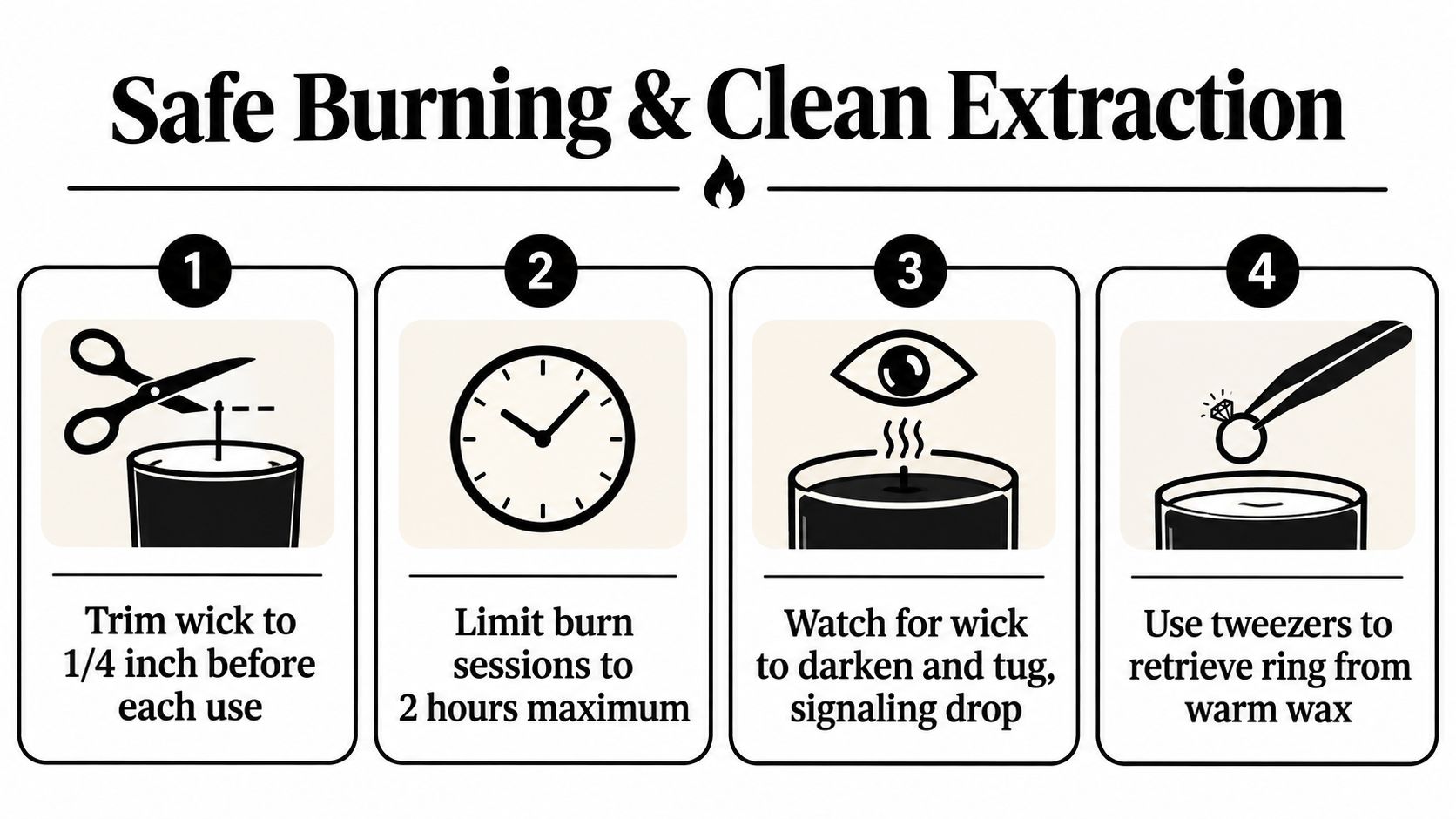
Use plastic tweezers to lift the cooled or warm capsule. Metal tools can scratch plated bands, chip a finish, or mark the jar. Once the ring is free, remove any remaining wrapping and rinse the piece in warm water with a small drop of dish soap.
A microfiber cloth works well for patting the ring dry. Avoid an ultrasonic cleaner on plated jewelry unless the manufacturer confirms that the finish can tolerate it. The jewelry candle reveal guide can provide another practical reference, but always follow the specific seller's instructions if they differ.
Independent candle-safety discussion highlights a broader issue: a foreign object can affect burn behavior, so safety guidance should address wick trimming, burn duration, jar heat, and when to stop using the candle, not only the act of “digging out” the ring (discussion of jewelry candles and safety concerns).
A jewelry candle's advertised prize value can sound more precise than it is. The ring may be wearable and attractive, yet its retail replacement value can be very different from its melt value or likely resale price.
A lower-priced ring is often a copper alloy band with cubic zirconia or a small glass stone. A middle tier may use sterling silver with a modest accent stone, while a premium tier can feature gold vermeil, moissanite, or a birthstone. Those descriptions are useful only when the seller states them clearly and supports them with documentation.
An appraisal generally describes what it could cost to replace an item through a retail channel. It doesn't promise that a secondhand buyer, pawnshop, or jeweler will pay that amount. Retail pricing can include design work, labor, branding, presentation, and sales overhead, while resale focuses more heavily on material, condition, demand, and verifiable quality.
That distinction explains how a candle can cost less than an item's stated appraisal without automatically proving fraud. It also explains why a buyer shouldn't treat the appraisal as guaranteed profit.
| Tier | Metal Type | Stone | Appraisal Range | Resale Estimate |
|---|---|---|---|---|
| Entry level | Often copper alloy or plated base metal | Cubic zirconia or glass | May be presented as a low retail replacement amount | Usually limited, often close to novelty or material value |
| Mid-range | Commonly sterling silver | Small solitaire or accent stone | Can reflect a higher retail replacement price | Depends on silver content, condition, and stone demand |
| Premium | Gold vermeil or another disclosed precious-metal finish | Moissanite, birthstone, or similar feature stone | May be positioned as a more substantial retail replacement item | Requires verification of metal, stone, and condition before a buyer can estimate it |
The table describes common product positioning, not a guarantee for every candle. A seller should identify the actual composition of the ring you may receive, rather than relying on labels such as “luxury” or “high value.”
If you're comparing a surprise ring with a conventional engagement purchase, a resource covering steps to choose an engagement ring can help you evaluate metal, setting, stone, sizing, and documentation without the mystery element.
For a seller-specific explanation of the valuation process, consult the jewelry candle ring value information. The useful questions remain the same: What is the metal? What is the stone? Who issued the appraisal? Does the paperwork describe replacement cost or another valuation method?
Skepticism is reasonable, but the strongest test isn't whether a candle contains a ring. It's whether the seller explains the ring clearly enough for you to judge it.
Look for a product page that separates the candle's features from the jewelry's features. “Gold plated” is not the same as solid gold, gold-filled metal, or gold vermeil. “Stone included” doesn't tell you whether the stone is cubic zirconia, glass, moissanite, a birthstone, or another material.
Some established sellers, including Jewelry in Candles and Superior Jewelry Candles, publish product information, customer-service details, or business disclosures. That doesn't mean every item from any seller automatically meets your expectations. It means buyers can compare the information available rather than judging only from promotional photos.
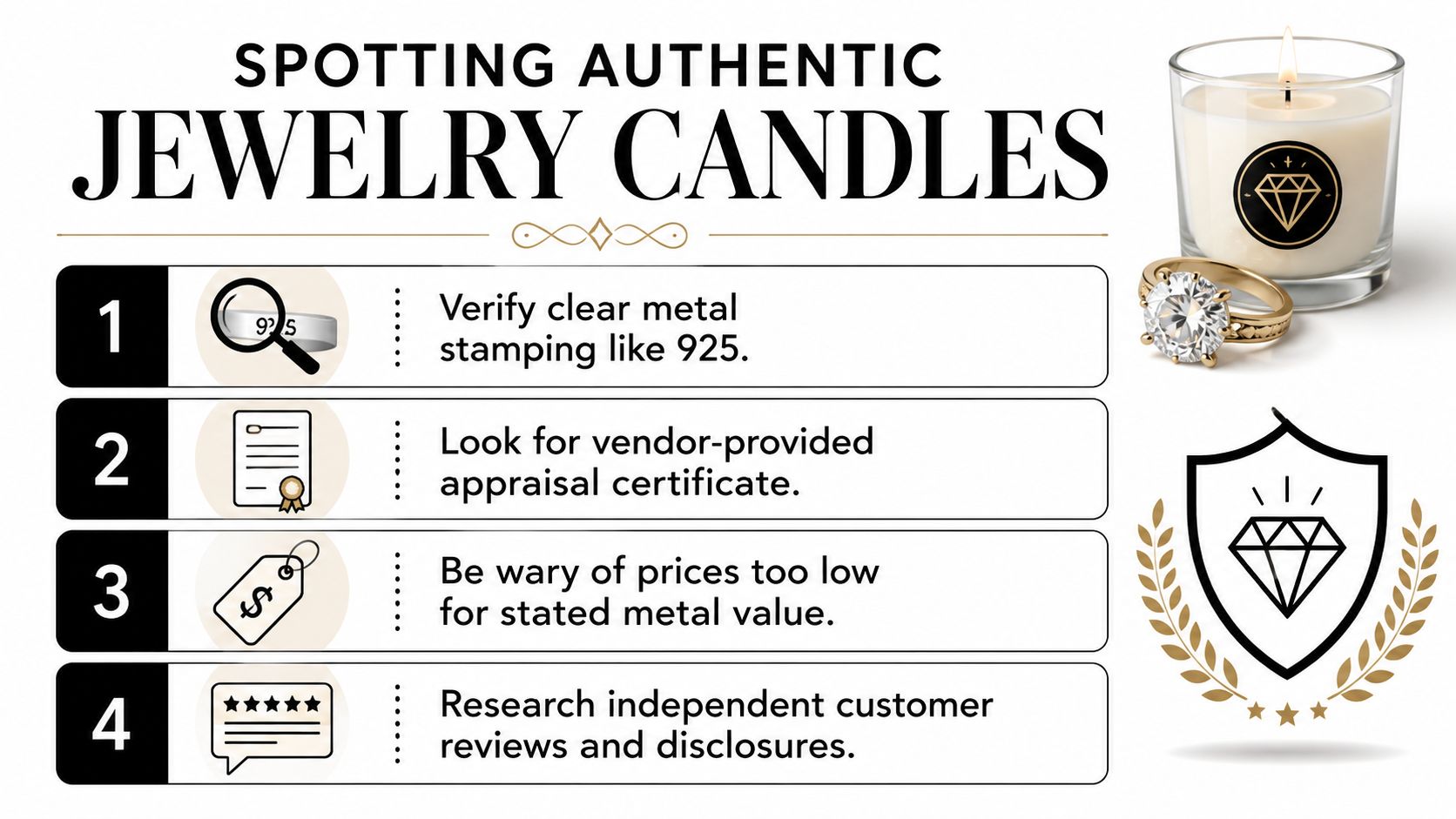
Vague terms such as “premium plated,” missing appraisal paperwork, and a ring that develops green tarnish quickly should prompt questions. Green residue can indicate a base-metal reaction, but it doesn't by itself establish the complete composition of a ring. Ask for the metal specification and care guidance before wearing it.
A low price can be a fair price for a novelty ring. It becomes misleading when the seller describes the jewelry with material terms it can't document.
Use a loupe to inspect stamps, compare the issuer's credentials, and ask how the company handles a missing reveal. Don't test a valuable-looking ring with harsh chemicals or abrasive methods, because those can damage plating and obscure the very evidence you're trying to examine.
A sensible purchase check can be completed before you add the candle to your cart. Start with the seller, then inspect the product specifications, and finish with the terms that protect you if the reveal doesn't go as promised.
Look for disclosed jewelry tiers, responsive customer support, and information about appraisal providers. Sellers that publish batch photos or burn-time videos give you more to evaluate than sellers that show only a polished ring against a dramatic background.
Confirm the wax type, wick material, approximate burn guidance, and the method used to protect the ring. A description that says the jewelry is sealed in foil or placed in a protective pouch gives you a clearer picture of the construction than a generic promise of a hidden prize.
Pay attention to what the product doesn't say. If the page gives a headline value but avoids metal composition, stone type, sizing, or care instructions, treat the headline as incomplete information.
A useful policy should explain what happens if the ring is missing, damaged, or difficult to retrieve. It may also address appraisal certificates, exchanges, and resizing. A written promise is more useful than a customer-service reply that isn't reflected in the terms.
Price claims need context. If a candle advertises a possible $500 ring for $20, treat that as a marketing ceiling, not a guaranteed payout. If a $60 candle lists a $300 appraisal, a realistic expectation is a disclosed mid-range piece such as sterling silver or a lower-value gold finish, not automatically solid gold.
Jackpot Candles offers scented candles with a concealed jewelry reveal and an appraisal page where customers can enter a ring code to review the associated value. It is one example of the type of seller to compare against other brands by checking its wax description, jewelry disclosures, reveal instructions, and policy language.
The strongest buying signal is visible proof. Batch images, material details, burn guidance, and a clear missing-ring process let you judge the product before the surprise begins.
Yes, but tell the recipient that a ring is hidden inside. They need to know when to stop burning and shouldn't treat the candle like an ordinary jar that can be burned to the very bottom.
Rinse it with warm water and mild dish soap, then use a soft brush only when the finish allows it. Pat it dry with microfiber, and avoid ultrasonic cleaning on plated pieces unless the seller or jeweler approves it.
Stop using the candle and photograph the fully burned wick, remaining wax, jar, and packaging. Send those images to the seller with your order details, then follow the stated missing-item process rather than searching through hot wax.
Sometimes, but resizing depends on the metal, setting, plating, and band design. Ask a jeweler to inspect it first, because resizing can damage a plated surface or affect a delicate stone setting.
Wax can leave an oily or fragrant coating, while the ring's actual tarnishing behavior depends mainly on its metal and finish. Clean and dry the piece before wearing it, then follow the seller's care instructions.
The fragrance usually continues to come from the remaining wax, but the exposed metal can make the experience feel different and may sit near the melt pool. Stop the burn according to the safety guidance instead of relighting the candle just to use the remaining scent.
If you want to explore a candle with a concealed jewelry reveal, visit Jackpot Candles and review the wax details, ring information, appraisal process, and safety instructions before choosing a product. Use those details to select a candle that delivers both an enjoyable fragrance experience and a clearly explained surprise.
Comments will be approved before showing up.