
free shipping at $99


You light your favorite soy candle after dinner, expecting a relaxing evening of fragrance and warm light. Instead, you notice that the wax seems to be disappearing much faster than expected, or a deep tunnel has formed around the wick while wax remains untouched along the sides. The problem may not be the candle alone. Soy candle burn time depends on the wax, wick, fragrance formula, container, room conditions, and the way you burn it.
A size-based estimate gives you a useful starting point, but it can't promise an identical result in every home. A draft near an open window, an untrimmed wick, or repeated short burns can change how efficiently the candle uses its wax. The most reliable way to enjoy a longer-lasting candle is to understand those variables and manage the ones within your control.
You bring home a soy candle labeled for long evening use. After a week of brief, hurried burns, the jar appears lower than expected, while a dark wick tip and an uneven wax surface suggest a problem. The candle may be functioning normally. Its lifespan reflects both its construction and the care routine surrounding each burn.
Start with the material that fuels the flame: wax mass. A jar's size or total weight can be misleading because it may include glass, a lid, fragrance, and decorative parts. For a useful comparison, check the listed wax or net weight. More wax generally means more available fuel, but it does not guarantee a fixed number of hours.
A label's burn-time figure is best read as a range produced under reasonable conditions. Wick design, fragrance concentration, vessel diameter, airflow, and trimming habits all influence how quickly the wax reaches the flame. A candle burned in a calm room with a properly prepared wick may last longer than the same candle used beside a draft or in repeated short sessions.
The common estimate of 7 to 9 hours per ounce of soy wax offers a starting point, rather than a stopwatch promise. Soy is also widely reported to burn 30% to 50% longer than paraffin candles of the same size, as described in this soy candle burn-time guide. These figures help set expectations, but real performance depends on how efficiently the wick draws fuel and how evenly the melt pool develops.
A properly matched wick behaves like a controlled valve. It supplies enough melted wax for a steady flame and broad melt pool. If it is too large, the hotter flame can consume fuel quickly. If it is too small, the flame may heat only a narrow circle, leaving wax around the sides. That unused wax is part of the candle's weight, but it does not contribute to useful burn time.
Wax type also affects how the candle behaves. For a clear explanation of what soy wax candles are, review the material's composition and common characteristics before comparing labels.
A useful starting rule: Treat printed burn time as a range shaped by wax weight, candle design, room conditions, and daily care.
Soy usually provides a slower burn than paraffin, yet the hours you receive depend on the candle's behavior in your room. A range signals normal variation, not necessarily inconsistent workmanship. Read the label as a starting point, then judge the candle by its melt pool, flame, and overall burn pattern.
A premium soy candle can last differently from one evening to the next. In a quiet bedroom, its flame may burn steadily and use wax at a measured pace. On a kitchen counter beside an open window, the same candle can develop an uneven melt pool and consume fuel faster. Burn time is therefore a changing system, not a fixed hours-per-ounce promise.
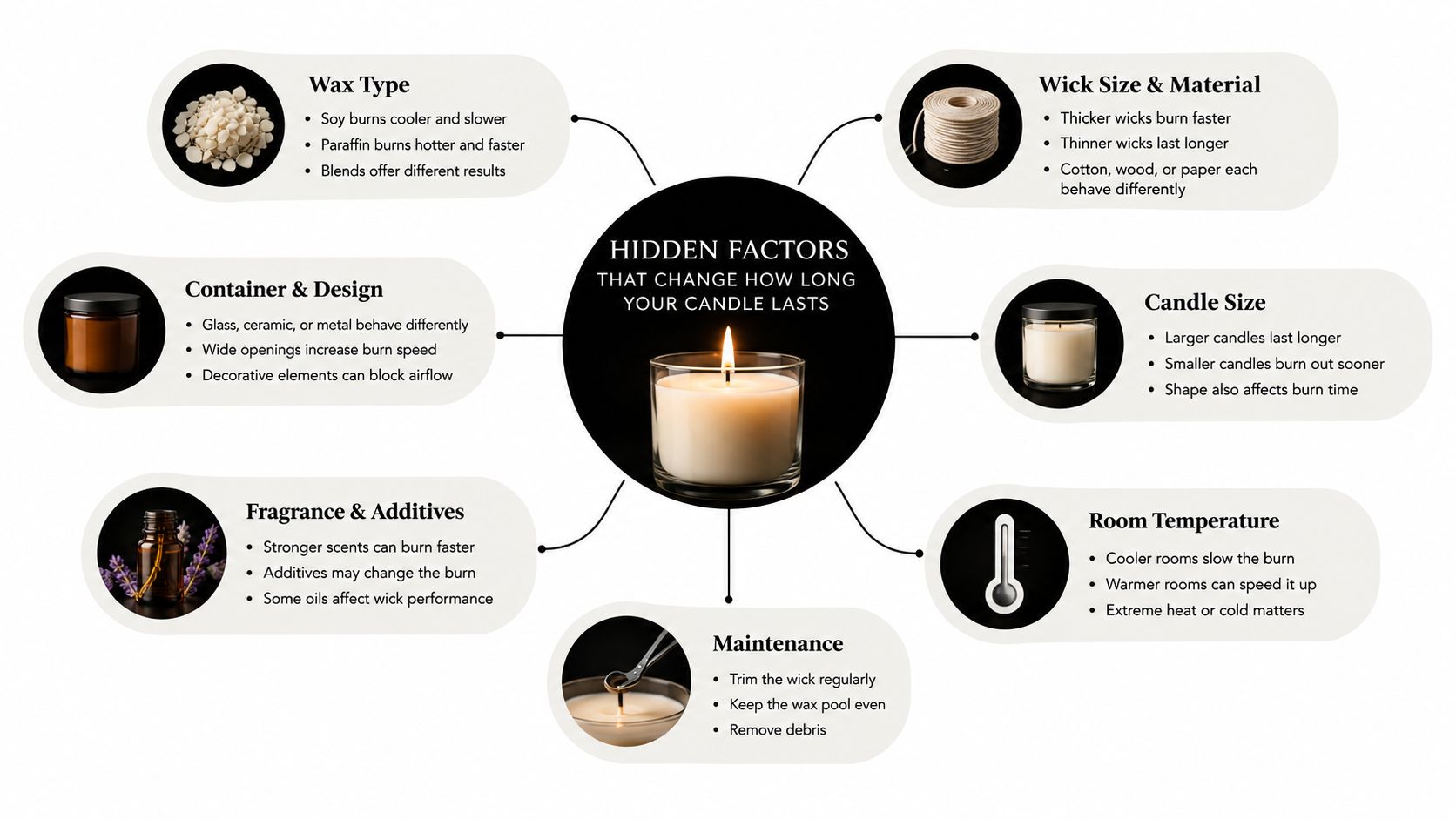
Wax mass is the reservoir. A larger amount of wax provides more fuel, while the wick controls the rate at which that fuel reaches the flame. The wick works like a faucet. A well-sized wick draws enough melted wax to maintain a stable flame and warm the surrounding surface. A wick that is too large opens the faucet too far, creating a hotter flame and faster wax consumption.
A wick that is too small restricts the flow. It may produce a narrow melt pool, leaving a ring of solid wax around the vessel. That wax remains in the container instead of becoming usable fuel. Container shape affects the balance too. A broad vessel needs heat to travel across its surface, while a narrow one concentrates heat in a smaller area.
The candle's lifespan depends on how these parts work together, not on wax weight alone.
Fragrance oil adds scent, but it also changes the wax system. It can lower the effective melt point and increase the burn rate. If the wax cannot hold the fragrance properly, the candle may soot, burn unevenly, and use wax more quickly.
A technical explanation of fragrance loading and melt-pool behavior notes that loading above about 10% to 12% can contribute to these problems. A stronger scent does not automatically mean a longer-lasting candle. The fragrance concentration, wax, and wick must be matched so the scent performs without making the flame unstable.
Air movement changes the flame's shape and direction. A fan, heating vent, or open window can pull the flame to one side, causing the melt pool to deepen unevenly and making wax disappear faster along one edge. Moving the candle while its wax is liquid can also disturb the surface and change how it cools.
Daily habits matter just as much as the candle's design. A carefully tested candle may burn differently in a still bedroom than on a breezy kitchen counter. Two people can therefore get different lifespans from the same product without either person using it incorrectly. Record how the flame and melt pool respond in your room, then adjust placement and burning habits accordingly.
A burn estimate is a starting point, not a promise. Use the baseline from Section 1, then turn it into a working forecast by checking the candle's wax weight, wick setup, and intended burning conditions.
First, confirm what the printed weight measures. A net wax weight supports a useful estimate, while a total product weight may include the jar, lid, and packaging. Next, record the number of wicks. Multiple wicks can spread heat across a wider vessel, so the same amount of wax may not burn at the same rate as a single-wick candle.
A simple log can be more useful than a label calculation. Write down the start and finish time, wick condition, room location, and whether the melt pool reached the vessel's edges. After several sessions, you can see whether the candle is using wax steadily or losing efficiency through tunneling, an oversized flame, or uneven heat.
Two identical candles may finish at different times in different homes. Drafts can pull the flame sideways, while an untrimmed wick can produce a larger, hotter flame. Brief sessions may leave wax around the sides, reducing the portion that burns cleanly later.
The industry discussion of candle wax performance explains why burn rate depends on more than the wax label. For a practical real-world reference, this guide to real-world soy candle burn time also describes how home conditions and care habits can shift the final result.
Treat your log like a candle's service history. It shows how the flame behaves in your space and helps you decide whether a small change in placement or wick care could preserve more usable wax.
A soy candle and a paraffin candle may look identical in a jar, yet their behavior changes once the wick is lit. Soy wax comes from vegetable oil, while paraffin is petroleum-derived. Their melt points, fragrance performance, and soot patterns differ, so the same container size does not guarantee the same experience or lifespan.
Soy generally melts more gradually, which can provide a longer, steadier burn when the formula and wick are well matched. That advantage is conditional, not automatic. A poorly matched soy wick may leave a tunnel or waste wax at the sides, while a carefully tested paraffin blend can produce a more even flame. Your room, vessel, fragrance load, and daily burning habits help determine the result as much as the wax category does.
Melt-point behavior is one useful comparison. Soy often needs more time to form an even liquid surface, particularly in a broad vessel. Paraffin commonly reaches a fluid melt pool more readily, which can make its fragrance release feel faster. Soy may offer a softer, slower fragrance progression, while paraffin is often chosen for a stronger immediate scent throw. The exact result depends on the blend and fragrance oil.
Soot and cleanliness also depend on the complete candle design. An oversized wick, excessive flame, or draft can produce smoke in either wax. A stable flame and a properly tested wick help both materials burn more cleanly. Wax alone cannot guarantee a spotless jar.
Price per hour deserves the same careful treatment. A lower-priced paraffin candle may cost less at checkout, while a soy candle that lasts longer or uses fragrance more gradually may provide a different value over its usable life. Compare the candle's total cost with how long it burns in your home, rather than judging value from the wax label alone.
Wick size remains the main control point for both materials. The maker must match it to the wax blend, fragrance load, and container diameter, as explained in the earlier discussion of environmental and care factors.
For a broader material comparison, read this soy versus paraffin candle comparison.
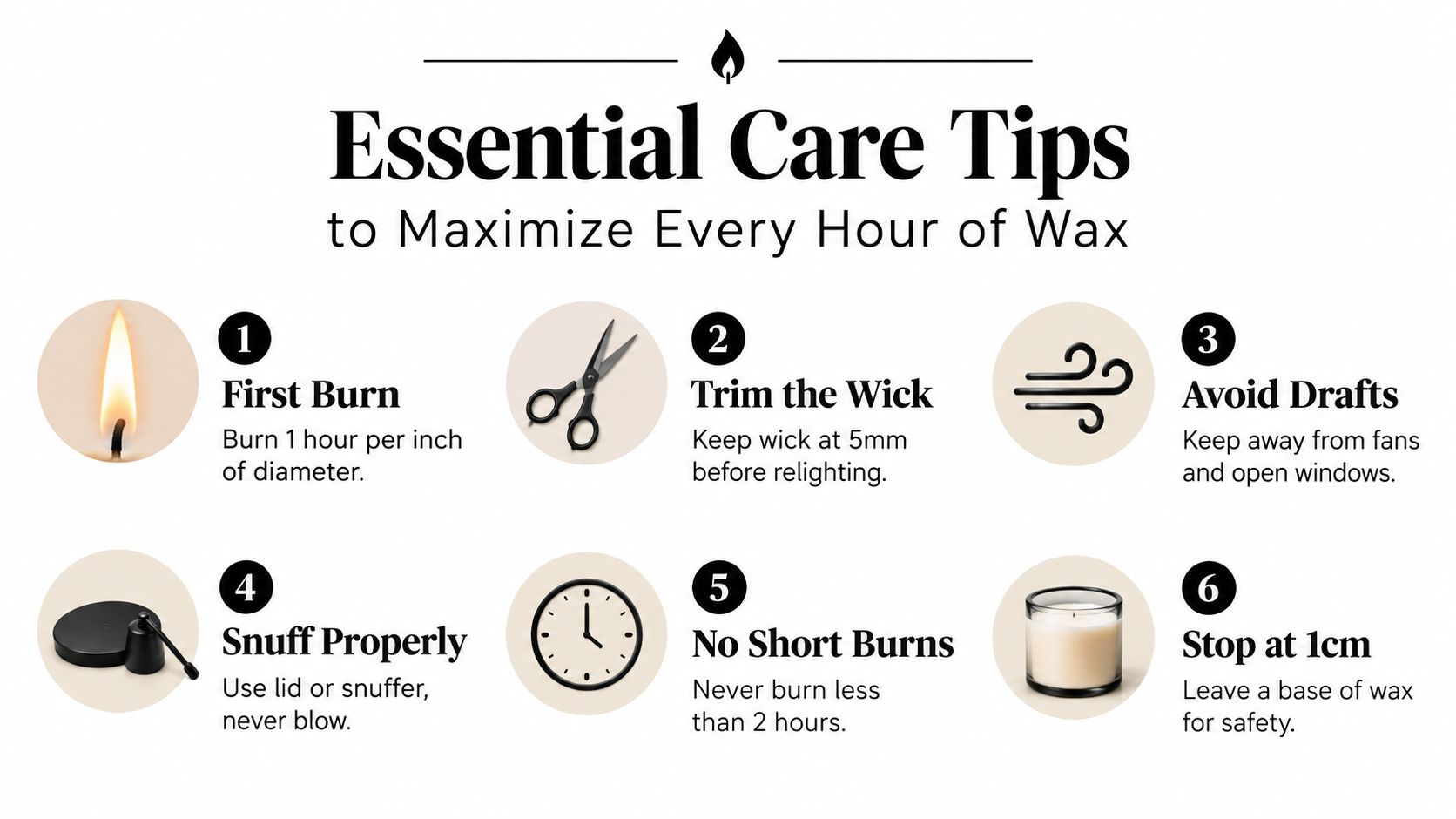
The care guidance above applies to the comparison: a premium wax still depends on its surroundings and routine. Keep the candle on a stable, draft-free surface, prepare the wick before lighting, and give the melt pool time to develop. These habits influence how much of the wax becomes usable fragrance and light, so actual burn life is shaped by the environment, not a fixed hours-per-ounce promise.
A candle can still contain plenty of wax yet burn poorly. If the first flame melts only a small circle around the wick, the solid outer ring may remain untouched. Later burns can follow that narrow channel, leaving usable wax against the sides.
During the first burn, let the liquid wax spread to the container wall, as long as the candle remains attended and safe. Allow about one hour per inch of container diameter as a general guide, but watch the surface instead of treating the clock as a guarantee. The vessel, wick, and room conditions all affect how quickly the pool develops.
First-burn rule: Let the top melt evenly to the edges before extinguishing, provided the candle remains attended and safe.
After that first session, give the wax enough time to warm across the surface rather than relying on quick, repeated lightings. A brief burn can leave the candle with an uneven memory of where to melt. A long burn can make the container excessively hot, so stop when safe use requires it.
Before each relighting, let the wax cool fully and trim the wick to about 1/4 inch. This length gives the flame enough fuel without allowing a tall, smoky tip to consume wax too quickly. Remove carbon crumbs and loose wick pieces from the surface before lighting.
Use a wick trimmer, small scissors, or another tool that can reach the wick without digging into the wax. If the wick has bent into the melt pool, straighten it only after the wax has cooled. These small steps make each session more consistent than burning for a set number of hours.
For more practical handling instructions, read this candle-burning guidance from Jackpot Candles. Extinguish the flame with a snuffer or a careful wick dip rather than blowing across the liquid wax. That reduces smoke and helps keep soot from settling on the container.
A deep hole around the wick means the surface has not been warming broadly enough. A tall, smoky flame often signals that the wick needs trimming, while one-sided melting can show that the candle is not sitting evenly. Treat these signs as feedback, then adjust the next session instead of trying to recover the lost wax with a much longer burn.
Stop using the candle when about 1/2 inch of wax remains. The shallow base may allow the container to overheat, especially during a long session. Keep the candle in sight while lit, and let the container cool completely before cleaning it for reuse.
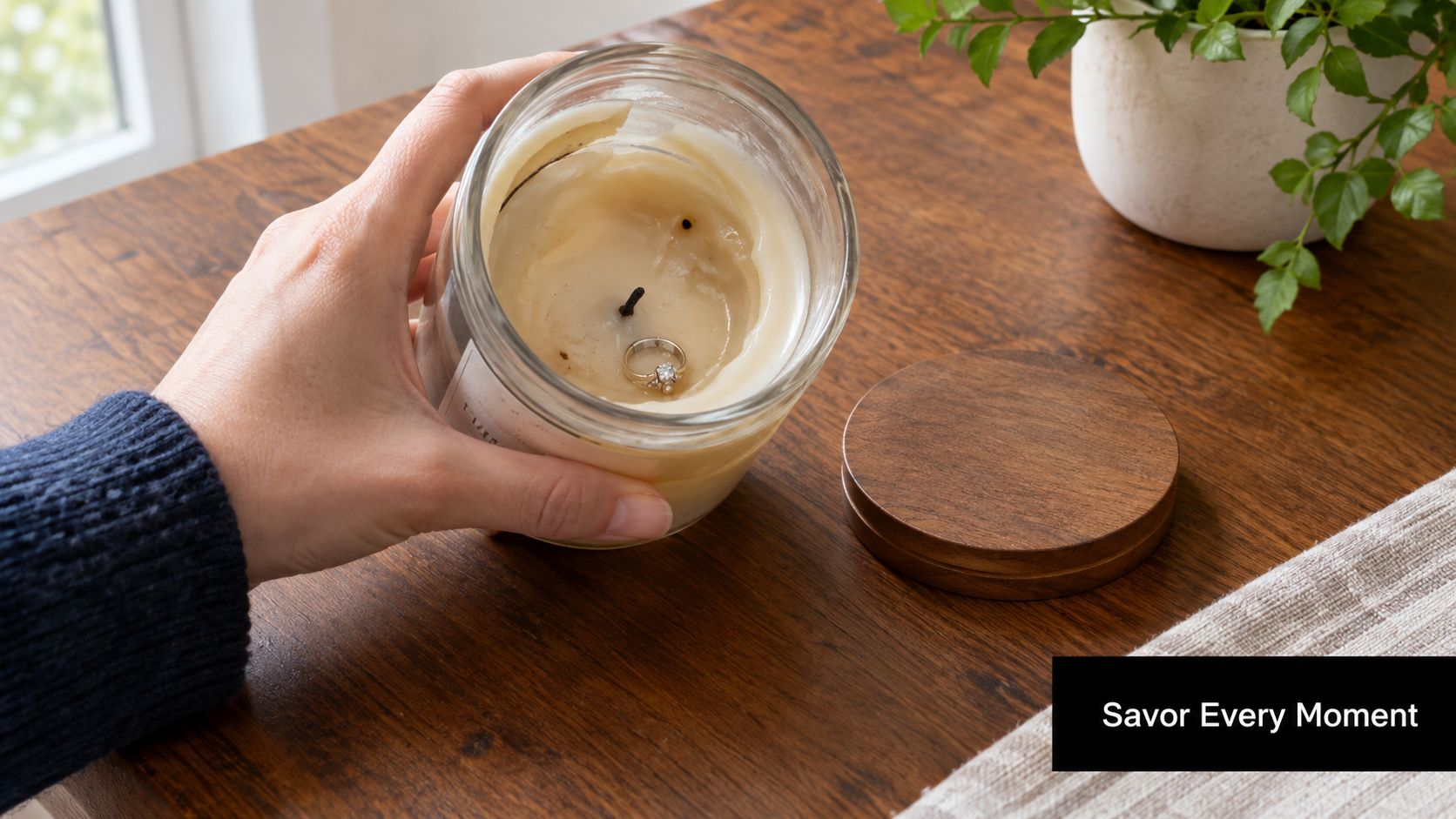
Burn time is more than a number printed on a product page. It determines how gradually the fragrance enters your room, how often you need to relight the candle, and how much anticipation builds before the hidden jewelry appears. A slower, even burn lets you enjoy the scent experience instead of rushing toward the bottom of the jar.
The most useful principles are straightforward:
Jackpot Candles offers scented soy candles with a hidden piece of jewelry, so the candle's fragrance, glow, and eventual reveal are part of the same experience. If you're ready to choose a candle and put these burn-time habits into practice, visit Jackpot Candles and explore the available surprise designs.
Comments will be approved before showing up.