
free shipping at $99


You've found the perfect present in theory: something relaxing, attractive, and personal enough to show that you've paid attention. Then you open a typical gift basket and find mismatched lotions, an overpowering candle, and filler that takes up more space than the products. The recipient smiles, but the gift feels assembled rather than considered.
A spa gift set works best when it feels like a complete moment, not a pile of bath products. The scent, texture, packaging, order of use, and small surprise should work together to create a private ritual. Whether you're buying for a loved one, building a corporate gift, or making a self-care collection for yourself, the strongest sets combine practical usefulness with sensory discovery.
A good spa gift set answers an unspoken question: what kind of rest does this person need? Someone who spends long days at a desk may appreciate a soothing bath, rich foot cream, and a candle that creates a clear boundary between work and evening. Someone who travels frequently may prefer compact products, a reusable pouch, and a shower-focused routine. The contents should tell a story about the recipient rather than just reflect what happens to be available on a retail shelf.
That distinction matters because spa gifting has moved beyond occasional indulgence. One independent market summary estimates the global spa products market at USD 61,817.8 million in 2024, with a projection of USD 90,408.9 million by 2030 and a 6.5% CAGR from 2025 to 2030. The same overview connects this growth with familiar product categories such as bath salts, body care, aromatherapy, and self-care accessories, the same building blocks used in many gift bundles. Read the spa accessories market summary for the underlying market context.
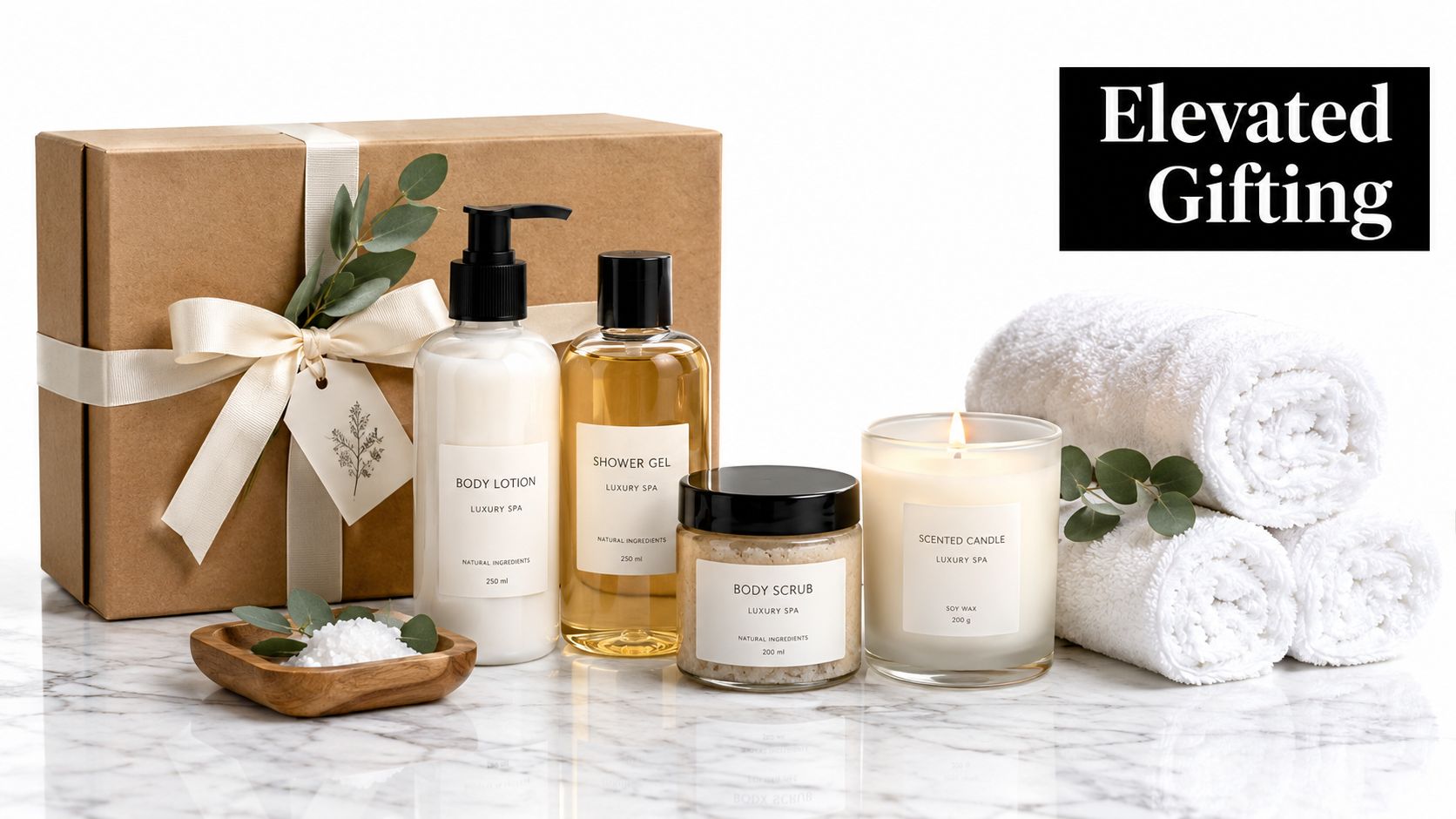
A thoughtfully composed set has a beginning, middle, and end. Cleansing products open the routine, exfoliating or mineral-based treatments add a tactile step, and creams or oils finish it with comfort. A candle, towel, sleep mask, or small discovery item can frame the experience without competing with the core ritual.
Practical rule: Every item should either support the routine, improve the atmosphere, or create a memorable reveal. If it does none of those things, it probably doesn't belong in the box.
This approach works for relationship gifting because it gives the recipient permission to pause. It works for corporate gifting because the products are useful without requiring the sender to guess at a highly personal object. It also works for self-gifting, where the act of arranging the products can mark a transition from a crowded day to a calmer evening.
Visual appeal earns the first reaction, but scent and touch determine whether the gift feels premium. A heavy glass jar, a soft towel, a smooth wooden lid, and a balanced fragrance create more confidence than excessive decoration. A hidden surprise can add another layer, especially when it appears after the recipient has already begun using the candle or bath product.
The strongest sets also leave room for interpretation. They don't insist that the recipient follow a complicated treatment plan. Instead, they offer a few compatible ways to relax, such as a warm bath, a scented shower, or a quiet candlelit routine. That flexibility is what turns a seasonal gift into something people can use repeatedly.
A spa gift set should behave like a compact regimen. Instead of placing one oversized product in a box, a good curator combines several functional steps that create variety without producing clutter. A documented home-spa set, for example, includes a 2 oz shea butter cream, 3 oz body scrub, 1 oz clay facial mask, 2 oz foot salts, and 2 oz foot cream in a 10.75 x 2.25 x 2.25 inch box. Those specifications come from the Head-to-Toe Home Spa Gift Set, which illustrates how a small package can support a multi-step experience.
Look for a sensible progression rather than a random assortment.
The ingredient architecture can also reveal whether the set was designed with purpose. The documented example combines emollient-rich creams containing shea butter, coconut oil, cocoa butter, and beeswax with sea-salt scrubs, kaolin and bentonite clays, and mineral salts such as Dead Sea, pink Himalayan, and Epsom salts. These ingredients serve different roles, from softening and conditioning to exfoliating and adding a mineral bathing step.
Spa gift sets aren't purchased evenly throughout the year. Google Trends data cited in a market summary shows the term bath and body gift box reached a normalized interest score of 84 in December 2024, then fell back near zero in January 2025. The same source identifies a similar December pattern for aromatherapy gift searches. See the spa gift box trend overview for the search-interest context.
That pattern affects both buyers and makers. During a holiday rush, polished packaging and dependable bestsellers may matter more than experimental combinations. Outside the main gifting window, a smaller, highly specific set can work better because it speaks to a use case such as sleep, recovery, travel, or a quiet weekend at home.
Ingredient transparency matters more than a vague botanical label. One widely sold gift set states that its body-care products contain up to 95% natural-origin ingredients, while also identifying ingredients used for cleansing, solubilization, moisturization, and preservation, including sodium laureth sulfate, PEG-40 hydrogenated castor oil, glycerin, phenoxyethanol, and sodium benzoate. Its product details are available through the Sanctuary Spa shower duo.
The lesson isn't that conventional ingredients make a set unsuitable. Stable liquid products need appropriate formulation, fragrance dispersion, pH management, and microbial protection. The useful question is whether the brand explains the formula clearly and whether the product suits the recipient's preferences and sensitivities.
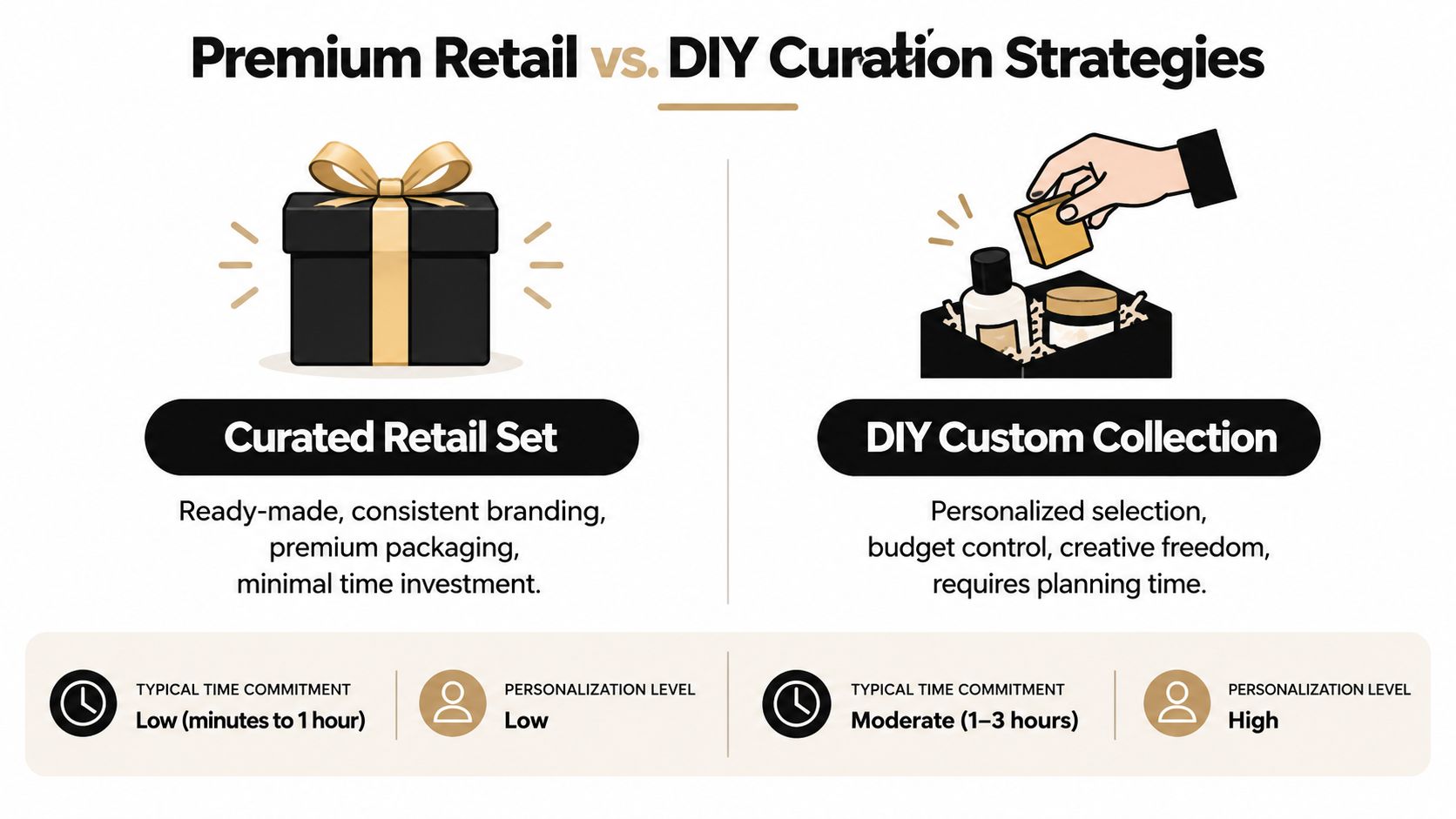
Choosing between a finished retail set and a DIY collection comes down to where you want to spend your effort. A premium retail set gives you a resolved visual identity, coordinated labels, and packaging that is ready for gifting. A DIY collection gives you control over every scent, texture, container, and personal detail.
Neither approach wins in every situation. The right choice depends on how well you know the recipient, how much time you have, and whether the unboxing experience matters more than exact product selection.
| Decision point | Curated retail set | DIY custom collection |
|---|---|---|
| Assembly | Ready to present with little preparation | Requires sourcing, arranging, and securing |
| Personalization | Usually based on a preselected theme | Can reflect precise scent and skin-care preferences |
| Visual consistency | Brand styling is already coordinated | You must create cohesion yourself |
| Product control | Limited to the available assortment | You choose every component |
| Surprise factor | May include a built-in novelty element | Comes from your own sequencing and hidden details |
| Best fit | Last-minute gifting, corporate presents, polished presentation | Close relationships, specific preferences, creative projects |
A ready-made set is useful when you need reliable presentation without spending an afternoon comparing bottles and containers. It also reduces practical mistakes. A professional packer has already considered product compatibility, box proportions, label placement, and the risk of bottles shifting during delivery.
Novelty products can make a retail set feel more interactive. A candle with a concealed ring or necklace, for example, creates anticipation during use rather than only at the moment of unboxing. That hidden discovery can give a familiar product a second emotional beat, provided the reveal is clearly explained and the recipient understands how to use the item safely.
The limitation is that a polished set can still feel generic if its fragrance or theme doesn't suit the person receiving it. A beautiful package won't fix a scent they dislike or a formula they can't use.
DIY is strongest when you know the recipient's habits. You can build a Sleep Well collection around calming fragrance notes, a Morning Ritual set around bright citrus and refreshing textures, or a desk-recovery bundle with hand cream, foot salts, and a candle for the end of the working day.
You also control the amount of packaging. A reusable wooden box may be appropriate for a substantial gift, while a fabric pouch may suit a lighter travel set. The drawback is that DIY work exposes every weak decision. Unrelated scents, inconsistent container sizes, or too many products can make a collection look improvised.
If you want to add a handmade bath element, use a tested method such as this easy bath bomb recipe, then pair the result with professionally labeled products rather than presenting an unmarked homemade formula as if it were store-bought.
A personalized gift doesn't need more products. It needs better decisions about the products already inside it.
Start with one clear promise. “A relaxing evening” is more useful than “a little bit of everything,” because it gives you a standard for every purchasing decision. Once the promise is clear, choose products that support the same mood while offering different physical experiences.
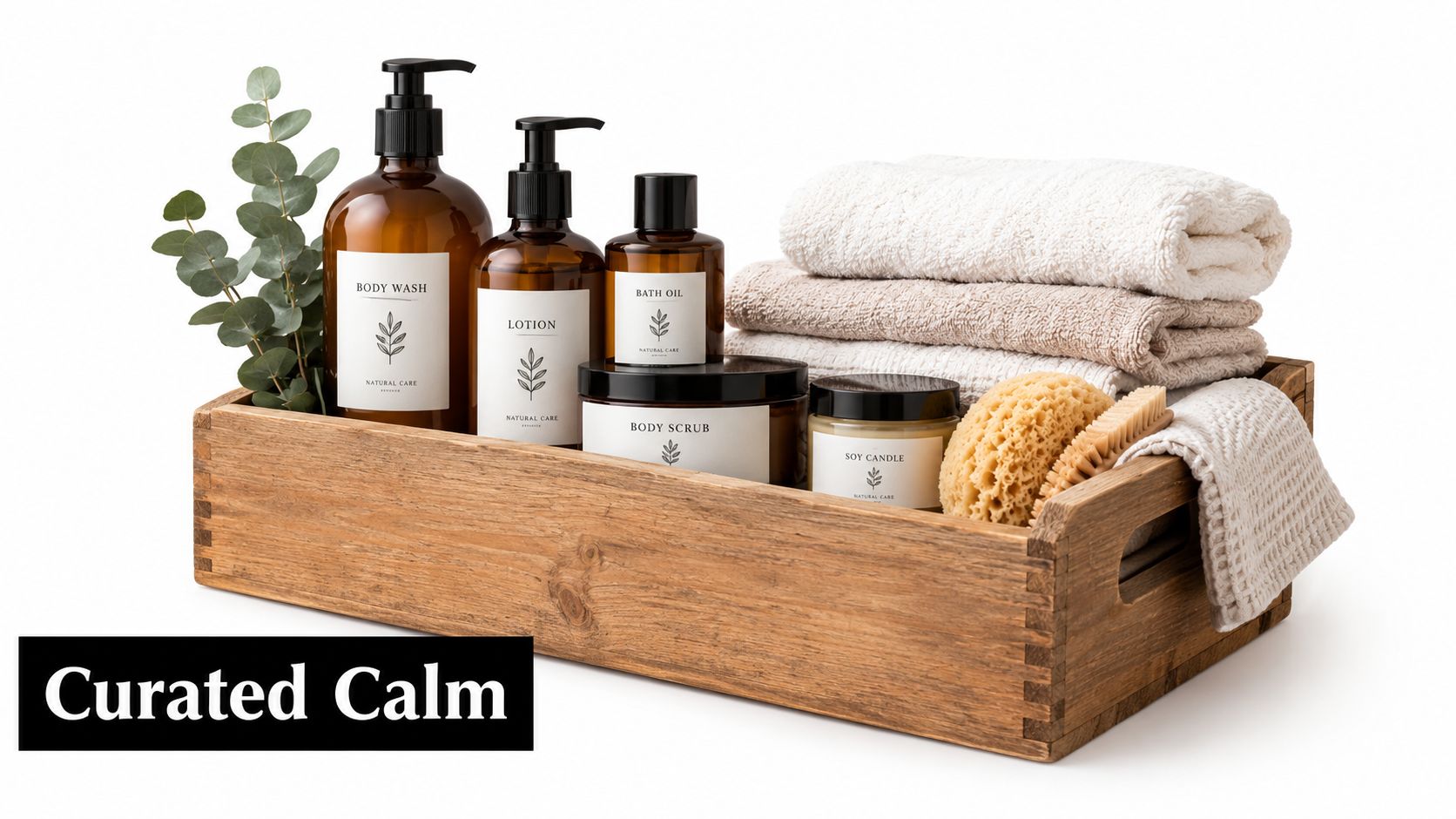
A useful collection usually needs one cleansing step, one treatment step, and one finishing step. Add an atmosphere product only after those foundations work together. A shower gel, body scrub, body lotion, and candle can feel complete without a towel, mask, salts, and several accessories competing for attention.
Scent deserves the same discipline. Matching every item exactly can become flat, but combining unrelated fragrances creates fatigue. Choose one central note, then allow gentle supporting notes around it. For example, a lavender-led set can include a soft herbal candle, a neutral cream, and a lightly floral bath product without making every item smell identical.
Use contrast through texture instead of fragrance overload. A creamy lotion beside a grainy scrub, dissolving bath salts, and a smooth ceramic vessel gives the hands and eyes something to discover. A multi-sensory set feels richer without becoming busier.
A set can also support people who don't have time for a full bath. Include a shower-friendly option or a small ritual that works beside the bed or at a desk. For practical ideas around tension after screen-heavy work, this desk worker massage routine can help you choose complementary tools without turning the box into a medical kit.
A short guide to assembling a home spa kit can provide another useful reference when you're deciding how to balance bath, body, and atmosphere products.
The container should support the experience rather than hide it. Use paper cushioning to prevent movement, keep liquids upright, and leave enough open space for the first visual reveal. A reusable vessel adds value only when the recipient can realistically use it afterward.
Before closing the box, test the sequence yourself. Open it as the recipient will, lift each layer, read the labels, and check whether the first product you see makes sense. Then light or use any atmosphere item only according to its instructions, and keep flammable products separated from bath and body formulas.
A thoughtful spa gift set should respect the recipient's values as carefully as it reflects their fragrance preferences. Sustainability isn't only a material choice made after the products are selected. It influences the size of the box, the number of inserts, the usefulness of the vessel, and the clarity of the ingredient information.
Recent market coverage reports that over 60% of consumers prefer sustainable beauty gifts, while also highlighting demand for custom packaging and limited-edition collaborations. Those expectations create a real design challenge. A highly personalized gift can become wasteful if every variation requires new boxes, printed cards, ribbons, and single-use accessories. See the spa gift set best-seller trends for that consumer context.
The most effective personalization often happens through selection rather than extra material. Choose the right fragrance family, include a note written for the individual, or arrange the products around a recognizable routine. A custom sleeve or label can add identity, but it shouldn't require an entirely separate packaging system for every recipient.
Limited-edition details work best when they improve the experience rather than encourage disposability. A reusable pouch, a small ceramic container, or a seasonal illustration that can be removed from the box has more staying power than layers of decorative plastic.
Personalization should make the recipient feel known, not make the recycling bin fuller.
A natural-looking label isn't enough. Check the full ingredient list, fragrance information, usage instructions, and any relevant claims before you buy. One documented gift set combines a high natural-origin positioning with conventional cleansing, solubilizing, moisturizing, and preservative ingredients. That combination demonstrates why transparent labeling is more useful than treating “natural” as a complete quality judgment.
Look for clear statements about whether a product is vegan or cruelty-free only when the brand provides that information directly. Also consider practical sensitivities. Strong fragrance, essential oils, exfoliating particles, and certain botanical ingredients may not suit every recipient, so a neutral body cream or unscented accessory can make a set more inclusive.
Packaging can communicate care through restraint. Recycled paper, reusable containers, minimal inserts, and clear material guidance make it easier for the recipient to understand what to keep and what to discard. If you include a candle, explain the vessel's second use only when it is practical. A durable container that sits unused isn't more sustainable just because it looks attractive.
For readers comparing candle materials and packaging choices, this guide to sustainable candles offers a useful way to think about the product's wider footprint. The same principle applies across the entire set: choose fewer, better-matched elements and explain them clearly.
Presentation determines whether the recipient sees a considered ritual or a collection of products. The contents may be excellent, but a box filled without hierarchy makes every item compete for attention. A carefully staged opening creates anticipation before the first bath bomb dissolves or the first candle is lit.
Begin with the exterior. The box, sleeve, or reusable container should suit the occasion and the recipient's style. A clean kraft box can feel warm and restrained, while a rigid dark box may suit a more luxurious presentation. The format matters less than the condition. Crushed corners, loose labels, and excess adhesive immediately lower perceived quality.
Arrange the set in layers. Place the largest or most visually important item where it can be seen first, then use tissue paper or paper filler to create depth around it. Don't bury the most personal detail at the bottom unless the delayed reveal is intentional.
A simple arrangement might look like this:
The first layer should never be an instruction sheet that feels clinical. Use a short note that tells the recipient why you chose the set and how to begin. “Light this after your shower and take the evening slowly” feels more personal than a list of product features.
A spa gift set should appeal to the eye before it becomes useful to the hands. Combine a few surfaces, such as paper, glass, wood, and fabric, but keep the palette controlled. Natural elements such as dried orange, eucalyptus, or a small bundle of herbs can add atmosphere, provided they are dry, clean, and separated from products that could absorb their scent.
Avoid adding loose botanicals directly to a bath product unless the formula and packaging are designed for it. Small leaves and petals can clog drains, cling to wet surfaces, or create a cleanup task that undermines the relaxing mood. Use them as removable decoration instead.
Tactile variation creates a stronger impression than decorative volume. A soft towel beside a cool glass jar and a textured paper label gives the recipient something to feel while opening the box. That physical sequence makes the gift memorable even before the fragrance develops.
Test the box as if you were receiving it after delivery. Products shouldn't roll into one another, leak onto paper, or require scissors to access the main gift. Secure glass containers individually, keep candle surfaces protected, and place any fragile surprise where it won't be crushed by heavier items.
A good presentation also explains the practical details without interrupting the mood. Include concise usage guidance for products that require special care, especially candles, bath products with colorants, or formulas intended for limited areas of the body. If the recipient has to search for basic information, the gift feels less finished.
The final touch is a real message. A handwritten card doesn't need to be long. Mention a shared memory, the reason you chose the scent, or the kind of evening you hope the recipient enjoys. That sentence transforms a polished box into a personal gesture.
Presentation isn't decoration added after the decision. It is part of the product itself. A cohesive spa gift set looks inviting, opens in a logical sequence, feels varied without being crowded, and gives the recipient a reason to use each item.
Jackpot Candles offers scented candles and bath bombs with a concealed jewelry surprise, along with spa-style gift options that can include a candle, bath bomb, and Vitamin C serum. Explore Jackpot Candles to find a sensory gift that combines a relaxing ritual with an unexpected discovery.
Comments will be approved before showing up.