
free shipping at $99


So, you’ve discovered a beautiful piece of jewelry—maybe even one hidden inside a Jackpot Candle—and you spot a tiny ‘925’ stamp tucked away on it. What does that mean?
In short, that stamp is your guarantee that the item is genuine sterling silver, made from 92.5% pure silver. It's a hallmark of quality that tells you the metal is authentic and valuable.
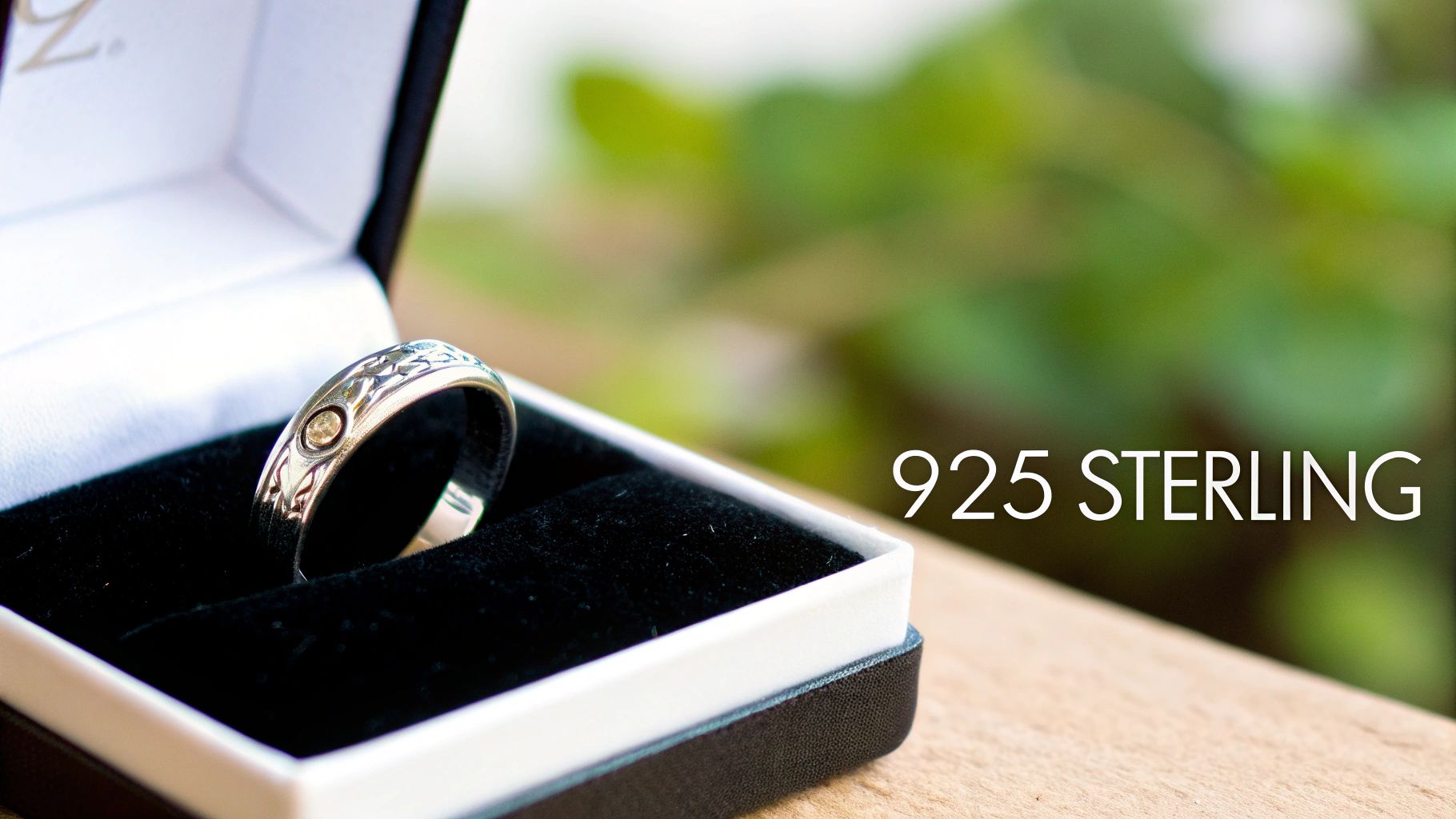
That little ‘925’ marking is more than just a number; it’s a universal sign in the jewelry world. Think of it like a baker's recipe. Pure flour on its own is too delicate to hold its shape, so a baker adds other ingredients to give the dough structure and strength.
It’s the same with silver. Pure silver (99.9%) is way too soft for everyday wear. A ring made from it would bend, dent, and scratch in no time. To fix this, jewelers mix 92.5% pure silver with 7.5% other metals (usually copper) to create a much stronger material called an alloy.
This specific blend is what we know as sterling silver, and the '925' stamp is its official seal of approval. It’s the perfect recipe.
To make it even clearer, here's a quick breakdown of what that stamp really tells you.
| Component | Meaning and Significance |
|---|---|
| 925 | The piece contains 92.5% pure silver. |
| Alloy Metals (7.5%) | The remaining 7.5% is made of other metals, like copper, to add strength and durability. |
| Hallmark | This stamp is a "hallmark," an official mark guaranteeing the metal's purity. |
| Quality Standard | It's the globally recognized standard for high-quality, authentic sterling silver. |
This simple stamp assures you that you're getting the real deal, not a plated imitation.
This standard isn't new. Imagine unwrapping one of Jackpot Candles' premium soy wax candles and finding a ring stamped with '925'. That mark connects your new piece to a tradition stretching back thousands of years. Merchants began marking silver to guarantee its quality in trade as early as 3000 BC, and the practice was officially formalized in the 13th century.
This time-tested blend gives you the best of both worlds:
The 925 stamp is your assurance that you're holding a piece of high-quality, authentic sterling silver. It’s the global standard that separates genuine articles from lesser-quality plated items or imitations.
Understanding this purity is also a big part of knowing how much is sterling silver worth, since its value is directly tied to that consistent 92.5% silver content. Every time you see that mark, you know you have a piece that beautifully balances precious metal with practical strength.
If silver is such a gorgeous, precious metal, you might be wondering: why isn’t jewelry just made from 100% pure silver? The answer is all about finding the sweet spot between incredible beauty and everyday strength.
Pure silver, which is also called fine silver and stamped with a '999' mark, is actually surprisingly soft.
Imagine trying to wear a ring made from a material as soft as modeling clay. It would get bent out of shape just from grabbing your keys, scratch up with a simple handshake, and any delicate designs would be gone in a flash. That's the reality of working with fine silver. While its shine is second to none, it’s just not practical for something you want to wear every day.
To get around this problem, jewelers had to get creative, mixing metals to craft a material that was much stronger and more resilient.
This is where the magic behind the ‘925’ stamp comes in. By mixing 92.5% pure silver with 7.5% of other, tougher metals, jewelers create what's known as an alloy. This new blend is what we call sterling silver. The most common metal added to the mix is copper, which is perfect for the job because it adds a ton of strength without messing with the silver's classic bright-white color.
Think of it like adding rebar to concrete. Concrete by itself is pretty strong, but it can be brittle and crack under pressure. The steel rebar gives it the internal skeleton it needs to handle daily wear and tear. Copper does the exact same thing for silver, transforming it from a delicate, fragile metal into something tough enough for a master craftsman to work with.
This specific recipe wasn't just picked out of a hat; it's the perfect balance.
This exact formula is why 925 sterling silver became the undisputed international standard for top-quality silver jewelry. It’s a guarantee that a piece isn't just beautiful, but it’s also built to last—from a pair of delicate earrings to a sturdy ring you might find in a surprise candle.
Creating sterling silver was a brilliant fix to a big problem. It gives artisans the ability to create intricate, detailed jewelry that can be cherished for generations. Without this process, the silver jewelry we have today just wouldn't be possible.
So, that ‘925’ stamp means more than just purity. It’s a symbol of a centuries-old innovation that brought together the best of art and science. It’s the mark of a metal that is both precious and practical, beautiful and built for life. This smart bit of engineering is the key to understanding what 925 means on jewelry—it's a sign of quality you can count on.
While that little ‘925’ stamp is the most common sign of sterling silver, it’s definitely not the only mark you’ll find. Think of these stamps as a secret language, each one telling a story about the metal’s identity and quality. Once you learn to read them, you become a much more savvy and confident jewelry owner.
Beyond the number 925, you might spot other stamps that mean the exact same thing. Jewelers often use abbreviations to say "sterling silver."
These alternative marks are just as legit and pretty common:
If you see any of these, you're holding a piece that meets that crucial 92.5% pure silver standard. This system of stamping isn't new; it has a long history as a consumer guarantee. Back in the Renaissance, European silversmith guilds made it a rule to build trust. In the US, the standard was officially adopted in the 1860s, moving from old ‘COIN’ marks to ‘STERLING’ or ‘925,’ which locked in the system we still use today.
This image really helps break down what sterling silver is made of, showing how pure silver is mixed with other metals to make it strong enough for jewelry.
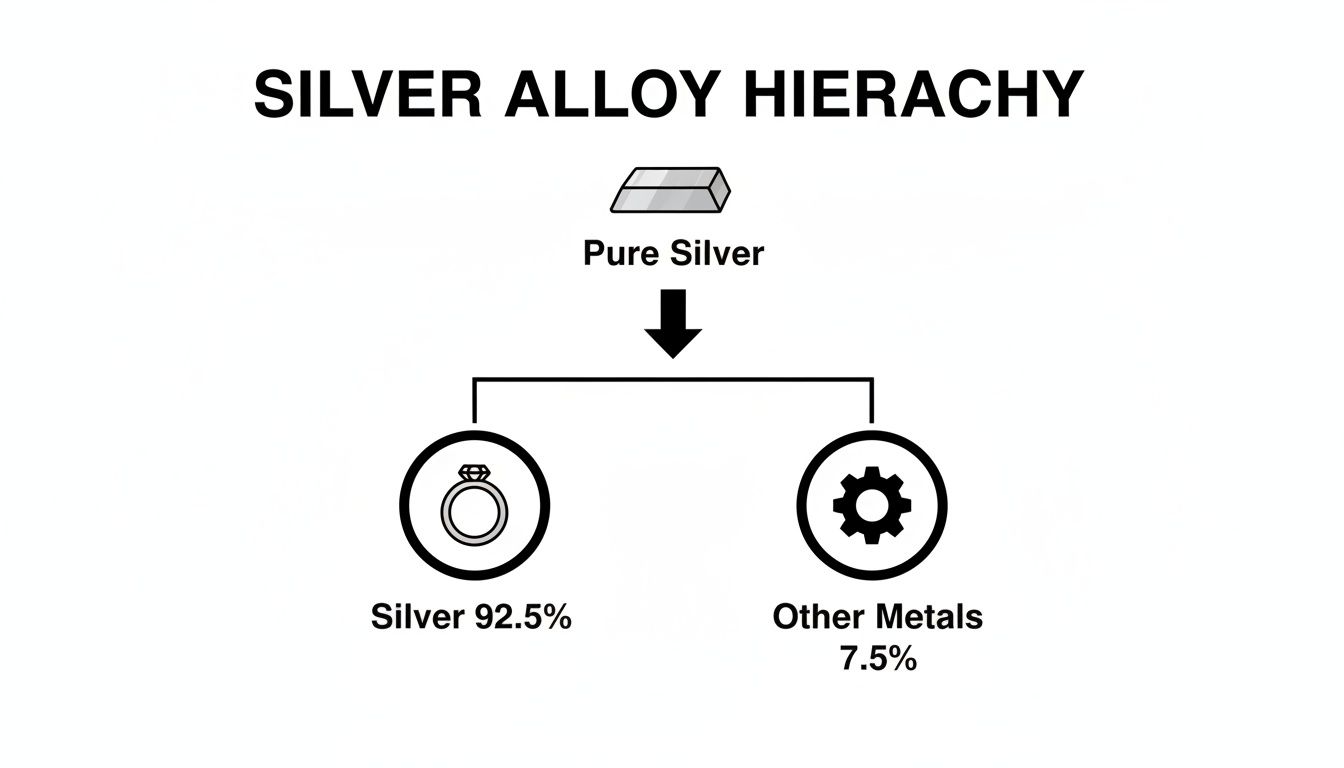
As you can see, that tiny bit of added metal is what turns soft, delicate pure silver into the durable, beautiful alloy we all know and love.
So, what about the other marks you might find? It's really helpful to know what the most common stamps mean, especially when you come across different types of metals.
This quick guide will help you identify what you're looking at based on its stamp.
| Stamp or Mark | Material | Meaning |
|---|---|---|
| 925 | Sterling Silver | The piece is a solid alloy made of 92.5% pure silver mixed with other metals for strength. |
| STER | Sterling Silver | An abbreviation for "Sterling," meaning it meets the 92.5% silver standard. |
| GP | Gold Plated | A thin layer of gold has been bonded to a base metal like copper or brass. The gold can wear off over time. |
| GF | Gold Filled | A thick layer of gold has been pressure-bonded to a base metal, making it much more durable than plated. |
| 10K | 10 Karat Gold | An alloy made of 41.7% pure gold. It's the most durable and affordable type of solid gold jewelry. |
| 14K | 14 Karat Gold | A popular choice for fine jewelry, containing 58.3% pure gold. It offers a great balance of beauty and durability. |
| PT / PLAT | Platinum | The piece is made of at least 95% pure platinum, a very strong, dense, and hypoallergenic precious metal. |
Knowing these distinctions is super powerful! It means you can look at just about any piece, decipher its hallmark, and get a really good idea of its true composition and value.
What if your jewelry looks golden but has a strange stamp on it? This is where understanding the difference between a solid metal and a plated surface is key. Some marks are dead giveaways that a piece isn't solid gold.
Here are the two you'll see most often:
GP (Gold Plated): This means a super-thin layer of gold was electrically bonded to a base metal, like copper or brass. Because gold plating is so thin, it can wear off over time with a lot of use, eventually revealing the different-colored metal underneath.
GF (Gold Filled): Gold-filled is a big step up in quality. Here, a much thicker layer of gold is heat-bonded to the base metal. This process creates a far more durable finish that won't tarnish or wear away nearly as easily as plating, giving you a longer-lasting golden look.
Key Takeaway: A ‘925’ stamp tells you you’re dealing with a solid precious metal alloy. In contrast, marks like ‘GP’ or ‘GF’ let you know it's just a surface coating over a less valuable base metal.
Whether you’re sorting through family heirlooms or checking out a surprise ring you found in a candle, you’ll now know exactly what you’ve got in your hands.
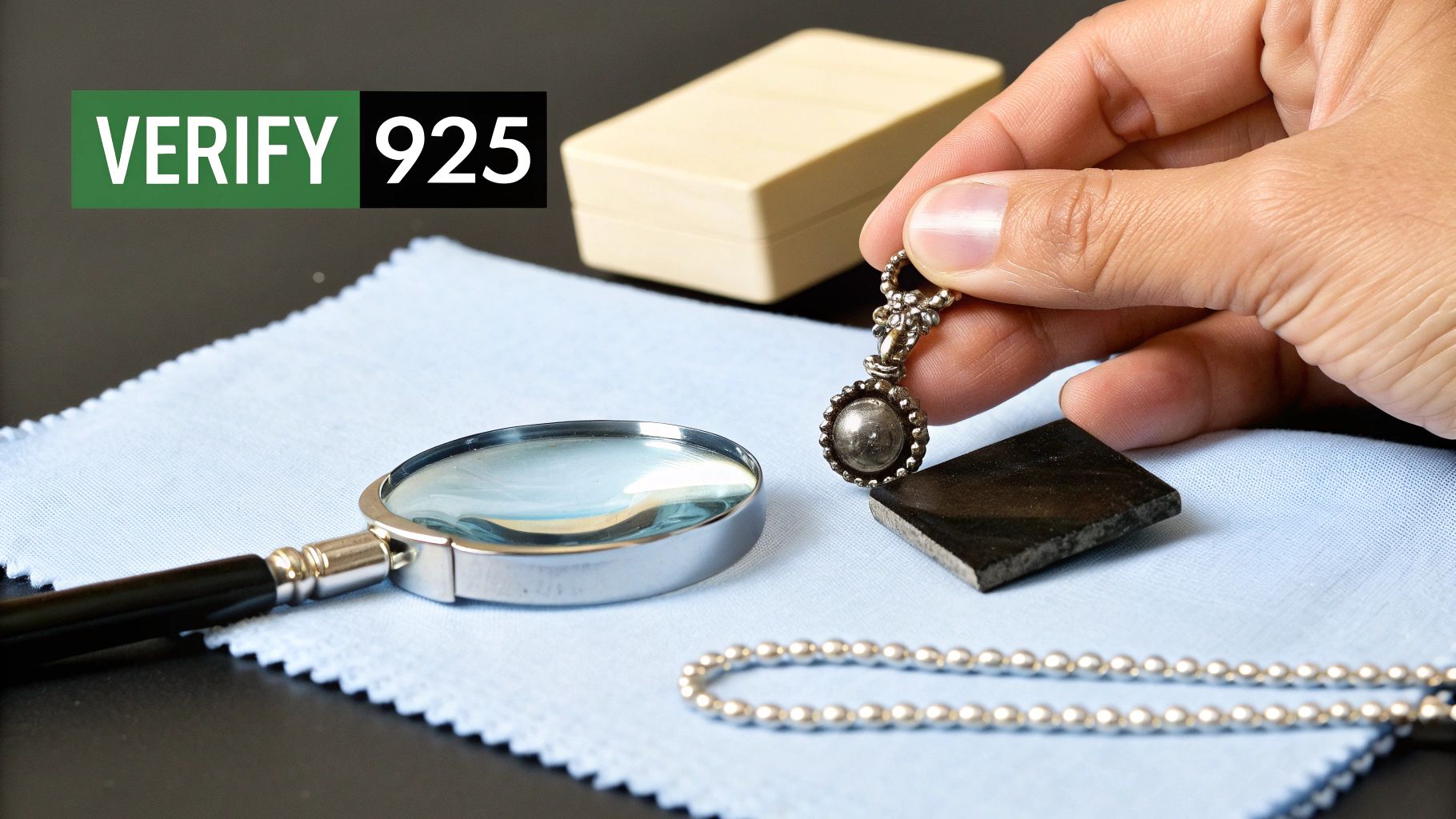
While that ‘925’ stamp is a great sign, it’s not always a guarantee. In the world of jewelry, fakes can sometimes carry fake marks. The good news? You don’t need a high-tech lab to figure out if your silver is the real deal.
A few simple, non-destructive tests you can do right at home will give you peace of mind. These quick checks are perfect for confirming the quality of any piece, whether it's a family heirloom or a surprise ring you found in a Jackpot Candle.
You can run through these tests in just a few minutes using things you probably already have. Best of all, they’re totally safe for your jewelry and surprisingly good at spotting fakes.
The Magnet Test: This is the easiest first step. Silver is paramagnetic, which is a fancy way of saying it doesn't really react to magnets. Grab a strong magnet—like one from your fridge—and hold it right next to your jewelry. If the piece snaps right to the magnet, it's a dead giveaway that it's made of a cheaper metal like steel with a thin silver coating.
The Polishing Test: Real sterling silver oxidizes, or tarnishes, when it’s exposed to air. This is totally normal and easy to clean off. To test it, just rub the item firmly with a soft, light-colored cloth. If you see black marks showing up on the cloth, congratulations—you’re looking at genuine sterling silver! Those marks are just the tarnish coming off.
Pro Tip: Don't grab anything abrasive for this test. A simple microfiber cloth or a dedicated silver polishing cloth is all you need. The goal is to see the chemical residue, not to scratch up your beautiful jewelry.
While home tests are fantastic for a quick check, some methods are best left to the pros. You might have heard about acid testing, which involves scratching the metal and putting a drop of nitric acid on it to watch for a color reaction.
Sure, it's accurate, but it’s also destructive. It will permanently damage your jewelry. This test also means handling some pretty serious chemicals and knowing exactly how to interpret the results.
If you have a piece you think might be really valuable and you need 100% certainty, going to a professional is the smartest and safest option. There are great resources for finding trusted jewelry appraisal services near me who can give you a definitive answer without putting your treasure at risk.
Once you've confirmed your 925 silver is legit, you might be curious about its value. A sterling scrap silver calculator can give you a good idea of its current market worth.
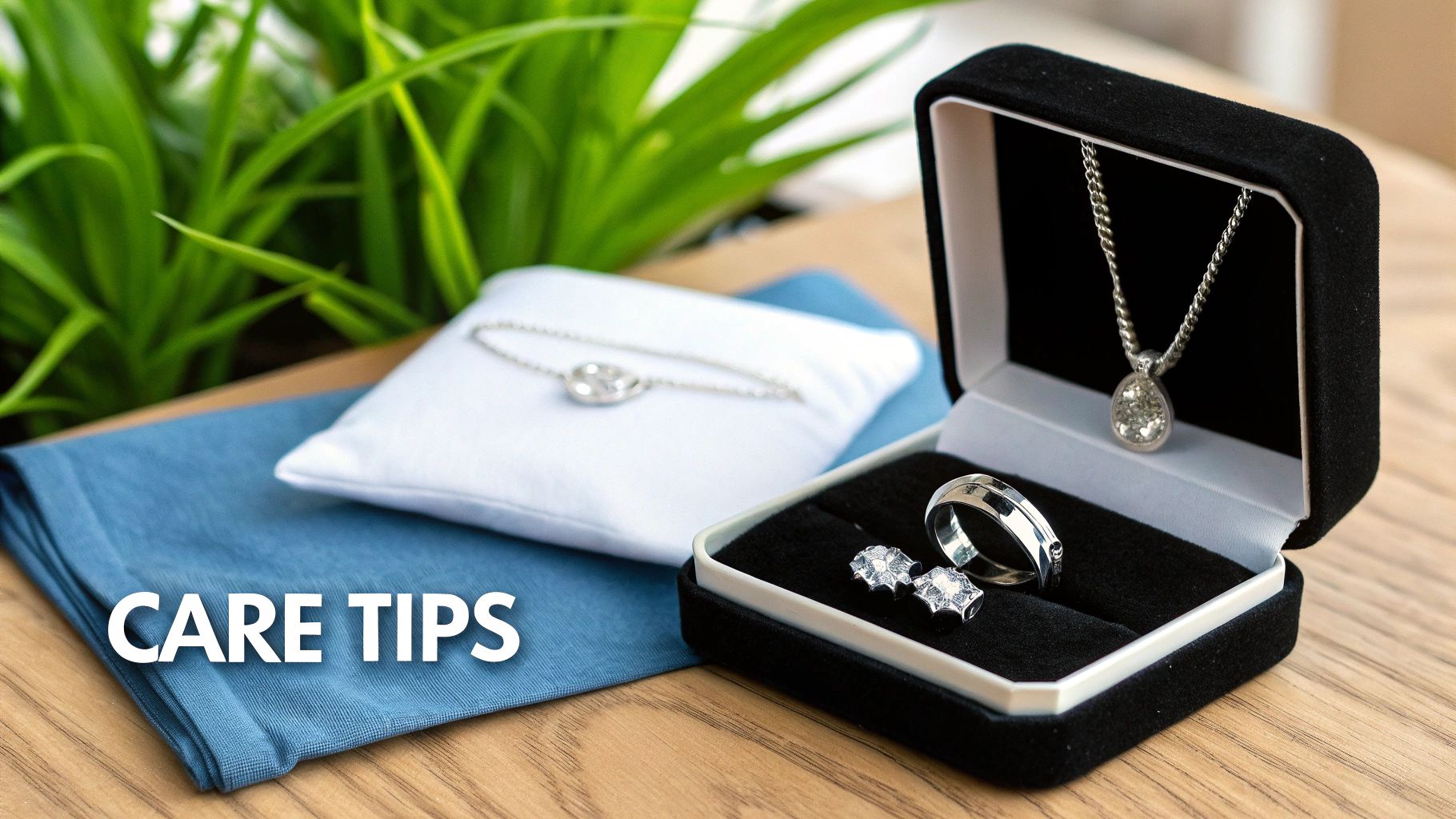
So, you've got a piece of genuine 925 sterling silver. One thing you'll notice over time is that it can start to look a little dull or dark. This is called tarnishing, and it's totally normal! It’s not a flaw—it's just a natural chemical reaction that happens when the copper in the alloy meets oxygen and sulfur in the air.
The good news? Keeping your jewelry looking brilliant is easy with just a little care.
Your best strategy is preventing tarnish before it starts. The biggest culprits are moisture and air, so how you store your jewelry is your first line of defense. When you're not wearing your pieces, tuck them away in a cool, dark place. An airtight container, like a little zip-top bag or a jewelry box that closes tightly, works wonders.
When you do spot a bit of tarnish, cleaning is simple. The gentlest approach is to use a soft, lint-free polishing cloth made specifically for silver. Giving your piece a quick, light polish after you wear it is a great habit that can stop tarnish from building up.
For more stubborn tarnish, a mild cleaning solution is your best bet. You can even make one at home with just warm water and a few drops of gentle, phosphate-free dish soap.
If you're looking for more detailed instructions and other cleaning tricks, you’ll love our dedicated guide on how to clean sterling silver.
One of the best things about sterling silver is how beautifully it cleans up. Proper care can bring back up to 95% of its original shine, making that jackpot gleam last a lifetime.
Some everyday things can make your sterling silver tarnish faster or even cause damage. It's a good idea to take your jewelry off before you hop in a chlorinated pool, use harsh cleaning chemicals, or even before you put on lotions and perfumes.
It’s no surprise why sterling silver is so popular. It shines in over 60% of affordable luxury jewelry sales worldwide, giving you that white-gold look for a fraction of the cost. Taking these small steps to care for it is so worthwhile—it ensures your surprise find stays a treasured part of your collection for years to come. For more on the backstory, check out the history of 925 sterling silver at TheCollectiveJewelry.com.
Ever wonder why 925 sterling silver has been a jewelry box staple for literally centuries? It’s not just a passing trend. Its lasting charm comes from a perfect mix of rich history, undeniable beauty, and a price tag that doesn't make you gasp.
This isn't just some random metal. It’s a legacy that has been part of human history for millennia, starting as ancient currency and becoming a go-to for designers everywhere.
The story behind sterling silver is pretty amazing. When you spot that '925' stamp on a ring from your Jackpot Candle, you're looking at a tradition born from necessity. Pure silver is just too soft for the bumps and scrapes of daily life. The standard we use today has roots going all the way back to 3000 BCE when Egyptians actually valued silver more than gold because it was so rare!
Fast forward to the 14th century, and English craftsmen had perfected the mix: 92.5% silver blended with 7.5% copper for strength and shine. This built on a standard from 12th-century European coins, where German traders known as 'Easterlings' helped set the quality bar—which is how we got the name 'sterling'. If you're a history buff, you can dive deeper into the history and significance of 925 sterling silver at TheCollectiveJewelry.com.
One of the biggest reasons sterling silver is still so popular is that it gives you a high-end look without the shocking price. You get that brilliant, cool-toned shine you see in much more expensive metals like white gold or platinum, making luxury a reality for almost everyone.
This sweet spot in the market means you can build a gorgeous, versatile jewelry collection without breaking the bank. It feels precious and looks incredible, but it's totally attainable.
Sterling silver makes the dream of owning beautiful, high-quality jewelry a reality. It's the ideal choice for those who appreciate fine craftsmanship and timeless style but also value smart, practical purchasing.
This blend of elegance and value is exactly why you'll find sterling silver in everything from delicate, everyday pieces to bold, look-at-me statement accessories.
Beyond being affordable, 925 sterling silver is basically a jewelry designer's dream material. It’s strong enough to hold intricate details and keep gemstones secure, but it's also soft enough to be shaped into just about any design you can imagine.
This creative freedom is what allows artisans to craft pieces that are both delicate and durable. It’s why sterling silver never goes out of style—it’s constantly being reinvented in new and exciting ways.
Plus, its bright, neutral color is the perfect backdrop for all kinds of gemstones. From sparkly diamonds to vibrant opals, sterling silver makes their colors pop. It's this combination of beauty, strength, and value that makes 925 sterling silver more than just a trend—it's a true classic.
Even after you know what the '925' stamp on your jewelry means, a few other questions tend to pop up. Let's clear those up so you can feel totally confident in your sterling silver pieces.
It’s pretty rare for high-quality 925 sterling silver to turn your skin green. When it does happen, though, don't panic!
It’s just a harmless chemical reaction. The 7.5% copper alloy in the metal is simply reacting to things like your skin's natural oils, the lotion you’re wearing, or even just sweat. The easiest fix? Keep your jewelry clean and dry, and you'll likely never see it happen.
Absolutely, yes. Think of the ‘925’ stamp as an official seal of approval. It certifies that the piece is made from 92.5% pure silver, which is the global standard for what we all know and love as genuine sterling silver.
That little bit of other metal isn't there to cheat you; it's there to give the silver the strength it needs to be worn every day without bending or breaking.
The real difference between pure silver (stamped 999) and sterling silver (stamped 925) is all about durability. Pure silver is incredibly soft—too soft for most jewelry. Sterling silver is an alloy that's built to last.
For most people, it sure is. Sterling silver is generally considered hypoallergenic because the most common culprit for metal allergies, nickel, isn't typically used in well-made 925 silver.
However, if you happen to have a very specific sensitivity to copper, you might experience a mild reaction. But honestly, that’s pretty uncommon.
At Jackpot Candles, every surprise reveal is a chance to discover a beautiful piece of genuine 925 sterling silver jewelry. Light a candle, soak in the incredible fragrance, and find your next treasure waiting inside.
Explore our collection of scented candles and bath bombs today!
Comments will be approved before showing up.