
free shipping at $99


Ask any candle lover, "what's the best candle wax?" and you'll probably get a dozen different answers. The simple truth is, it really depends on what you're looking for. For most of us, a high-quality soy wax blend hits that sweet spot, giving you a clean burn, amazing fragrance, and a nod to sustainability.
But the real "best" wax is the one that fits your life perfectly. Are you all about a fragrance that fills the entire house? Do you want a candle that seems to last forever? Or are you focused on finding the most natural, eco-friendly option?
Walking down the candle aisle can feel surprisingly complicated. You're not just picking a pretty jar or a nice scent; you're choosing an experience. And that whole experience is shaped by the candle's core ingredient—the wax.
Think of it this way: candle wax is like the foundation of a house. It dictates the structure, performance, and overall quality of everything else. It’s what makes a candle truly great, or just… okay.
This guide will pull back the curtain on the world of candle waxes. We’ll get to know the unique personality of each major player, from old-school paraffin to luxurious beeswax, helping you go from confused to confident in your candle choices.
The type of wax a candle is made from directly impacts almost everything about how it performs. It’s so much more than just a holder for the wick; the wax is the engine driving the entire experience.
Here are a few key things determined by the wax:
By the end of this guide, you won't just know the difference between soy and paraffin—you'll understand which wax is designed to deliver the exact candle experience you're looking for. You'll be able to shop smarter and enjoy your candles that much more.
Whether your priority is a powerful fragrance, a clean and healthy burn, or a long-lasting glow, there’s a perfect wax out there for you. Let's start this journey by meeting the main contenders.
Picking the right candle wax is a lot like choosing the perfect fabric for an outfit. Some are tough and traditional, others feel luxurious and natural, and a few are modern marvels of performance. Every wax has its own unique story and purpose, which is why candlemakers are so incredibly thoughtful about what they use.
Let's get to know the four main players in the candle world. Once you understand their personalities—their strengths and their quirks—you'll see why one might be great for a simple pillar candle and another is the only choice for a high-end, scented candle with a jewelry surprise inside.
When you picture a "classic" candle, you're probably thinking of paraffin wax. For decades, it’s been the industry standard for mass-produced candles because it's reliable and doesn't cost a lot to make. It’s a true workhorse, famous for holding vibrant colors and throwing a powerful scent.
Think of paraffin as a megaphone for fragrance. Its structure is fantastic at holding onto a lot of fragrance oil and then releasing it when lit, creating a strong "hot throw" that can easily fill a big room. That performance, plus its low price, has kept it on top for a long time.
But, where it comes from is a big deal for many people. Paraffin is a byproduct of refining crude oil. While the wax used in quality candles is highly refined to be non-toxic, its link to the petroleum industry is a major turn-off for eco-conscious shoppers.
Soy wax came onto the scene as a direct answer to paraffin, making it the eco-conscious innovator of the group. It's made from hydrogenated soybean oil, which means it’s a 100% natural and renewable resource. That plant-based story is a huge plus for anyone looking for more sustainable products.
People love soy wax for its clean and slow burn. Soy candles usually last longer than paraffin candles of the same size and create way less soot, which helps keep your air and your walls cleaner. Its lower melting point also means the pool of melted wax doesn't get quite as scorching hot.
While it's a fantastic natural wax, it can sometimes be a bit fussier with fragrance than paraffin. The good news is that modern soy blends have been perfected to get around this, delivering a beautiful scent experience without giving up those green benefits. You can dive deeper into this in our article covering the key differences between soy vs paraffin candles.
Beeswax is the OG candle wax, with a history that goes back thousands of years. It’s a truly luxurious, all-natural option made by honeybees when they build their honeycombs. It's the only wax that comes directly from the work of an animal, making it a pretty special and premium material.
When you burn it, beeswax gives off a subtle, sweet honey scent all on its own. It's also known for being a natural air purifier.
Fans claim that burning beeswax releases negative ions that grab onto common airborne yuckies like dust, dander, and pollen, essentially cleaning the air in your home. This makes it a go-to for people with allergies or sensitivities.
The main things to keep in mind with beeswax are its signature honey smell, which can sometimes clash with added fragrances, and its higher price tag. Its natural golden color can also change how dyes look. For these reasons, you'll often find it being enjoyed in its pure, natural state.
The newest star on the scene is coconut wax, a modern contender that's quickly winning over candle lovers. Made from the hydrogenated oil of coconuts, this wax is celebrated for being sustainable, having a creamy white look, and performing exceptionally well. It's often called one of the most eco-friendly waxes out there.
Coconut wax really shines in a few key areas:
Because it's a softer wax, you'll almost always find it blended with harder waxes (like soy) to give it a bit more structure. These coconut-soy blends are quickly becoming the gold standard for high-end candle makers who want it all: sustainability, a clean burn, and a powerful, luxurious scent.
What truly separates a fantastic candle from a mediocre one? It isn't just the pretty jar or the color of the wax; it's all about how that wax performs once you light the wick.
Learning about these performance metrics is like learning the secret language of candles. It empowers you to pick a winner every single time. Let's break down the most important factors that define a quality candle experience, from how strong it smells to how cleanly it burns.
For any scented candle, the most important job is delivering that beautiful aroma. That's where scent throw comes in. Think of it as the volume knob for your candle's fragrance. It measures how well the wax releases its scent into the air, both when it's unlit (cold throw) and when it’s burning (hot throw).
A candle with a weak scent throw is like a speaker turned down to a whisper—you have to get right next to it to catch a whiff. But a candle with a powerful scent throw can fill an entire room, creating a truly immersive atmosphere. Paraffin wax has long been the king of scent throw, but modern soy and coconut blends are giving it a serious run for its money.
Want to dive deeper? Check out our guide on finding the best candle wax for scent throw.
This chart shows how paraffin has historically dominated the market, but it also highlights the impressive growth of soy wax as a major competitor.
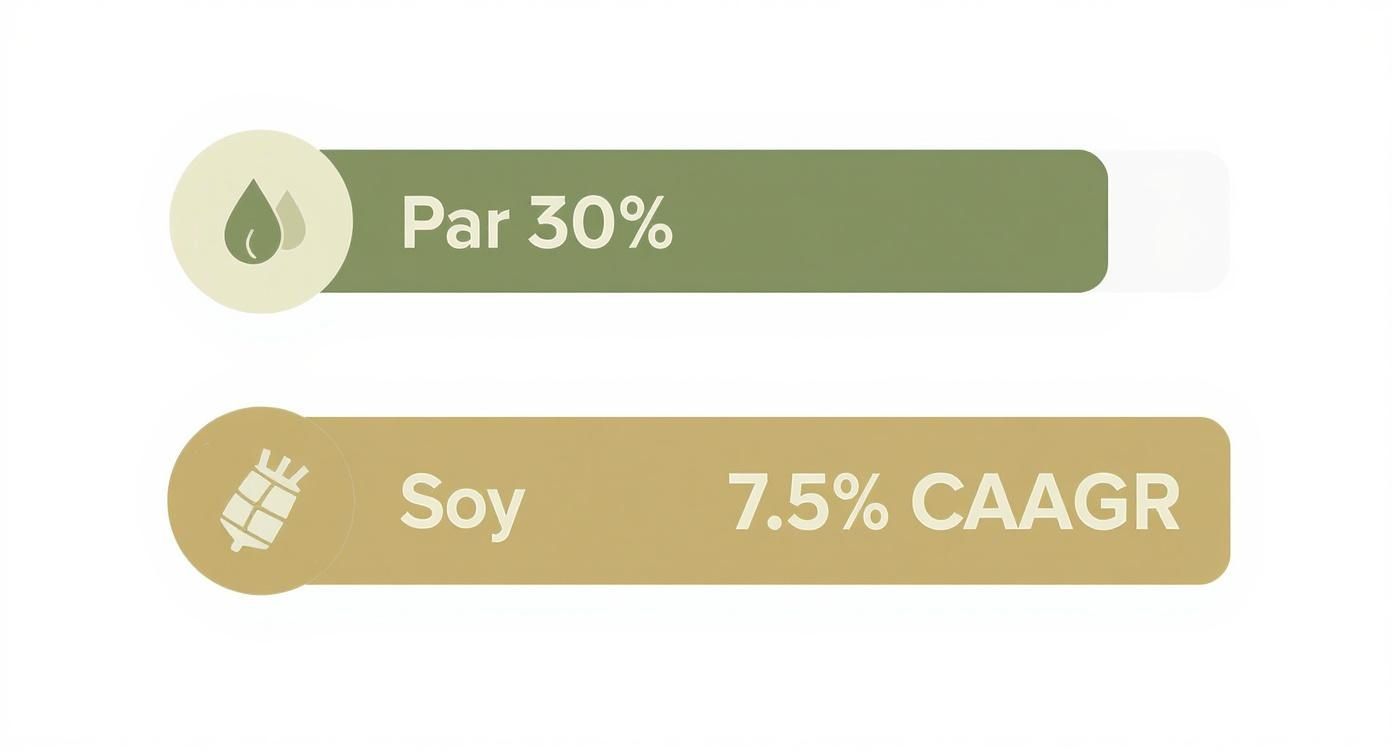
While paraffin still holds a massive 30% market share, you can see the shift in what people want. The demand for sustainable options is driving soy wax's projected annual growth of 7.5%.
Next up is burn time, which is really just how long your candle will last. Some waxes are like marathon runners, burning slowly and steadily for hours on end. Others are more like sprinters, burning hot and fast. It all comes down to the wax's melting point.
For anyone who loves a good value, a longer burn time is a huge win. It means more hours enjoying your favorite fragrance.
Ever notice that ugly ring of black soot around the top of a candle jar? That's soot, and how much a candle produces is another huge quality factor. The goal is always a clean burn with as little soot as possible.
Think of the difference between a clean-burning gas stove and a smoky campfire. A high-quality wax, like a good soy or coconut blend, burns cleanly and produces very little soot. This is not only better for your home's air quality but also keeps your candle jar looking pristine.
A clean burn is not just about aesthetics; it's about creating a healthier and more pleasant environment. Choosing a wax known for low soot production ensures you're enjoying the fragrance without the unwanted side effects.
Because paraffin is a petroleum byproduct, it has a tendency to produce more noticeable soot, especially if the wick isn't trimmed properly. This is one of the main reasons so many candle lovers are making the switch to natural waxes.
The melt pool is that circle of liquid wax that forms around the wick while a candle is burning. It's incredibly important for two reasons: it prevents that dreaded "tunneling," and it's the engine that powers the scent throw.
A well-performing candle should create a melt pool that reaches all the way to the edges of the jar within the first few hours. If the melt pool is too small, the candle will tunnel straight down the middle, leaving a thick wall of unused wax behind. This is a huge waste and dramatically shortens your candle's life. The right wax combined with the right wick size is the secret to getting that perfect, even melt pool every time.
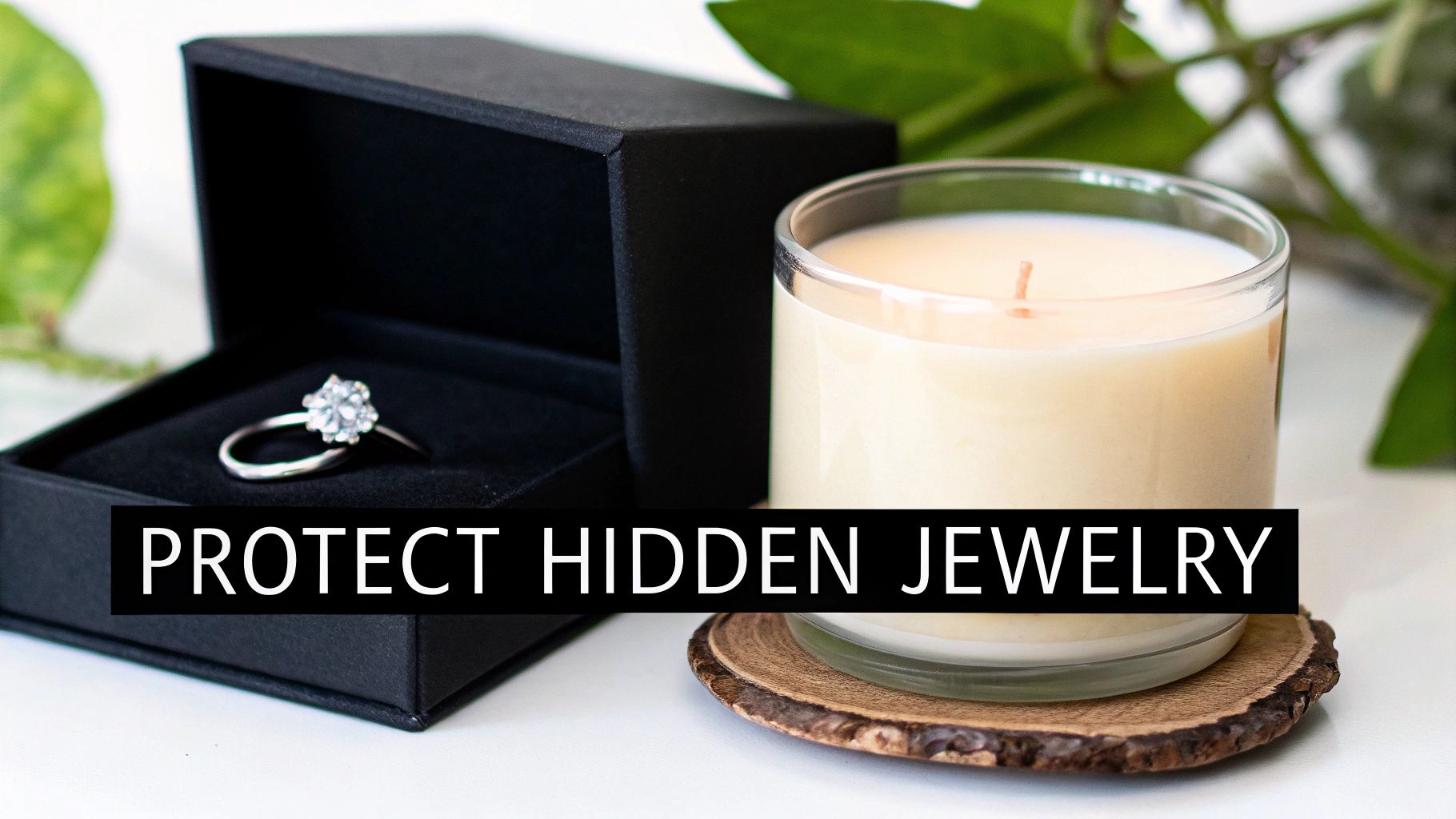
When you're talking about specialty candles, the wax is so much more than just fuel for the flame. It's a huge part of the entire experience. For a high-end scented candle meant to fill your home with a beautiful perfume, the wax is all about maximizing that fragrance. But for a jewelry candle? The mission is totally different—the wax has to pull off a delicate balancing act.
In these one-of-a-kind candles, the wax is the main event. It has to deliver a rich, gorgeous scent and act as a gentle guardian for the treasure hidden inside. This is where asking "what is the best candle wax?" shows you just how much the context matters. The answer changes completely based on what you want the candle to do.
For candles that are purely about intense fragrance, the top priority is scent throw. The wax needs to act like a sponge, soaking up a ton of fragrance oil and then releasing it powerfully and consistently when you light the wick. This is where traditional paraffin has often had an edge, since its molecular structure is fantastic for projecting strong, complex aromas.
The goals for a jewelry candle, however, are way more nuanced. A beautiful scent is still a must-have, but the list of what the wax needs to do gets a lot longer. The wax has to be engineered not just for fragrance, but for safety, cleanliness, and keeping that surprise inside perfect.
When there's a valuable piece of jewelry waiting to be discovered, the priorities shift. You can't just grab any wax that smells good. The whole system has to be designed to protect that hidden prize, which makes picking the wax a highly technical decision.
Here’s what a jewelry candle wax absolutely has to do:
This unique set of demands is exactly why a specially engineered soy wax blend is the perfect solution. It balances all these needs beautifully.
For a jewelry candle, the wax must be a silent partner. It creates a beautiful atmosphere while ensuring the hidden gift is revealed in pristine condition. It needs to be gentle yet effective—a combination that requires careful formulation.
The global candle market, recently valued at USD 15.3 billion, shows just how much people are loving specialized and high-quality products. While paraffin candles are still a huge segment (projected to grow with a CAGR near 5.9%), the demand for natural and eco-friendly options like soy is exploding. Shoppers are looking for better performance and cleaner ingredients. You can find out more about the trends shaping the candle market and see for yourself.
This shift is why innovative blends are so important. They’re made for customers who want it all: luxury, safety, and sustainability. Jackpot Candles, for example, uses a proprietary soy blend designed to offer the best of both worlds. It gives you the robust, room-filling scent of a high-end candle while ensuring a clean, low-temperature burn that keeps your hidden jewelry safe and sparkling. This thoughtful approach turns the candle from a simple light source into a complete, exciting, and worry-free experience.
Knowing the difference between soy and paraffin is great, but putting that knowledge to use is what really makes you a candle pro. Becoming a smarter shopper and picking up a few simple care habits will guarantee you get the most joy (and value!) from every single candle you bring home.
These little tricks will completely change your candle experience, making them last longer, burn cleaner, and smell incredible. You don't need to be an expert to get expert-level results—you just need to know the secrets.
You can spot the signs of a high-quality candle before you even light the wick. The global candle wax market hit about USD 8.5 billion in 2023, and with that many options out there, knowing what to look for is a must. Since customers are asking for natural waxes more and more, good brands are usually proud to show off what they use.
Here’s what to look for on your next candle run:
Once you've brought your perfect candle home, a little TLC is the key to making it last. These simple steps are non-negotiable for preventing annoying issues like tunneling and soot, giving you a clean, beautiful burn every time.
The very first burn is the most important moment in a candle's life. It sets the "memory" for every burn that comes after. Get this right, and your candle will behave perfectly right down to the bottom of the jar.
Here are the golden rules of candle care:
Following these tips ensures you get the absolute most out of every candle. To dive even deeper, check out our guide on how to burn a candle properly.
After getting to know the unique personality of each wax, we’re left with the big question: which one is truly the best? The honest answer is that the "perfect" wax is the one that lines up with what you want in a candle. Every wax has a moment where it shines brightest, and knowing that is the key to picking the right candle every single time.
Think of it like choosing a car. You wouldn't take a tiny sports car on a family camping trip, and you probably wouldn't enter a minivan in a racetrack. Each one is the "best" for what it was built to do. The same exact logic applies to candle wax.
To make the right call, you need to know what you value most. Are you all about a powerful fragrance that fills the whole house? Or do you lean toward pure, natural ingredients? Maybe you just want a great all-around performer.
For the Scent Maximizer: If your number one priority is a huge, room-filling fragrance that makes a serious statement, paraffin wax is usually the champion. Its molecular structure is basically engineered to throw scent like nothing else, making it the reliable workhorse for anyone who wants the most potent aroma they can get.
For the Natural Purist: If you're looking for a clean, natural experience with as few additives as possible, beeswax is your hero. It's a truly luxurious, hypoallergenic choice that some even say helps purify the air as it burns. Plus, its subtle, natural honey scent is perfect for those who prefer an unadulterated, earthy vibe.
But for the modern candle lover who wants the best of all worlds—clean burning, great scent, and sustainability—there's a clear frontrunner. A high-quality soy wax blend stands out as the ultimate versatile choice.
The best candle wax for most people is a premium soy blend. It masterfully balances sustainability, a clean and healthy burn, and a rich, beautiful fragrance experience without major compromises.
This is the well-rounded champion that just delivers across the board. You get the clean, slow burn of a natural wax, which means less soot and a longer-lasting candle. At the same time, specially formulated blends—like the proprietary soy blend we use in Jackpot Candles—are designed to hold and release fragrance just as beautifully as their paraffin counterparts.
This makes them the ideal foundation for specialty products like our jewelry candles, where a clean, low-temperature burn is every bit as crucial as a stunning scent. It’s the smart, balanced, and luxurious choice for today’s candle enthusiast.
Even after you get the basics down, there are always a few lingering questions that pop up when you're picking out the perfect candle. Let's dive into some of the most common ones we hear.
Think of this as your go-to guide for those little curiosities that can make all the difference.
Have you ever lit a soy candle, enjoyed it for a few hours, and then noticed the top looks a little rough or uneven once it cools? Don't worry, that's totally normal! It's a classic trait of natural soy wax, sometimes called "frosting" or "cauliflowering."
This happens because the vegetable-based wax is simply trying to go back to its natural crystal-like state as it hardens. It’s actually a good sign—it means you’ve got a candle made with 100% natural soy wax or a blend that's rich in the good stuff. Most importantly, it has absolutely no effect on how your candle performs or how amazing it smells.
This is a big one, and you see a lot of chatter about it online. While paraffin wax does come from the petroleum refining process, the kind used for quality candles is highly purified to a food-grade standard. This process strips away any nasty impurities.
The real conversation around paraffin isn't about toxicity—it's about performance. It's known for producing more soot than natural waxes. But you can keep that in check by always, always trimming your wick to 1/4 inch before you light it up.
If you're looking for a powerhouse of fragrance, paraffin has traditionally been the top dog. Its chemical makeup lets it hold onto a lot of fragrance oil, which means you get a really strong hot throw (that's the scent you smell when the candle is burning).
But times are changing! The world of natural waxes has come a long way. These days, premium soy and coconut wax blends are crafted to go head-to-head with paraffin. They can deliver a fantastic, room-filling scent experience, all while giving you that cleaner, slower burn we love. You really don't have to compromise anymore.
Ready to experience that perfect balance of a rich, luxurious scent and a clean, beautiful burn? The special soy blend we use in every Jackpot Candle is designed to give you an incredible fragrance journey while keeping your hidden jewelry surprise perfectly safe. Discover your next favorite scent today!
Comments will be approved before showing up.