
free shipping at $99


You light a new candle expecting a soft, cozy room. Ten minutes later, the air smells like a synthetic candy aisle, an overfilled perfume counter, or something vaguely burnt. The jar promised relaxation, but your first instinct is to put the lid back on.
That reaction doesn't mean your nose is difficult. The worst candle scents are usually a poor match between fragrance, formula, room, and season, rather than universally bad scents. A lavender candle can feel medicinal in a bright bathroom, vanilla can turn into burnt sugar beside a hot oven, and pine can make a small bedroom feel like a lumber yard.
Fragrance matters enormously to candle buyers. Independent candle-industry reporting lists more than 10,000 candle scents worldwide, with vanilla at roughly 11% market share and citrus or lemon at about 10%. The same candle-industry reporting says nearly three-quarters of buyers consider fragrance extremely or very important when choosing a candle. Choosing the right scent isn't a minor detail. It determines whether the candle becomes part of your home or gets abandoned in a cupboard.
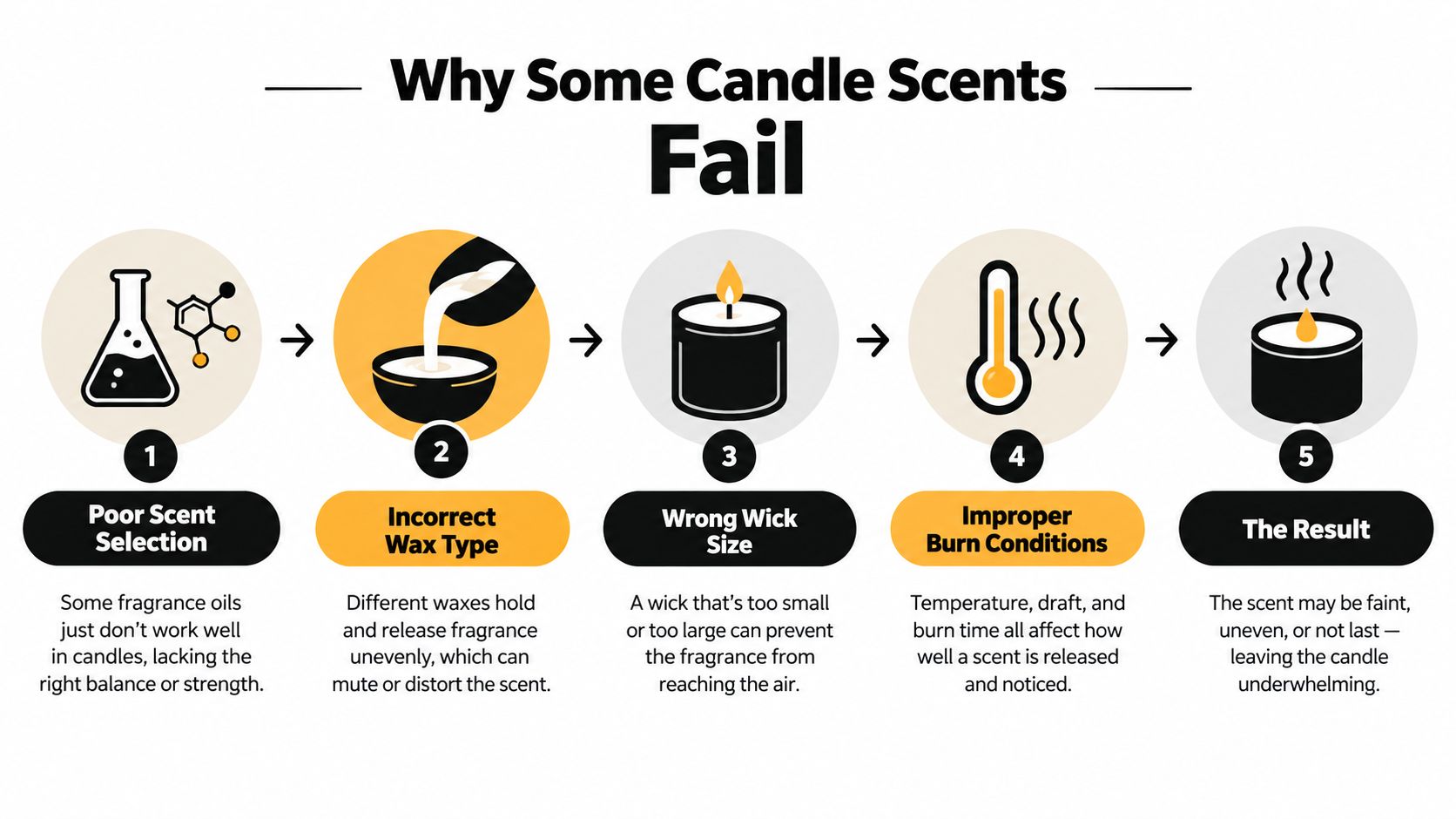
The first surprise often happens during the transition from cold wax to burning candle. In the jar, a fragrance can seem balanced and inviting. Once warmed, its brightest notes rise quickly, the deeper materials spread through the room, and the flame adds its own toasted edge. A scent that looked gentle on a store shelf can become overpowering at home.
Lavender is a good example. A soft lavender blended with woods or musk may feel calming, but a sharper lavender formula can suggest antiseptic, soap, or a hospital hallway. The problem isn't lavender itself. It's the way the note has been built and the environment where you're smelling it.
Vanilla creates a different kind of disappointment. Instead of warm pastry, you may get melted frosting, scorched sugar, or artificial cake flavor. That distinction matters because a kitchen already contains food aromas, heat, and grease. A very sweet vanilla candle can blur those smells into something heavy and sour.
A candle can be well-made and still be wrong for your room.
Pine can fail through sheer scale. In a large living room, a resinous evergreen scent may provide welcome structure. In a small bedroom, the same candle can feel dense, sharp, and overly outdoorsy, as though someone brought fresh-cut timber indoors.
Historical consumer data shows how personal this response can be. In a 2015 online survey, vanilla received 27% of favorite-scent votes, lavender received 19%, and apple received 10%, while chocolate received just 4%. That gap illustrates why some gourmand profiles become candidates for the worst candle scents in mainstream reviews, particularly when they smell more like food flavoring than home fragrance. The survey also found that 42% of respondents regularly bought scented candles. These figures appear in the historical candle consumer survey, and they help explain why repeated scent disappointment can influence future purchases.
A candle's performance depends on more than the name printed on the label. Think of the fragrance as a band. Top notes are the loud opening track, bright and attention-grabbing. Middle notes supply the melody, while base notes keep playing after the first impression has disappeared.
Citrus, green notes, and aldehydic materials can make a candle smell lively before burning. Push them too far, though, and the result may become waxy, metallic, or strangely clean. A perfumery reference describes an overrepresented aldehydic character as similar to a “blown-out candle,” while indoor-air testing has detected aldehydes among scented-candle emissions. The reported concentrations in the cited studies were below limit values, but the practical issue for shoppers is often persistent off-notes and lower perceived quality, not an immediate dramatic reaction. The technical background appears in this perfumery discussion of candle fragrance materials.
A scent can also smell wonderful cold and flat when burning because the top notes evaporate quickly while the base becomes more prominent. That's why a bright lemon jar may turn into generic waxy sweetness, or a fresh green candle may lose its crispness after the first impression.
A wick that's too small may not heat enough wax to release the fragrance effectively. A wick that's too large can create an oversized flame, excessive heat, and a sharp or sooty character. Poor combustion may leave black deposits and replace the intended aroma with the smell of burning wax.
Fragrance oils also need to tolerate the heat around the melt pool. When a formula breaks down near a hot flame, some notes can smell plasticky or chemical. The issue isn't automatically the fragrance family. It's the relationship between oil concentration, wax, wick, vessel, and burn conditions.
Soy wax can soften sharper synthetic notes, while paraffin often carries them with more bite. Neither material rescues a poorly chosen fragrance oil or an unsuitable wick. For a useful explanation of how scent structure affects the experience, read this guide to understanding candle fragrances and scent notes. If you're comparing candles with non-flame options for managing insects, this practical discussion of comparing candles and MODERN LYFE fans also gives helpful context about what each approach can and can't do.
Some fragrance families collect more complaints because they leave little room for error. They may be pleasant in a carefully balanced blend, but a single dominant note can quickly take over a real room.
| Scent Family | Common Examples | Why It Often Disappoints |
|---|---|---|
| Ultra-sweet gourmand | Vanilla cupcake, caramel drizzle, cookie bakery | Heat can turn creamy sweetness into buttery frosting, burnt sugar, or artificial flavoring. |
| Sharp floral | Lilac, freesia, rose bouquet | Concentrated floral materials may read as soap, cosmetics, or cleaning products in enclosed spaces. |
| Ozonic and clean | Clean cotton, fresh linen, rain | Airy notes can become plasticky, metallic, or reminiscent of dryer sheets. |
| Heavy spice and incense | Cinnamon bark, patchouli, incense resin | Strong warmth spreads rapidly and can dominate furniture, food, and personal-care aromas. |
| Green and aquatic | Cucumber, mint, sea salt | Cooling or watery notes may suggest mouthwash, cold medicine, or damp air. |
The appeal of bakery candles is easy to understand. Vanilla, caramel, chocolate, and pastry notes promise comfort without the effort of baking. The failure begins when the formula has no dry wood, spice, fruit, or musk to interrupt the sweetness. Instead of smelling like a kitchen with something delicious in the oven, it smells like icing warmed under a heat lamp.
Chocolate can be especially divisive. The historical survey cited earlier placed chocolate at just 4% of favorite-scent votes, the lowest result in that survey. Buyers who dislike it often describe a dense, synthetic, food-like impression rather than a refined cocoa aroma.
Lilac, freesia, and rose can feel elegant in a spacious room, but small rooms compress their projection. A sharp floral then sits close to the face, where its soapy or cosmetic facets become obvious. Clean cotton has a related problem. Its promise is fresh air, yet an aldehydic or heavily ozonic formula may smell like detergent, plastic packaging, or a dryer sheet.
Cinnamon bark can be warm and festive, but a narrow cinnamon formula may smell acrid once heated. Patchouli and incense can create depth, though too much earthy resin may make a room feel dusty or stale. Cucumber, mint, and sea salt offer freshness, but their coolness can veer toward toothpaste, mouthwash, or medicinal vapor.
The useful question isn't “Is this scent bad?” Ask instead, “Which part of this scent becomes unpleasant when heat, space, and nearby smells enter the picture?”
A candle doesn't perform in a vacuum. The room supplies its own smells, humidity, airflow, furniture, and temperature. A fragrance that seems balanced in a shop may become too loud in a bathroom or disappear in an open-plan living area.
Cooking already fills a kitchen with changing aromas. Roasting vegetables, coffee, frying oil, and baked food compete with the candle. A vanilla cake or cinnamon sugar candle can make that mixture muddled, particularly if the fragrance is intensely sweet. A lighter citrus, herb, or dry wood profile usually leaves more space for food smells to remain recognizable.
Bathrooms create another challenge. Humidity can make a sharp lily or freesia fragrance feel thicker, while hard surfaces reflect the scent instead of absorbing it. The result is often a perfume cloud that lingers long after the bath or shower ends.
Bedrooms reward restraint. Linen, soft musk, gentle woods, and quiet tea notes tend to sit closer to the skin and furniture. Aldehydic top notes can feel harsher at bedside distance, especially in a closed room. If you're choosing between a candle and a room scent product, this guide to finding the right air freshener cans is useful for thinking about how enclosed spaces hold fragrance. Placement advice is also available in this guide to where to place scented candles.
A large living room reverses the problem. Light citrus and green notes may vanish into open space, leaving only a faint impression. Deeper woods, amber, and resinous blends generally have more presence, although strong formulas still need ventilation and careful burn habits.
| Scent Family | Best Room | Worst Room | Season It Struggles |
|---|---|---|---|
| Light citrus | Kitchen or entryway | Large open living room | Cold weather, when it may feel too thin |
| Soft linen or musk | Bedroom | Large, busy kitchen | Hot weather if the blend turns powdery |
| Heavy gourmand | Living room for short burns | Kitchen | Warm summer weather |
| Floral | Spacious bedroom or living room | Small bathroom | Humid weather if it becomes dense |
| Woods and amber | Open living area | Small bedroom | High summer, when it may feel oppressive |
| Ozone and aquatic | Bathroom or entryway | Cozy winter living room | Cold months if it feels metallic |
The seasonal mismatch can be just as noticeable. Dense amber and oud-style profiles may feel too heavy in July, while bright ozone can seem thin and metallic in December. A small enclosed room calls for a delicate scent, while an open room can handle a stronger woody or resinous base.
A short video can help you think about candle placement and airflow before you light one:
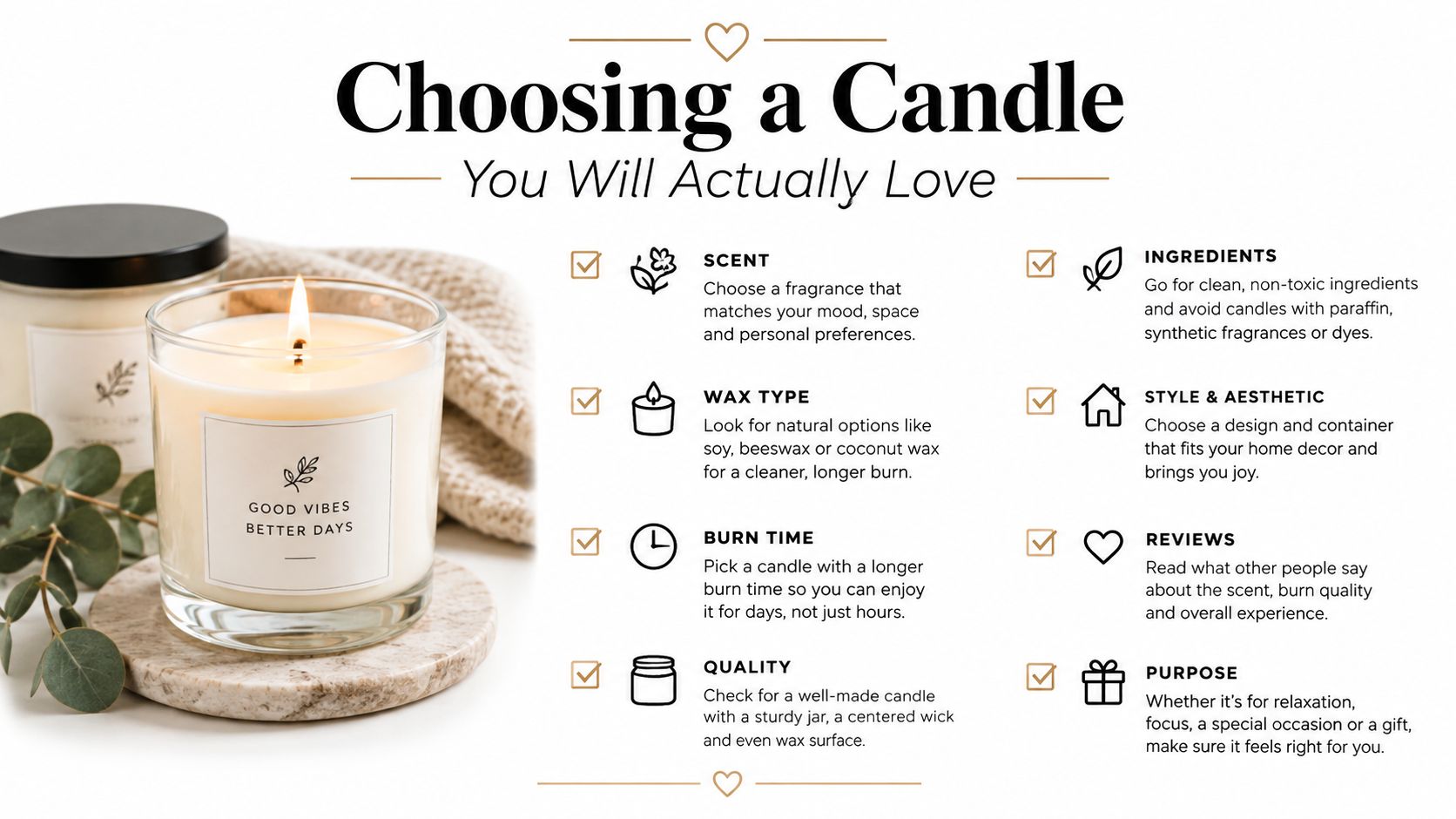
A candle can look perfect online and still fail in your room. Product language such as “luxury,” “intoxicating,” and “spa-like” describes an atmosphere, not the ingredients, strength, or way the fragrance behaves while burning. Treat those words as a starting mood, then look for evidence.
Smell the unlit wax slowly. Harsh solvent, rubber, or plastic notes deserve caution, although cold wax cannot predict every detail of the burn. If the shop offers a burning tester, give it time to develop. Smell it close up and from the edge of the room, where the fragrance may feel softer and more realistic.
Online, named notes provide more useful information than a vague “fragrance blend.” A detailed listing can show whether the candle contains citrus and neroli, cinnamon bark, or only a broad promise of “warm sophistication.” Wax type, fragrance load, wick description, and customer photos add context about how it may perform.
One reviewer may dislike a note that works beautifully for someone else. Repeated comments about headaches, chemical odors, black soot, or fragrance fading quickly point to a performance concern. Reviews describing the candle after burning carry more weight than comments about packaging or label design.
Start with a smaller jar or discovery set from an unfamiliar fragrance house. Record the room, season, burn time, and result. Over time, that record can separate a general dislike of vanilla from a reaction to vanilla that becomes too sweet in your kitchen.
Wick construction affects the experience too. Some metal-core wicks can produce a hotter or harsher burn, while a wick poorly matched to its wax may create soot or mute the fragrance.
If you have sensitive airways, strong fragrance deserves extra caution. Read this guide to three things to consider when buying candles if you have allergies before buying. Coverage of indoor air quality notes that heavily fragranced or poorly formulated candles can release VOCs, soot, and ultrafine particles, and the same source notes that phthalate-containing fragrance blends may contribute to headaches or asthma symptoms in sensitive people (indoor-air-quality guide to candle risks).
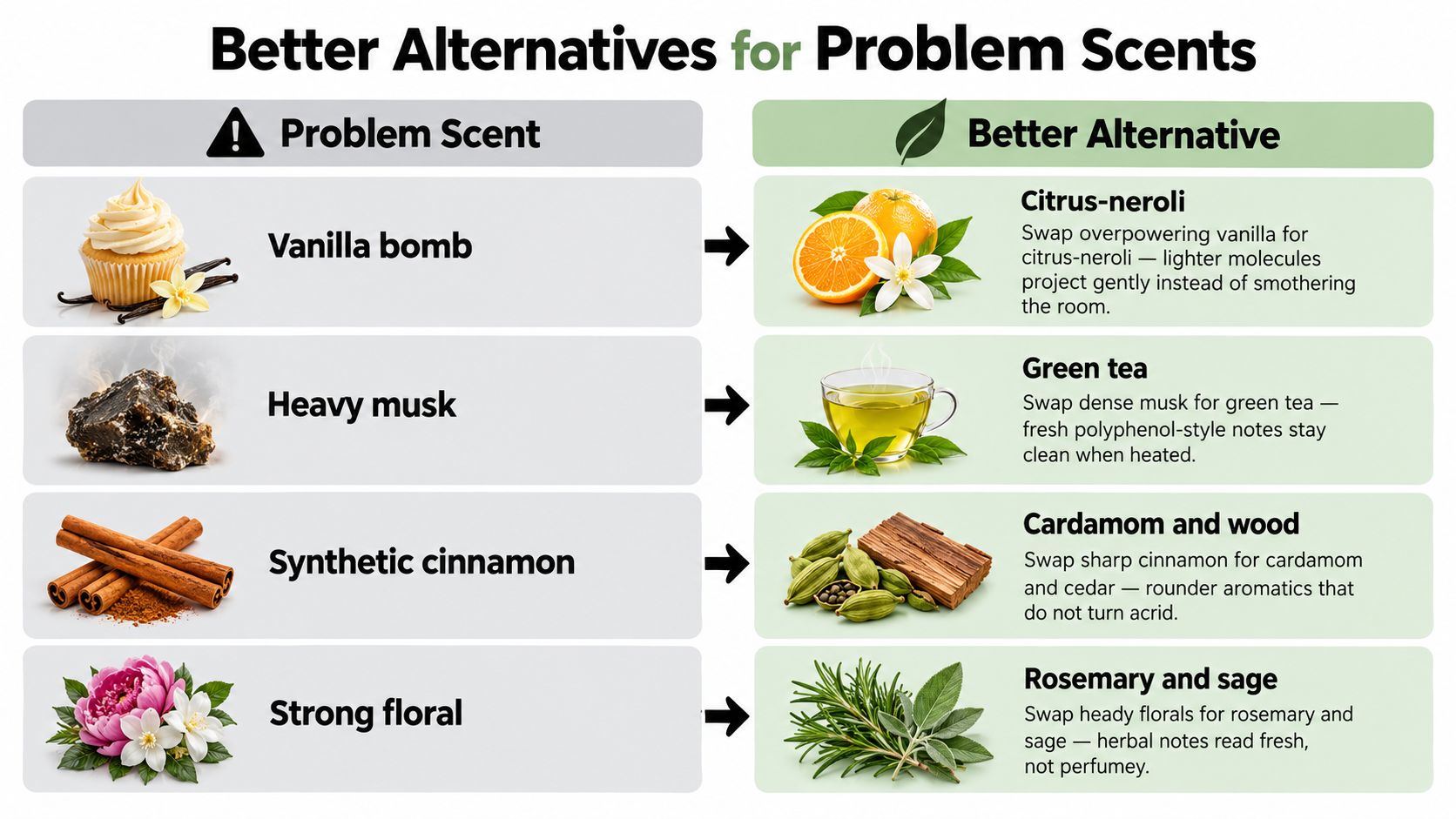
A good replacement doesn't just remove intensity. It changes the shape of the fragrance so the room gets contrast, texture, and a softer dry-down.
Overloaded vanilla usually benefits from coconut and sandalwood. Coconut keeps the creamy comfort, while sandalwood adds a dry, woody anchor that prevents the scent from becoming pure sugar. Citrus and neroli can also make a sweet profile feel more open and less frosting-like.
For aggressive lily of the valley, try soft peony or white tea. These alternatives preserve floral brightness but generally feel less metallic and less like concentrated soap. White tea also works well in bedrooms and workspaces because it can suggest cleanliness without turning the room into a detergent aisle.
Cinnamon needs companions. Cardamom and orange create warmth through citrus lift and rounded spice, while smoked clove adds depth rather than relying on one hot, sharp note. If a cinnamon candle smells acrid, the solution may be a more layered spice blend rather than abandoning autumn fragrance altogether.
Medicinal eucalyptus can be exchanged for rosemary and mint, or pine and cedar. Those combinations still feel clean and green, but they can read more like herbs or dry forest air than a pharmacy. Remember that a candle offers a sensory experience, not medical treatment. Anyone with recurring congestion or irritation should address that concern with a healthcare professional.
Soapy laundry florals often improve when paired with rice milk, cotton flower, bamboo, or cedar. These materials soften the clean impression and give it a warmer body. The result can feel fresh without the sharp edge that makes some “clean cotton” candles resemble dryer sheets.
The best test is still personal. Order discovery sizes when available, burn one in the room where you plan to use it, and judge the fragrance at several points rather than only during the first few minutes. If you use scent in a dry room and want gentle ambient moisture as well, compare the candle experience with a humidifier with Bluetooth speaker, keeping in mind that these products create different effects and aren't interchangeable.
Before buying, make four quick checks:
The worst candle scents usually aren't permanent verdicts. They're often wrong-room or wrong-season choices, amplified by a fragrance formula that doesn't behave well under heat.
Are scented candles safe for everyone?
No scent suits everyone. Strong fragrance and soot can irritate sensitive people, so ventilate the room, keep the wick trimmed, and stop burning if you notice discomfort.
Is soy always better than paraffin?
Not automatically. Soy can soften sharper notes, while paraffin can carry them with more intensity. Wick quality, fragrance formulation, and burn behavior matter just as much.
Can I return an unburned candle I dislike?
That depends on the retailer's return policy. Check it before opening or burning the candle, because used fragrance products may have different conditions.
How long should a candle scent a room?
There isn't one universal answer. Room size, airflow, wax, wick, fragrance concentration, and your sensitivity all affect how long the scent feels pleasant. If the room becomes heavy, extinguish the candle and ventilate it.
Jackpot Candles offers scented candles and bath bombs with a surprise piece of jewelry inside, alongside named fragrance choices that let you select a profile before burning. Visit Jackpot Candles to explore the available scents and choose a candle that fits your room, season, and tolerance for fragrance intensity.
Comments will be approved before showing up.