
free shipping at $99


The strongest fragrance oil in the bottle is often not the strongest fragrance oil in a finished candle. A dramatic first sniff can disappear quickly, while a quieter sandalwood, amber, vanilla, or musk blend can build a room-filling hot throw once the wax, wick, fragrance load, and curing process work together.
That distinction matters in a growing category. The global fragrance oil market was valued at USD 8.50 billion in 2024 and is projected to reach USD 11.90 billion by 2032, representing a 4.30% compound annual growth rate, according to Data Bridge Market Research's fragrance oil market report. Candle makers aren't choosing a minor additive. They're choosing a core performance ingredient.
I've poured enough candles to know the practical answer: buy oils for finished-candle behavior, not bottle intensity. The recommendations below focus on room-filling throw, clean burning, compliance, and consistency across real product formats.
A fragrance oil is only as strong as the system carrying it. The oil must dissolve into the wax, survive production, release during the melt-pool stage, and reach the air in a balanced way. A powerful concentrate can underperform if the wick doesn't create enough heat or if the wax can't hold the chosen load.
Before judging an oil, separate two results:
Cold throw helps with shelf appeal. Hot throw determines whether a customer experiences a scented room. I prioritize hot throw every time.
The most useful evaluation has four parts:
A common mistake is assuming that a higher fragrance load automatically creates a stronger result. It doesn't. A 12% load in a wax that can't retain the oil may perform worse than an 8% load in a compatible system. Excess oil can sweat on the surface, interfere with the wick, or produce an uneven burn instead of adding useful aroma.
Practical rule: Judge a fragrance after curing and burning, not during the first bottle sniff.
The oil's construction still matters. High-quality blends often combine quick-impact top notes with persistent middle and base notes. You can learn more about the materials used in these blends through this guide to what fragrance oils are made of, but the finished candle remains the final test.
A strong fragrance oil is only one part of a strong candle. Fragrance load, wax capacity, processing temperature, volatility, and solubility determine whether the finished candle fills a room. Industry guidance commonly places candle fragrance usage around 6% to 10% of total candle weight, as described in fragrance oil market guidance from REAN IN.
For a 16-ounce candle, a 6% load contains roughly 0.96 ounces of fragrance oil, while a 10% load contains about 1.6 ounces. That change can affect scent strength, wick behavior, surface appearance, and burn quality.
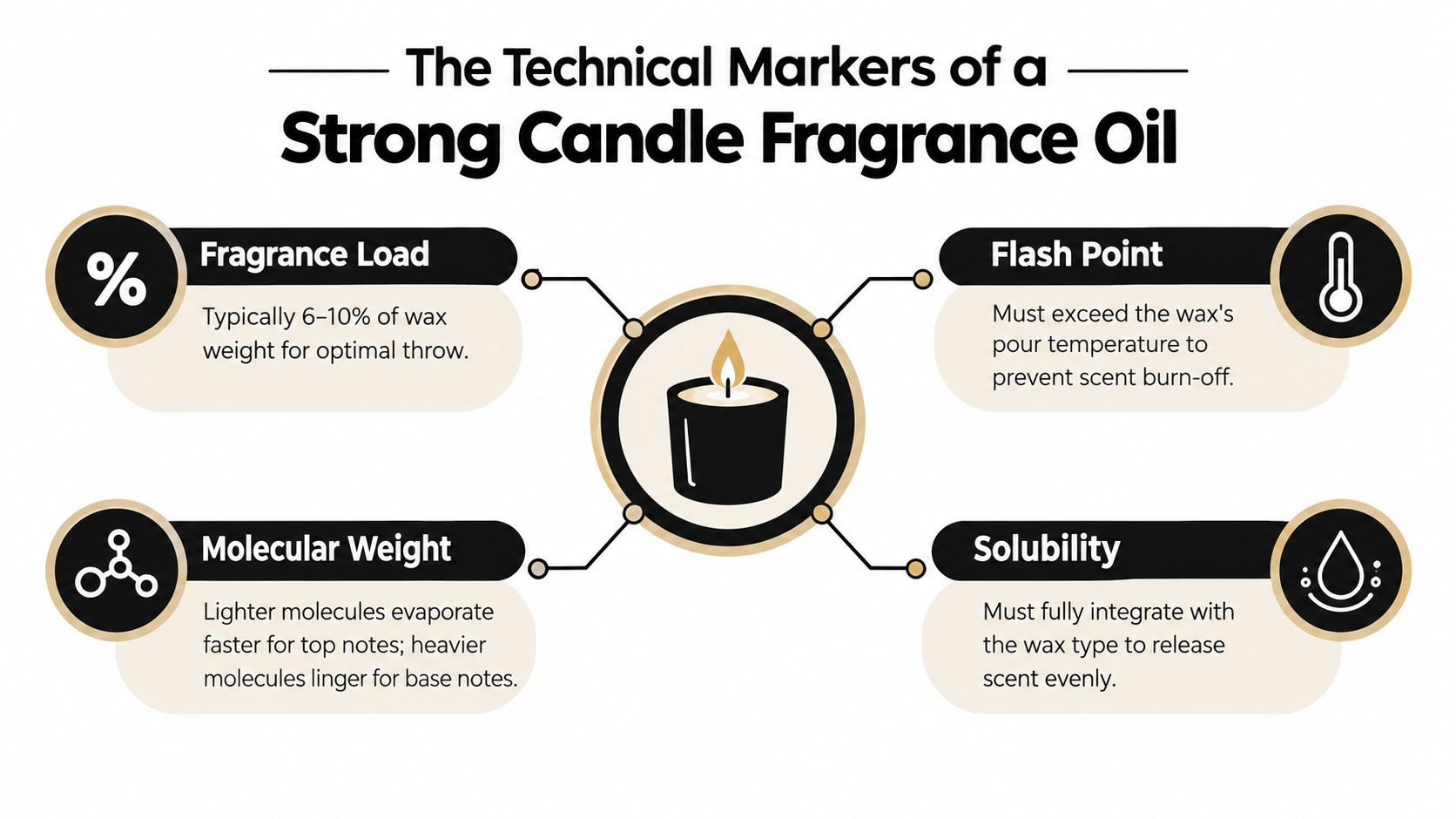
Stay within the wax manufacturer's tested range. Soy systems often perform well in the 6% to 10% window, while some blends may accept more if the wax can hold the added oil. Beyond that capacity, extra fragrance can sweat onto the surface, disrupt the wick, and weaken the burn instead of improving throw.
Weigh every batch. Drops vary with the bottle opening, viscosity, and temperature, so weight-based dosing produces repeatable results. A well-matched oil at the correct load will outperform an overloaded candle that burns poorly.
Flash point is the temperature at which fragrance vapors can ignite. Candle-production references commonly place the desired flash point above the oil-addition temperature, often around 160°F to 185°F, or 71°C to 85°C, according to The Candle Bench's flash point and IFRA guidance.
Flash point does not rank scent strength. A high flash point does not guarantee stronger aroma, while a lower one does not automatically disqualify an oil. It does require closer handling and strict attention to the supplier's instructions.
Top notes, including citrus and some herbs, appear quickly and fade quickly. Middle notes provide the recognizable body of the blend. Base notes, such as woods, musks, resins, and some gourmand materials, keep the fragrance present as the candle warms.
A sharp citrus oil may smell stronger cold than a sandalwood blend yet deliver less sustained hot throw. Choose blends that pair immediate impact with heavier materials for room-filling performance.
The oil must integrate evenly with the chosen wax. Poor compatibility causes sweating, uneven scent release, or a candle that smells strong in one area and weak in another. Supplier documentation and small-batch testing reveal more than a dramatic product description.
For practical selection criteria, compare this guide to high-quality candle fragrance oils. Judge the finished candle after curing and burning, not from the bottle alone.
I rank fragrance families by how reliably they create useful hot throw in a candle, not by how forcefully they hit the nose from the bottle. The strongest performers tend to include substantial base-note structure and enough mid-note body to prevent the fragrance from feeling flat.
| Oil Family | Hot Throw Rating | Cold Throw Rating | Recommended Load (Soy Wax) | Best Use Case |
|---|---|---|---|---|
| Woody amber, sandalwood, oud, cedar | Very strong | Strong | Start at 6% to 8% | Large rooms and long-lasting signature scents |
| Vanilla and gourmand | Strong | Very strong | Start at 6% to 8% | Cozy collections and broad consumer appeal |
| Musk and amber | Strong | Strong | Start at 6% to 8% | Smooth room diffusion and modern home fragrance |
| Spices, including cinnamon, clove, and cardamom | Aggressive | Strong | Start at 6% | High-impact seasonal candles |
| Frankincense, myrrh, and other resins | Strong and persistent | Moderate to strong | Start at 6% to 8% | Deep, meditative, premium profiles |
| Warm florals | Moderate to strong | Strong | Start at 6% | Floral candles with a substantial base |
| Citrus and light herbs | Fast but short-lived | Very strong | Start at 6% | Fresh accents and blends, not usually standalone room fillers |
Sandalwood, oud, cedar, smoky woods, and amber woods are my first choice when a customer asks for a powerful candle. They have enough weight and depth to remain noticeable after the initial burn phase, especially when paired with vanilla, musk, saffron, or resin.
Oud can dominate a formula, so use it as a structural note rather than assuming more is better. Cedar gives a drier, cleaner effect. Sandalwood feels rounder and more forgiving in a retail collection.
Vanilla, tonka, coffee, caramel, and baked-goods profiles often produce an enveloping throw. They can smell rich cold and remain recognizable hot, but overly sweet formulas may become heavy in small rooms.
Vanilla works particularly well as a support note. Add it to woods, coffee, fruit, or spice and it can soften sharp edges while helping the fragrance feel fuller.
Cinnamon leaf, clove, and cardamom can produce an aggressive hot throw at a comparatively conservative starting load. They're excellent for autumn and holiday products, but their intensity can overwhelm a blend and create a harsher customer experience.
Resinous notes such as frankincense and myrrh offer a different kind of strength. They don't always give the loudest cold throw, but they add persistence and depth once the candle is warm.
Light citrus and delicate florals aren't poor ingredients. They need support. Pair lemon, bergamot, jasmine, or lavender with amber, musk, woods, or vanilla if you want a candle that remains noticeable beyond the first impression.
A fragrance oil doesn't have one universal strength rating. The carrier and delivery method control how quickly aromatic materials leave the finished product.
In a soy candle, wax holds the fragrance until heat creates a melt pool. A woody amber or vanilla blend usually translates well because its heavier structure remains present during warming. Sharp citrus and aldehydic profiles can smell brilliant cold but lose their impact sooner during a burn.
A paraffin candle often releases fragrance differently because the wax system and burn characteristics differ. An oil that feels muted in soy may project more clearly in paraffin, while a delicate blend may become too bright or disappear quickly.
Reed diffusers use a liquid carrier that continuously pulls fragrance through reeds. They favor oils that can dissolve evenly and evaporate at a controlled rate. Room sprays release fragrance immediately, often through an alcohol-based or comparable spray system, so they create instant impact but usually don't offer the same persistence as a wax or diffuser format.
| Format | Hot Throw | Cold Throw | Longevity | Best Carrier Match |
|---|---|---|---|---|
| Soy wax candle | Builds with heat and melt-pool development | Moderate to strong | Moderate to long, depending on base notes | Soy-compatible fragrance oil |
| Paraffin candle | Often immediate and pronounced | Moderate to strong | Moderate to long | Paraffin-compatible fragrance oil |
| Reed diffuser | Continuous, gentle projection | Strong in the vessel | Long and gradual | Diffuser base with soluble fragrance oil |
| Room spray | Immediate and noticeable | Not applicable in the same way | Shorter, targeted refresh | Spray base or alcohol-compatible fragrance oil |
Oil-based perfumes add another complication. Skin-contact products require their own safety assessment and concentration rules. An oil that performs beautifully in wax isn't automatically suitable for skin.
The strongest oil is the one matched to its medium, not the one with the most impressive specification sheet.
For candle makers, test vanilla, sandalwood, oud, amber, and musk blends in the actual wax. Save bright citrus and aldehydic oils for blends where their quick lift has a supporting base.
A powerful candle still needs a controlled formula. For candles, IFRA Category 12 is generally the relevant category, while the wax determines the usable fragrance ceiling. PetalMade's IFRA compliance guide notes that some soy systems hold about 6% to 10%, with certain blends reaching 12% only when the wax can absorb that load without compromising the burn.
IFRA limits and wax capacity address separate safety questions:
Regulatory coverage describes an IFRA amendment cycle involving 59 new rules, with existing creations requiring compliance by 30 October 2025. The changes address sensitization, toxicity, phototoxicity, and prohibition of at least one fragrance ingredient, as reported by Coptis in its overview of new perfume ingredient restrictions. Review current supplier documentation before marketing a strong fragrance, particularly for leave-on products or formulations exposed to sunlight.
Flash point belongs on the production checklist. Add fragrance according to the supplier's instructions and ensure its flash point is above the temperature used for incorporation, often around 160°F to 185°F, or 71°C to 85°C, according to the candle-safety reference cited earlier. Flash point is a handling guide, not permission to heat fragrance without control.
Before each production batch:
The practical target is the highest clean-performing load, not the largest number on a formula sheet. Safety limits, wax capacity, and burn performance must agree before a strong fragrance oil earns a place in production.
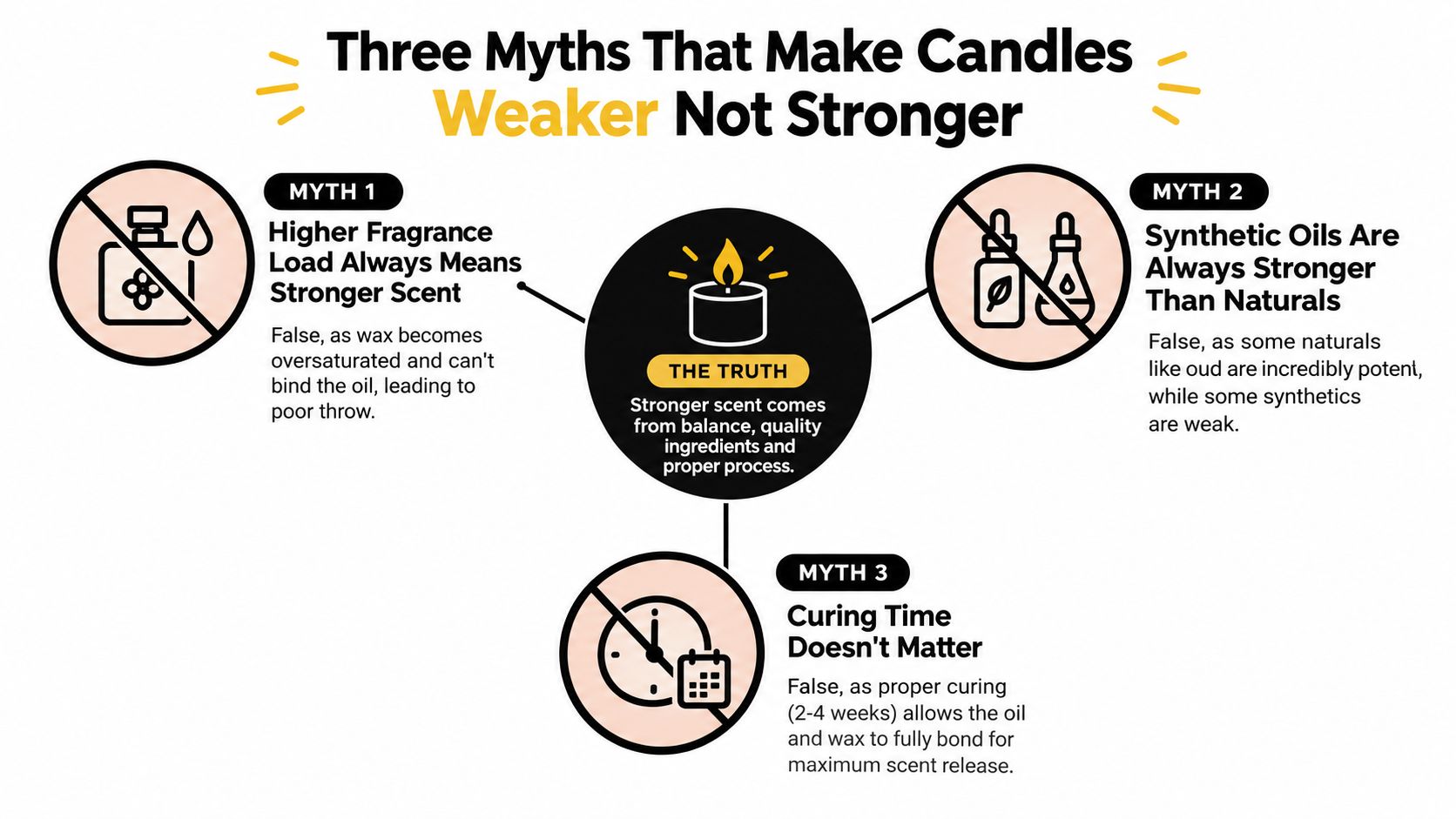
It doesn't. Once the wax approaches its holding capacity, extra oil can sit outside the wax structure, sweat onto the surface, interfere with the wick, and weaken the burn. The useful target is the highest clean-performing load, not the highest number you can pour into the vessel.
Natural origin doesn't determine candle throw. Essential oils can contain highly volatile materials that give a strong first impression but fade quickly in heated wax. Synthetic aroma materials can add stability, structure, and persistent base notes, while natural materials can add character and complexity.
The best commercial formulas often use a deliberate blend of natural and synthetic materials. Judge the finished candle, not the ingredient label alone.
Drops aren't a reliable measurement. A drop of a thin oil doesn't weigh the same as a drop of a viscous oil, and neither tells you whether the wax can hold the added fragrance. Use a calibrated scale and record fragrance as a percentage of wax weight.
Curing also matters. A fresh candle may smell uneven or muted before the oil and wax settle into a stable structure. Give every test batch the same cure treatment before comparing results.
Start with the wax, not the fragrance shelf. A soft soy system needs an oil that can release effectively within its thermal behavior. A paraffin or paraffin blend may suit dense oud, leather, smoky woods, and aggressive amber profiles. Coconut and palm systems may show softer, more nuanced blends well, but they still require direct testing.
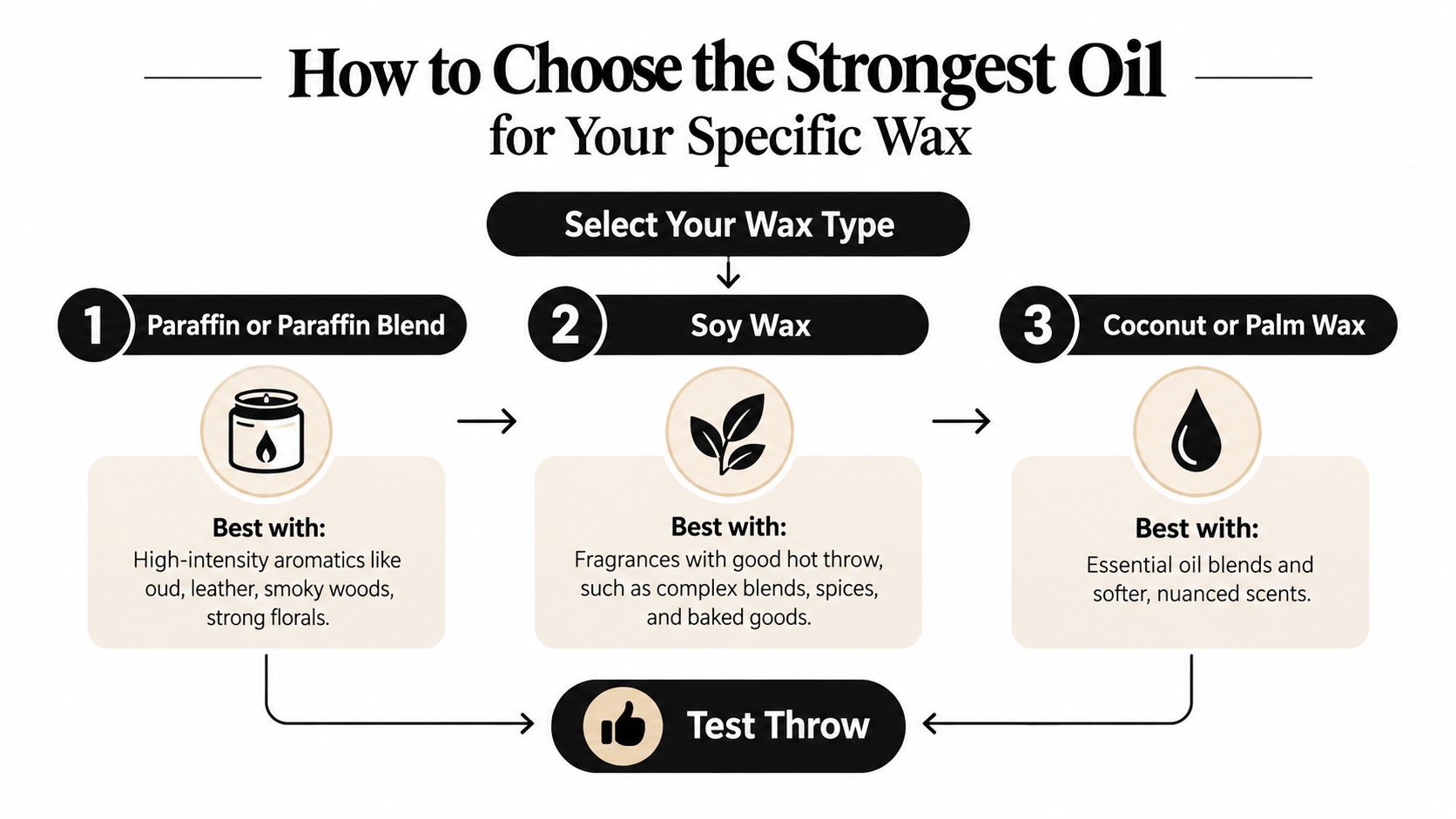
My shortlist looks like this:
For soy-specific formulation considerations, review this guide to soy wax candle fragrance oils.
Test each candidate at 6%, 8%, and 10%, then compare it with two wick sizes, following the load and safety guidance in the cited formulation sources. Evaluate cold throw after curing, then hot throw at 30 minutes, 1 hour, and full melt pool, as part of your own controlled test schedule. Those test times are practical checkpoints, not universal performance guarantees.
Don't commit to a full production run after one successful pour. Keep the vessel, wax, wick, cure conditions, and fragrance source consistent while you test. If one oil performs strongly at a moderate load and burns cleanly, choose it over a louder oil that requires overloading.
For many soy candle systems, 6% to 10% by weight is a practical working window. Some waxes may tolerate more, but only if they hold the oil and the candle still burns cleanly. The strongest finished candle is not the one with the highest load. It is the one that balances fragrance, wax, wick, vessel, and burn performance.
Start with 1 ounce of fragrance oil per pound of wax, roughly a 6% load. Use the following figures as formulation references:
| Fragrance Load % | Ounces of Oil per 1 lb Wax | Ounces of Oil per 16 oz Wax |
|---|---|---|
| 6% | 0.96 oz | 0.96 oz |
| 8% | 1.28 oz | 1.28 oz |
| 10% | 1.60 oz | 1.60 oz |
Confirm the calculation against your wax supplier's instructions, vessel size, and fragrance documentation. A heavier load can weaken the burn instead of improving scent throw.
Start with vanilla, sandalwood, coffee, oakmoss, smoked cedar, amber, and balanced gourmand blends. These profiles often deliver a fuller room impression in soy, especially when their mid and base notes remain clear after curing. Phthalate-free options may suit your product requirements, but the label alone does not predict performance. Review the current IFRA certificate and test the oil in your exact wax system.
Pour controlled test candles at different loads and compare hot throw across wick sizes. Record cold throw, hot throw, sweating, flame behavior, melt-pool development, cure conditions, and compliance documents. Test at 6%, 8%, and 10%, then choose the lowest load that fills the room while burning cleanly.
Jackpot Candles uses a proprietary soy wax blend and perfume-grade fragrance oils in scented candles, including designs with a surprise jewelry discovery. Visit Jackpot Candles to examine how a finished soy-based candle handles fragrance and burn performance.
Comments will be approved before showing up.