
free shipping at $99


Triple scented soy candles typically use a higher fragrance load, often around 9% to 10%, but their actual performance depends on the wax blend and cure time. The label alone doesn't guarantee a stronger scent.
Have you ever chosen a candle because “triple scented” sounded like a clear promise, only to find that it barely filled the room? The gap comes from treating a marketing phrase as a technical standard. In candle making, fragrance load, wax compatibility, wick selection, cure time, and room conditions all shape the result.
A strong candle can smell rich before lighting, then perform differently once heat changes the wax and releases fragrance into the air. Another candle with the same label may smell stronger, weaker, cleaner, or more balanced because its formula uses a different soy blend or fragrance composition.
Does “triple scented” describe a measurable formula, or only a marketing promise? The phrase sounds precise, but candle makers do not use it as a universal measurement. It usually signals an intentionally strong scent profile, not a fixed amount of fragrance oil.
The measurable question is how much fragrance oil the candle contains relative to its wax weight. Soy wax can typically hold about 8% fragrance oil by weight, while a practical maximum is near 10%. Many makers begin testing around 6% because that level can balance scent release with reliable burning, as explained by this soy candle fragrance-load calculator.
Two candles can carry the same label and perform differently. One maker may use a soy wax that works well near the upper end of its fragrance range. Another may use a blend that performs better with a lighter load, while still describing the finished candle as “triple scented.”
The difference can appear in cold throw, the fragrance noticed before lighting, and hot throw, the scent released while the candle burns. Melt-pool formation and burn time can also change. The label stays the same, but the wax, oil, wick, and testing process do not.
“Triple scented” therefore communicates intended intensity, not a guaranteed scientific result. A higher load may make a candle smell more pronounced, yet fragrance does not increase aroma in a simple, linear way. If the wax cannot hold or release the oil effectively, excess fragrance can affect texture, pooling, wick behavior, and overall stability.
Cure time adds another layer. A candle can smell impressive immediately after pouring, while its scent changes as the wax and fragrance bind during curing. Independent testing after an appropriate cure gives a more useful picture of performance than the label alone.
Practical rule: Treat “triple scented” as an invitation to investigate the formula, not as proof that the candle contains a fixed amount of fragrance.
The commercial appeal of soy container candles helps explain why bold scent language appears often on packaging. Shoppers encounter fragrance before lighting, then judge the candle again during the burn, so the label tries to set an expectation across both experiences.
The practical takeaway is simple. A triple scented soy candle usually aims for a more noticeable aroma than a lightly fragranced candle, but the phrase does not reveal the exact load, wax blend, wick setup, or curing process. Those details determine whether the promise becomes a satisfying room-filling scent or only a strong impression when the lid first comes off.
Fragrance load is the amount of fragrance oil used in relation to the wax weight. If a candle maker uses 10 g of fragrance oil with 100 g of wax, the fragrance load is 10%. That calculation gives you a more useful way to compare candles than phrases such as “extra strong” or “triple scented.”
Soy wax doesn't have one universal fragrance limit. Many soy container waxes are formulated to hold roughly 6% to 11% fragrance by weight, with common practical optima around 8% to 10%, according to this guide to fragrance load in candle making. The range changes because soy products differ in formulation, structure, and additives.
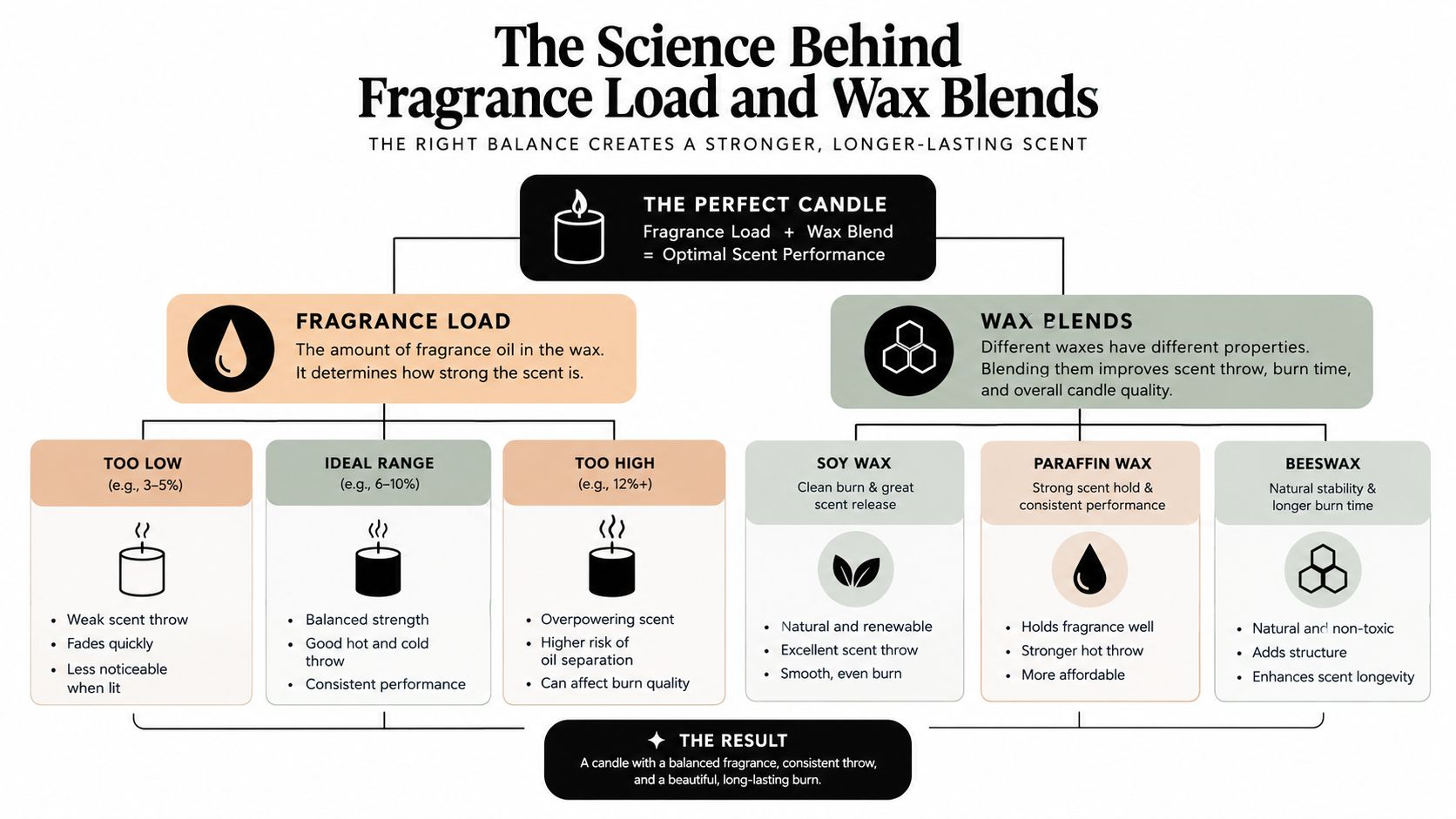
A soy wax that handles a higher fragrance load may release scent effectively during the burn. Another blend may become soft, oily, or difficult to wick when pushed toward its upper limit. One supplier's guidance places Golden Brands 444 soy around 9% to 11%, while NatureWax C-3 is closer to 6%, illustrating why you need the specific wax manufacturer's guidance rather than a generic soy-wax rule.
Fragrance chemistry matters, too. A heavy vanilla, resinous amber, bright citrus, and delicate floral accord don't interact with wax in exactly the same way. The oil's composition can influence how quickly it moves through the melt pool and how readily heat carries its aromatic compounds into the room.
Candle makers also need fragrance oils designed for candle use. When you're researching scent materials or comparing fragrance profiles, a collection such as Nemat fragrance oils can help you understand how individual scent styles differ before they become part of a finished product. The important question isn't only whether an oil smells appealing in a bottle. It must also work with the chosen wax and intended burning conditions.
For a practical explanation of how fragrance oils interact with soy formulas, see this guide to soy wax candle fragrance oils. It reinforces a key point: makers should test the complete formula, rather than assuming a higher fragrance percentage will solve every scent problem.
A fragrance load that looks impressive on paper can create performance problems if the wick and wax aren't matched to it. More oil can soften the candle, alter the melt pool, or make the flame behave unpredictably. The ideal formula releases enough fragrance to create a satisfying hot throw while preserving a stable, even burn.
That balance explains why a candle maker may test several loads instead of automatically choosing the highest permitted amount. The useful target is the strongest stable formula, not the largest number on the label.
A standard scented soy candle and a triple scented soy candle may differ most noticeably in how quickly and broadly their aroma reaches you. The first releases fragrance when you open the jar, which is called cold throw. The second appears after the wick creates a melt pool and heat carries fragrance into the room, known as hot throw.
Independent testing helps clarify the difference. In CandleScience lab notes, soy wax candles tested at 6% fragrance load showed weak cold throw and weak-to-moderate hot throw. The same wax tested at 9% performed better, and the results improved further after 2 to 3 weeks of curing, as documented in the Ecosoya Quantum soy wax lab notes.
That finding supports the intuition behind “triple scented,” but it also limits the claim. A higher load can improve perceived strength, yet the candle still needs adequate curing and a compatible wax-fragrance pairing. A freshly poured candle may not represent its finished performance.
| Feature | Standard scented soy candle | Triple scented soy candle |
|---|---|---|
| Fragrance intention | Balanced or moderate aroma | More pronounced aroma |
| What the label tells you | Often limited detail | Still may not disclose a precise load |
| Cold throw | Depends on oil and cure time | May be stronger, but isn't guaranteed |
| Hot throw | Depends on wick, wax, and room | May reach greater intensity when properly formulated |
| Main risk | A scent feels too subtle | Heavy loading can affect burn quality |
Room size changes the experience. A scent that feels powerful beside a desk may seem restrained in an open living area. Air movement, ceiling height, furnishings, and your own adjustment to a fragrance also affect perception. If you burn the same scent regularly, your nose can become less aware of it even while visitors notice it immediately.
A standard candle may suit a bedroom or reading nook where a restrained aroma feels comfortable. A stronger soy candle may make more sense in a larger shared room, provided the formula burns cleanly and you use it according to the maker's instructions.
The best comparison isn't “single versus triple” in isolation. Ask whether the product discloses its wax type, fragrance load or testing approach, cure guidance, and burn instructions. Those details tell you more than the adjective on the front label.
What should you ask before trusting a “triple scented” label? Start with the evidence behind the formula. Ask, “What does the maker disclose about the wax, fragrance load, curing, and testing?” The phrase describes an intention, not a standardized performance grade. Fragrance concentration and adequate cure time usually offer more useful clues.
A transparent product page cannot predict how every person will experience a scent. It can show whether the maker has considered the variables that control performance. Fragrance load works like seasoning in a recipe: too little may seem faint, while too much can interfere with the wax and wick. Cure time allows the fragrance and wax to settle into a more stable finished candle, so a newly poured product may not represent its later performance.
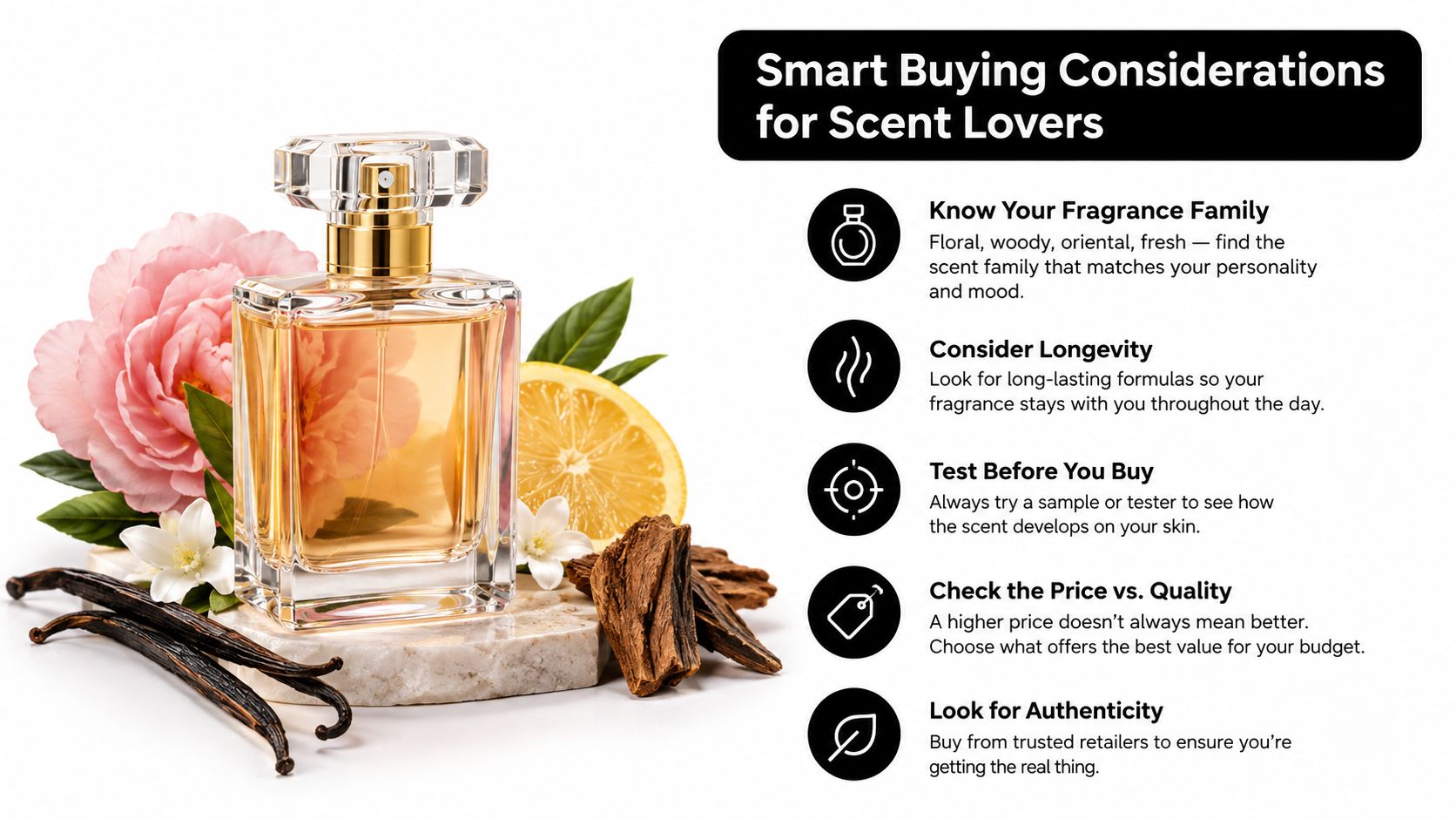
Reviews provide another perspective when customers describe room size, burn duration, and whether they mean cold or hot throw. Read them as context, not laboratory proof. “Very strong” and “too subtle” can both be accurate because airflow, room dimensions, and individual scent sensitivity change the experience.
A product with a clearly described wax blend, realistic fragrance information, and careful testing may be more dependable than one with louder wording and no technical detail. For premium soy candles, prioritize formula transparency over label intensity.
A well-formulated candle still needs the right treatment at home. The most fragrant soy candle can underperform if you light it before it has stabilized, place it in a draft, or repeatedly extinguish it before the melt pool develops evenly.
Cure time deserves special attention. Lab testing found that scent performance improved after 2 to 3 weeks of curing in the tested soy wax, so immediate burning may not show the candle at its full potential. Follow the maker's stated cure guidance when it's available, and store the candle in a cool, dry place while it rests.
Heavier fragrance concentrations can lower the melt point and make wax pool more quickly. Properly made soy jar candles commonly achieve about 40 to 60 hours of burn time for an 8-ounce candle, though wick size and fragrance load affect the result, according to this guide to candle wax burn time.
For more detail on cold throw, hot throw, melt pools, and the conditions that influence them, consult this guide to soy candle scent throw. The practical lesson is that scent strength and burn quality need to be managed together. A candle that fills the room quickly but burns unevenly may deliver less enjoyment over its full life.
Don't judge the candle after one short lighting session. Let the wax warm consistently, observe how the fragrance develops, and note whether the aroma remains pleasant as the candle burns. Strong scent should feel controlled, not harsh or unstable.
“Soy” often becomes shorthand for “healthier,” but wax type doesn't tell the whole indoor-air story. Fragrance chemistry, scent concentration, ventilation, vessel design, wick behavior, and burning habits all matter. A soy base may appeal to buyers seeking a paraffin-free formulation, yet that preference doesn't make every strongly scented candle identical in emissions.
A chamber study found that an unscented soy candle emitted about 204 µg/h of total VOCs, while the same soy candle with fragrance emitted 2,059 to 9,408 µg/h, depending on the scent family, according to this analysis of soy candles and VOC emissions. The figures show why fragrance deserves as much attention as wax when you're evaluating a strong-scent product.
Volatile organic compounds, or VOCs, are airborne chemicals released from various products and processes. The study's results don't mean that every scented candle produces the same emissions, nor do they establish a universal risk level for every household. They do show that adding fragrance can change the emissions profile substantially, and that the scent composition itself matters.
That leads to a more useful set of questions:
Never leave a burning candle unattended, and keep it away from curtains, paper, pets, children, and unstable surfaces. A strong fragrance doesn't justify ignoring flame safety. For practical guidance on placement, wick care, and responsible use, review these candle safety tips.
Triple scented soy candles can offer an appealing sensory effect, but the most informed choice balances aroma with formulation transparency and sensible use. Look beyond the promise of intensity. Ask how the candle was made, how long it was cured, and whether the scent suits the room and the people who use it.
Jackpot Candles offers hand-poured soy candles with fragrance varieties and a surprise piece of jewelry inside, giving shoppers both a scented candle experience and a discovery element. Visit Jackpot Candles to compare available scents, review product details, and choose a candle that matches your preferred aroma strength and home routine.
Comments will be approved before showing up.