
free shipping at $99


Candles transform a house into a home, filling our spaces with calming scents and a warm, inviting glow. From the rich vanilla notes that evoke celebration to the serene aroma of lavender, they are a cornerstone of self-care and ambiance. But with this cozy comfort comes a responsibility. A flickering flame, while beautiful, is still an open fire, and enjoying it safely requires more than just common sense.
Many of us think we know the basics, but small, overlooked details can lead to dangerous situations. It’s time to move beyond the obvious and embrace a smarter, more informed approach to enjoying our favorite home fragrances. This comprehensive guide will illuminate eight critical candle safety tips, providing actionable, in-depth advice to ensure your candle-burning experience is always a secure and delightful one. We will delve into specific techniques and expert insights that protect you, your family, and your home, allowing you to relax with complete peace of mind. Let's get started on mastering the art of safe and serene candle enjoyment.
This is the golden rule of candle safety, and for good reason. Leaving a burning candle unattended, even for a moment, introduces a significant fire risk into your home. A sudden draft, a curious pet, or simply the candle burning down to its base can transform a moment of peaceful ambiance into a dangerous situation. According to the National Fire Protection Association (NFPA), unattended candles are a leading cause of home candle fires, underscoring why this is the most critical of all candle safety tips.
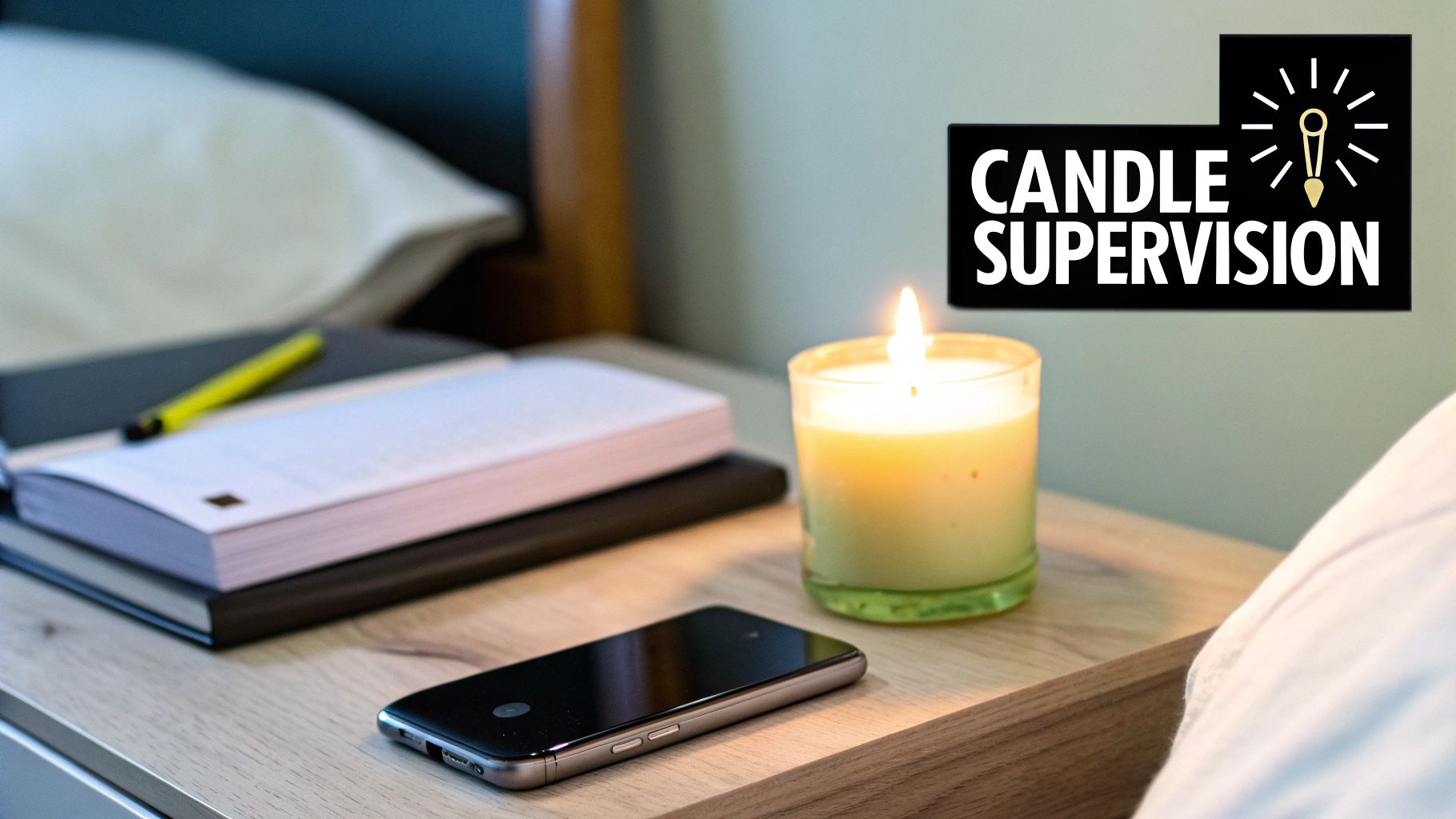
Think about how high-end establishments manage this risk. Luxury spas and restaurants that use real-flame candles don't leave safety to chance. They implement strict protocols, such as continuous staff monitoring, timed rotations for checking on candles, and placing them in areas where they are always in sight. You can adopt this same professional-level vigilance in your own home.
The core principle is simple: if you leave the room, the candle flame goes out. This applies whether you're stepping away to answer the door, heading to another floor, or going to sleep. Never assume a candle will be fine on its own.
Creating habits around this rule is key to ensuring you never forget. Try these practical strategies to build a reliable safety routine:
By making this rule an unbreakable habit, you can enjoy your favorite fragrances with complete peace of mind. For a deeper dive into this essential practice, you can get more details on candle supervision at Jackpot Candles.
The gentle glow of a candle can be mesmerizing, but its open flame is a source of intense heat that requires a dedicated safety zone. Placing a burning candle too close to combustible items is a recipe for disaster. Objects like curtains, bedding, books, and decorations can easily ignite when exposed to the flame or the radiant heat it produces. The National Fire Protection Association (NFPA) recommends maintaining a clearance of at least one foot (12 inches) on all sides of a burning candle, a crucial guideline among all candle safety tips.
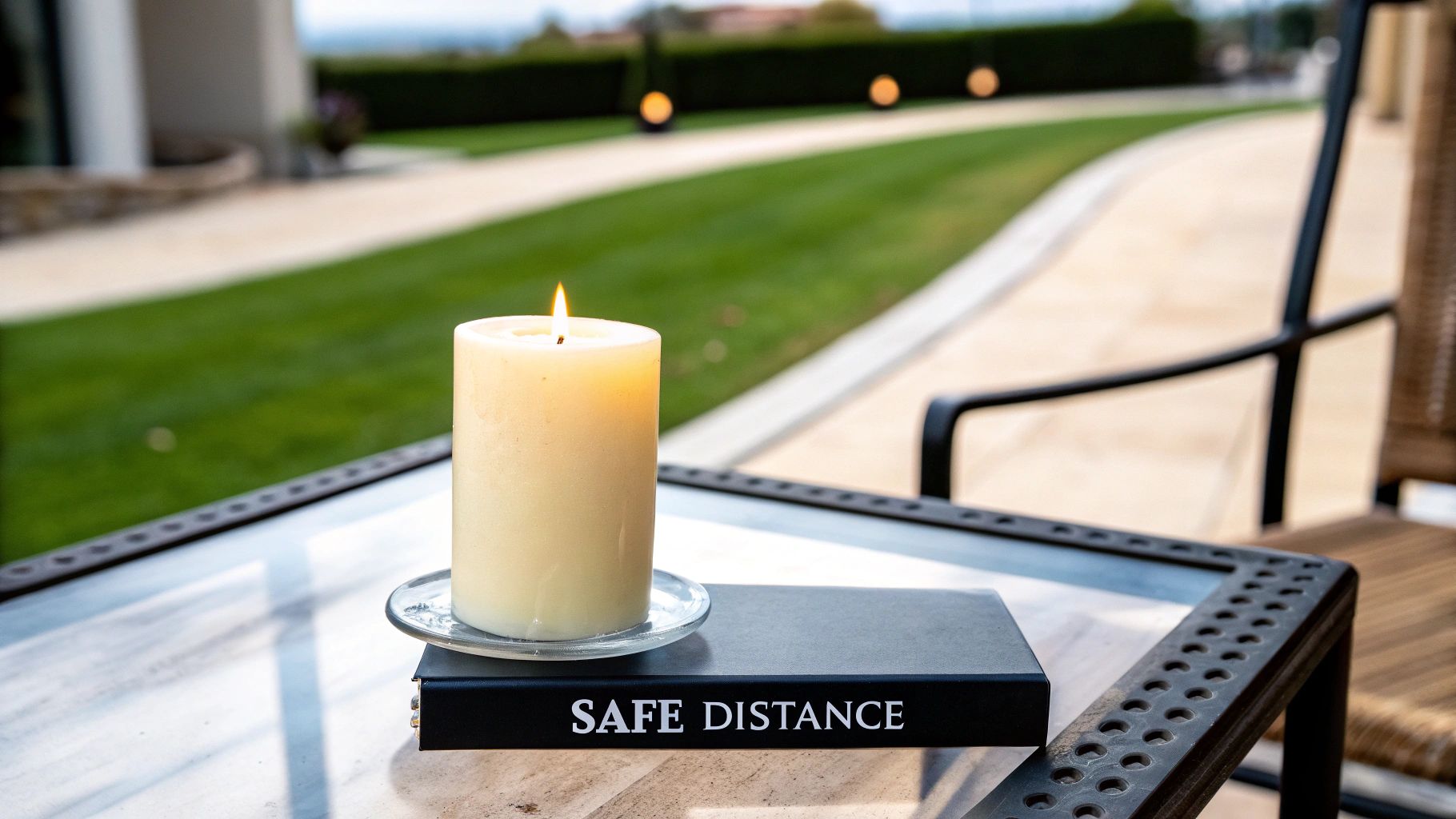
Consider how professionals manage this hazard in public spaces. Churches often place votive candles on designated metal stands far from wooden pews or decorative fabrics. Similarly, high-end wedding planners design centerpieces where candles are nestled within glass hurricanes or arranged with significant spacing from flammable floral arrangements and linens. You can apply this same deliberate and strategic placement in your home to create a safe, fire-resistant environment for your candles.
The core principle is to create a "no-fly zone" for flammable materials around your candle. Before you light the wick, take a moment to survey the surrounding area. Ensure a minimum 12-inch buffer between the candle and anything that could catch fire, including items above it. This simple spatial awareness drastically reduces the risk of an accidental fire.
Making a quick environmental scan a habit is the best way to ensure consistent safety. Integrate these practices into your candle-lighting routine:
By consciously creating a safe zone, you can confidently enjoy the ambiance of your candles without worrying about nearby objects. For more information on safe candle placement, refer to the safety standards provided by organizations like Underwriters Laboratories (UL).
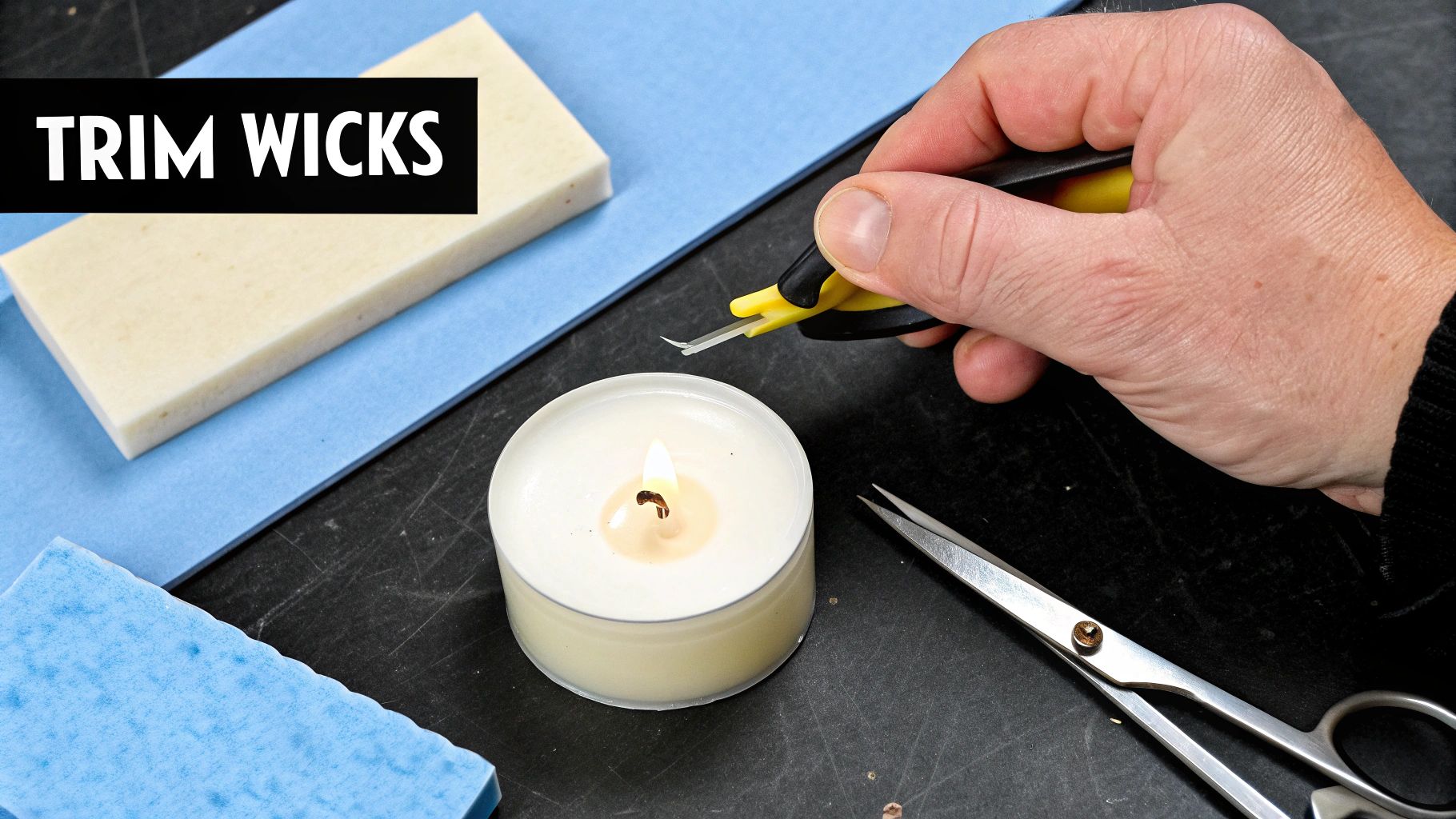
Proper wick maintenance is a cornerstone of responsible candle enjoyment and one of the most impactful candle safety tips you can adopt. An untrimmed wick is often the culprit behind common candle problems like excessive smoke, soot staining your container, and an unstable, dangerously large flame. A wick that is too long draws up too much wax, creating a large, flickering flame that can easily get out of control.
This isn't just a casual suggestion; it's a standard practice promoted by high-end candle makers and fragrance experts. Brands like Bath & Body Works and Yankee Candle consistently include wick care in their educational materials because it directly affects the candle's performance and safety. Similarly, many candle subscription services now include a wick trimmer in their welcome kits, underscoring its importance for achieving a clean, safe, and long-lasting burn.
The rule is straightforward: before you light your candle, every single time, trim the wick to approximately 1/4 inch (or 6mm). This prevents the wick from "mushrooming," where a carbon buildup forms on the tip, leading to a smoky, oversized flame. The goal is to create a small, steady flame that melts the wax evenly.
Integrating this into your routine is simple with the right tools and habits. Follow these strategies for a perfect burn every time:
By adopting this simple habit, you ensure your candle burns cleaner, brighter, and more safely. To see these techniques in action, you can get a complete guide on how to trim your wicks at Jackpot Candles.
Choosing the right surface and holder for your candle is just as crucial as where you place it in a room. A candle's container can get surprisingly hot, and the heat can transfer directly to the surface beneath it, creating a serious fire hazard. Placing a candle on a sturdy, heat-resistant surface in a proper holder is one of the most fundamental candle safety tips to prevent heat damage, accidental fires, and messy wax spills.
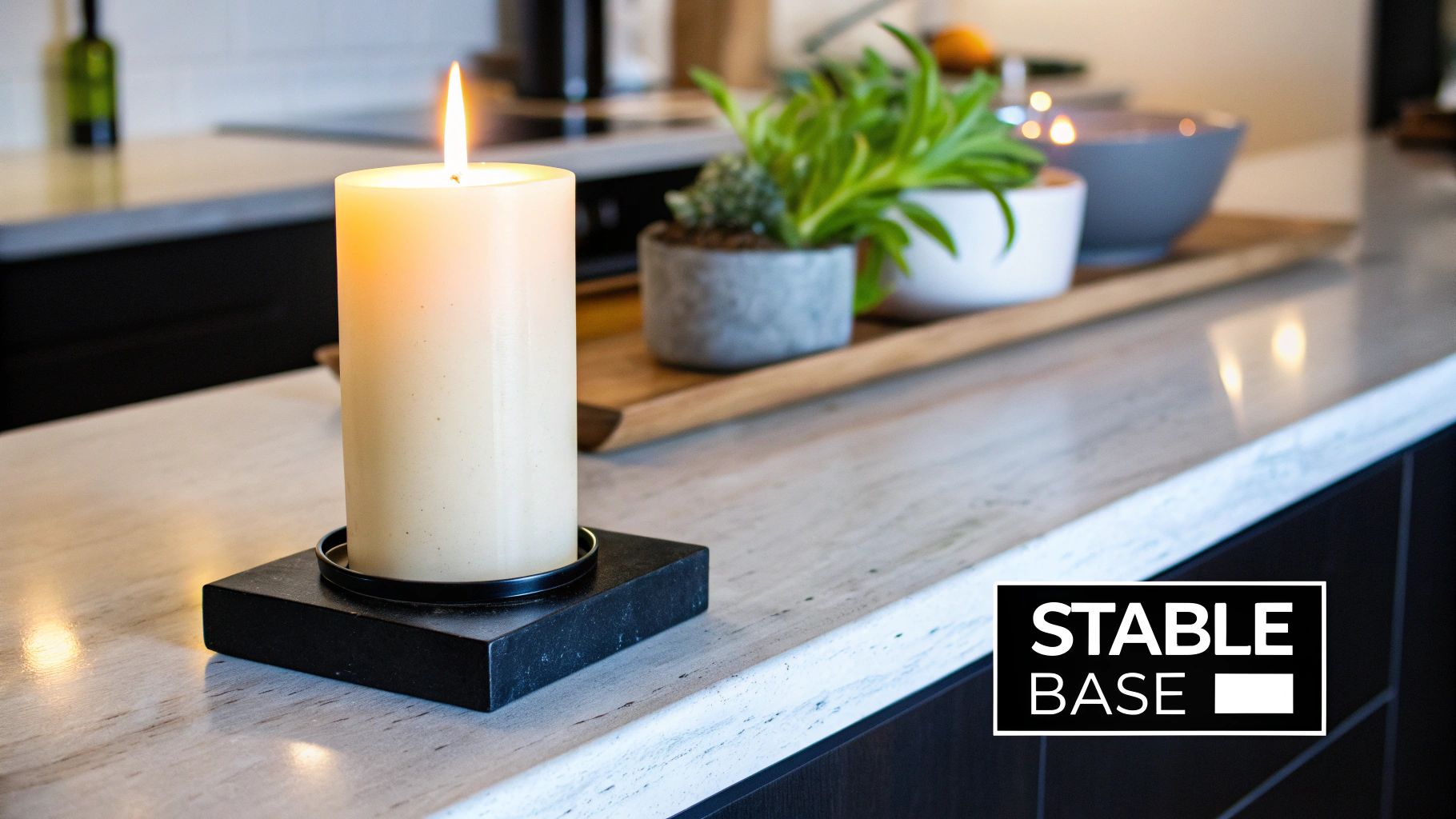
This principle is a non-negotiable standard in professional settings. High-end interior designers and home decor retailers like Pottery Barn always showcase candles on appropriate surfaces, such as marble trays, stone coasters, or in protective ceramic dishes. This isn't just for aesthetics; it’s a built-in safety measure to protect valuable furniture and prevent accidents. You can bring this same level of care and sophistication into your home by being mindful of what lies beneath your flame.
The core idea is to create a protective barrier between the candle's heat and the surface it rests on. Never place a burning candle directly on wood, plastic, fabric, or any flammable or delicate material. Always use a holder specifically designed for candles, and ensure that holder is placed on a stable, level, and heat-resistant surface.
Integrating this practice into your candle routine is easy with a few simple strategies. These tips will help you protect your home and enjoy your candles without worry:
A candle's flame might seem small, but its behavior is heavily influenced by its environment. Placing a lit candle in the path of a draft or in a high-traffic area introduces instability, creating a significant fire hazard. Air currents from open windows, vents, or even people walking by can cause the flame to flicker wildly, burn unevenly, and potentially send sparks flying toward flammable materials. This is one of the most overlooked yet crucial candle safety tips for maintaining a controlled burn.
Think about how professional event planners or high-end restaurants manage this risk. They meticulously position candles away from main aisles, doorways, and dance floors. Often, they use protective enclosures like hurricane glasses or place candles in recessed wall sconces. This strategic placement isn't just for aesthetics; it's a deliberate safety measure to prevent drafts from interfering with the flame and to keep candles away from accidental bumps.
The guiding principle is to create a still, protected environment for your candle. Before lighting the wick, take a moment to assess the room for potential air currents and physical disruptions. Your goal is to find a stable surface where the candle can burn peacefully without being disturbed by its surroundings.
Developing an eye for safe placement will quickly become second nature. Use these practical strategies to choose the perfect, secure spot every time:
By carefully considering a candle's placement, you prevent common accidents and ensure a safer, more consistent burn. To learn more about creating the ideal burning environment, you can read the advice from the experts at Yankee Candle.
While it may be tempting to let a beautiful candle burn indefinitely, one of the most crucial candle safety tips is to limit each burn session to a maximum of four hours. Burning a candle for longer than this recommended time can lead to several safety hazards. The wick can become unstable and form a "mushroom," creating an excessively large and potentially dangerous flame. This also generates more soot and can cause the glass container to overheat, risking cracks or even shattering.
This four-hour limit isn't an arbitrary number; it's a standard advocated by the National Candle Association and top manufacturers to ensure optimal performance and safety. High-end event planners and luxury hotels that use candles for extended ambiance strictly adhere to this rule. They often have protocols for swapping out candles or extinguishing and relighting them in cycles to maintain a safe and controlled environment throughout a long evening.
The principle is to prevent the candle from reaching a state of thermal instability. After four hours of continuous burning, extinguish the flame completely. Allow the candle to cool for at least two hours. This gives the wax time to fully solidify before you trim the wick and safely relight it for another session. This cycle prevents overheating and maintains the integrity of the wick and container.
Integrating this rule into your routine ensures you can enjoy your candles for longer periods without compromising safety. Here are a few strategies to make it effortless:
By respecting the four-hour burn rule, you not only prevent potential fire hazards but also extend the life of your candle and ensure a cleaner, more efficient burn every time. You can learn more about burn times and candle care from the experts at the National Candle Association.
The innocent curiosity of a child or the playful energy of a pet can quickly turn a beautiful burning candle into a household hazard. Their unpredictable movements and lack of awareness about fire dangers mean they can easily knock over a candle, get burned by the hot wax or flame, or even try to ingest the wax. This is why keeping candles completely out of their reach is one of the most non-negotiable candle safety tips for any family home.
Think about how environments with high safety standards, like pediatric offices or childcare facilities, manage this risk. These places often ban open flames entirely, opting for flameless alternatives to eliminate the danger. While you don't have to give up your favorite scented candles, you can adopt a similar mindset by creating designated "no-go" zones for flames that are inaccessible to little hands and paws.
The core principle is to create physical distance and barriers between the candle and any children or pets in your home. This means placing them high enough or in a protected enough space that they are completely unreachable. Never assume a child or pet will know to stay away.
Proactive placement and establishing clear boundaries are essential for keeping everyone safe. Try these strategies to childproof and pet-proof your candle enjoyment:
By implementing these barriers, you create a safer environment for your entire family. For more ideas on how to safely enjoy fragrances around your furry friends, explore these candle tips for homes with pets.
While you take every precaution, being prepared for the unexpected is a cornerstone of responsible candle use. Having the right fire extinguishing tools within easy reach can mean the difference between a minor incident and a serious emergency. This isn't just about having a fire extinguisher in the kitchen; it's about having candle-specific tools readily available where you use your candles. This proactive approach is a critical component of any comprehensive list of candle safety tips.
Consider the professional standards in high-risk environments. Fire departments, for instance, consistently recommend having specific tools on hand for different types of fires, while professional candle shops often demonstrate proper snuffer techniques to customers. Hotels also train their housekeeping staff on emergency procedures for candles left in guest rooms. You can bring this level of preparedness into your home to ensure total peace of mind.
The core principle is to have immediate access to the correct tool to safely extinguish a flame, especially if it grows beyond the wick. Using the wrong method, like splashing water on a wax fire, can cause burning wax to splatter and dangerously spread the flames. The goal is to safely deprive the fire of oxygen.
Integrating this practice into your candle routine is simple and effective. Use these strategies to ensure you are always prepared:
Having the right tools readily available is crucial for a quick response in case of an emergency. For a broader understanding of why fire extinguishers are considered mandatory in certain contexts, you might find information on the importance of having a fire extinguisher helpful.
| Safety Measure | Implementation Complexity 🔄 | Resource Requirements ⚡ | Expected Outcomes 📊 | Ideal Use Cases 💡 | Key Advantages ⭐ |
|---|---|---|---|---|---|
| Never Leave a Burning Candle Unattended | Low - habit formation and vigilance | Minimal - reminders or timers | Significantly reduced fire risk (37%) | Homes, hotels, restaurants, spas | Simple, highly effective fire prevention |
| Keep Candles Away from Flammable Materials | Moderate - requires space planning | Low - ruler, proper holders | Prevents fire spread and heat damage | Small or cluttered spaces, public venues | Reduces rapid fire spread and damage |
| Trim Wicks to 1/4 Inch Before Each Use | Moderate - requires tools and routine | Requires wick trimmers | Longer candle life, less flare-ups | Candle enthusiasts, professionals, homes | Cleaner burn, less soot, extended candle life |
| Use Proper Candle Holders and Heat-Resistant Surfaces | Moderate - purchase and selection | Investment in suitable holders | Prevents wax damage and tip-overs | Homes, restaurants, hotels, event spaces | Stable placement, containment of wax |
| Avoid Drafts and High-Traffic Areas | Moderate - assessment and placement | Minimal - careful positioning | Even burning, reduced accidents | Busy rooms, public spaces, event venues | Safer burn, less smoke, fewer accidents |
| Follow the 4-Hour Burn Rule | Low - timing and attention | Minimal - timers and monitoring | Prevents overheating, extends candle life | Long events, hotels, spas | Optimal burn conditions, reduced risks |
| Keep Candles Away from Children and Pets | Moderate - elevated placement, barriers | May need physical barriers | Prevents burns, ingestion, accidents | Family homes, childcare, pet owners | Enhanced safety and peace of mind |
| Have Proper Fire Extinguishing Tools Nearby | Moderate - equipment purchase and training | Requires extinguishers, snuffers | Quick fire response, minimized damage | All candle-using environments | Increases emergency readiness, confidence |
Embracing the warm glow and captivating fragrance of a candle is one of life’s simplest, most profound pleasures. It can transform a routine evening into a restorative ritual and a simple room into a serene sanctuary. However, this beautiful experience is built upon a foundation of respect for the open flame. The eight essential candle safety tips we have explored are not restrictive rules designed to diminish your enjoyment; they are empowering practices that amplify it. By making them an integral part of your candle routine, you ensure that every moment is defined by tranquility, not potential risk.
True luxury isn't just about the quality of the candle itself, it's about the peace of mind you have while enjoying it. Shifting your mindset from passively lighting a candle to mindfully managing its environment is the most crucial takeaway. This means that safety isn't an afterthought, it's part of the ritual itself.
This deliberate, step-by-step approach transforms candle burning from a simple action into a mindful practice, enhancing the overall sensory experience.
While all eight tips are important, a few stand out as non-negotiable pillars of candle safety tips that prevent the most common incidents. If you only commit to a few new habits today, make them these:
Mastering these three core practices provides a powerful safety net, allowing you to relax and fully immerse yourself in the ambient glow and fragrance. By integrating these expert candle safety tips into your life, you are not just protecting your home; you are honoring the very essence of self-care. You are creating a space where beauty and safety coexist, ensuring that every flicker of light contributes only to your peace, joy, and well-being.
Ready to pair your newfound safety expertise with a truly exceptional candle experience? Jackpot Candles offers clean-burning, 100% natural soy wax candles designed for a superior and safer burn. Discover our captivating scents and the surprise jewelry hidden within each one, knowing you can enjoy the ultimate luxury: a beautiful fragrance combined with complete peace of mind. Explore the Collection at Jackpot Candles.
Comments will be approved before showing up.