
free shipping at $99


If you're looking for the quick and dirty answer, here it is: paraffin wax has traditionally been the king of powerful hot throw. But things have changed. Modern coconut and soy wax blends are catching up fast, giving you a comparable, eco-friendly alternative that burns cleaner and still packs a serious fragrance punch. The choice really comes down to what you value more—raw power or natural ingredients.
Picking the right wax is easily the most critical decision you'll make in your candle-making journey. Think of the wax as the engine of your candle; it's the fuel that carries and pushes the fragrance oil into the air. Get this right, and you’re creating an incredible, immersive experience. Get it wrong, and you've just made a beautiful but frustratingly quiet candle.
To nail your choice, you have to understand "scent throw," which really comes in two flavors.
The wax you choose directly affects both cold and hot throw because every wax has a unique molecular structure and melting point, changing how it bonds with and releases fragrance oils. Some, like paraffin, are notorious for letting go of scent quickly and intensely. Others, like pure soy, need more time to cure so the oil can bind properly, leading to a much slower, more subtle release.
At the end of the day, the challenge for any candlemaker is finding a wax that matches their goals. Are you chasing an immediate, room-filling fragrance, or is a cleaner, eco-friendly burn with a more nuanced aroma more your style?
This guide will break down the top contenders to help you figure that out. We’ll get into the real differences in performance, burn characteristics, and how they play with fragrances to find the best candle wax for what you're trying to create.
| Wax Characteristic | Paraffin Wax | Soy Wax | Coconut Wax Blends |
|---|---|---|---|
| Primary Strength | Unmatched Hot Throw | Eco-Friendly & Slow Burn | Clean Burn & Strong Scent |
| Burn Profile | Fast, can produce soot | Clean, slow, and even | Very clean, slow burn |
| Scent Release | Fast and powerful | Slow and gradual | Strong and consistent |
| Curing Time | Shorter (3-5 days) | Longer (1-2 weeks) | Longer (1-2 weeks) |
Before we can even talk about the best candle wax for scent throw, we have to get on the same page about what makes a candle fragrant in the first place. It’s a delicate dance between the wax, the fragrance oil, the heat, and even time itself. Nailing this is what separates a candle that fills a room from one that barely whispers.
The two big terms you’ll hear thrown around are cold throw and hot throw. Cold throw is simply the scent your candle gives off when it’s just sitting there, unlit. Hot throw is the magic that happens when you light the wick—it’s the aroma that’s released into the air. A great cold throw doesn't always mean you'll get a knockout hot throw, and that all comes down to the wax.
A few critical factors have to work together perfectly to create a candle with an amazing and consistent scent.
Fragrance Load: This is just a fancy way of saying how much fragrance oil a particular wax can actually hold onto. Most waxes top out at around 6-12%. If you try to cram more in, the oil can start to "sweat" or pool on the surface. Not only does this look messy, but it's also a serious fire hazard.
Binding and Curing: Once you mix fragrance oil into melted wax, they need some time to get to know each other. This is called curing, and it’s when the oil and wax molecules truly bond. Natural waxes like soy or coconut blends are notorious for needing a long cure time—sometimes up to two full weeks—to reach their final scent strength.
So many people make the mistake of burning a new candle right away. Skipping the cure time, especially with natural waxes, is the number one reason for a weak hot throw. A little patience goes a long way in candle making.
Your technique matters just as much as your ingredients. The temperature of your wax when you add the fragrance oil is a make-or-break moment. Too hot, and you can literally burn off the delicate top notes of your scent before it even cools. Too cool, and the oil won't mix in properly.
Additives can also give your scent a boost. Things like vybar are often mixed into paraffin wax to help it grab onto more fragrance oil, which can lead to a much stronger scent throw. Getting the science right is the secret, and you can learn more about what candle throw is and why it's important to truly master your craft. Now that we've got the basics down, let's dive into how different waxes stack up.
When your number one goal is pure, unapologetic fragrance power, paraffin wax is the undisputed industry champ. It's been the go-to for decades for a reason. As a byproduct of petroleum refinement, paraffin has a unique molecular structure that’s incredibly efficient at releasing scent. Unlike denser natural waxes, it doesn't cling to fragrance oils, letting them go for an immediate and robust aroma.
This is exactly why paraffin dominates when it comes to hot throw. A well-made paraffin candle can start filling even a large, open-concept room with rich fragrance within just a few minutes of being lit. This rapid, high-impact performance is why it’s still a mainstay in the commercial candle market, especially for brands that promise a powerful scent experience right out of the box.
One of paraffin's biggest wins is its ability to handle high fragrance loads. It can often take 10% or even a little more by weight without breaking a sweat—literally. You won't see the stability issues like fragrance oil "sweating" that can plague other waxes at high concentrations. This means candle makers can pack more scent into their formulas, which translates directly to a stronger candle.
Let's say you're trying to create a bold, complex profile, like a rich espresso or a deep sandalwood. With paraffin, you can use a higher fragrance percentage to make sure every single one of those nuanced notes comes through loud and clear. That's a real challenge with some natural waxes that just can't hold that much oil.
The science behind it is pretty straightforward: paraffin’s lower melting point means it liquefies faster than denser natural waxes. A bigger melt pool allows fragrance molecules to vaporize and travel into the air more quickly and powerfully, setting a very high bar for performance.
But let's be real—no wax is perfect. Paraffin comes with some significant trade-offs you need to consider. The big one is its origin story. As a petroleum product, it’s a non-renewable resource, which is a major turn-off for many eco-conscious makers and their customers.
It’s also more prone to sooting if your wicking is off or if the candle burns in a drafty spot. While a properly crafted paraffin candle burns cleanly, the potential for that dreaded black smoke and residue on the jar is definitely higher compared to its natural cousins.
Ultimately, it's a balancing act. You have to weigh raw scent performance against environmental and aesthetic concerns. But for those who prioritize the strongest possible scent throw above all else, paraffin is still a top-tier contender. You can find more details about how different candle waxes affect scent throw and see how their performance metrics stack up.
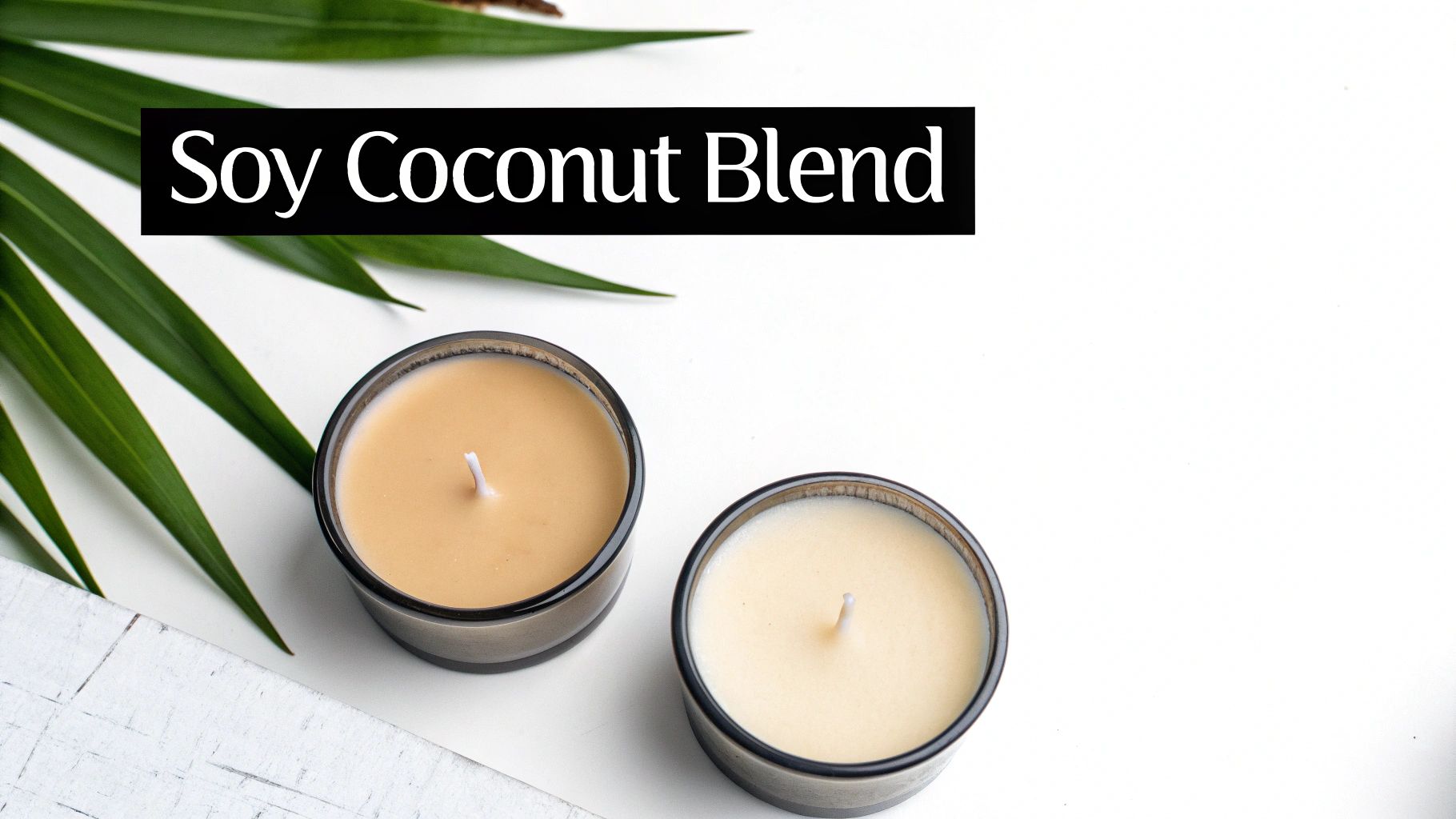
If you're looking to move away from petroleum-based waxes, you’ve probably heard all about soy and coconut. They're the go-to choices for candle makers and shoppers who want something more eco-friendly. Soy wax, which comes from hydrogenated soybean oil, is incredibly popular, but working with it is a whole different ballgame than paraffin.
Because soy wax has a much denser molecular structure, it takes more heat to get a good melt pool going and to convince it to let go of its fragrance. You're not going to get that instant "whoa" factor you might with other waxes. Instead, soy offers a slower, more subtle scent release—perfect if you want a consistent, gentle background aroma that isn't overpowering.
The biggest mistake I see new soy candle makers make? They test their candles way too soon. Soy wax absolutely needs a one-to-two-week curing period for the fragrance oil to properly bind with the wax. Burn it any earlier, and you'll be wondering where the scent is.
For anyone who loves the idea of a natural wax but craves a stronger performance, coconut wax is where it's at. Made from the meat of coconuts, this wax is a premium player known for its clean, slow burn and incredible ability to throw a scent. In a head-to-head test, pure coconut wax or a blend heavy on coconut will almost always beat pure soy in fragrance intensity.
This has led to the explosion of soy-coconut blends, which honestly give you the best of both worlds. The soy wax provides some much-needed structure and keeps costs down, while the coconut comes in to boost the fragrance load and smooth out the burn, giving the final candle a gorgeous, creamy finish.
It's the perfect compromise for getting a powerful hot throw while still checking that "natural and sustainable" box. We've seen a huge shift toward these waxes as people become more conscious of what's in their candles. A popular recipe is a 70% soy and 30% coconut blend, which really amps up the hot throw and marries performance with eco-friendly sourcing. To see how these natural waxes really stack up, you can dive into some great candle test comparisons.
By blending these two waxes, candle makers can create a product that can stand up to traditional options, offering a strong, clean scent without any paraffin. This is exactly why soy-coconut blends have become the top choice for so many luxury and artisan candle brands where both performance and natural origins are non-negotiable.
Choosing the right candle wax for scent throw can feel like a constant tug-of-war between amazing performance and all-natural ingredients. To make things easier, let's put the top contenders side-by-side and see how they really stack up. This breakdown shows you exactly where each wax shines—and where it falls short—so you know what you’re getting into.
Understanding these trade-offs is everything. A wax like paraffin might give you an incredible hot throw that fills a room in minutes, but its eco-friendliness isn't its strong suit. On the other hand, a natural wax like soy gives you a clean, beautiful burn but asks for a little more patience to get that perfect scent.
Here's a quick look at how the different waxes compare. This table gives you a side-by-side comparison based on the key factors that influence scent throw and overall candle performance. Think of it as your cheat sheet before we get into the finer details.
| Wax Type | Hot Throw Intensity (1-10) | Cold Throw Strength | Max Fragrance Load | Eco-Friendliness |
|---|---|---|---|---|
| Paraffin | 9 | Strong | 10-12% | Low |
| Soy Wax | 6 | Moderate | 8-10% | High |
| Coconut Blend | 8 | Strong | 10-12% | High |
| Para-Soy Blend | 8 | Very Strong | 10-12% | Medium |
These numbers really get to the heart of the matter for any candle maker. Paraffin is the undisputed heavyweight with a knockout 9/10 hot throw, making it the go-to for scenting large, open spaces. The catch? It's a petroleum byproduct, which is a major turn-off for a lot of people these days. For more on this classic matchup, our guide comparing soy vs. paraffin candles breaks it down even further.
While the chart gives you the raw data, the real story is in how these waxes perform in the real world.
A pure soy wax candle, with its 6/10 hot throw, might not look like a champion on paper. But its true appeal is its clean, slow burn and the fact that it comes from a renewable source. This makes it perfect for cozier spots like a bedroom or for anyone who puts natural products first. Just remember, that two-week cure time is non-negotiable if you want to unlock its true, gentler fragrance.
For anyone aiming for that high-end, luxury feel, a coconut blend is often the answer. It’s the best of both worlds, delivering a powerful 8/10 hot throw that can go toe-to-toe with paraffin blends, all while being a super eco-friendly natural wax. You get a gorgeous, creamy look and a clean burn that just feels premium.
Finally, you've got the para-soy blend, the ultimate compromise. It borrows the incredible scent-throwing power of paraffin and mixes in soy to get a better burn and a more "natural" vibe. This blend is a fantastic choice if you want performance that’s almost identical to paraffin but with a slightly greener footprint.
Figuring out which performance data translates into the perfect wax for your project is where the real fun of candle making begins. The truth is, the "best" candle wax for scent throw isn't a single answer—it really depends on what you're trying to create and where the candle will live. The choice you make should be all about the kind of experience you want your candle to provide.
For instance, if you're trying to fill a big, open-concept living room with a fragrance that makes an immediate impact, a paraffin or para-soy blend is your best bet. Their hot throw is incredibly powerful, designed to make a statement in larger spaces.
On the flip side, if you're pouring a luxurious, clean-burning candle for a cozier spot like a bedroom or a spa, a coconut-soy blend offers a much more sophisticated experience. Its clean burn and smooth, strong fragrance release feel refined and are a huge draw for customers looking for more natural products.
Let's walk through a few common scenarios:
This chart gives you a great visual of how the most popular wax types stack up in terms of scent throw performance.
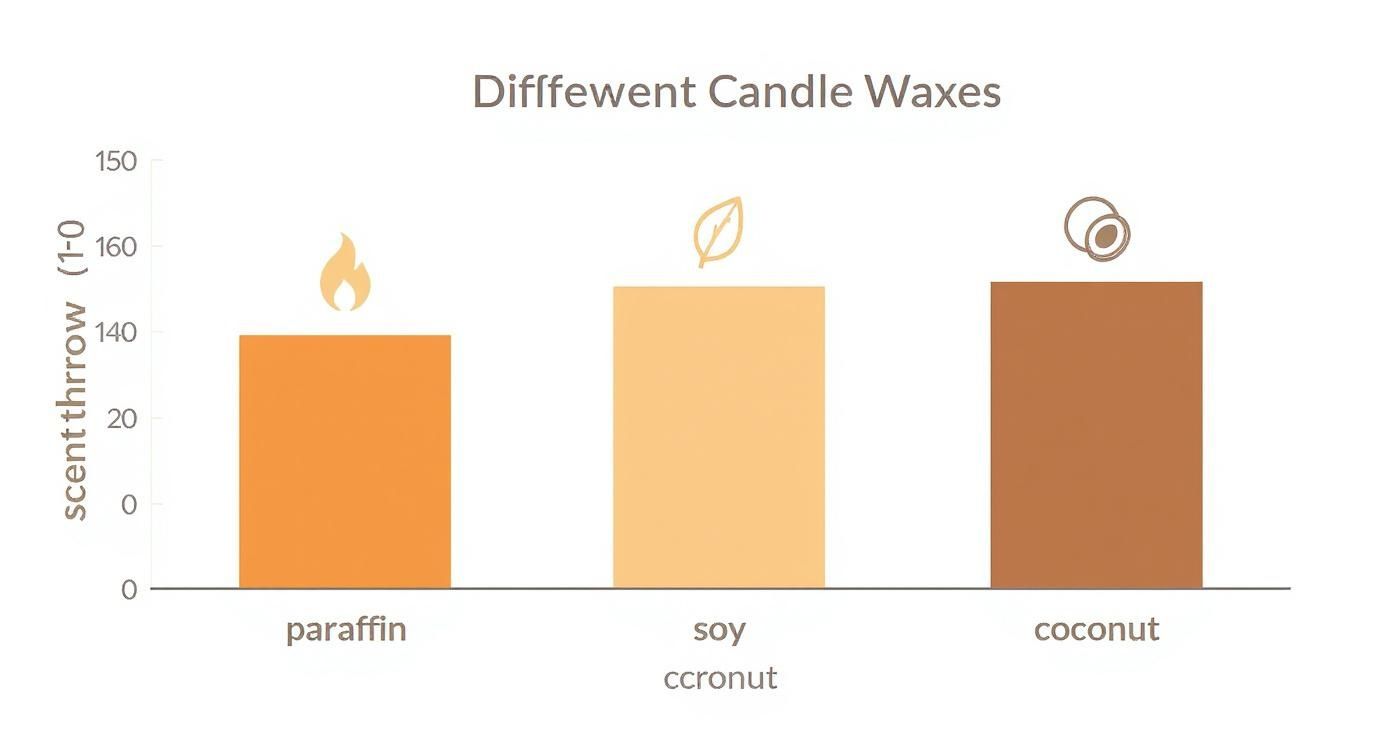
As you can see, paraffin definitely leads the pack in sheer power, but coconut blends are right there with it, offering a fantastic natural alternative. If you want to dive deeper into getting the best aroma from your candles, check out our guide on how to make candles smell stronger.
Remember, it's not just about the wax. The entire presentation of your candle matters. Great packaging doesn't just protect your creation; it tells your brand's story. It's worth exploring some solid e-commerce packaging design tips to make sure your final product really catches the eye.
Even when you think you've done everything right, candle-making can still throw you a curveball. Troubleshooting is just part of the craft, but knowing a little bit about the science behind common scent throw issues can make fixing them a whole lot easier.
Let's dig into some of the most persistent problems we hear about from fellow candle makers and get you the clear, straightforward answers you need for a stronger, more consistent scent.
This is, without a doubt, the most common frustration for anyone new to soy wax. The number one culprit is almost always not giving it enough curing time. Soy wax has a really dense molecular structure, and it needs a full 1-2 weeks for the fragrance oil to truly bind with it. If you burn it too soon, the oil hasn't had a chance to fully integrate, which leads to a disappointing hot throw.
Your pour temperature is another big factor. If you add your fragrance oil when the soy wax is too hot (usually anything over 185°F), you can literally burn off the delicate top notes of your scent before the candle has even cooled.
A weak scent throw in natural waxes is rarely about the quality of the wax itself—it's almost always about the process. Patience during the curing phase is non-negotiable if you want the best possible scent throw from your soy candles.
It’s a tempting thought, isn't it? But trying to cram more fragrance oil into your wax than it can handle will backfire, and it can even be dangerous. Every wax has a maximum fragrance load, which is the highest percentage of oil it can physically hold. Pushing past that limit (typically between 8-12%) means the oil can't properly bind.
This leads to the oil "sweating" or pooling on the surface of your finished candle. Not only will that extra oil not help your scent throw, but it also creates a serious fire hazard when lit. Always, always stick to the manufacturer's recommended fragrance load for your specific wax.
The ideal curing time changes quite a bit depending on your wax. Skipping this step is like pulling a cake out of the oven halfway through baking—it's just not going to be right.
For the best possible performance, let your candles cure for the full recommended time in a cool, dark place. This simple act of patience is the final, crucial step to unlocking your candle’s true scent potential.
Ready to experience a perfectly crafted candle without all the guesswork? Discover the brilliant scents and beautiful jewelry waiting inside every one of our candles. At Jackpot Candles, we use a proprietary soy wax blend designed for a clean, long-lasting burn and a powerful, room-filling fragrance. Find your new favorite scent and your next piece of jewelry today at https://www.jackpotcandles.com.
Comments will be approved before showing up.