
free shipping at $99


Welcome to the art of scented candle making! This is where the right fragrance oil can turn simple wax and wick into an unforgettable experience. It's the soul of the candle, the one thing that transforms a block of wax into an immersive sensory journey.
So, what makes a fragrance oil the best? It boils down to a few key things: they need to be phthalate-free, IFRA-compliant, and specifically designed for the type of wax you're using. This isn't just about a great scent; it's about safety and performance. Sourcing high-quality, lab-tested oils from a reputable supplier is non-negotiable if you want to craft a premium, safe, and beautifully fragrant candle.
Picking the perfect scent is easily the most important decision you'll make. It sets the mood, sparks memories, and defines the entire candle. This guide is your roadmap to understanding what makes a fragrance oil truly exceptional, so you can choose with confidence.
The heart of a remarkable candle is always its fragrance. Just look at the market—the global demand for scented candles was valued at around $4.11 billion and is expected to hit nearly $5.6 billion within five years. That tells you people are hungry for unique, high-quality home fragrances. If you're curious, you can discover more insights about candle market trends to see just how big the demand is.
To make a truly great candle, you need to balance a few key factors. Think of it like a three-legged stool: if one leg is off, the whole thing wobbles. Candle making is the same—fragrance, wax, and your process have to work together in harmony.
This diagram shows how these pieces fit together to create a fantastic final product.
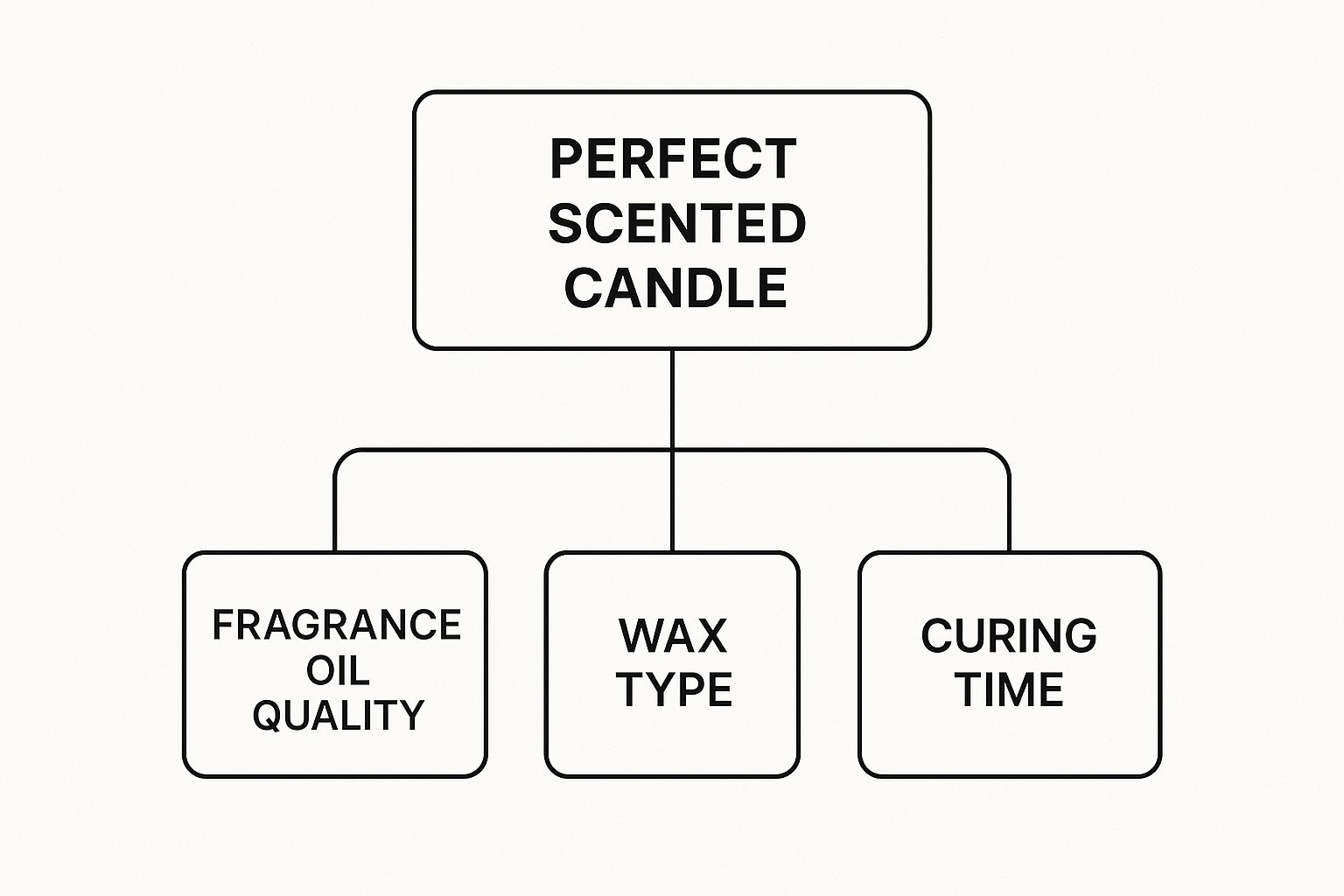
As you can see, the perfect candle is a beautiful synergy of quality oil, the right wax, and solid technique. In this guide, we'll walk through each of these pillars, starting with the basics and moving into the practical science behind it all. By the end, you'll be able to confidently select the best fragrance oils and truly master your craft.
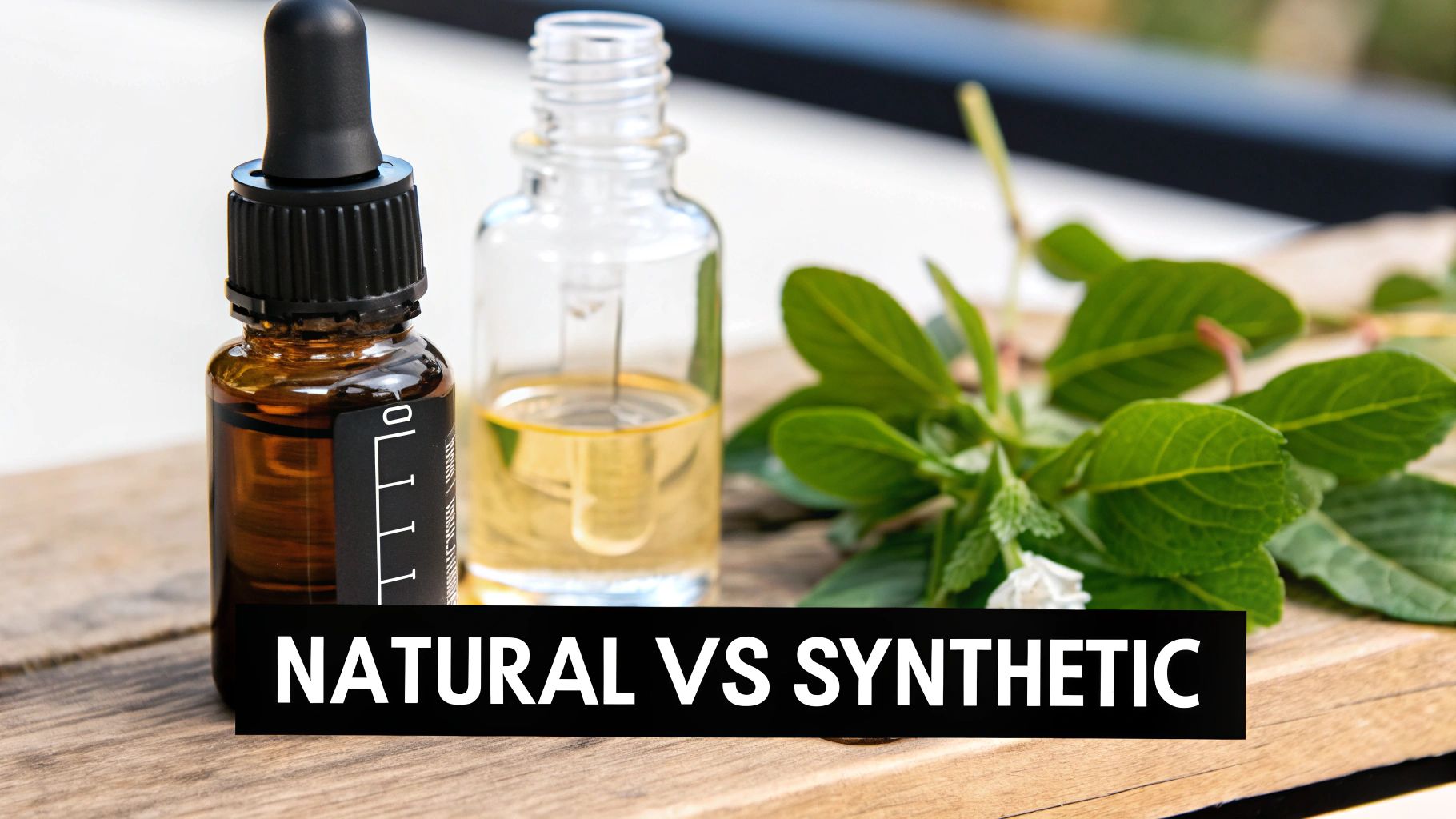
When you start making candles, one of the first big choices you’ll make is between natural and synthetic fragrance oils. This decision shapes everything—the complexity of your scent, how well it fills a room, your costs, and even your creative options.
There’s no "better" option here; they just do different things. Think of it like cooking. Natural oils are like a sprig of fresh rosemary—pure, raw, and straight from the source. Synthetic oils are more like a masterfully created spice blend, engineered to deliver a specific, complex flavor you couldn't get from just one ingredient.
Synthetic fragrance oils are aromatic compounds created in a lab. But don't think of them as just "imitations." They are masterpieces of scent engineering, designed to perform perfectly in products like candles, soaps, and lotions.
The biggest win for synthetic oils is their incredible range and consistency. They allow creators to dream up scents that just don't exist in nature. Ever wondered how a candle can smell like "Ocean Breeze" or "Fresh Linen"? That's the magic of synthetics.
Because they’re manufactured, their chemical makeup is incredibly stable. This means your "Vanilla Bean" candle will smell exactly the same every single time you make it. That stability is key for performance, as synthetics are built to bind with candle wax and handle the heat, giving you a strong, reliable scent throw.
On the other side, you have natural essential oils. These are the real deal—highly concentrated extracts pulled directly from plants, flowers, and resins through methods like steam distillation. Lavender, peppermint, and eucalyptus are some of the most popular examples.
The main draw here is authenticity. If you're building an all-natural brand, essential oils are your go-to. They deliver pure, unadulterated scents and are often used in aromatherapy for their potential therapeutic benefits. If you want to go deeper, you can learn all about making candles made with essential oils and what makes them unique.
But this purity has its own set of challenges. Essential oils can be more volatile, especially when heated. Lighter scents, like citrus, can burn off too quickly in hot wax, leaving you with a weak-smelling candle. They can also vary slightly from one harvest to the next, much like a vintage of wine.
Key Takeaway: The term "fragrance oil" usually means synthetic or synthetic-natural blends, while "essential oil" is purely plant-derived. High-quality fragrance oils are built for candle performance, whereas essential oils offer natural purity but can be less predictable in hot wax.
So, which path is right for your project? This side-by-side look at their essential characteristics should help you decide which is best for your candles.
| Attribute | Synthetic Fragrance Oils | Natural Essential Oils |
|---|---|---|
| Scent Variety | Virtually limitless, including conceptual scents. | Limited to what can be extracted from plants. |
| Consistency | Extremely high; scents are identical batch to batch. | Can vary based on harvest, season, and origin. |
| Performance | Formulated for strong hot and cold throw in wax. | Can be less stable at high heat; some scents fade. |
| Cost | Generally more affordable and prices are stable. | Can be very expensive, with fluctuating prices. |
| "Natural" Claim | Cannot be marketed as "100% natural" or "aromatherapy." | Ideal for all-natural branding and aromatherapy. |
In the end, many of the best fragrance oils on the market are actually sophisticated blends of both. These oils combine the strength and stability of synthetics with the authentic depth of natural extracts, giving candle makers the best of both worlds. It all comes down to your creative vision and what you want your brand to be.
Have you ever picked up a candle, fallen in love with the scent in the store, only to get it home and find you can barely smell it once it’s lit? It’s a super common problem, and it all comes down to two crucial ideas in the candle world: cold throw and hot throw.
Getting both right is the secret sauce to a truly unforgettable scented candle. Think of it like baking a cake. The raw batter smells amazing—that’s your cold throw. But the real magic happens when that warm, delicious aroma fills your whole kitchen as it bakes. That’s the hot throw.
Cold throw is simply the scent your candle gives off when it’s unlit, just sitting at room temperature. This is your candle's first impression, and it’s usually what makes someone decide to buy it. A strong, pleasant cold throw is a sign of a quality candle right off the bat.
It’s all about how well the fragrance oil has settled into the solid wax. You want the scent to be noticeable and inviting, but not so strong that the wax feels oily. The cold throw is basically the promise of the beautiful scent experience that's about to unfold.
This is where the real show begins. Hot throw is the fragrance that fills the room after you light the candle and a nice pool of melted wax has formed. For any candle maker, a powerful hot throw is the ultimate goal. It's what creates that cozy, immersive atmosphere we all love.
Achieving a great hot throw isn't as simple as just adding more oil. It's a delicate dance between the fragrance oil, the wax, and the heat. The oil needs to bind perfectly with the wax molecules and then be released effectively as the candle burns. For a deeper dive, check out this great guide on what candle throw is and why it is important to the final product.
A candle with a weak hot throw is like a story with a bad ending. It gets your hopes up with a great cold throw but ultimately fails to deliver the full experience it promised.
Perfecting your candle’s scent throw isn’t about one single trick; it's about getting several different things to work together in harmony. It takes a bit of patience and a lot of testing!
Here are the main things you need to get right:
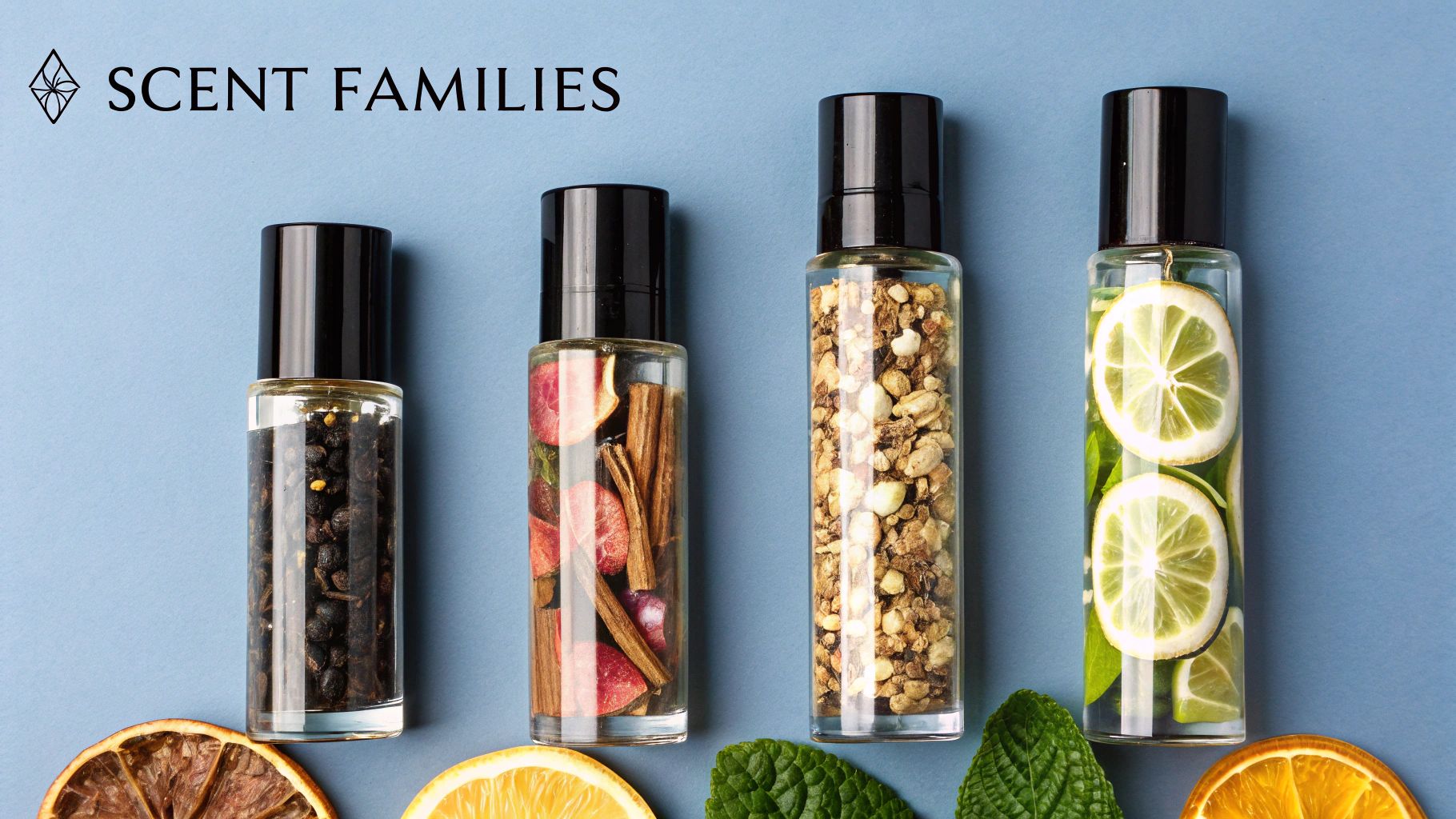
Ready to get creative? Understanding the main scent families is where the real fun begins. Think of categories like Floral, Woody, Oriental, and Fresh as the primary colors on an artist's palette. Once you know them, you can go beyond just picking a scent you like and start intentionally crafting a specific mood or atmosphere for any room in your house.
This is how you level up from just making candles to becoming a true scent artist. It's about knowing that "fresh" can mean zesty lemon or a cool ocean breeze, and "woody" can be a cozy cedar cabin or a damp, earthy forest floor. Getting familiar with these nuances is the secret to finding the best fragrance oils for candle making that perfectly match your vision.
The floral family is probably the most classic and widely loved category out there. It’s incredibly diverse, covering everything from the light, airy scent of a single rose petal to the intoxicating aroma of a full, lush bouquet. Florals are masters at creating feelings of romance, elegance, and pure calm.
You’ll see these popular examples everywhere:
If floral scents lift your spirits, woody fragrances bring you right back down to earth. This family is all about scents from woods and mosses, creating aromas that feel warm, dry, and grounding. Think of a peaceful walk through a forest or the comforting smell of a crackling fireplace.
Woody scents are fantastic for creating a stable, calming, and sophisticated vibe. They're often used as base notes in blends to give lighter fragrances more depth and staying power.
Common woody fragrance oils include:
Welcome to the world of all things rich, warm, and spicy! The Oriental family features bold, opulent scents built around notes like vanilla, exotic resins, and warm spices. They are absolutely perfect for creating an atmosphere that feels luxurious, mysterious, and incredibly inviting.
Think of fragrant spice markets or decadent desserts. These scents are complex and tend to last a long time, often making a powerful statement. For a closer look at how these different scent types play together, our guide on understanding candle fragrances and scent notes is a fantastic place to start.
Oriental scents are often described as "sensual" or "exotic." They are perfect for evening candles or for creating a cozy, enveloping feeling during colder months.
Bright, clean, and uplifting—that's the Fresh family in a nutshell. This group is super varied and can be broken down into zesty citrus, clean aquatic notes, and crisp green aromas. These scents are famous for making a space feel clean, open, and energized.
This category includes some of the most universally loved fragrances:
To make it even easier to find your perfect match, we've put together a quick guide to these scent families and the moods they tend to create.
This table breaks down the core scent categories, their signature smells, some common examples, and the feelings they usually bring to mind.
| Scent Family | Key Characteristics | Example Fragrance Oils | Associated Mood |
|---|---|---|---|
| Floral | Sweet, romantic, and powdery | Rose, Lavender, Jasmine, Gardenia | Romantic, Elegant, Calming |
| Woody | Earthy, smoky, and warm | Sandalwood, Cedarwood, Pine, Vetiver | Grounding, Stable, Cozy |
| Oriental | Rich, spicy, and warm | Vanilla, Cinnamon, Myrrh, Clove | Luxurious, Mysterious, Warm |
| Fresh | Clean, zesty, and airy | Lemon, Bergamot, Sea Salt, Mint | Energizing, Uplifting, Clean |
Hopefully, this gives you a clearer picture of how to navigate the wonderful world of fragrance. By starting with a family you love, you can confidently explore different oils and create scents that are uniquely you.
When it comes to making candles people will absolutely love, the quality of your fragrance oil is everything. It’s the single biggest factor in how your candle smells, how it performs, and most importantly, how safe it is. Sourcing the best fragrance oils isn't about crossing your fingers and hoping for the best; it's about knowing exactly what to look for.
Think of it like cooking a gourmet meal. You wouldn't just grab any old cooking oil from the back of the pantry. You’d choose a high-quality, pure ingredient that elevates the entire dish. It's the exact same idea here. A fantastic scent is just the starting point—you also need an oil that's stable, safe, and specifically engineered for candle making. Skimping on quality can lead to a scent that disappears once lit, ugly discoloration, or even a serious safety hazard.
Any supplier worth their salt will provide documentation for their fragrance oils. Don't let the technical look of these files scare you off! They are your roadmap to making a safe and amazing-smelling candle. Learning to read them is a skill every candle maker needs.
The two most important documents you’ll encounter are the Safety Data Sheet (SDS) and the IFRA Certificate. These contain all the critical information you need to use the oil correctly and safely.
Here’s what you need to zero in on:
Beyond the spec sheets, there are a few industry-wide standards that immediately signal a high-quality, safe fragrance oil. If you're making candles to sell or even just to give to friends and family, these are must-haves.
First, always look for oils that are explicitly labeled phthalate-free. Phthalates are chemicals that have been used to help scents last longer, but there are growing concerns about their potential health effects. To keep their products as safe as possible for customers, professional candle makers almost exclusively stick to phthalate-free oils.
But the gold standard, the most important thing to look for, is IFRA compliance. The International Fragrance Association (IFRA) is the global authority that sets the safety rules for all fragrance materials. An IFRA certificate shows the maximum percentage you can safely use in different products, including candles (which fall under Category 12). Always, always make sure your fragrance load is within that recommended limit.
The last piece of the quality puzzle is sourcing your oils from a supplier you can really rely on. A great supplier is an open book—they provide all the necessary documents right on the product page and are happy to help if you have questions.
Here are a few green flags to watch for:
And please, never skip the testing phase! An oil can smell absolutely divine right out of the bottle but be a total dud in your wax. Making a small test candle is the only way to truly know if you've found a winner. By building relationships with trusted suppliers and learning to read the data, you can confidently choose oils that will create a premium, safe, and stunning candle every single time.
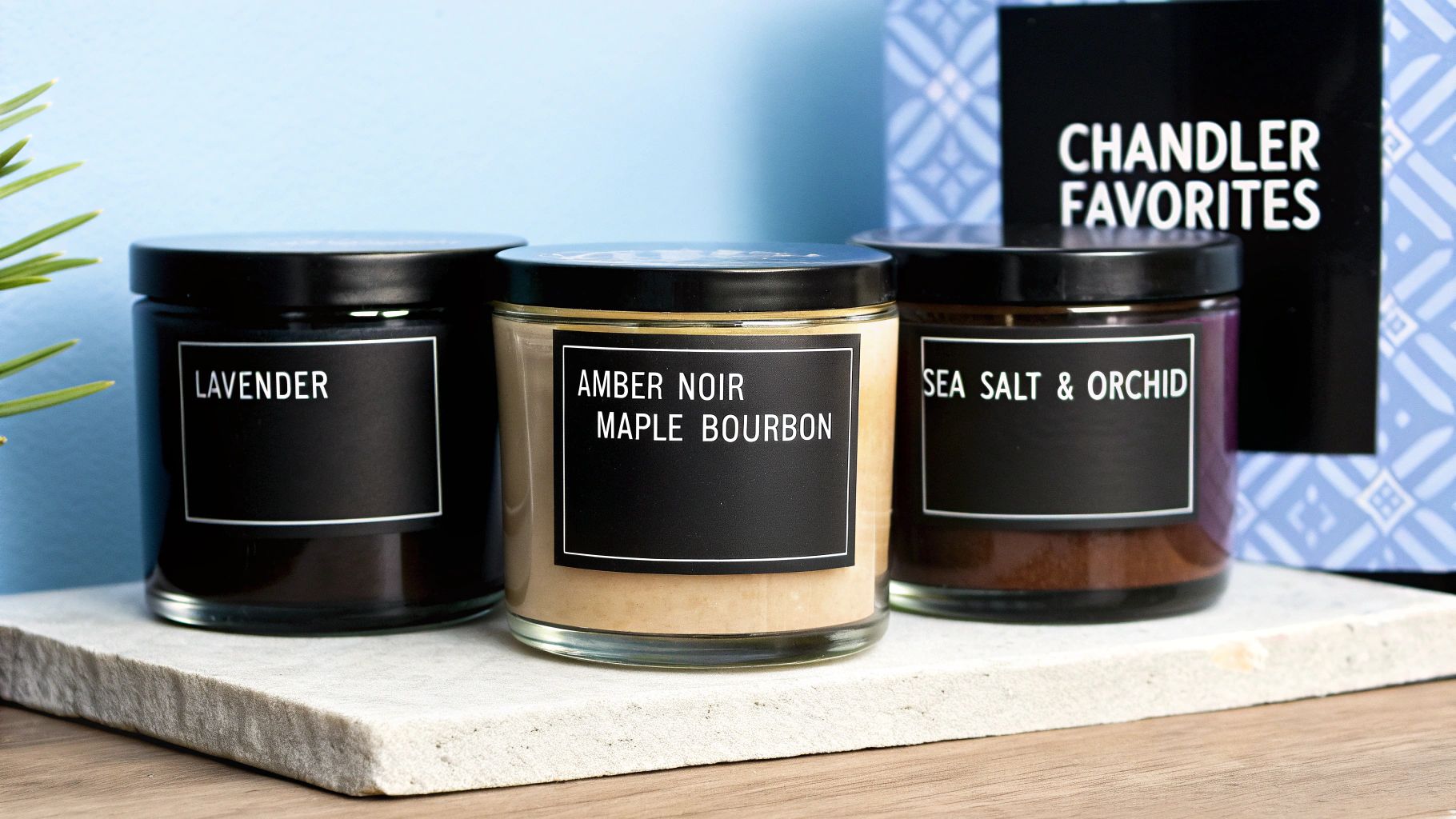
When you first dive into the world of candle making, the sheer number of fragrance oils can feel like a tidal wave. But here’s a little secret from the pros: most seasoned chandlers have a core collection of scents they trust completely.
These are the tried-and-true fragrances that perform beautifully in wax, have customers coming back for more, and essentially form the backbone of many successful candle lines. Knowing what these top performers are gives you a fantastic starting point for building your own collection.
Of course, a great product is only half the battle. Success also means getting a handle on the business side of things, like pricing handmade products effectively. Choosing popular, high-performing oils is a smart business move that helps ensure you're making something people will actually want to buy again and again.
Some fragrances just have that special something. They've earned legendary status for their incredible performance and almost universal appeal, striking that perfect balance for year-round collections or becoming a brand's signature scent. These oils are known for having a strong, clean throw in just about any wax you throw at them.
Here are four go-to choices that professionals absolutely adore:
These customer-favorite fragrances prove just how powerful a well-balanced scent can be. They’re so popular because they tap into strong, positive emotions—from the immediate calm of lavender to the cozy nostalgia of a warm apple dessert.
The wild success of these oils is no accident. They manage to appeal to a massive audience while still feeling special and high-end, which is the sweet spot every chandler is looking for. They just work.
Starting with these proven winners gives you a rock-solid foundation for your own candle line. You can pour with confidence, knowing you’re using some of the absolute best fragrance oils for candle making out there.
When you're getting into candle making, it’s totally normal for questions to pop up, especially when you’re chasing that perfect, store-bought quality scent. Let’s walk through some of the most common puzzles makers run into. Getting these details down is a huge part of feeling confident in your craft.
For just about any soy wax out there, the magic number for fragrance load is usually between 6% and 10% of your total wax weight. If you're trying a new oil and wax combo, starting at 8% is a great rule of thumb. It's a classic rookie mistake to think more oil automatically means a stronger candle, but that's not how it works.
If you push the fragrance load past that 10-12% mark, you can run into real problems. You might see the oil literally separating from the wax, leaving little oily puddles on top of your finished candle. This is called "sweating," and not only does it look a bit messy, it can be a safety issue, too.
Always double-check the maximum fragrance load your specific wax manufacturer suggests. Every wax blend is different in how much oil it can hold, and the only way to really know what works is to test, test, test your unique wax and fragrance oil combination.
Oh, the dreaded weak hot throw. It’s probably one of the most frustrating things for a candle maker, but don't worry, it's almost always something you can fix. When your candle’s beautiful scent seems to vanish the moment you light it, there are a few usual suspects to investigate.
First, take a look at your temperatures. A good target for soy wax is to add your fragrance oil right around 185°F (85°C). If your wax is way too hot, you can actually scorch the most delicate top notes of your scent right off. But if it's too cool, the oil and wax molecules won't bond together properly.
Second, you have to be patient and let it cure. Soy candles really need to sit for at least one to two weeks so the fragrance can fully weave itself into the wax. It's a step you just can't skip—this is when the scent truly blossoms and gets stronger.
And finally, what about your wick? If your wick is too small for the diameter of your jar, it won't create a melt pool that's big enough to let that gorgeous aroma fill the room. And of course, starting with high-quality oils made specifically for candles is non-negotiable for a powerful scent.
Absolutely! This is where the real fun begins. Blending fragrance oils is how you create those one-of-a-kind, signature scents that make your candles completely your own. It's your chance to get creative and design an aroma nobody else has.
Think like a perfumer and consider top, middle, and base notes to create a blend that’s balanced and beautiful. Before you pour a whole batch, try out your ideas by dabbing a little of each oil on a paper test strip to see how they play together. Found a winner? Mix your oils together thoroughly before adding them to the melted wax.
And a pro tip: always keep detailed notes on your ratios. That way, you can recreate your masterpieces perfectly every single time. This is what turns candle making from a hobby into a true art.
Ready to experience perfectly balanced, high-quality scents for yourself? Jackpot Candles uses premium, perfume-grade fragrance oils in our proprietary soy wax blend to deliver an unforgettable aromatic experience from the very first light. Explore our collection and find your next favorite fragrance today at https://www.jackpotcandles.com.
Comments will be approved before showing up.