
free shipping at $99


A soy, beeswax, or other plant-based label can sound like a clean-burn guarantee. It isn't. A votive that starts out with a steady flame can begin smoking when its wick grows too long or a draft disrupts the flame, so the wax name alone can't tell you how it will perform.
Clean burning votive candles are best judged as a complete product: wax, wick, fragrance, holder, and burning conditions all work together. Fewer visible soot marks can be a useful sign, but they don't mean zero emissions or automatic fire safety. Look for a calm flame and clear care instructions, and be wary of sweeping claims that promise a candle is completely soot-free or emission-free.
A votive may look pleasant on a table, then start smoking after its wick grows long or a nearby draft makes the flame flicker. That change doesn't necessarily mean the wax has changed. It shows why the common advice to choose a particular wax and assume it will burn cleanly leaves out important parts of the picture.
A peer-reviewed study found that wax and wick composition influence some candle emissions, including black carbon, commonly called soot, and fine particles. Earlier research also distinguished ordinary burning from sooting and smoldering. The practical takeaway is that a candle's performance depends on how its materials burn together, and on the conditions around its flame.
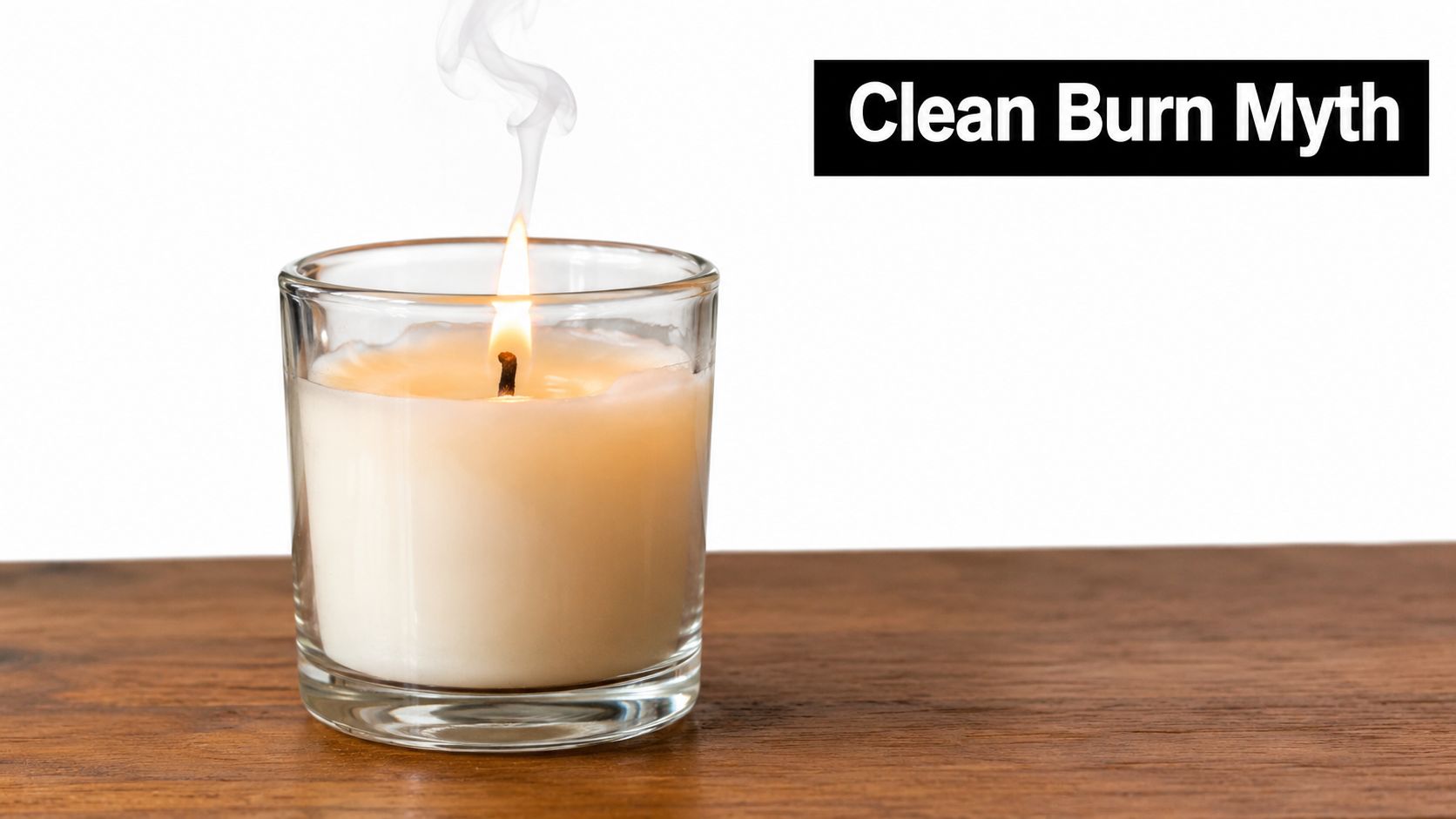
Think of “clean burning” as a description of performance, not a promise attached to a wax category. The wick needs to suit the wax and the candle's design. Fragrance can also affect how the candle burns, while drafts and wick debris can disturb an otherwise steady flame.
That's why two votives made with the same wax might not burn alike. A well-matched wick and calm setting can support a stable flame, while an overly long wick or a draft can make the flame less steady and produce visible smoke or soot. Neither a premium label nor a plant-based description tells you how that specific combination performs.
When you're comparing candles, notice whether the flame stays relatively steady and whether the maker gives clear instructions for trimming and use. Visible soot is a useful reason to check the wick and burn environment, but its absence can't establish that a candle produces no emissions.
The distinction matters: reduced visible soot is not the same as zero emissions, and neither claim establishes fire safety. A careful clean-burn claim should reflect how the candle performs under stated conditions, rather than suggesting that its wax type alone guarantees a result.
A practical clean-burning benchmark starts with what you can observe: a reasonably steady flame, little visible smoke during normal burning, and no persistent soot deposits that suggest the wick or burn conditions need attention. These signs help you assess performance at home, but they don't measure every substance released into the air.
Candle combustion can happen in different modes. Earlier research on church candles identified normal burning, sooting, and smoldering after extinguishment as distinct conditions. Normal burning produced lower mass-emission rates, while sooting and smoldering produced different particle profiles (peer-reviewed research on candle burning modes).
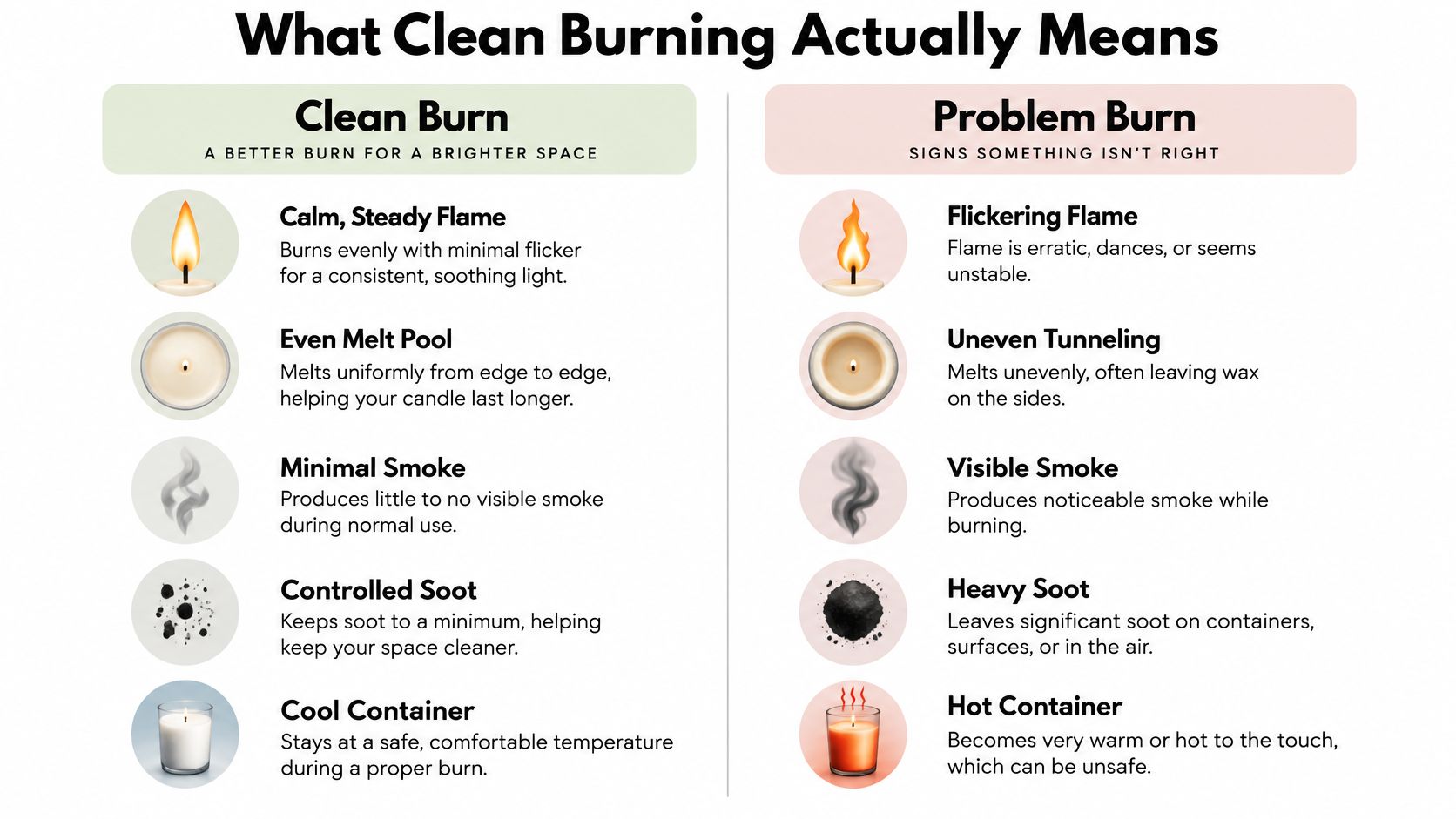
An analogy can help: think of a candle as a small engine. Wax is the fuel, the wick controls how fuel reaches the flame, and surrounding air affects combustion. If the wick is a poor match or the flame is disrupted, the candle may burn less, whatever the wax label says.
A flickering flame doesn't automatically prove a product is defective. Check for a nearby draft, an overlong wick, or bits of wick in the melt pool. If smoke and visible soot continue under calm conditions with proper care, the candle may not be a good match for its wick, fragrance, or holder.
Practical rule: Judge a candle by its behavior during normal use, not by an absolute promise on its label.
Words such as “soot-free” and “emission-free” make a stronger claim than a calm-looking flame can support. In practice, the more useful question is whether the votive burns steadily with limited visible soot under the conditions the maker recommends.
If you want more background on interpreting these terms, Shivora Candles offers a clean burning candle guide. For a closer look at how wax labels relate to candle performance, explore this comparison of soy candles and other wax candles.
Here's a short video to help visualize the ideas behind a steadier burn:
A votive's burn isn't a contest between soy and paraffin. A proprietary soy blend and traditional paraffin are different wax choices, but neither label by itself establishes that a finished candle will burn cleanly. The meaningful comparison is how each specific wax performs with its wick, fragrance, holder, and intended use.
A peer-reviewed emissions study found that wax and wick composition strongly affected black carbon, PM2.5, and particle-bound polycyclic aromatic hydrocarbons, while having less influence on several other measured emissions. In that experiment, the researchers trimmed wicks to a controlled length before testing, underscoring that wick condition is part of how combustion is evaluated (candle emissions research).
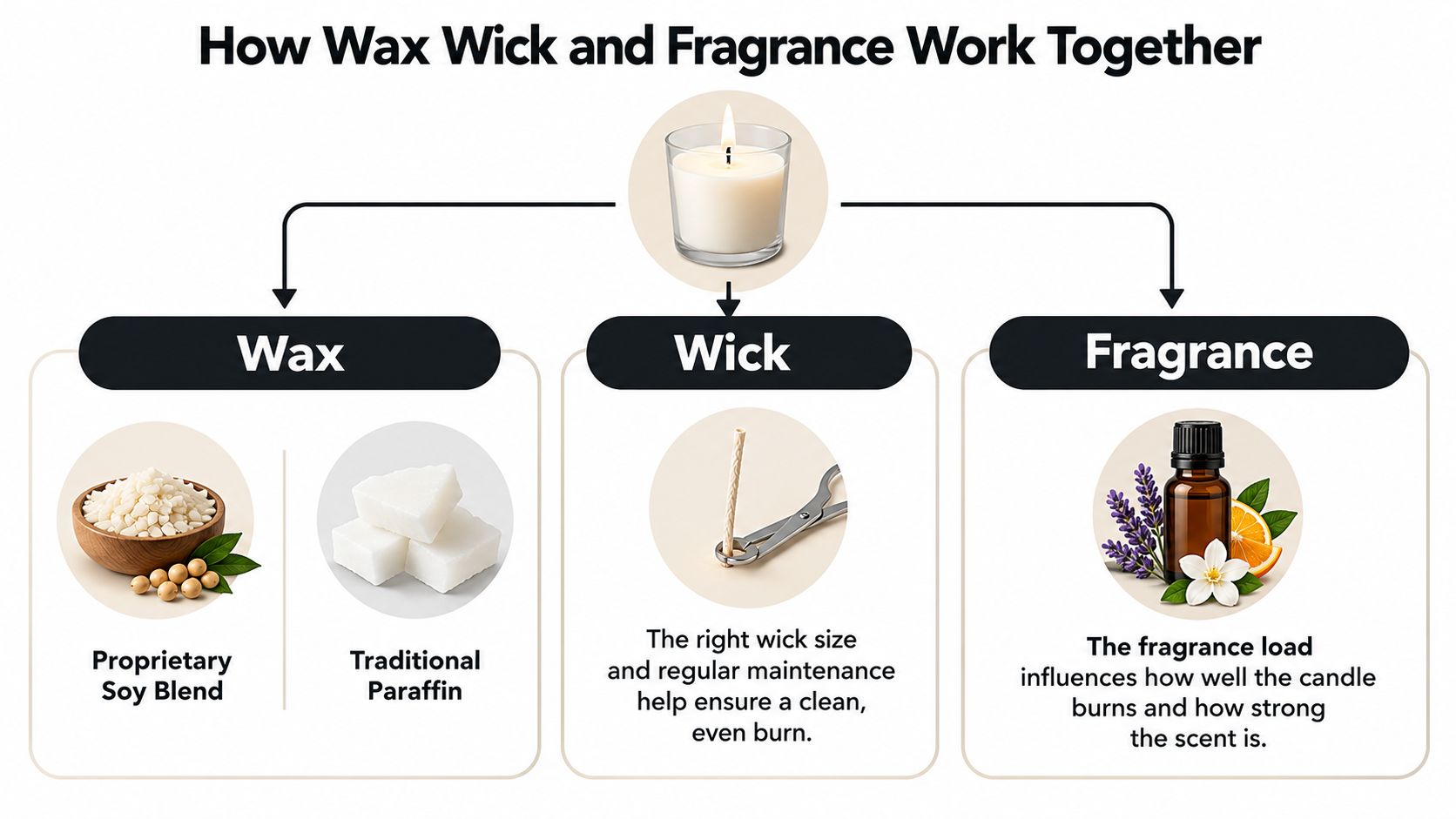
Wax affects how a candle melts and feeds its wick, but the word “soy” or “paraffin” isn't a complete performance report. A soy blend still needs a wick that suits its formula and candle format. The same principle applies to paraffin or other blends: assess the finished candle rather than assuming one wax category is automatically soot-free.
The wick carries melted wax to the flame. If it's too large for the candle, the flame may become tall or unstable, and soot can result. If it's too small or poorly matched, the candle may not perform as intended. A visible wick that mushrooms, smokes, or flickers persistently deserves attention, particularly if the room is calm and the wick has been maintained.
Manufacturers can evaluate a product as a complete combination, including its wax, wick, fragrance, and holder. That matters because a wick that works with an unscented formula may not behave identically once fragrance is added.
A strong scent and a clean burn aren't the same feature. Fragrance components can alter the melted wax and affect flame behavior, so a highly scented votive should be assessed as its own formulation rather than treated as an unscented candle with perfume added.
That doesn't mean stronger fragrance automatically causes a problematic burn. It means scent intensity alone can't tell you how steadily a candle will burn. If you want to understand how fragrance oils fit into product choices, read this overview of high-quality candle fragrance oils. Then look for care instructions and judge the candle by its performance, not just its scent strength or wax label.
“Low-soot,” “low-emission,” “low-VOC,” “non-toxic,” and “clean burning” don't mean the same thing. Low-soot generally describes a visible aspect of burning. A broader emissions claim would need to account for more than soot, and “non-toxic” is a separate, expansive description that can be difficult to interpret without clear evidence and context.
Controlled candle testing detected combustion gases, volatile organic compounds, formaldehyde, benzene, polycyclic aromatic hydrocarbons, PM2.5, and ultrafine particles. In the tested scenarios, calculated indoor concentrations were generally below relevant guidance values. A reported 2025 study also found that scented candles significantly increased indoor particulate concentrations, with particles dispersing through indoor spaces (candle emissions testing overview).
Those findings don't translate into one simple verdict for every home. A single small votive in a ventilated space isn't the same situation as several scented candles burning for a long time in a small, poorly ventilated room. The number of candles, room conditions, fragrance, and duration all affect the setting in which people encounter emissions.
That's particularly worth considering if someone in your household has asthma or fragrance sensitivity, or if children or pets share the space. No candle label can tell you how an individual will respond. If scent is a concern, consider using fewer candles, choosing shorter burn sessions, and ventilating the room afterward.
A candle might produce little visible soot while still releasing substances that you can't see. Conversely, detecting emissions doesn't by itself explain the level of exposure in every room. Avoid treating one observation or marketing term as a complete account of indoor air quality.
A useful question for a maker is: What does this claim mean, and under what conditions was it evaluated? Clear wording helps shoppers distinguish a description of visible performance from claims about emissions or the full product. When that information isn't available, rely on observable burn behavior and practical exposure management rather than assuming that “clean” means harmless in every context.
Start with information you can use. A clear product description should help you understand the wax, wick, fragrance, holder, and care instructions. “Premium” may describe a product's positioning, but by itself it doesn't explain how the votive is designed to burn.
Look for a maker who gives specific guidance and can describe how the finished candle is tested. The useful question isn't just whether a brand uses a particular wax. It's whether the maker considers the wax, wick, fragrance, and intended holder together.
Before buying or lighting a votive, use this quick checklist:
An even-looking candle and a centered wick can be reassuring signs of careful construction, but appearance alone can't verify combustion performance. The important test is how the product behaves when used according to its instructions. A steady flame and clear directions offer more practical information than a broad wax claim alone.
Fragrance quality also isn't measured by intensity alone. A balanced scent that suits your room and preferences may be a better choice than a fragrance that quickly feels overpowering. Jackpot Candles offers scented candles made with a proprietary soy wax blend and perfume-grade fragrance positioning; that describes the product offering, but doesn't by itself establish an emissions result.
A simple routine can help you notice problems before they become part of your normal burn. Say you're lighting a votive on a living-room table. Before you strike a match, clear away old wick debris, check that the holder is clean and stable, and choose a spot away from drafts and combustible materials.
Trim the wick before lighting. Candle-safety guidance recommends keeping it approximately 1/4 to 1/2 inch long; an excessively long wick can lead to a hotter, less stable flame, faster wax consumption, smoke, and soot. Remove loose wick debris before relighting, too (U.S. candle safety guidance).
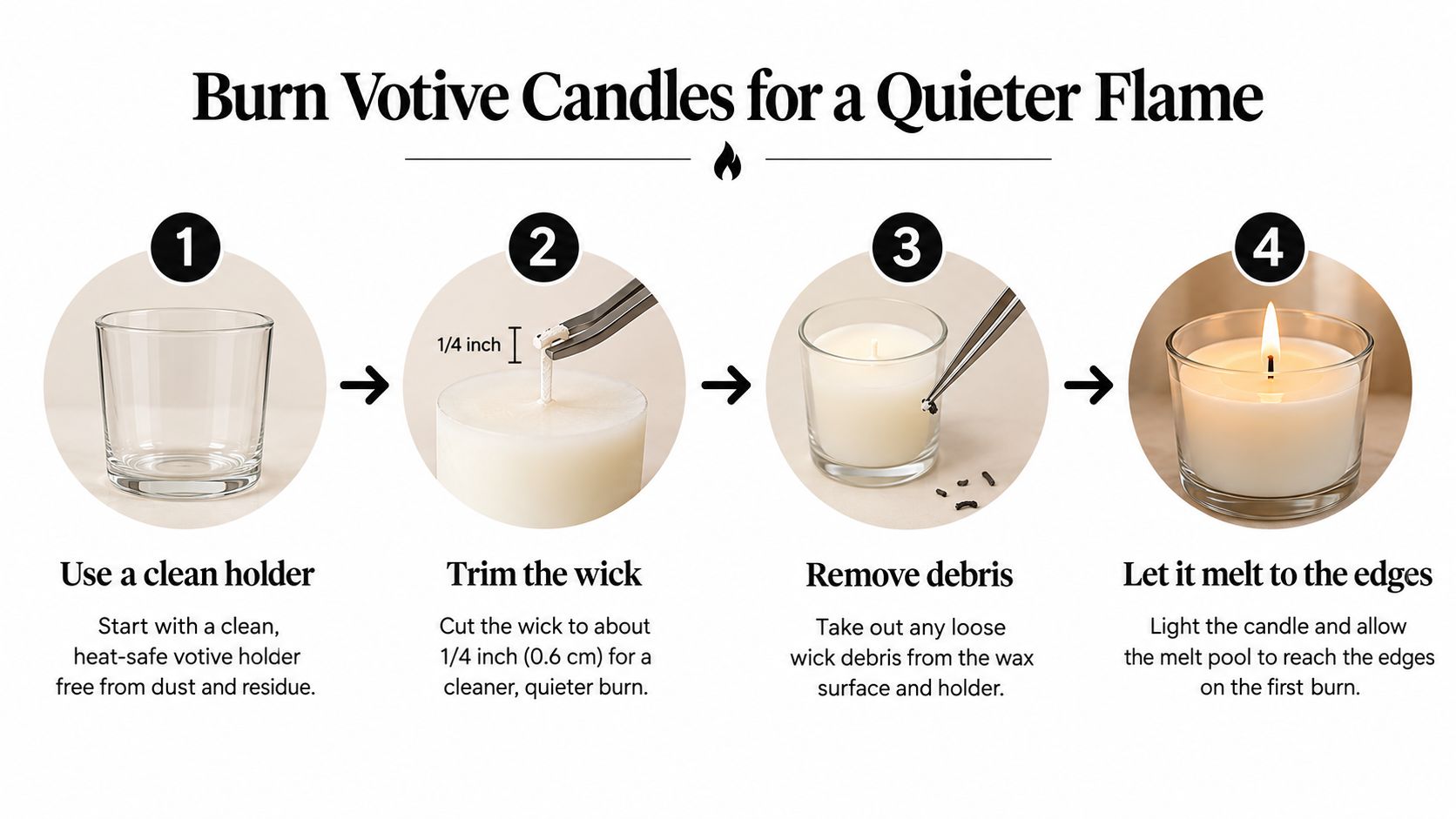
Light the candle where you can keep an eye on it. Notice whether the flame is steady, whether smoke appears, and whether the holder behaves as expected. If the flame starts flickering, check for a vent, open window, or passing air current before deciding the candle itself is at fault.
The first burn is also a chance to observe how the votive melts. Follow the manufacturer's directions rather than extending the session to force a particular result. A small candle in a holder has its own design limits; don't assume that burning longer is always better.
If the candle begins to smoke, extinguish it safely, let it cool, and inspect the wick and melt pool before considering another burn. Remove debris, retrim as directed, and try a calmer location. If the problem continues when you're following the product's instructions, stop using that votive and contact the maker.
Shorter sessions, fewer candles, and ventilation after use can be sensible choices when a fragrance feels strong or the room is small. Don't move a hot candle or holder, and don't leave a lit flame unattended. A repeatable routine won't guarantee zero emissions, but it can help you recognize a draft or overlong wick and spot when the candle may not be performing as expected.
A low-soot claim doesn't make a votive fireproof, safe to leave unattended, or harmless in every setting. Candle safety depends on what people do with the flame: use a stable holder, keep the wick maintained, leave clearance from combustible materials, and supervise the candle while it's burning. Those precautions apply whether the candle produces visible soot or not.
U.S. fire data for 2009–2013 recorded an average of 9,300 home structure fires started by candles each year. More recent National Park Service guidance reports an average of 7,610 candle-started home structure fires annually. These estimates use different reporting periods and sources, so the difference shouldn't be read as proof that candles are safe or unsafe as a category (National Park Service candle safety guidance).
A candle that burns with less visible soot may offer a tidier experience, but that observation doesn't establish its full emissions profile or remove the need for fire precautions. Fragrance strength also isn't a safety measure. Keep those questions distinct when reading product descriptions: What does the maker mean by clean burning? What instructions support safe use? What information is available about how the product performs?
For additional everyday precautions, consult these candle safety tips. They complement, rather than replace, the instructions supplied with a specific candle. If the wick keeps smoking or the holder becomes unexpectedly hot, extinguish the candle and reassess instead of treating the behavior as normal.
The decision rule is straightforward: choose a votive whose wax, wick, fragrance, and holder are designed to work together, then follow its care instructions and stay attentive while it burns. Clean-burning language should help you understand a product's performance, not persuade you to skip basic safety practices.
Explore Jackpot Candles for scented candles made with a proprietary soy wax blend and fragrance-focused designs. Compare the product details and care instructions, then visit Jackpot Candles to find a candle that suits your space and scent preferences.
Comments will be approved before showing up.