
free shipping at $99


If you want your jewelry to last, learning how to store it is non-negotiable. The golden rules are simple: keep your pieces separate, keep them dry, and keep them away from direct sunlight. Get those three things right, and you'll sidestep the most common culprits of tangles, tarnish, and fading.
It often comes down to moving your collection out of humid spots like the bathroom and using organizers with built-in compartments.
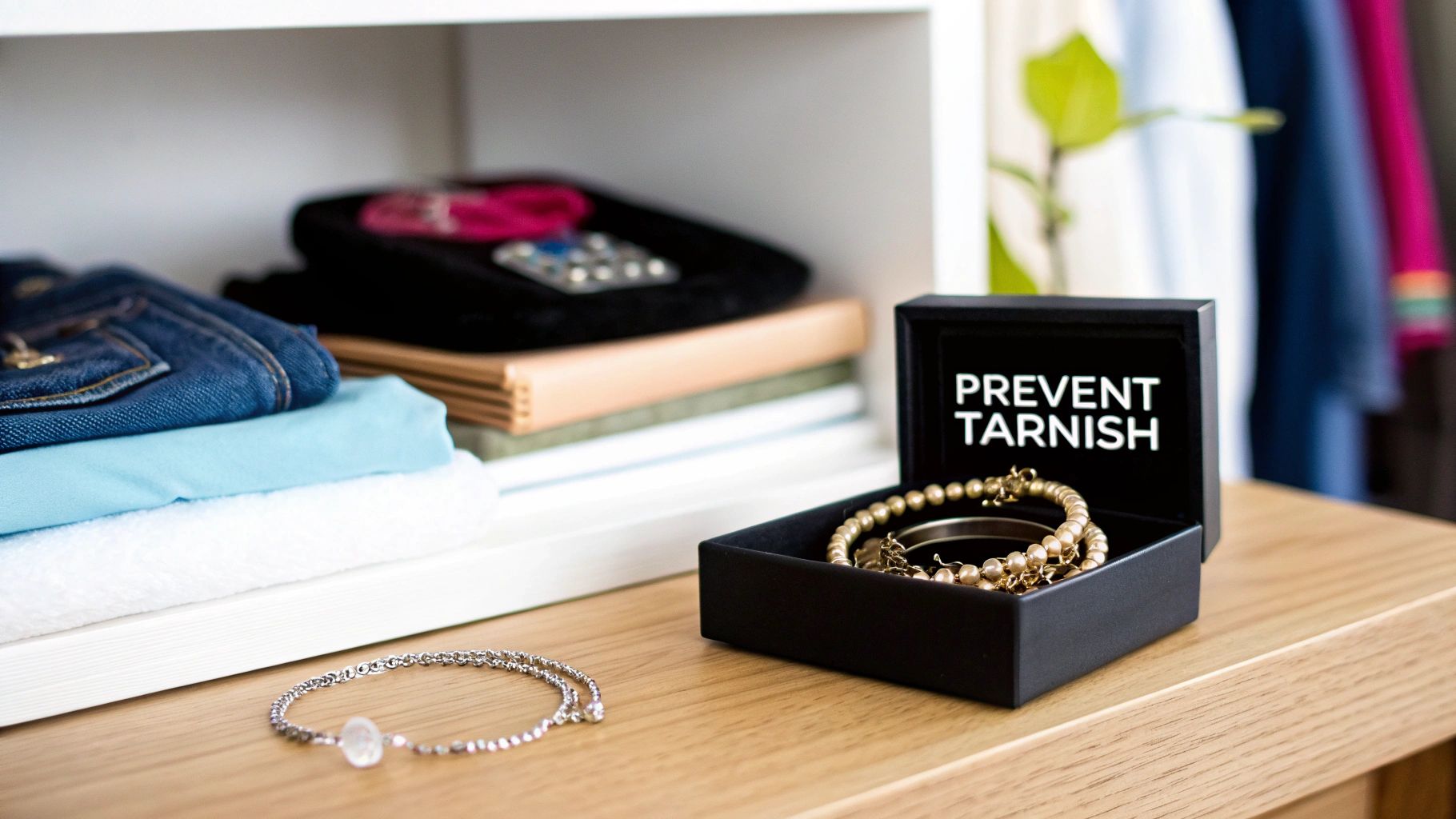
Before you run out and buy another pretty jewelry box, let's talk about what actually keeps your pieces safe. It’s less about a fancy container and more about creating the right environment for your treasured items. Honestly, just a few small habit changes can dramatically extend the life and brilliance of your entire collection.
I’ve seen so many common storage mistakes cause slow, irreversible damage. Storing a jewelry box in a steamy bathroom, for instance, is a fast track to tarnished silver. Tossing a handful of different pieces into a single dish? That’s a recipe for disaster.
Believe it or not, the most common cause of damage to fine jewelry isn't from wearing it—it's from how it's stored. Harder gemstones like diamonds will easily scratch softer metals and other gems if they're all just jumbled together.
When you nail down a good storage system, you’re doing more than just tidying up. You're creating a protective shield against the everyday things that can ruin your favorite pieces.
A thoughtful approach really pays off, helping you:
It seems like more and more people are catching on to this. The global market for jewelry organizers was valued at around USD 29.6 billion and is expected to more than double by 2035. That’s a huge shift, showing that we're starting to see our collections not just as accessories, but as investments worth protecting. If you're curious, you can discover more insights about the growing jewelry organizer market.
To keep things simple, I've put together a quick table with the core principles that apply to any piece of jewelry you own.
| Principle | Why It Matters | Quick Tip |
|---|---|---|
| Keep It Separate | Prevents harder stones (like diamonds) and metals from scratching softer ones. Also stops chains from tangling. | Use organizers with individual compartments, small pouches, or hang necklaces on a stand. |
| Keep It Dry | Humidity and moisture are the main causes of tarnish, especially for silver and plated jewelry. | Never store jewelry in the bathroom. Keep silica gel packets in your jewelry box to absorb moisture. |
| Keep It Dark | Direct sunlight can cause certain gemstones (like amethyst or topaz) to fade and can even degrade materials like pearls. | Store your pieces inside a closed jewelry box, drawer, or cabinet away from windows. |
Mastering these three rules is the first and most important step. Once you have these down, you can start diving into the specifics for different materials.
Choosing the perfect organizer isn't a one-size-fits-all kind of deal. It’s really about taking a good, hard look at what you actually own. The best way to store your jewelry depends entirely on the unique mix of pieces you’ve collected over the years. A beautiful tray with tiny compartments might be a dream for a ring enthusiast, but it's completely useless for someone whose prized possessions are long, delicate necklaces.
Before you even think about buying something, take a moment to do a quick audit of your collection. Do you have dozens of statement earrings? A mix of fine and costume jewelry? An ever-growing pile of tangled chains? Figuring this out first will steer you toward a system that actually protects your pieces and makes them easy to find when you're rushing out the door.
Think of your organizer as a custom home built just for your jewelry. You wouldn't try to cram a tall armoire into a room with a low ceiling, and the same logic applies here. Different pieces have different needs, and a little planning goes a long way.
Here's a key takeaway: pay attention to the material of the organizer itself. Soft linings like velvet or felt are non-negotiable because they prevent scratches on delicate metals and gemstones. And if you have a lot of silver that tarnishes, airtight containers are a total game-changer.
Once you know what kind of storage you need, it’s time to figure out where it’s going to live. Not everyone has space for a huge standing armoire, but that doesn’t mean you can’t create a system that works beautifully. You just have to get a little creative.
If you want some great ideas, you can find surprisingly relevant insights by looking at the top sewing box organizers for a tidy studio, since many of the principles are the same.
For example, if you’ve only got a shallow dresser drawer, using stackable trays is a brilliant way to use that vertical space without creating clutter. If you're a fan of DIY and want something that fits your furniture perfectly, you can even follow a guide to create your own DIY drawer organizer.
Even with all these options, traditional jewelry boxes are still the most popular choice for storage around the world, mostly because they’re so versatile and secure. This popularity has made the "boxes" segment a huge part of the global jewelry organizer market, which just keeps growing.
Let's get one thing straight: not all jewelry is created equal. How you store each piece can be the difference between a lifetime of sparkle and a one-way ticket to the repair shop. One of the biggest mistakes people make is treating their entire collection the same. A storage solution that’s perfect for a diamond ring could spell disaster for your favorite string of pearls.
You have to get to know the specific needs of each material. From the delicate, organic nature of pearls to the tough-as-nails brilliance of diamonds, every item in your jewelry box needs a slightly different touch to keep it looking its best.
This handy little infographic breaks down some of the most popular organizer styles to get you started.
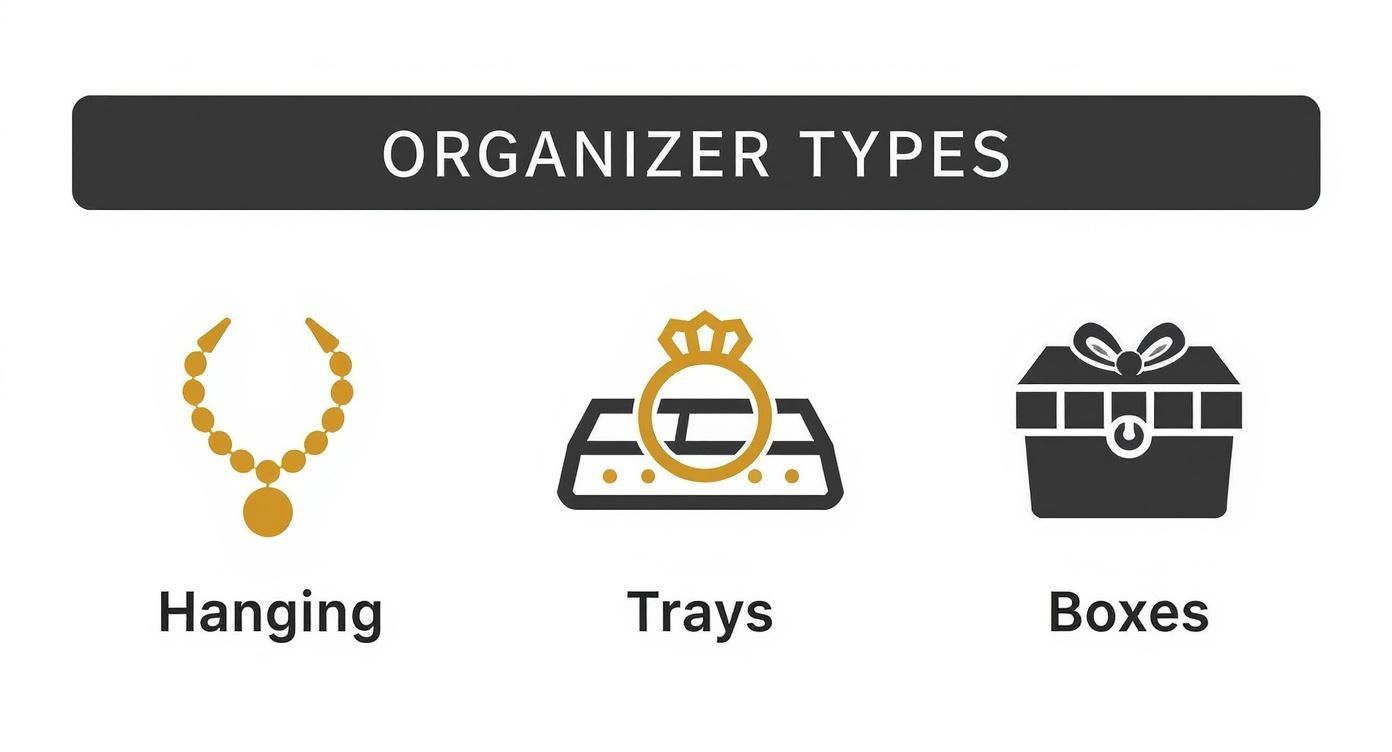
Think of it as a quick guide to matching your collection's needs with the right home, whether that means keeping necklaces from tangling or just having your rings neatly lined up.
To make it even easier, here's a quick cheat sheet with the must-knows for storing your most common jewelry materials.
| Material Type | Best Storage Method | Common Mistakes to Avoid |
|---|---|---|
| Gold & Diamonds | Separate compartments, soft pouches | Tossing them together in a dish; letting diamonds scratch other pieces. |
| Sterling Silver | Airtight bags or boxes with anti-tarnish strips | Storing in humid places like the bathroom; leaving them out in the open air. |
| Pearls | Soft, breathable pouches (silk/cotton), laid flat | Sealing in airtight plastic bags; hanging necklaces which stretches the silk. |
| Plated Jewelry | Individual compartments, hanging organizers | Jumbling them together, which causes plating to rub off; exposure to moisture. |
This table is your at-a-glance guide to preventing some of the most common forms of jewelry damage. Just a few simple tweaks to your storage routine can make a world of difference.
Solid gold is pretty low-maintenance, but it's also surprisingly soft. Its biggest enemy? Scratches. And the number one culprit is often a diamond, which clocks in at a 10 on the Mohs hardness scale. A stray diamond stud tossed into a jewelry dish can easily etch the surface of a gold bracelet or a softer gemstone.
To stop this from happening, your best bet is to always store diamond jewelry by itself.
For your solid gold items without any hard gems, the main goal is just to avoid dings and scratches from other metals. Keeping them in separate compartments is still the way to go.
Sterling silver is gorgeous, but it has a nasty habit of tarnishing when exposed to air and humidity. The secret to keeping it bright is to limit its contact with the sulfur compounds floating around in the atmosphere.
The absolute worst place you can keep your silver is in a steamy bathroom. Seriously, just don't do it. A cool, dry spot like a bedroom closet or a dresser drawer is a much better choice. An airtight environment is your ultimate defense against tarnish.
Give these anti-tarnish tricks a try:
Taking these simple steps will dramatically cut down on how often you have to sit there polishing your silver collection.
Pearls are special because they're organic gems—they came from a living thing! This makes them incredibly soft and porous, so they’re super vulnerable to damage from chemicals and dehydration. Unlike almost every other piece in your collection, pearls actually need a bit of moisture from the air to keep their beautiful luster.
Storing them in an airtight plastic bag is one of the worst things you can do. It can cause them to dry out and become brittle over time. They really need to "breathe."
Always keep your pearls in a soft, breathable pouch made of silk or cotton. It’s also important to lay pearl necklaces flat instead of hanging them up. Hanging can stretch and weaken the silk thread they’re strung on, which is a recipe for a heartbreaking spill. And, of course, keep them far away from all other jewelry to avoid scratching their delicate surface.
Costume jewelry and gold-plated pieces need a little extra TLC to prevent chipping, fading, and tarnishing. That super-thin layer of gold on plated items can rub right off if it's jumbled together with a bunch of other pieces.
The best strategy is to treat each piece like it’s delicate. Use a hanging organizer for your necklaces to stop them from becoming a tangled mess and clanking against each other. For earrings and rings, a box with lots of small, separate compartments is ideal. Since these materials can be highly reactive to moisture, keeping them in a dry environment with a few silica gel packets is a really smart move.
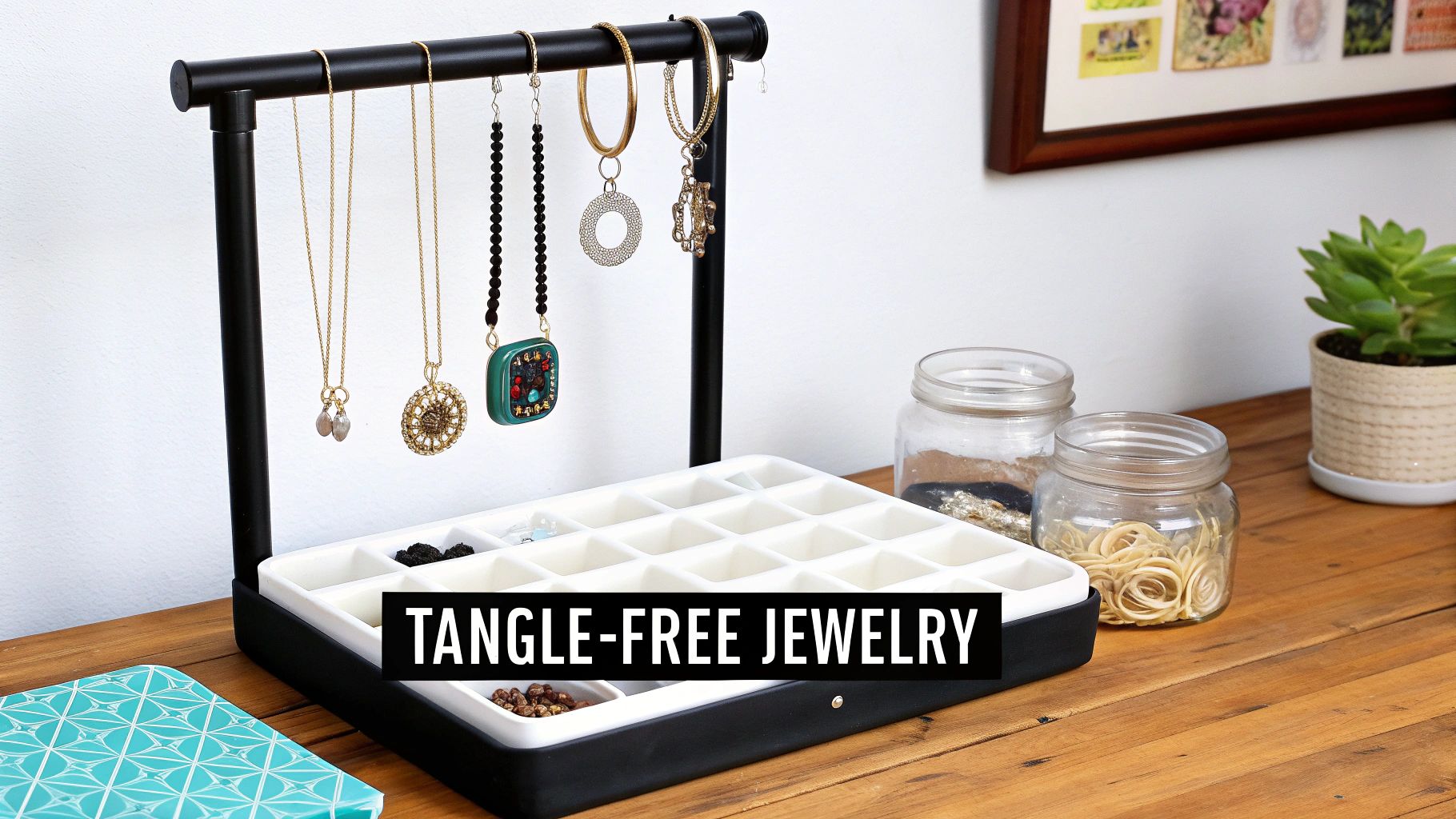
Alright, now that you’ve got the basics of jewelry storage down, let's get into the really clever stuff. These are the simple, often-overlooked hacks that tackle the two biggest headaches for any jewelry lover: the dreaded tangled necklace chain and the slow, creeping return of tarnish.
The best part? You don’t need to spend a fortune on fancy equipment. In fact, many of the best tools for protecting your collection are probably already hiding somewhere in your house. These tips are all about using everyday items to create a storage system that keeps every piece pristine and ready to wear.
Let's be clear: humidity is the number one enemy of your sterling silver and plated jewelry. It's what speeds up that chemical reaction (oxidation) that turns your shiny pieces dull and discolored. Keeping your jewelry out of the steamy bathroom is a great first step, but you can do even more by actively fighting moisture inside your jewelry box.
It's easier than you think. Just grab a few of these household items:
It all comes down to simple science. By cutting down the humidity right where your jewelry lives, you dramatically slow down the chemical reaction that causes tarnish. This tiny step can save you so much polishing time later on.
If you’ve noticed some pieces have already started to turn, don’t panic. We've got great advice on how to clean sterling silver to bring back its original sparkle before you tuck it away in your newly protected storage spot.
A truly great storage system doesn't have to break the bank. With a bit of creativity, you can turn common household objects into brilliant organizers that finally solve the age-old problems of tangled chains and jumbled-up rings.
Here are a few of my favorite budget-friendly ideas:
When you’ve got pieces that are incredibly valuable or hold deep sentimental meaning, just organizing them isn't enough. We have to talk about security. Protecting these irreplaceable treasures requires a bit more planning than simply tucking them away in a standard jewelry box. Your first line of defense is almost always going to be a high-quality home safe.
Don’t just grab the first one you see. When you're picking a safe, look past its size and really dig into the specs. You want to pay close attention to its fire rating, which tells you exactly how long it can stand up to extreme heat. Also, keep an eye out for features like solid steel construction and a certified lock—these are your best bet for deterring theft.
If you do nothing else, please do this: create a detailed inventory of your valuable pieces. This document is your absolute best friend if you ever need to file an insurance claim due to loss, damage, or theft. Trying to make a claim without it can be a nightmare.
A rock-solid inventory should include:
Before you can properly document your collection, you need to know exactly what you have. A fantastic starting point is learning how to identify authentic antique jewelry to make sure your records are spot-on. Once your inventory is complete, check out our guide on the best jewelry insurance companies to ensure you've got the right coverage.
Think of your inventory as undeniable proof of ownership and value. Store a digital copy somewhere safe in the cloud and keep a physical copy in a completely separate, secure location—like with a trusted family member or in a safe deposit box.
There are times when even the most robust home safe just doesn't cut it. For those exceptionally valuable heirlooms or pieces you only wear on rare occasions, a bank's safe deposit box offers a level of professional security that's tough to match at home. This is especially true for items that are simply irreplaceable due to their sentimental value.
You’re not alone in seeking out professional security. The global jewelry storage service market was valued at a whopping $19.61 billion. It’s clear that as people collect more precious pieces, the need for secure, off-site solutions is only going to grow.
Even when you're doing your best to take care of your jewelry, questions inevitably come up. A few quick answers can make all the difference in protecting your favorite pieces and giving you peace of mind. Let's dig into some of the most common questions we hear about storing jewelry at home.
I get it, tossing everything into one beautiful box seems like the easiest solution. But in the long run, it's a recipe for disaster. When different pieces are all jumbled together, harder stones like diamonds can easily scratch softer metals like gold or even other gemstones. And don't even get me started on the tangled mess of chains, which leads to weakened links and eventual breakage.
The best fix is to use an organizer with separate, fabric-lined compartments. If you've got a box you love that doesn't have dividers, no problem. Just pop each piece into its own soft pouch before putting it away. It’s a simple, affordable trick that works wonders.
Ah, the dreaded necklace knot. It's one of the most frustrating jewelry problems out there! The absolute best way to keep your necklaces from turning into a tangled ball is to hang them vertically. Gravity is your best friend here, keeping each chain separate and straight.
Here are a few ways to make that happen:
And for travel? The old trick of threading a delicate chain through a drinking straw before clasping it is still one of the best hacks around.
Hands down, the absolute worst place you can store your jewelry is the bathroom. The constant humidity is like a fast pass to tarnish, especially for sterling silver and costume pieces. All that moisture in the air speeds up the oxidation process, which is what causes that annoying discoloration.
You'll also want to steer clear of direct sunlight. Over time, those strong UV rays can cause colored gemstones like amethyst, topaz, and even delicate pearls to fade. Your best bet is always a cool, dry, and dark spot, like a dresser drawer or inside your bedroom closet.
Yes! Getting into this habit is a game-changer. Just a quick wipe with a soft, dry cloth before you store your jewelry removes the daily buildup of lotions, natural skin oils, and sweat. These things can build up over time, contributing to tarnish and making your pieces look dull. A quick clean ensures everything is sparkling and ready to go for the next time you wear it.
At Jackpot Candles, we believe discovering a beautiful piece of jewelry is just the beginning of the fun. Our premium soy wax candles and bath bombs each hide a surprise ring or necklace, turning a moment of relaxation into an exciting treasure hunt.
Explore our collection and find your next favorite scent—and surprise—today!
Comments will be approved before showing up.