
free shipping at $99


Jackpot money candles are scented candles with a sealed jewelry capsule hidden inside, designed to melt away so the buyer discovers a ring, necklace, or bracelet as a surprise. The U.S. candle market is large, with estimated annual retail sales of about $3.14 billion, so this isn't a novelty hiding in a niche corner of home fragrance, it's a product built inside a mainstream category (National Candle Association facts and figures).
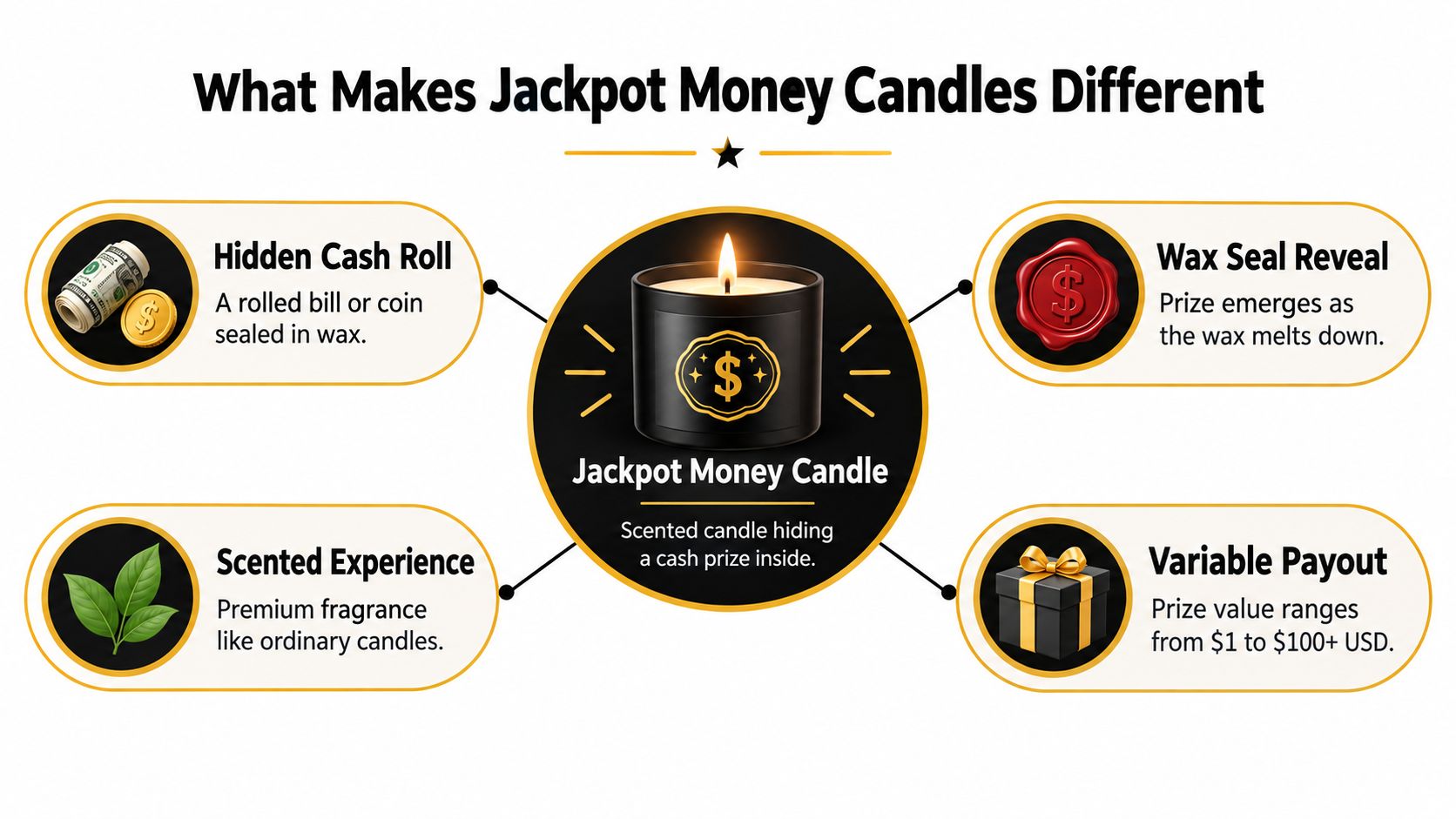
The first strike of fragrance feels ordinary. Then the candle starts changing the job it is doing. It scents the room like a regular premium candle, while the wax slowly gives way to a hidden reveal that turns a simple burn into a moment people wait for.
A standard scented candle ends when the wax is gone. A jackpot money candle builds a concealed surprise into the vessel, usually a jewelry capsule or similar package hidden in the wax. The “money” label can mislead shoppers, because the product is a themed surprise candle, not a candle that hands out cash at the table.
That distinction matters in practice. Buyers usually care about scent first, then the reveal. The category works best when both parts hold up, because fragrance quality, wax behavior, and the hidden insert all affect the experience. For a broader look at candle formats before buying, different kinds of candles is a useful reference for the basics without the gimmick.
The appeal makes sense because candles already live in a mainstream buying habit. Per the National Candle Association, roughly three-quarters of candle buyers rate fragrance as extremely important or very important when choosing a candle. That helps explain why a surprise candle can work at all. It enters a category where scent already drives the decision, so the hidden item has to add to the purchase instead of replacing the candle itself.
Practical rule: the hidden prize should feel like a bonus, not a substitute for a well-made candle.
That is the right way to judge the product. It works as experiential home fragrance, with the scent doing the daily work and the reveal giving it gift appeal. A buyer is really choosing two things at once, an everyday burn and a later surprise.
For a closer look at how the brand frames the product, the overview on Jackpot Candles' luxury jewelry candle shows how the concept is presented around fragrance and discovery rather than only the hidden item.
A good surprise candle rises or falls on the parts buyers never see. Wax blend, wick choice, fragrance load, and container design all affect whether the candle burns evenly or turns into a smoky, tunneling mess. The jewelry capsule adds another variable, because anything inside the vessel can change heat flow and flame stability.
A premium soy-blend candle can burn cleanly, but soy alone does not guarantee performance. The National Candle Association's summary of the 2007 Ökometric study says emissions under normal conditions varied by wax type and were strongly affected by burn quality, not just the wax itself (Ökometric study summary). That is the part marketing often skips. Formulation matters, but so does how the candle burns.
ASTM F2326 is useful because it standardizes visible smoke comparison during development. The wick is trimmed to about 6 to 7 mm before each burn cycle, which helps separate the candle's formulation from simple wick-length problems (ASTM F2326-04r09). For a surprise candle, that matters because the product cannot be judged on wax claims alone. Fragrance load, container shape, and the hidden insert all need to be tested together.
When comparing products, ask whether the brand publishes burn-test results for the candle with the insert included, not just the wax blend.
Once a capsule is placed inside a candle, the vessel becomes more than a container. Heat can pool differently around the insert, especially if it is metal or wrapped in material that conducts heat unevenly. ASTM F2417-23 addresses controlled test conditions, including an ambient range of 20 to 30 °C, minimized drafts, and at least 20 cm between candles, which is the kind of testing discipline a product like this needs during development.
A candle with a hidden object inside should be tested as a complete system, not as wax plus an afterthought.
That is the biggest practical difference between a genuine premium surprise candle and a novelty product. The first is built around the full burn experience. The second often assumes fragrance alone will carry the candle.
A jackpot candle should be treated like any other open flame first, and like a reveal second. The common mistakes are easy to spot: people dig into hot wax, keep burning after the insert starts to show, or try to pull the hidden piece out while the flame is still active. That approach turns a fun unboxing moment into a mess, and candles remain a preventable household fire risk (NFPA candle safety).
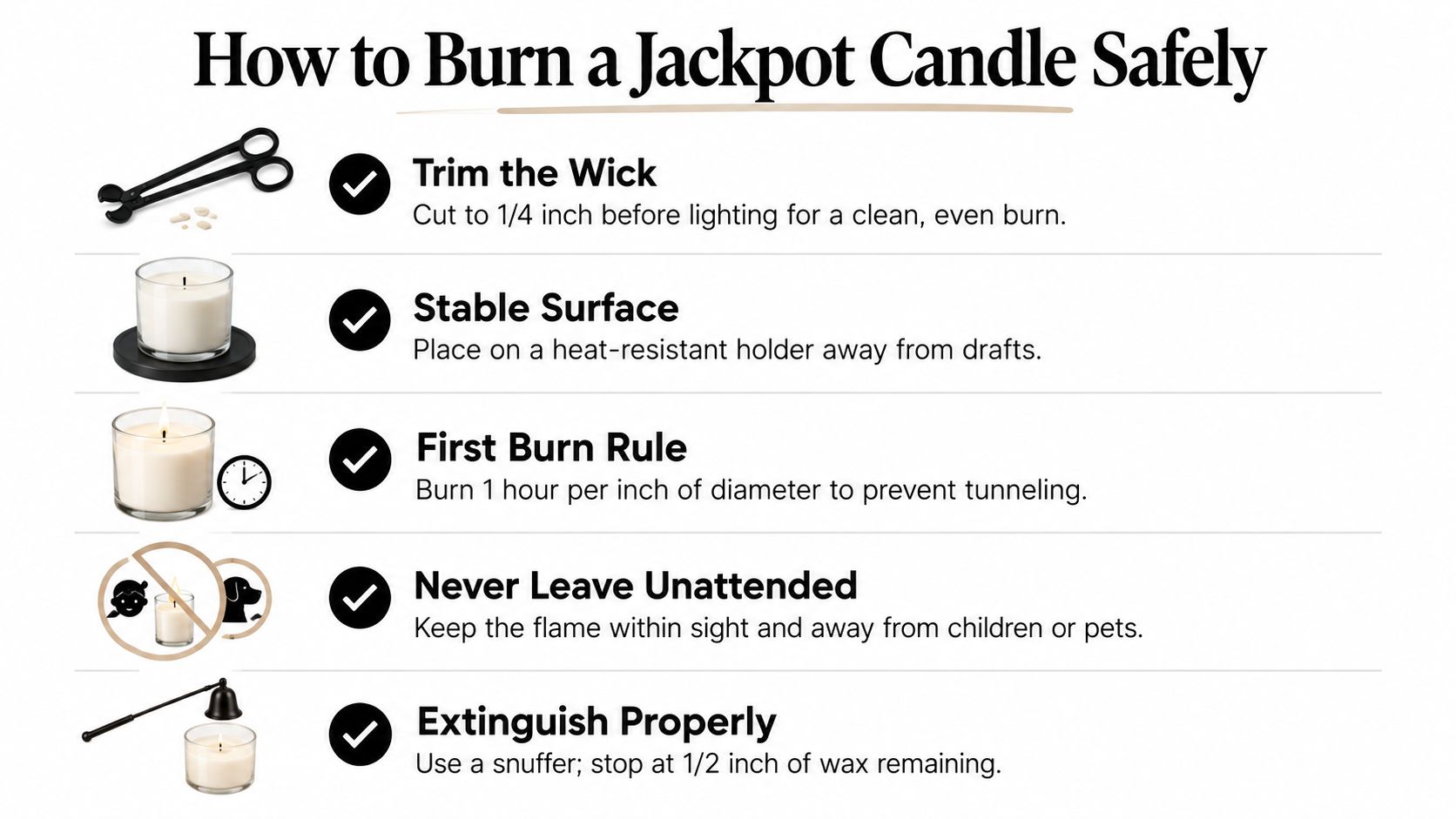
The insert usually appears only after the wax level has dropped, so patience matters. Let the candle burn on a flat, heat-resistant surface, and trim the wick before lighting it. That helps keep the flame controlled and reduces the soot and uneven melting that make the reveal harder to handle.
The National Fire Protection Association says candles caused an estimated average of 5,894 home-structure fires each year in the United States from 2020 to 2024, with 63 deaths, 532 injuries, and $286 million in property damage annually (NFPA candle safety). It also says more than half of candle fires started when décor or furnishings were too close, while 21% involved an unattended, discarded, or misused candle. Those figures are a good reminder that the reveal is never worth rushing.
Once the jewelry capsule is visible, extinguish the flame and let the wax cool before touching anything. Use tweezers or another tool, not fingers, and lift the package out gently instead of scraping around it. Wax-covered metal or stones should cool on a safe surface before unwrapping, because hot wax can hold heat longer than people expect.
Never turn the reveal into a scavenger hunt inside a lit candle.
For general candle habits, the candle safety tips guide is a useful refresher, and the image above gives a quick visual check of the basic steps. The practical rule is simple, burn calmly, stop early, and remove the insert only after everything has cooled. That protects both the jewelry and the room around it.
The video below walks through a full burn cycle with a hidden insert, showing when the capsule typically surfaces and how to retrieve it safely.
A surprise candle can feel like a small win the moment you pull out the jewelry, but the value question gets complicated fast. A piece may feel worth a lot in the box and still mean something different to a jeweler, an insurer, or a resale buyer. Retail value, appraised value, and resale value often point to different numbers, even when they describe the same item.
A hidden stone or ring may be natural, lab-grown, treated, plated, or decorative. That detail changes the market value far more than the sparkle does. A 2025 U.S. survey of more than 2,000 consumers found that 84% were aware of lab-grown diamonds, but 49% lacked confidence distinguishing lab-grown from natural stones, while 37% said they lacked enough information to choose between them (Rapaport survey summary).
A ring listed as a $100 value may be a plated fashion piece with a resale value near zero, so ask whether the figure reflects retail, replacement, or appraisal before you set your expectations. That single question saves a lot of disappointment later.
| Question | Why it matters |
|---|---|
| Is there a hallmark? | It can help identify metal content. |
| Is the stone described? | It tells you whether the item is natural, lab-grown, or decorative. |
| Is the value an estimate or an appraisal? | Those are not the same thing. |
| Could the piece be resold easily? | Liquidity affects real-world value. |
Those details keep the reveal grounded. Buyers enjoy the surprise more when they know whether they have fine jewelry, fashion jewelry, or something in between.
For a practical reference on pricing terms, the guide on how to value jewelry is useful because it separates retail-style valuation from what a piece may bring in another setting. That difference keeps the moment exciting without turning the value claim into false confidence.
These candles work best when the person receiving them enjoys both fragrance and the reveal itself. That's why they fit occasions where the gift is supposed to feel a little more playful than practical. A surprise candle gives you a scent, an unboxing moment, and a keepsake, so it lands differently than a standard scented gift.
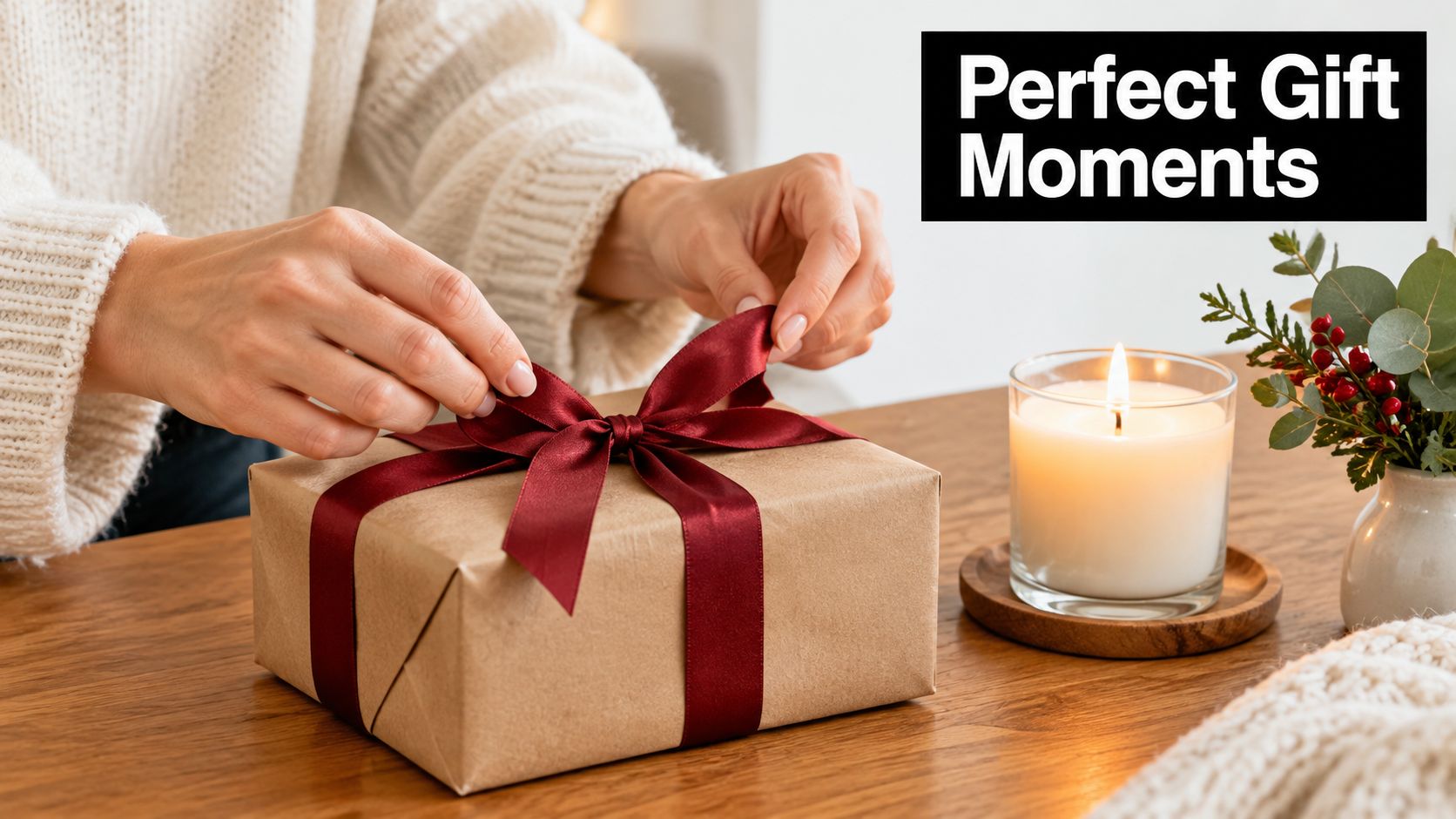
Birthday gifts are the obvious fit, especially for someone who likes opening something over time rather than all at once. Anniversaries work too, as long as the buyer wants a sentimental surprise without choosing a specific piece of jewelry in advance. Holiday gifting also makes sense, because the burn can stretch the celebration beyond the day the box is opened.
If the recipient is more into self-care than collecting, the candle still works. The hidden piece becomes a bonus, but the main use is still atmosphere, scent, and a pause in the day. That's one reason these candles overlap well with broader gift categories like the curated sets discussed in ArtNaturals self care gift sets, where the experience matters as much as the item itself.
Not every gift needs a high-stakes “big reveal” mood. Some people want a softer reveal, where the jewelry is a nice extra and the candle does most of the emotional work. Others want a playful unwrapping ritual that feels more like an event than a purchase.
The best match is the person who likes layered gifts. They'll appreciate the scent on day one, the candle on the second or third burn, and the jewelry after that. A surprise candle works less well for someone who wants instant utility and no ritual at all.
The right gift isn't the one with the loudest claim, it's the one the recipient actually wants to burn.
That's the decision filter that matters. If the person likes candles, likes jewelry, and doesn't mind a little suspense, the format makes sense. If they want a straightforward candle only, a standard premium scent is the better choice.
The best results come from three habits, a steady burn, realistic expectations, and careful handling when the reveal appears. Don't burn it like a disposable candle, don't assume the hidden item's value tells the whole story, and don't treat hot wax like a shortcut. Those three mistakes create most of the disappointment people report with surprise candles.
A good buyer watches the flame, keeps the surrounding area clear, and stops burning once the insert is exposed enough to retrieve safely. A better buyer also checks the jewelry details before deciding what the piece is worth to them personally. The surprise is the point, but the experience is better when it's controlled.
Jackpot Candles offers scented candles and bath bombs with a hidden jewelry surprise inside, which makes this topic especially relevant if you want the reveal without the guesswork. If you're ready to try a candle that combines fragrance, suspense, and a keepsake, visit Jackpot Candles and choose a scent that fits the kind of reveal you want to enjoy.
Comments will be approved before showing up.